Project-1: Powertrain for aircraft in runways
AIM : To design an electric powertrain for aircraft in runways and list out the theoretical information about aircrafts
OBJECTIVE :
1. To search and list out the total weight of various types of aircrafts.
2. To find difference between ground speed and air speed.
3. To find out why it is not recommended to use aircraft engine power to move it on the ground at Airport.
4. To find how an aircraft is pushed to runway when its ready to take off
5. To learn about take off power, tyre design, rolling resistance, tyre pressure, brake forces when landing.
6. A. To calculate the force and power required to push / pull an aircraft by a towing vehicle.
7. A. To design an electric powertrain with type of motor, it’s power rating, and energy requirement to fulfill aircraft towing application in Simulink. Estimate the duty cycle range to control the aircraft speed from zero to highest. Make all required assumptions. Prepare a table of assumed parameters. Draw a block diagram of powertrain.
SOLUTION :
1. To search and list out the total weight of various types of aircrafts.
A.) There are different types of weights of an Aircraft which are:
i. Manufacturer's Empty Weight (MEW) :Also called Manufacturer's Weight Empty (MWE) or Licensed Empty Weight. It is the weight of the aircraft "as built" and includes the weight of the structure, power plant, furnishings, installations, systems and other equipment that are considered an integral part of an aircraft. This excludes any baggage, passengers, or usable fuel.
ii. Zero-Fuel Weight (ZFW) : This is the total weight of the airplane and all its contents (including unusable fuel), but excluding the total weight of the usable fuel on board. As a flight progresses and fuel is consumed, the total weight of the airplane reduces, but the ZFW remains constant.
iii. Maximum zero fuel weight (MZFW) : It is the maximum weight allowed before usable fuel and other specified usable agents (engine injection fluid, and other consumable propulsion agents) are loaded.
iv. Operating Empty Weight (OEW) :(Roughly equivalent to basic empty weight on light aircraft). It is the basic weight of an aircraft including the crew, all fluids necessary for operation such as engine oil, engine coolant, water, unusable fuel and all operator items and equipment required for flight but excluding usable fuel and the payload.
v. Payload :It is the carrying capacity of an aircraft. It includes cargo, people, extra fuel. In the case of a commercial airliner, it may refer only to revenue-generating cargo or paying passengers.
vi. Maximum Takeoff Weight(MTOW) : This is the maximum weight at which the pilot of the aircraft is allowed to attempt to take off.
vii. Regulated Takeoff Weight (RTOW) : Depending on different factors (e.g. flap setting, altitude, air temperature, length of runway), RTOW or maximum permissible takeoff weight varies for each takeoff. It can never be higher than MTOW.
viii. Maximum Landing Weight (MLW) : This maximum weight at which an aircraft is permitted to land.
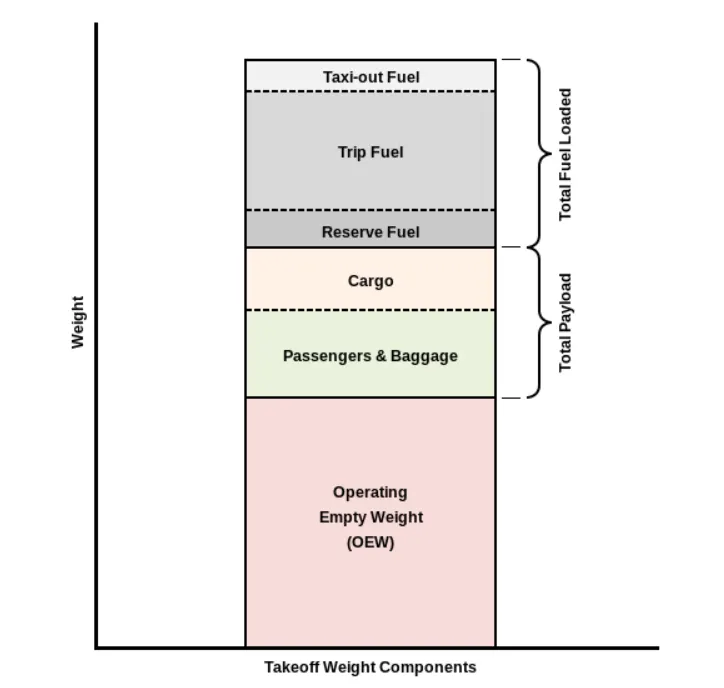
ix. Maximum Ramp Weight (MRW) : It is also called maximum taxi weight (MTW). It is the maximum weight authorized for maneuvering (taxiing or towing) an aircraft on the ground.
x. Aircraft Gross Weight : It is the total aircraft weight at any moment during the flight or ground operation. This decreases during flight due to fuel and oil consumption.
So these are different weights of Aircrafts.
2. To find difference between ground speed and air speed.
A.)
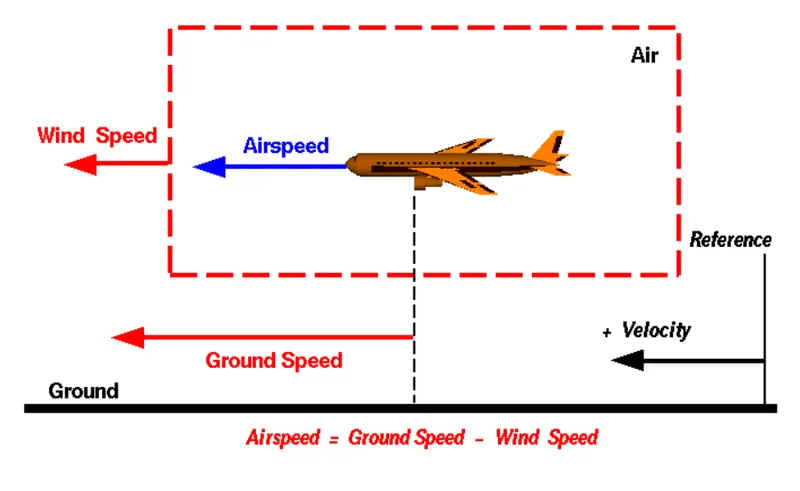
AIR SPEED: It is simply the speed at which an aircraft is moving relative to the air it is flying in. Also, it is the speed at which the air is flowing around the aircraft's wings. There are two types of Air speed:
i. Indicated Air Speed (IAS) : It is the measured speed of an airplane as it moves through the air. The indicated airspeed is what registers on the cockpit air speed indicator, and it is based on pressure readings collected by the pitot-static system. The indicated airspeed is inversely correlated with the true airspeed based on altitude.
If true airspeed remains constant, and the only variable to change is the aircraft’s altitude, at a higher altitude, the air is thinner and there are fewer molecules to enter the pitot tube and create pressure. The gauge will register a lower indicated airspeed.
At a lower altitude, the air is denser, and the increase in molecules causes a higher pitot pressure which will translate to a higher indicated airspeed.
The indicated airspeed as displayed on your airspeed indicator gauge in knots of indicated airspeed (KIAS) is used for aircraft speed limits, speed changes, and ATC speed restrictions. The published v-speeds for each aircraft are also relayed in indicated airspeed.
ii. True Air Speed (TAS) : It is the speed the airplane moves at in relation to the air mass it is flying through. If the air is perfectly still and the aircraft is flying straight and level, the true airspeed will be the same as groundspeed. True airspeed is calculated by taking the indicated airspeed and adjusting for pressure and temperature variables.
If the airplane is flying into a headwind, the true airspeed will be higher than groundspeed. This is because the plane and the air mass are moving in opposite directions, so they pass each other more rapidly and the pitot tube reads a higher pressure and therefor a higher true airspeed.
The inverse is true with a tailwind. In this case, the true airspeed will be less than groundspeed because the air mass is moving with the airplane, so the relative speed between the plane and the air is less than it is between the air and a stationary point on the ground.
True airspeed is also impacted by altitude. At higher altitudes, with less dense air, the aerodynamic drag on the plane decreases and the true airspeed increases. The rate of increase is 2% per thousand feet.
Pilots use true airspeed in knots (KTAS) for performance measurements and flight planning.
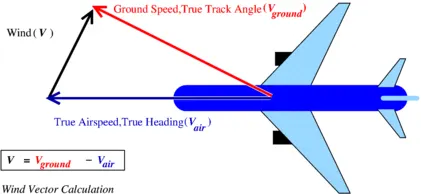
GROUND SPEED : It is the speed at which the airplane is actually moving over the ground. Groundspeed takes your true airspeed and adjusts for wind. A tailwind pushes the plane faster relative to the ground than to the airmass, so the groundspeed would be higher than the true airspeed. A headwind slows the plane’s forward progress relative to the ground while increasing its speed relative to the airmass, so the groundspeed would be lower than the true airspeed. Groundspeed is used by pilots when making time and distance calculations.
Ground speed is the actual speed that an aircraft travels over the ground, and is also referred to as “shadow speed.” Ground speed combines the aircraft’s air speed and the wind speed relative to the aircraft’s direction of flight. An aircraft’s air speed is determined not by how much distance it covers in a set time, but by a combination of its forward speed and the speed of the wind that is blowing towards the aircraft.
A wing must have air moving over it to create lift. Too little moving air and the airplane will ‘stall,’ or lose elevation very rapidly. The stall speed is when the wings no longer create lift, and the airplane falls from the sky. As an example, let’s say that an aircraft has a stall speed of 20 knots. That does not mean that the aircraft needs to propel itself at 20 knots, but rather that the air moving over the wing must be traveling at 20 knots or more so that the aircraft can stay aloft. Therefore, a gust of wind that is traveling at 20 knots towards the aircraft will allow the airplane to hover stationary over an area.
Ground speed and Air Speed are not always the same speed. On a windy day, an airplane may have an Air Speed of 80 knots but a Ground Speed of only 60 knots. The term “shadow speed” comes from the speed of the airplane’s shadow on the ground. If an aircraft has an Air Speed of 80 knots but a ground speed of 60 knots, a car that follows the shadow will only need to go 60 knots to keep the same speed as the airplane.
Most people have heard of head and tailwinds. Tailwinds will help push an aircraft faster, so that it reaches its destination more quickly, while a headwind pushes against the aircraft and slows it down. A headwind will detract from an aircraft’s Ground Speed, while a tailwind will increase it.
Difference between Ground Speed and Air Speed:
True airspeed is simply the speed at which an aircraft is moving relative to the air it is flying in. As such, it’s also the speed at which the air is flowing around the aircraft’s wings.
Ground speed, on the other hand, is the aircraft’s speed relative to the ground. One thing that should be noted here is that it’s its horizontal rather than vertical speed – an aircraft climbing completely vertically would have a ground speed of zero.
In other words, while airspeed is what determines whether there is enough airflow around an aircraft to make it fly, ground speed is what determines how fast an aircraft will get to its destination.
3. To find out why it is not recommended to use aircraft engine power to move it on the ground at Airport.
A.) Usually, Aircrafts run on the ground using Engine power but it is not used at rated comparing to flying power used. So it uses less speed. The following are some limitations why we can't use the full Engine power on ground:
i. The area infront of the jet engine creates a space where any equipment or people can be sucked into the engine if anything is too close.
ii. Applying the gas can create a blast behind the engines.
iii. Areas infront of the engines are critical factors when applying the power to them, so we can't ignore them easily.
iv. People, Things can be damaged if they are near to the plane from the jet blast.
v. Air intake is very powerful that it can even suck the human bodies.
vi. Due to high suction it may intake the small dust particles, stones, papers etc which may damage the engines.
vii. The noise obtained from the plane is more and also fumes gave more heat.
So it is not recommendable to move the aircraft on ground with Engine power which has dangerous affects.
4. To find how an aircraft is pushed to runway when its ready to take off.
A.) To push the aircraft to runway there are two ways :
i. Taxiing: It is the movement of an aircraft on the ground, under its own power, in contrast to towing or pushback where the aircraft is moved by a tug. The aircraft usually moves on wheels, but the term also includes aircraft with skis or floats (for water-based travel).
An airplane uses taxiways to taxi from one place on an airport to another; for example, when moving from a hangar to the runway. The term taxiing is not used for the accelerating run along a runway prior to takeoff or the decelerating run immediately after landing, which are called the takeoff roll and landing rollout, respectively.
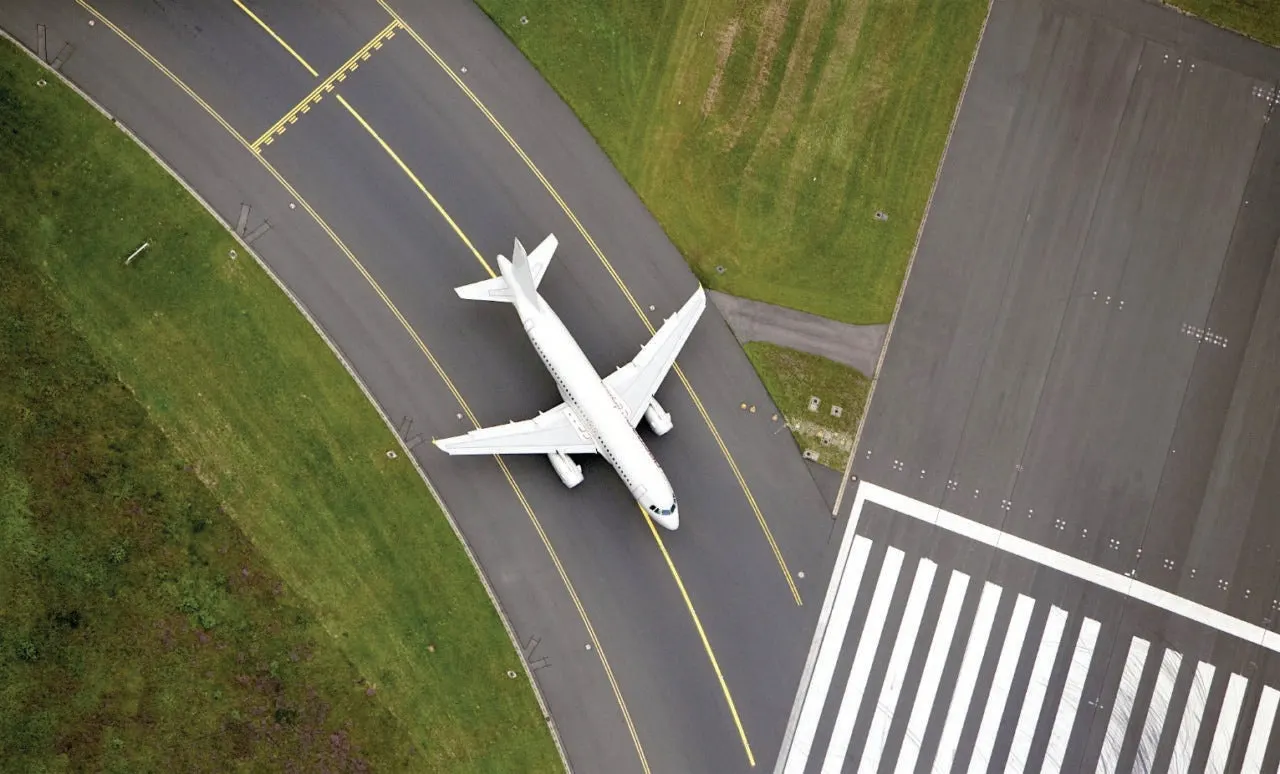
When taxiing, aircraft travels slowly. This ensures that they can be stopped quickly and do not risk wheel damage on larger aircraft if they accidentally turn off the paved surface. Taxi speeds are typically 30 to 35 km/h.
ii. Pushback: In aviation, it is an airport procedure during which an aircraft is pushed backwards away from its parking position, usually at an airport gate by external power. Pushbacks are carried out by special, low-profile vehicles called pushback tractors or tugs.
Although many aircraft are capable of moving themselves backwards on the ground using reverse thrust(a procedure referred to as a powerback), the resulting jet blast or prop wash might cause damage to the terminal building or equipment. Engines close to the ground may also blow sand and debris forward and then suck them into the engine, causing damage to the engine. A pushback is therefore the preferred method to move the aircraft away from the gate.
Pushbacks at busy aerodromes are usually subject to ground control clearance to facilitate ground movement on taxiiways. Once clearance is obtained, the pilot will communicate with the tractor driver (or a ground handler walking alongside the aircraft in some cases) to start the pushback. To communicate, a headset may be connected near the nose gear.
Since the pilots cannot see what is behind the aircraft, steering is done by the pushback tractor driver and not by the pilots. Depending on the aircraft type and airline procedure, a bypass pin may be temporarily installed into the nose gear to disconnect it from the aircraft's normal steering mechanism.
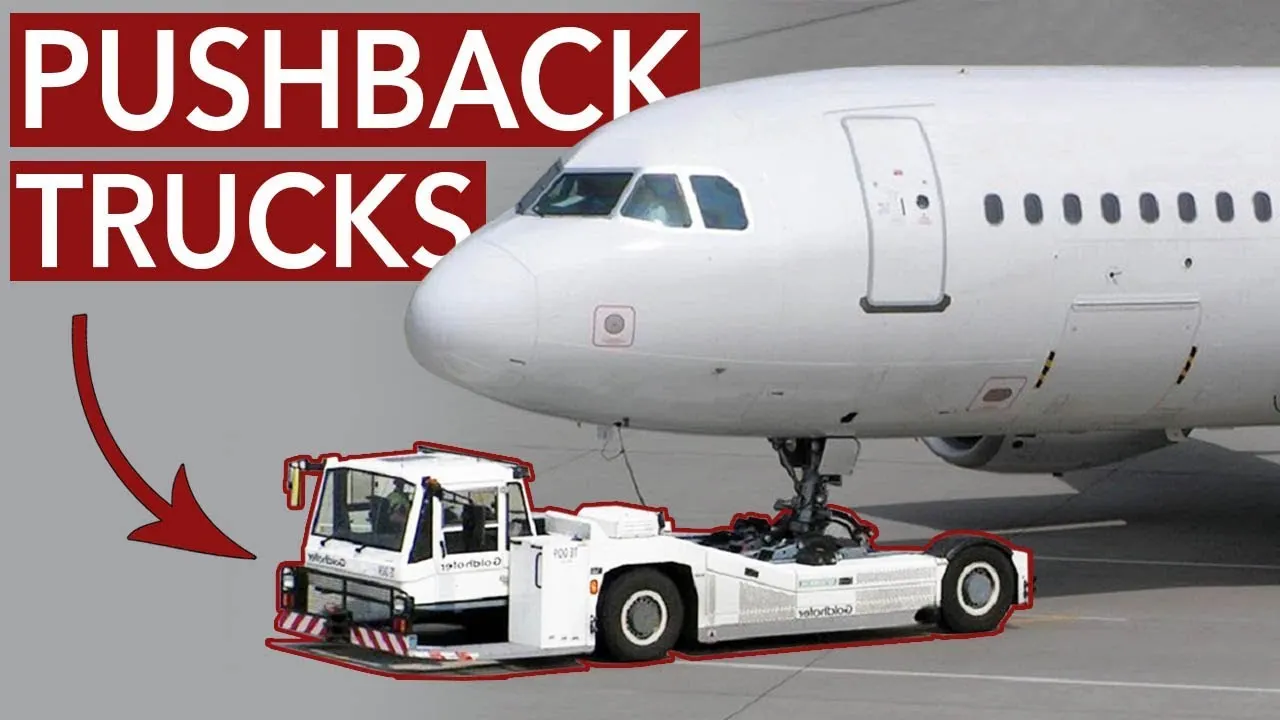
Once the pushback is completed, the towbar is disconnected, and any bypass pin removed. The ground handler will show the bypass pin to the pilots to make it clear that it has been removed.The pushback is then complete, and the aircraft can taxi forward under its own power.
5. To learn about take off power, tyre design, rolling resistance, tyre pressure, brake forces when landing.
A.)
i. Take-off Power : Take-off is the phase of flight in which an aerospace vehicle leaves the ground and becomes airborne. For aircraft traveling vertically, this is known as liftoff. For aircraft that take off horizontally, this usually involves starting with a transition from moving along the ground on a runway.
On take-off in order to position the aircraft to a safe height away from the terrain and obstacles, the engine thrust is set to a high take-off power setting and the aircraft attitude is pitched up to maintain a specific speed by fulfilling the task is known as Take-off power.
Its performance can be predicted using a simple measure of the acceleration of the aircraft along the runway based on force equilibrium. The forces involved are :
D - Aerodynamic drag of vehicle resisting the aircraft motion
T - Thrust of propulsion system pushing aircraft along runway
F - Rolling resistance friction due to contact of wheels on the ground
During Take-off run the imbalance in these forces will produce acceleration along the runway
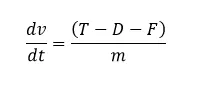
where, dv/dt is acceleration along the runway
m is the mass of vehicle
Power = (T-D-F) V
ii. Tyre Design :
When it comes to safety, tyres are one of the most important components of aircraft. They help to absorb the shock of landing and provide cushioning. It also provides the necessary traction for braking and stopping of an aircraft.
An aircraft tyre is designed to withstand extremely heavy loads while landing, take off, taxing, and parking. The number of wheels required for aircraft increases with the weight of the aircraft, as the weight of the aeroplane needs to be distributed more evenly.
Carcass plies are used to form the tire. They are sometimes called casing plies. An aircraft tyre is constructed for the purpose it serves.
- They support the weight of an aircraft while it is on the ground.
- It also provides the necessary traction for braking and stopping of an aeroplane.
- Tyre also helps to absorb the shock of landing and provide cushioning the roughness of takeoff, roll-out, and taxi operations.
Unlike an automobile or truck tyre, it does not have to carry a load for a long period of continuous operation. However, an aircraft tyre absorbs the high impact loads of landing, and also it’s operating at high speeds for a short time when required.
Let’s go through some technical aspects of the tyre.
Retreading – Retreading is methods of restoring a worn tyre by renewing the tread area or by renewing the tread area plus one or both sidewalls. Repairs are included in the tyre retreading process.
Ply Rating – Ply Rating is used to identify the maximum recommended load rating and inflation pressure for a specified tyre. It is an index of tyre strength.
Speed Rating – The speed rating is the maximum takeoff speed to which the tyre has been tested.
Skid Depth – Skid depth is the distance between the tread surface and the deepest groove as measured in the mould.
Aircraft tyres must have an approved speed and load rating and have sufficient clearance when retracted through landing gear to allow for tyre growth. Tyre growth is the increase in the size of the tyre due to centrifugal forces at high speed.
Aircraft tyres may be Tube-type or Tubeless :Tubeless tyres are more advantageous over tube-type. There is no longer the use of tube-type tyre in recent aviation. Nowadays all airliners are using tubeless tyres. Tubeless that are meant to be used without a tube has the word TUBELESS on the sidewall of the tyre.
Aircraft tyres may be Radial or Bias: Almost all airliners are using Radial tyre. Bias is an older design, and it’s mainly used for road vehicles. Radial tyres have the word RADIAL on the sidewall. Radial tires are more expensive than bias-ply tyres. Radial tires are in demand because of their lower life cycle cost and long term value.
Conductive Aviation Tyres: Yes, Today’s tyres are conductive. Aircraft tyres are manufactured with tread rubber with conducting compounds to permit earthing of static charges. In early days when tyres were not sufficiently conductive, aircraft used to have a conductive strip hanging down from the axle of the landing gear. Upon landing, this strip would be the first part of the aircraft to touch the earth. This discharges any static electricity accumulated on the outer surfaces of the aircraft. Now you don’t see them anymore.
Chines in Aviation tyre:
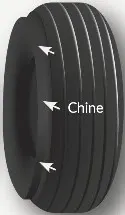
Chines are also called deflectors. Chine tyre used on the nose wheel of aircraft, specially fuselage-mounted jet engines. It diverts runway water away from the engine inlets.
Chines are circumferential protrusions that are moulded into the sidewall of nose tyres that deflect water sideways to help reduce excess water ingestion into the engines. Tyres may have chines on one or both sides, depending on the number of nose tyres on the aircraft.
Aircraft Tyre S tandards :
Each tyre manufacturer produces their own designs of the tyre with different tread patterns, wear patterns, wear limits etc, and in some cases, different names for the same part of the tyre. But all tyres must meet the approved standards before being accepted by the FAA or CAA.
All commercial aircraft tyres approved under FAA Requirement Technical Standard Order (TSO) C62. A TSO is a minimum performance standard for specified materials, parts, and appliances used on civil aircraft
iii. Rolling Resistance:
Rolling resistance is the force resisting the motion when a body rolls on a surface. It can be seen in the aircraft when the aircraft takes off from the runway and while landing at the runway with the help of their wheels.
The Rolling resistance for the air plane can be calculated as
Fr = c mr ag
where
Fr = Rolling resistance (N)
c = rolling resistance coefficient
mr = rolling mass (kg)
ag = acceleration of gravity (9.81 m/s2)
iv. Tyre Pressure:
An aircraft tire or tyre is designed to withstand extremely heavy loads for short durations. The number of tires required for aircraft increases with the weight of the aircraft, as the weight of the airplane needs to be distributed more evenly. Aircraft tire tread patterns are designed to facilitate stability in high crosswind conditions, to channel water away to prevent hydroplaning, and for braking effect. Aircraft tires generally operate at high pressures, up to 200 psi (14 bar; 1,400 kPa) for airliners, and even higher for business jets
The main landing gear on the concorde was typically inflated to 232 psi (16.0 bar), whilst its tail bumper gear tires were as high as 294 psi (20.3 bar). The high pressure and weight load on the Concorde tyres were a significant factor in the loss of Air France Flight 4590 .
Tests of airliner aircraft tires have shown that they are able to sustain pressures of maximum 800 psi (55 bar; 5,500 kPa) before bursting. During the tests the tires have to be filled with water, to prevent the test room being blown apart by the energy that would be released by a gas when the tire bursts.
Aircraft tires are usually inflated with nitrogen to minimize expansion and contraction from extreme changes in ambient temperature and pressure experienced during flight. Dry nitrogen expands at the same rate as other dry atmospheric gases (normal air is about 80% nitrogen), but common compressed air sources may contain moisture, which increases the expansion rate with temperature.
The requirement that an inert gas, such as nitrogen, be used instead of air for inflation of tires on certain transport category airplanes was prompted by at least three cases in which the oxygen in air-filled tires had combined with volatile gases given off by a severely overheated tire and exploded upon reaching autoignition temperature. The use of an inert gas for tire inflation eliminates the possibility of tire explosion.
v. Brake force when landing:
Aircraft brakes stop a moving aircraft by converting its kinetic energy to heat energy by means of friction between rotating and stationary discs located in brake assemblies in wheels. Brakes provide this critical stopping function during landings to enable airplanes to stop within the length of the runway.
The following braking devices are used to decelarate the aircraft until it stops:
a. Ground spoilers : These usually deploy automatically upon main landing gear touch down or upon activation of thrust reversers. It provides two aerodynamic effects - Increased aerodynamic drag, which contributes to aircraft deceleration and Lift-dumping which increases the load on the wheels and thus increases wheel brake efficiency.
b. Wheel brakes : braking action results from the friction force between the tires and the runway surface. The friction force is affected by : Aircraft speed, Wheel speed, Tire condition and pressure, Runway condition.
c. Thrust reversers : These provide a deceleration force that is independent of runway condition. Its efficiency is higher at high airspeed, so they must be selected as early as possible after touch down. Thrust reversers should be returned to reverse idle at low airspeed and stowed at taxi speed. But maximum reverse thrust can be maintained to a complete stop in an emergency.
6. To calculate the force and power required to push / pull an aircraft by a towing vehicle.
A.) Generally the towing vehicle experiences two kinds of forces when it exposed to push/pull the aircraft.
i. Rolling resistance force : The following is the calculation of rolling resistance
Frr = μrr * m * g ;
where, μrr = coefficient of rolling resistance
m = mass
g = acceleration due to gravity
The rolling resistance force acts on both aircraft and pushback truck
lets take an example to find the force
The rolling resistance of aircraft is
Mass = 55,000 kg ; μrr = 0.025 ; g = 9.81
Then Frr(aircraft) = 0.025 * 55,000 * 9.81
Frr(aircraft) = 13,488.75
The rolling resistance of truck is
Mass = 1500 kg ; μrr = 0.03 ; g = 9.81
Then Frr (truck) = 0.03 * 1500 * 9.81
Frr (truck)= 441.45
Then the total resistance will be sum of Frr(aircraft) + Frr (truck)
Total Frrt = 13,930.15 N
ii . Aerodynamic force : The aerodynamic force to move an airplane on an absolute flat runway with no wind at constant low speed is usually very negligible.
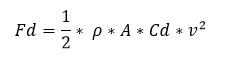
where,
P is air density (kg/m^3)
A is front area (m^2)
v is velocity (m/s)
But the aerodynamic force is very negligible. So the net force acting on the push back ttruck is given as:
Fnet = Frr(aircraft) + Frr(truck)
Fnet = 13,930 N
The power required is P = F*V
Vis velocity which the pushback truck either pushes/ pulls the aircraft.
P = 13930 * 10
P =139.3 KW
7. A. To design an electric powertrain with type of motor, it’s power rating, and energy requirement to fulfill aircraft towing. Estimate the duty cycle range to control the aircraft speed from zero to highest. Make all required assumptions. Prepare a table of assumed parameters.
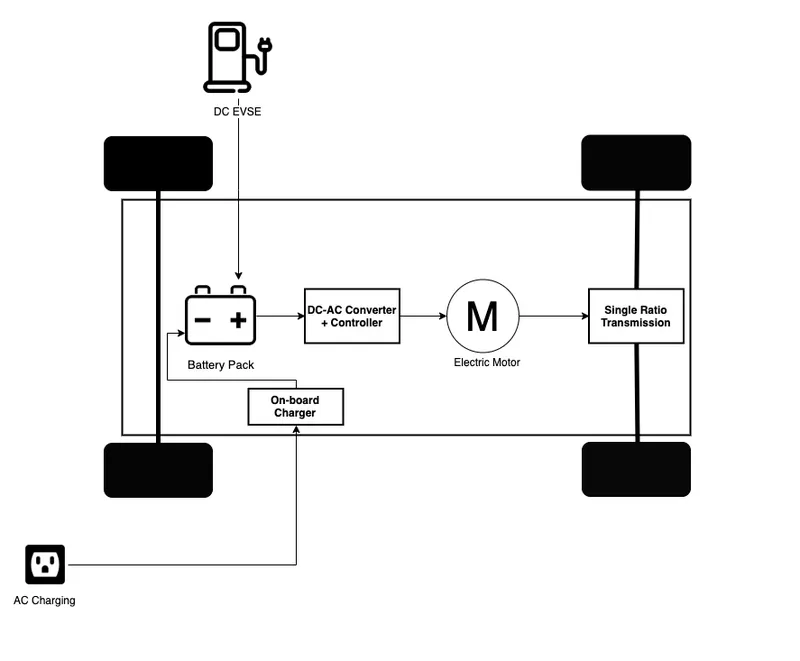
Ans.) The components required for the EV powertrain are described below:
i. Battery Pack: It is a set of any number of (preferably) identical batteries or individual battery cells. They may be configured in a series, parallel or a mixture of both to deliver the desired voltage, capacity, or power density. It gives DC output.
ii. DC - AC converter: DC supply from the batter is converted to AC and is given to motor. Power transfer is managed by Powertrain Electronic Control Unit.
iii. Electric Motor: Converts Electrical to Mechanical energy. Regeneration can be obtained to save power in many EV's.
iv. On-board charger: Converts Ac received through charge port to DC and controls the amount of current flowing into battery pack.
EV POWERTRAIN:
i. Motor design :
Lets take,
Motor is BLDC type
Rated power = 30-40 KW
Peak power = 60 KW
Speed = 3000-5000 RPM
Rated torque = 90 N-m
Peak torque = 160 N-m
Efficiency > 85 %
ii. In Power rating :
Rated power is 30 KW and peak is 60 KW as it is double the rated. The converter used is DC-Ac
Lets Input voltage is 420 V and current is 70 A
Then the power input is V *I
P = 420*70
P = 29.4 KW
iii. Energy requirements:
Energy required for an EV similar to Towing vehicle to Push/Pull the aircraft is calculated on basis of time
Energy = Power * Time taken by towing vehicle to push/pull the aircraft
Power = 29.4 KW ; Time is 16 min
Then, Energy = 29.4 * 16 * 60
Energy = 28224 KJ
iv. Duty cycle:
Duty cycle of powertrain is calculated by output power by the input power,
Duty cycle = Output power / Input power
Duty cycle = 25.8 KW / 29.4 KW
Duty cycle = 0.87 %
v. Block diagram of Powertrain is as below:
CONCLUSION :
1. The total weight of various types of aircrafts are listed.
2. The difference between ground speed and air speed is explained
3. The reason behind use of aircraft engine power to move it on the ground at Airport is explained.
4. The process of aircraft is pushed to runway when its ready to take off is explained.
5. The concepts of learn take off power, tyre design, rolling resistance, tyre pressure, brake forces when landing are explained.
6. The force and power required to push / pull an aircraft by a towing vehicle are calculated.
7. An Electric powertrain with type of motor, it’s power rating, and energy requirement to fulfill aircraft towing is designed.