Project 1 : CFD Meshing for Tesla Cyber Truck
Objective:- For the given model, check and solve all geometrical errors and Assign appropriate PIDs. Perform meshing with the suitable Target length and element Quality criteria.
Target lengths for the different parts of a model can be decided by your own. Finer mesh will give good results and will compromise with the longer processing time.
Target lengths for the different parts of a model are as follow:
- Body - 3 mm
- Lights - 4 mm
- Rims and Tyres - 2 mm
- Window - 2 mm
Procedure:- The model is first loaded in the solver deck.
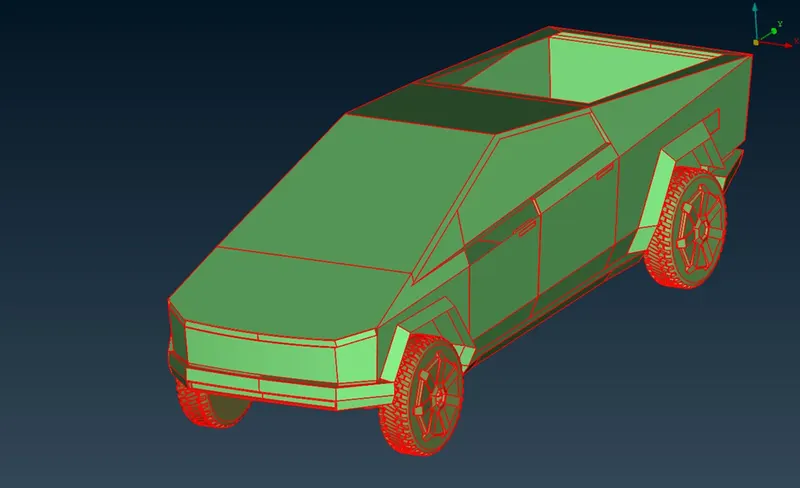
Geometry clean-up
As we can see the geometry is symmetric about a plane. We can perform a geometry clean up on half of the model and then mesh it and afterwards perform symmetry to reflect other half of the part.
First we need to perform Topo clean-up so that the most of the single cons are converted to double and triple cons.
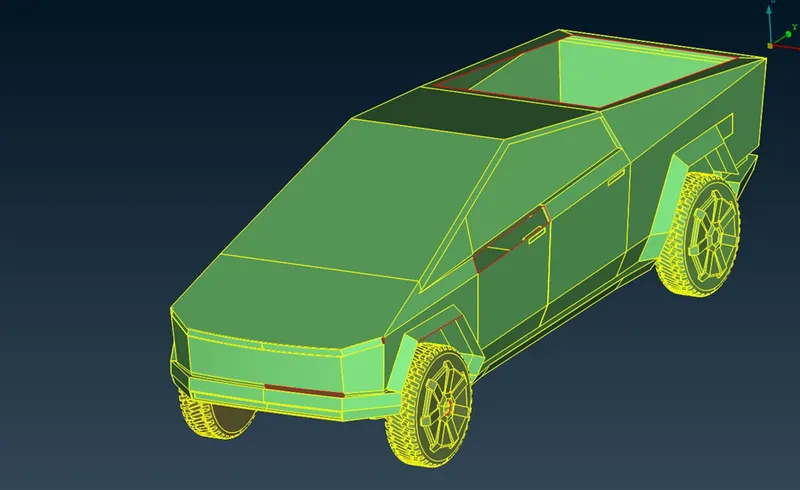
Now to delete half of the model, we need to perform ‘Cut’ operation which is shown below.
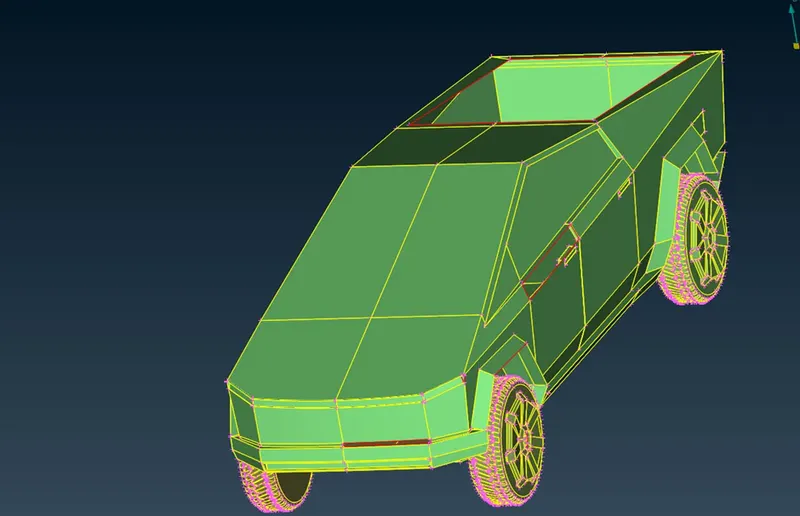
Now Deleting half part of the Model.
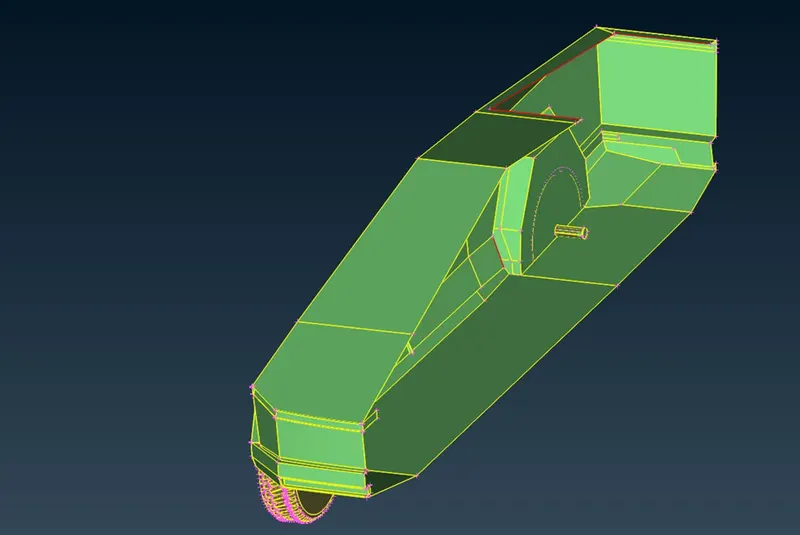
Now performing a geometry check-up for any single cons, triple cons and missing surfaces present in the model.
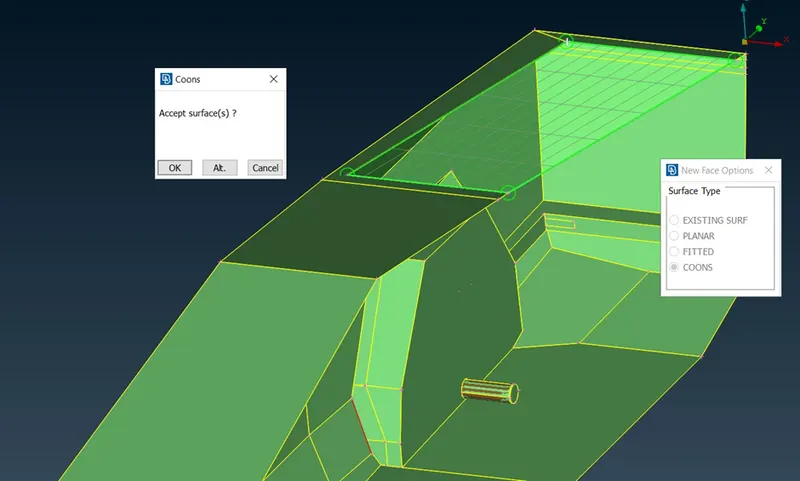
Cleaning the geometry by using appropriate commands such as cut, paste, 'New `->` Coons', etc. as shown below. Also creating a single volume of the geometry to create volumetric mesh.
Assigning PID’s
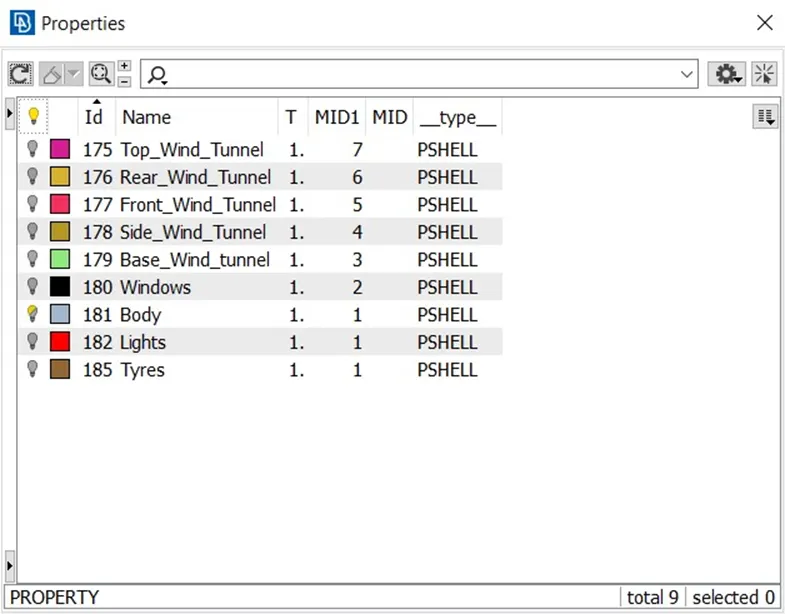
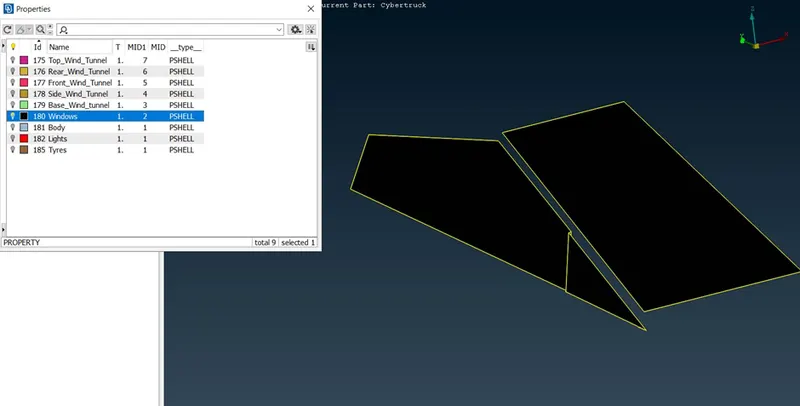
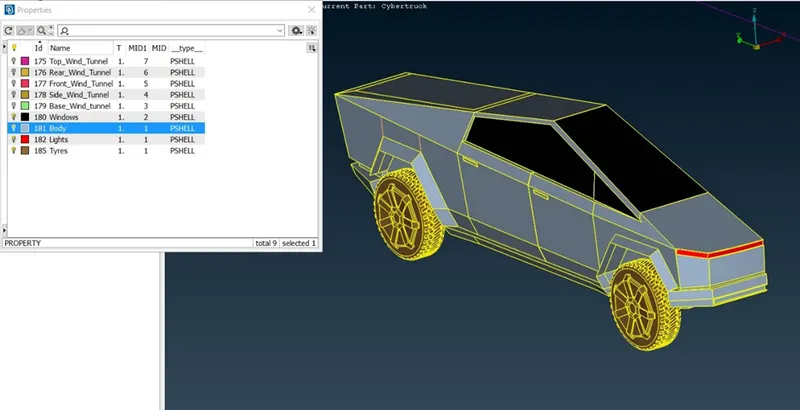
After this now deleting the present PID’s and assigning new PID’s to the given model as shown below.
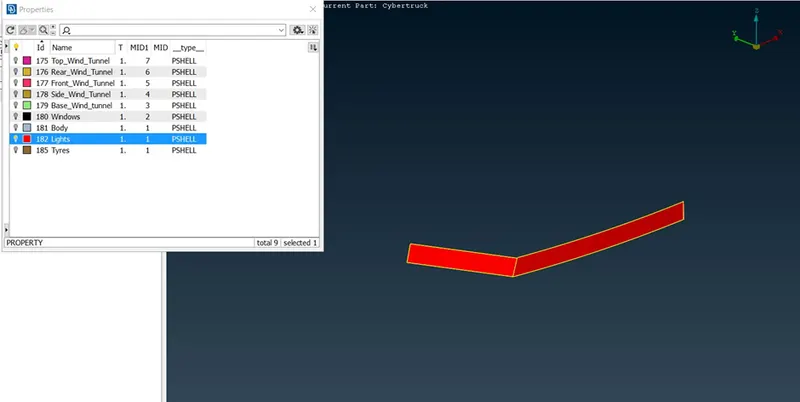
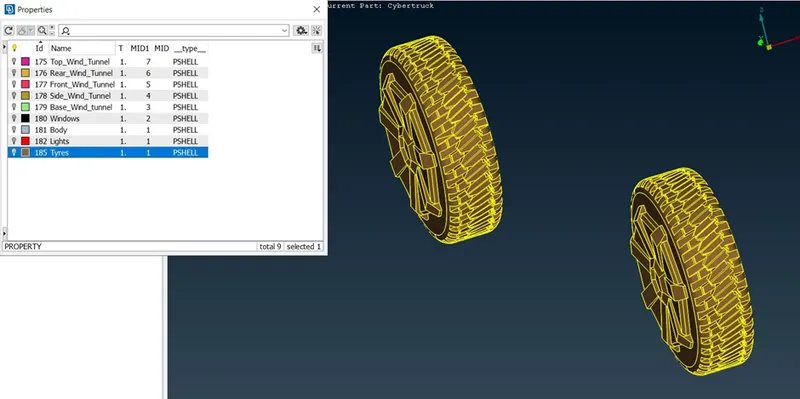
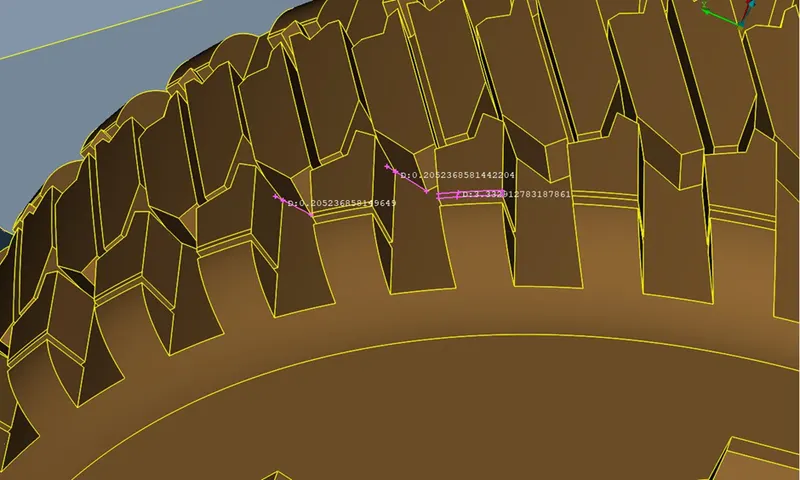
Carefully deleting the cons which can cause failure of the elements. After deleting the cons, checking for only minimum length that can be assigned to the parts as there won’t be any issue regarding maximum length.
The issue is arising for only tyre and the minimum length is found to be 0.205mm. So the minimum length will be assigned as 0.2mm.
Meshing
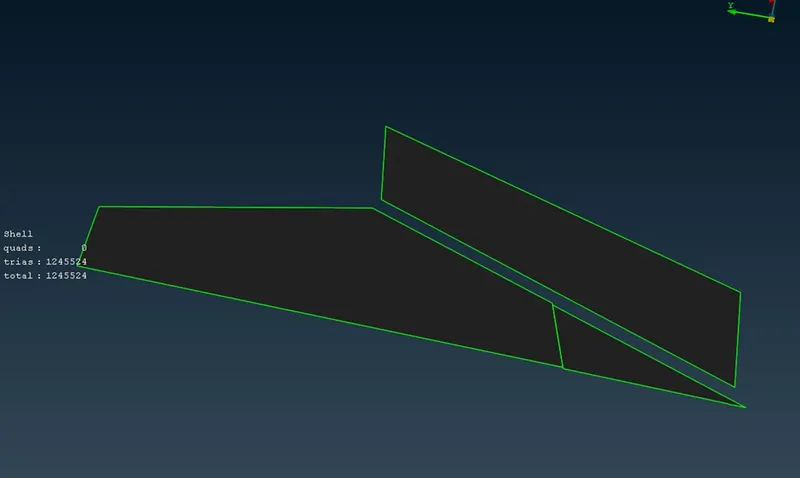
Creating 2D mesh (shell elements) according to the given criteria one by one for different parts. Also check for any Off Elements present in the geometry. To get rid of the failed elements perform ‘Reconstruct’ option under ‘Shell Mesh’. If the problem is still not solved then we can perform mesh improvements option under ‘Grids’ such as ‘Move’, ’Origin’, ’Align’, etc. so that the failed elements are reduced to zero.
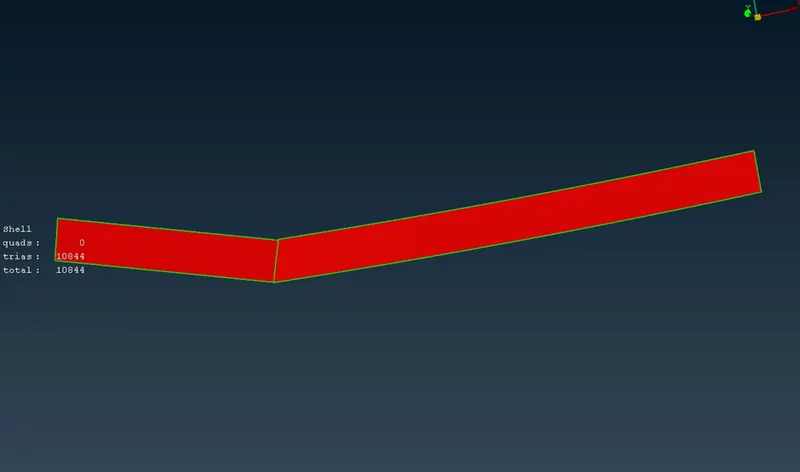
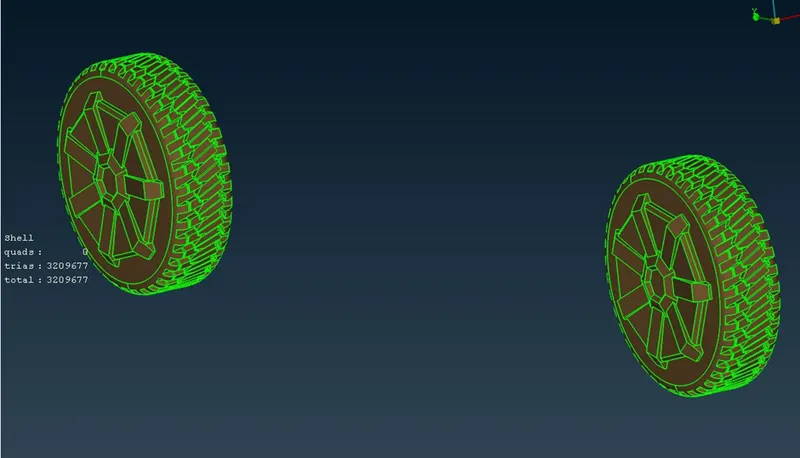
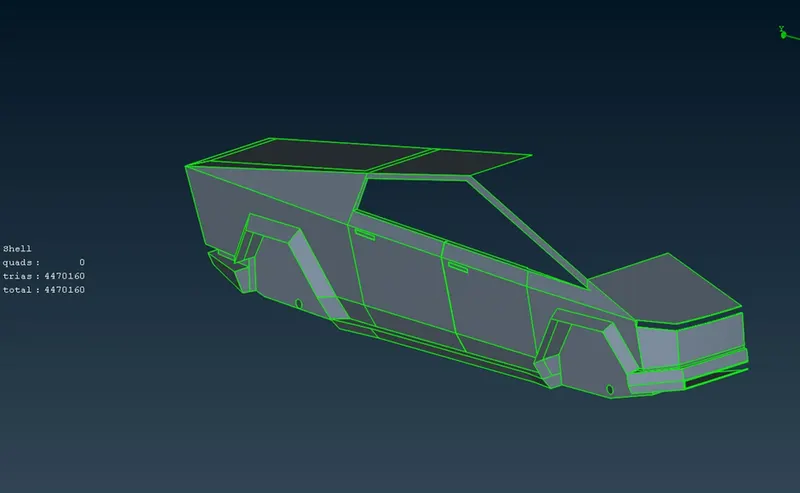
Finished Meshed Model
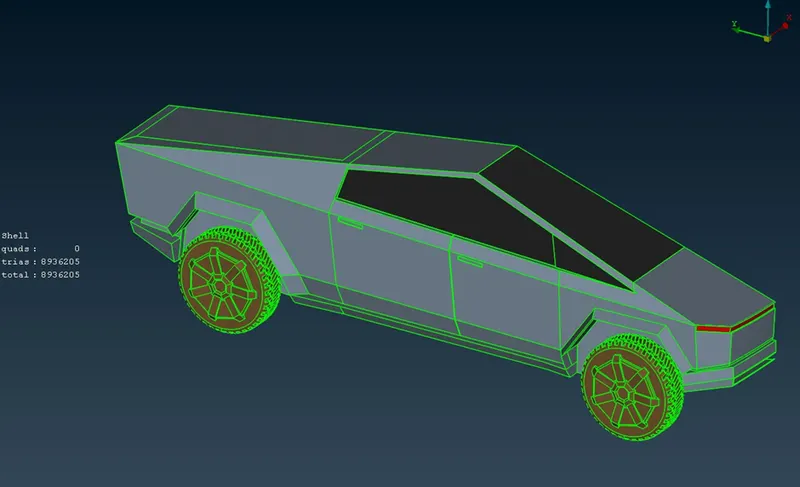
After meshing we will perform symmetry of all the entities except the ‘Logo’. To perform symmetry operation go to ‘Transform `->` Copy `->` Entities’. Select the entire model and then deselect the ‘Logo’ by clicking on ‘select by PID’.
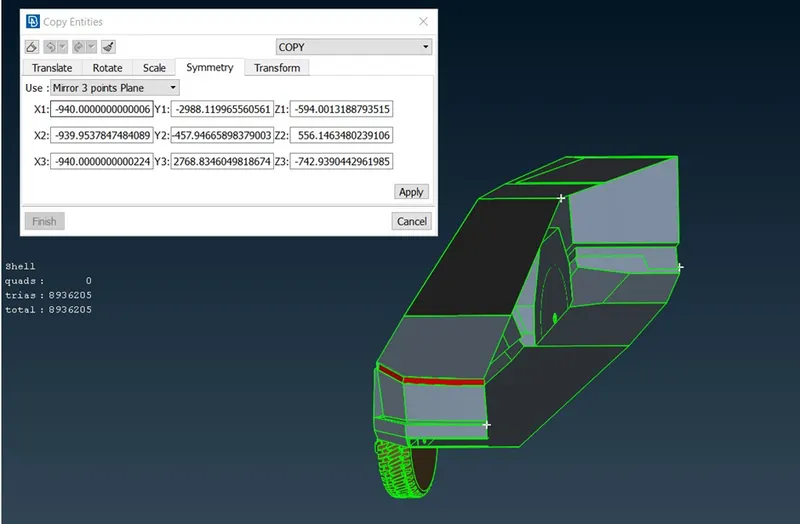
After this enable the ‘Mirror 3 points plane’ option and then select the nodes of the plane to be mirrored. Some single cons can be seen after performing the symmetry option. To solve this just paste both the single cons together.
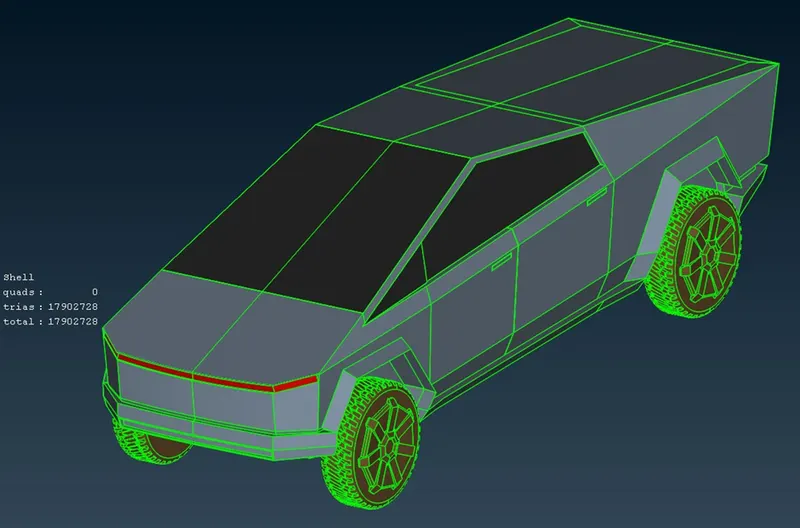
Construction of Wind Tunnel
Now we will construct the wind tunnel. To construct the planes we need reference points from the model. To construct points we need some reference information such as the Front end of the wind tunnel will be 4*Length of the model, Rear end will be 6*Length of the model, Top end will be 3*Length of the model and Both the sides will be 3*Length of the model. The base of the wind tunnel can be kept very close to the model.
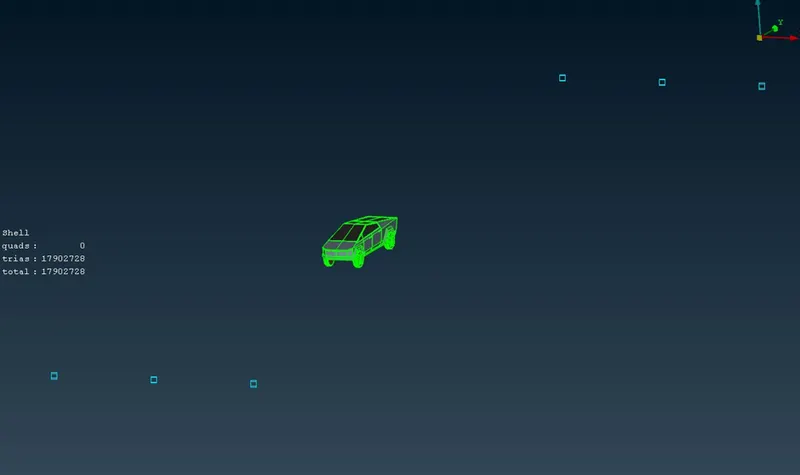
From this reference points we will construct curves. To do so got to ‘Curves `->` Create’ and then join the points. After this construct a new plane by selecting ‘New `->` Fitted’. Now we will complete the wind tunnel.
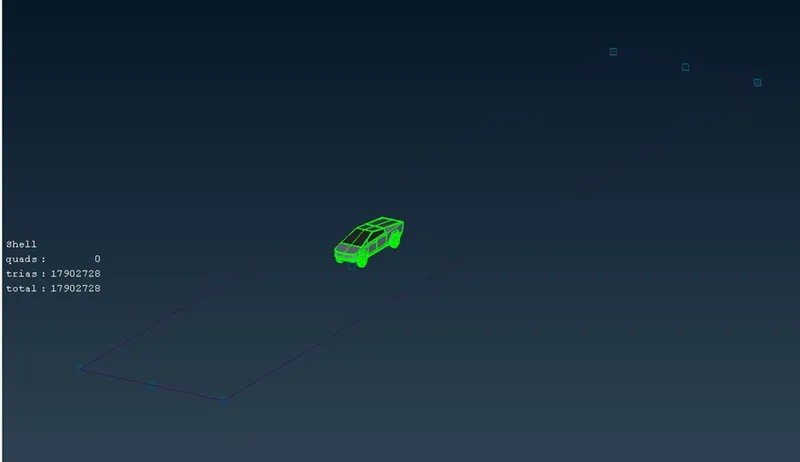
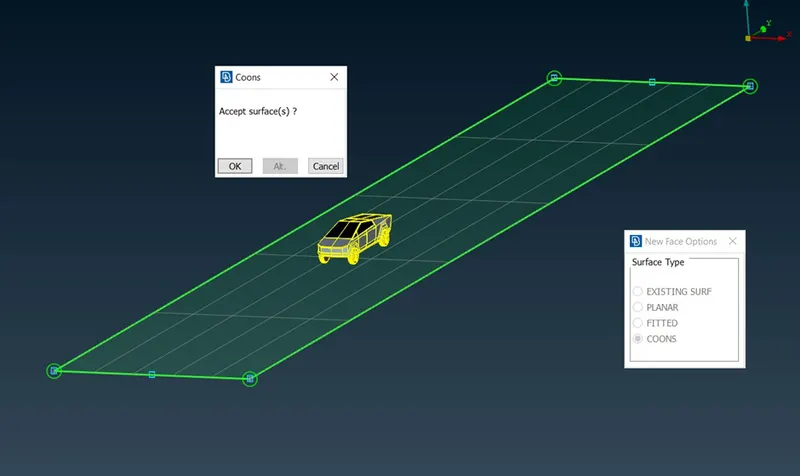
Finished Wind Tunnel
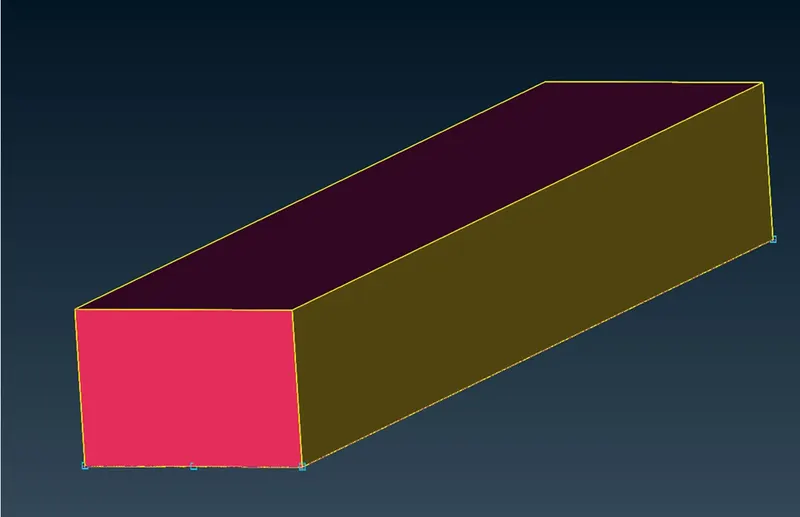
Meshing of Wind Tunnel
Since the base of the wind tunnel is very close to the model, we will mesh the base with a target length of 20mm. The Top Surface will be meshed with a target length of 100mm since we only require finer mesh around our model only. The side surfaces will be meshed with a varying length since the mesh varies from 20-100mm. To do so go to ‘Mesh `->` Perimeters `->` Spacing’, select ‘Geometric’ under ‘Biasing’ option. Give a factor of 1.1 and ‘dmin = 20’ and dlimit = 100’ and click ok. After this select ‘Spot Mesh’ and mesh the remaining surfaces one by one.
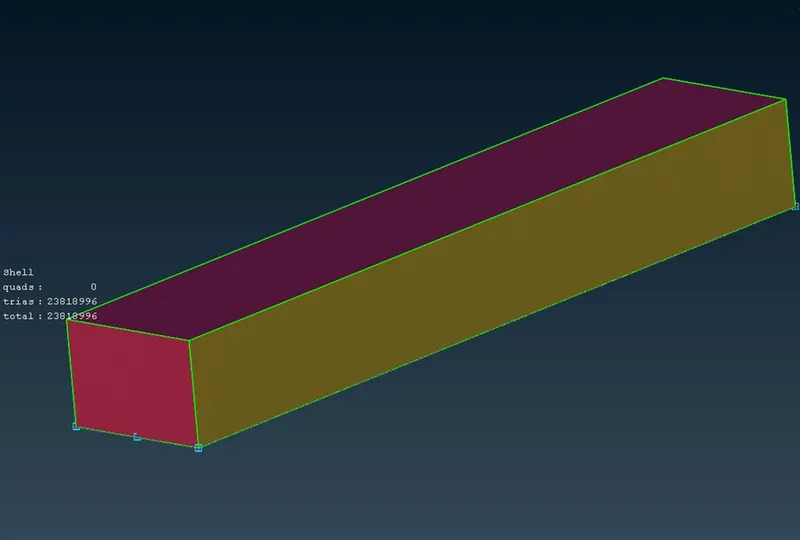
Volumetric Mesh
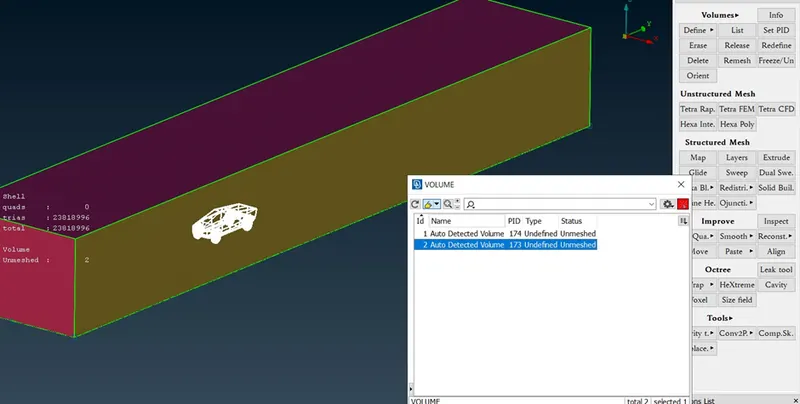
Proceeding with the volumetric mesh after performing surface mesh for both the model and the wind tunnel. Under Volumetric mesh click Define and then select ‘Auto Detect’. ANSA will auto detect all the volumes, in this case 2 volumes are detected, out of which we will delete the entire volume of the car i.e 1 volume, and will keep only one volume which is shown below.
Volume to be kept
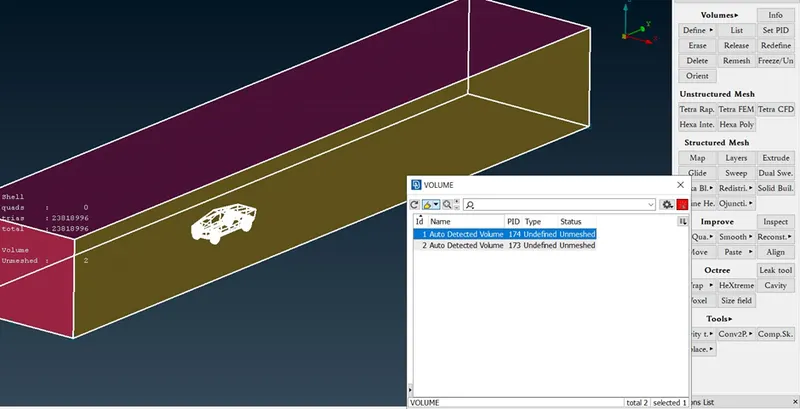
Volume to be deleted
Conclusion:-
The topological cleanup and surface meshing of the given model is done. A wind tunnel is constructed and surface of meshing is also done. Also the volumetric mesh of the entire model is done.
Google link:- https://drive.google.com/file/d/1IIsHa3fSC4D0LpCxZ4ruCzH5sj7o_CLH/view?usp=sharing