Photo Realistic Rendering
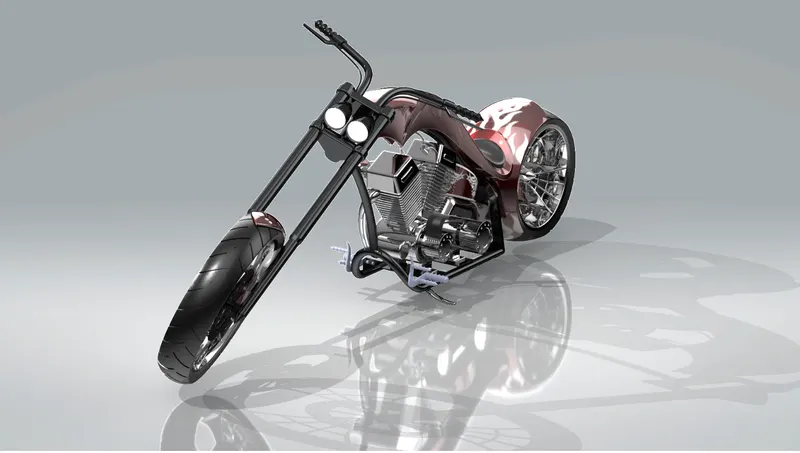
DESIGN AND RENDERING OF AMERICAN CHOPPER
OBJECTIVE:
- Modeling of American Chopper
- Photo Realistic rendering of the Chopper
INTRODUCTION:
A chopper is a type of custom motorcycle which emerged in California in the late 1950s. A chopper employs radically modified steering angles and lengthened forks for a stretched-out appearance. They can be built from an original motorcycle which is modified or built from scratch.
DESIGN APPROACH/ METHODOLOGY
Bottom-up-approach
In this approach, the individual parts are modelled separately and then all the part are assembled using mating constraints
Modeling approach
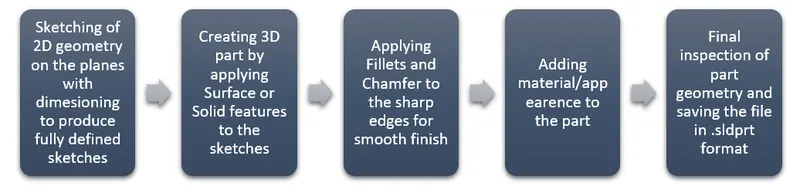
Chopper Modelling flow
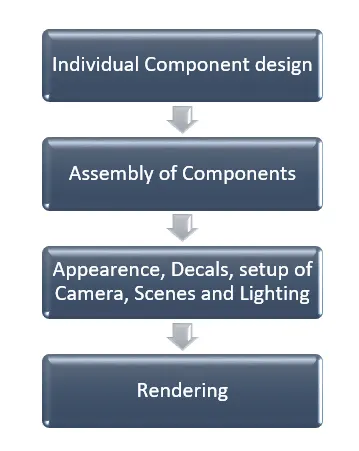
Chopper BOM
- Transmission Belt
- Kickstand
- Front Fender
- Rear Fender
- Chain
- Oil Tank
- Pedal
- Front Wheel
- Rear Wheel
- Front Fork
- Chassis
- Engine
- Gas Tank
FEATURES USED:
- Split Line: The Split Line. tool projects an entity (sketch, solid, surface, face, plane, or surface spline) to surfaces, or curved or planar faces. It divides a selected face into multiple separate faces.
- Projected Curves: it is a tool used to form 3D curves from two 2D curves from two different planes.
- Extrude Boss/Base: Extrude tool is used to extend a sketched profile in one or two directions as either a thin feature or a solid feature.
- Revolve Boss/Base: Revolves a sketch or selected sketch contours around an axis to create a solid feature.
- Swept Boss/Base: Sweeps a closed profile along an open or closed path to create a solid.
- Extrude Cut: Cuts a solid model by extruding a sketched profile in one or two directions.
- Revolve Cut: Cuts a solid model by revolving a sketched profile around an axis.
- Linear Pattern: Patterns features, faces and bodies in one or two linear direction.
- Shell: Hollows out a part, leaving open the faces selected and creating thin-wall features on the remaining faces. If no face is selected, it creates a hollow model.
- Mirror: Mirrors features, faces, and bodies about a plane or a planar face.
- Combine: This function adds two bodies together and keep the area that is common to them.
- Extrude Surface: Extrudes a sketch or sketch contours in one of two directions to create a surface feature.
- Swept Surface: Sweeps a closed profile along an open or closed path to create a surface feature.
- Lofted Surface: Creates a lofted surface between two or more profiles or sketches.
- Knit Surface: Combines two or more adjacent non-intersecting surfaces into a single surface body.
COMPONENT MODELLING
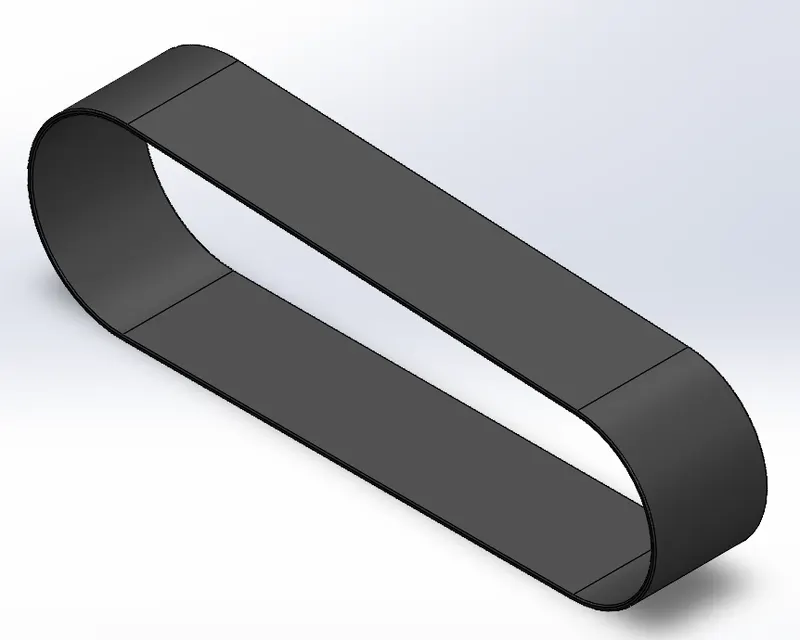
- Transmission Belt
Transmission Belt is used to transmit power from the motor to the gear box to
Sketch Tools and Features:
- 2D Sketch
- Extrude Boss/Base
- Fillet
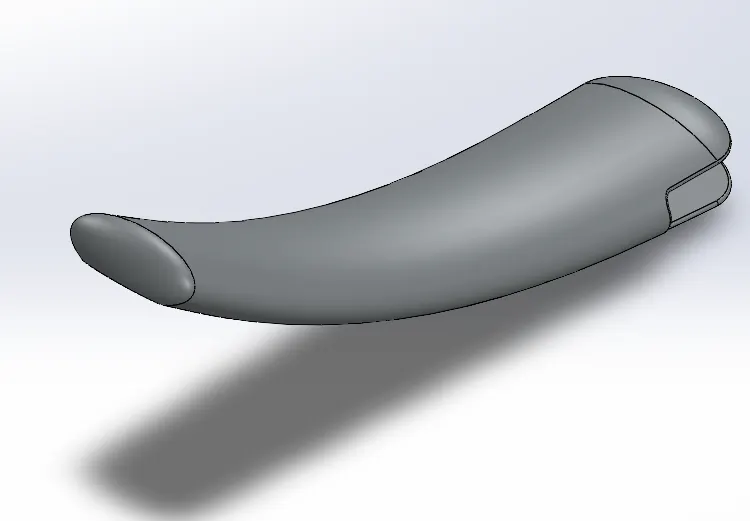
- Kickstand
A Kickstand is a part of the bike which allows the bike to be kept upright without leaning against another object or the aid of a person
Sketch Tools and Features:
- 2D Sketch
- Loft
- Dome
- Extrude Boss/Base
- Extrude Cut
- Split
- Fillet
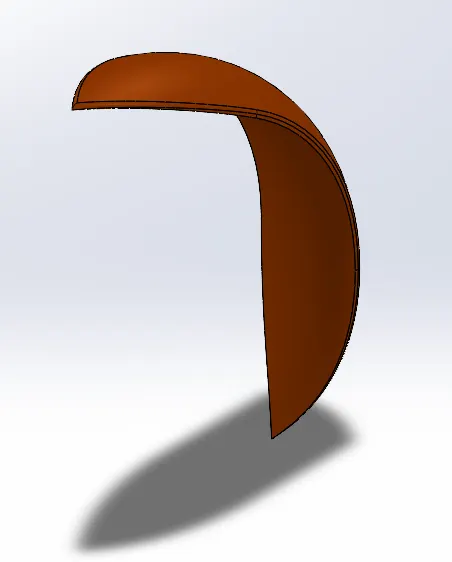
- Front Fender
The purpose of the front fender is to prevent mud, liquids, rocks and other road spray from being thrown into the air by the rotating tire
Sketch Tools and Features:
- 2D Sketch
- Revolve
- Split
- Fillet
- Rear Fender
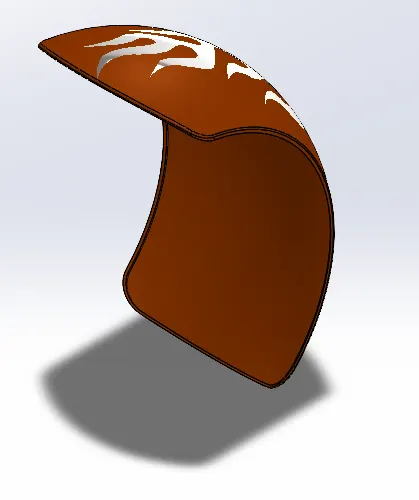
The rear fender prevents mud, liquids, rocks and other road spray from being thrown into the air by the rotating tire
Sketch Tools and Features:
- 2D Sketch
- Revolve
- Split
- Fillet
- Shell
- Chain
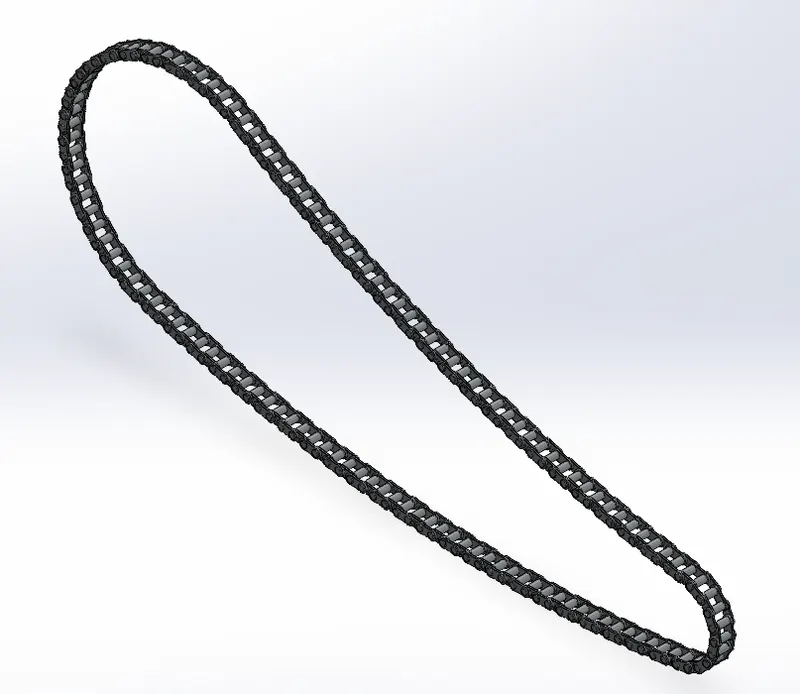
Motorcycle chains are a part of the drivetrain to transmit the motor power to the rear wheel
Sketch Tools and Features:
- 2D Sketch
- Extrude Boss/Base
- Fillet
- Blocks
- Circular Pattern
- Mirror
- Oil Tank
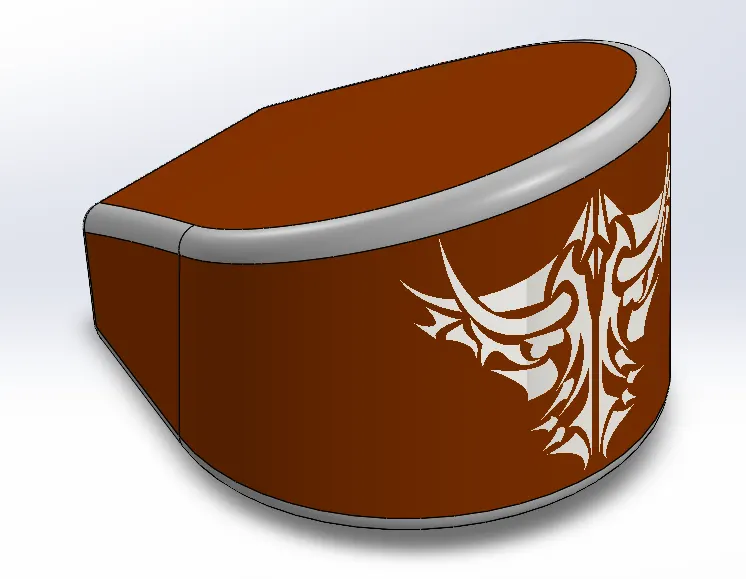
The Oil Tank holds the capacity of oil used to cool the motorcycle
Sketch Tools and Features:
- 2D Sketch
- Extrude Boss/Base
- Combine
- Fillet
- Shell
- Pedal
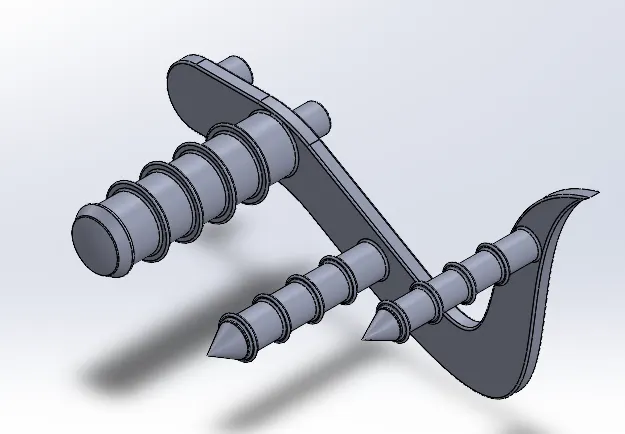
The pedal is the part of a motorcycle that the rider pushes with their foot to propel the vehicle. It provides the connection between the rider’s foot and the crank allowing the leg to turn the bottom bracket spindle and propel the bike’s wheels.
Sketch Tools and Features:
- 2D Sketch
- Extrude Boss/Base
- Fillet
- Revolve
- Dome
- Chamfer
- Linear Pattern
- Front Wheel
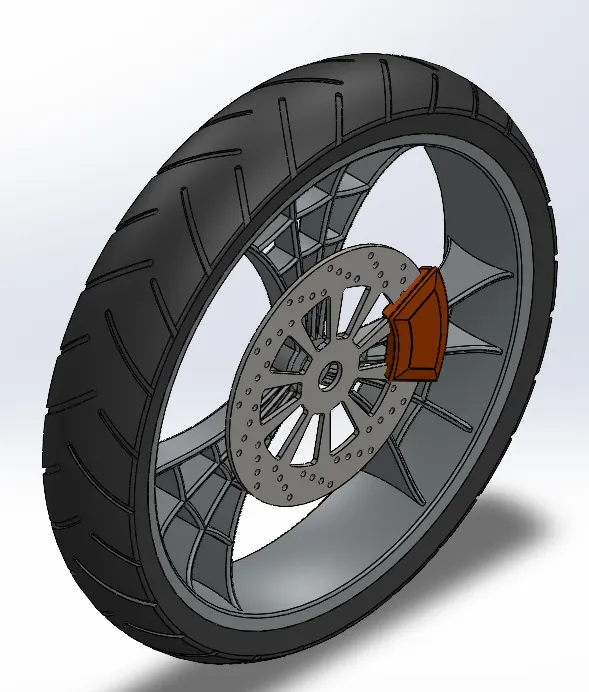
The Front Wheel consists of the Rim, Rotor, Caliper and Tire. The Tire in the front wheel is of a larger diameter and lower width and its main function is to take the initial impact of any bumps or holes on the road and aid in the steering mechanism
Sketch Tools and Features:
- 2D Sketch
- Revolve
- Boss Extrude
- Cut Extrude
- Circular Pattern
- Combine
- Fillet
- Chamfer
- Rear Wheel
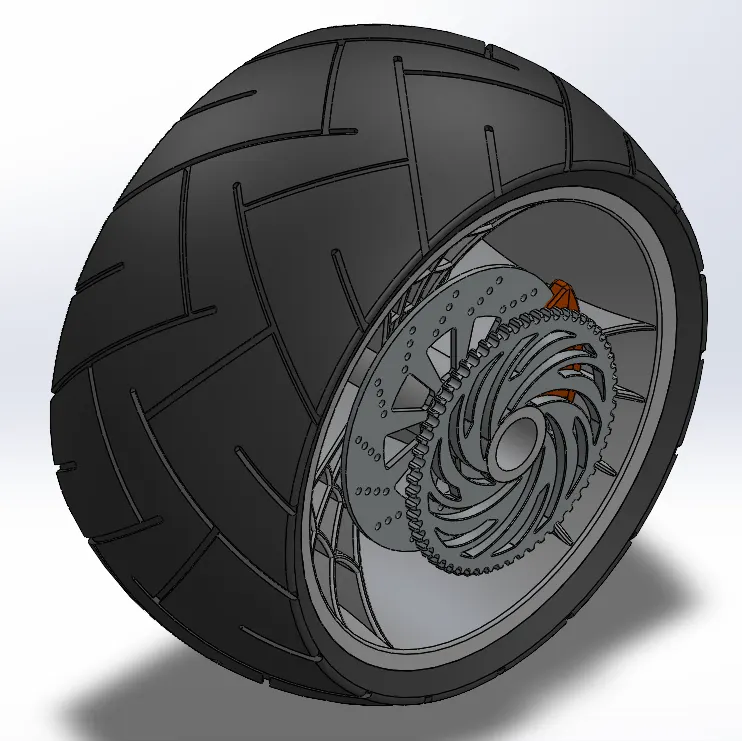
The Rear Wheel consists of the Rim, Rotor, Sprocket, Caliper and Tire. The rear tire of a motorcycle is usually smaller and wider as compared to the front. The main function of this tire is to provide traction and power for the motorcycle since the engine is connected to it through the chain and sprockets. The wideness of the tire means there’s more surface area touching the road.
Sketch Tools and Features:
- 2D Sketch
- Revolve
- Boss Extrude
- Cut Extrude
- Circular Pattern
- Combine
- Cut Revolve
- Fillet
- Chamfer
- Front Fork
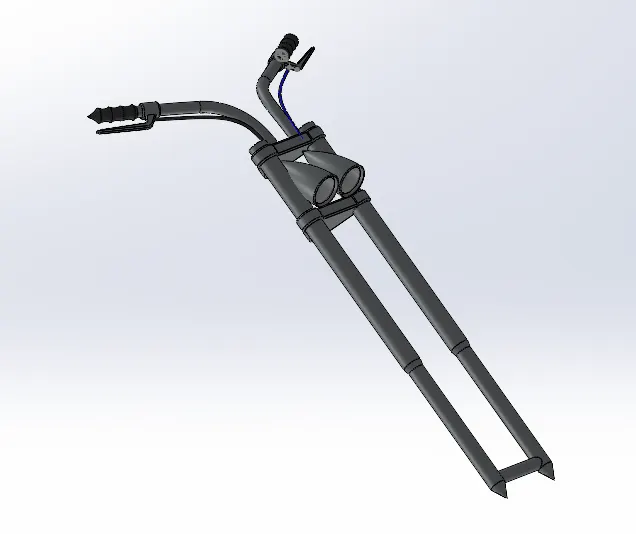
A motorcycle fork connects a motorcycle's front wheel and axle to its frame
Sketch Tools and Features:
- 2D Sketch
- Revolve
- Boss Extrude
- Linear Pattern
- Cut Extrude
- Dome
- Fillet
- Projection Curves
- Sweep
- Mirror
- Combine
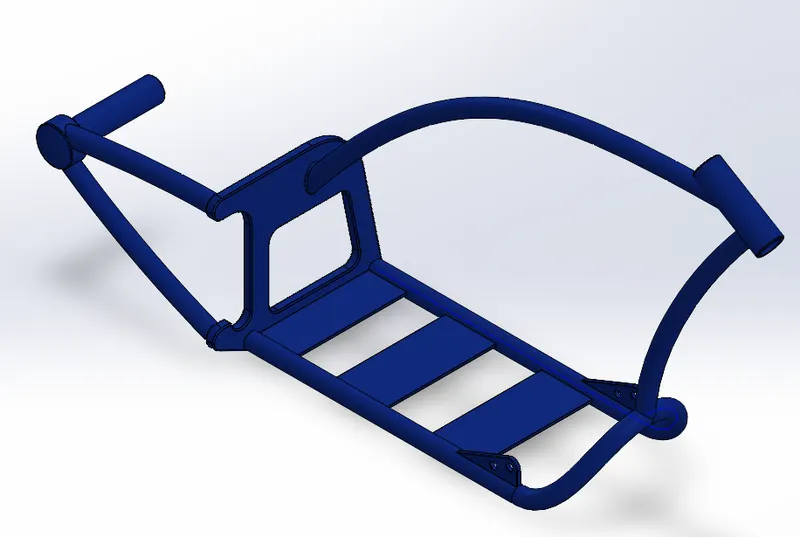
- Chassis
A motorcycle frame is a motorcycle's core structure. It supports the engine, provides a location for the steering and rear suspension, and supports the rider and any passenger or luggage.
Sketch Tools and Features:
- 2D Sketch
- Blueprint Setup
- Projection Curves
- Sweep
- Mirror
- Boss Extrude
- Cut Extrude
- Dome
- Split
- Combine
- Fillet
- Engine
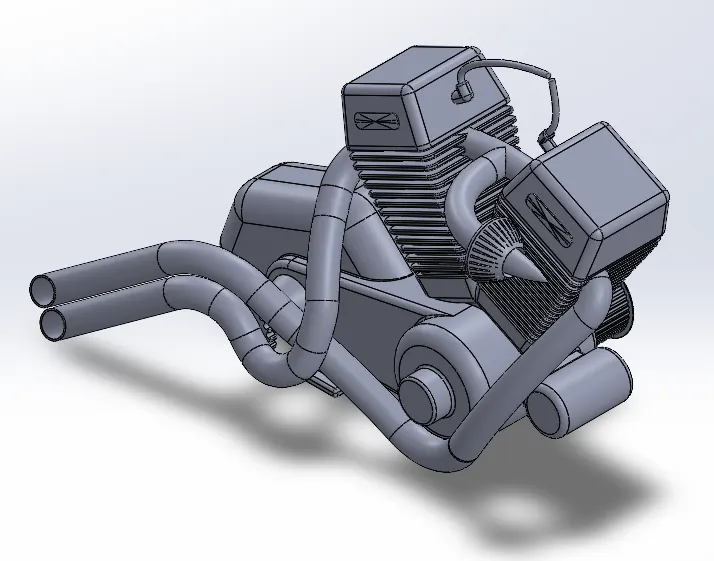
The Engine powers the motorcycle which is mostly a two-stroke or 4-stroke internal combustion engine types.
Sketch Tools and Features:
- 2D Sketch
- Blueprint Setup
- Boss Extrude
- Revolve
- Cut Extrude
- Dome
- Circular Pattern
- Split
- Fillet
- Chamfer
- Sweep
- Mirror
- Combine
- Gas Tank
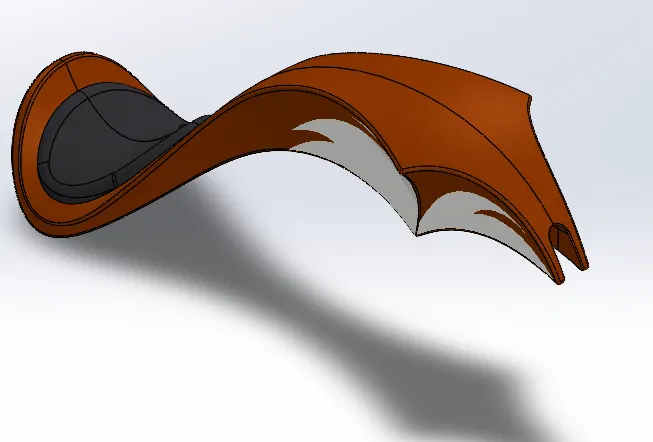
The Gas Tank holds the fuel of the motorcycle
Sketch Tools and Features:
- 2D Sketch
- Blueprint Setup
- Surface Sweep
- Surface Trim
- Projected Curve
- Surface Loft
- Boundary Surface
- Mirror
- Surface Knit
- Split Line
- Fillet
- Cut Sweep
- Shell
Assembly of Chopper:
For the assembly, individual components are inserted after the chassis as the other parts are placed with rest of the position on the chassis.
The geometric relationship between the parts are provided using the below mates
- Coincidental
- Tangent
- Concentric
- Parallel
- Angel Lock
PHOTO REALISTIC RENDERING
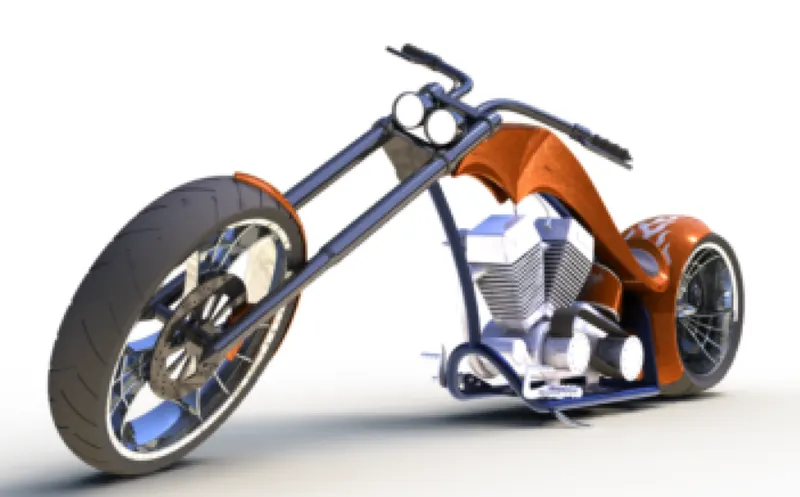
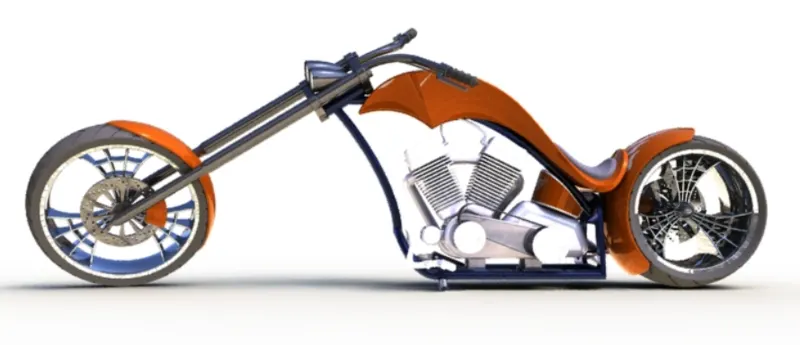
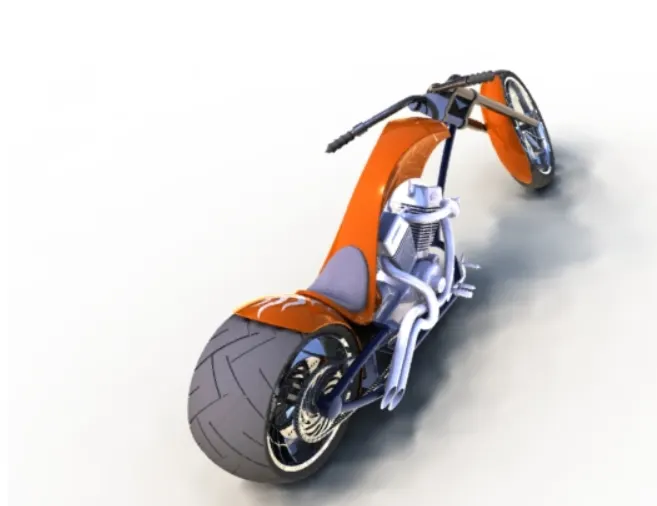
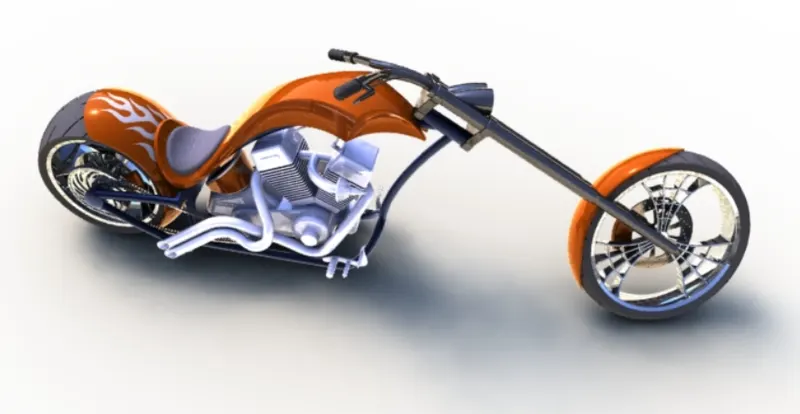
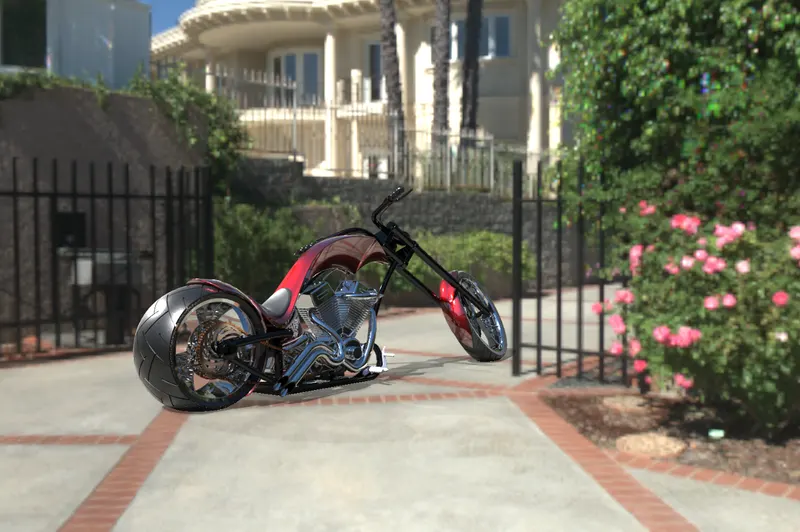
For creating photo realistic images of the Chopper we rendered the models. The process consists of adding decals, cameras, lights, environment, scenes and backgrounds. All the while changing the properties of each feature, adjusting them to create the perfect appearance setting for our final model rendering.
Rendering of the model is done using below add-ins and software
- Photoview 360
- SolidWorks Visualize
CONCLUSION:
- Thus, by using Solidworks the parts modelling, and appearance were successfully designed
- Using Solidowrks, the American Chopper assembly was done
- By using Solidworks Visualize, the Photo Realistic Rendering of the American Chopper was successfully made
- Nandha KumarThat was awesome work i never seen designing skills like this keep rocking.