Independent Research Project
AIM:
To simulate the conjugate heat transfer in a rectangular channel and to calculate the nusslet number and skin friction coeffecient.
ANALYSIS PERFORMED:
- Temperature distribution
- Velocity of fluid flow
- Average Nusslet Number
- Skin friction Coeffecient
DESCRIPTION:
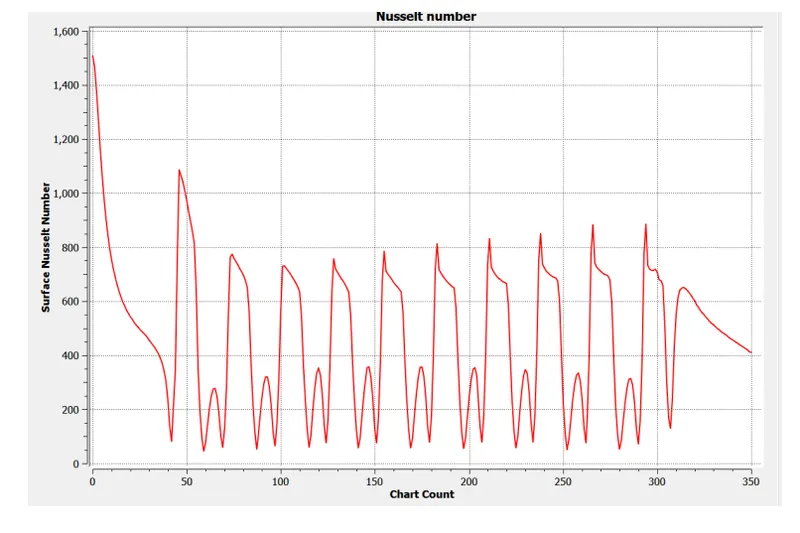
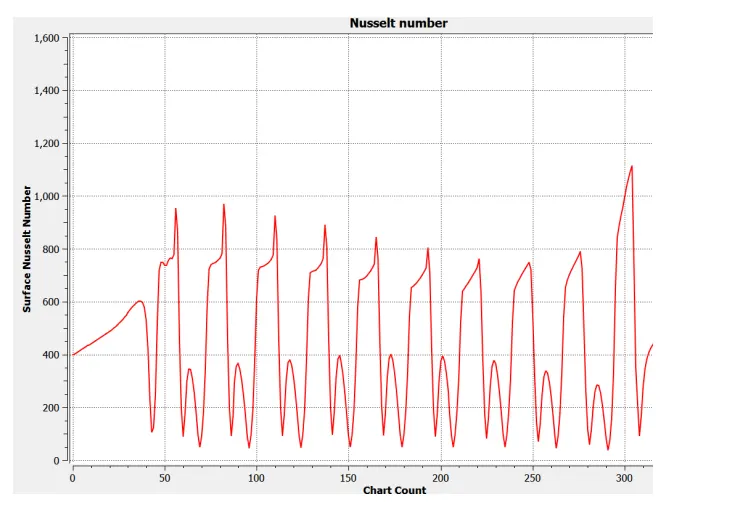
- NUSSLET NUMBER : The Nusselt number is the ratio of convective to conductive heat transfer across a boundary. The convection and conduction heat flows are parallel to each other and to the surface normal of the boundary surface, and are all perpendicular to the mean fluid flow in the simple case.

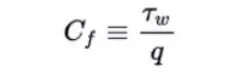
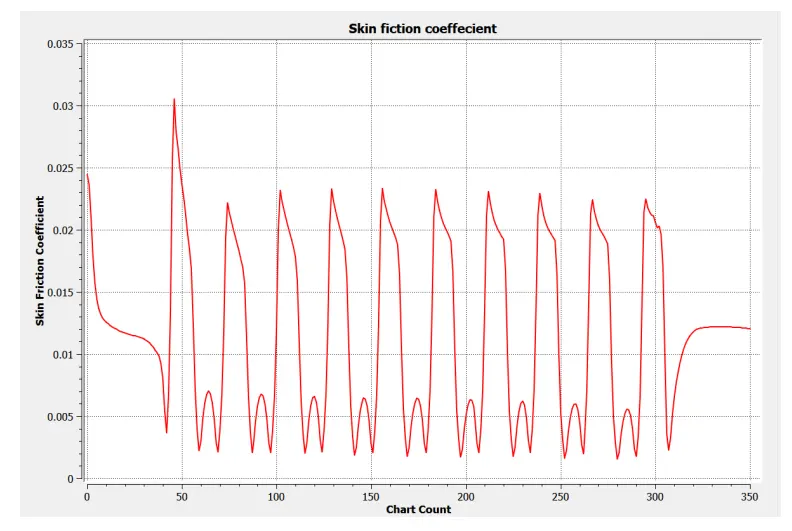
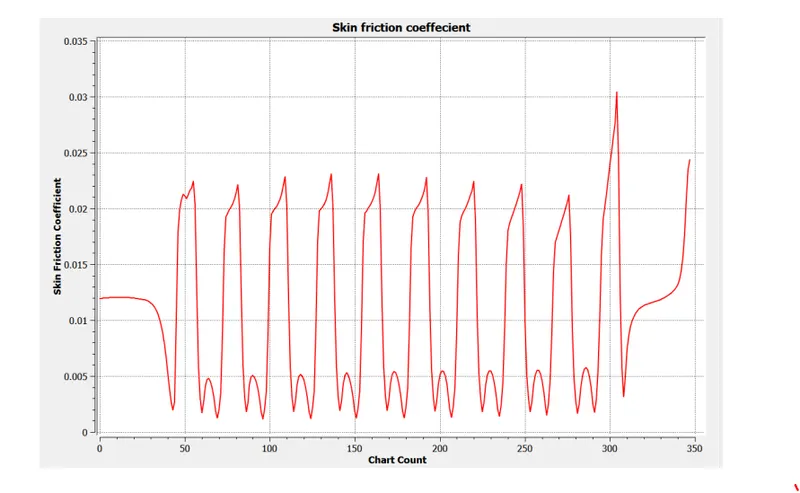
- SKIN FRICTION COEFFECIENT: Skin friction coefficient is the ratio between the local shear stress and characteristic dynamic pressure.
SETUP :
- Using the geometric modeller , the fluid region and the solid region is drawn.
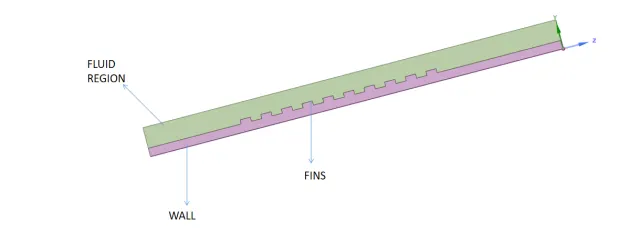
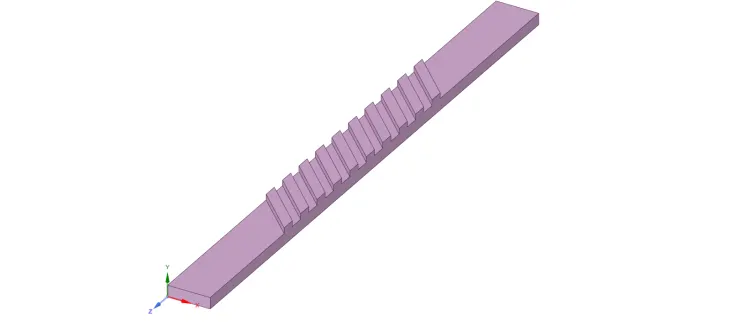
- The Fins are drawn at an angle of 45 degree and 60 degree.
- The Add and subtract boolean objects are used to make the fins and the walls as a single body
Mesh
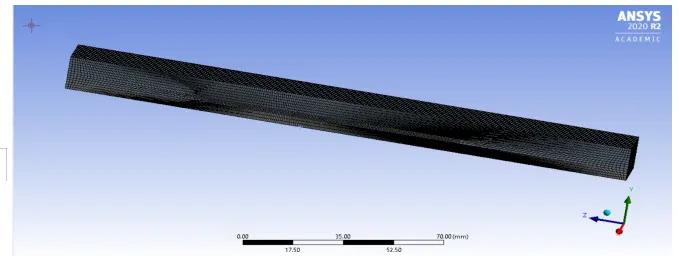
- The mesh size used is 1mm with sweep method for the boundaries
- Edge sizing is given for the fins with size 0.5mm
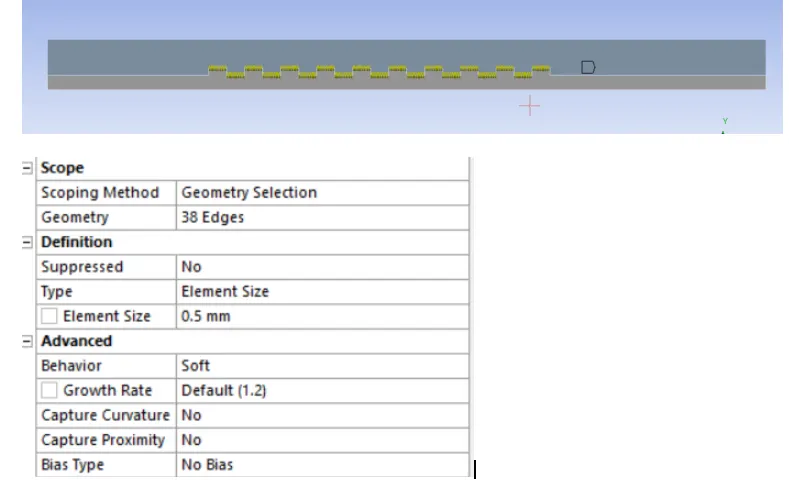
- The following sections are named using named sections as follows inlet,outlet,Heater Plate , Insulated Wall
Fluent Setup :
- The Viscous model used is laminar model
- The material selected for the heat exchanger is aluminium and the fluid region is water
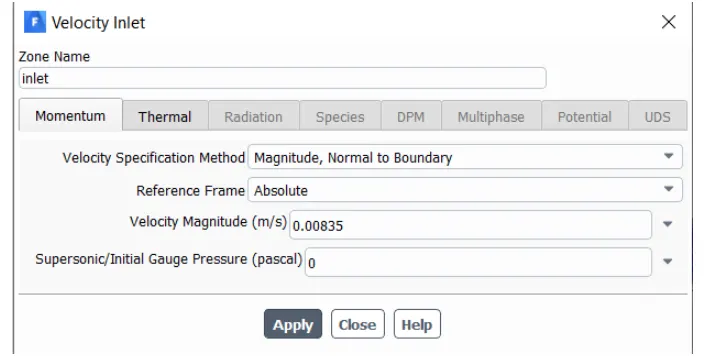
- Inlet velocity - 0.00835 m/s
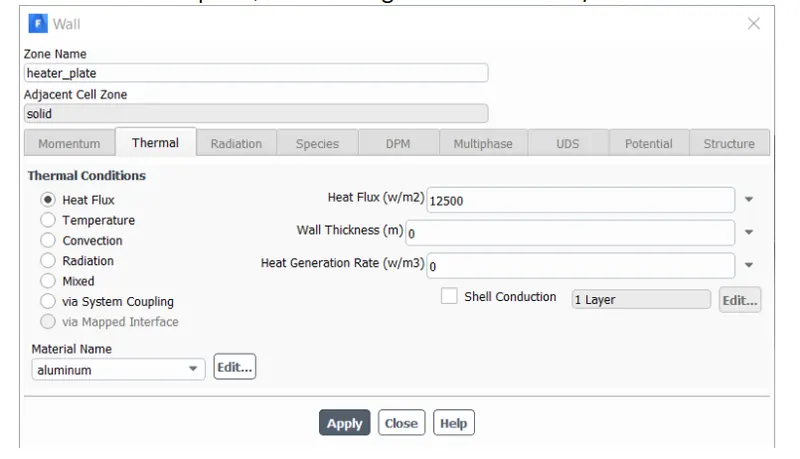
- In the heater plate, heat flux is given as 12500 W/m2
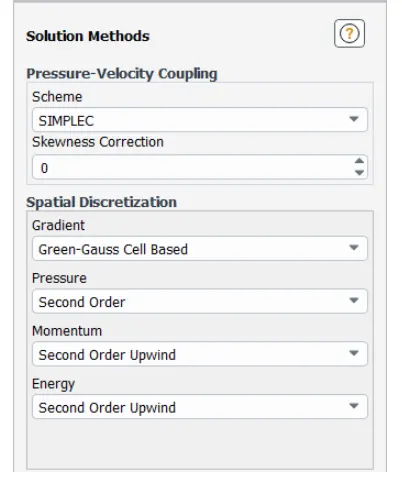
- The method used is Simplec
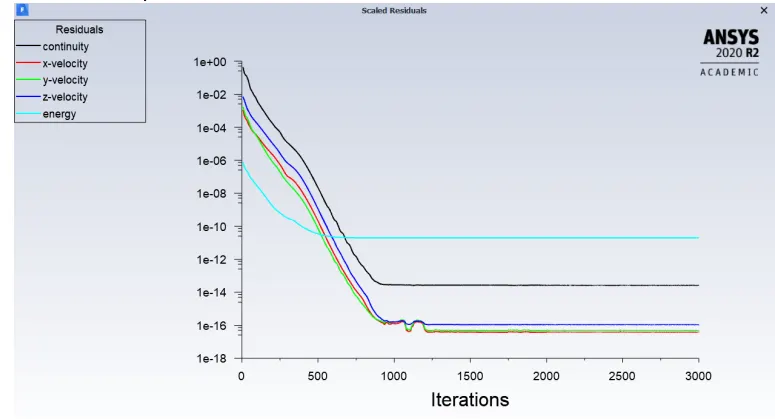
- The setup is initialized , and run for 3000 iterations
Post Processor:
- A polyline is drawn along the perimeter of the fins in order to measure the nusselt number , temperature and skin friction coeffecient
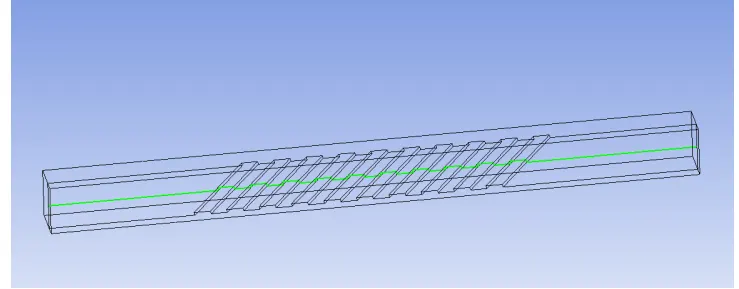
The same setup is used with only change in the angle of the fins , two angles are used 45 degree and 60 degree
- 45 degree
Skin friction coeffecient :
Nusselt number
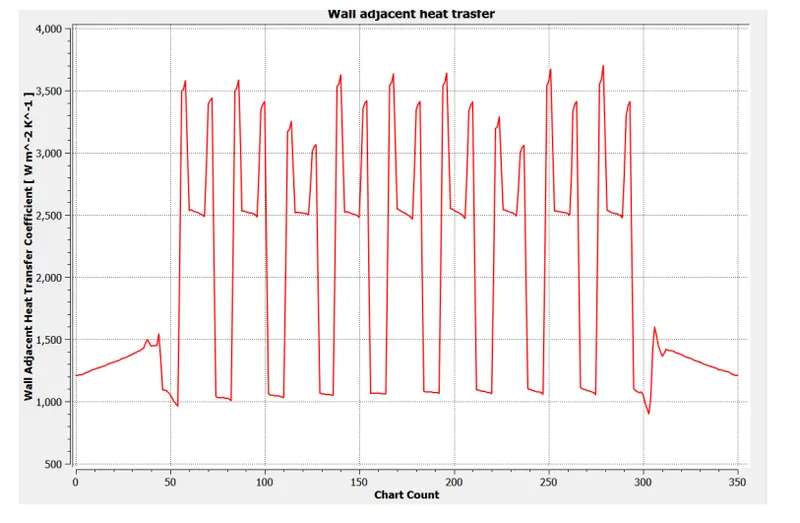
Wall Adjacent Heat Transfer Coeffecient :
Inference :
From the Heat transfer coeffecient we can see that , when the fluid travels through the fins , the heat transfer co effecient increases enabling increased heat transfer and reduction in water temperature .
- 60 degree
Skin Friction Coeffecient :
Nusselt number :
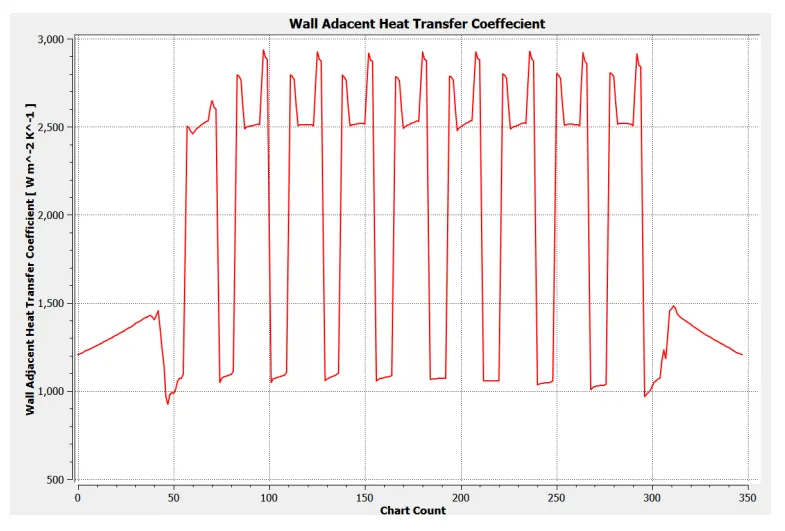
Wall Adjacent Heat Transfer coeffecient :
Temperature
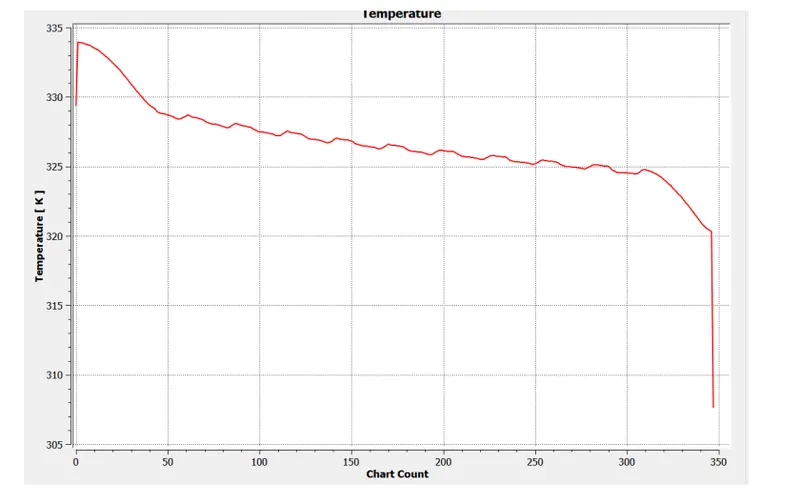
Conclusion :
When comparing the wall heat transfer coeffecient , the heat exchanger with 45 degree angle has higher heat transfer coeffecient compared to 60 degree fin angle . This might be due to the increased surface area exposed to the stream flow due to 45 degree angle