Flow over an airfoil
Aim:-To find flow over aerofoil by varying the angle of attack and find the drag force and corresponding lift force.
Objective:-
1.NACA0017 airfoil to be modeled in solidworks using data from nasa site. Angle of attack is to be varied to 0,2,4,6,8,10 degree.
2.Lift and Drag forces for the corresponding angle of attack to compared.
Introduction:-
An airfoil is the cross-sectional shape of wing.An airfoil shaped body moved through a fluid produces aerodynamic force .The component of this force perpendicular to the direction of motion is called lift .The component parallel to the direction of motion is called drag.The lift on an airfoil is primarily the result of its angle of attack and shape.Angle of attack is the angle between the body's reference and the oncoming flow.
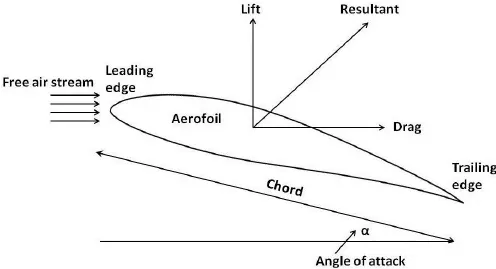
Fig.Various forces on aerofoil
Parameters:
Fluid Used = Air
Velocity in X Direction = 600 m/s
Type of Flow= Laminar and Turbulent
Surface Roughness=0
Gravity =Not Considered
Angle of Attack = 0,2,4,6,8,10
Procedure:-
1.NACA 0017 coordinates are stored in the text document.
2.Open New part design in solidworks and select the insert option and insert curves through XYZ points.
3.Select the text documents and click ok.
4.Using Convert Entities convert them into sketch and close the loop by the line command.
5.Rotate the sketch for different angle of attack ie.0,2,4,6,8,10.
6.Extrude the sketch and save the sketch.
7.Open the flow simulation and click the wizard.
8.Open the Flow Simulation and click the wizard.
9.Now set the computational Domain as 2 Dimensional and select XY Plane and length of the computational domain was set as 12m in positive X direction and -6m in negative X direction and 4m in positive Y direction and -4m in negative Y direction.
10.Select the surface goals in Force(X) and Force(Y).
11.Insert Local mesh for more refinement.
12.Run the simulation and get the cut plots for velocity and pressure and get the value for surface goals.
Explanation:-
When air passes over aerofoil an vortex is generated at the trailing edge as shown in figure below.
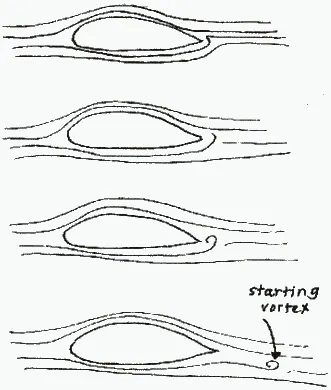
Fig. Staring vortex formed at trailing edge
By considering conservation of angular momentum there must be clockwise velocity vortex over the aerofoil .
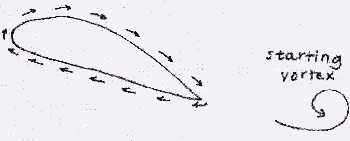
Fig.Clockwise vortex over aerofoil
This adds to addition in free stream velocity over the aerofoil while reducing the velocity below the aerofoil . By using Bernoulli's equation it can be proved that there exist a pressure differential over the aerofoil which results in lift in the upward direction.

Fig.Total effect of airflow over the aerofoil
Results:-
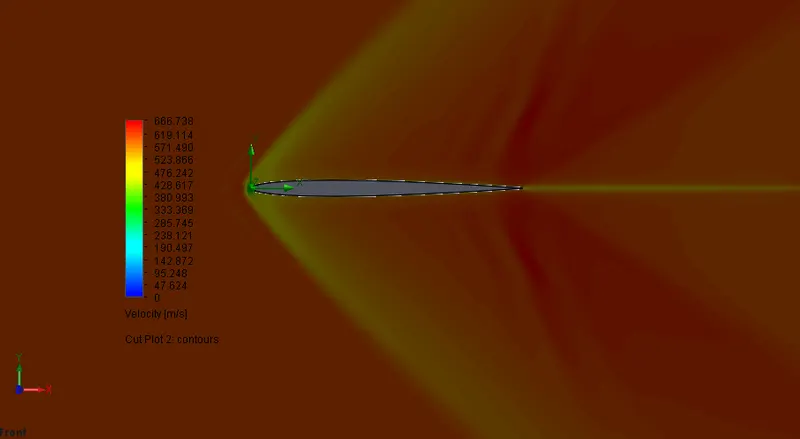
Fig. Velocity on aerofoil at zero angle of attack
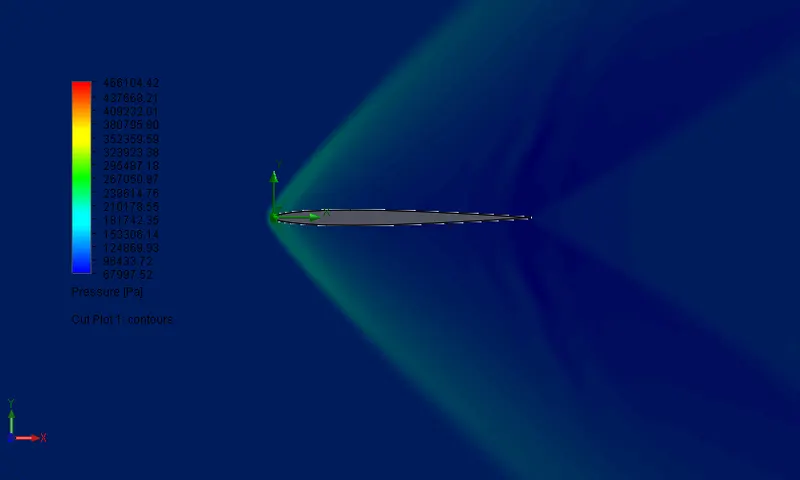
Fig.Pressure on aerofoil at zero angle of attack
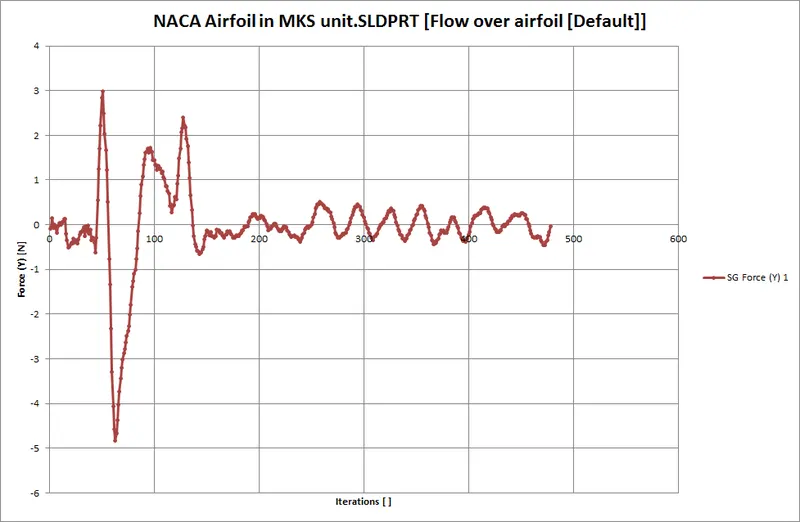
Fig. Lift forces on aerofoil at zero degree angle of attack
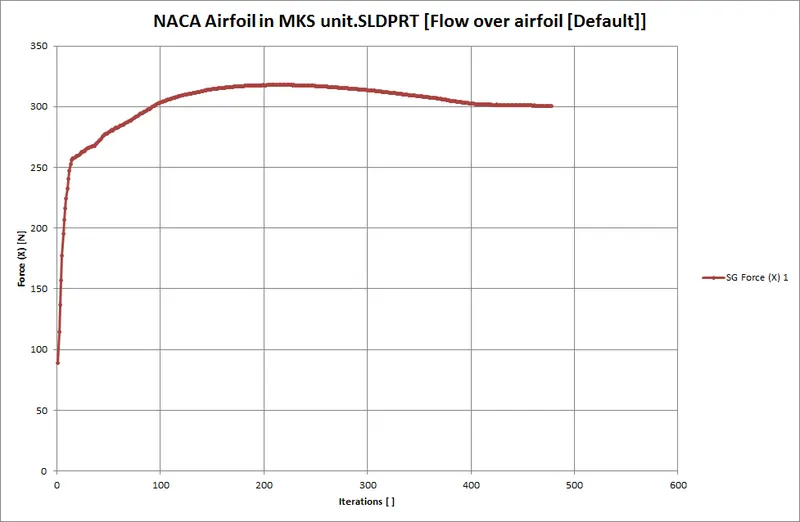
Fig.Drag Forces on aerofoil at zero degree angle of attack
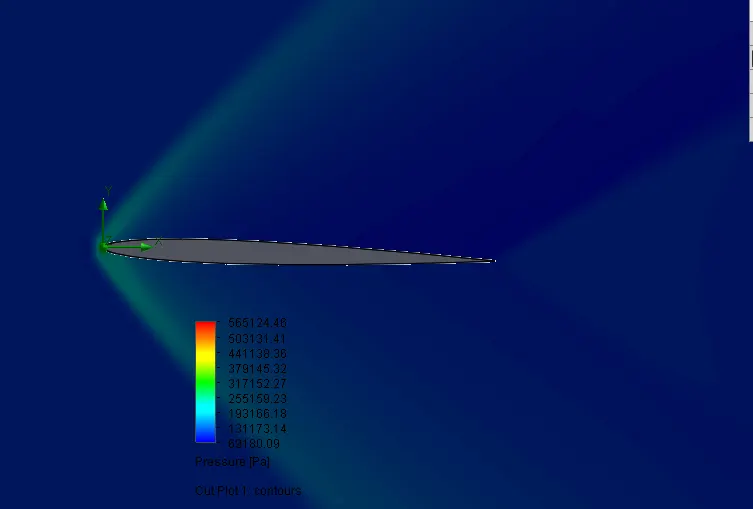
Fig. Pressure on aerofoil at 2 degree angle of attack
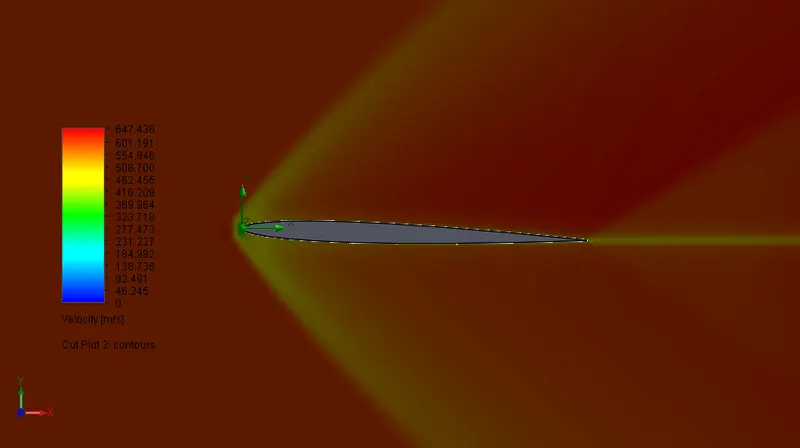
Fig.Change in air flow velocity as it passes over aerofoil at 2 degree angle of attack
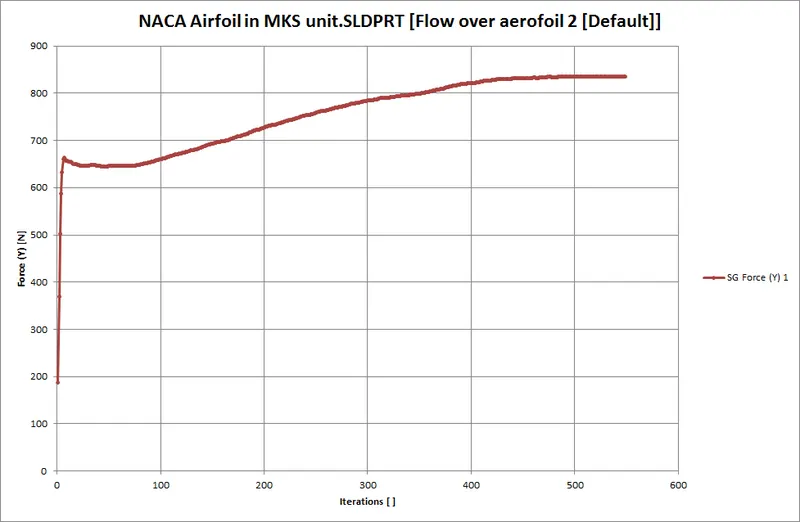
Fig. Lift Forces on Aerofoil at 2 degree angle of attack
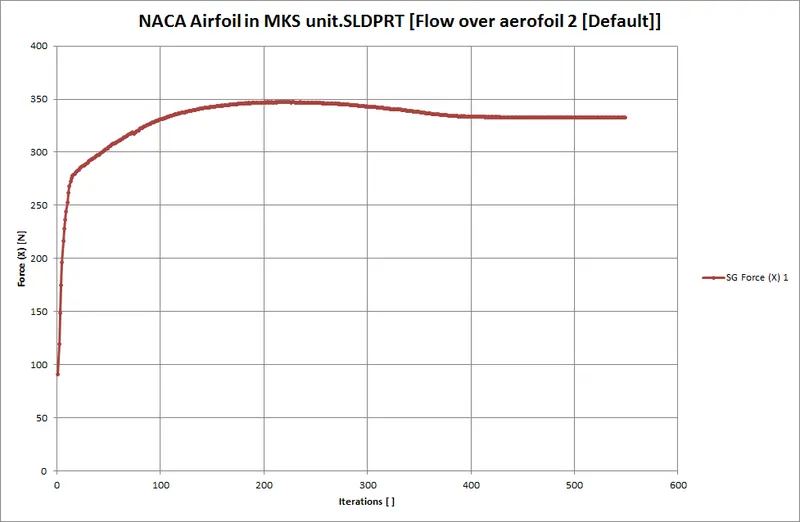
Fig.Drag Forces on Aerofoil at 2 degree angle of attack
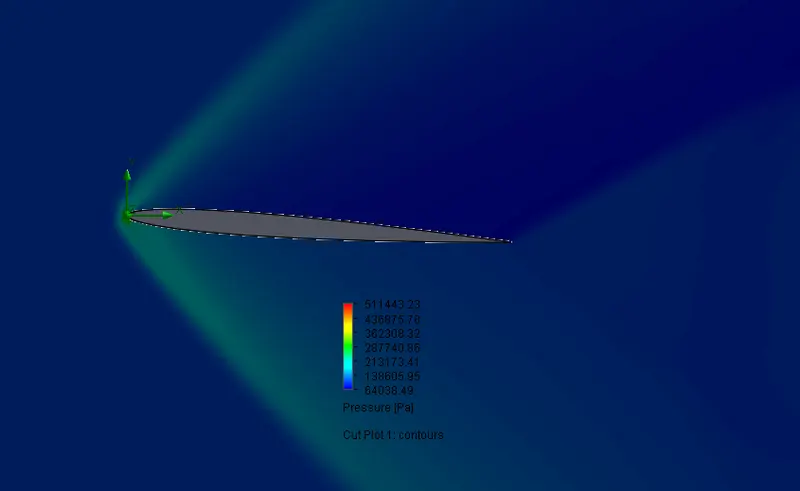
Fig. Pressure on aerofoil at 4 degree angle of attack
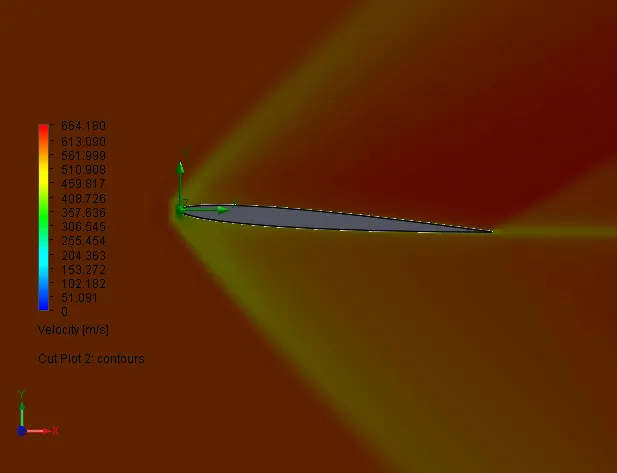
Fig. Velocity on aerofoil at 4 degree angle of attack
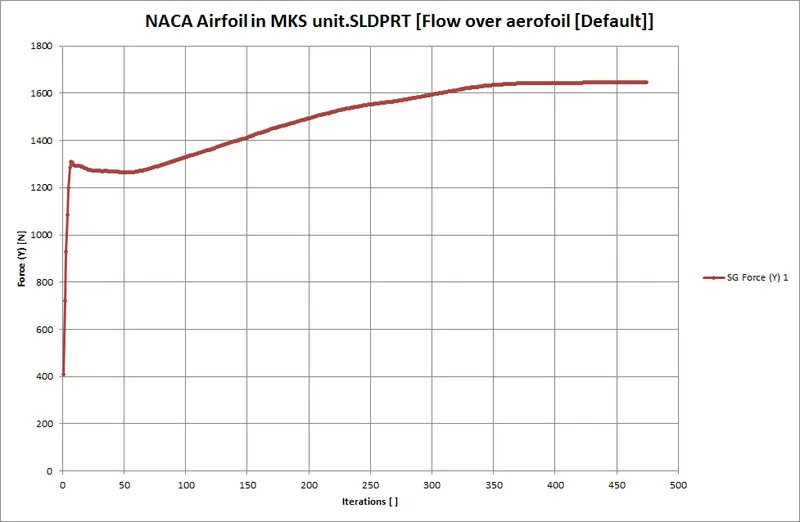
Fig.Lift Forces on Aerofoil at 4 degrees angle of attack
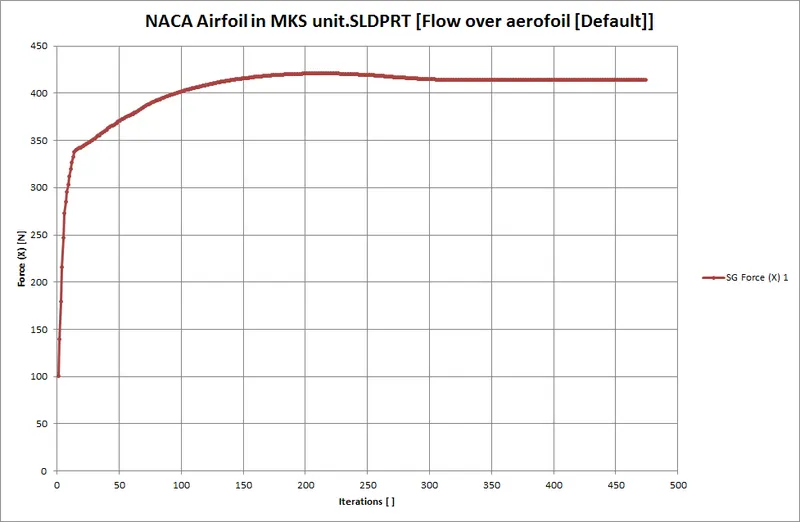
Fig.Drag Forces on Aerofoil at 4 degrees angle of attack
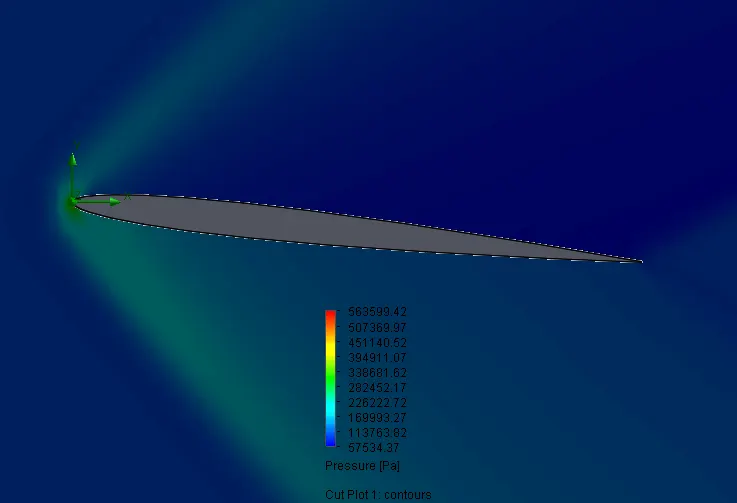
Fig. Pressure on aerofoil at 6 degree angle of attack
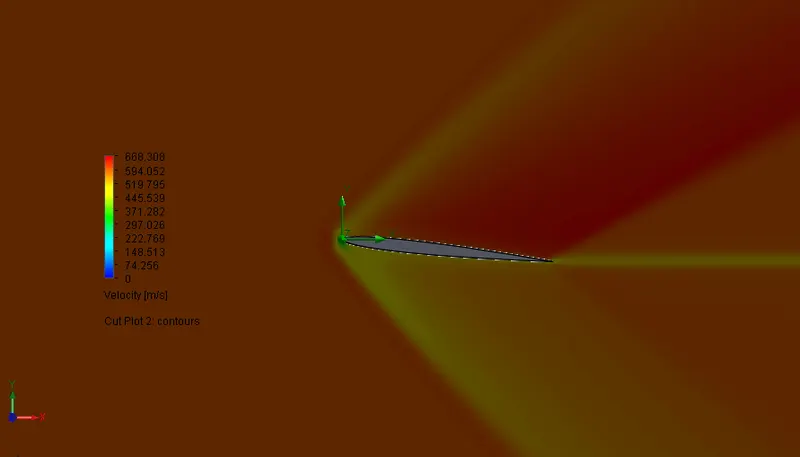
Fig. Velocity on aerofoil at 6 degree angle of attack
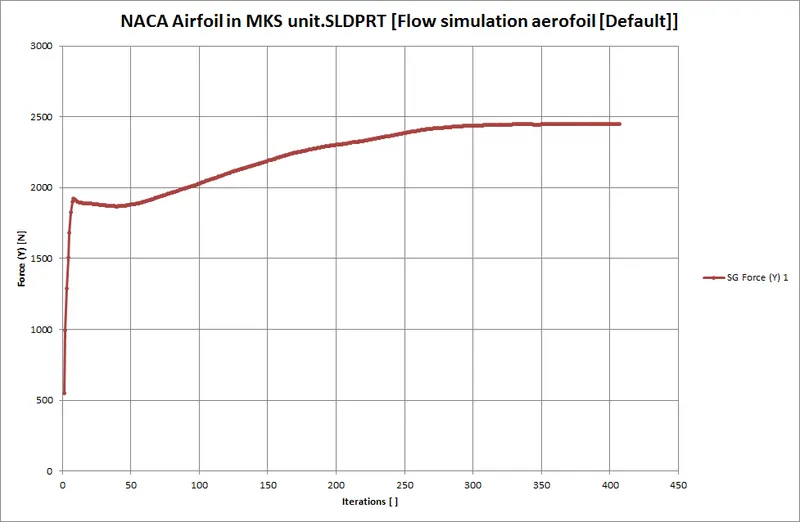
Fig.Lift forces on aerofoil at 6 degree of angle of attack
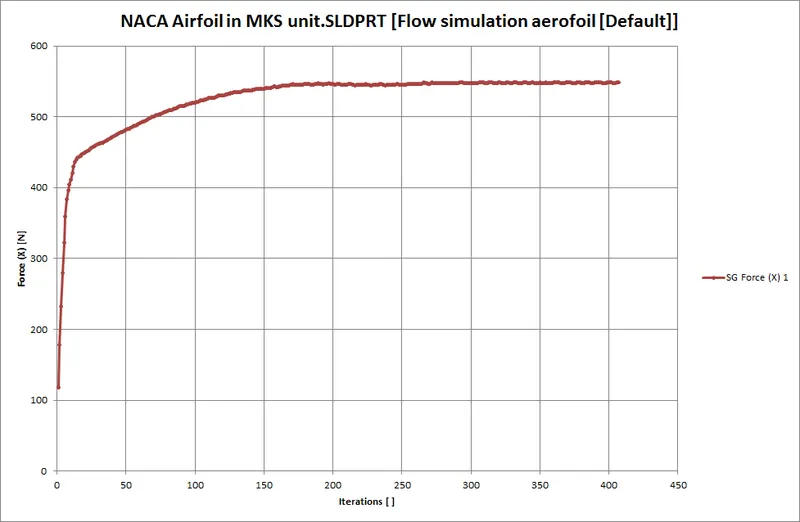
Fig.Drag Forces on aerofoil at 6 degree of angle of attack
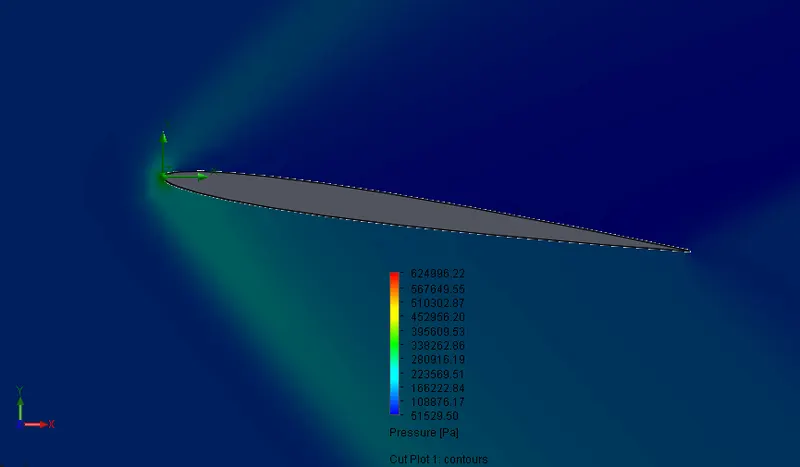
Fig. Pressure on aerofoil at 8 degree angle of attack
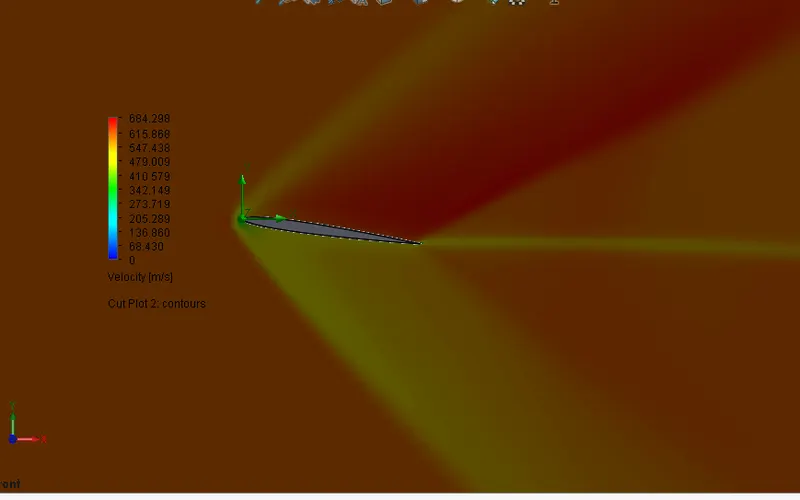
Fig. Velocity on aerofoil at 8 degree angle of attack
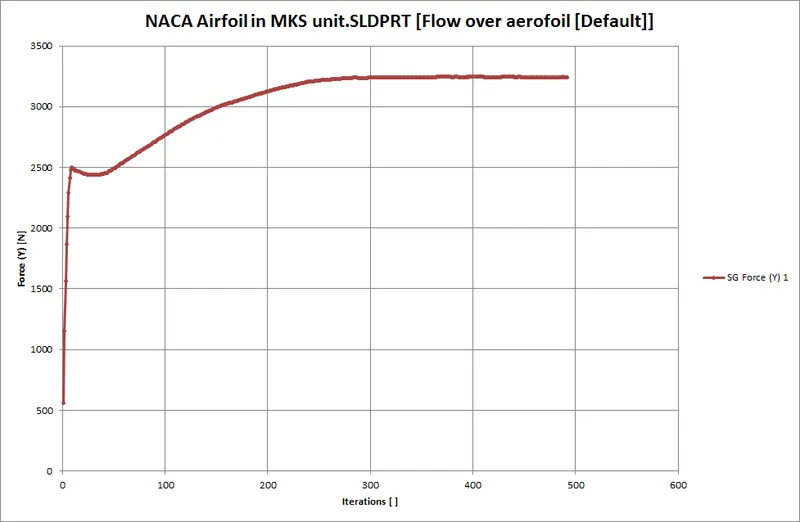
Fig.Lift forces on aerofoil at angle of attack 8 degree
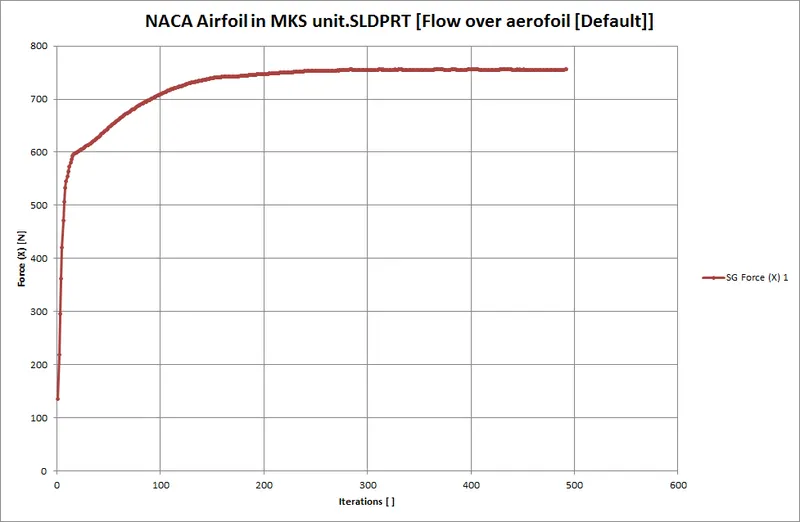
Fig.Drag forces on aerofoil at angle of attack 8 degree
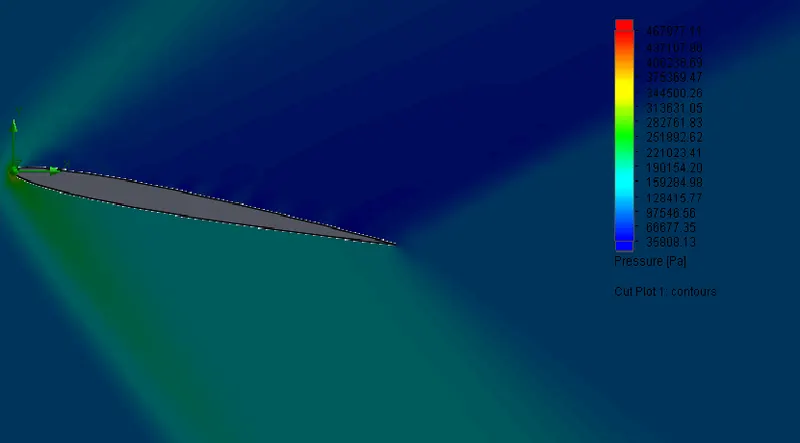
Fig. Pressure on aerofoil at 10 degree angle of attack
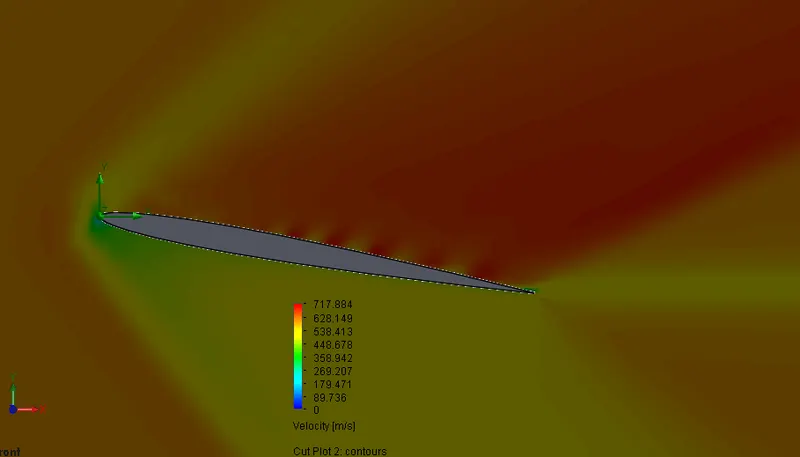
Fig. Velocity on aerofoil at 10 degree angle of attack
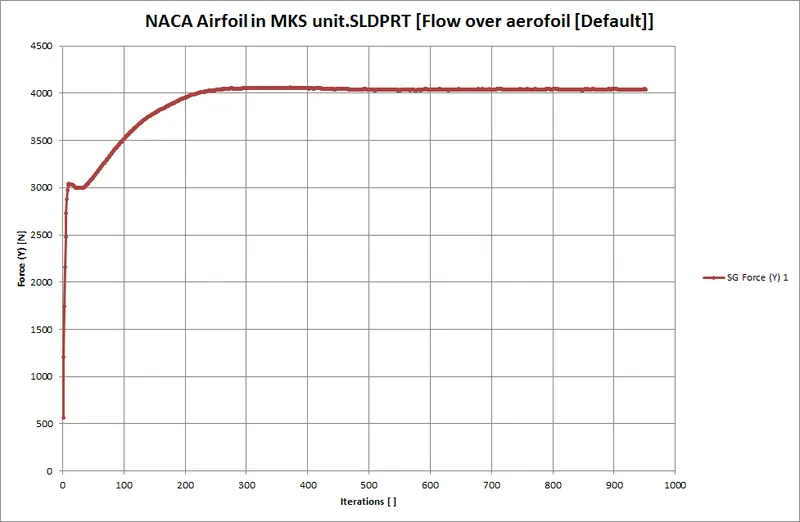
Fig.Lift forces on aerofoil at 10 degree angle of attack
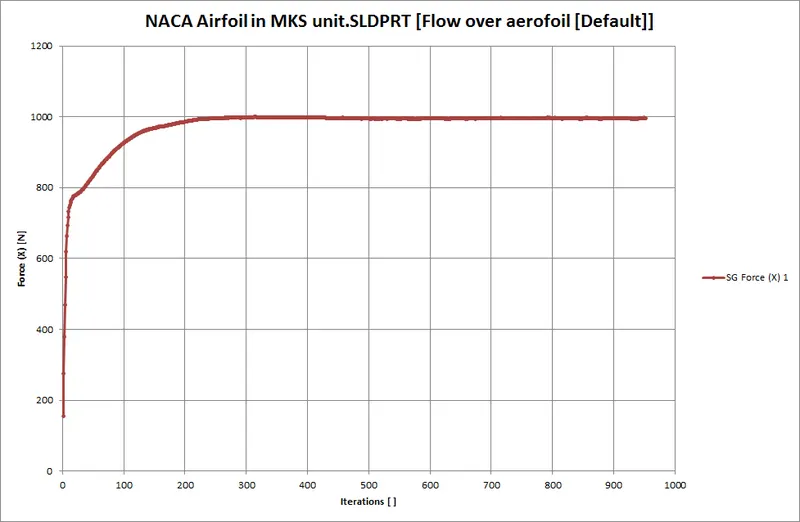
Fig.Drag forces on aerofoil at 10 degree angle of attack
Conclusion:-
| Angle of Attack | Drag Force (Newton) |
Lift Forces (Newton) |
| 0 | 300 | 0 |
| 2 | 325 | 800 |
| 4 | 420 | 1625 |
| 6 | 550 | 2480 |
| 8 | 750 | 3250 |
| 10 | 1000 | 4000 |
As the angle of attack increases the frontal area increases which causes increases drag forces .
Velocity over aerofoil increases as air passes over when angle of attack increases; however there is subsequent drop in pressure over the aerofoil and there is high pressure under the aerofoil.
Due to this pressure differential a lift is created in the upward direction of aerofoil.
If the angle of attack is increased beyond certain level then it causes stalling ;as the air layer seperates before the aerofoil and eddies are generated along the aerofoil profile rather than behind aerofoil.