Design of backdoor
Aim: - To Develop the Roof reinforcement from the given styling surface.
Introduction:-
In this project, I have been designed a back door for a hatchback where it is hinged at roof level (as opposed to the boot/trunk lid of a sedan, which is hinged below the rear window). Similar to the hood and side doors, the back door is a swinging/closure commodity in a car. It consists of an outer and inner panel. It is a very critical component because of the passenger safety requirements.
The Backdoor has to be designed by keeping in mind the space required for the luggage compartment as well as to accommodate the Latch and Striker motor and Wiper motor without compromising the strength of the component.
Usually, Aluminium or Steel is used to manufacture the backdoor. While the Aluminium backdoor is lighter in weight and has a lesser number of components (since the part is "cast", it has a varying thickness and therefore doesn't require reinforcements). Steel backdoor is "deep drawn" with uniform thickness, added reinforcements, and therefore is heavier. But the production cost of the latter is lesser and therefore a Steelbackdoor is priced lower.

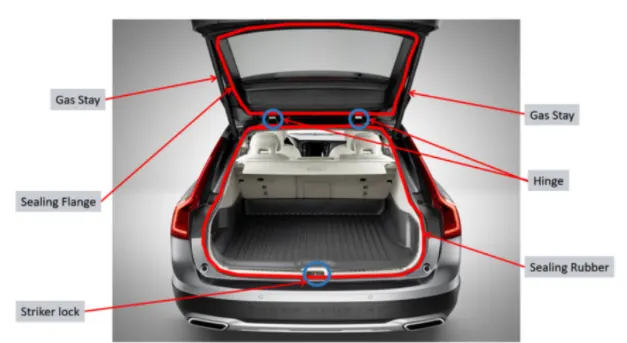
Given Model
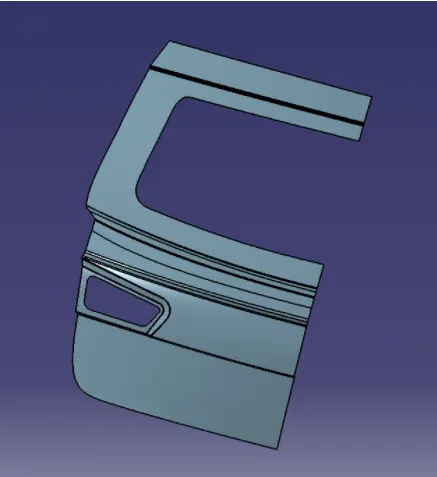
Solving errors and joining the part
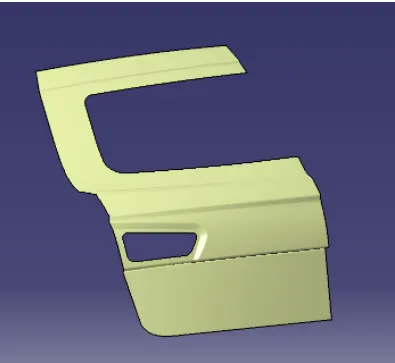
Sealing surface creation
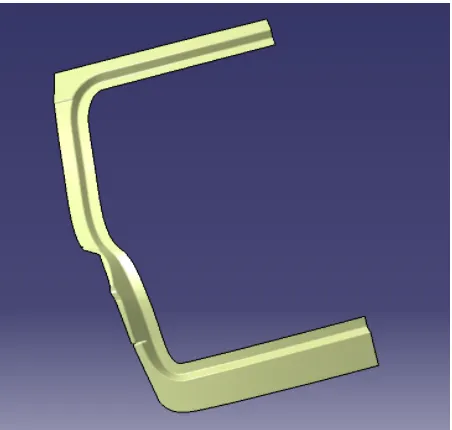
Creating windshield and inside surface
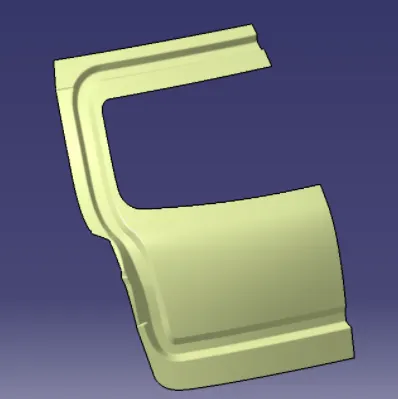
Creating mastics
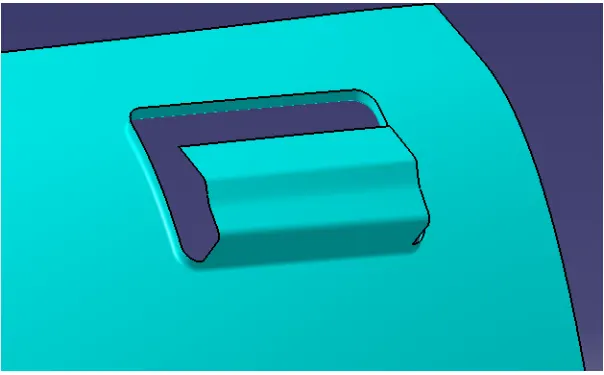
Emboss
Embosses are provided all over the wall of parts because this helps in dissipates the force during the collision.
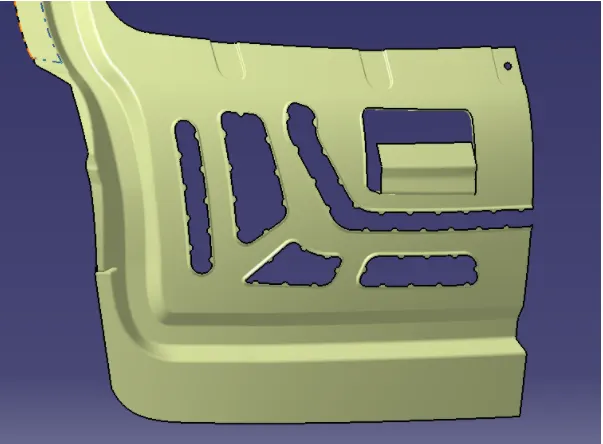
Hinge emboss
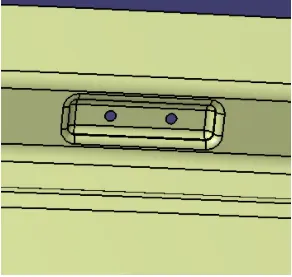
Gas stay emboss
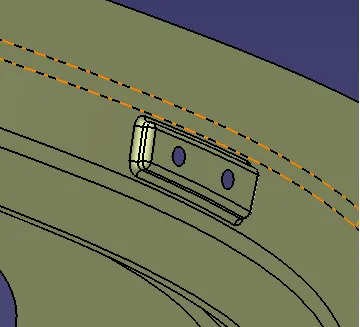
Wiper motor emboss
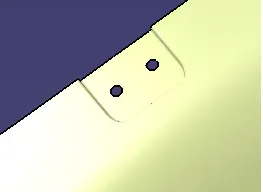
Stricker emboss
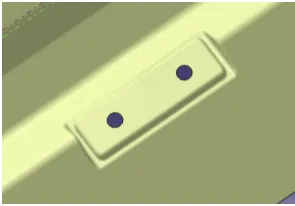
Bottom Panel
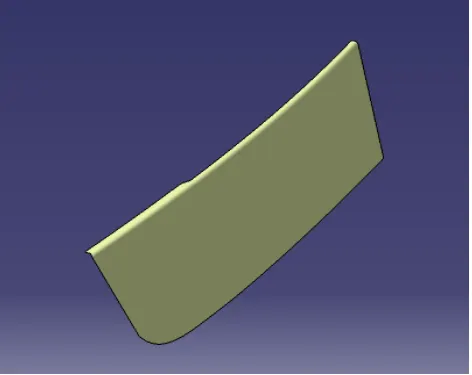
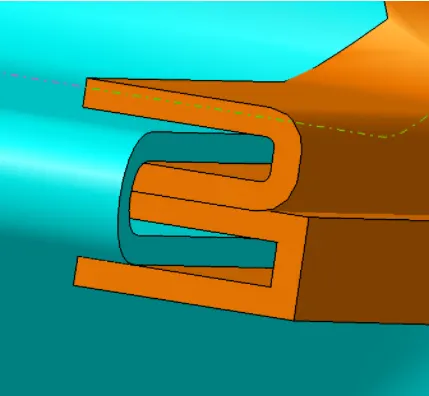
Hemming:
Hemming is forming operation in which the edges of the sheet are folded over another part in order to achieve a tight fit. Normally hemming operations are used to connect parts together to improve the appearance of a part and to reinforce part edges.
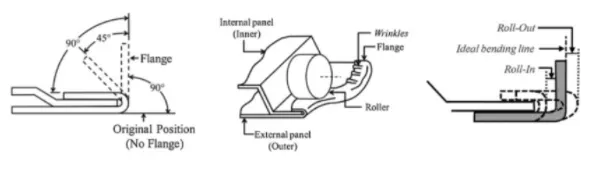
Hemming for panels
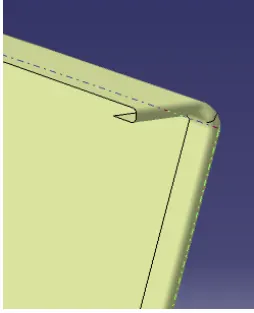
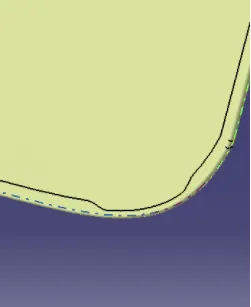
Reinforcement:-
The inner panel accommodates the Latch and Striker actuator, Wiper motor actuator, Trims mounting, Hinge and Gas Stay embosses, V-Emboss, Latch, etc and therefore the necessary cut-outs are provided. Various reinforcements are also spot welded to the inner panel.
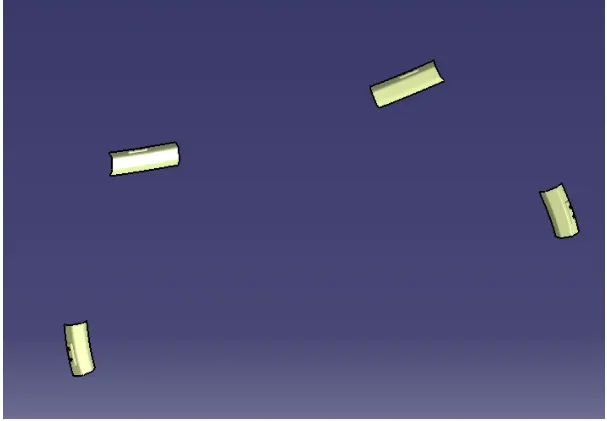
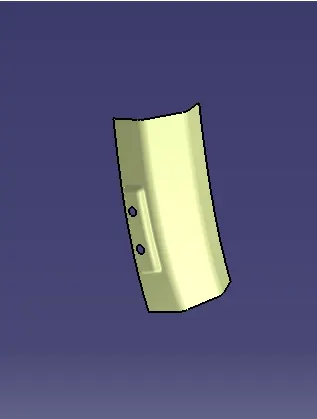
FINAL BACK DOOR
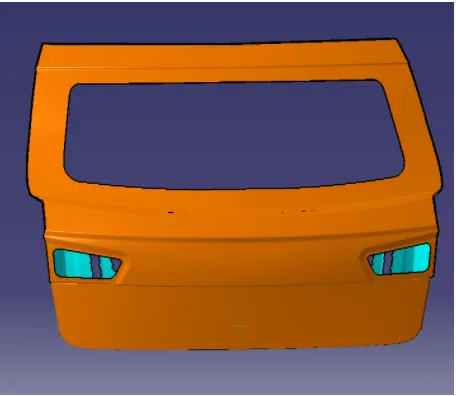
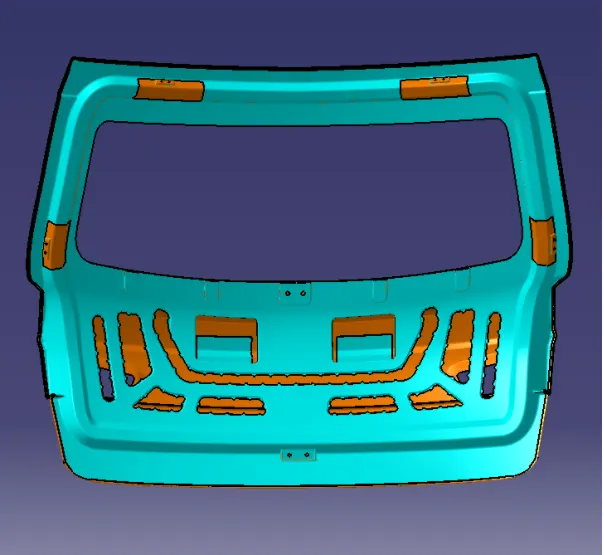
CREATING THICKNESS
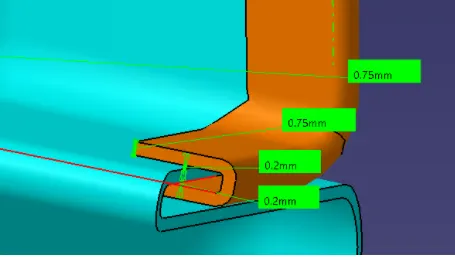
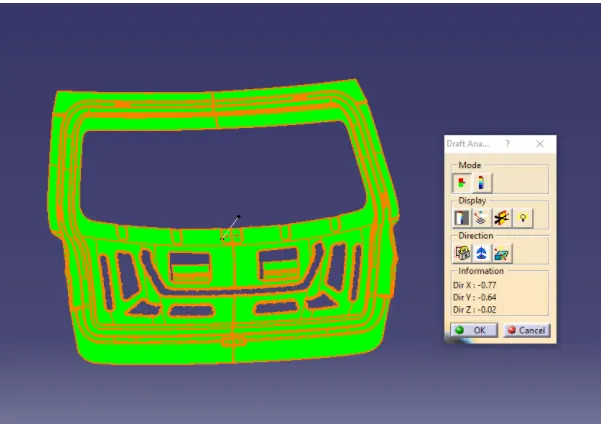
Draft analysis
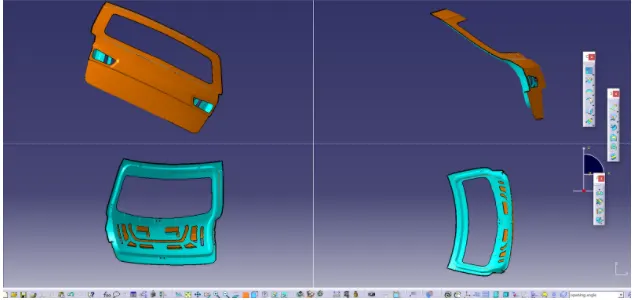
Opening angle:
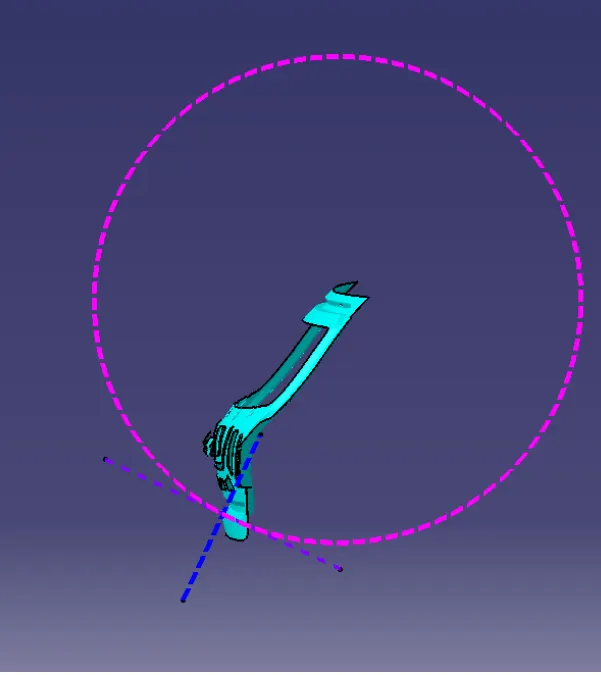
Striker position
The position of the hinge should be perpendicular to the latch when the latch and striker meets. For that, a circle is drawn from the center of the hinge axis to find the part of the striker and positioned perpendicular to the part.
Conclusion:-
Thus the Back door was designed and developed from the given styling surface with essential reinforcements and emboss definitions. Draft analysis was also done on the Inner Panel.