Underbody Coating
UNDERBODY COATINGS:
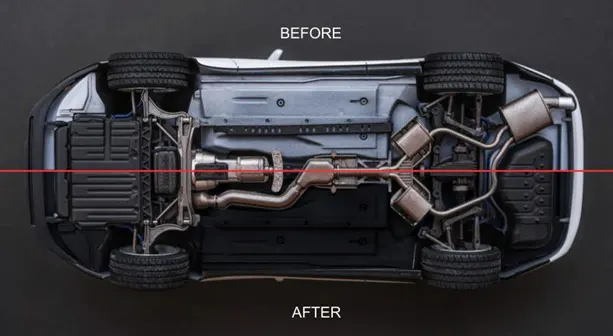
Underbody coating is which are used to prevent the car bodies from rust & corrosion. This underbody coating helps in the protection of dust and moisture also some other factors such as poor road conditions, rocks getting thrown from tires, and denting the metal and salts from water during monsoon plays an important role in damaging the underbelly of a car.
Modern automotive coating process:
The modern automotive coating consists of five steps:
- Pre-treatment; Removes and cleans excess metal and forms an appropriate surface structure enabling bonding of a corrosion protection layer.
- The next step is the electrodeposition of an anti-corrosion or rust prevention layer.
- A sealer like Poly Vinyl Chloride is applied for anti-corrosion, elimination of water leaks, and minimization of chipping and vibrational noise.
- A primer is then applied to promote adhesion between the surface and basecoat; it also imparts a smoother surface for subsequent layers and has anti-chipping properties.
- Finally, the topcoats that include a basecoat and clear coat are applied; they provide surface properties that are sought after, including colour, appearance, gloss, smoothness, and weather resistance.
PROS:
- Rust Prevention: Underbody coating ideally should be applied when the car comes out new from the factory when there are no dust particles present. This will result in a good adhesive coating to prevent rust on the underbody surface and also extending the life of the parts.
- It becomes extremely important to apply this coating when the vehicle is to be driven close to coastal areas.
- Sound reduction: Applying thick layers of covering can reduce the sound within the cabin up to a certain degree. Rubberized paint can reduce the noise from the tires, the roads, and the debris.
CONS:
- High cost: The cost of underbody coating has reduced over the years, but it will still expensive. The option of applying a coat at the dealership can get quite expensive since dealerships will look forward to making profits and hence increasing the price for an underbody coating.
- Added weight: Although insignificant, there is a possibility that extra weight can affect the fuel economy of the vehicle.
TYPES OF UNDERBODY COATING:
- Rubberized Undercoating. Rubberized vehicle undercoating is easy to apply and offers good cushioning as well as protection from dust, moisture, and dents.
- Polyurethane Undercoating.
- Wax or Paraffin-Based Undercoating.
- Asphalt-Based Undercoating.