Design of backdoor
Title-Design of BIW of Back Door (or Tailgate) of the hatchback car
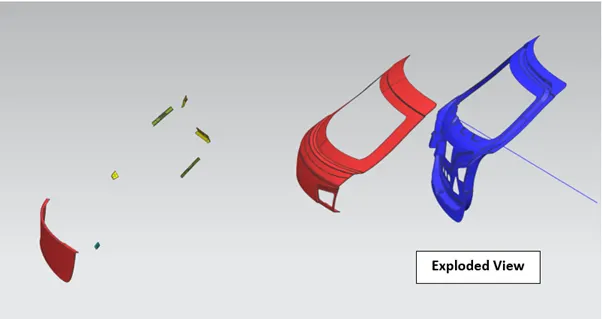
Objectives-
- To understand the functional requirement of Back Door
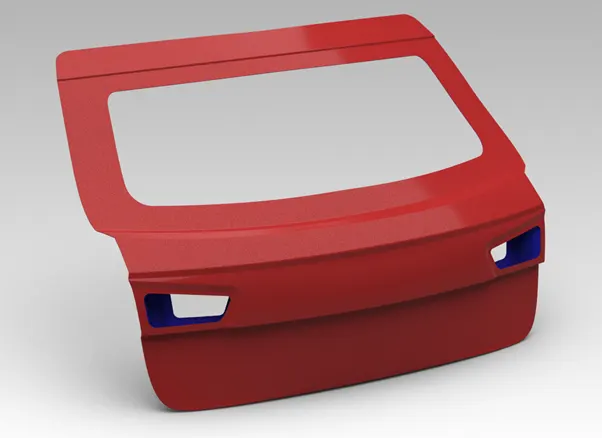
- To design Back Door (Inner panel, Outer panel upper & lower, Reinforcements)
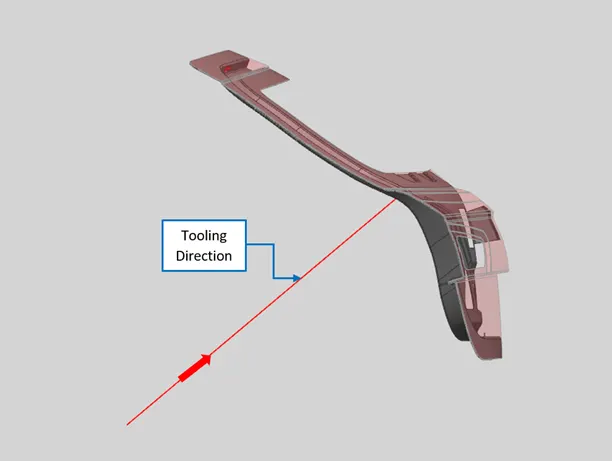
- To perform Draft Analysis for the inner panel to ensure proper manufacturing of inner panel along the tooling direction.
Content-
|
1. |
Introduction |
|
2. |
Components of the Back door assembly |
|
3. |
Design of Back Door assembly |
|
4. |
Manufacturing processes required for Back Door |
|
5. |
Testing performed on backdoor |
|
6. |
Draft analysis of Back Door Inner Panel |
|
7. |
Final Views |
|
8. |
Conclusion |
1. Introduction-
Back Door or Tailgate
HATCHBACK CAR is a passenger car with a basic configuration of two boxes and A B C pillars. It has four door and a rear door that swings upward to provide access to the cargo area. These cars have two rows of seats and the rear seats can be folded to increase the cargo area. It is usually considered as city car. HATCHBACK CARS are functionally similar to station wagons (which are intended to carry large volumes), but distinguished by a (much) smaller load area.
Back door or Tailgate in these kinds of cars will gives access to the rear commodities like rear seats, rear storage area. Back door in most of the passenger car may be opened by releasing latch and striker locking system. Back door when opened will be supported by the gas stay to keep itself in open condition.
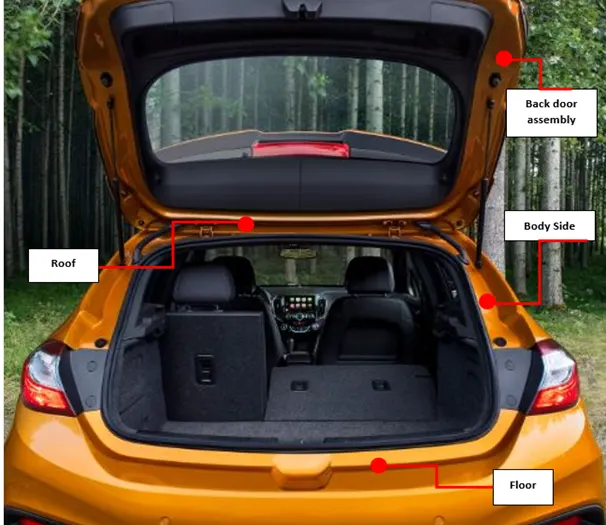
Back door in hatchback cars is in contact with the Roof, Body side and Floor of the car. It encloses rear part of the car.
Functional requirements of the Back Door-
Followings are some of the functions which should be performed by back door of the car
- Back door will provide access to the boot space so that we can easily keep our luggage into it.
- It should be remained in opened condition while using luggage area
- Back should have some strength against collision from rear impact to safeguard passenger
- Sealant should be such that it will not allow water inside the car
- Back door should have enough visibility to see rear of the car
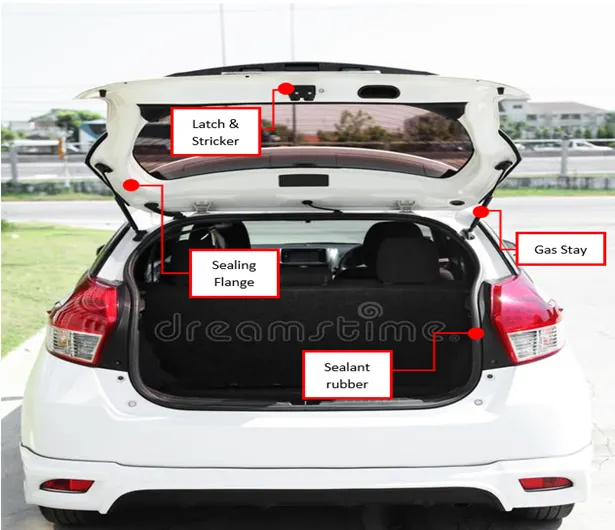
Latch & striker- These are back door locking components which will hold the door in closed condition
Gas stay- Gas stay will hold the back door in opening condition. Some gas stay will also assist to open the back door.
Sealant rubber- Sealant rubber structure is all around the door. It will avoid water to enter inside the car in closed condition.
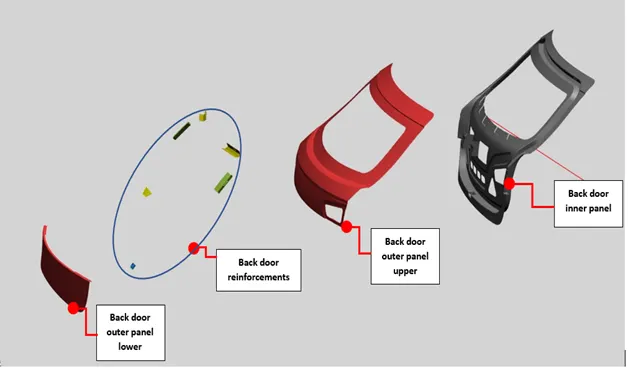
2. Components of the Back door assembly
- Back door outer panel upper
- Back door outer panel lower
- Back door inner panel
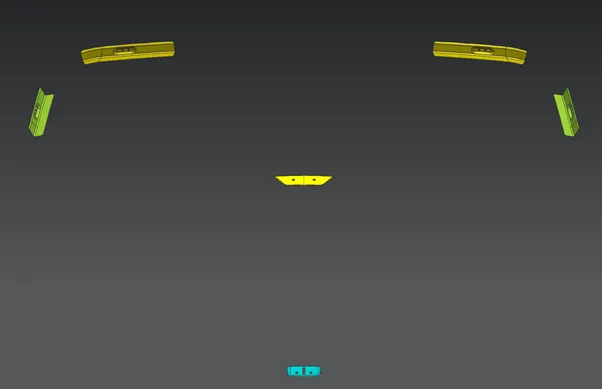
- Hinge reinforcement LH
- Hinge reinforcement RH
- Gas stay reinforcement LH
- Gas stay reinforcement RH
- Wiper motor reinforcement
- Latch and Stricker reinforcement
3. Design of Back Door assembly-
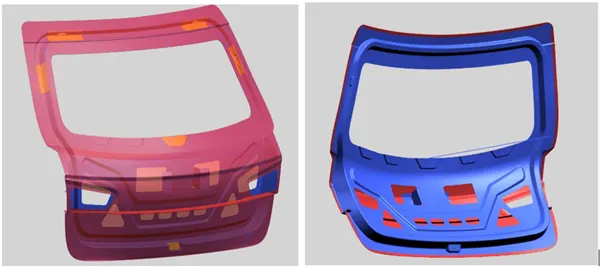
Input from Styling team-
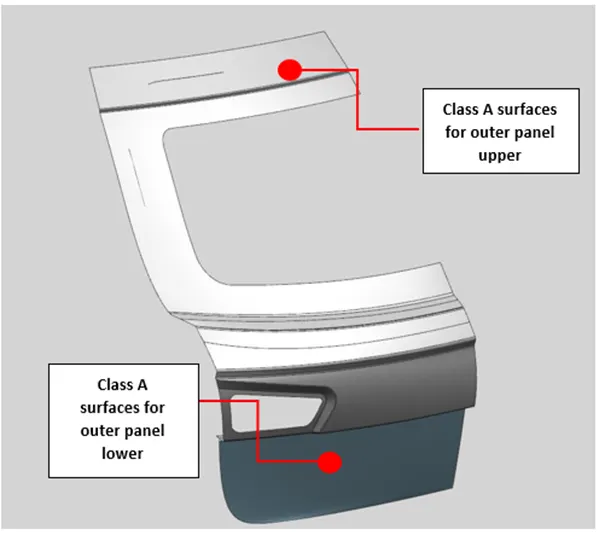
From styling team, we will be receiving class A surface which we need to develop into sheet metal part model.
A. Design of inner panel
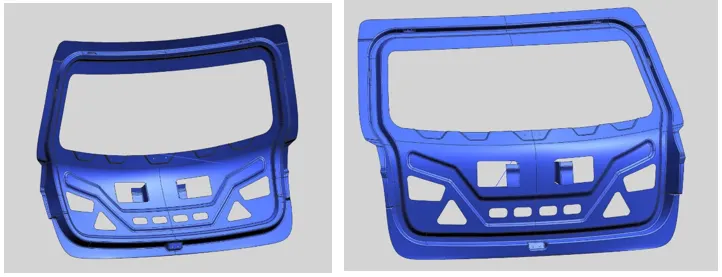
While designing there are some considerations to be implemented in inner panel
- Tooling direction- Tooling direction will ensure the proper manufacturing of the inner panel while deep drawing process. So, while designing flanges we are going to use tooling direction as a vector.
- Sealing flange should be such that it will perpendicular throughout the length to the sealing rubber structure which will confirms perfect closing of the back door.
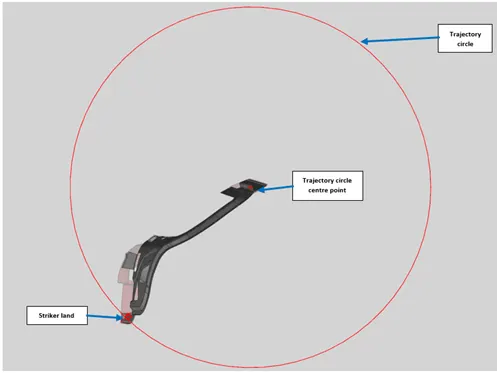
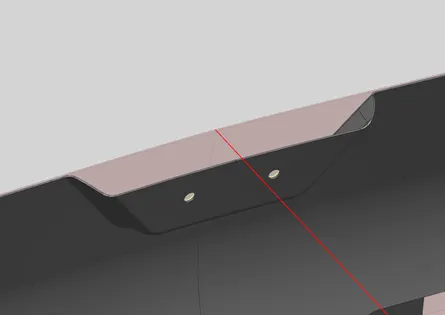
- Trajectory of the opening and closing of the door should designed in such way latch and striker always perpendicular to each other as shown
- Provide enogh space for the wiper motor so that it willwork properly
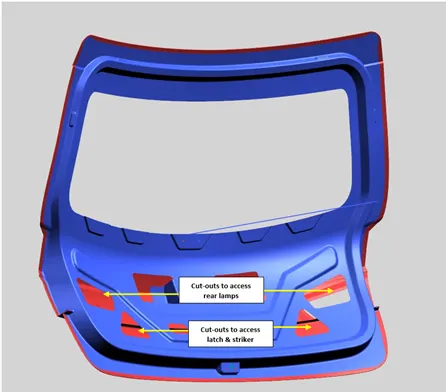
- Cut-outs needed to access or assembly of rear lamp and latch and striker
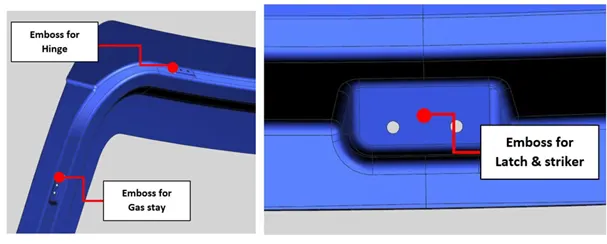
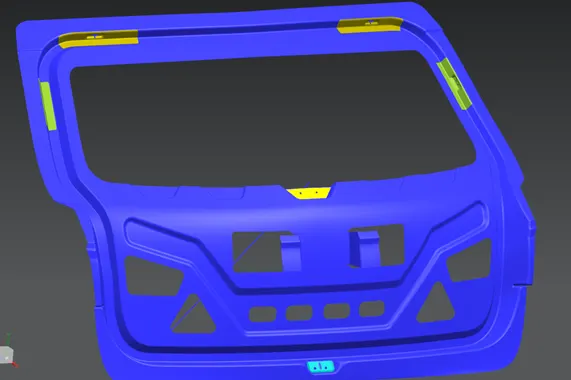
- Embosses for mounting Gas stay, Hinge, Latch & striker, Wiper motor, etc reinforcement and providing proper land to mount them.
- Thickness of inner panel = 75 mm
B. Design of Back Door outer panel upper
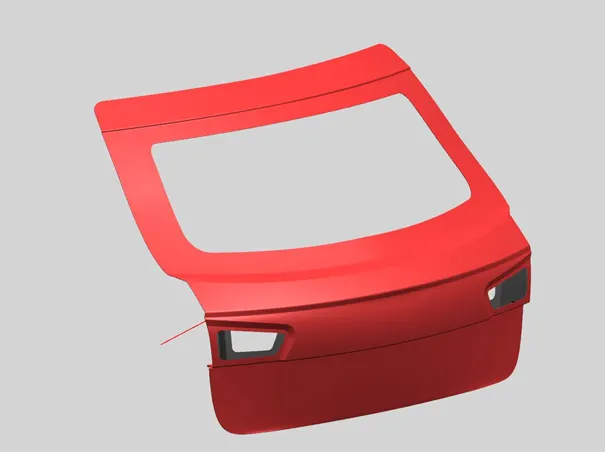
Important points to be checked while designing are
- Minimum hemming flange land to be kept will be more than 12-14 mm for proper hemming process
- Hemming flange bend curvature should be smooth all around
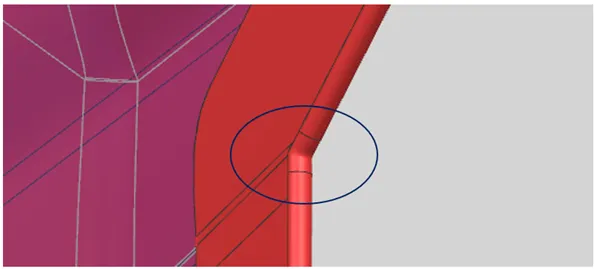
- Sharp corner relive should be provided
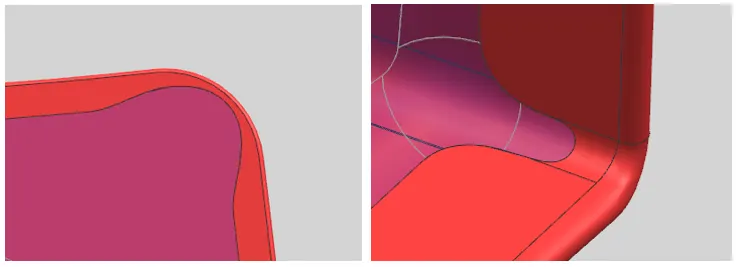
- Outer panel upper thickness = 75 mm
C. Design of Back Door outer panel Lower
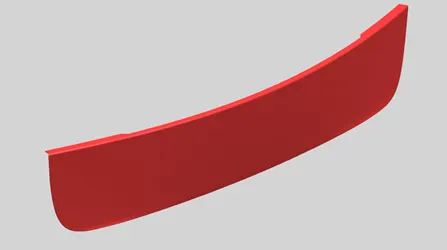

Design of lower panel will be same as upper panel
- Outer panel upper thickness = 75 mm
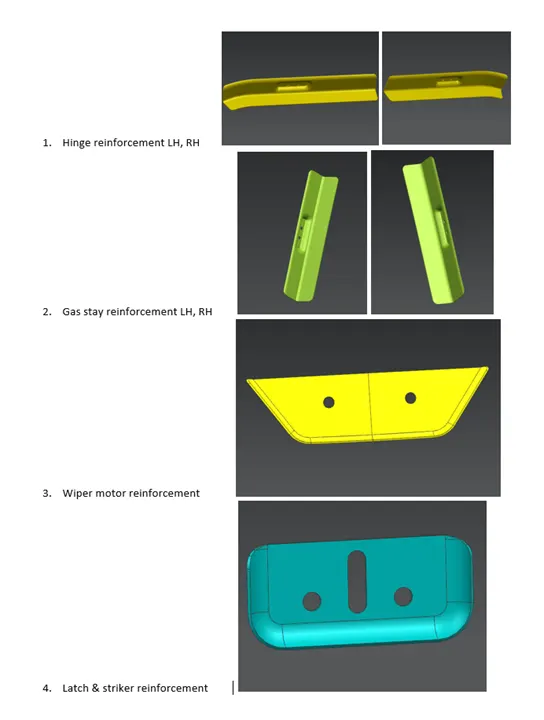
D. Design of reinforcements
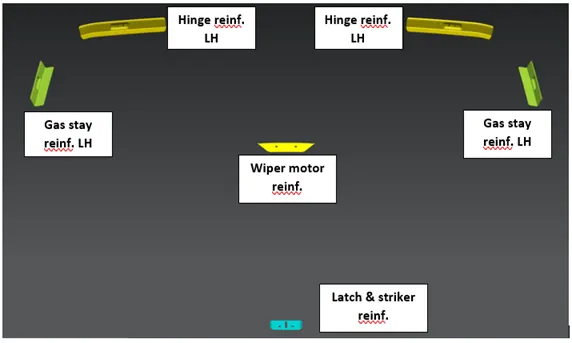
Reinforcements are components which will provide extra strength at areas where more forces are available. They will make sure under these forces part will not fail.
- Reinforcement thickness = 1 mm
4. Manufacturing processes required for Back Door-
Followings are some of the processes which are used to produce back door
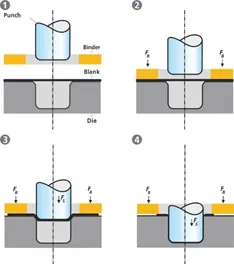
- Deep drawing-
The deep drawing process is a forming process which occurs under a combination of tensile and compressive conditions. A flat sheet metal blank is formed into a hollow body open on one side or a hollow body is formed into a hollow body with a smaller cross-section.
In the automotive industry, deep drawing is usually carried out using rigid tools.
- Hemming-
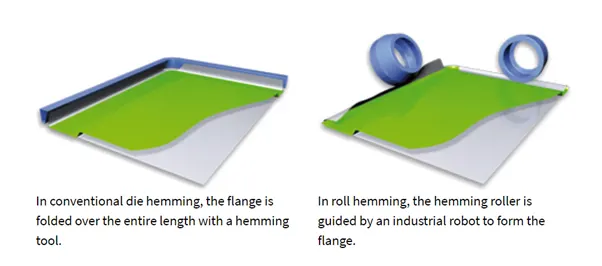
Hemming is a forming operation in which the edges of the sheet are folded or folded over another part in order to achieve a tight fit. Normally hemming operations are used to connect parts together, to improve the appearance of a part and to reinforce part edges.
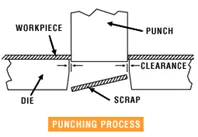
- Piercing-
Piercing is a shearing process where a punch and die are used to create a hole in sheet metal or a plate. The process and machinery are usually the same as that used in blanking, except that the piece being punched out is scrap in the piercing process.
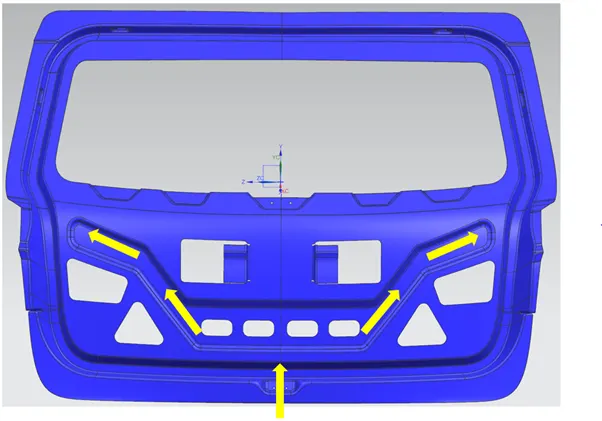
Force distribution in impact situation-
Back door design should be such that it will safeguard passenger and luggage at rear side.
Creating embosses on the back door inner panel will give extra strength to the whole assembly in impact situations. V or Y shapes embosses are more effective for this situation because force will flow away from the centre.
5. Testing performed on backdoor-
Following are tests which are performed to evaluate strength of the back door
- Bend test
- Torsion test
- Dent test
- Assembly load case
- Endurance test (repeating operation test)
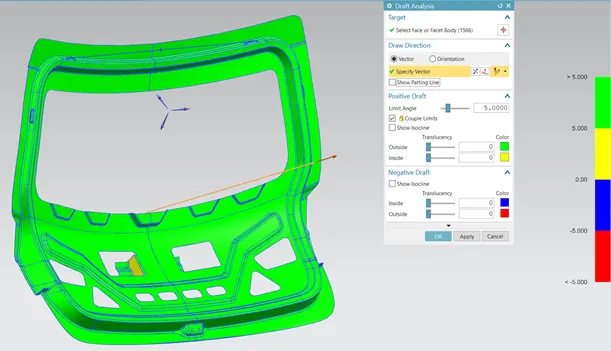
Draft analysis of Back Door Inner Panel-
The Draft Analysis command enables you to detect if the part you drafted will be easily removed. This type of analysis is performed based on colour ranges identifying zones on the analysed element where the deviation from the draft direction at any point, corresponds to specified values.
7. Final Views-
8. Conclusion-
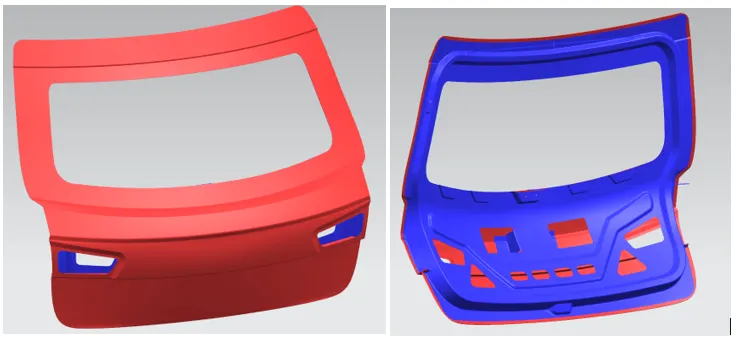
- Using input class A surface Back Door Assembly has created with the help of NX-CAD.
- Reinforcements for Hinge, Gas stay, Wiper motor & Latch-striker to provide extra strength to inner panel.
- Inner panel is found ok in Draft analysis.
Back Door Assembly(CAD model) google drive link:-https://drive.google.com/file/d/1n85GrPtmY42vxLUqX8qZpf98v3YLf8we/view?usp=sharing