Benchmarking
What is Benchmarking?
Benchmarking is a way of discovering what is the best performance being achieved – whether in a particular company, by a competitor or by entirely different industry. This information can then be used to identify gaps in an organization’s processes to achieve a competitive advantage.
- Understand fully the purpose and use of benchmarking.
- Understand the difference between benchmarking and competitor research.
- Gain insight to ensure that benchmarking is in alignment with the company’s management objectives.
Benchmarking as a Tool
Benchmarking is a process for obtaining a measure – a benchmark. Simply stated, benchmarks are the “what,” and benchmarking is the “how.” But benchmarking is not a quick or simple process tool. Before undertaking a benchmarking opportunity, it is important to have a thorough understanding of the company’s guidelines. Some companies have strict guidelines as to what information can be gathered, and whom practitioners can contact to get that information. Depending on the size of the company, practitioners may be surprised at what is readily available in-house.
Benchmarking is not just a matter of making inquiries to other companies or touring and documenting another company’s facilities or processes. When making use of benchmarking, a company should not limit the scope to its industry, nor should benchmark be a one-time event.
Three Primary Classifications of Benchmarking
Although there are many forms of benchmarking, they can be classified into three categories – internal, competitive and strategic.
Internal benchmarking is used when a company already has established and proven best practices and they simply need to share them. Again, depending on the size of the company, it may be large enough to represent a broad range of performance (i.e., cycle time for opening new accounts in branches coast to coast). Internal benchmarking also may be necessary if comparable industries are not readily available.
Competitive benchmarking is used when a company wants to evaluate its position within its industry. Also, competitive benchmarking is used when a company needs to identify industry leadership performance targets.
Strategic benchmarking is used when identifying and analysing world-class performance. This form of benchmarking is used most when a company needs to go outside of its industry.
CASE STUDY FOR BENCHMARKING TO BUY A PERFECT CAR FOR FAMILY
CASE
Mr. D.S. Pughazhyendhii lives in a crowded city and needs a big car for his family as well as daily commute to office. He needs car to travel to Madurai from Bangalore once in a month. He has a budget of 8 - 10 lakh on road.
OBJECTIVE
Benchmarking the vehicles in markets according to cutomer's needs.
STUDY
According to customer's need it would be best for him to go for compact SUV as it is a class of small sports utility vehicle bigger than the mini SUVs but smaller than mid sized SUVs. As compact SUVs are taller than the hatchbacks and the sedans, you sit at a higher height. This helps you get a better view of the road. This is advantageous especially in crowded areas, where negotiating through other road users gets a bit tricky. In comparison, it gets a bit tough to make your way through traffic in a typical low slung hatchback or sedan. A height advantage lets you have a better view of your surroundings. So the compact SUV would be a better option for the cutomer as he has to use it for dauly commute in a crowded city Bangalore.
BENCHMARKING OF VARIOUS COMPACT SUVs IN MARKET
Following are the compact SUVs selected for benchmarking as per famous brands in India:
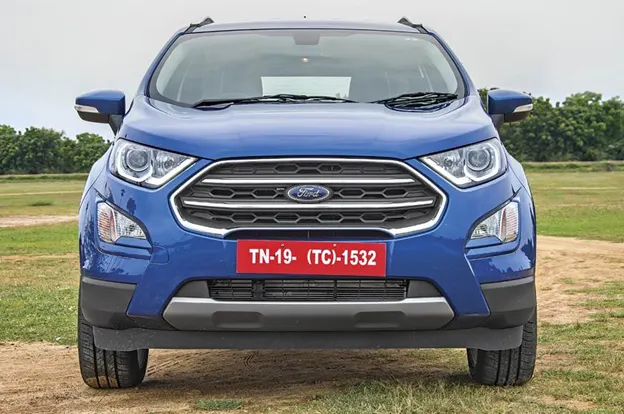
- Ford EcoSport 8/10
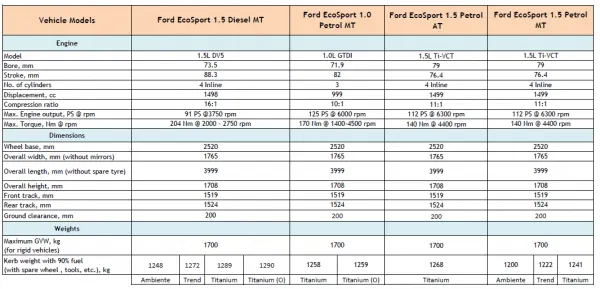
The Ford EcoSport is fresh from a makeover and is all the better for it. The talking point is the completely redone cabin that also gets the latest of features, while the revised suspension improves comfort too. As ever, the EcoSport remains good to drive with tidy handling and a peppy diesel engine. There are a lot of variants on offer but the tempting top version with class-leading safety kit like 6 airbags breaches the Rs 10 lakh mark.
For EcoSport diesel prices:
1.5l Diesel Ambiente MT Rs 8.42 lakh
1.5l Diesel Trend MT Rs 9.16 lakh
1.5l Diesel Trend+ MT Rs 9.56 lakh
1.5l Diesel Titanium MT Rs 9.99 lakh
1.5l Diesel Signature MT Rs 10.99 lakh
1.5l Diesel Titanium+ MT Rs 11.04 lakh
1.5l Diesel S MT Rs 11.89 lakh
- Tata Nexon 8/10
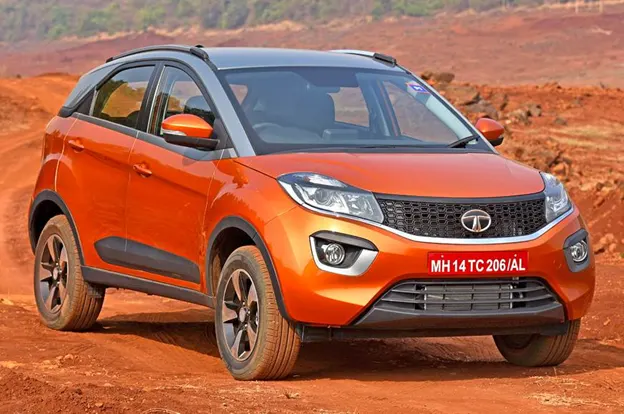
The attractive Tata Nexon is definitely the value for money proposition in this segment. And, the keen pricing and eye-catching styling are not the only things that make this Tata tempting. Its diesel engine is capable, there’s a good balance between ride and handling and the cabin space is surprisingly roomy. There’s also plenty of kit on offer. Fit and finish though largely good, could be better, though.
Tata Nexon diesel prices:
Nexon XE diesel Rs 7.19 lakh
Nexon XM diesel Rs 7.84 lakh
Nexon XT diesel Rs 8.40 lakh
Nexon XZ diesel Rs 8.99 lakh
Nexon XZ+ diesel Rs 9.69 lakh
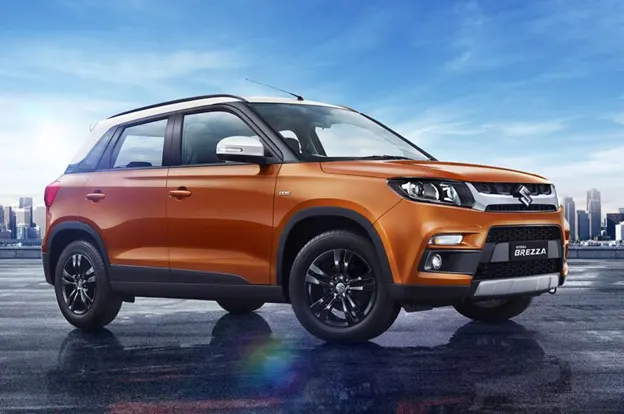
- Maruti Suzuki Vitara Brezza 7/10
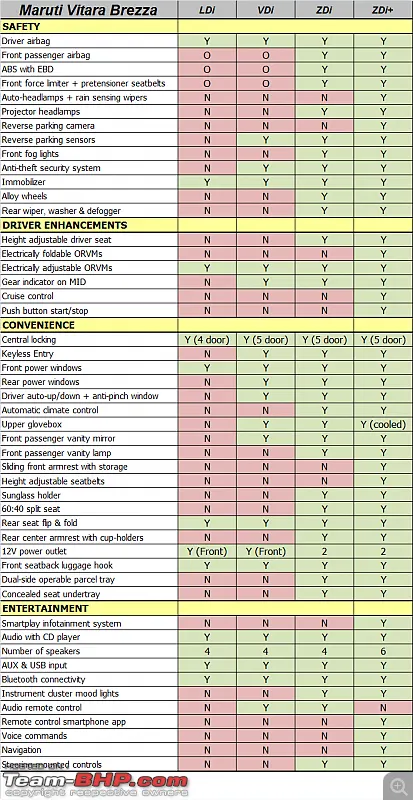
Maruti’s compact SUV is a sales champion and that’s because like other big-selling Marutis, the Vitara Brezza too gets the basics right - it’s efficient, reliable and fairly well priced. The Maruti Suzuki Vitara Brezza scores well on practicality too but the package is not perfect. The noisy 90hp 1.3-litre diesel motor feels outdated and, though punchy, lacks bottom-end grunt.
Vitara Brezza prices:
Vitara Brezza LDi Rs 7.521 lakh
Vitara Brezza VDi Rs 8.04 lakh
Vitara Brezza ZDi Rs 8.82 lakh
Vitara Brezza ZDi+ Rs 9.77 lakh
- Renault Duster 85PS 7/10
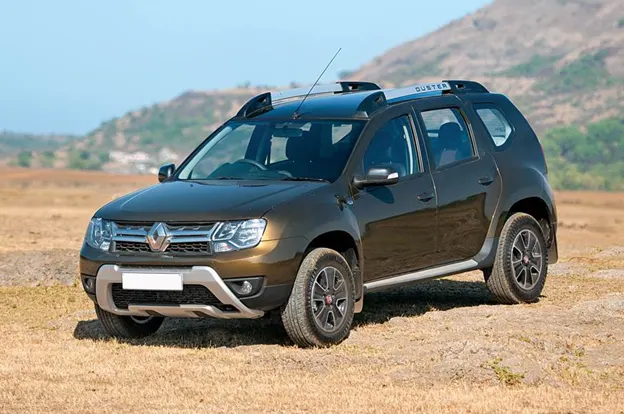
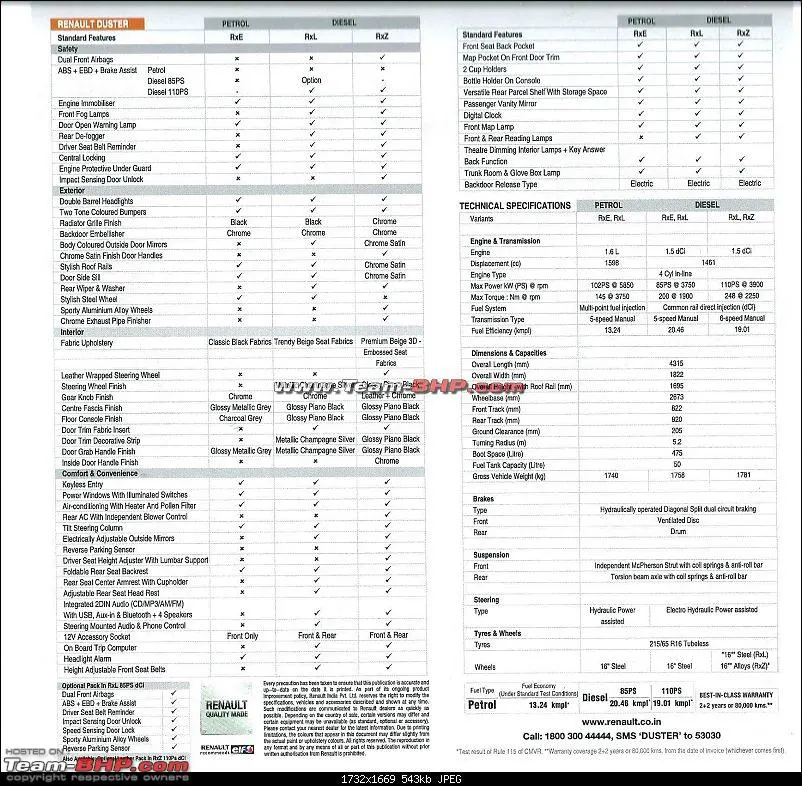
The Renault Duster might be past its prime now but it still makes for a compelling SUV buy in the well-priced 85hp, diesel guise. The engine is very tractable and performance is actually more than acceptable. The Duster also feels tough and rugged and ride quality is very impressive. Where the Duster loses out is in the cabin, which doesn’t feel special enough and equipment levels are also down compared to similar-priced SUVs.
Renault Duster 85PS prices:
Standard Rs 8.95 lakh
RXE Rs 9.09 lakh
RXS Rs 9.95 lakh
RXZ Rs 10.89 lakh
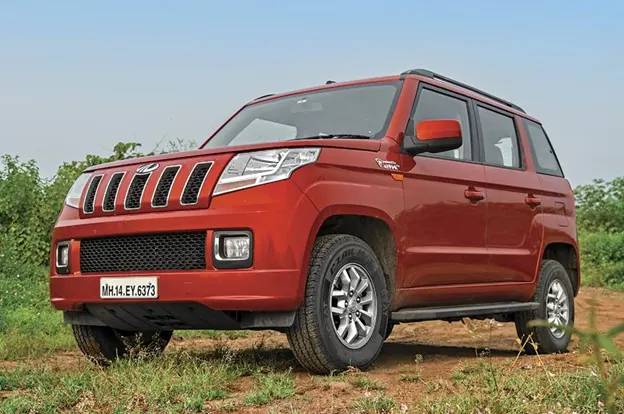
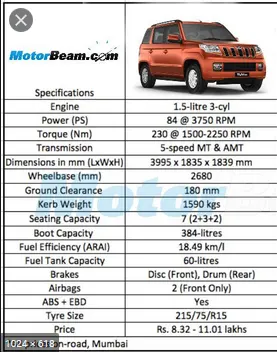
- Mahindra TUV300 6/10
Unlike the three monocoque-bodied SUVs above, the Mahindra TUV300 is built on a hardier ladder frame chassis, and correspondingly feels that little bit more rugged too. The cabin is quite spacious too though comfort isn’t the best; the rear-most jump seats take the seat count up to seven but are best left unused. A bouncy ride, mediocre performance and high price also mark the Mahindra SUV down.
TUV300 prices:
T4+ Rs 8.26 lakh
T6+ Rs 8.83 lakh
T8 Rs 9.54 lakh
T10 Rs 9.99 lakh
After comparisons of cars from various points of view I would recommend "TATA NEXON " for these reasons:
- It is the only and first car indigeniously built car in India with Five start rating from EURO NCAP.
- Tata nexon has a big beefy look which makes it to look like range rover. Its color and stylish look make it unique from others.
- Tata has introduced IRA connected car technology which can be connected through a sim in android and will give signal when car goes 3 meters away from its location.
- Nexon also has Xpress cooling function which cools down the temperature insdide car in just 8 minutes with certain conditions.
- Nexon provides AC vents both in front and rear for passengers with two speed adjustments. Although it is not very suitable for three adults at back but a child upto 15 years can come in middle comfortably.
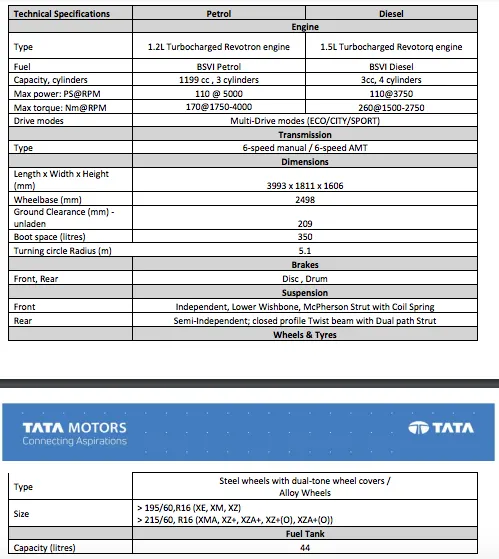
- Nexon provides big Boot space of 350 litres and can accommodate large amount of things.
- It has provided maximum 31 utility spaces inside where travellers can keep their things easily.
- Nexon comes with good ground clearance of 209 mm which makes it to drive very easily on rough and bumpy surfaces.