EXTRACTION OF MID AND 2D MESHING FOR THE GIVEN COMPONENTS USING RADIOSS
AIM: To Extract mid surface, geometry clean up and create the two dimensional mesh for the given models according to the given quality criteria by using HYPERMESH
1. MODEL 1: Practice
2. MODEL 2: Clip Repair
3. MODEL 3: Mounting Bracket
PROCEDURE:
- Import file to hyper Mesh
- Delete solid surfaces
- Geometry clean-up
- Mid surface extraction
- Toggling lines
- Assign quality criteria
- Meshing
- Check for free edges
- Assign thickness
MODEL 1: PRACTICE
IMPORT GEOMETRY FILE TO HYPERMESH
Import the Geometry file to hyper mesh
For open
Go to File >> Import >> Select geometry >> Open the model >> Click the model >> Import
Select USER PROFILE as RADIOSS
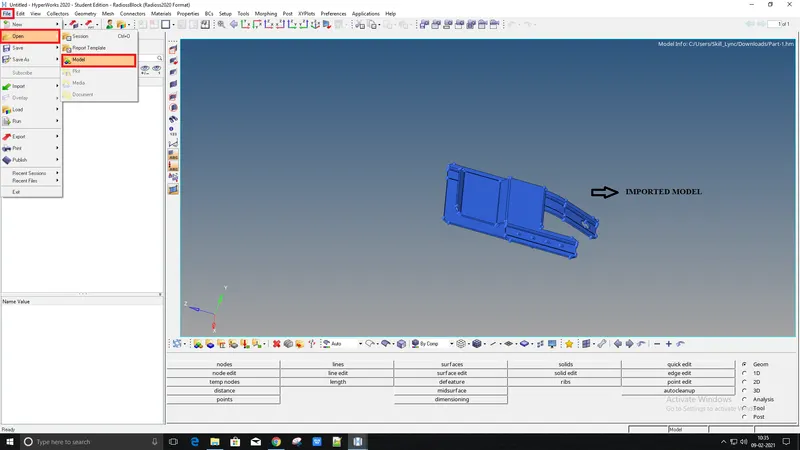
IMPORTING MODEL
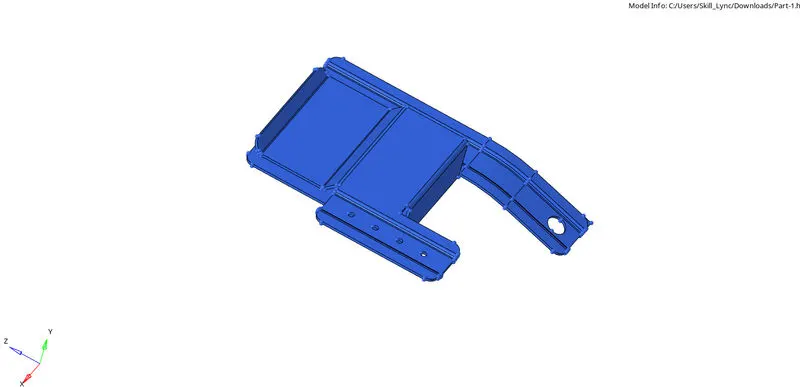
MODEL IMPORTED
DELETING SOLID FACES
We only have to work on the geometry, so before inspection check for solids and delete if there are any.
Delete [F2] >> Solids >> Select by box selection >> Delete Entity
Another way to check for solids is by switching the view from AUTO MODE to TOPO MODE.
If the model is highlighted in GREEN that means solid is present.
From the image below, we can confirm that there are no solids present in the model
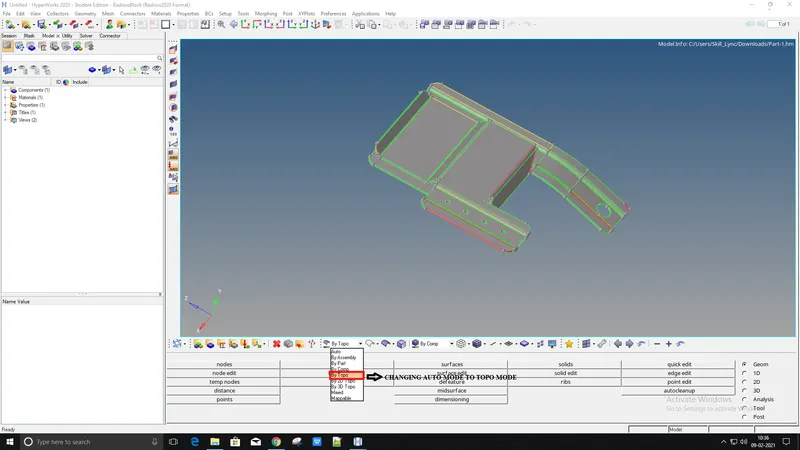
CHANGING GEOMETRY COLOUR MODE
GEOMETRY CLEAN UP
Once the model is imported move to geometry clean up just to check whether there any extra surface or free edges or missing surface will present or not
Check for errors
To check an error
Go to visualize panel >> Disable shared edges and all except free edges
After changing geometry colour mode from AUTO to TOPO mode we can able to see the geometrical errors
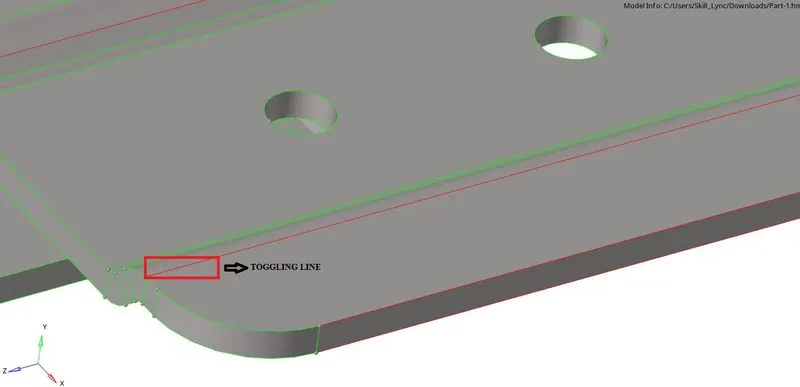
FREE EDGE ERROR
To fix this error we have to toggle those lines
For that
Go to >> Quick edit command >> Toggle >> ok

QUICK EDIT PANEL
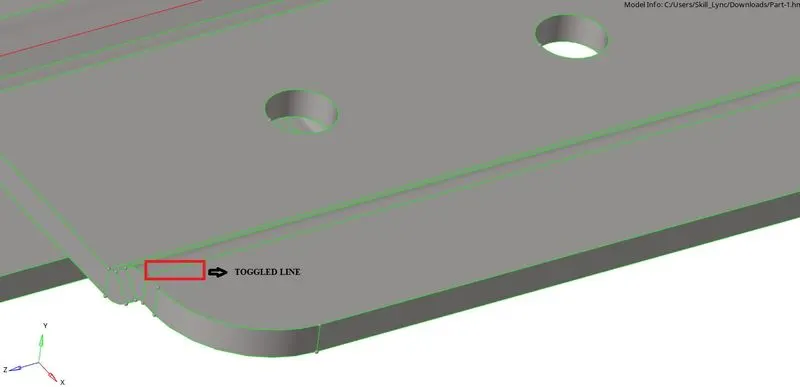
TOGGLED LINE
We also see the duplicate surface present in the geometry
To fix this
Go to Delete (F2) >> Select the duplicate >> Delete
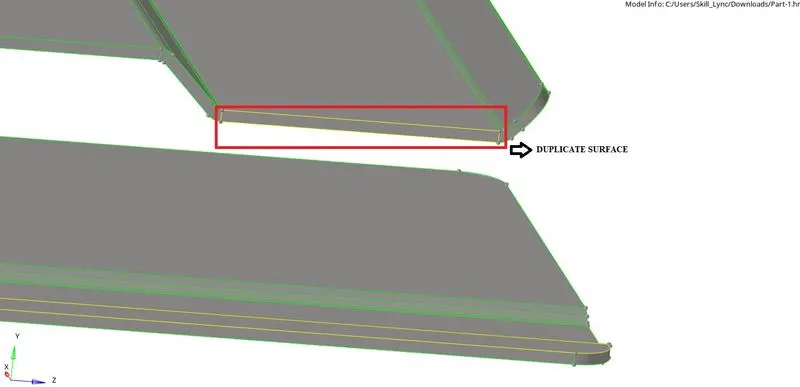
DUPLICATE SURFACES

DELETE TAB
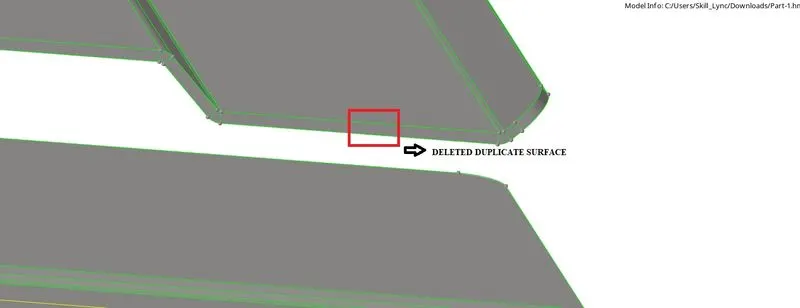
DUPLICATE SURFACE DELETED
Check for other error by swtiching to wire frame mode
Now the model is error free as shown in below fig
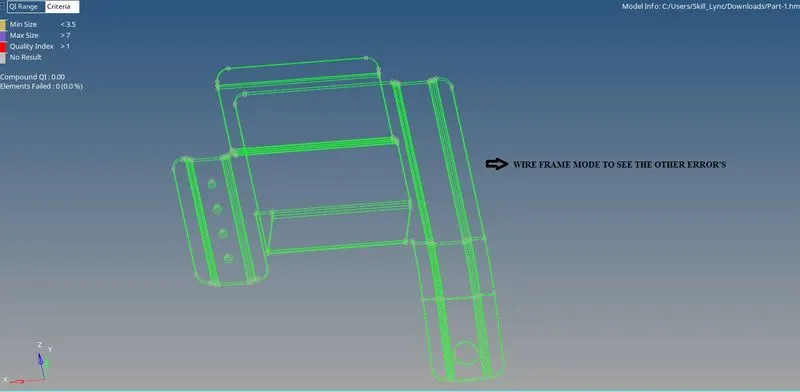
WIRE FRAME MODE
MID SURFACE EXTRACTION
Once the model is geometric error free then move to mid surface
Now create a mid-surface for a given components
Go to Geometry >> Mid surface >> Auto mid surafce >> Extraction : Skin offset >> Select the surf >> Extract

MID SURAFCE TAB
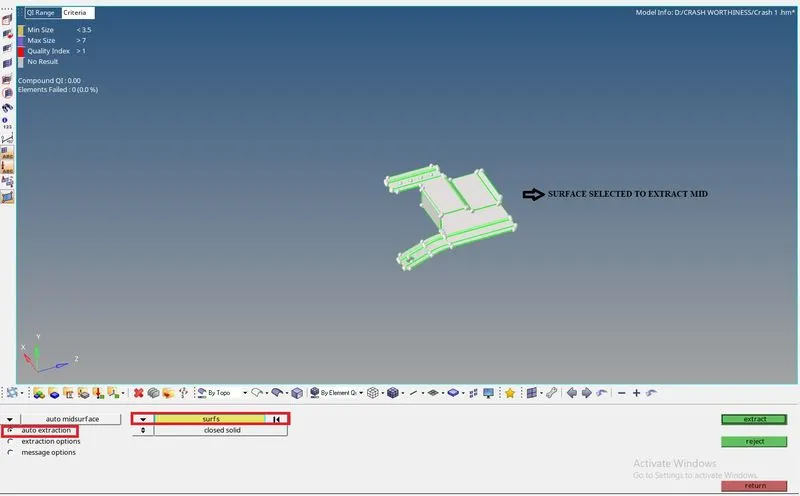
SELECTING SURFACE
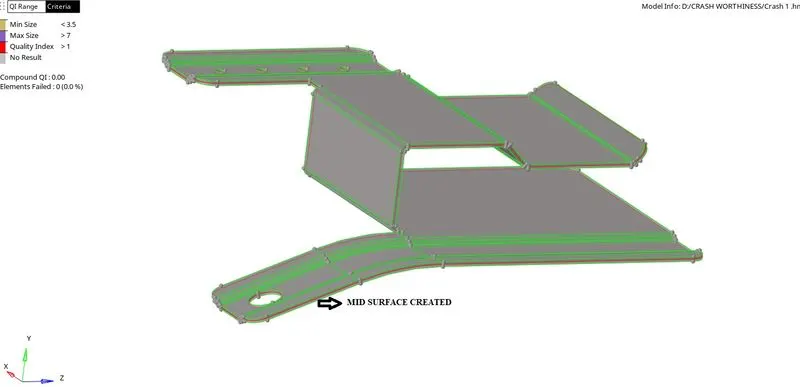
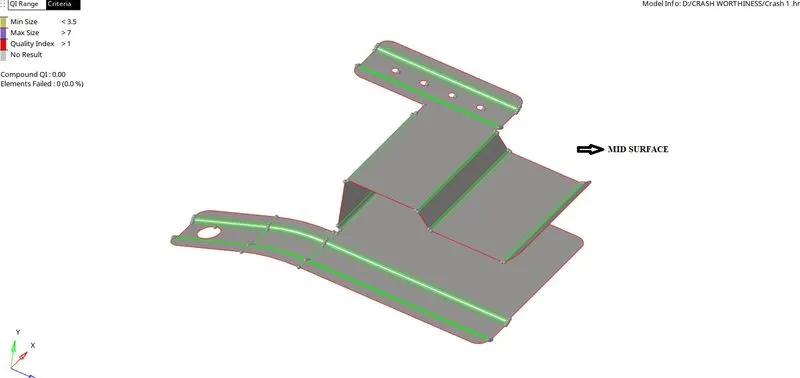
MID SURAFCE EXTRACTED
TOGGLING OF LINES
We have to make sure that the length of any line or distance between any points is above the Minimum length
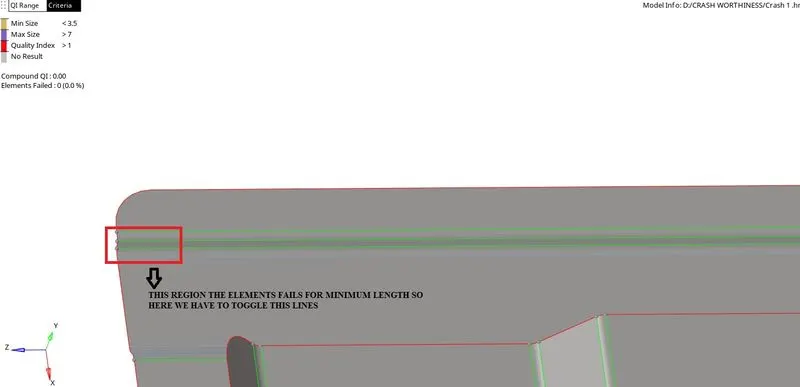
TOGGLINING OF LINES
The fastest option for this fix is the toggle edge which is a tool under quick Edit [F11]
Quick Edit > Toggle Edge > Left click to Toggle
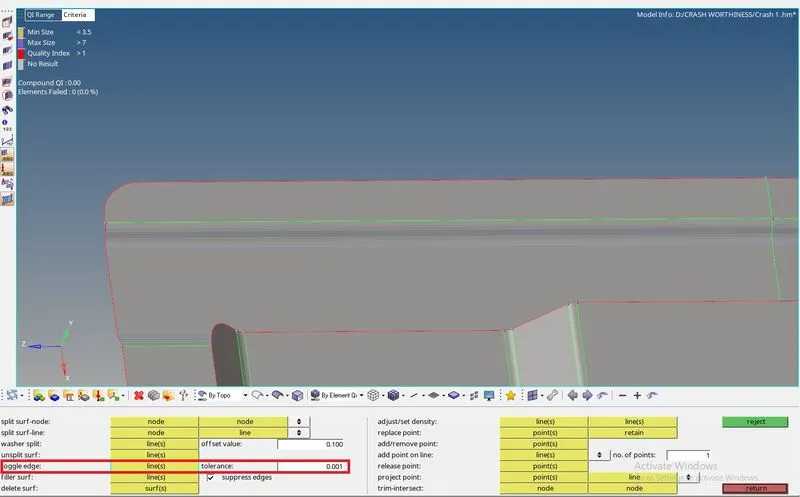
QUICK EDIT PANEL
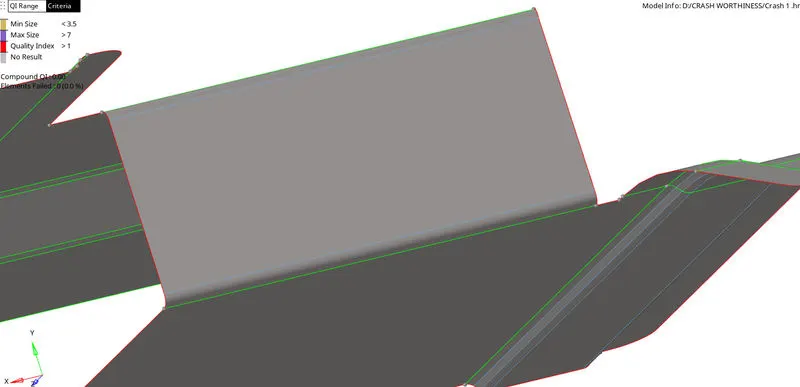
TOGGLED LINES
For proper feature capturing creating a mid line as shown in below fig
Go to Lines >> Mid line >> Select 1st line >> Select 2nd line >> Create
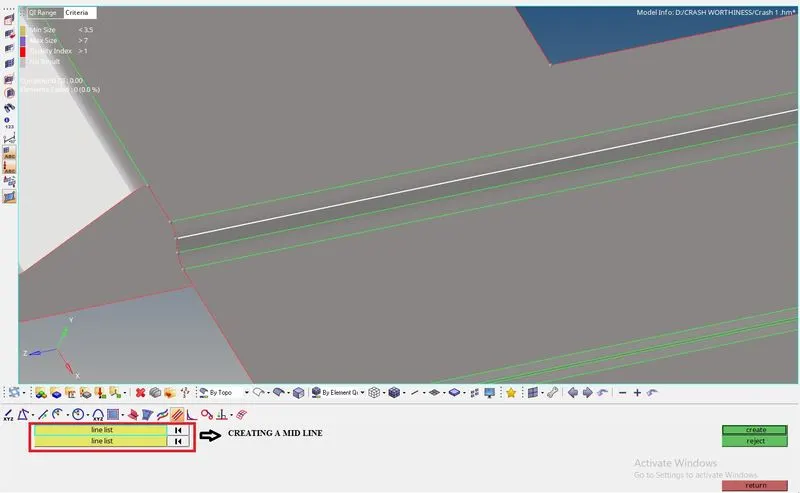
SELECTING LINES TO CREATE MID LINE
After creating a mid line we have to trim that line for that
Go to surface edit >> Trim with lines >> Select surf >> Select line >> Surface normal >> Trim
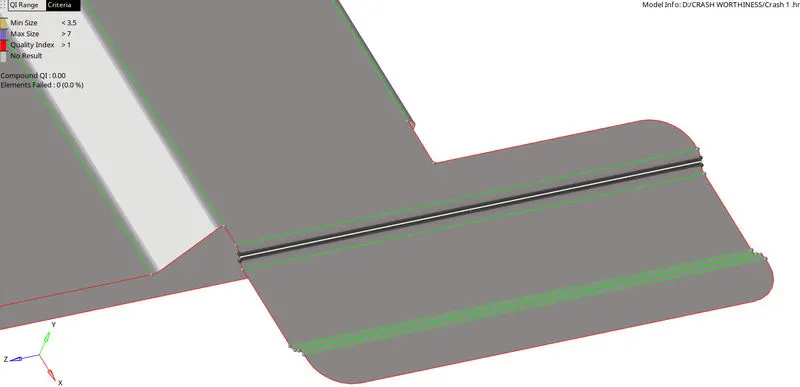
SELECTING SURFACE

SURFACE EDIT TAB
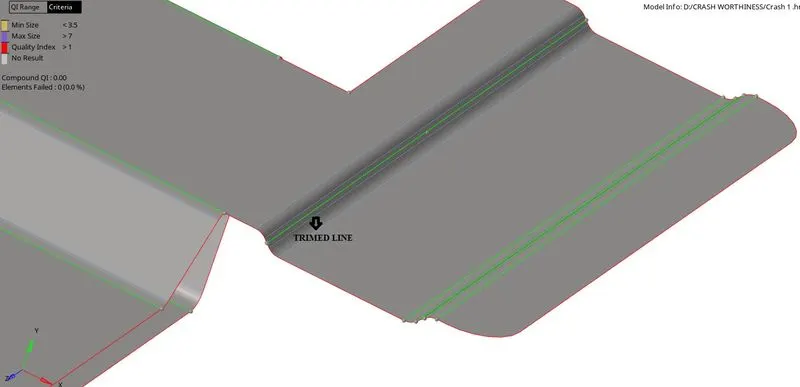
TRIMED LINE
ASSIGN QUALITY CRITERIA
Assign quality criteria for a given model
Go to preferences >> criteria file setting >> Enter the values >> Apply >> Ok
MESHING
Mesh the given components with a given quality criteria
Rules of mesh :
For better mesh flow we need to fallow some rules :
- Opposite tria's are avoided.
- Flat surface trai's should be avoided by merging them using split.
- Avoid trai's near to hole region.
- Hole feature should be in even numbered.
- Avoid tria's at the perimeter line.
- Avoid zig-zag mesh flow.
- Avoid rotating quads.
- Divides the large surface into small parts using split for meshing.
- Defeature the area which are going to fail the quality criteria.
Now mesh the component
Go to geometry page >> Select 2D >> Select auto mesh >> Select surface >> Create

AUTO MESH TAB
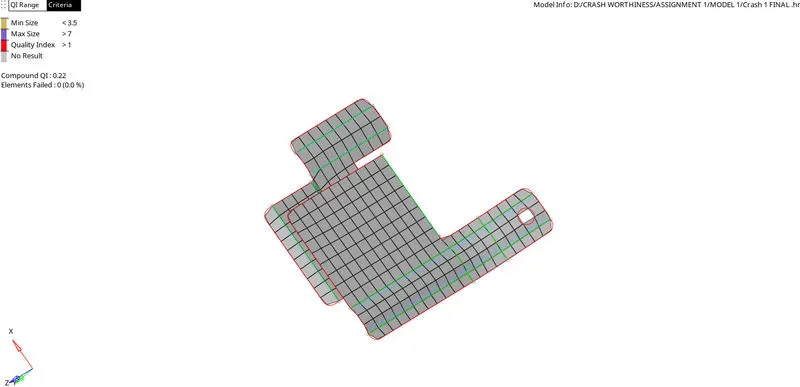
MESHED MODEL
CHECK FOR FREE EDGE
we have to check for free edges (red lines) in the component.
Edges Tool will help us find this error:
Tool > Edges [Shift + F3] > Elem's > Select by box slection > Find edges

CHECK FREE EDGE TAB
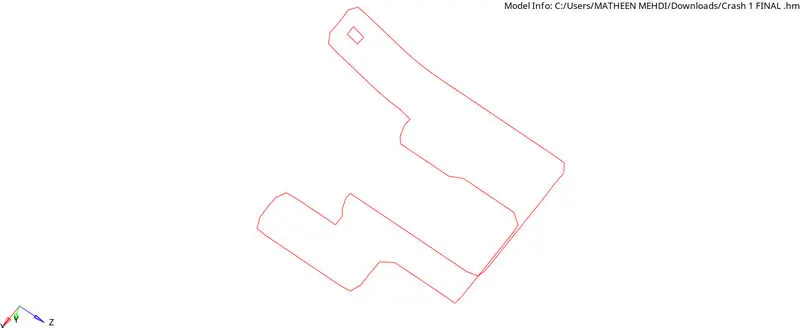
NO DISCONNECTIVITY BETWEEN ELEMENTS ARE PRESENT
If free edges are present, connectivity won't be established between the surfaces.
As a result, when force is applied on any surface it won't be distributed to the neighbouring surface due to connectivity issue
Here in this model we don't have any free edge between the elements.
CHECK FOR NORMALS
After meshed the model check for vector normal
To check
Go to Tool >> Normal >> Select elements display
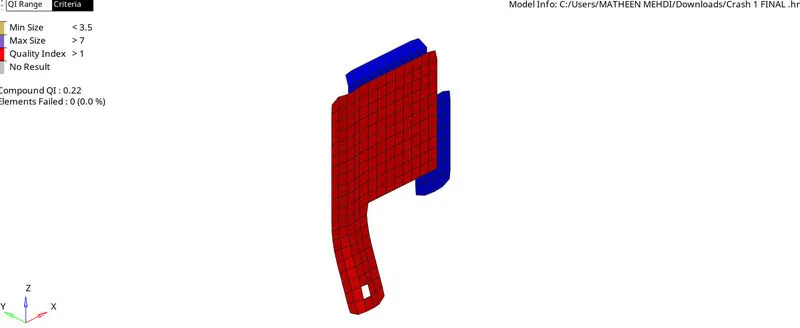
NORMALS
ASSIGNING THICKNESS
The given component having thickness we can see in parent geometry
Here we took mid surface and meshed the components so we have to assign the thickness according to parent geometry
To assign thickness
Go to tool bar >> Create property for different thickness >> Enter thickness value
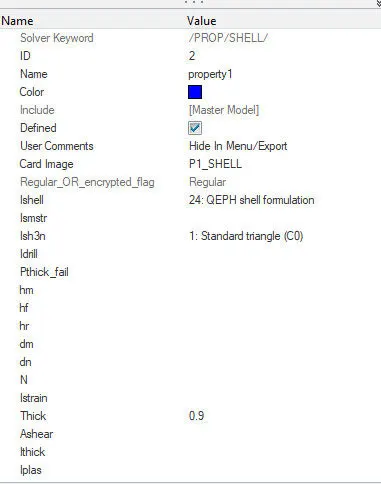
ASSIGNING THICKNESS VALUE
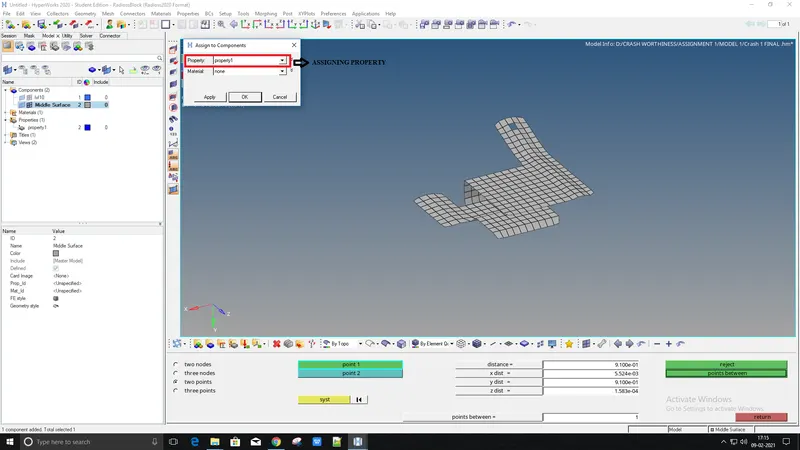
ASSINGED PROPERTY TO THE COMPONENT
MODEL 2: CLIP REPAIR
IMPORT GEOMETRY FILE TO HYPERMESH
Import the Geometry file to hyper mesh
For open
Go to File >> Import >> Select geometry >> Open the model >> Click the model >> Import
Select USER PROFILE as RADIOSS
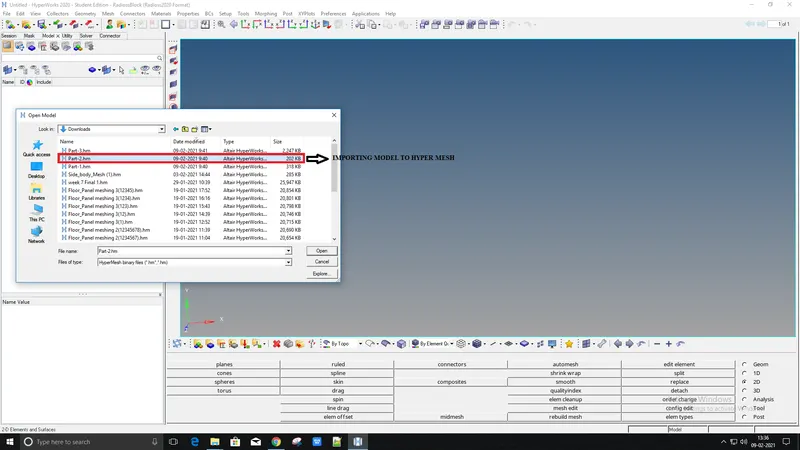
IMPORTING MODEL
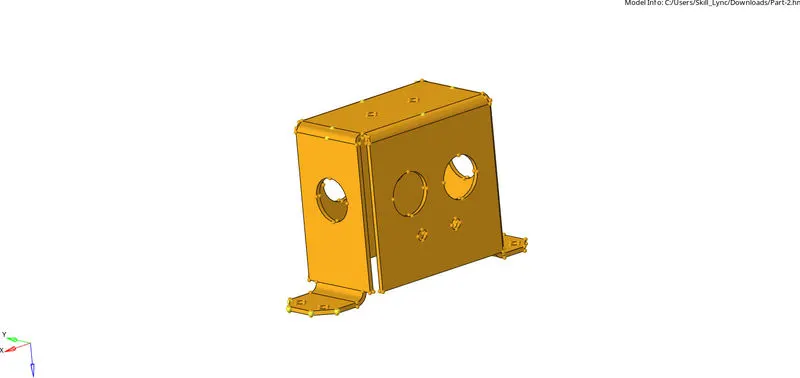
MODEL IMPORTED
DELETING SOLID FACES
We only have to work on the geometry, so before inspection check for solids and delete if there are any.
Delete [F2] >> Solids >> Select by box selection >> Delete Entity
Another way to check for solids is by switching the view from AUTO MODE to TOPO MODE.
If the model is highlighted in GREEN that means solid is present.
From the image below, we can confirm that there are no solids present in the model
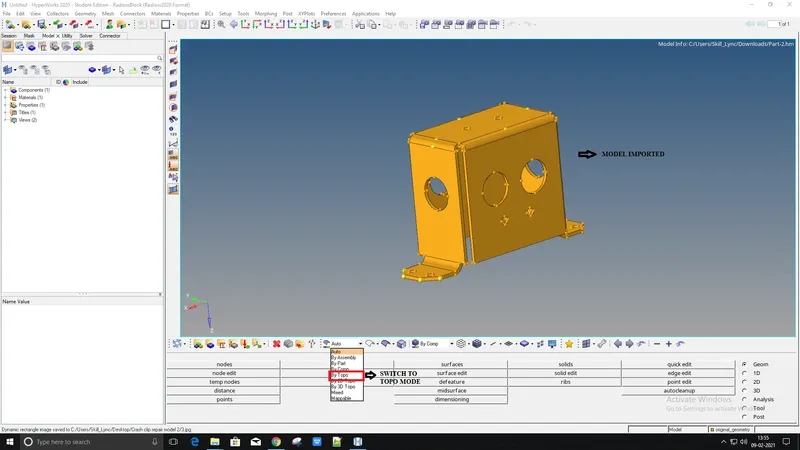
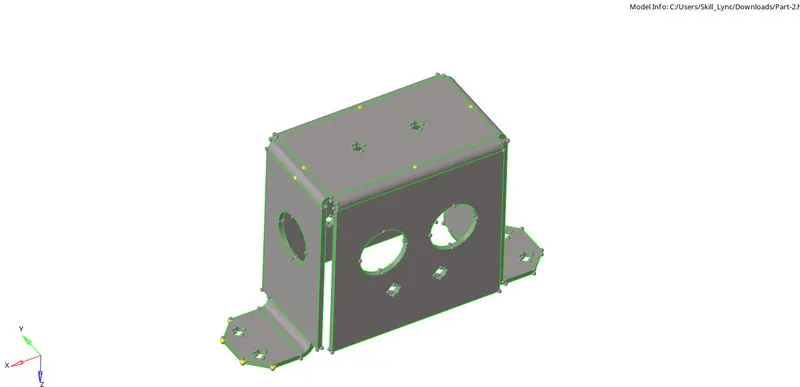
CHANGING GEOMETRY COLOUR MODE
GEOMETRY CLEAN UP
Once the model is imported move to geometry clean up just to check whether there any extra surface or free edges or missing surface will present or not
Check for errors
To check an error
Go to visualize panel >> Disable shared edges and all except free edges
After changing geometry colour mode from AUTO to TOPO mode we can able to see the geometrical errors
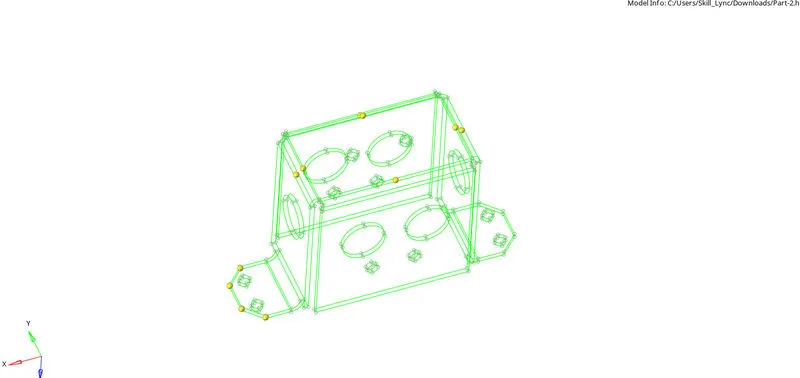
WIRE FRAME MODE TO CHECK AN ERRORS
As we seen the above fig
Their are no error or missing surfaces present in the given geometry
MID SURFACE EXTRACTION
Once the model is geometric error free then move to mid surface
Now create a mid-surface for a given components
Go to Geometry >> Mid surface >> Auto mid surafce >> Extraction : Skin offset >> Select the surf >> Extract
MID SURAFCE TAB
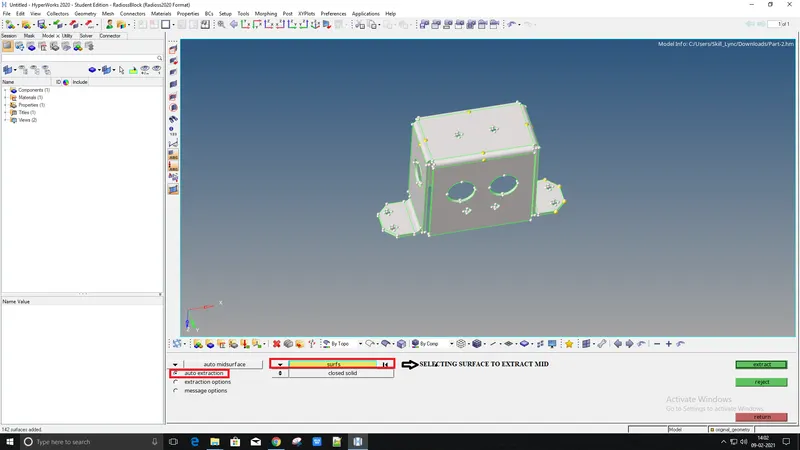
SELECTING SURAFCE
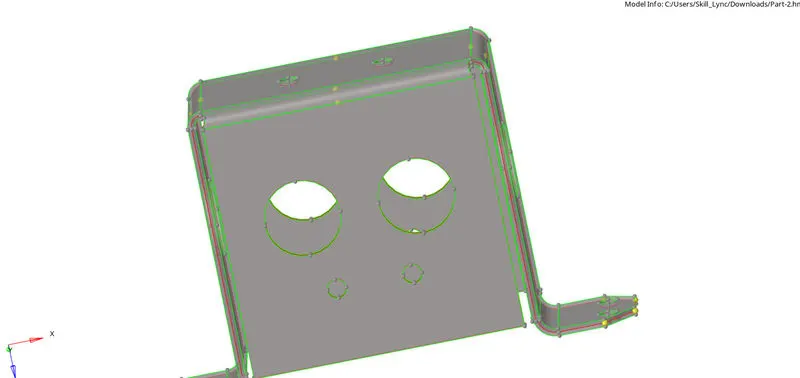
MID SURFACE GENERATED
GEOMETRY CLEAN UP AFTER TAKING MID:
Ignore holes which is less than dia 5mm.
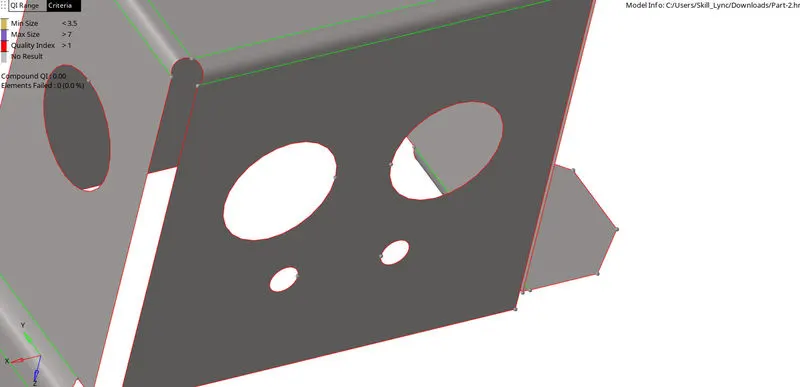
For that
Go to Quick edit >> Unsplit Surf >> ok

QUICK EDIT PANEL
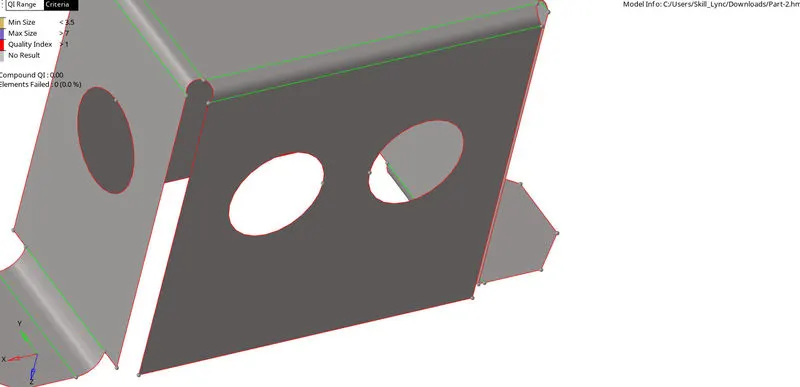
UNSPLITED DIA LESS THAN 5mm
ASSIGN QUALITY CRITERIA
Assign quality criteria for a given model
Go to preferences >> criteria file setting >> Enter the values >> Apply >> Ok
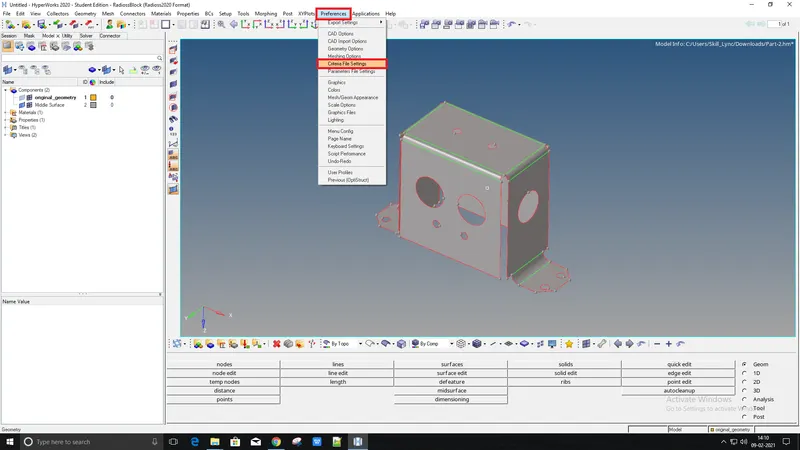
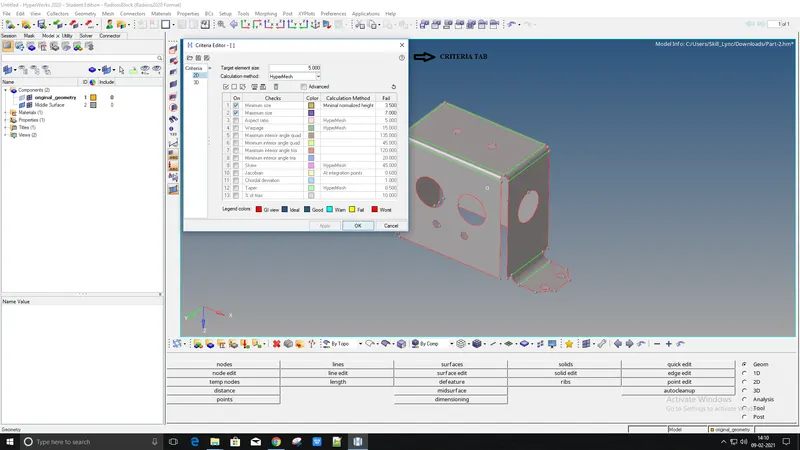
ENETRING QUALITY CRITERIA
MESHING
Mesh the given components with a given quality criteria
Rules of mesh :
For better mesh flow we need to fallow some rules :
- Opposite tria's are avoided.
- Flat surface trai's should be avoided by merging them using split.
- Avoid trai's near to hole region.
- Hole feature should be in even numbered.
- Avoid tria's at the perimeter line.
- Avoid zig-zag mesh flow.
- Avoid rotating quads.
- Divides the large surface into small parts using split for meshing.
- Defeature the area which are going to fail the quality criteria.
Now mesh the component
Go to geometry page >> Select 2D >> Select auto mesh >> Select surface >> Create

2D TAB

AUTOMESH TAB
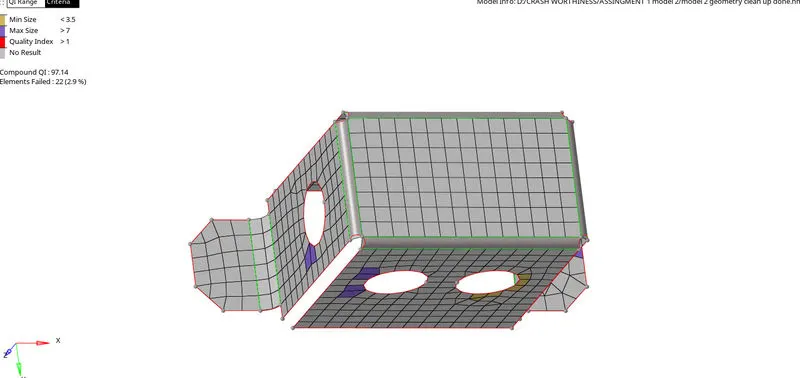
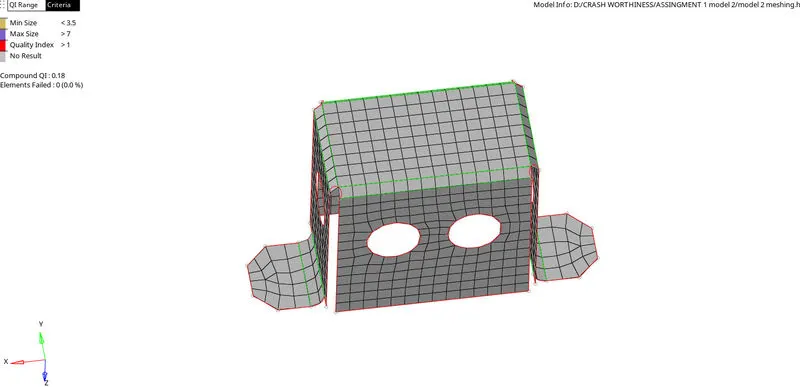
FINAL MESHED MODEL
CHECK FOR FREE EDGE
we have to check for free edges (red lines) in the component.
Edges Tool will help us find this error:
Tool > Edges [Shift + F3] > Elem's > Select by box slection > Find edges
CHECK FOR FREE EDGE TAB
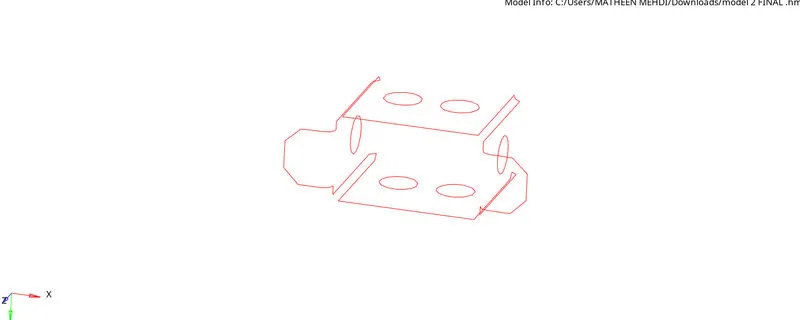
NO DISCONNECTIVITY BETWEEN ELEMENTS ARE PRESENT
If free edges are present, connectivity won't be established between the surfaces.
As a result, when force is applied on any surface it won't be distributed to the neighbouring surface due to connectivity issue
Here in this model we don't have any free edge between the elements.
CHECK FOR NORMALS
After meshed the model check for vector normal
To check
Go to Tool >> Normal >> Select elements display
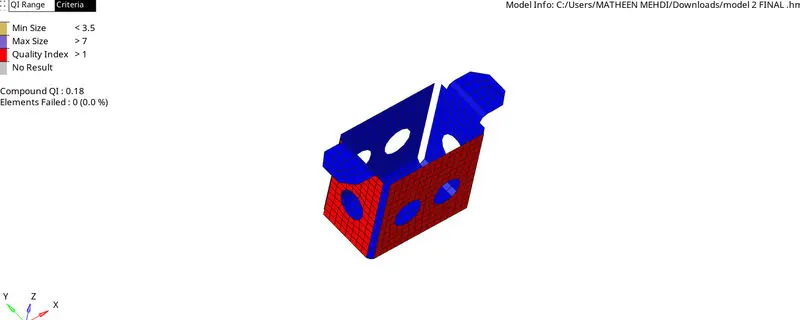
NORMALS
ASSIGNING THICKNESS
The given component having thickness we can see in parent geometry
Here we took mid surface and meshed the components so we have to assign the thickness according to parent geometry
To assign thickness
Go to tool bar >> Create property for different thickness >> Enter thickness value
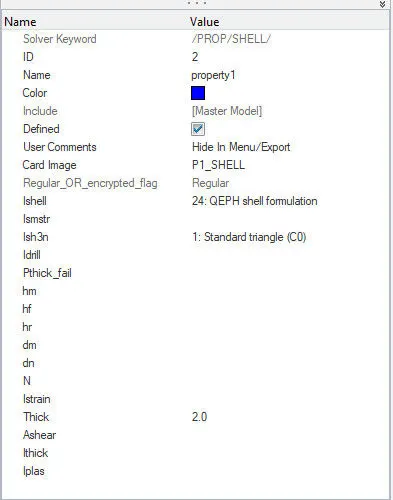
ASSIGNING THICKNESS
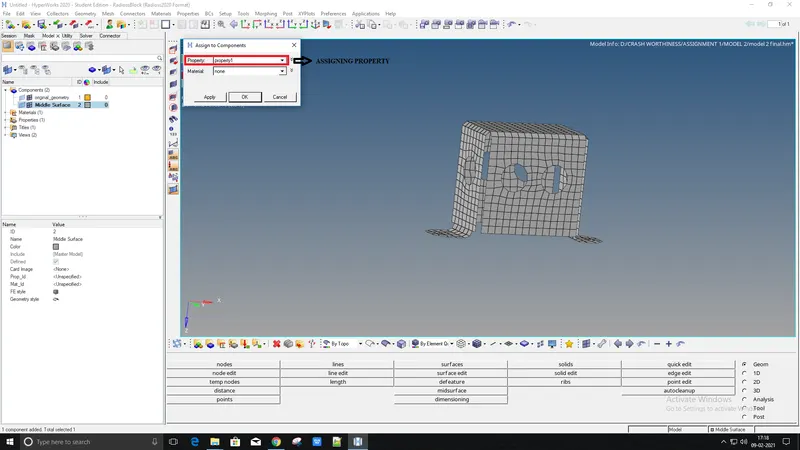
ASSINGED PROPERTY TO THE COMPONENT
MODEL 3: MOUNTIG BRACKET
IMPORT GEOMETRY FILE TO HYPERMESH
Import the Geometry file to hyper mesh
For open
Go to File >> Import >> Select geometry >> Open the model >> Click the model >> Import
Select USER PROFILE as RADIOSS
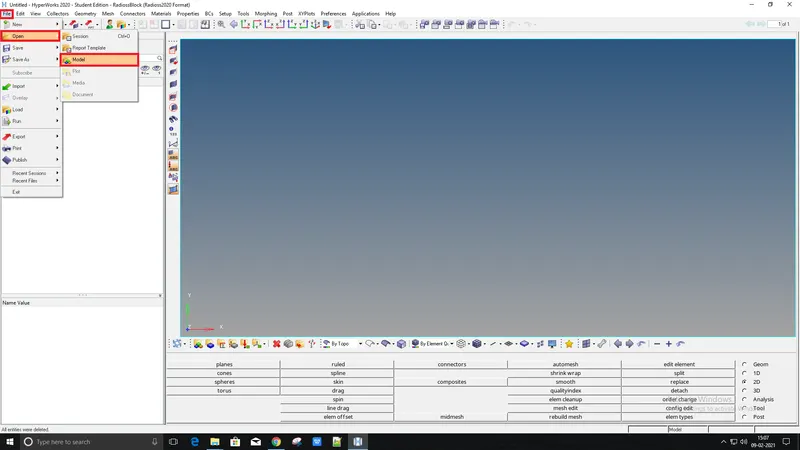
IMPORTING MODEL
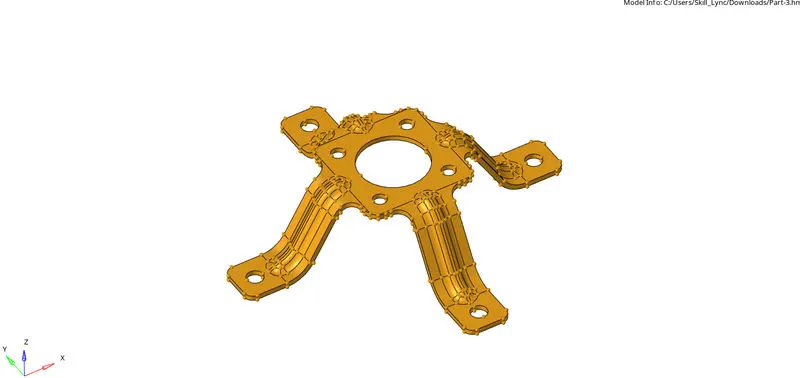
MODEL IMPORTED
DELETING SOLID FACES
We only have to work on the geometry, so before inspection check for solids and delete if there are any.
Delete [F2] >> Solids >> Select by box selection >> Delete Entity
Another way to check for solids is by switching the view from AUTO MODE to TOPO MODE.
If the model is highlighted in GREEN that means solid is present.
From the image below, we can confirm that there are no solids present in the model
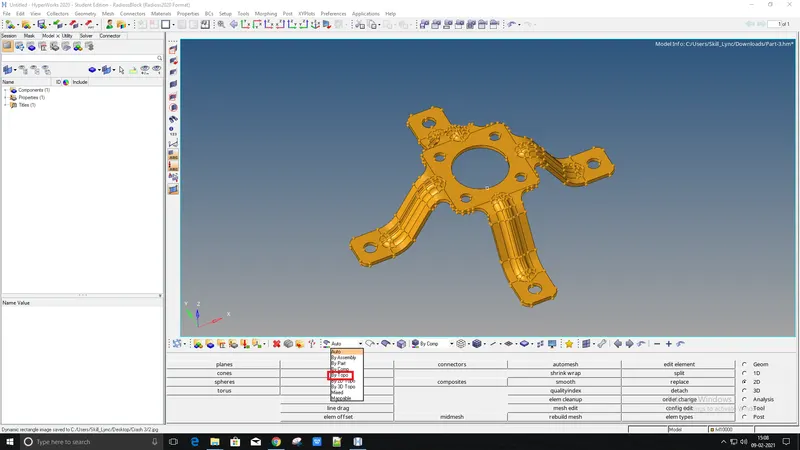
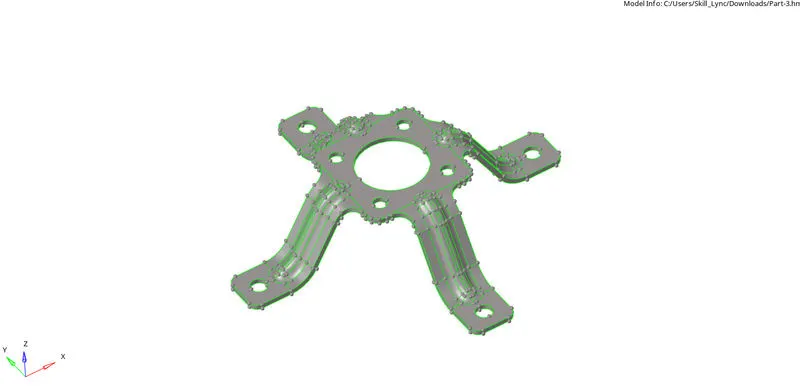
CHANGING GEOMETRY COLOUR MODE
GEOMETRY CLEAN UP
Once the model is imported move to geometry clean up just to check whether there any extra surface or free edges or missing surface will present or not
Check for errors
To check an error
Go to visualize panel >> Disable shared edges and all except free edges
After changing geometry colour mode from AUTO to TOPO mode we can able to see the geometrical errors
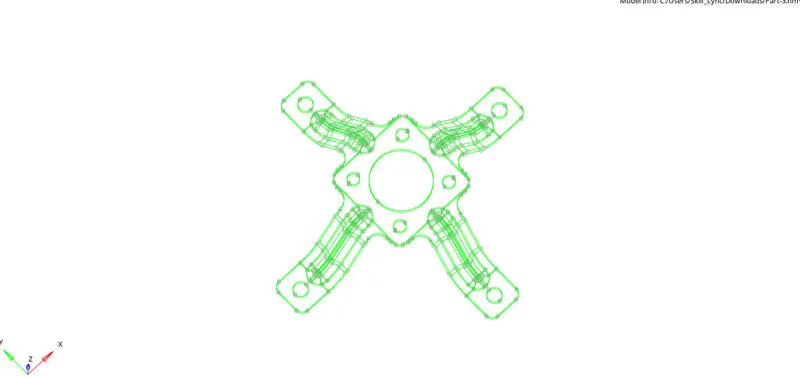
WIRE FRAME MODE
As we seen the above fig
Their are no error or missing surfaces present in the given geometry
MID SURFACE EXTRACTION
Once the model is geometric error free then move to mid surface
Now create a mid-surface for a given components
Go to Geometry >> Mid surface >> Auto mid surafce >> Extraction : Skin offset >> Select the surf >> Extract
MID SURFACE TAB
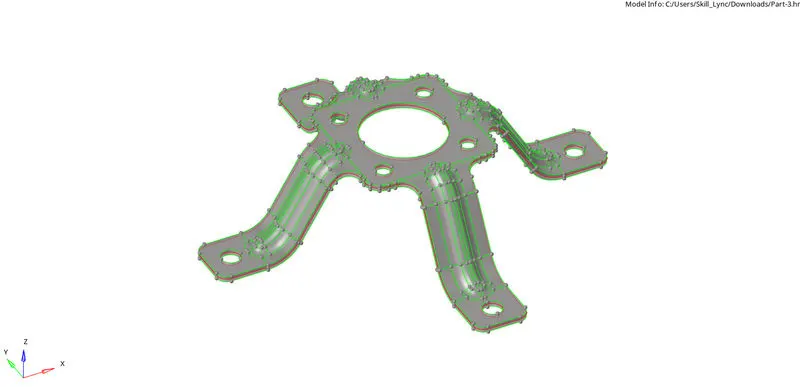
MID SURFACE CREATED
MID SURFACE GEOMETRY CLEAN UP:
Ignore holes which is less than dia 5mm
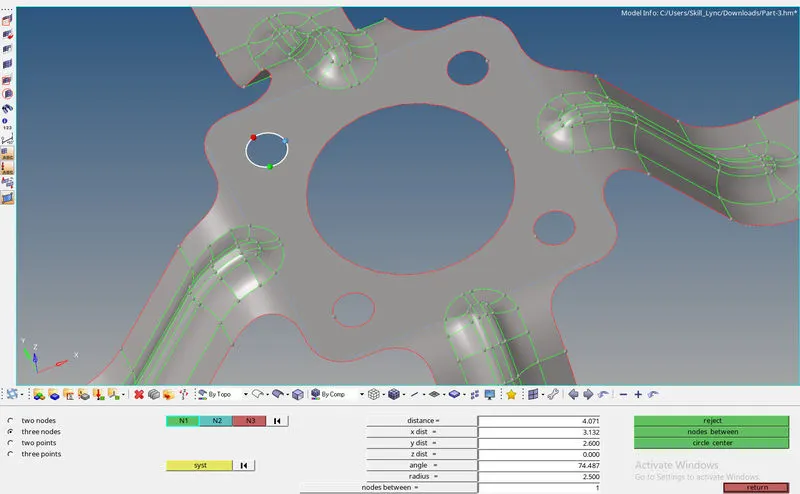
For that
Go to Quick edit >> Unsplit Surf >> ok
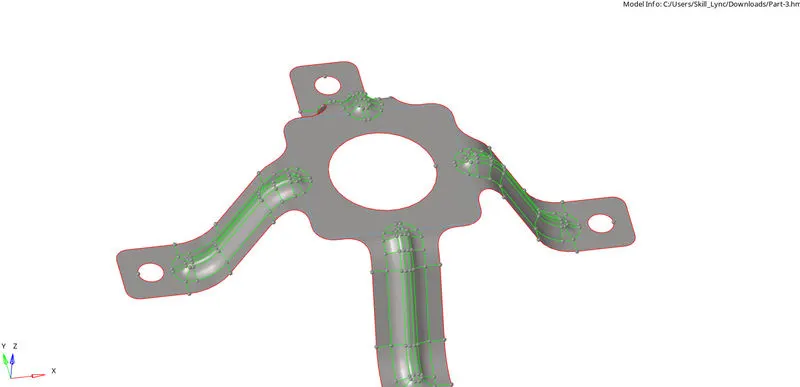
UNSPLITED DIA LESS THAN 5mm
TOGGLING OF LINES
We have to make sure that the length of any line or distance between any points is above the Minimum length

QUICK EDIT PANEL
The fastest option for this fix is the toggle edge which is a tool under quick Edit [F11]
Quick Edit > Toggle Edge > Left click to Toggle
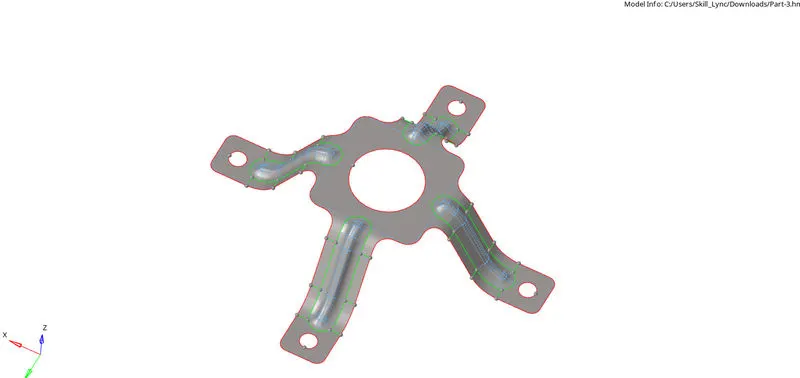
TOGGLED LINES
ASSIGN QUALITY CRITERIA
Assign quality criteria for a given model
Go to preferences >> criteria file setting >> Enter the values >> Apply >> Ok
MESHING
Mesh the given components with a given quality criteria
Rules of mesh :
For better mesh flow we need to fallow some rules :
- Opposite tria's are avoided.
- Flat surface trai's should be avoided by merging them using split.
- Avoid trai's near to hole region.
- Hole feature should be in even numbered.
- Avoid tria's at the perimeter line.
- Avoid zig-zag mesh flow.
- Avoid rotating quads.
- Divides the large surface into small parts using split for meshing.
- Defeature the area which are going to fail the quality criteria.
Now mesh the component
Go to geometry page >> Select 2D >> Select auto mesh >> Select surface >> Create
2D TAB
AUTO MESH TAB
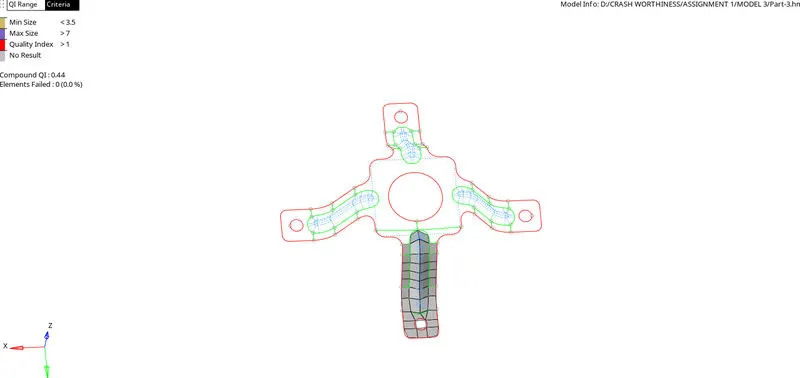
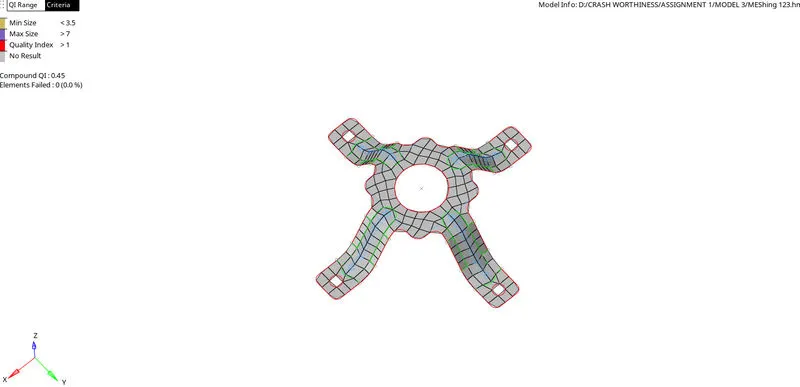
FINAL MESHED MODEL
CHECK FOR FREE EDGE
we have to check for free edges (red lines) in the component.
Edges Tool will help us find this error:
Tool > Edges [Shift + F3] > Elem's > Select by box slection > Find edges
CHECK FOR FREE EDGE
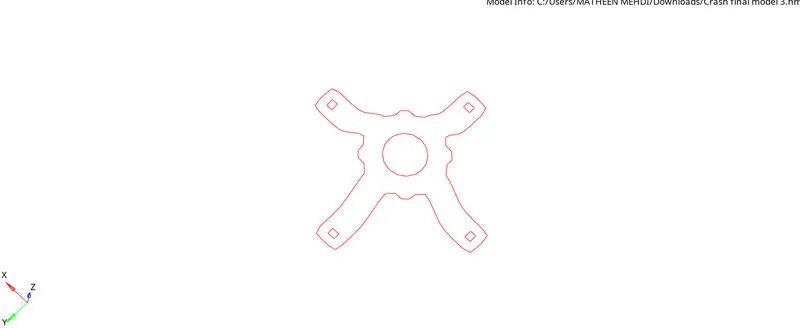
NO DISCONNECTIVITY BETWEEN ELEMENTS ARE PRESENT
If free edges are present, connectivity won't be established between the surfaces.
As a result, when force is applied on any surface it won't be distributed to the neighbouring surface due to connectivity issue
Here in this model we don't have any free edge between the elements.
CHECK FOR NORMALS
After meshed the model check for vector normal
To check
Go to Tool >> Normal >> Select elements display
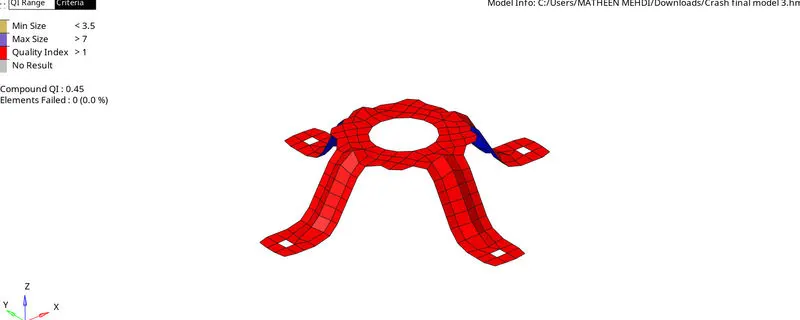
NORMALS
ASSIGNING THICKNESS
The given component having thickness we can see in parent geometry
Here we took mid surface and meshed the components so we have to assign the thickness according to parent geometry
To assign thickness
Go to tool bar >> Create property for different thickness >> Enter thickness value
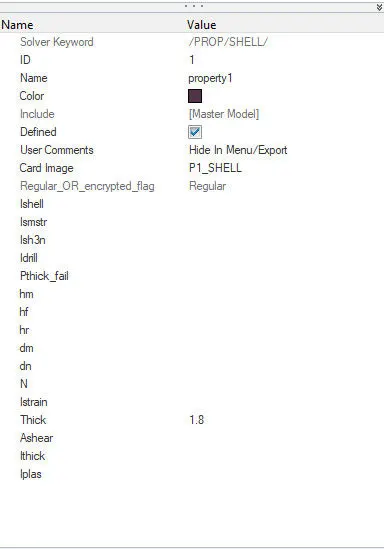
ASSINGING THICKNESS
RESULTS: All parts are successfully meshed as per the given quality criteria and Switch to 2d detailed element representation as shown in fig below
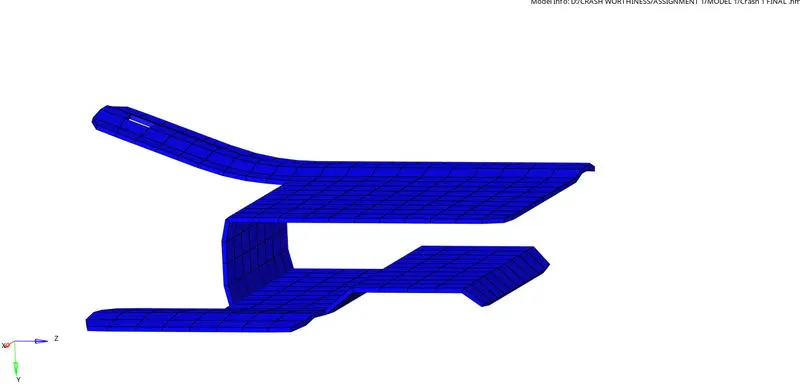
PRACTICE MODEL
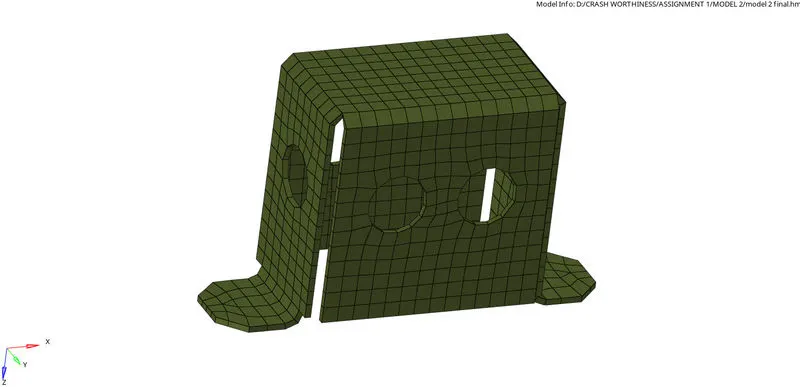
CLIP REPAIR MODEL
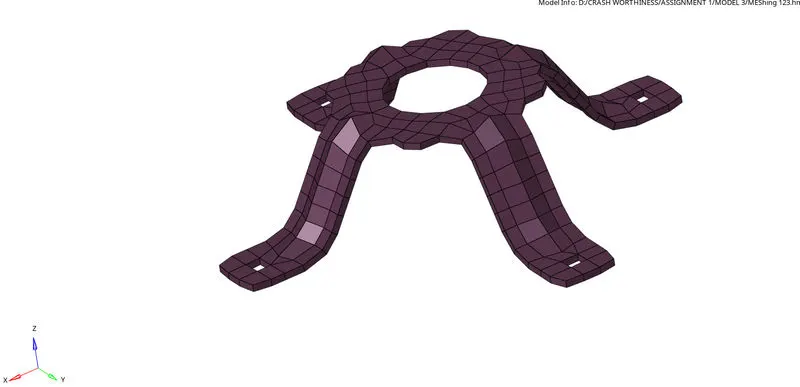
MOUNTING BRACKET MODEL
CONCLUSION:
I would like to conclude that here I learned how to take mid surafce by skin offset and how to fixed geometrical errors by using surface edit command and how to mesh for a given commponents with zero quality error.