Week 9 - Parametric study on Gate valve.
Objective:
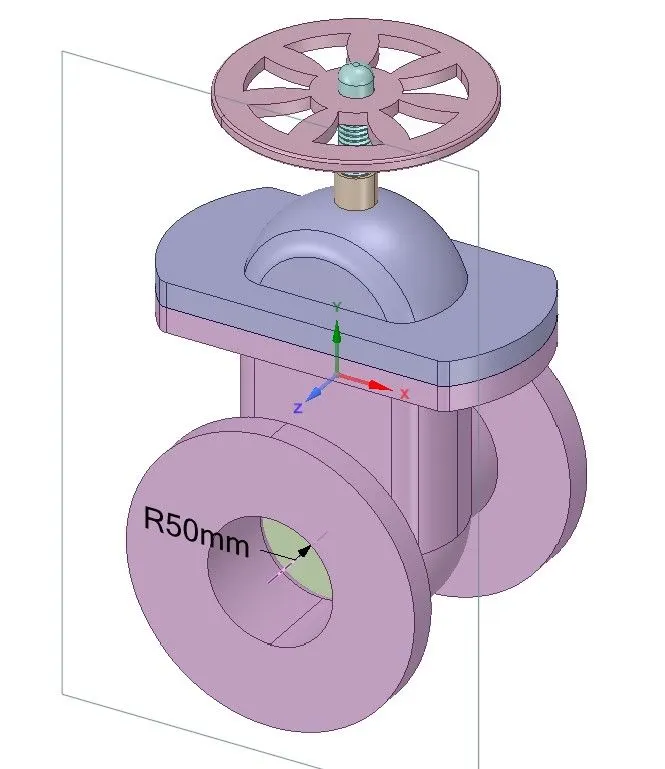
To simulate the Gate valve with different opening positions using parametric study in Ansys fluent.
Theory:
Flow coefficient:
`C_v=Q√((SG)/(∇P))`
where,
Q is the rate of flow (expressed in US gallons per minute),
SG is the specific gravity of the fluid (for water = 1),
ΔP is the pressure drop across the valve (expressed in psi).
Flow factor:
`K_v=Q√((SG)/(∇P))`
where,
Kv is the flow factor (expressed in `m^3*h^-1*(ba r)^-0.5`)
Q is the flow rate (expressed in cubic metres per hour `m^3/h`)
SG is the specific gravity of the fluid (for water = 1),
∆P is the differential pressure across the device (expressed in [bar]).
flow factor and flow coefficient are used to compare valve ability of flow with the given pressure difference.
When comparing two-valve if one valve with low flow factor (for the same pressure difference and inlet and outlet size) then it offers more flow resistance. which will reduce the flow rate.
Geometry:
Meshing:
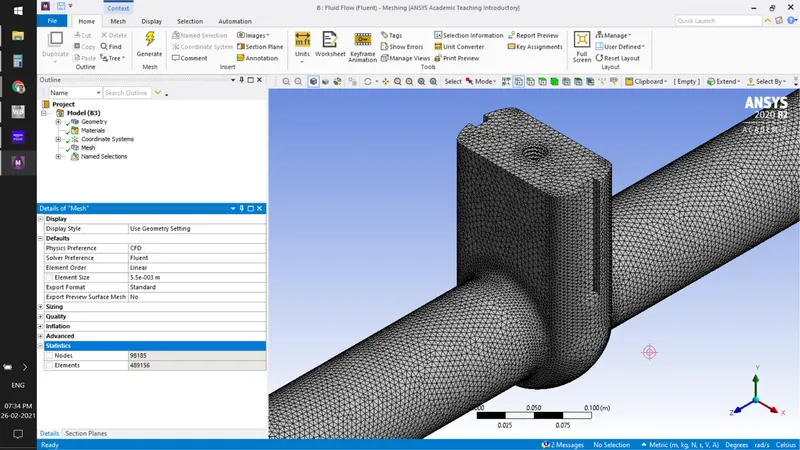
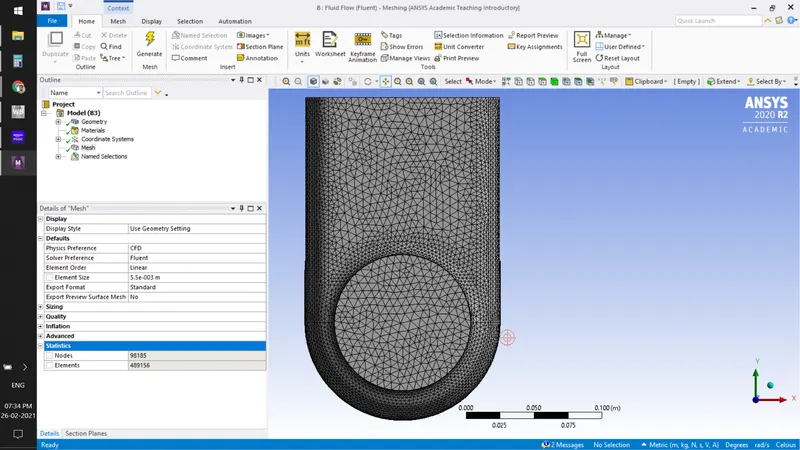
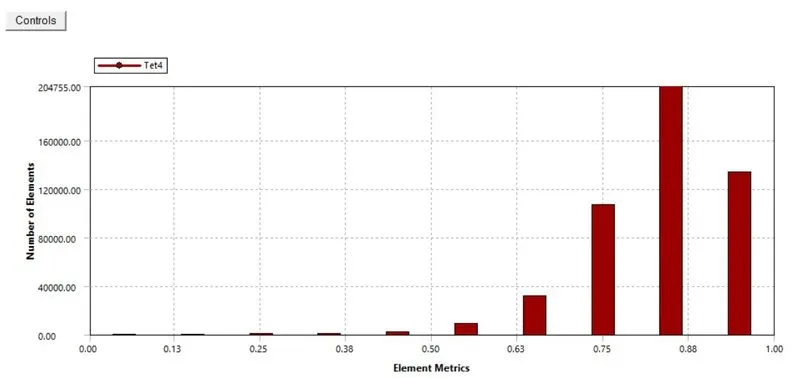 \
\
Solving:
Turbulence model: k-epsilon model
Boundary condition: Inlet pressure boundary condition with the pressure of 10 pascals.
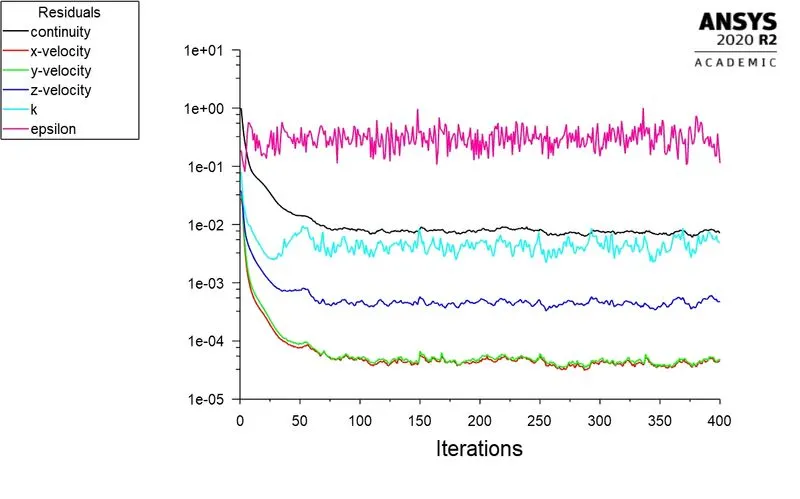
Residuals:
Matlab code for calculating flow coefficient and flow factor:
clear all
close all
clc

x = [5 10 20 30 40 60 80 100];
% mass flow rate in kg/s
y = [0.12341 0.14985 0.23971 0.36327 0.47262 0.65053 0.78542 0.88156]
% plot(x,y)

del_p = [9.8759 9.817 9.53173 8.92439 8.17956 6.54646 4.97197 3.666] % in pascal

del_p_bar = 1e-5.*del_p
del_p_psi = 0.000145038.*del_p

for i = 1:length(y)
    q_m3_ph = y(i)/(3600*1000);
    q_gallon_pm = q_m3_ph*4.40287;
    cv(i) = sqrt(1/del_p_psi(i))*q_gallon_pm;
    kv(i) = sqrt(1/del_p_bar(i))*q_m3_ph;
end

hold on
subplot(2,1,1)
plot(x,kv)
xlabel('percentage of opening')
ylabel('Flow factor Kv')
subplot(2,1,2)
plot(x,cv)
xlabel('percentage of opening')
ylabel('Flow coefficient Cv')
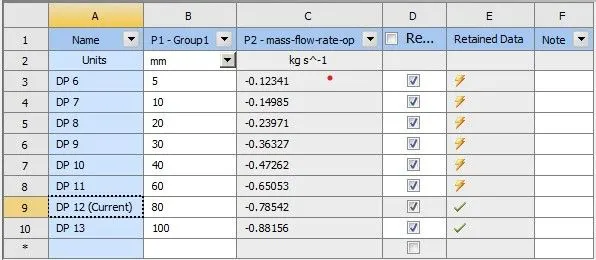
Mass flow rate with respect to the percentage of opening:
| Percentage of valve opening | Flow rate in kg/s |
| 5 | 0.12341 |
| 10 | 0.14985 |
| 20 | 0.23971 |
| 30 | 0.36327 |
| 40 | 0.47262 |
| 60 | 0.65053 |
| 80 | 0.78542 |
| 100 | 0.88156 |
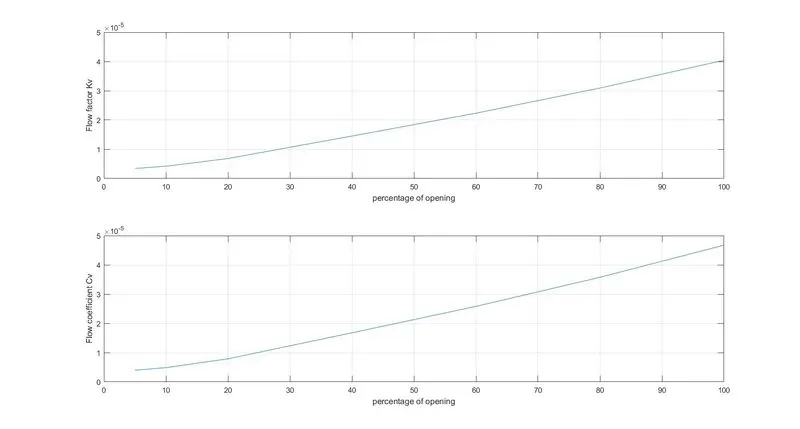
Percentage fo opening vs Flow factor and flow coefficient
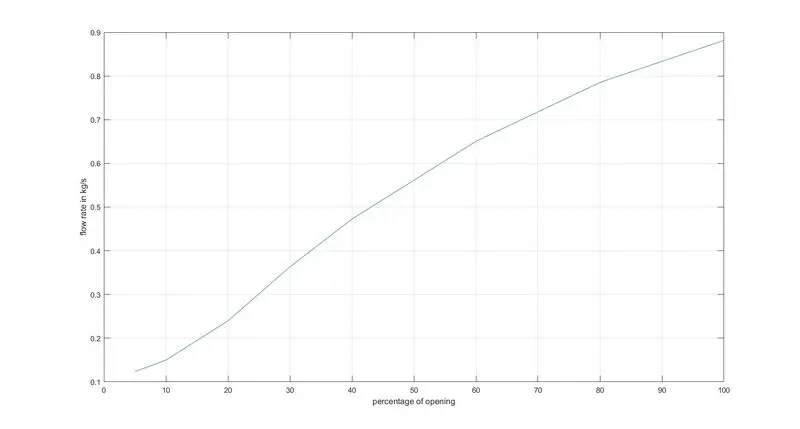
Percentage of opening vs Flow rate:
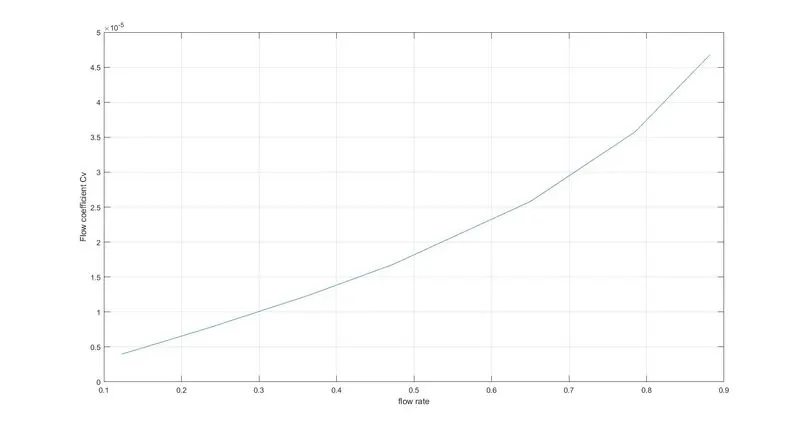
Flow rate vs Flow coefficient:
Conclusion:
- Thus the Flow coefficient directly proportional to the flow rate.
- thus the parametric study of the flow control valve was done on Ansys fluent.