Week 9 - Parametric study on Gate valve.
Parametric study on Gate valve
Aim : To conduct Parametric study on Gate valve.
Objectives :
perform a parametric study on the gate valve simulation by setting the opening from 10 % to 80%.
- Obtain the mass flow rates at the outlet for each design point.
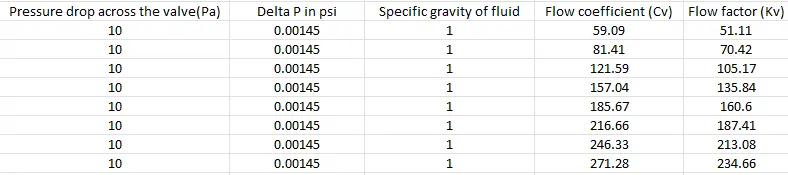
- Calculate the flow coefficient and flow factor for each opening and plot the graph.
- Discuss the results of the mass flow rate and flow coefficient.
Theory:
Gate valve : A gate valve, also known as a sluice valve, is a valve that opens by lifting a barrier (gate) out of the path of the fluid. Gate valves require very little space along the pipe axis and hardly restrict the flow of fluid when the gate is fully opened. The gate faces can be parallel but are most commonly wedge-shaped (in order to be able to apply pressure on the sealing surface).
Flow coefficient :
The flow coefficient of a device is a relative measure of its efficiency at allowing fluid flow. It describes the relationship between the pressure drop across an orifice valve or other assembly and the corresponding flow rate.
Mathematically the flow coefficient Cv (or flow-capacity rating of valve) can be expressed as :
`C_v = Q (sqrt((SG)/(DeltaP)))`
where:
- Q is the rate of flow (expressed in US gallons per minute),
- SG is the specific gravity of the fluid (for water = 1),
- ΔP is the pressure drop across the valve (expressed in psi).
Flow factor :
The metric equivalent flow factor (Kv) is calculated using metric units :
`K_v = Q (sqrt((SG)/(DeltaP)))`
where
- Kv is the flow factor (expressed in m3·h−1).
- Q is the flowrate (expressed in cubic metres per hour m3·h−1),
- SG is the specific gravity of the fluid (for water = 1),
- ∆P is the differential pressure across the device (expressed in bar).
Kv can be calculated from Cv using the equation:
`K_v = 0.865 * C_v`
Procedure:
Geometry :
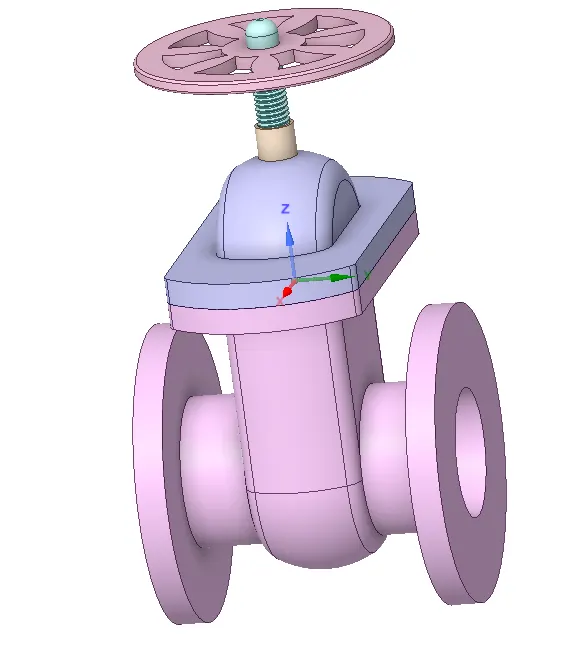
- Import the geometry into spaceclaim.
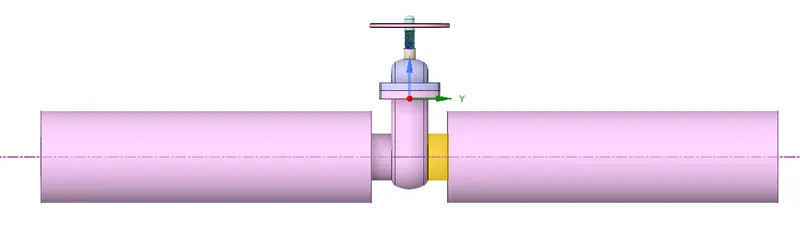
- Extend both sides of inlet and outlet by 800mm
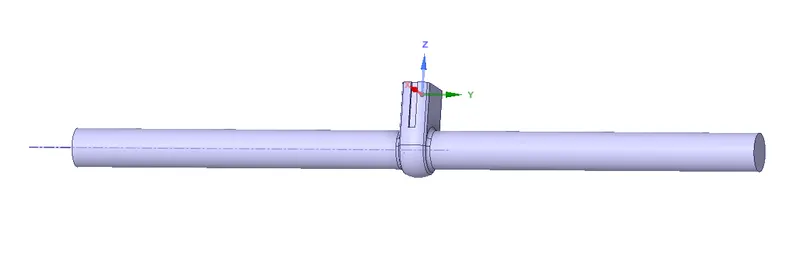
- Extract the fluid volume by selecting the edges
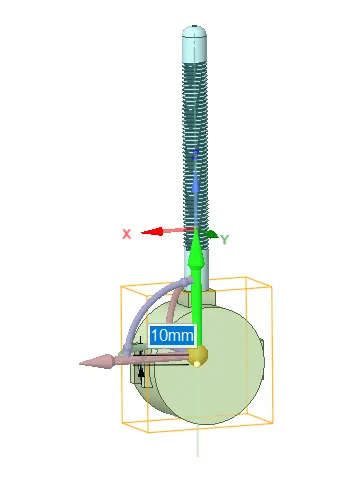
- Create a new parameter by moving the gate disc
Meshing :
Name the inlet and the outlet.
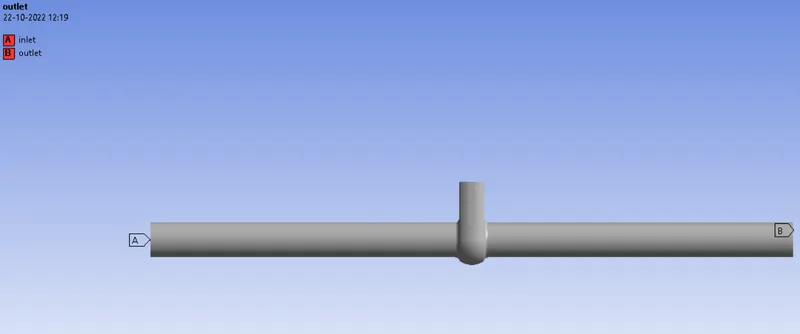
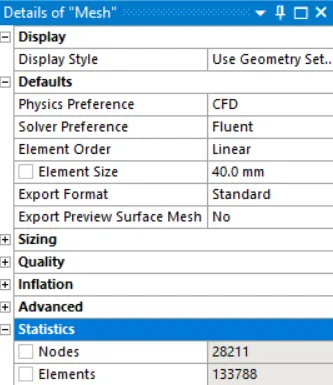
Set element size as 40mm
Mesh detail:
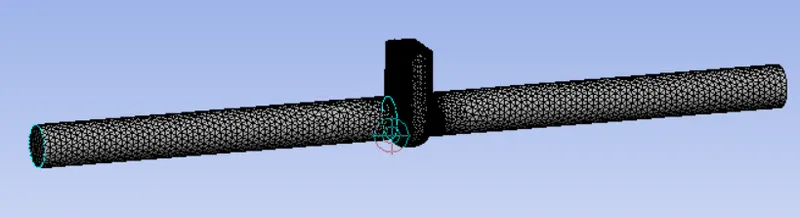
Mesh:
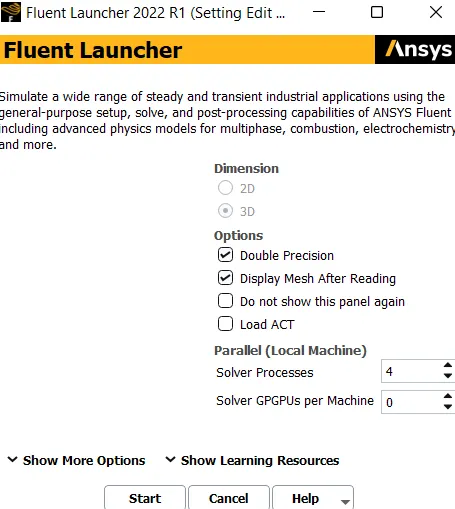
Setup:
- Set as Double precision and parallel 4 processors
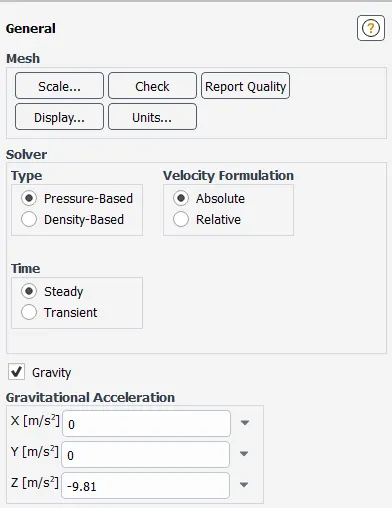
General :
Solver type - Pressure based
Velocity formulation - Absolute
Time - Steady
Gravity enabled in nagetive z direction
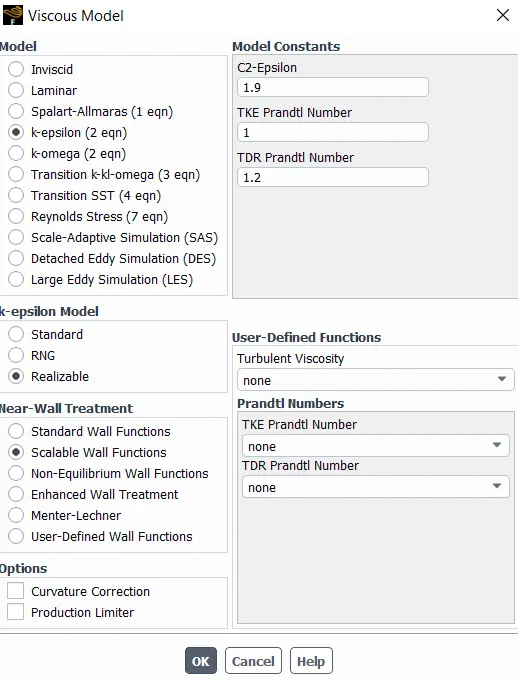
Viscous model :
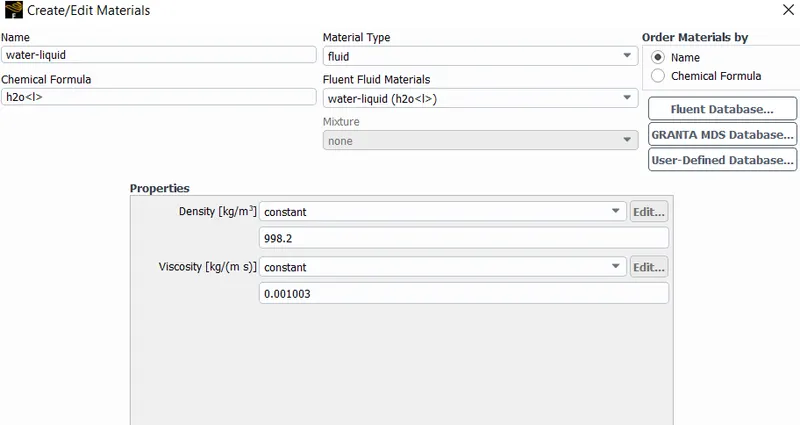
Material:
Boundaries:
Inlet: Pressure-inlet
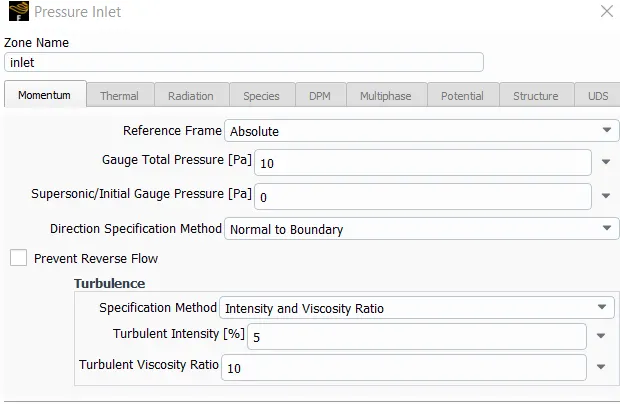
Outlet: Pressure-outlet
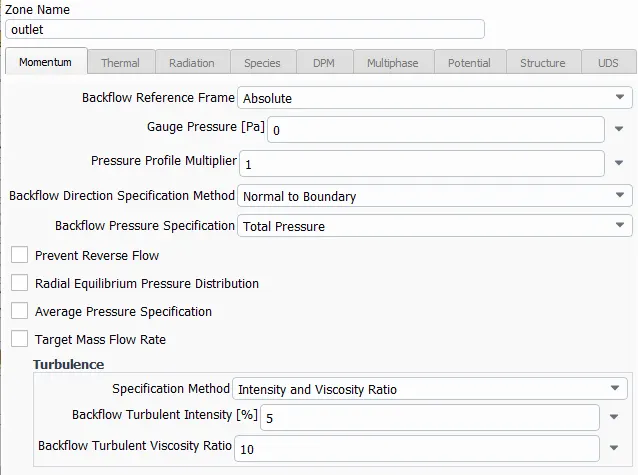
Wall-volume-volume : - wall
Solution method:
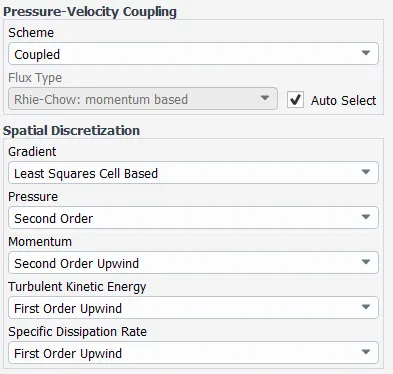
Standard initialize the setup and run the setup for 100 iterations.
Results:
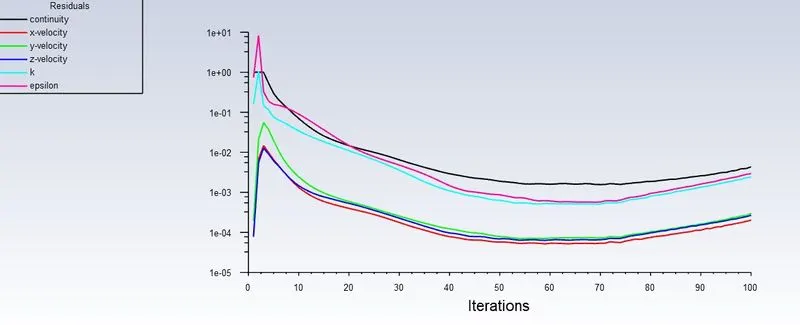
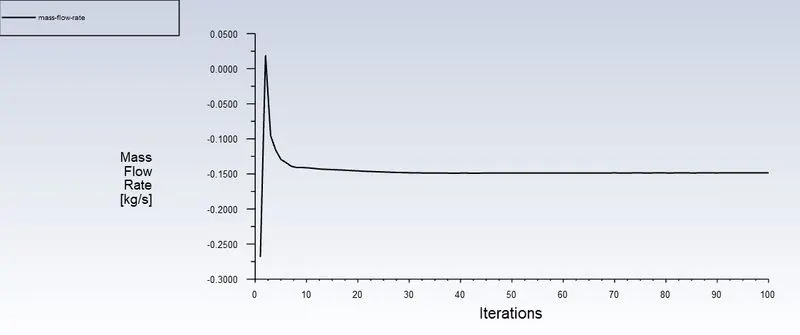
10% Gate valve lift:
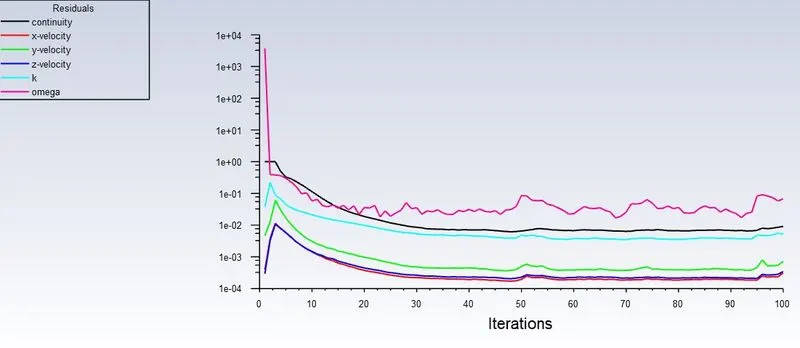
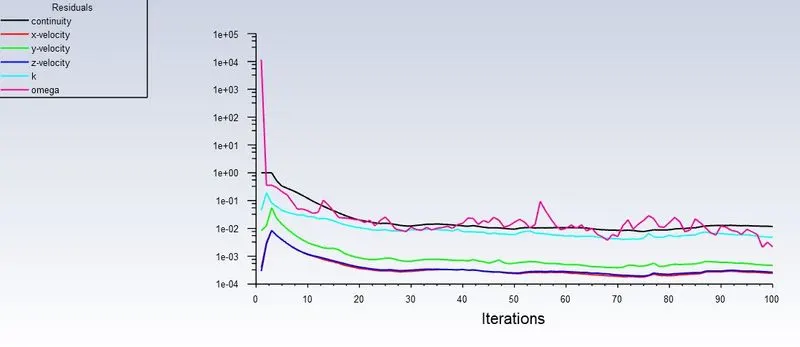
Residuals:
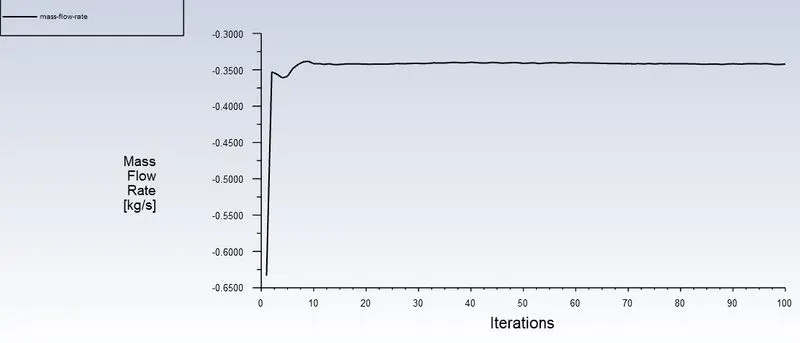
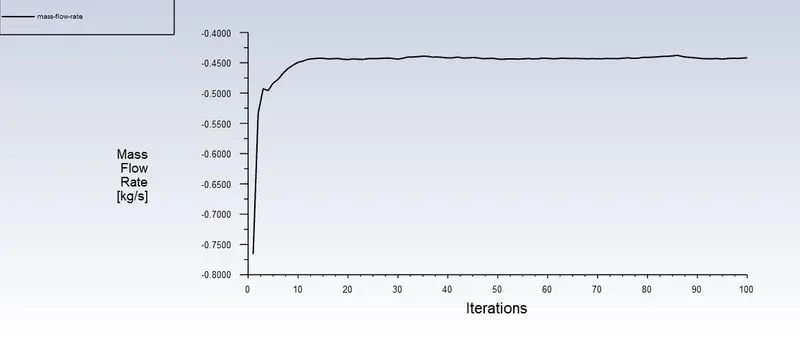
Mass flow rate:
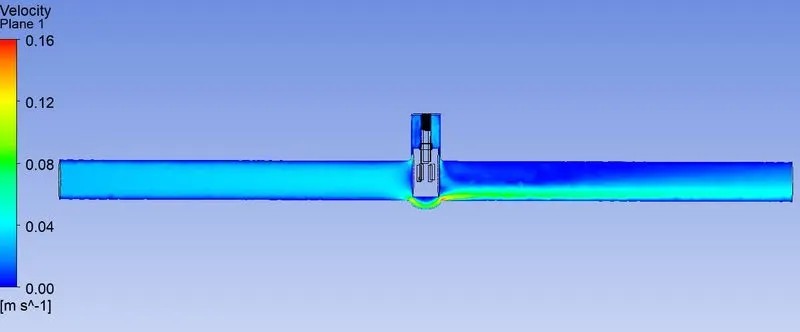
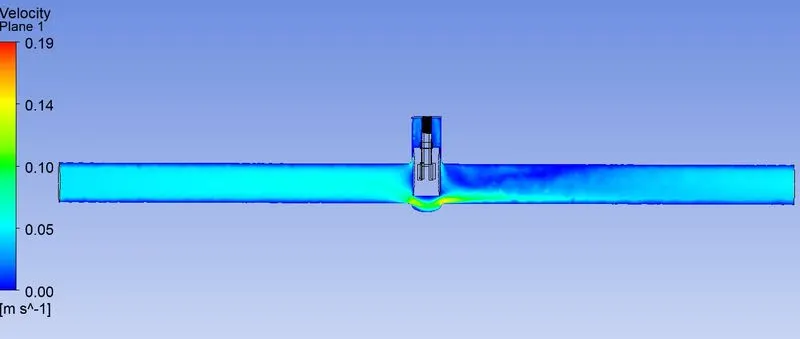
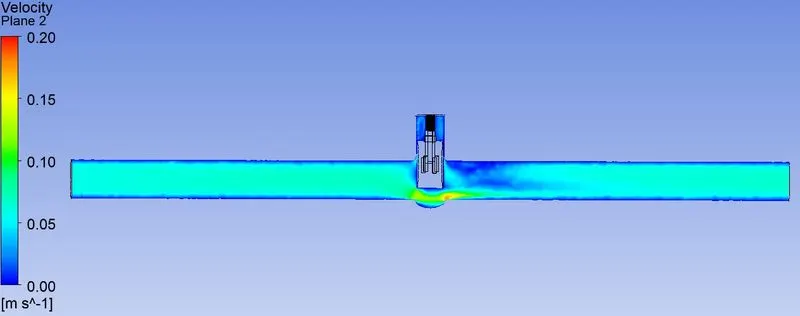
Velovity contour:
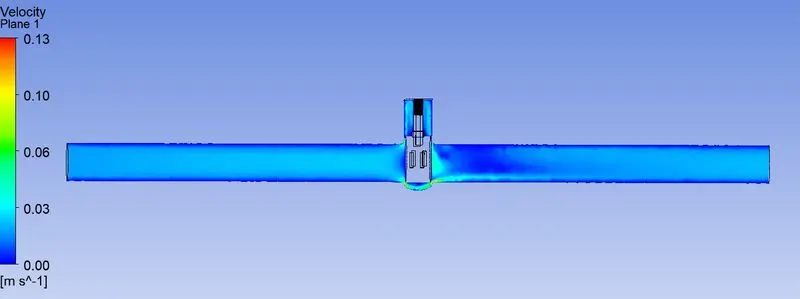
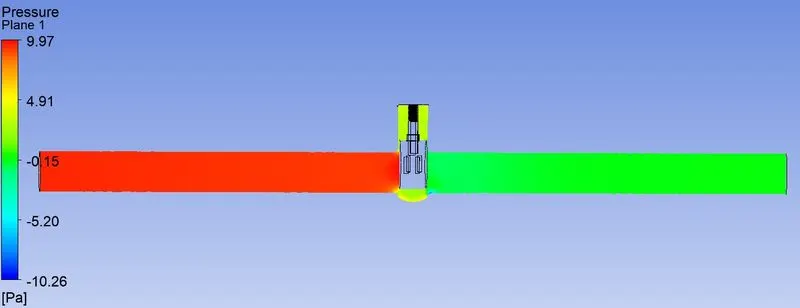
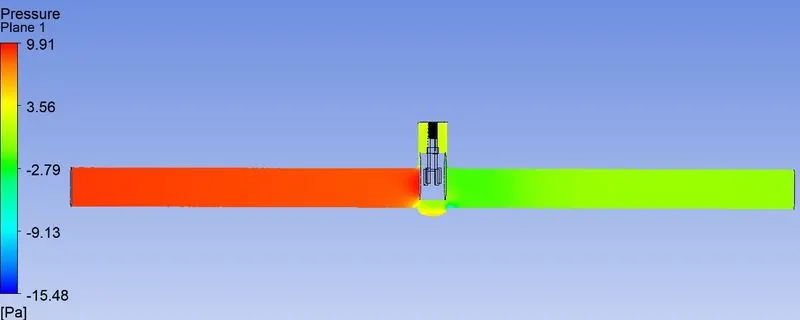
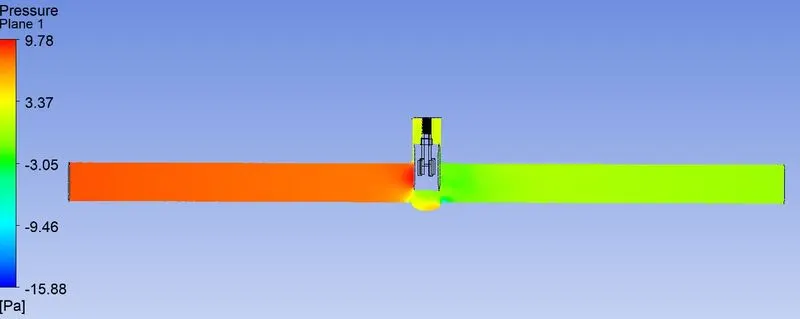
Pressure contour: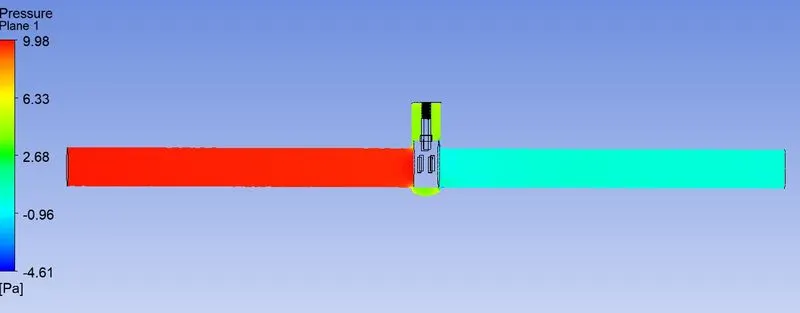
20% Gate valve lift:
Residuals:
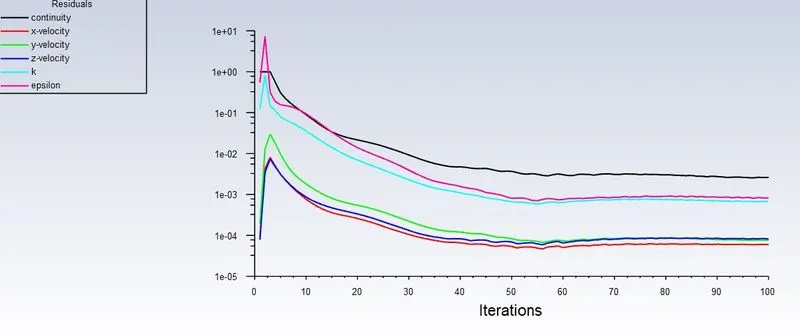
Mass flow rate:
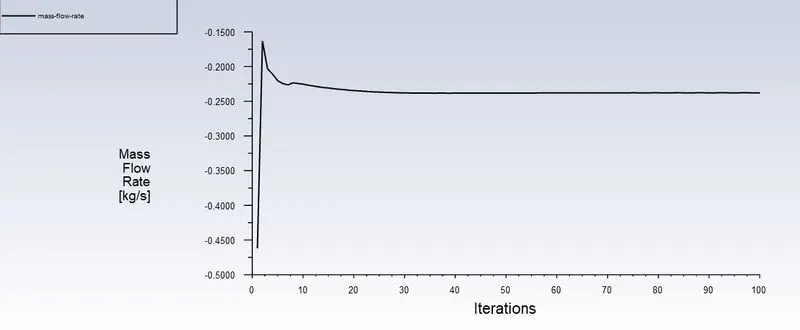
Velovity contour:
Pressure contour:
30% Gate valve lift:
Residuals:
Mass flow rate:
Velovity contour:
Pressure contour:
40% Gate valve lift:
Residuals:
Mass flow rate:
Velovity contour:
Pressure contour:
50% Gate valve lift:
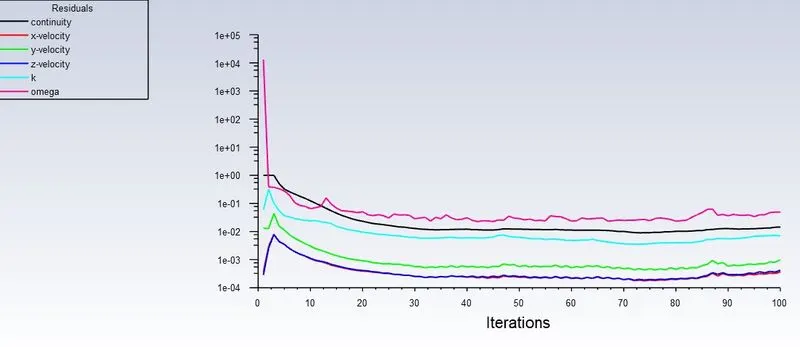
Residuals:
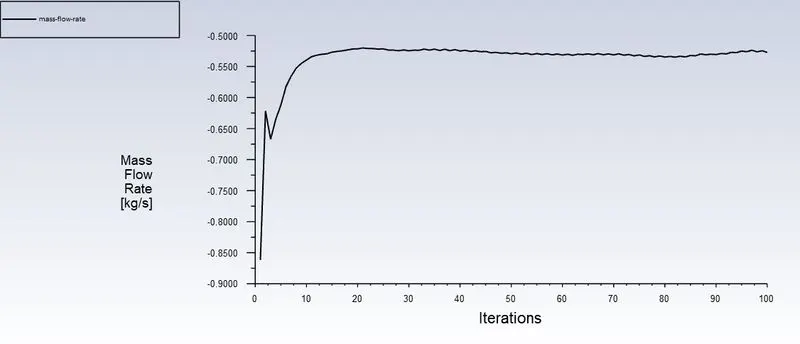
Mass flow rate:
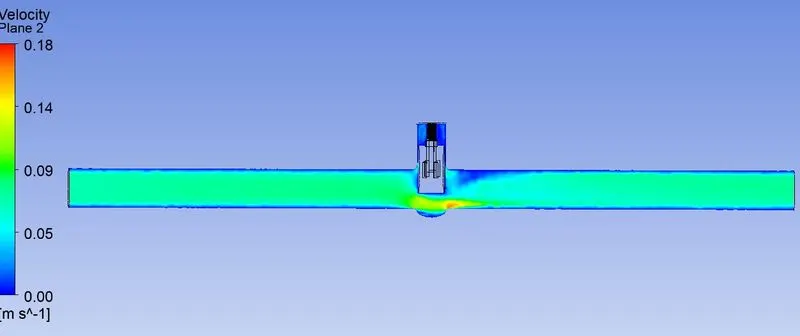
Velocity contour:
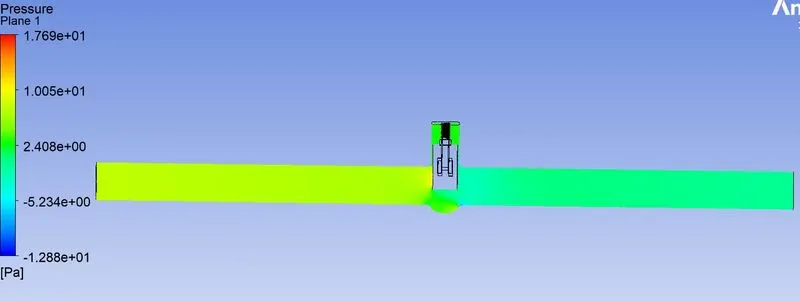
Pressure contour:
60% Gate valve lift:
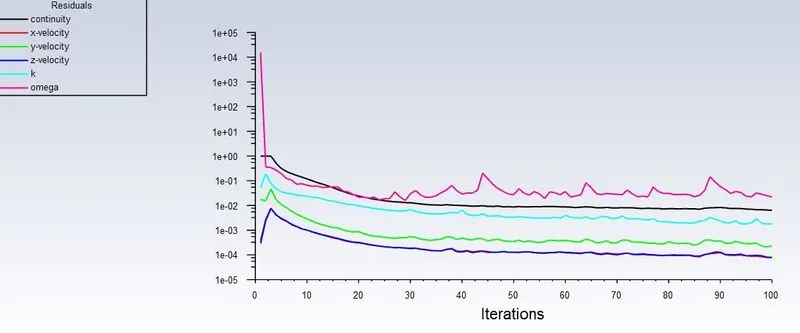
Residuals:
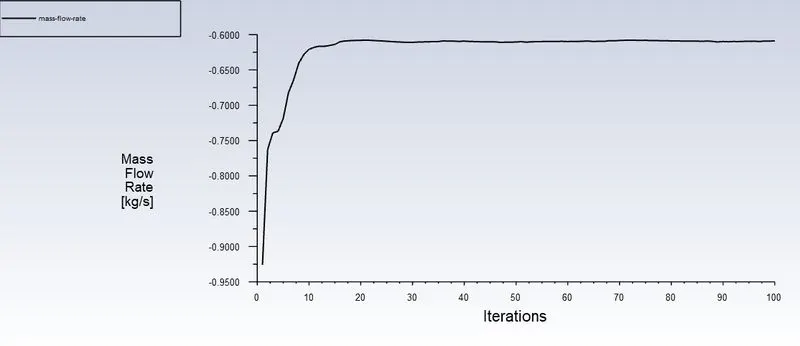
Mass flow rate:
Velocity contour:
Pressure contour:
70% Gate valve lift:
Residuals:
Mass flow rate:
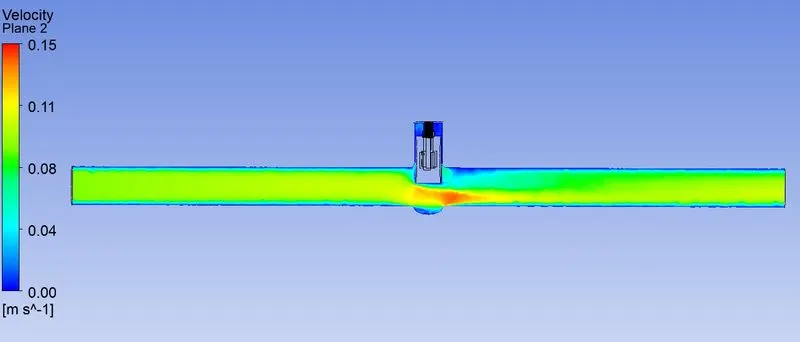
Velocity contour:
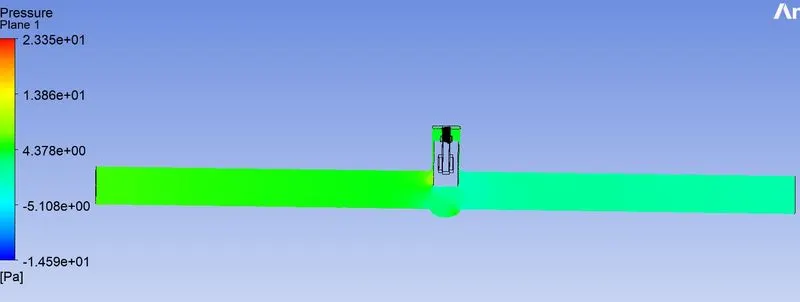
Pressure contour:
80% Gate valve lift:
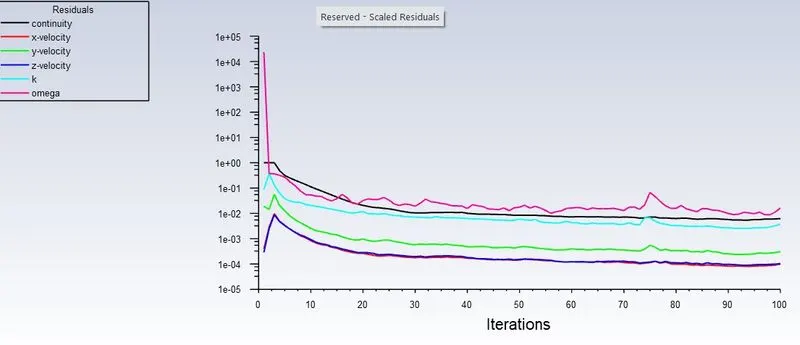
Residuals:
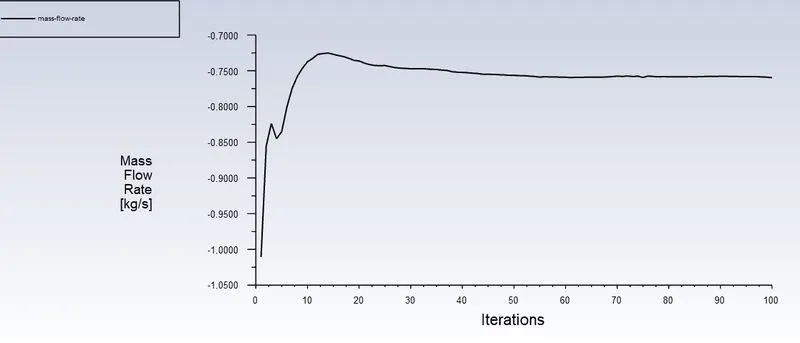
Mass flow rate:
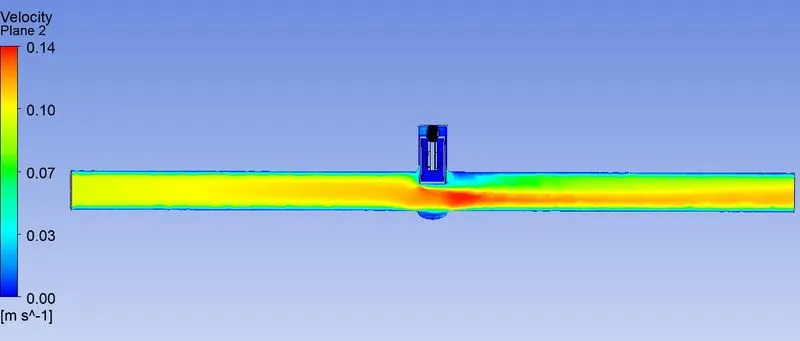
Velocity contour:
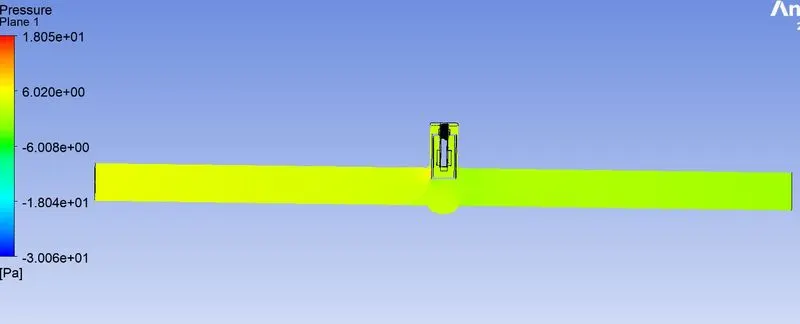
Pressure contour:
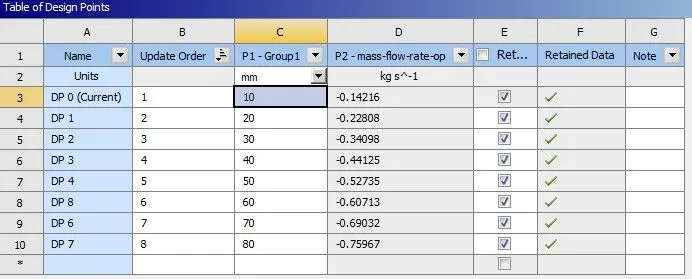
Values of massflow rate after parametrization:
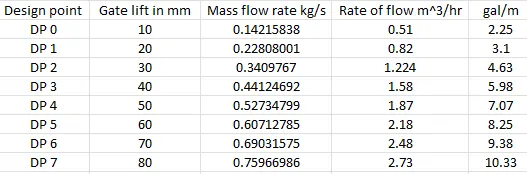
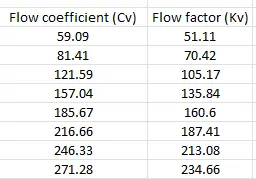
Export the data as csv file, and find flow factor and flow coefficient for all the Design points:
Plots:
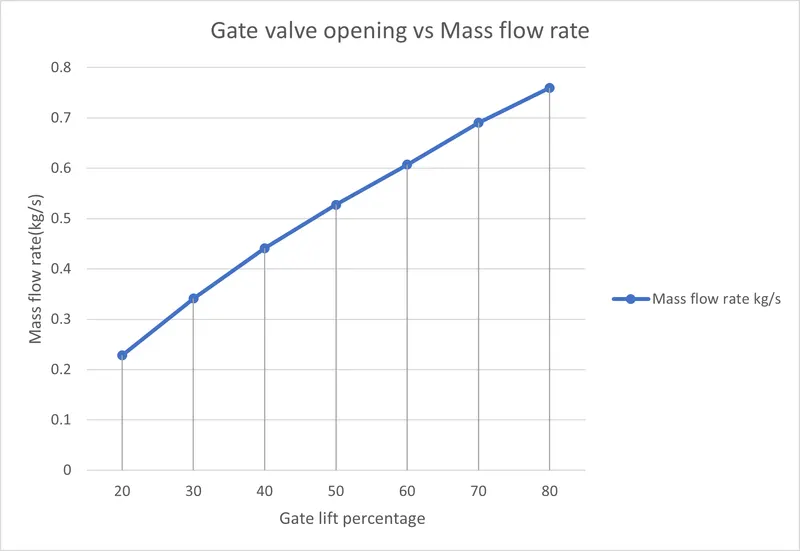
Graph of mass flow rate for different perecentage of gate lift
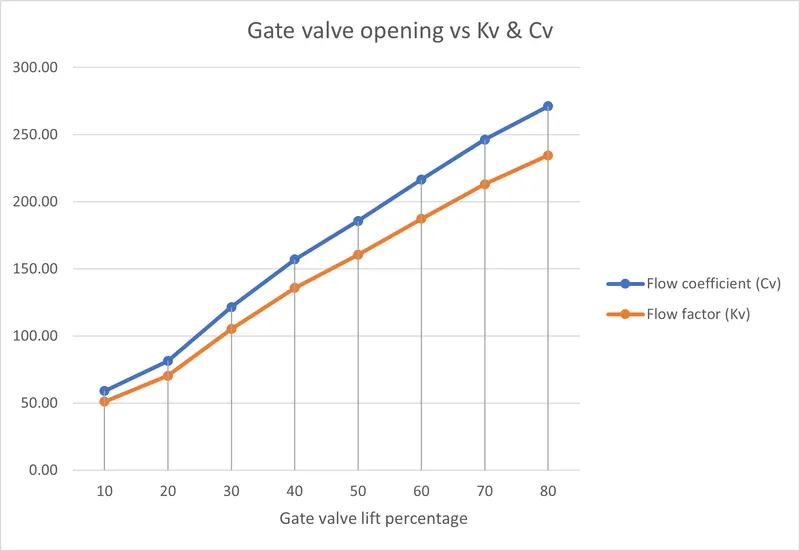
Graph of flow coefficient (Cv) and flow factor (Kv) for different perecentage of gate lift
Inference:
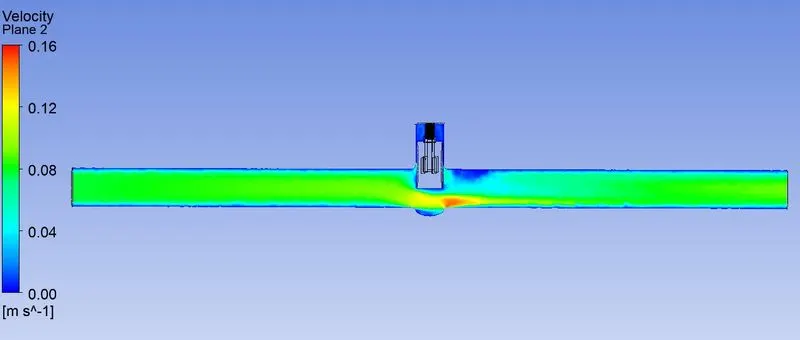
- Velocity of the flow increases after passing the gate valve.
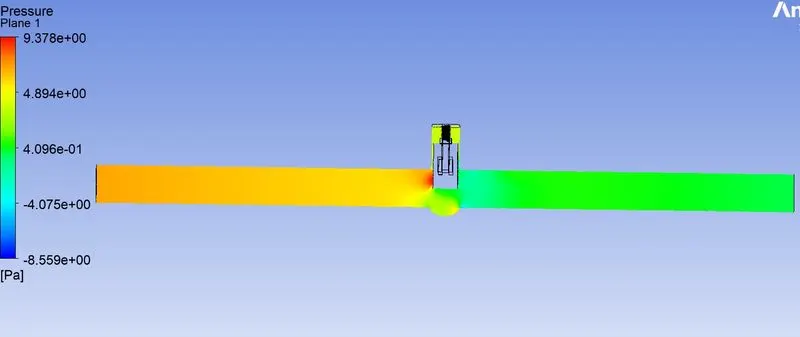
- Pressure drop occours across the gate valve due to increase in the velocity of the flow.
- As the percentage of gate valve opening increases, there will be less obstruction to the flow.
Effect on mass flow rate:
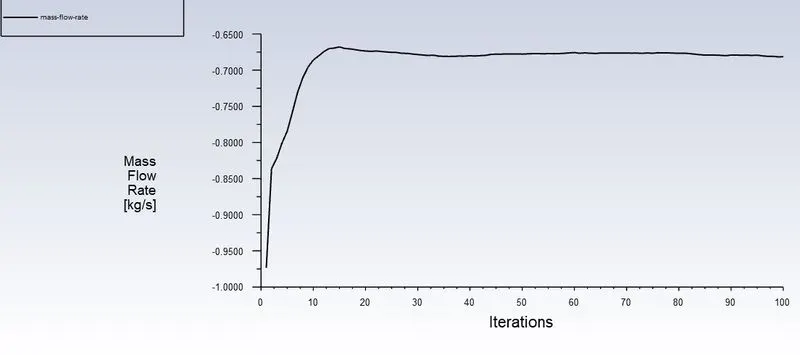
- Mass flow rate increases with increase in the lift of gate valve.
Effect on Flow coefficient (Cv) and Flow factor (Kv):
- We can see from the graph that, Both Flow coefficient (Cv) and Flow factor (Kv) increases with increase in the lift of gate valve
Conclusion:
- Parametrization of the gate valve is carried out and it is found that mass flow rate of the flow increases with increase in the lift value of the gate valve.