Switch Bezel Design
AIM :
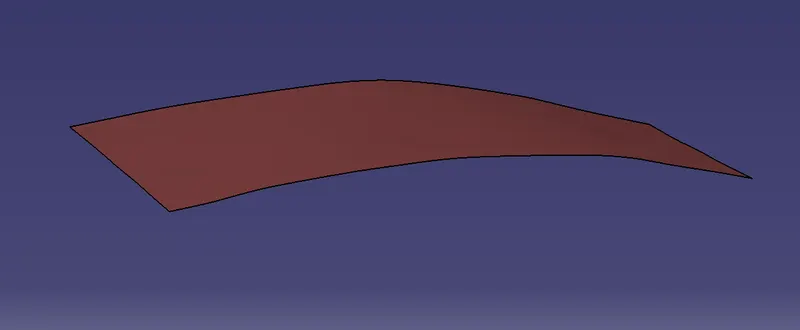
Create the Switch Bezel Plastic component through the given Class-A surface. To begin with, the tooling axis for the given Class-A Surface should be created meeting the requirements of the draft angle and at the end perform the Draft analysis on the model.
Detailed report :
Method Followed :
- Creating tool axis .
- Creating Class B surface from given Class A surface.
- Creating Class C surface from Class A & B surface .
- Creating a solid body by using a closed surface.
- Performing a draft analysis.
- Creating tool axis :
- To create the tooling axis, we need the proper orientation or view that gives the correct features and draft available in the component.
- So here the component view from the Z direction gives the proper view for the tool to see the features present in the geometry.
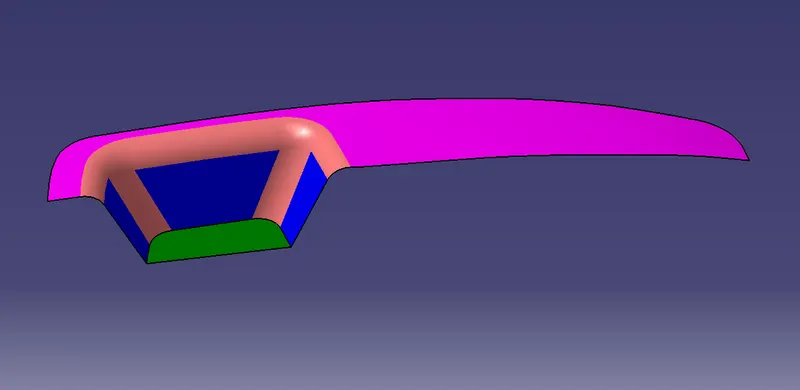
Tooling axis created by following steps :
Extracted the base surface.
Center point is created by using the on surface at zero.
On that point the axis system is created.
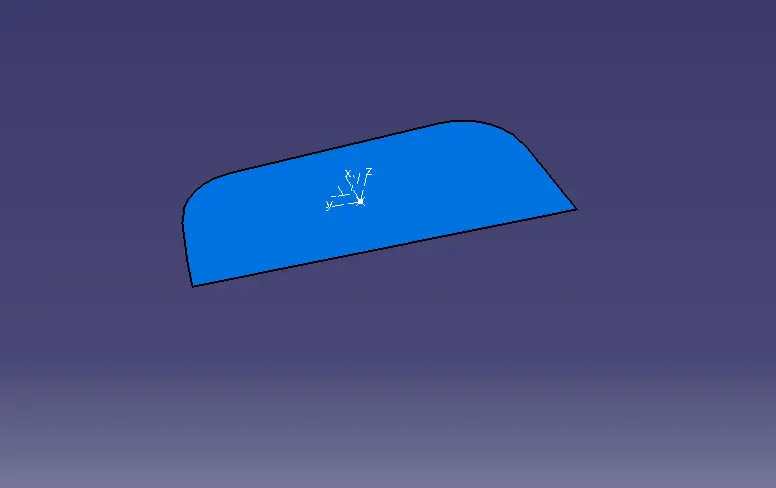
Take an intersection on the YZ plane to get a boundary line.
Made a dummy axis line to form a tooling axis by a bisecting two lines.
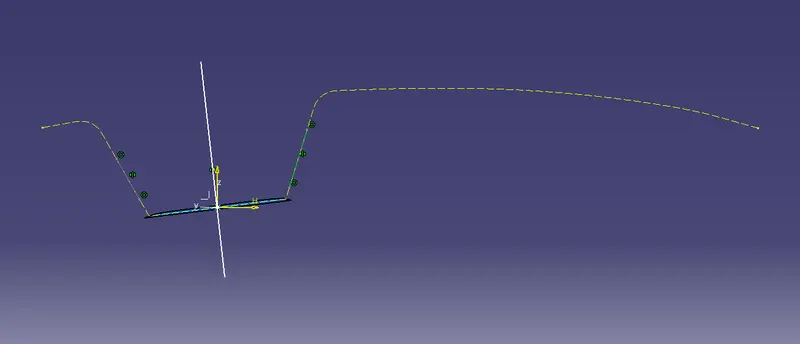
After that, I switched the surface and made a sketch on the XZ plane.
Using the axis center point, a line is drawn in sketch mode and it is constrained at the angle of 6 degrees.
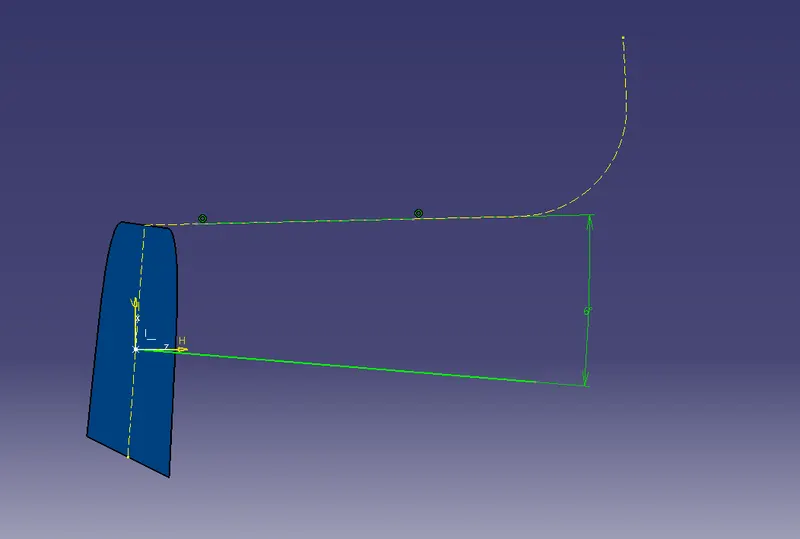
At last both the lines are bisected to get the Final tooling axis.
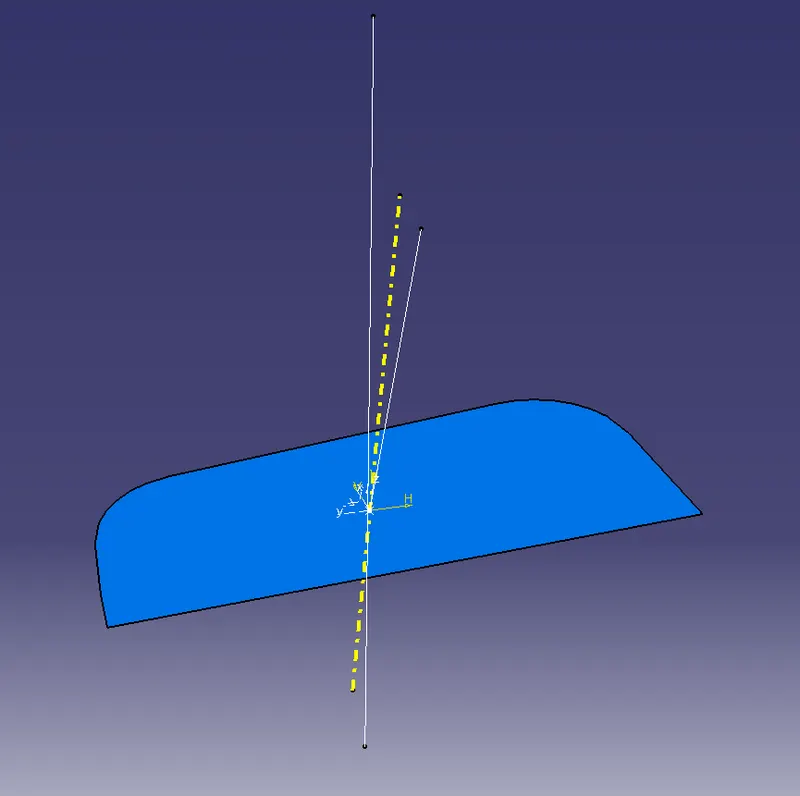
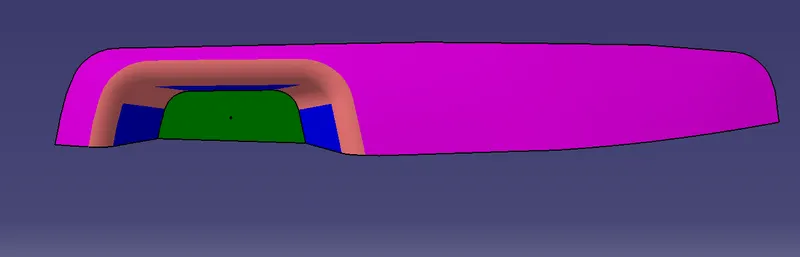
We extracted a Class A surface and worked on it separately to create Class B surface
- Base
- Walls
- Bezel rest surface
- Base :
- Extract the surface
- Untrim the surface
- Extrapolate it
- Offset it by 2.5mm to the downward.
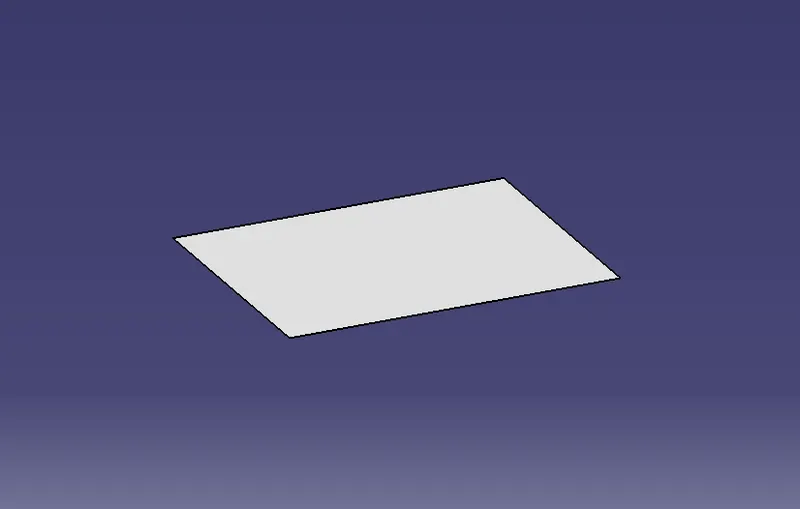
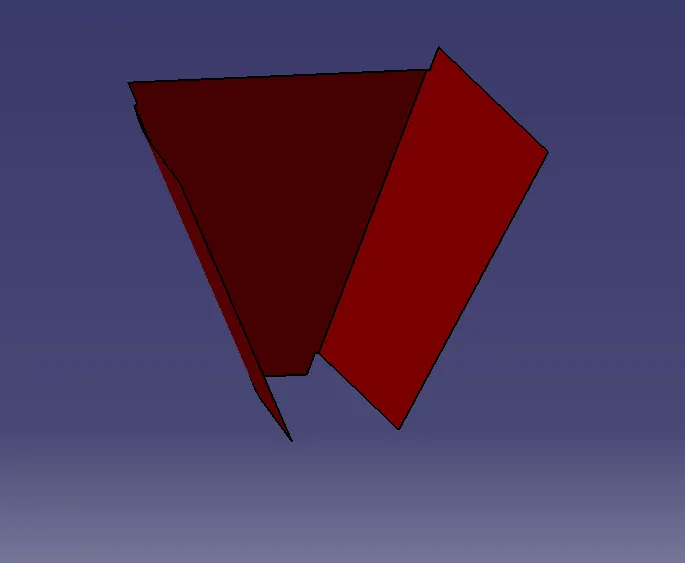
2. Walls :
- Extract the three walls separately
- Un-trim the surface of three extracts
- Extrapolate them
- Trim them with each other.
- Offset the given surface by 2.5mm to the outward direction.
3. Bezel rest surface :
- Extract it
- Un-trim the surface
- Extrapolate it
- Offsetted by 2.5mm to the downwards.
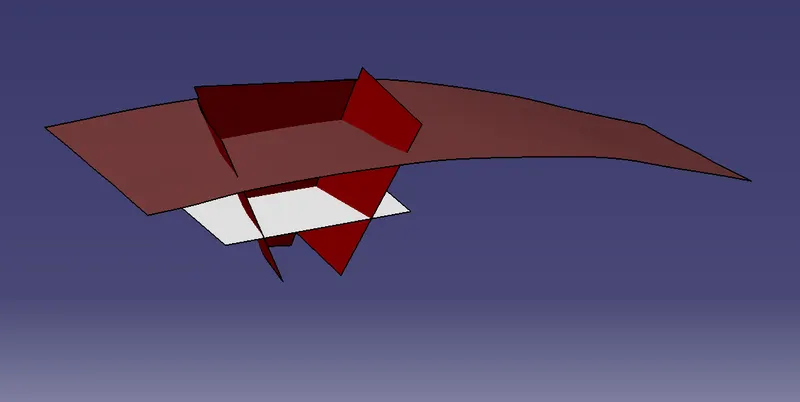
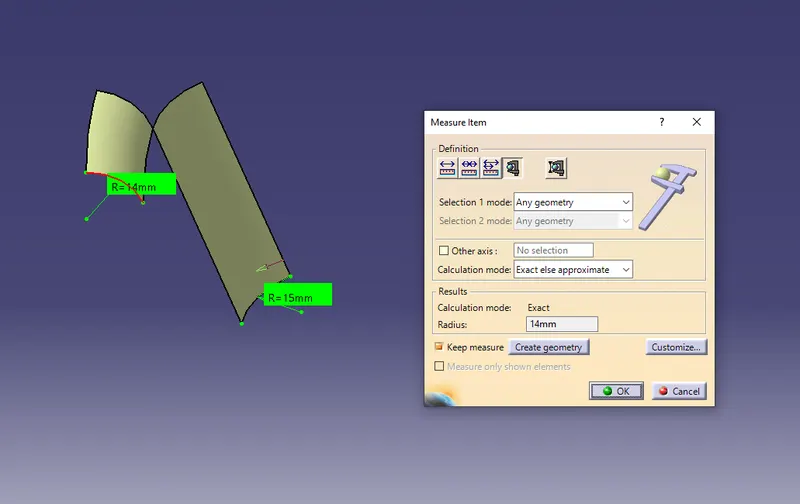
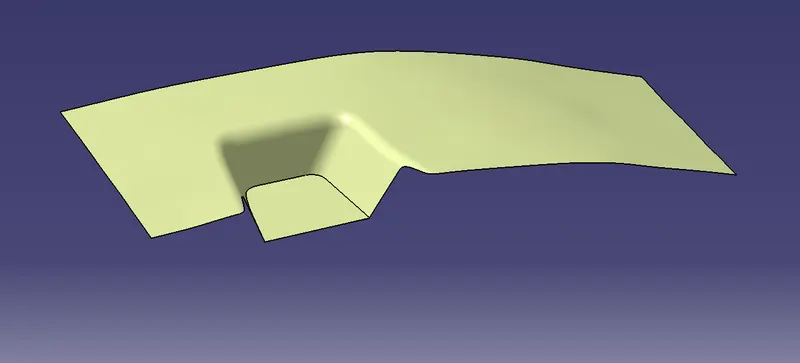
Trim the Walls, Base and Bezel rest surface to get Class B and give edge fillets of R14 and R15 by calculating fillet value. The Class B surface is given in the below image.
- Creating Class C surface from Class A & B surface :
Extract the boundaries of the Class A surface by using multiple extracts and make them into smooth curves.
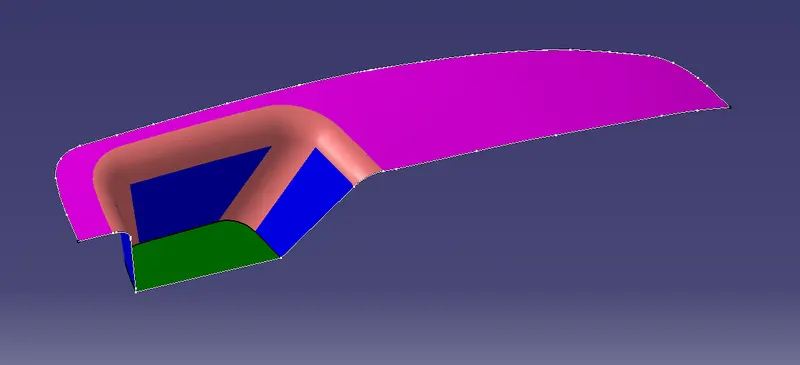
Sweep the boundaries with the help of tooling axis and give 3 degree draft in outward direction.
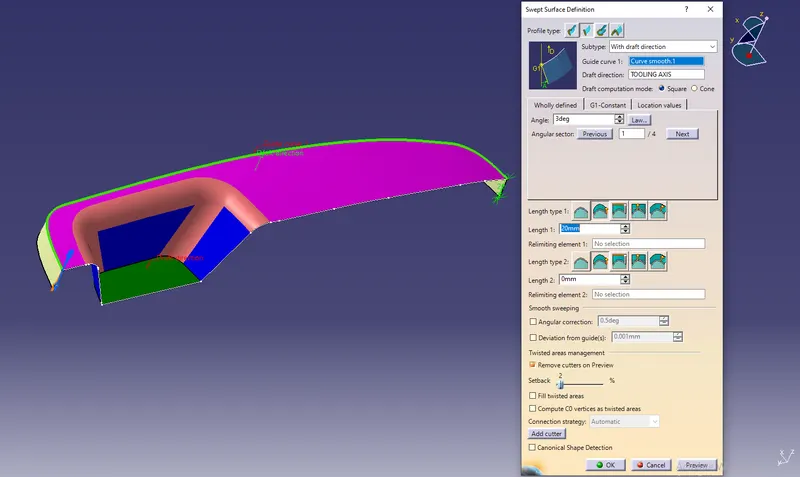
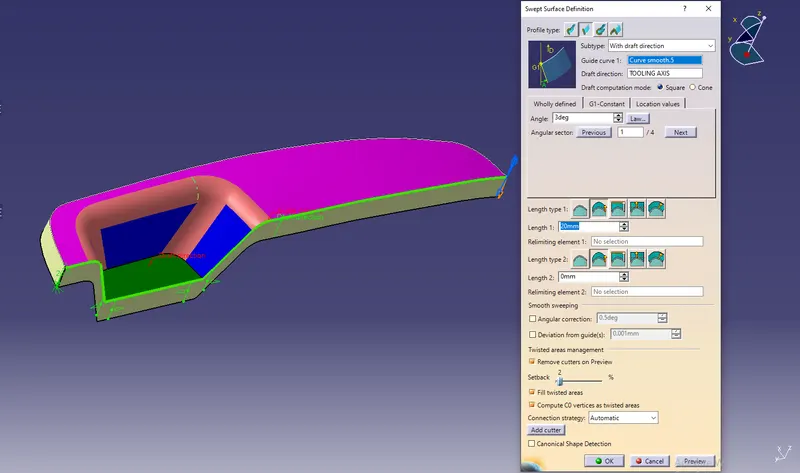
Extrapolate it by 3mm to trim it to join.
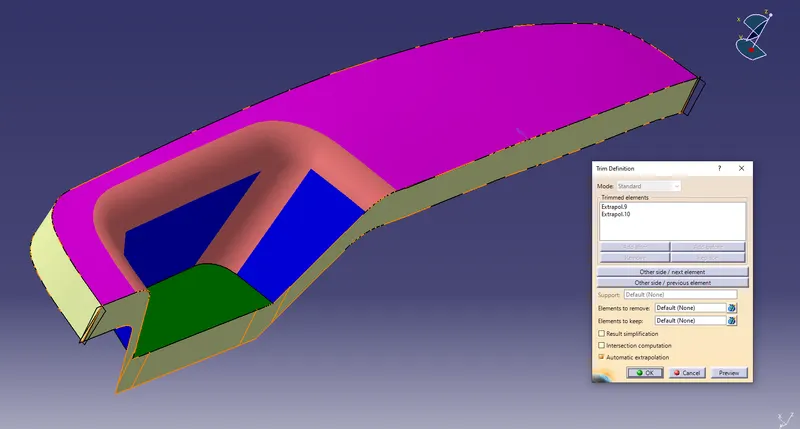
Final join :
First of all join the Class A and Class C surface together.
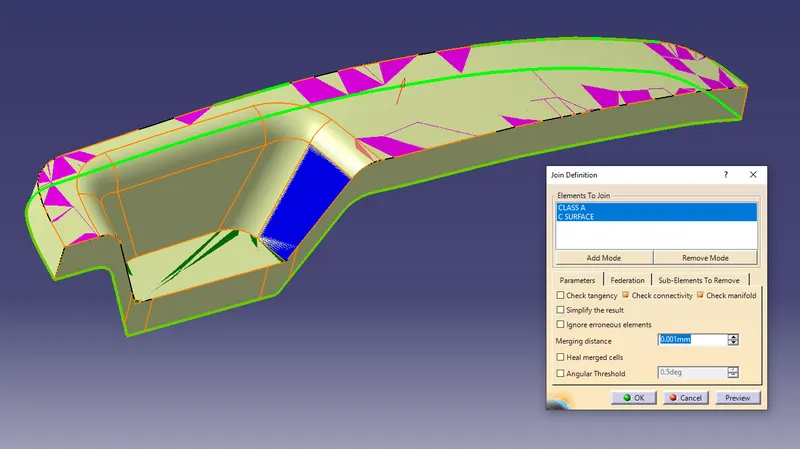
Then trim them with a Class B surface.
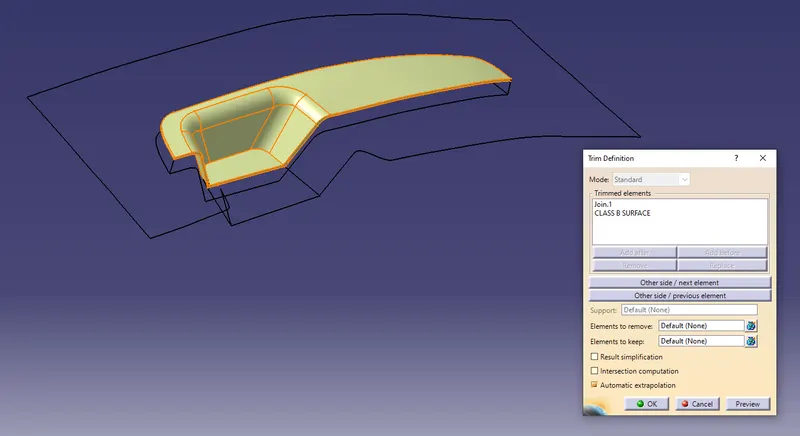
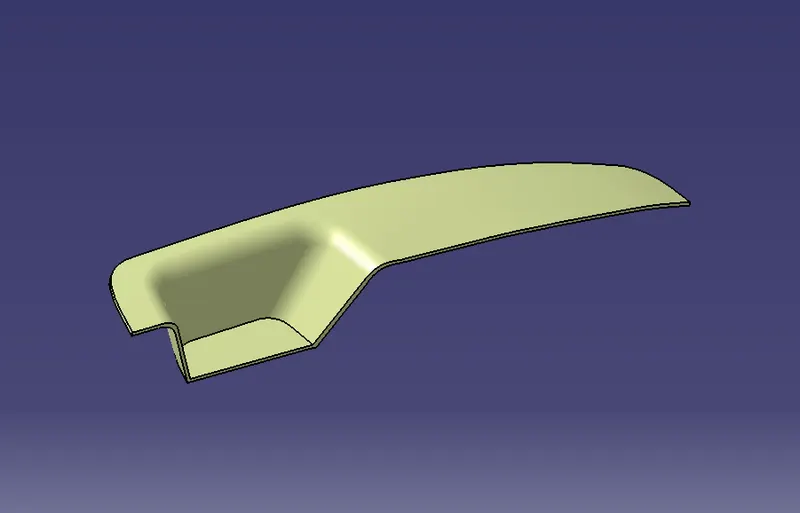
Check the surface whether it has a boundary or closed. After trimming we get the final Switch Bezel surface.
Creating a solid body by using a closed surface :
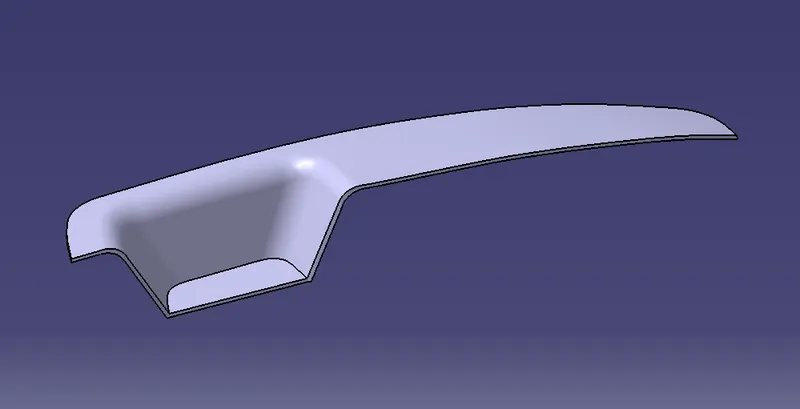
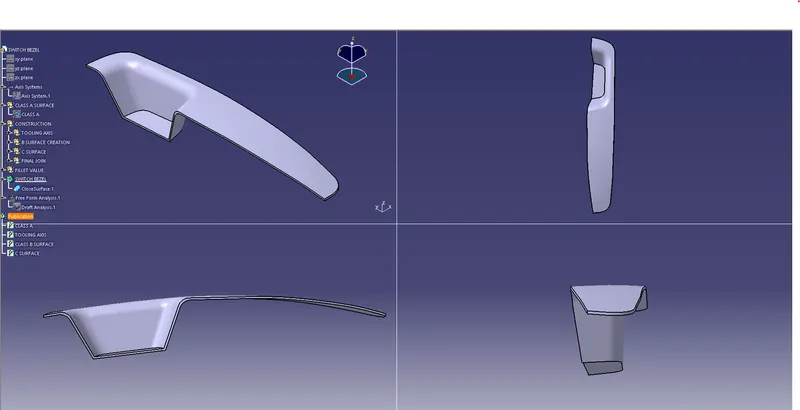
Solid body is created by a closed surface feature in the Part Design workbench in the defined partbody. This is our design output shown as given below in various orientations(Isometric view, Front view, Side view & Top view).
5. Performing a draft analysis :
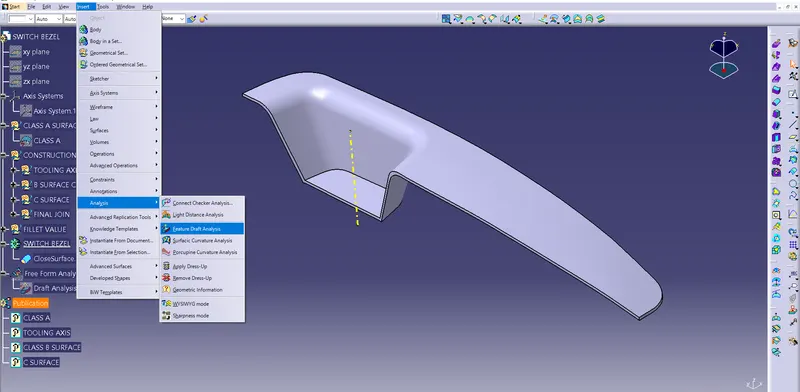
To perform draft analysis, Go to the insert > Analysis > Feature draft analysis.
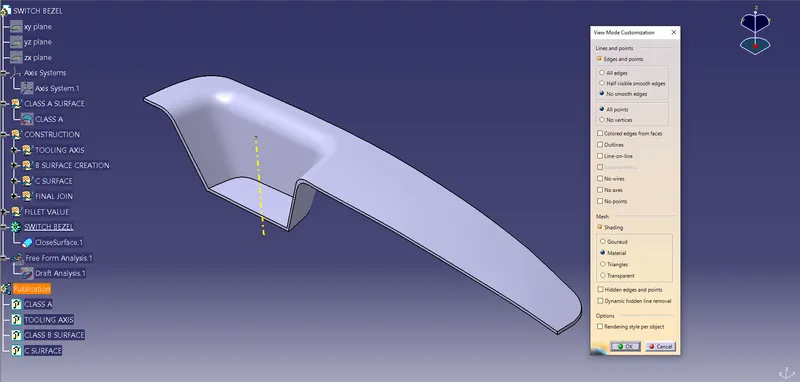
Switch customize view parameters and select material.
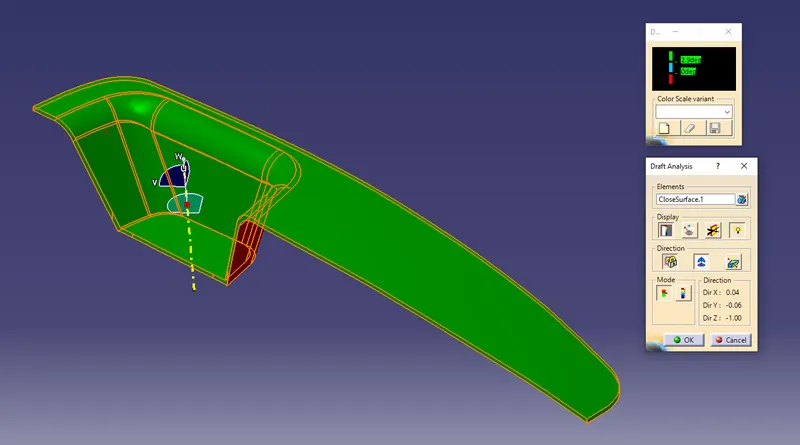
Click on the compass icon and align it with the tooling axis & click on the surface, we will get our results.
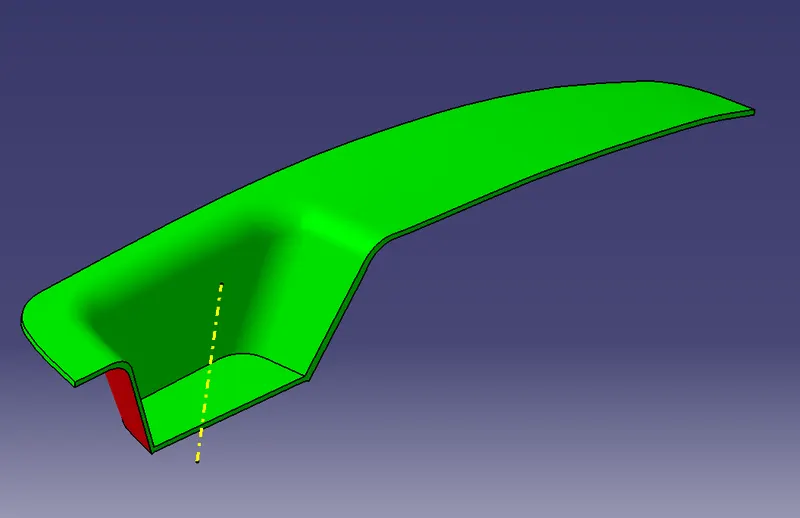
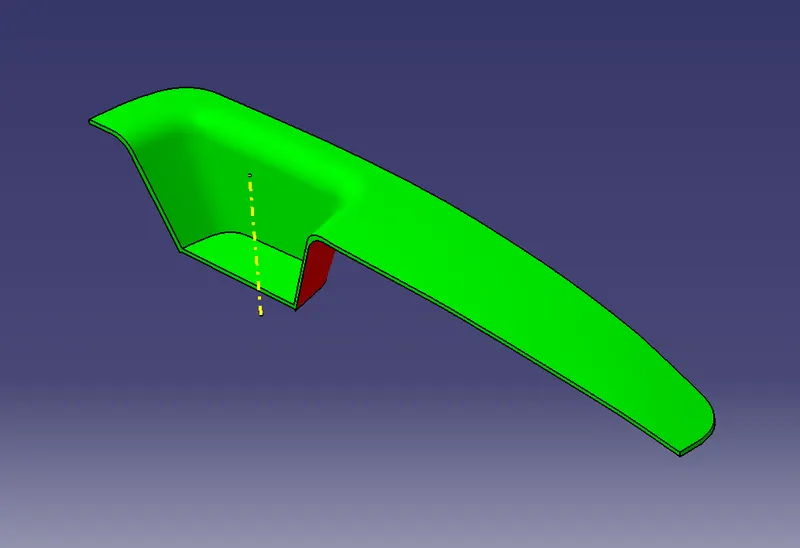
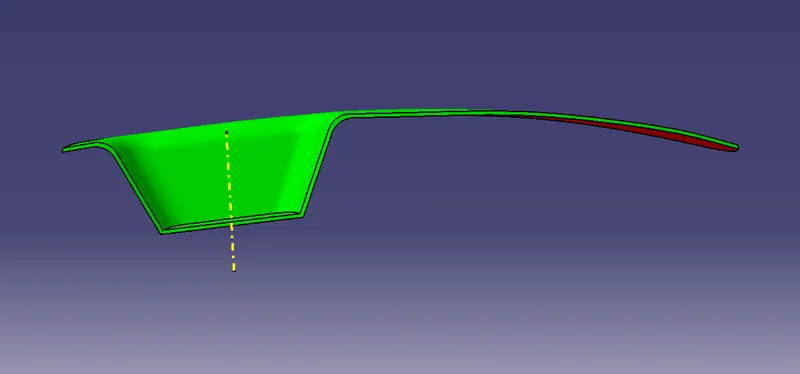
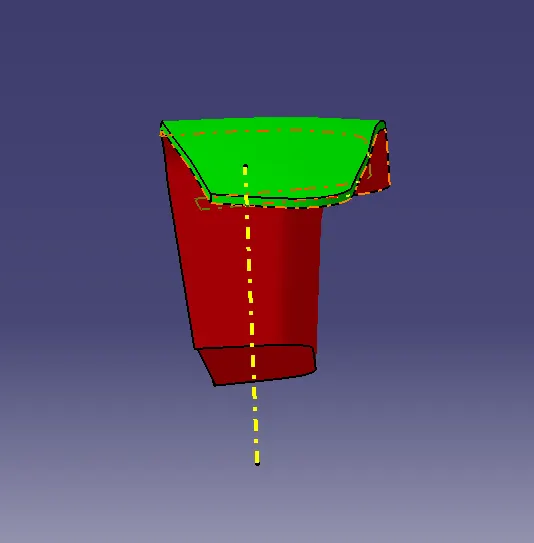
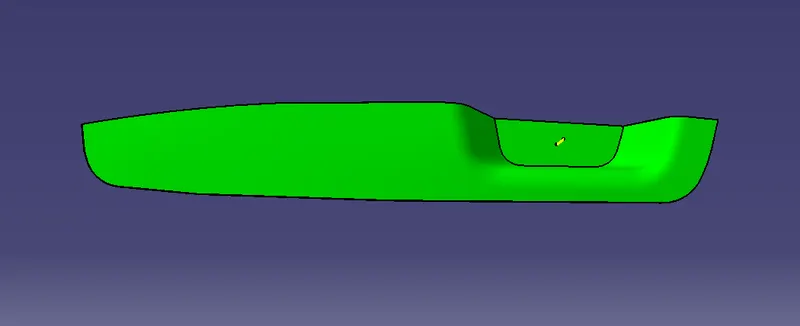
From the below image we can see that the surface in green colour has a more than 2.9° draft which is most required for tooling feasibility. Also see the color variant display box.
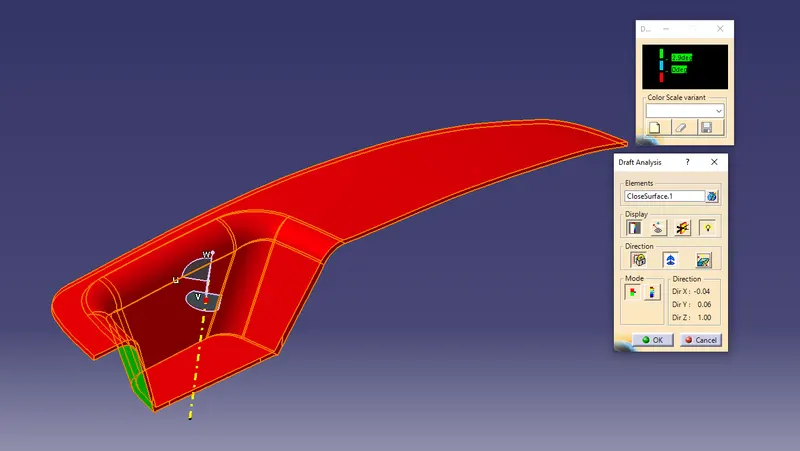
By inverting the draft direction we get the below image.
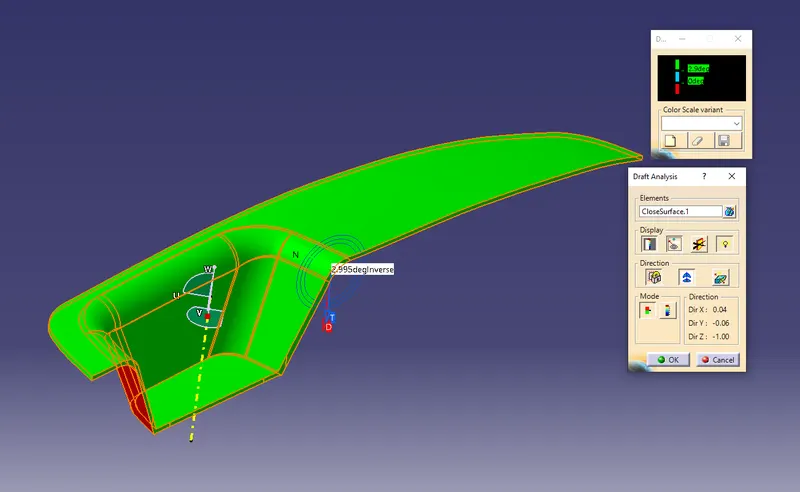
Below image shows running point draft analysis.
Below image shows full draft angle.
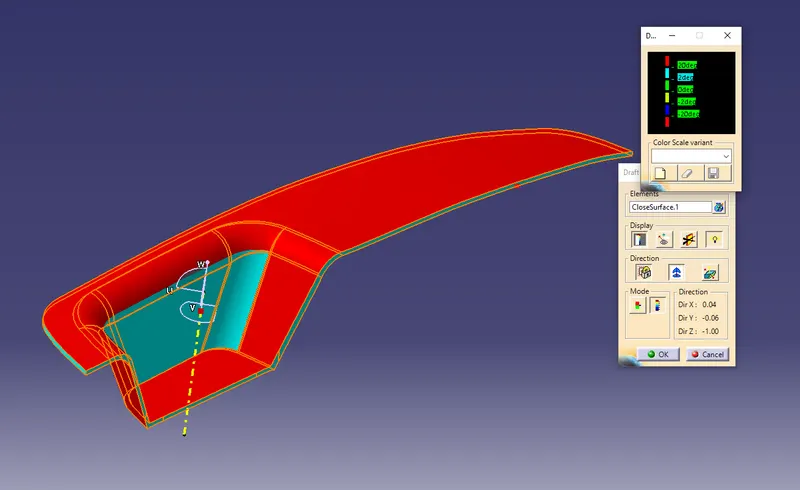
Image of the model with the proper colour code of the draft angle in various orientations ( Isometric, Front, Side and Top view).
Isometric View :
Front View :
Side view :
Top view :
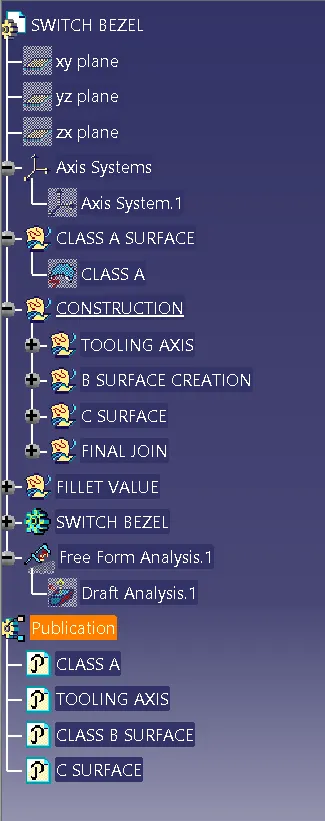
Publised the Tooling Axis, Class A,B and C surface.
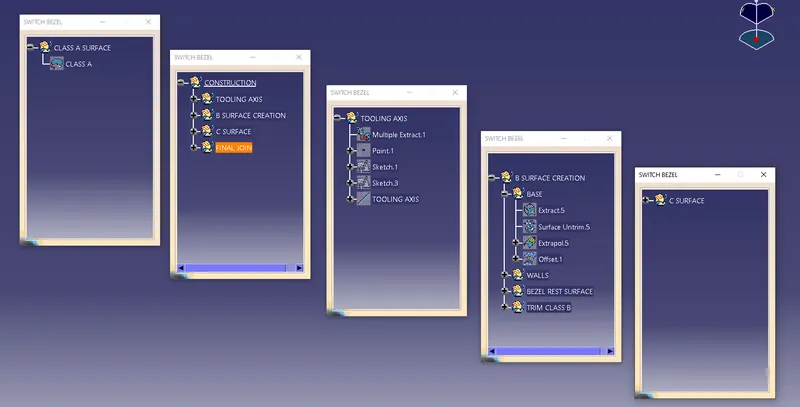
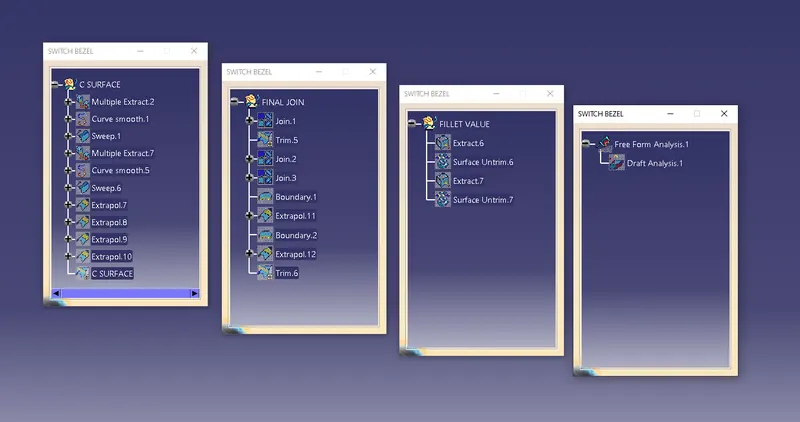
Images of the expanded Tree structure of the Geometrical set, part body and publications.
Conclusion : Created the Switch Bezel Plastic component through the given Class-A surface and performed Draft analysis.