Week 6 - CHT Analysis on a Graphics card
CHT ANALYSIS ON A GRAPHICS CARD
INTRODUCTION
Heat transfer is the branch of thermal engineering that concerns the generation, use, conversion and exchange of thermal energy (heat) between physical systems. Heat transfer is classified into various mechanisms, such as thermal conduction, thermal convection, thermal radiation, and transfer of energy by phase changes. Engineers also consider the transfer of
mass of differing chemical species, either cold or hot, to achieve heat transfer. While these mechanisms have distinct characteristics, they often occur simultaneously in the same system.
Heat conduction, also called diffusion, is the direct microscopic exchange of kinetic energy of particles through the boundary between two systems. Heat convection occurs when the bulk flow of a fluid (gas or liquid) carries heat along with the flow of matter in the fluid. Thermal radiation occurs through a vacuum or any transparent medium (solid-fluid or gas) by the transfer of energy through photons in electromagnetic waves.

CONJUGATE HEAT TRANSFER
Conjugate Heat Transfer (CHT) analysis deals with the study of heat transfer between solid and fluid domains by exchanging thermal energy at the interfaces between them, using a model based on a strictly mathematically stated problem.
In solids, conduction often dominates whereas, in fluids, convection usually dominates. Conjugate heat transfer corresponds with the combination of heat transfer in solids and heat transfer in fluids.
Typical applications of this analysis type exist as, but are not limited to, the simulation of heat exchangers, cooling of electronic equipment, and general-purpose cooling and heating systems.
WHY CHT?
Heat transfer in solids is mainly due to conduction, as described by Fourier's law defining the conductive heat flux, q, proportional to the temperature gradient:
Due to the fluid motion, three contributions to the heat equation are included:
- The transport of fluid implies energy transport too, which appears in the heat equation as the convective contribution. Depending on the thermal properties of the fluid and on the flow regime, either the convective or the conductive heat transfer can dominate.
- The viscous effects of the fluid flow produce fluid heating. This term is often neglected, nevertheless, its contribution is noticeable for fast flow in viscous fluids.
- As soon as a fluid density is temperature-dependent, a pressure work term contributes to the heat equation. This accounts for the well-known effect that, for example, compressing air produces heat.
Conjugate heat transfer helps us to integrate the effects of thermal conduction and thermal convection by monitoring the heat exchange process at the interface of the solid and fluid. This helps us to understand and capture the physics involved ineffective heat transfer in any system. This makes CHT analysis important in designing systems like heat exchangers, heat sinks, etc.
A CHT model, based on a strictly mathematically stated problem, describes the heat transfer between a body and a fluid flowing over or inside it as a result of the interaction of two objects. The physical processes and solutions of the governing equations are considered separately for each object in two subdomains. Matching conditions for these solutions at the interface provide the distributions of temperature and heat flux along the body–flow interface, eliminating the need for a heat transfer coefficient. Moreover, it may be calculated using these data.
APPLICATIONS
Starting from simple examples in the 1960s, the conjugate heat transfer methods have become a more powerful tool for modelling and investigating natural phenomena and engineering systems in different areas.
Typical applications include -
- Designing effective coolers, heaters or heat exchangers
- Designing heat sinks in electronic packages
- Thermal analysis of turbine vanes
- Aerospace
- Nuclear reactors
- Thermal goods treatment
- Food processing
- Atmospheric/thermal interactions in meteorology
- Procedures in medicine
AIM
- To simulate a steady-state conjugate heat transfer analysis on a scaled model of graphics card
- To plot the highest value of temperature found on the surface of the graphics card
- To plot the highest value of surface heat transfer coefficient found on the graphics card
- To plot temperature contours and contours for the value of surface HTC.
METHODOLOGY
This project primarily aims to conduct a CHT analysis on the scaled model of a graphics card. This is done in the following steps:
1. Baseline simulation - This step involved setting up a base simulation with an auto-generated, unrefined mesh. The inlet velocity of air was 1m/s. This simulation would reflect on the practicality of the solution obtained.
2. Considering three cases - Three cases for different values of inlet velocity i.e. 1m/s, 3m/s and 5m/s were considered after the baseline simulation and the solution was obtained.
3. Comparison of the three cases - Solutions from the above three cases were compared to understand how inlet velocity affects the temperature distribution and value of heat transfer coefficient.
BASELINE SIMULATION
The baseline simulation was conducted using a basic auto-generated mesh. The different parameters monitored during this stage are mentioned below.
1. GEOMETRY
The simulation uses a scaled model of a graphics card to replicate a real-life model. A cuboidal enclosure is created around the card for air used for cooling using a fan. The velocity of the air entering the enclosure may vary.
The various components of the graphics card are:
-Processor (heat generating element of the card)
-Fins (provided to increase the surface area for cooling)
-Base (holds all other electronic components and wiring)
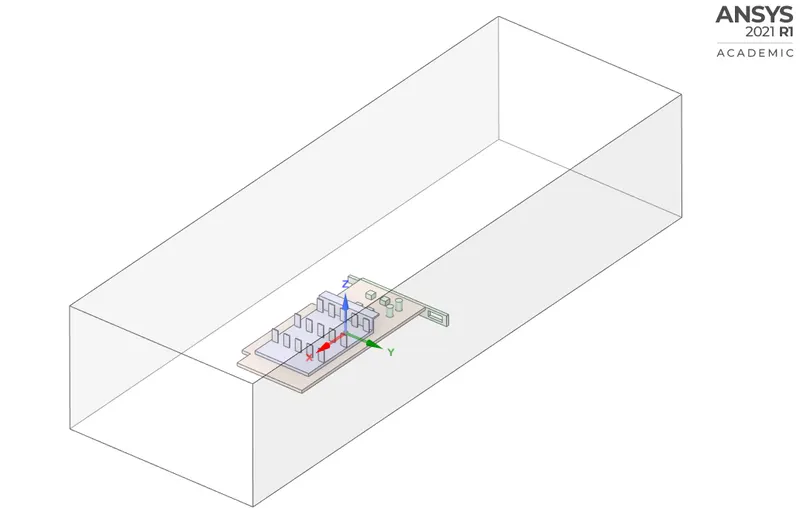
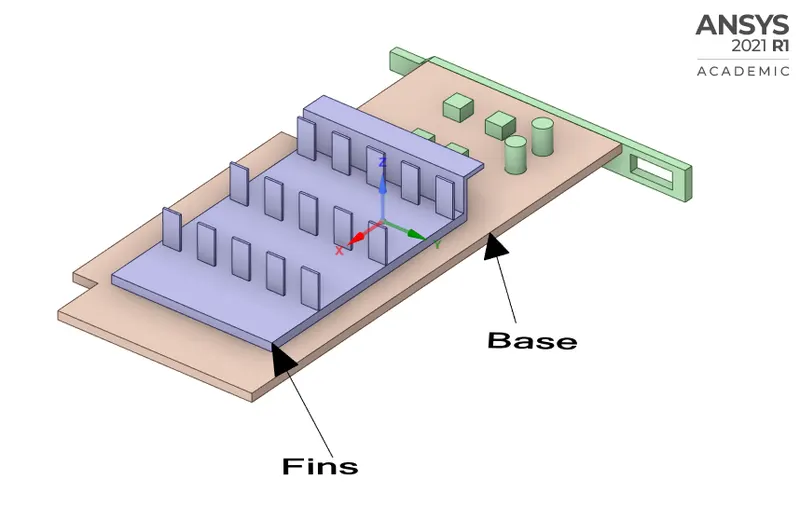
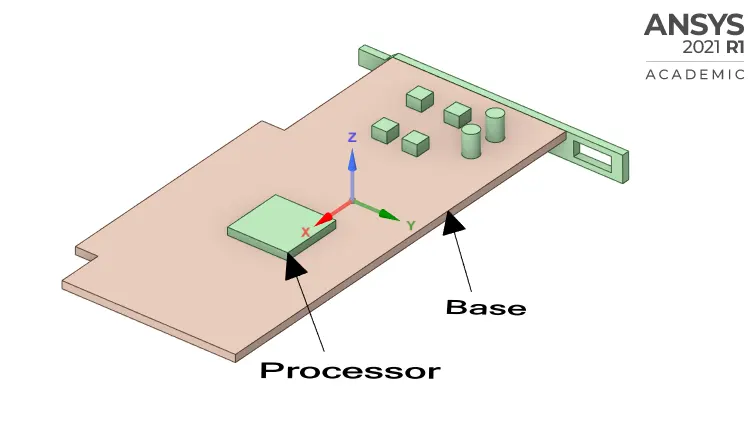
Share topology has been enabled to obtain a conformal mesh for the next stage of the simulation.
2. MESHING
An auto-generated mesh is used for the baseline simulation. This mesh will be refined later, once we confirm the practicality of the obtained solution.
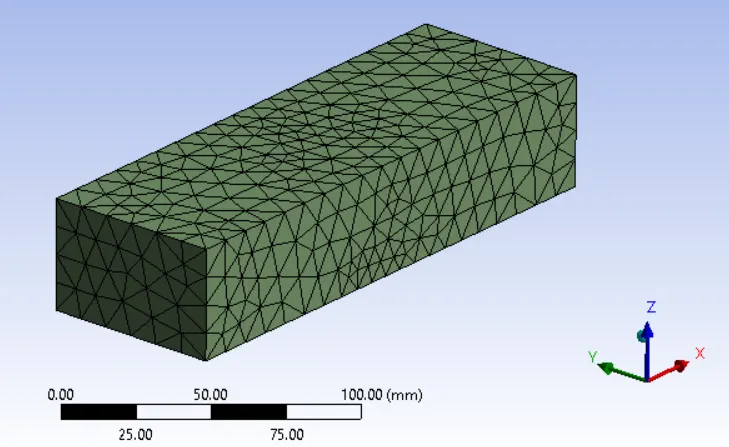
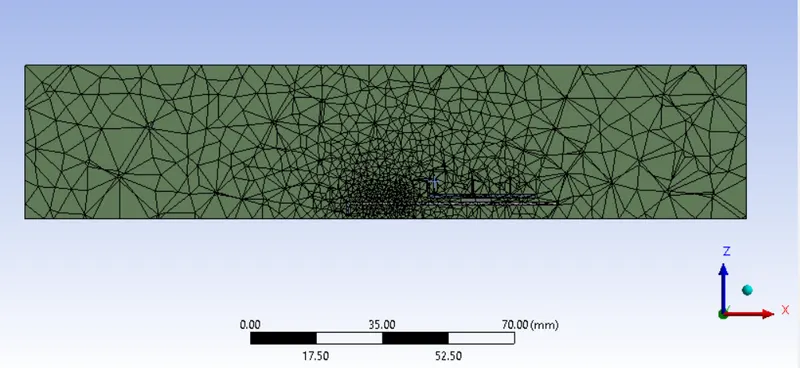
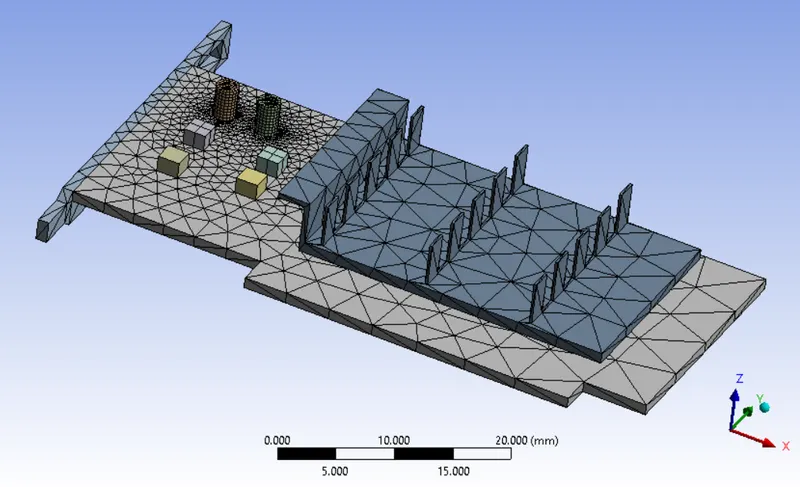
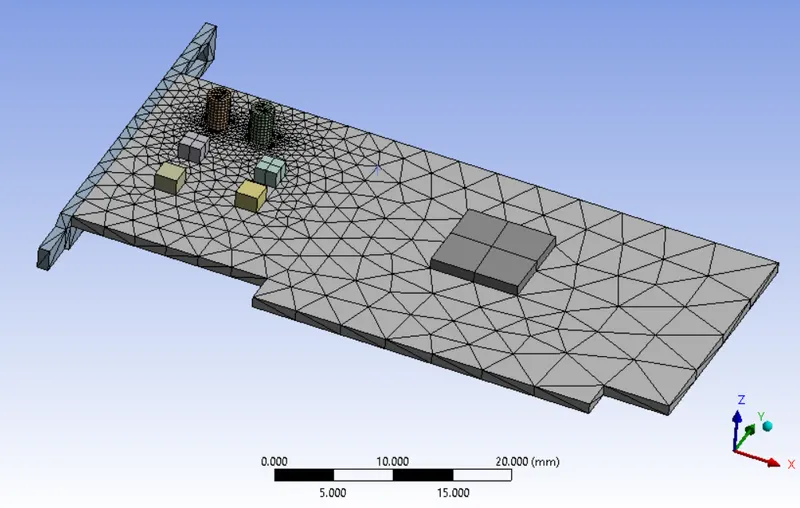
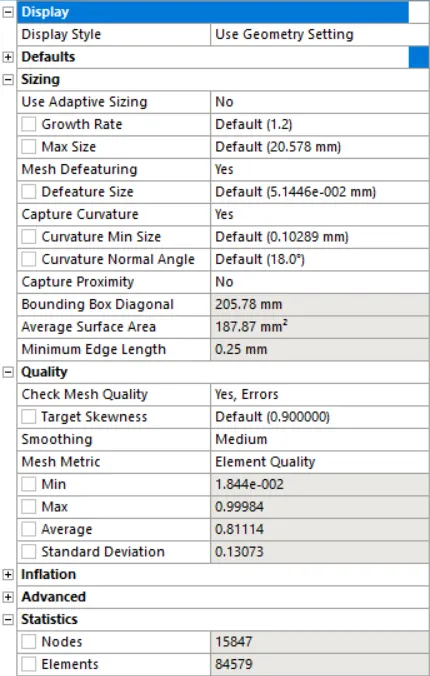
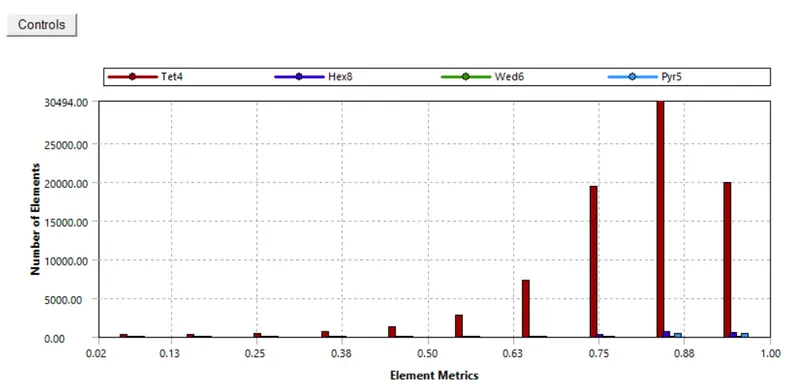
From the above graph, we find that the quality of most of the mesh elements was in the range of 63% to 95%. Hence, a good quality mesh is obtained and we can proceed with the simulation.
Named selections given were as follows:
-Inlet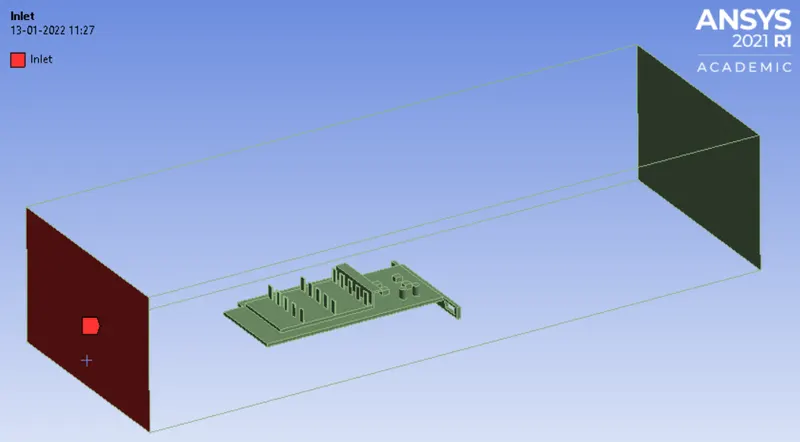
-Outlet
-Symmetry (For the 4 long faces of enclosure)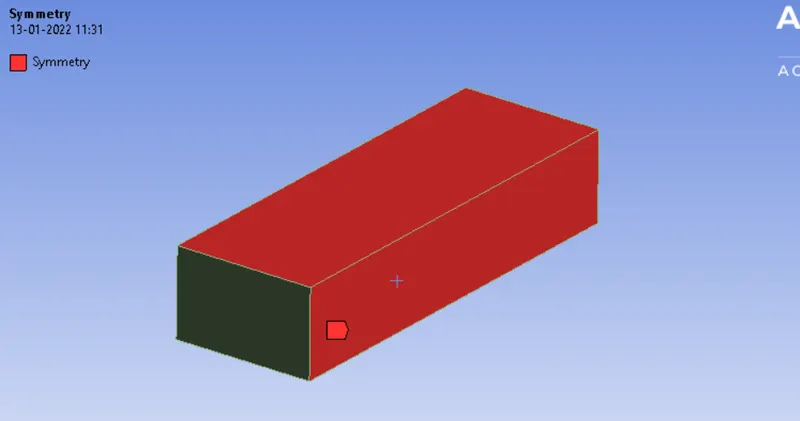
-Base (body)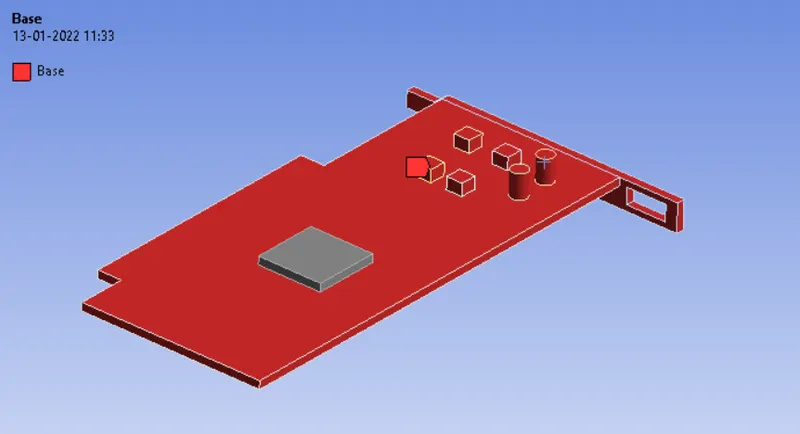
-Processor (body)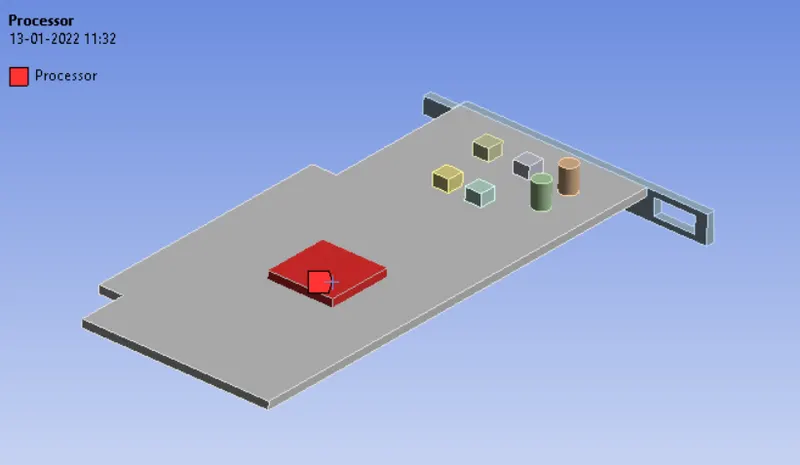
-Fins (body)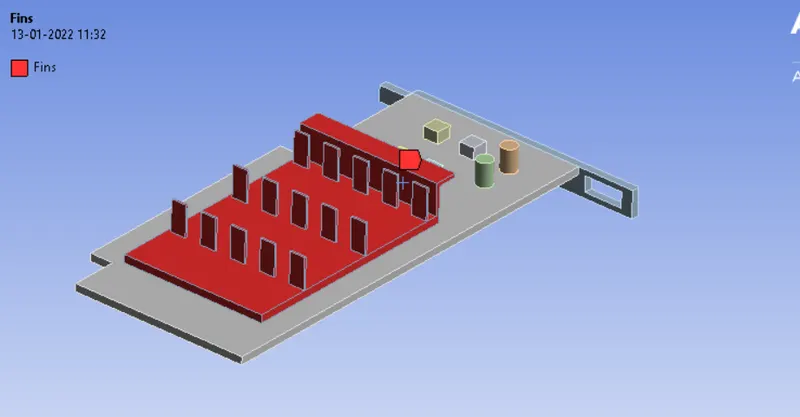
3. SETUP
A steady-state, pressure-based solver is used with absolute velocity formulation. The k-omega SST turbulent model is used.
Materials
The materials for various cell zones differ as follows-
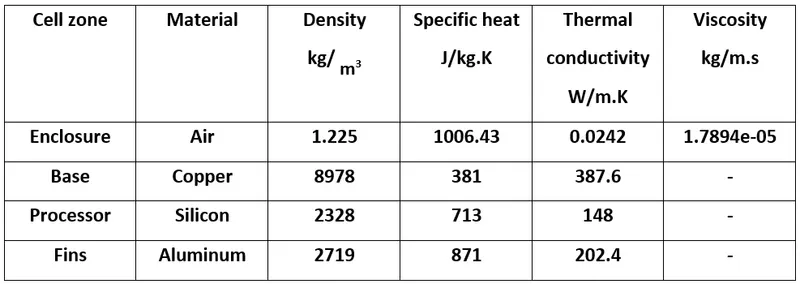
The processor is considered to be the heat-producing element. Thus, it has been considered to be a heat source.
Commonly used graphics cards - i5-2500k works with a TDP of 90W and a GTX 580 with a TDP of 200W. Considering these values, the average value would be 145W.
Due to the dimensions of the model under consideration, we scale this value down to 3W (close to 4% of the average value).
The volume of the processor is (8x8x1)mm3 = 64 mm3= 64e-9 m3
Thus the heat source would be 3/(64e-9) W/m^3, which would be as follows: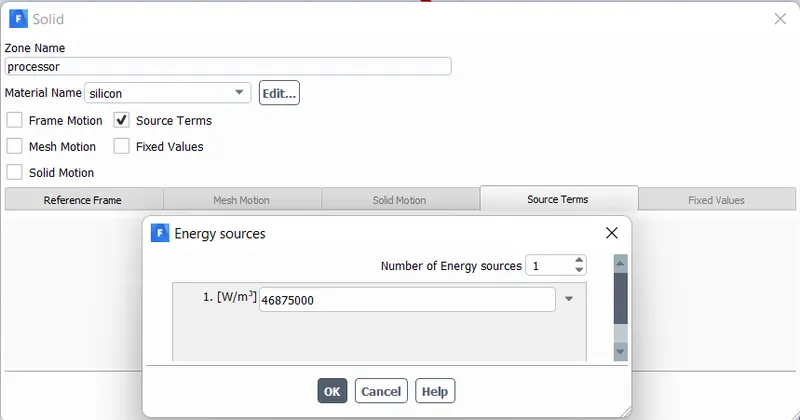
Inlet velocity for the baseline simulation is 1m/s.
4. SOLUTION AND RESULTS
RESIDUALS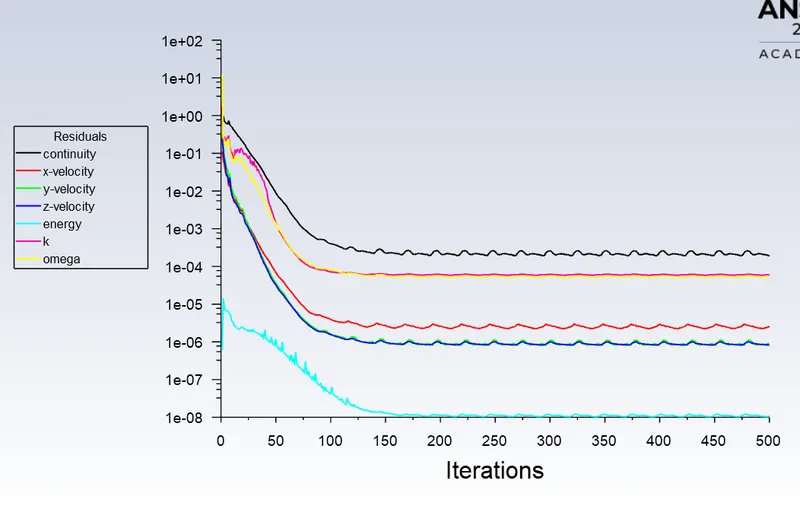
MAXIMUM TEMPERATURE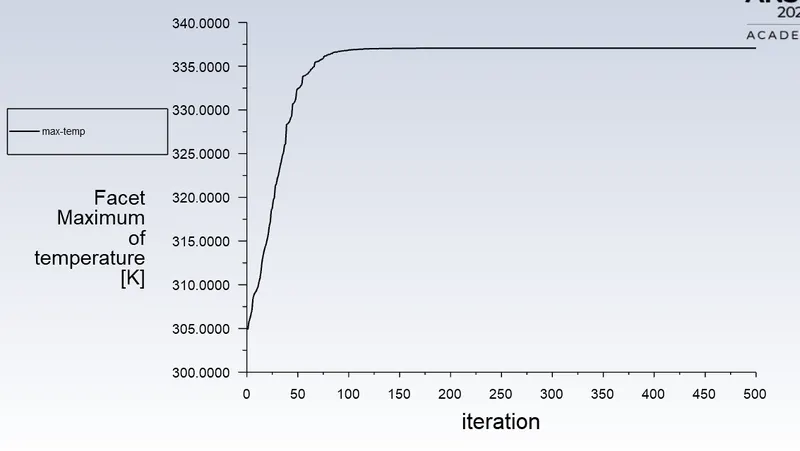
The maximum temperature attained was about 336.5K.
AVERAGE TEMPERATURE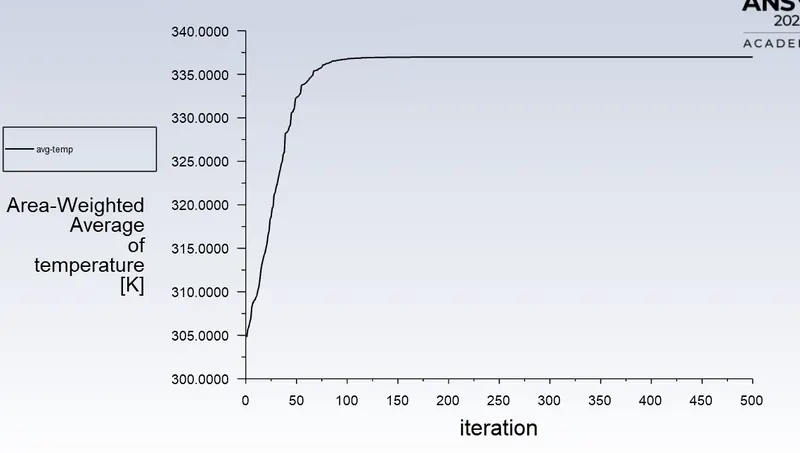
The average temperature attained was about 336K.
MAXIMUM HEAT TRANSFER COEFFICIENT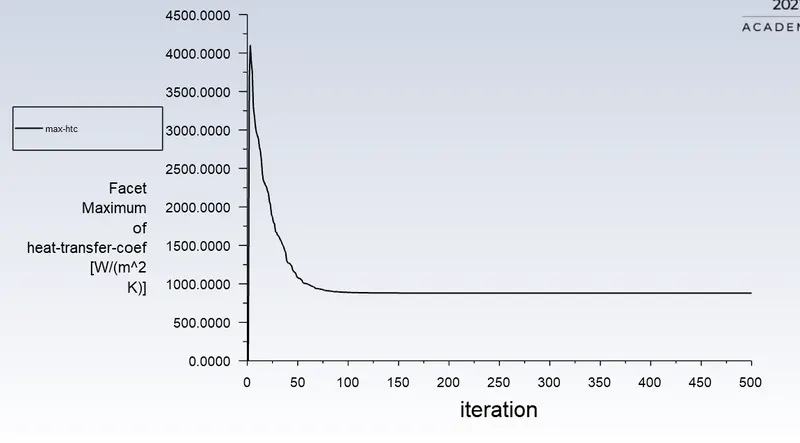
The maximum value of htc attained was close to 940 W/(m^2 K).
AVERAGE HEAT TRANSFER COEFFICIENT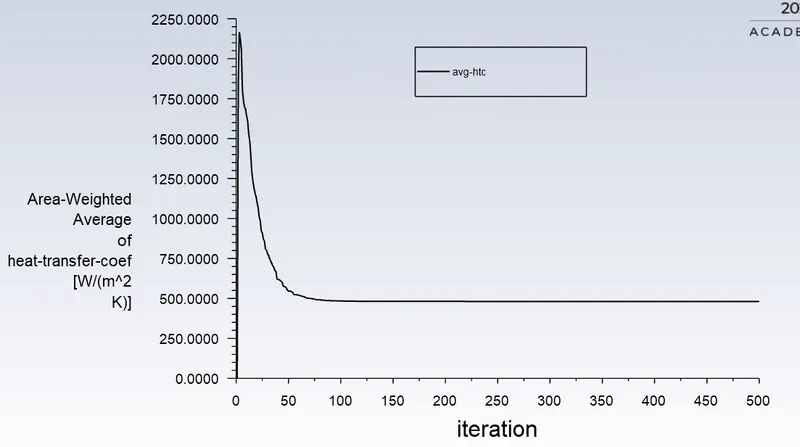
The average value of htc attained was close to 500 W/(m^2 K).
The residuals show a plot below 1e-03. The plots of temperature and value of heat transfer coefficient can also be observed to have approached a steady value after approximately 100-120 iterations. Thus, we can say that the solution has converged.
CONTOURS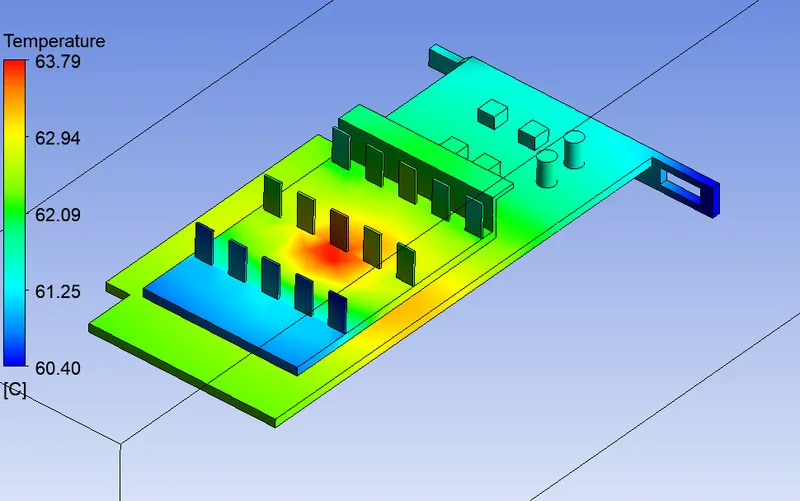
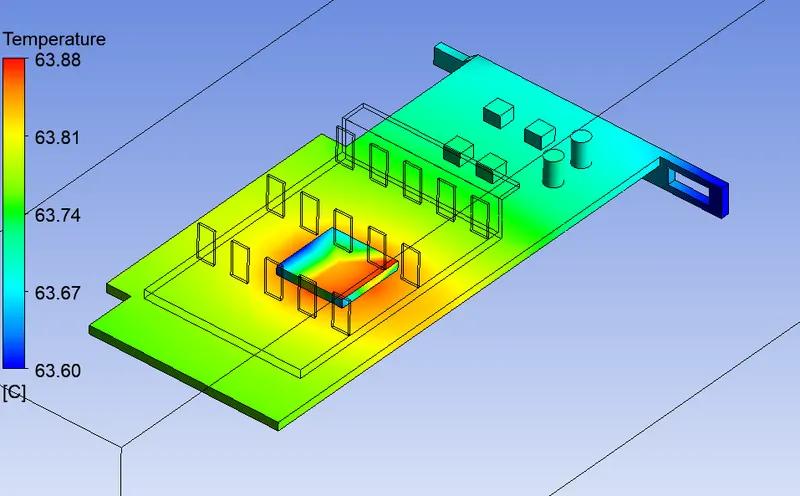
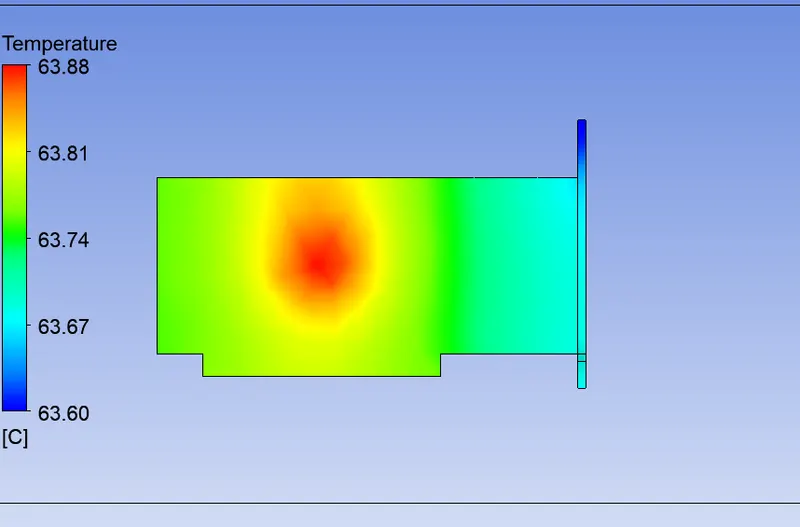
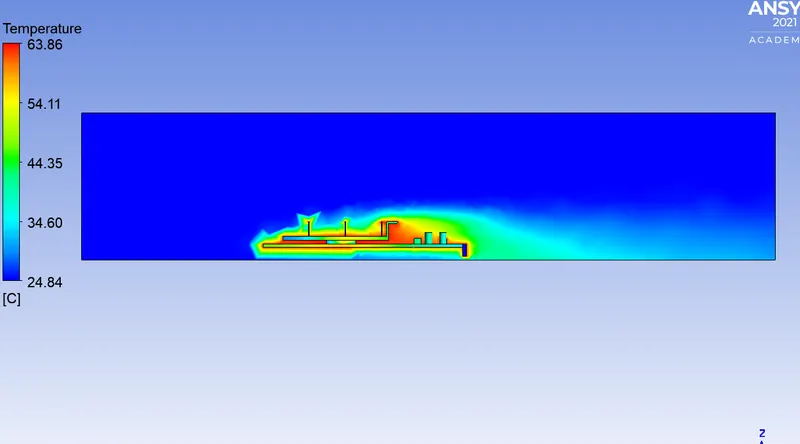
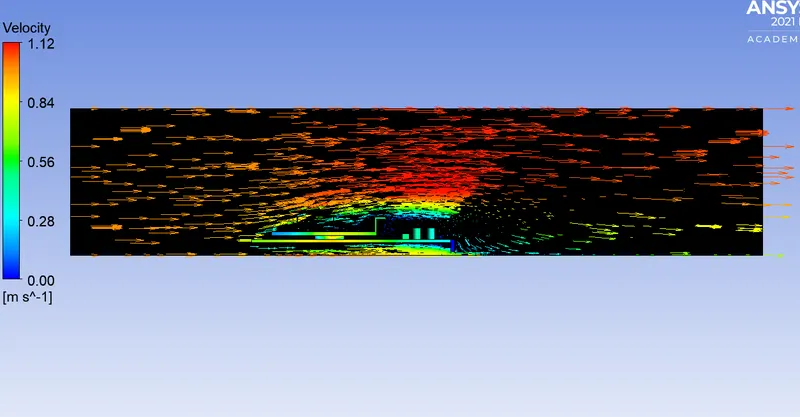
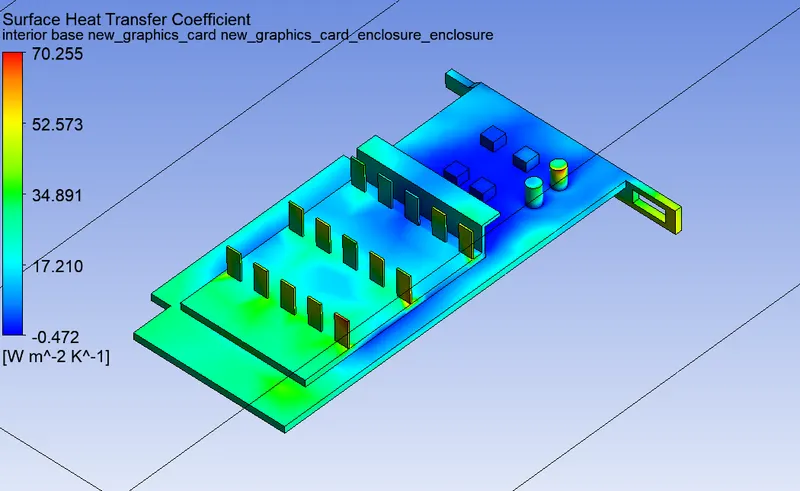
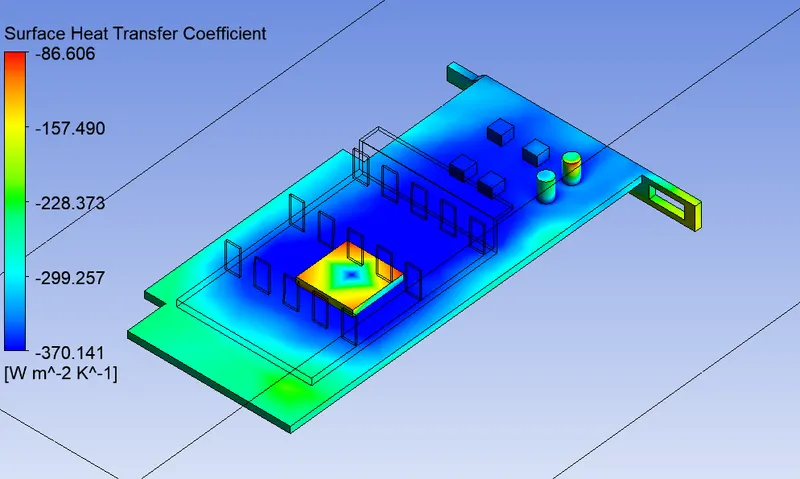
Thus, the baseline simulation generated practical results. Consequently, we follow the same setup for a refined mesh.
The values of average temperature, maximum temperature, average htc and maximum htc will be specifically computed fot the refined case, and the results will be compared.
REFINING MESH
Body sizing was done to refine the mesh as follows:
1. Element size: 2mm
2. Body sizing: Fins - 1mm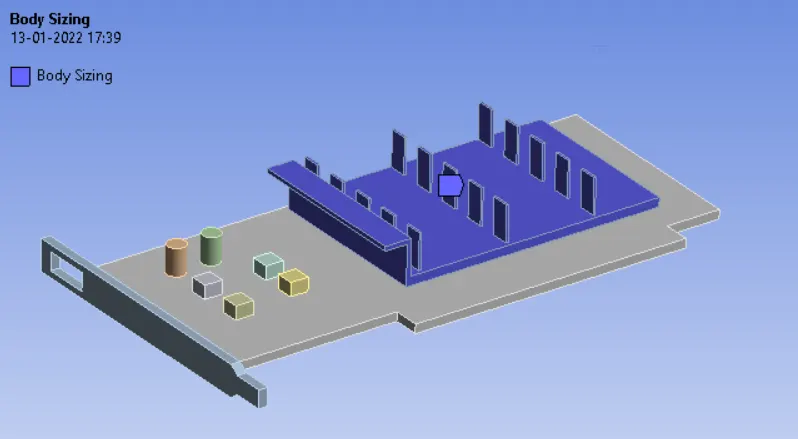
3. Body sizing: Baseplate - 1mm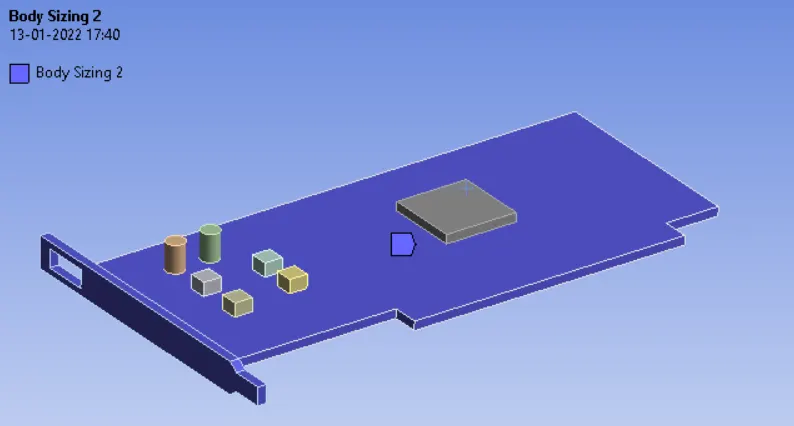
4. Body sizing: Processor and electronic components - 0.5mm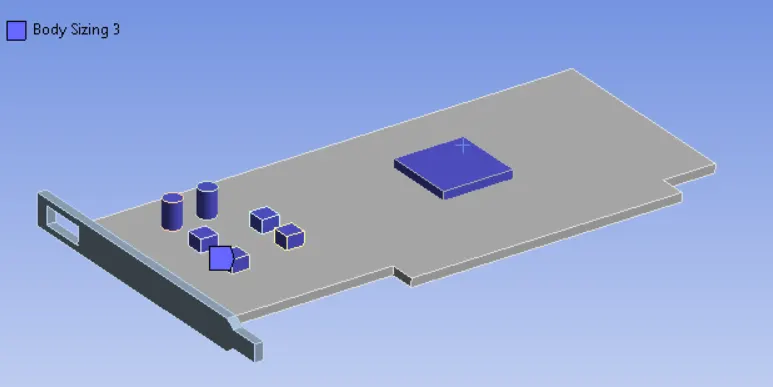
A total of 493822 cells were generated, keeping the limit for the student version in mind.
The refined mesh was used for 3 cases as follows:
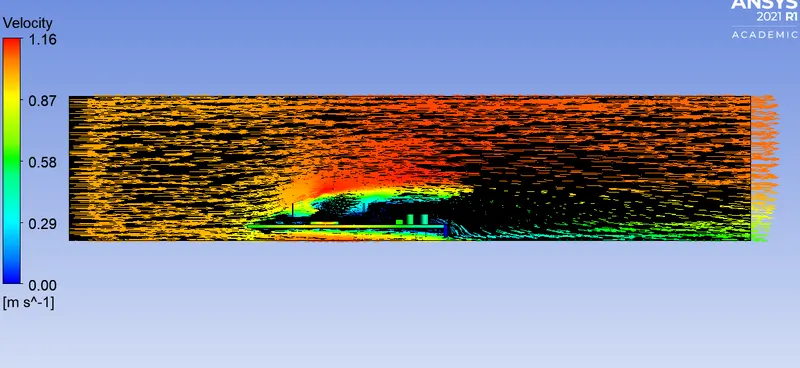
CASE 1: Inlet velocity - 1m/s
RESIDUALS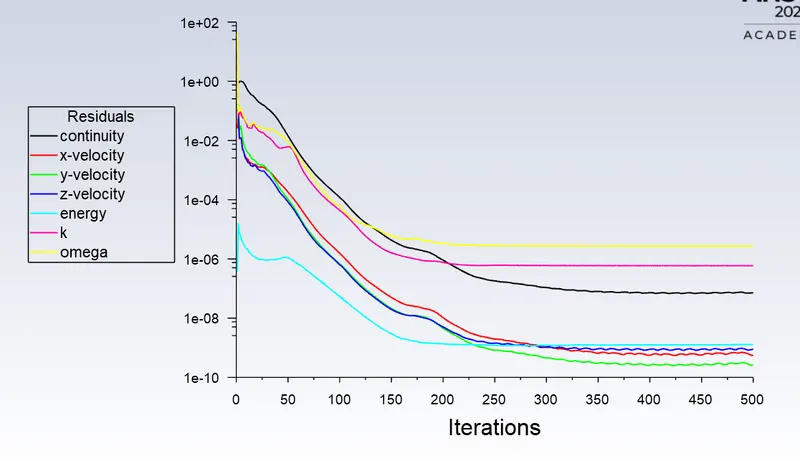
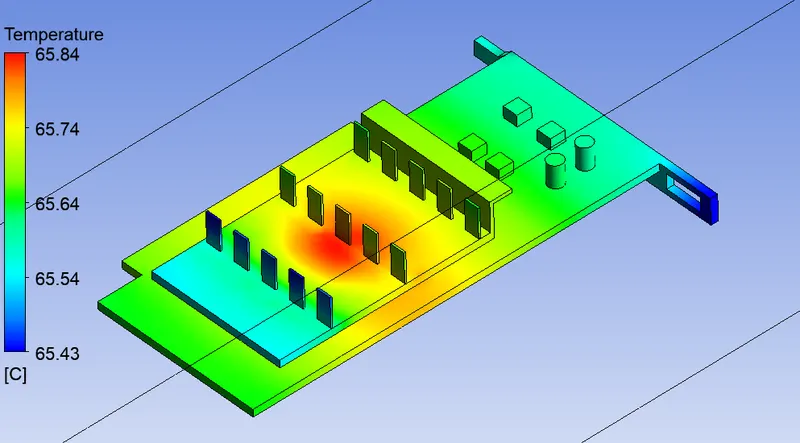
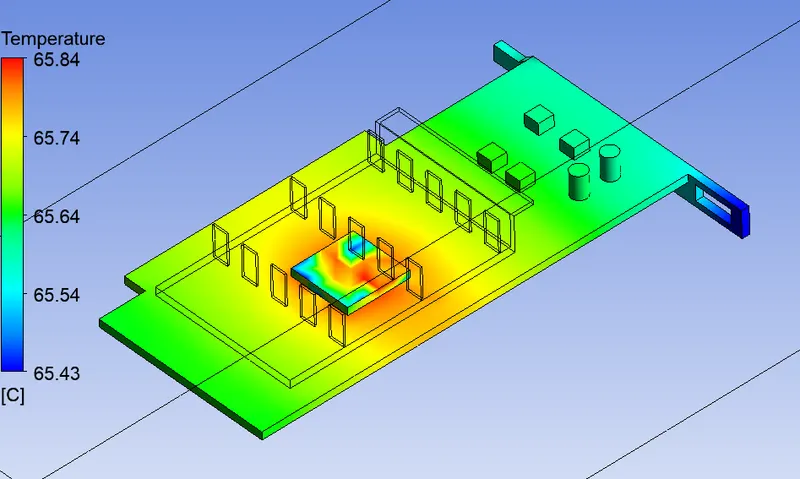
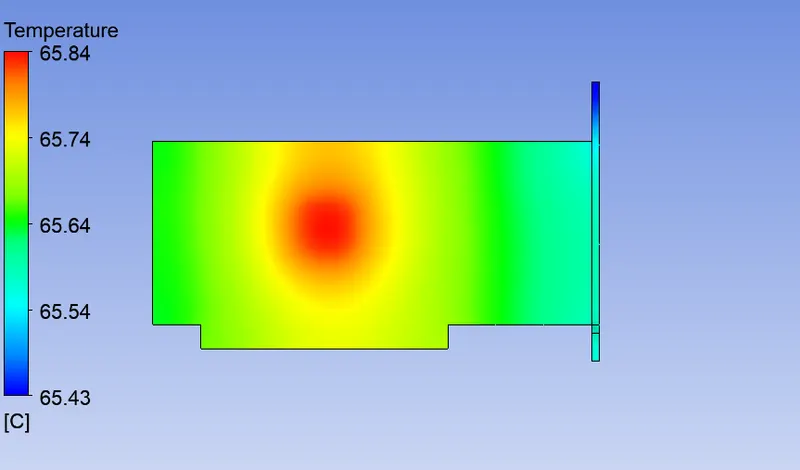
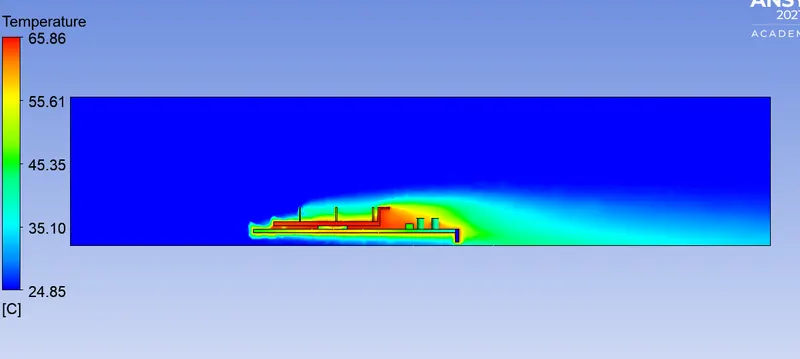
MAXIMUM TEMPERATURE : 339.05725 [K]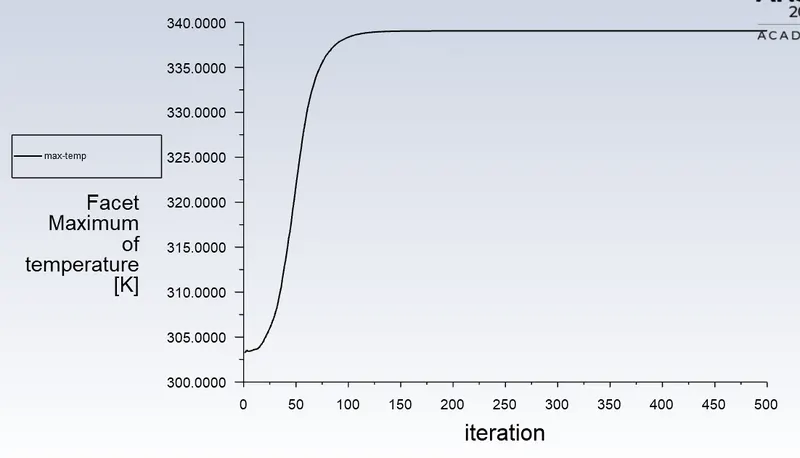
AVERAGE TEMPERATURE - 338.8976 [K]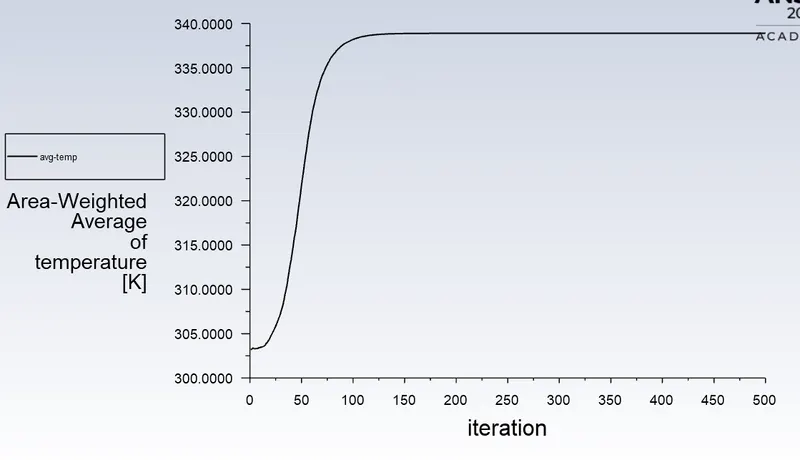
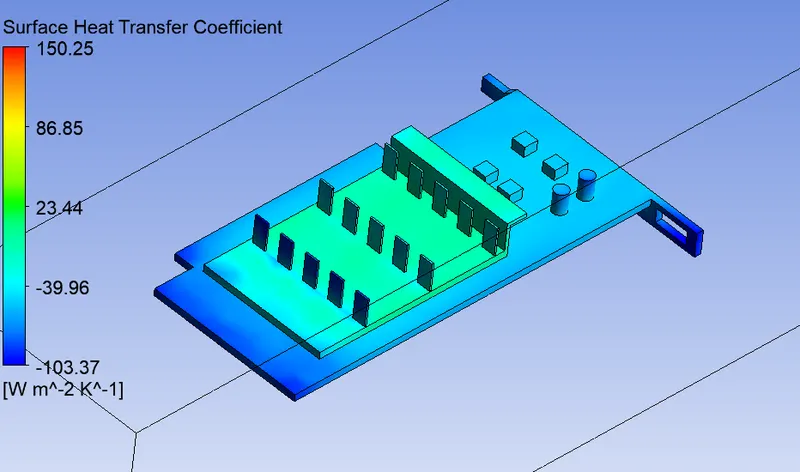
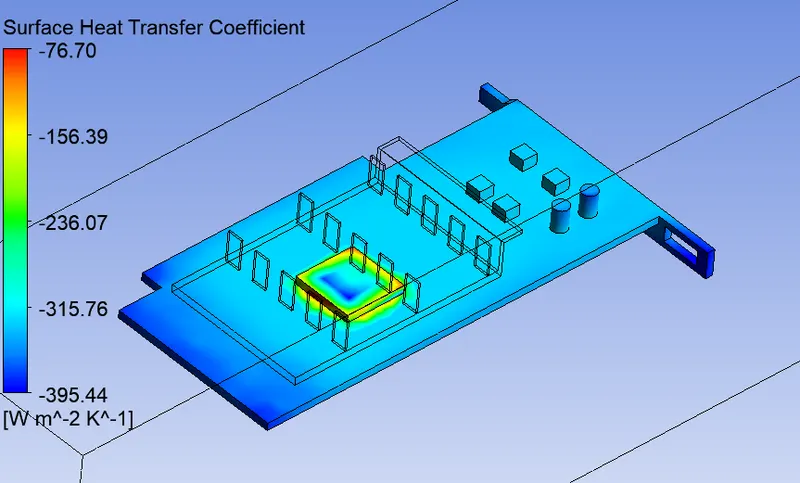
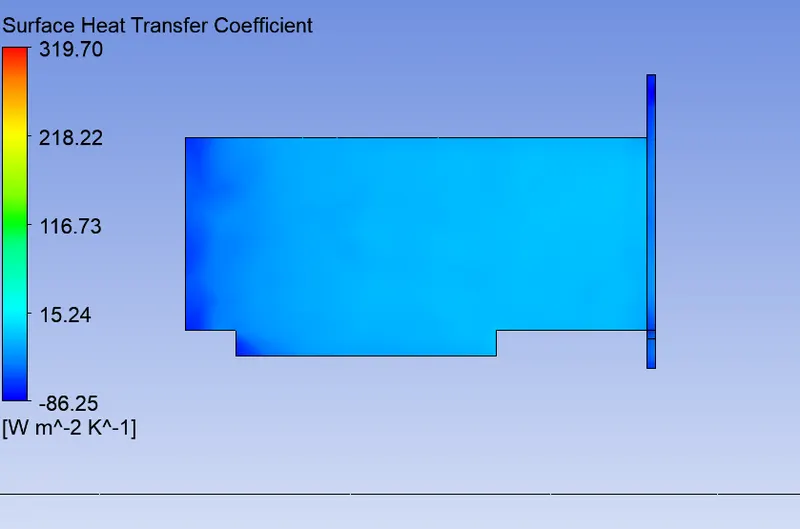
MAXIMUM HEAT TRANSFER COEFFICIENT - 1035.3412 [W/(m^2 K)]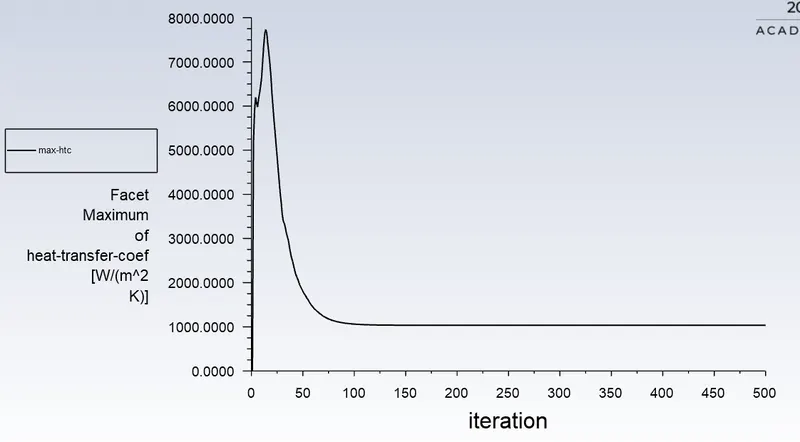
AVERAGE HEAT TRANSFER COEFFICIENT - 458.7943 [W/(m^2 K)]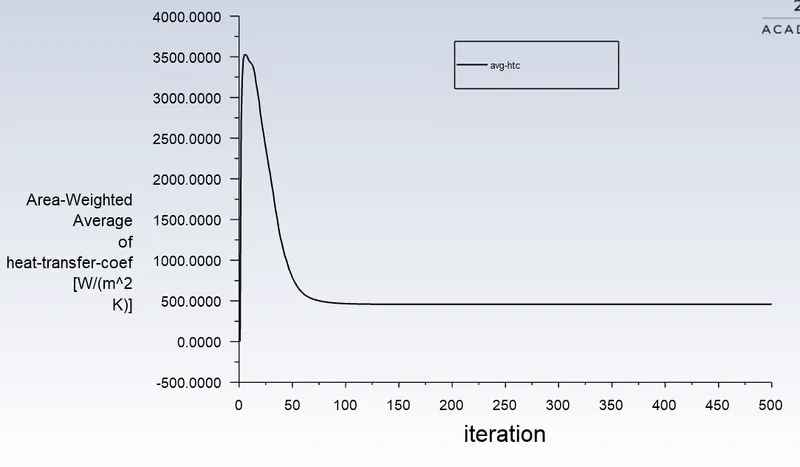
The residuals show a plot below 1e-04. The plots of temperature and value of heat transfer coefficient can also be observed to have approached a steady value after approximately 100-120 iterations. Thus, we can say that the solution has converged.
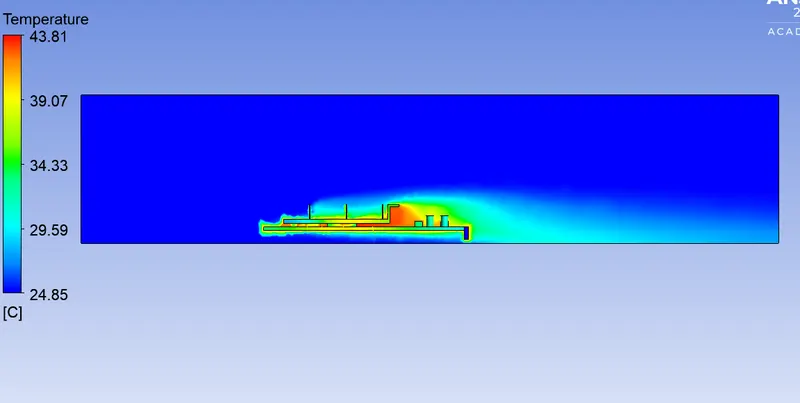
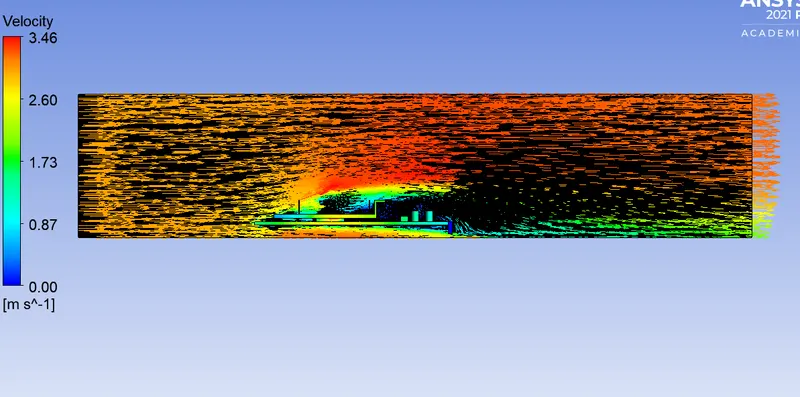
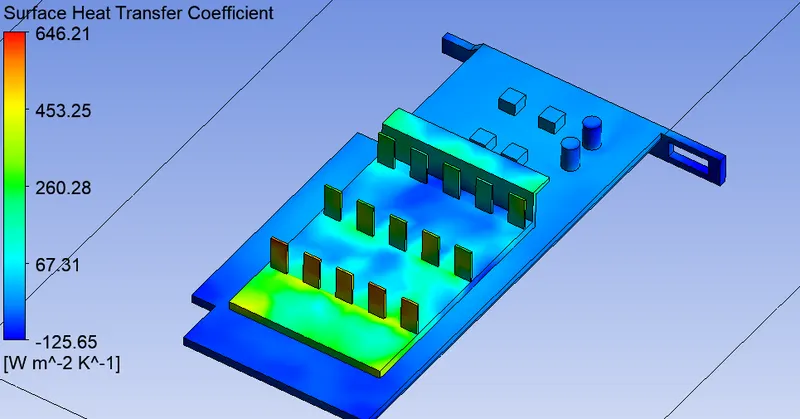
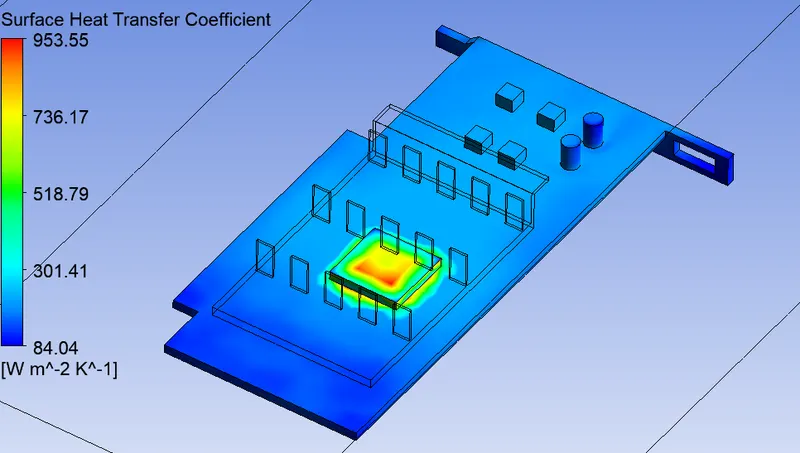
CONTOURS
CASE 2: Inlet velocity - 3m/s
RESIDUALS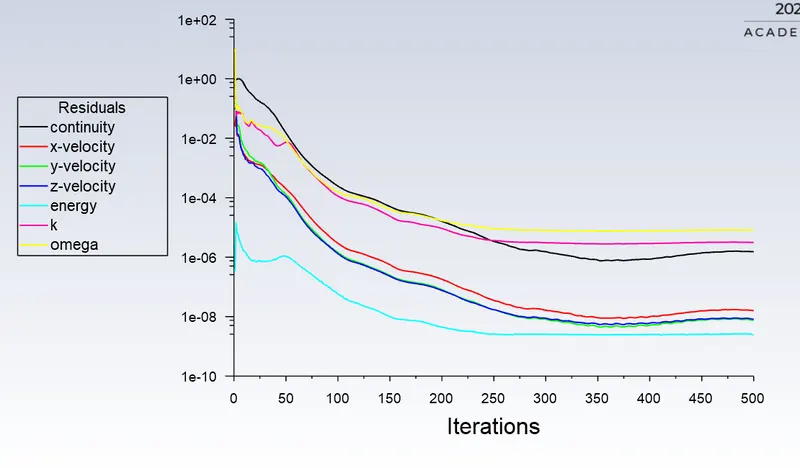
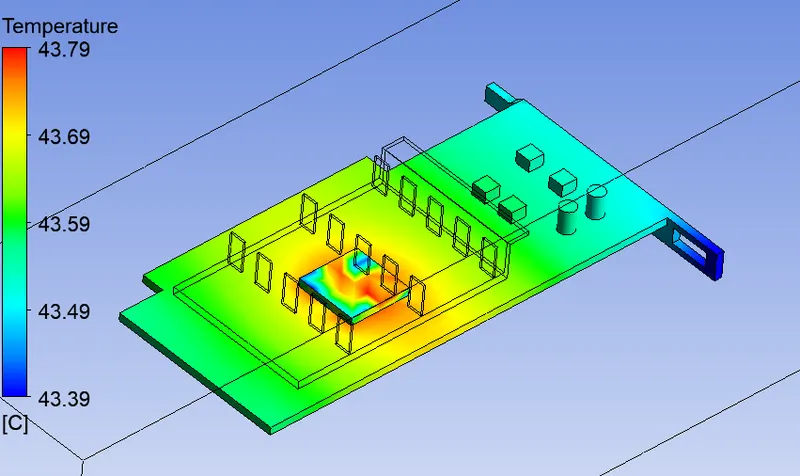
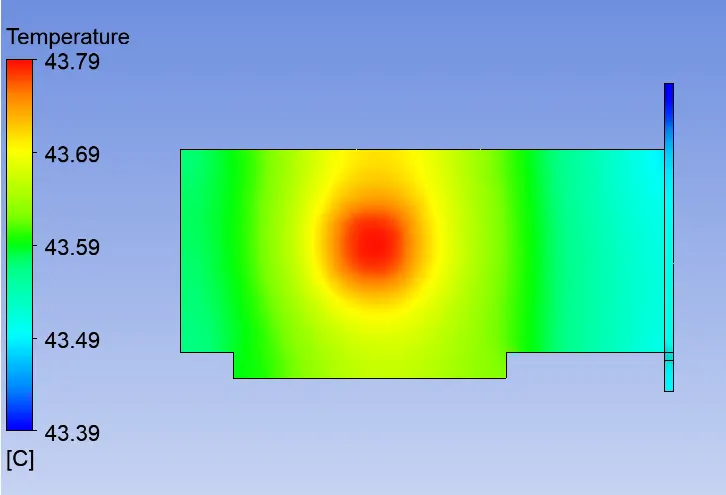
MAXIMUM TEMPERATURE - 316.9993 [K]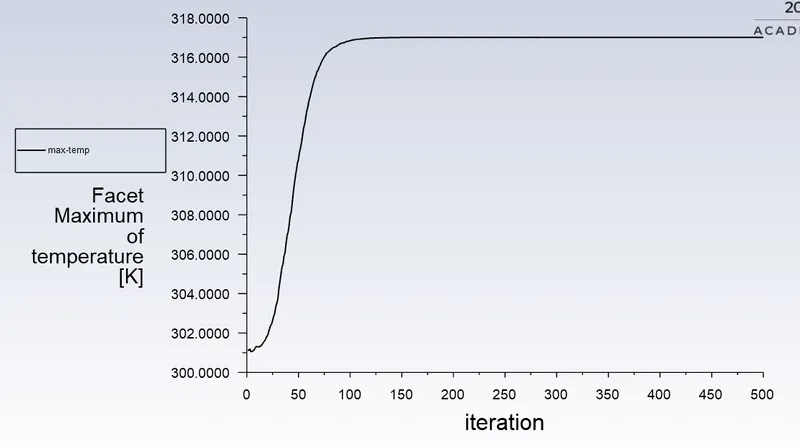
AVERAGE TEMPERATURE - 316.84144 [K]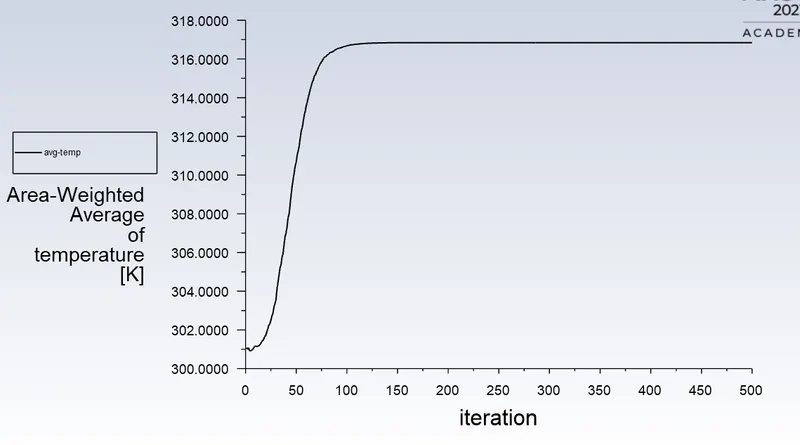
MAXIMUM HEAT TRANSFER COEFFICIENT - 2077.8518 [W/(m^2 K)]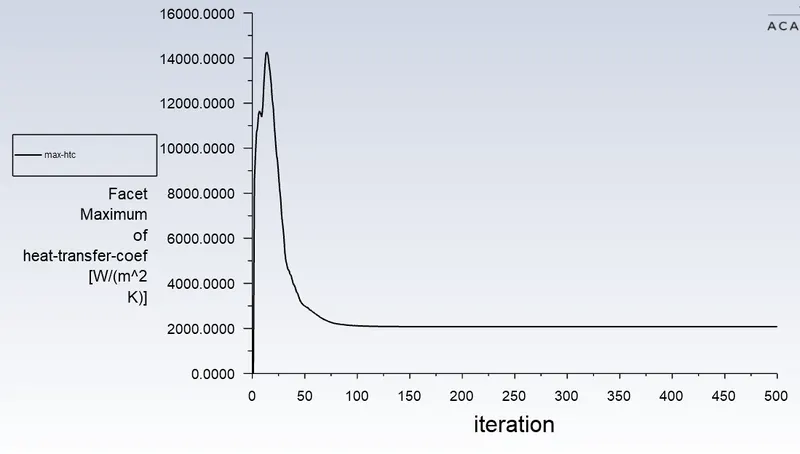
AVERAGE HEAT TRANSFER COEFFICIENT - 996.47637 [W/(m^2 K)]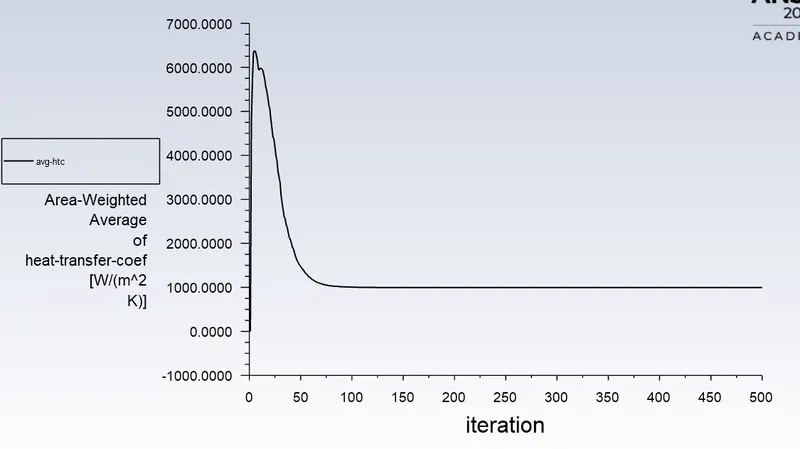
The residuals show a plot below 1e-04. The plots of temperature and value of heat transfer coefficient can also be observed to have approached a steady value after approximately 100-120 iterations. Thus, we can say that the solution has converged.
CONTOURS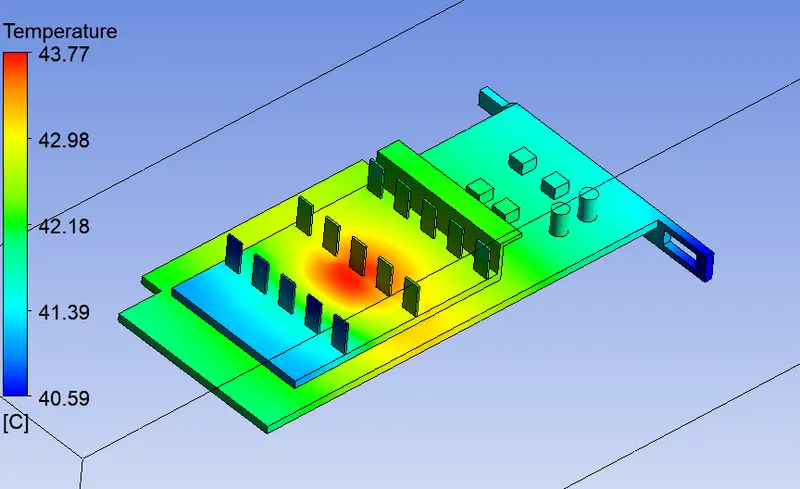
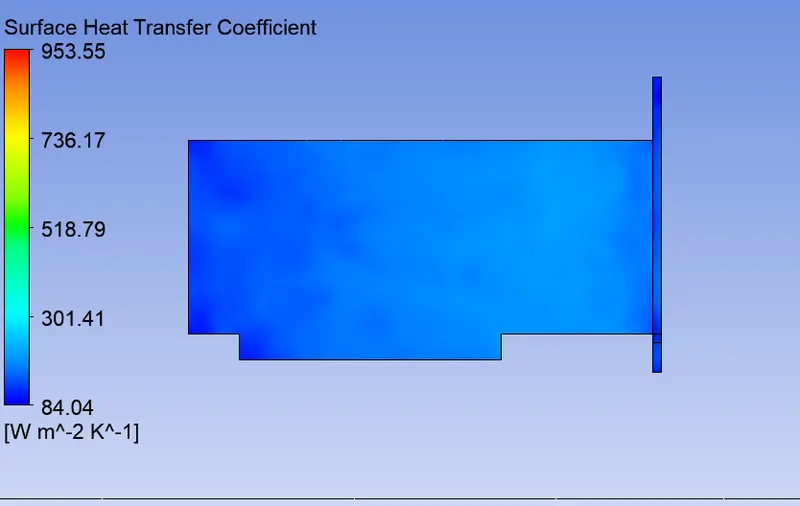
CASE 3: Inlet velocity - 5m/s
RESIDUALS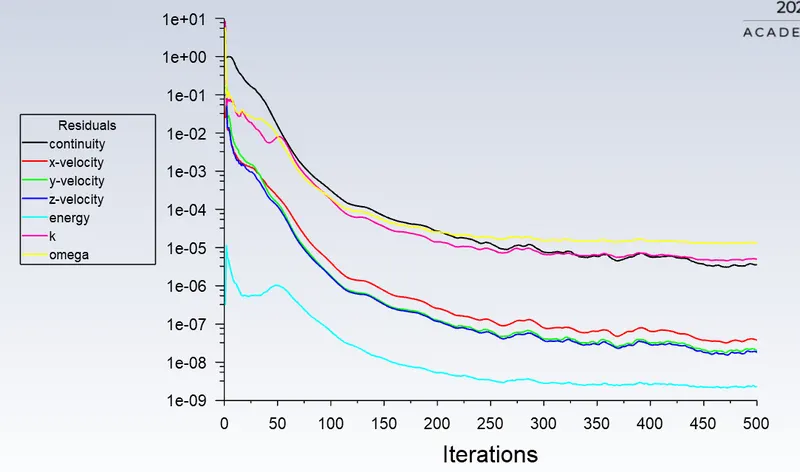
MAXIMUM TEMPERATURE - 311.71561 [K]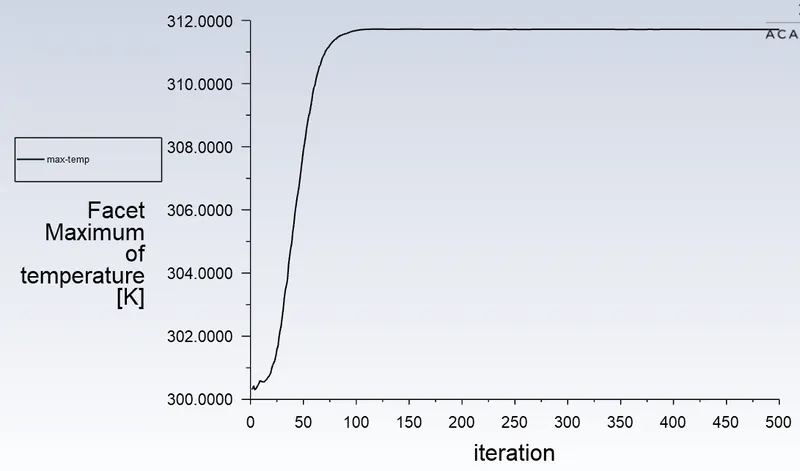
AVERAGE TEMPERATURE - 311.56174 [K]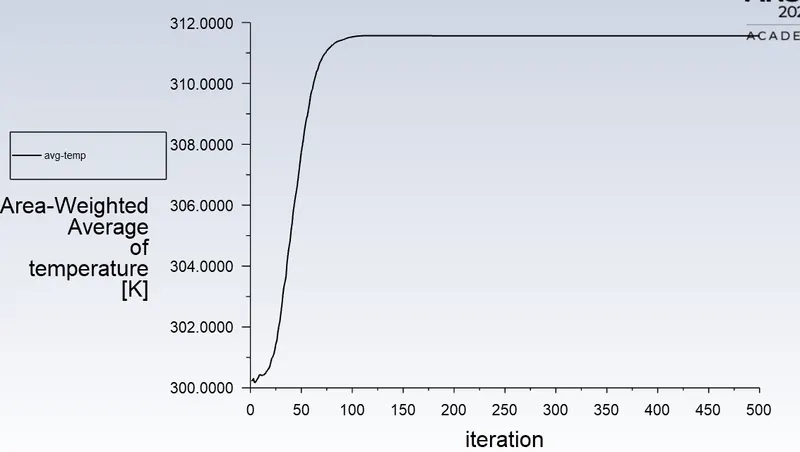
MAXIMUM HEAT TRANSFER COEFFICIENT - 2824.1563 [W/(m^2 K)]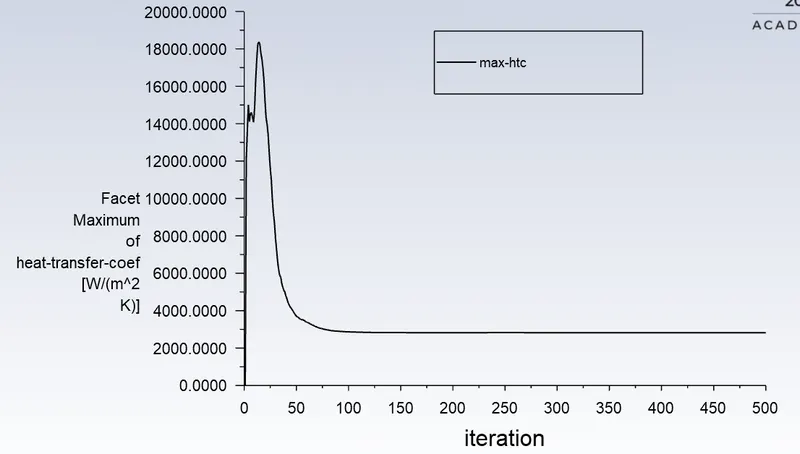
AVERAGE HEAT TRANSFER COEFFICIENT - 1384.959 [W/(m^2 K)]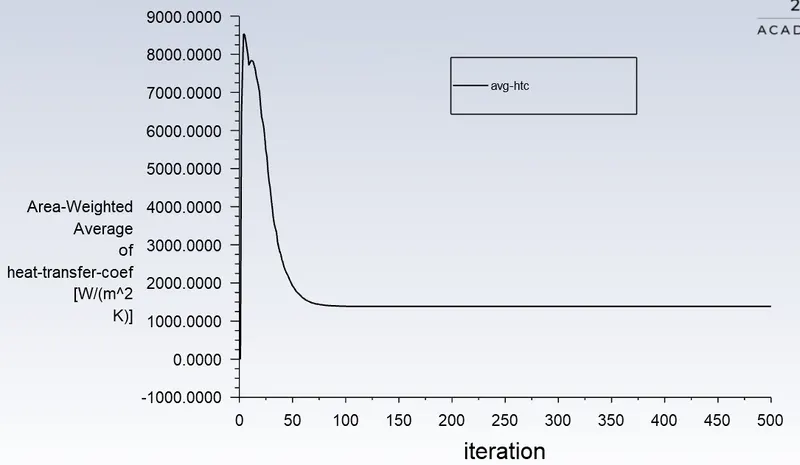
The residuals show a plot below 1e-03. The plots of temperature and value of heat transfer coefficient can also be observed to have approached a steady value after approximately 100-120 iterations. Thus, we can say that the solution has converged.
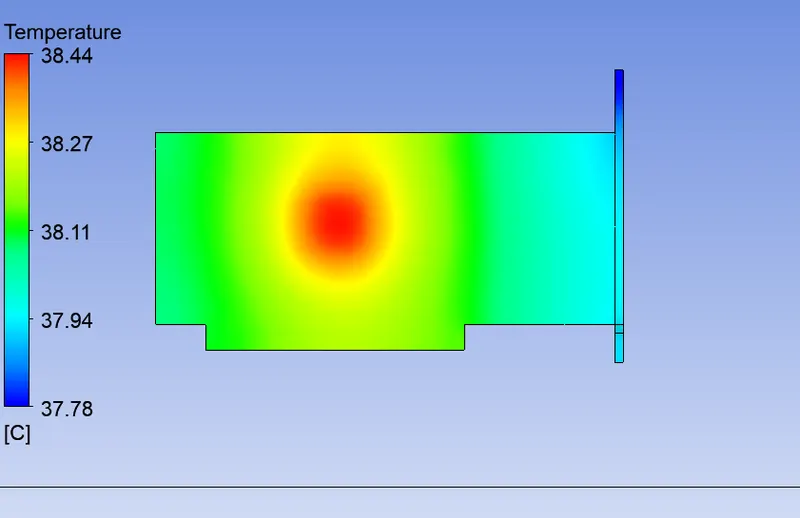
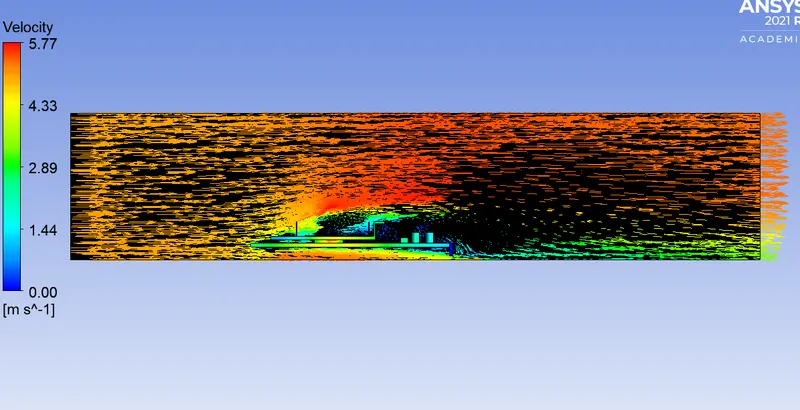
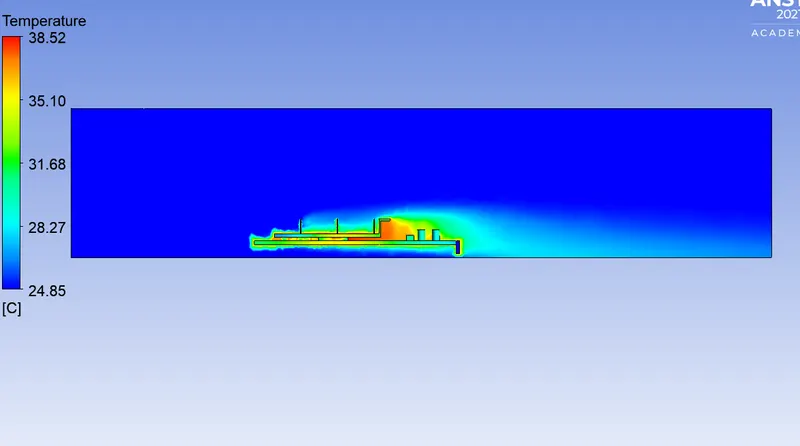
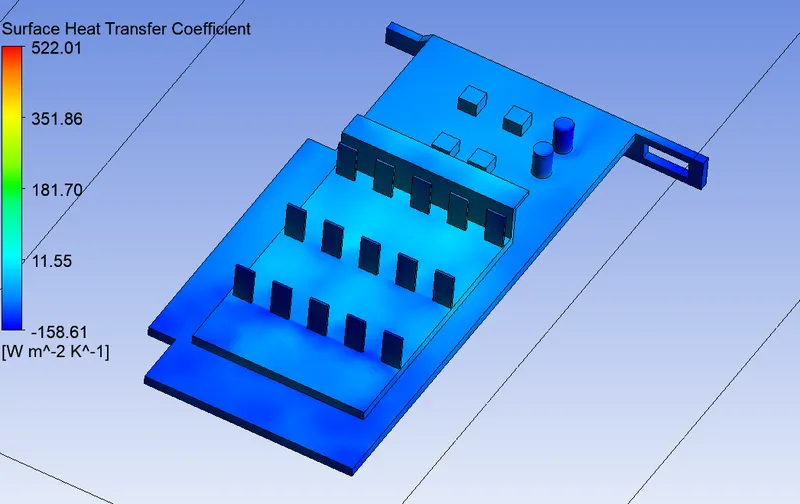
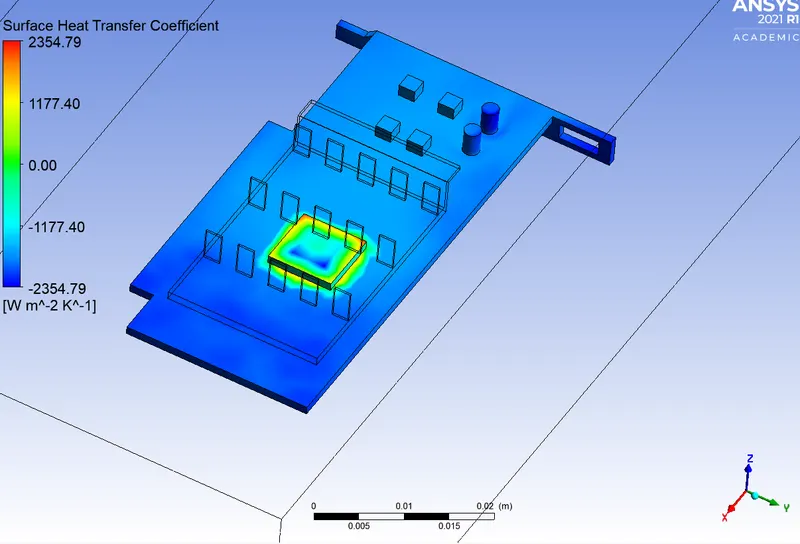
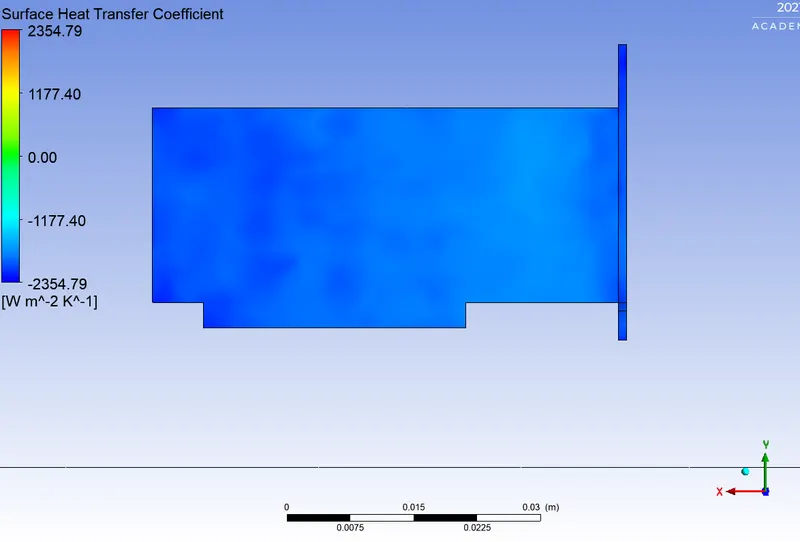
CONTOURS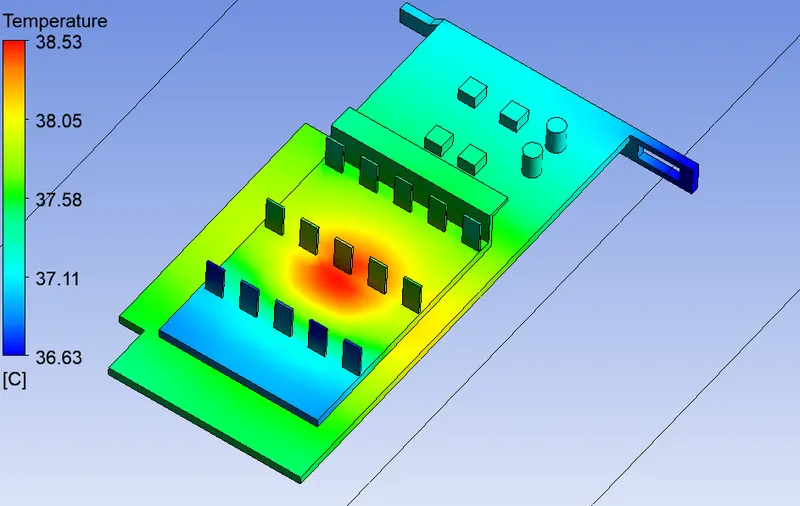
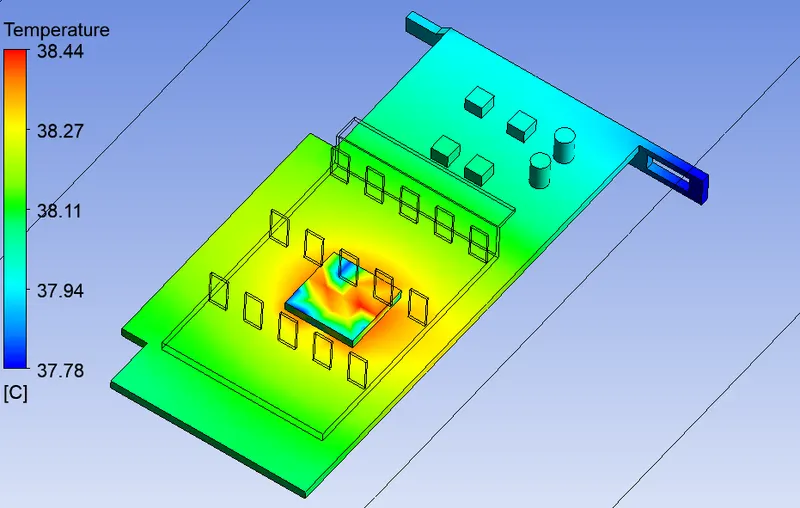
TABULATION OF RESULTS & OBSERVATION
The following table demonstrates the changes in value of temperature and heat transfer coefficient for the processor as a result of changes in the inlet velocity of air.
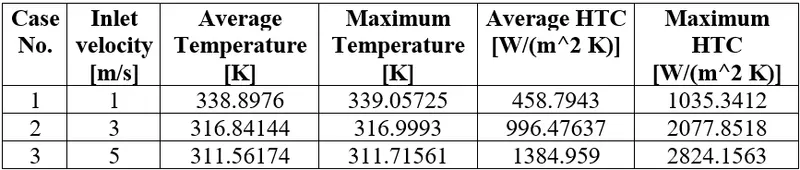
We can observe that as the inlet velocity of air increases, the value of average and maximum temperature decreases notably. This is due to the increase in the value of the heat transfer coefficient with an increase in inlet velocity. Thus, we can say that an increase in inlet velocity provides more efficient cooling of the processor and other components of the graphics card.
POTENTIAL HOTSPOTS - From the generated results, we can observe that the potential hotspots for the graphics card are primarily on and around the processor, as it is the heat generating element of the graphics card. The temperature varies throughout the card and is lowest towards the end of the baseplate farthest from the processor.
VERIFICATION
The verification of any conjugate heat transfer analysis is done by finding an analytical solution to the problem. This is done using the following relation:
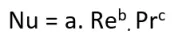
Nu - Nusselt number
Re - Reynolds number
Pr - Prandtl number
a,b,c - Dimensionless number based on experimental conditions
The value of a,b,c depends totally on experimental conditions. However, these values for standard shapes have been derived using experiments.
Since it is not a standard shape, the validation of the CHT on a Graphics Card can only be done by carrying out physical experiments and finding out the values of a, b, and c to further calculate the surface heat transfer coefficient.
CONCLUSION
Heat transfer in solids and heat transfer in fluids are combined in the majority of applications. This is because fluids flow around solids or between solid walls and because solids are usually immersed in a fluid. An accurate description of heat transfer modes, material properties, flow regimes, and geometrical configurations enables the analysis of temperature fields and heat transfer. Such a description is also the starting point for a numerical simulation that can be used to predict conjugate heat transfer effects or to test different configurations in order, for example, to improve the thermal performances of a given application.
Better cooling of the components of the graphics card is observed with an increase in the inlet velocity of air.
As the inlet velocity of air increases, the value of the heat transfer coefficient increases drastically.
As the inlet velocity of air increases, the value of the maximum and average temperature decreases notably.