Week-6 Challenge: EV Drivetrain
Week-6 Challenge: EV Drivetrain
PS1: Which types of power converter circuits are employed in electric and hybrid electric vehicles?
Solution:
There are 4 types of power converter circuits that are employed in EV and HEV:
1. AC to DC Converter
2. DC to DC Converter
3. DC to AC Converter
4. AC to AC Converter
PS2: An Electric Vehicle's powertrain with a 72V battery pack is shown in the diagram below. The duty ratio for acceleration operation is 'd1' and for the braking operation the duty ratio is 'd2'.
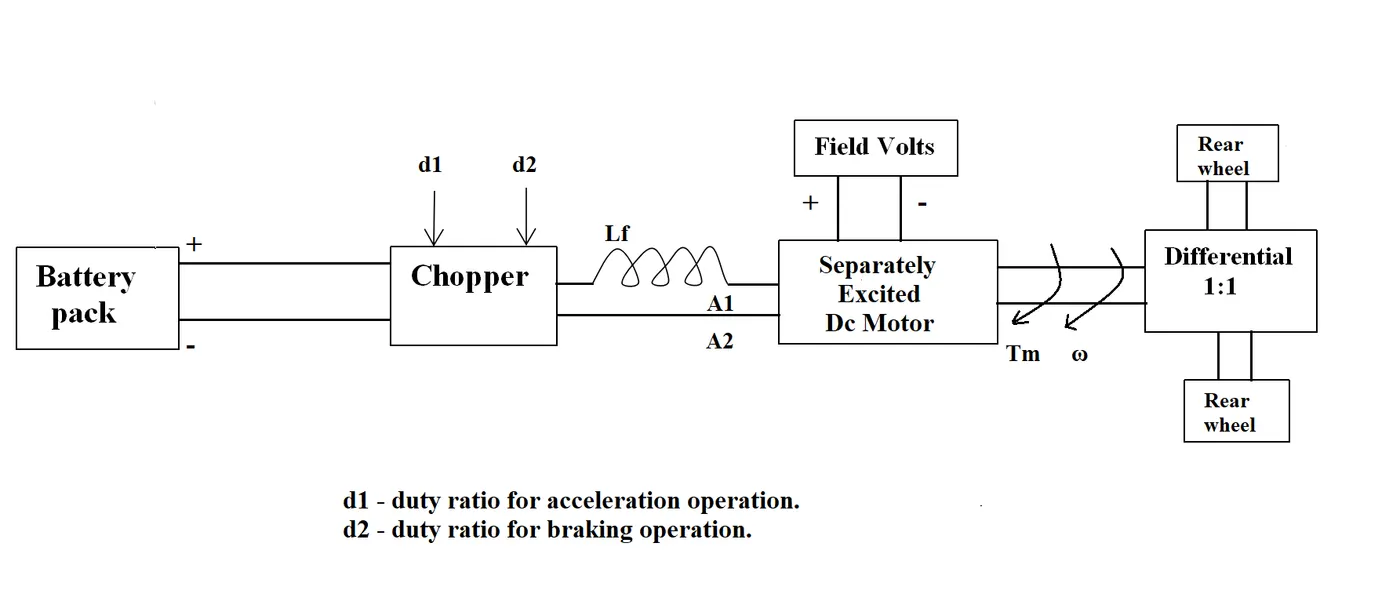
The other parameters of the electric vehicle are given below,
Motor and Controller Parameters:
Rated Armature voltage= 72 V
Rated armature current= 400 A
Ra= 0.5Ω, KΦ= 0.7 Volt second
Chopper Switching frequency= 400 Hz
The vehicle speed-torque characteristics are given by the below equation

What is EV steady-state speed if the duty cycle is 70%?
Solution:
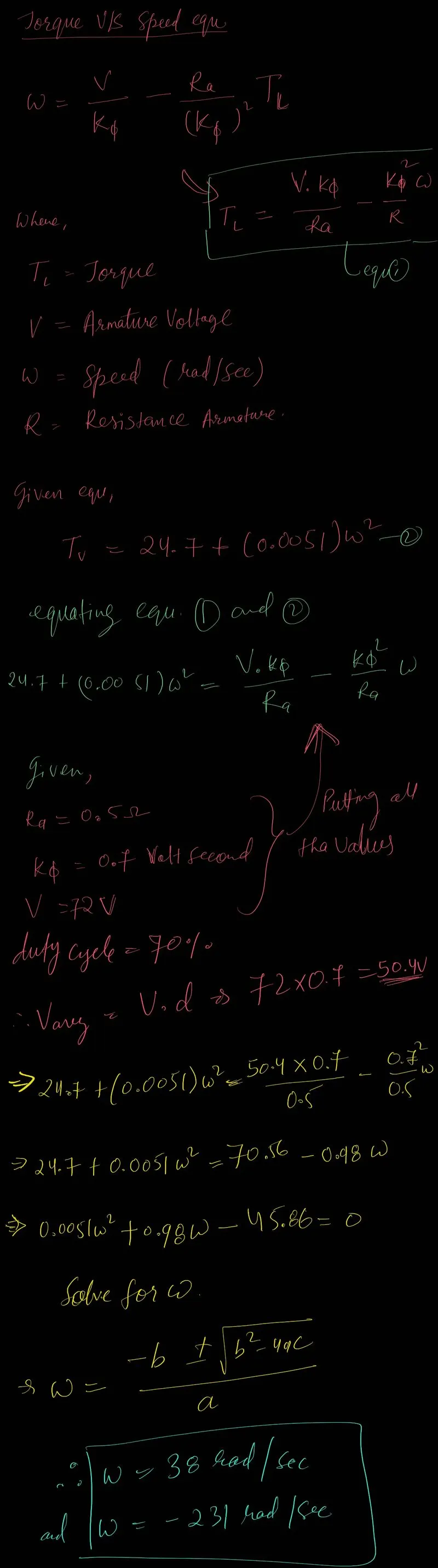
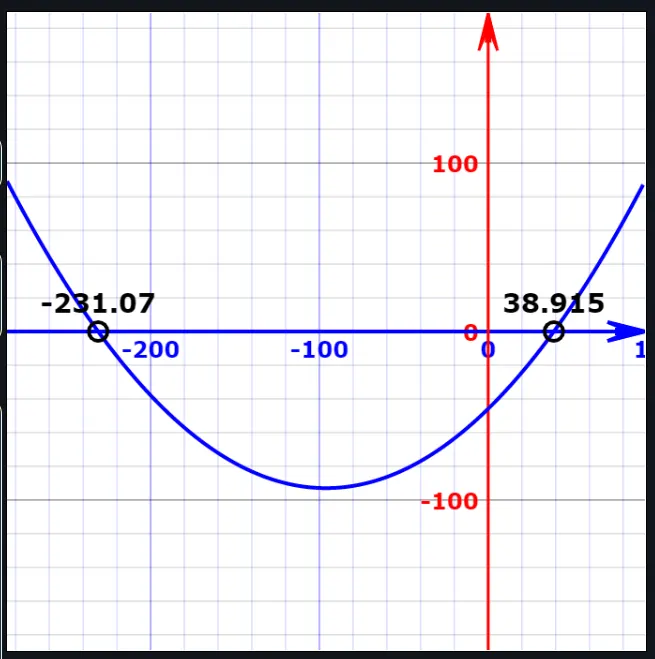
EV steady-state speed if the duty cycle is 70% is 38.915 rad/sec.
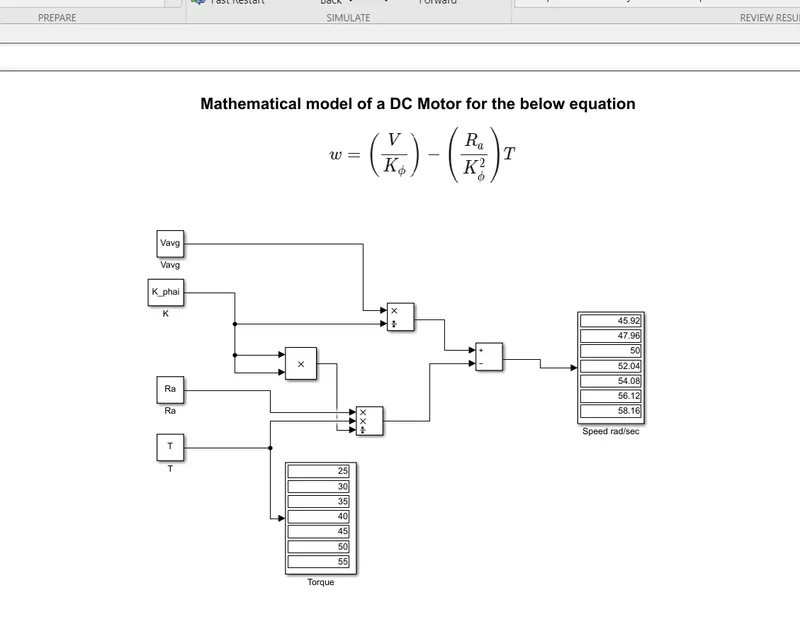
PS3: Develop a mathematical model of a DC Motor for the below equation using Simulink.
`w= (V/K_phi) - (R_a/K_phi ^2)T`
Solution:
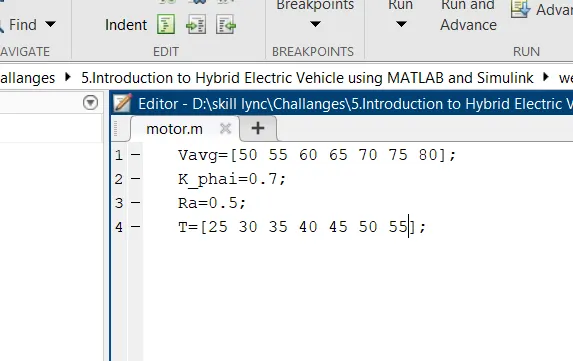
PS4: Refer to the blog below topic:
Induction Versus DC brushless motors by Wally Rippel, Tesla
Explain in brief the author’s perspective.
Solution:
1. In the blog Induction Versus DC Brushless Motors the author Wally Rippel compared the two types of motors.
2. According to the author DC brushless and induction drives use motors having similar stators. Both drives use 3-phase modulating inverters. The only differences are the rotors and the inverter controls. And with digital controllers, the only control differences are with control code.
3. One of the main differences is that much less rotor heat is generated with the DC brushless drive.
4. In an ideal brushless drive, the strength of the magnetic field produced by the permanent magnets would be adjustable. In an ideal brushless drive, the strength of the magnetic field produced by the permanent magnets would be adjustable.
5. According to the author DC brushless drives will likely continue to dominate in the hybrid and coming plug-in hybrid markets, and induction drives will likely maintain dominance for the high-performance pure electrics. The question is what will happen as hybrids become more electrically intensive and as their performance levels increase? The fact that so much of the hardware is common for both drives could mean that we will see induction and DC brushless life and work side by side during the coming golden era of hybrid and electric vehicles.
--------------------------------------------------------------------------------------------------------------------------------------------------------------------------------------------------END------------------------------------------------------------------------------------------------------------------------------------------------------------------------------------------------------