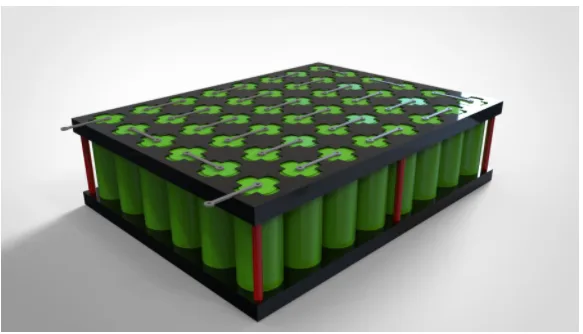
Mechanical Design of Battery Pack
This project requires the student to design a CAD model of a lithium-ion battery pack by choosing series and parallel cells, with electrical connections, and mechanical holders.
Black FridayUpgrade your career this Black Friday. Get up to ₹60,000 Scholarship on IIT programsUp to ₹60K Black Friday Scholarship52 seats leftOffer ends Fri, 27 Nov, 11:59 pm IST.
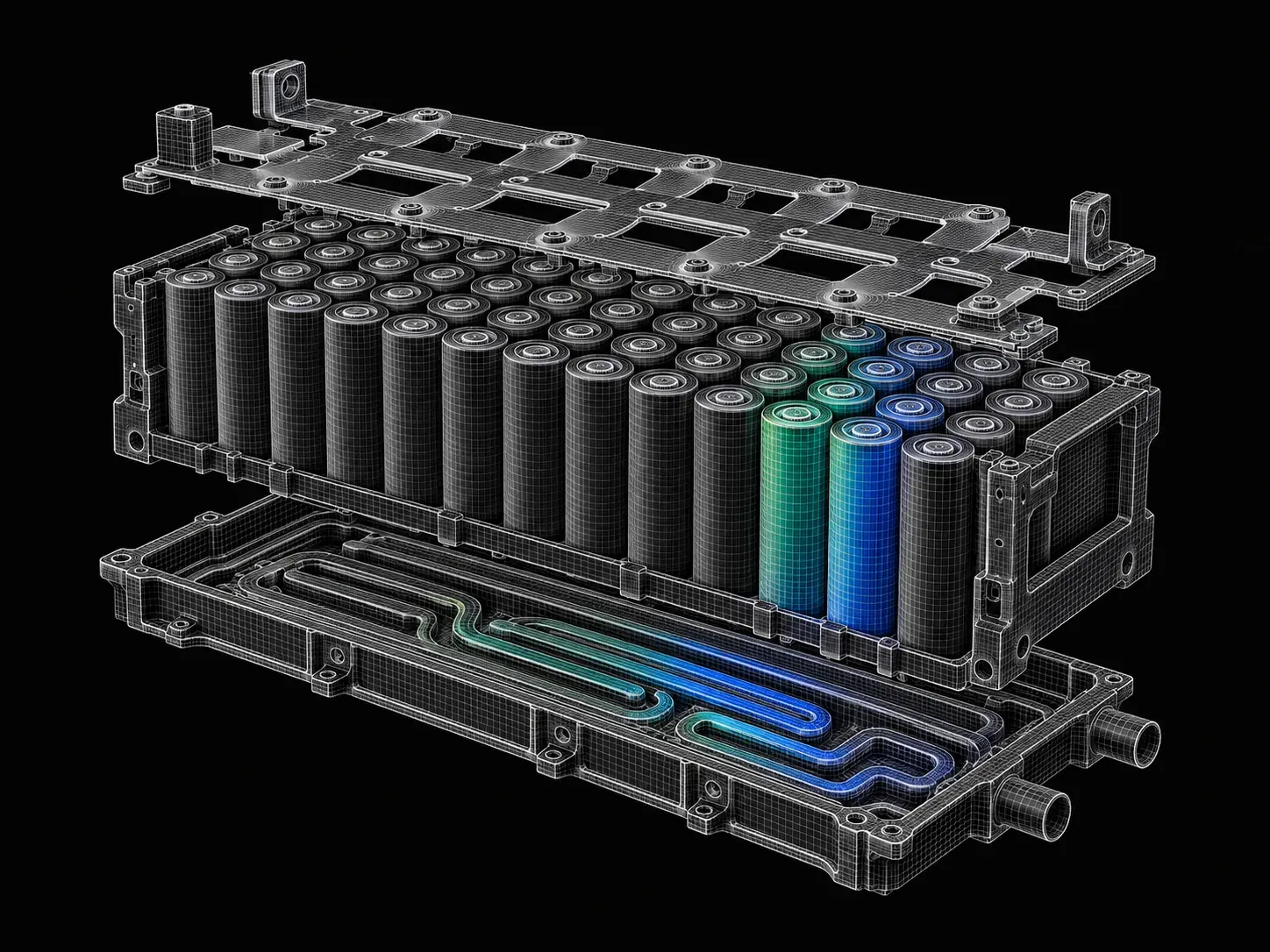
In this course, you will get a complete overview of electrochemistry, Battery terminologies, Mathematical modelling, Battery management system, Charging and discharging for EV application and thermal management.
Introduction to Battery Technology for Electric Vehicle is an online course from Skill-Lync: 12 weeks, 22 hours of content and 3 industry projects.
In this week, the following topics are covered:
In this week, the following topics are covered:
In this week, the following topics are covered:
In this week, the following topics are covereed:
In this week, the following topics are covered:
In this week, the following topics are covered:
In this week, the following topics are covered:
In this week, the following topics are covered:
Our projects are designed by experts in the industry to reflect industry standards. By working through our projects, Learners will gain a practical understanding of what they will take on at a larger-scale in the industry. In total, there are 3 Projects that are available in this program.
This project requires the student to design a CAD model of a lithium-ion battery pack by choosing series and parallel cells, with electrical connections, and mechanical holders.
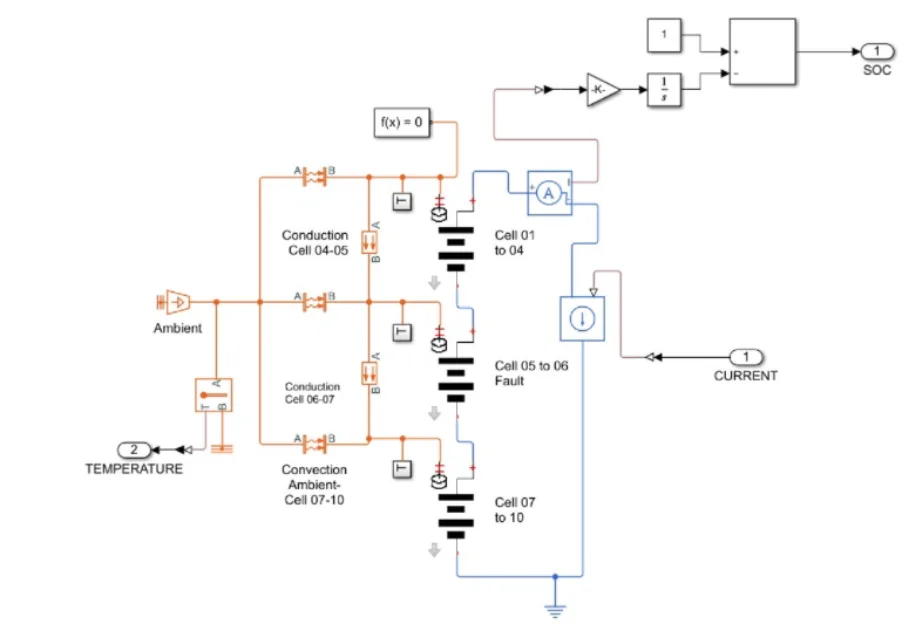
The model consists of a battery pack that includes 10 lithium-ion batteries connected in series. The battery pack is simulated with different temperature conditions and the perform…
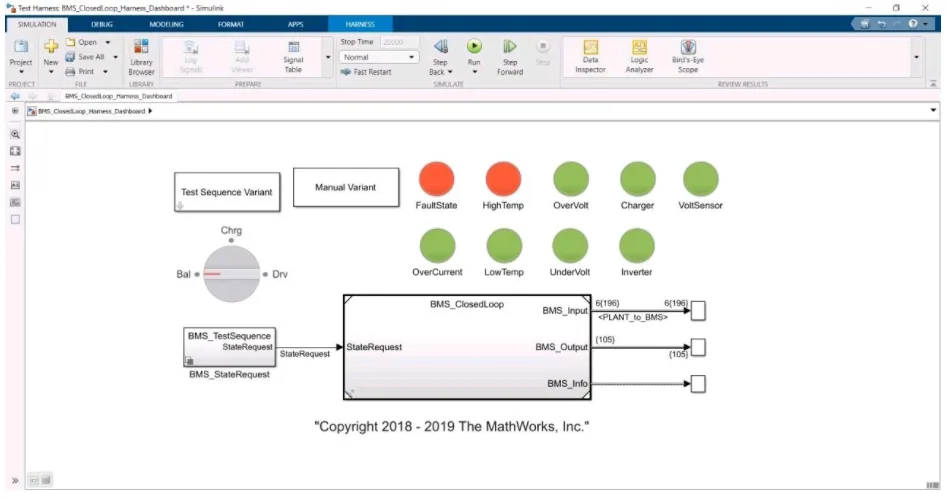
In this project, the students will test the BMS model for various types of faults during charge and discharge conditions.
Video stories from learners of related electrical programs, from Skill-Lync's YouTube channel.
by the Skill-Lync team
Amp-hours (Ah) count charge, meaning how much current a cell can give and for how long, so a 2 Ah cell supplies 2 A for about an hour. Watt-hours (Wh) count energy, which is that charge multiplied by the cell's voltage. Two cells with the same Ah rating can store different energy, so compare cells and packs in Wh or kWh. Week 2 of the course covers these terms.
Take a real cell, the Panasonic NCR18650B, an 18650 cylinder (18 mm wide, 65 mm long). Its datasheet gives a minimum rated capacity of 3,200 mAh and a nominal voltage of 3.6 V. Nominal voltage is roughly the average voltage over a full discharge, so:
C-rate scales current to capacity. 1C empties the cell in about an hour, which is 3.2 A here. 0.5C is 1.6 A for about two hours, and 2C is 6.4 A for about 30 minutes. The datasheet's standard charge current, 1,625 mA, is about 0.5C. At high C-rates you get a little less than the rated capacity, because more energy is lost inside the cell.
Chemistry sets the voltage. Battery University lists nominal voltages of 3.6 to 3.7 V for NMC (nickel manganese cobalt), 3.6 V for NCA (nickel cobalt aluminium), 3.2 to 3.3 V for LFP (lithium iron phosphate) and 2.4 V for LTO (lithium titanate). A 3.2 Ah LFP cell at 3.2 V would store 10.24 Wh, 11% less than the NCR18650B with the same Ah rating. LFP pays that back with long cycle life and good thermal stability.
Cells in series add their voltage, and cells in parallel add their capacity. So you pick the series count to reach the voltage the motor controller needs, and the parallel count to reach the energy and current the vehicle needs. A pack written as 10S4P has 10 groups in series, and each group is 4 cells in parallel. Week 4 covers modules, electrical connections and protection, and project 2 models a pack of 10 lithium-ion cells in series.
Build a 10S4P pack from the NCR18650B:
Series strings have a catch: the pack stops when its weakest cell reaches a limit. If one group hits 2.50 V first, the whole pack must stop discharging, even though the other nine groups still hold charge. That is why the BMS watches every series group, and why one lesson is titled "Understanding the Role of the Weakest Cell in Battery Management Systems".
Mostly by counting charge. The BMS measures the current many times a second and adds it up, like a meter on a water tank, and the state of charge (SoC) is the charge left divided by the capacity. This is called coulomb counting, because one coulomb is one ampere flowing for one second.
Here is the idea in MATLAB for one NCR18650B cell that starts full:
Q  = 3.2*3600;     % rated capacity in A*s (3.2 Ah)
dt = 1;            % one current sample per second
I  = [1.6*ones(1,3600), 3.2*ones(1,1200)];  % 1 h at 0.5C, 20 min at 1C
soc = 1 - cumsum(I)*dt/Q;   % discharge current is positive
fprintf('SoC after 80 min: %.3f\n', soc(end))
It prints 0.167. The cell gave 1.6 Ah in the first hour and 3.2 × 20/60 = 1.07 Ah in the next 20 minutes, so 2.67 Ah of its 3.2 Ah are gone.
The weak point is drift. Any error in the current sensor keeps adding up. An assumed offset of just 50 mA over 10 hours is 0.5 Ah, about 16% of this cell's capacity. So a BMS corrects the count with voltage. After the cell rests, its voltage settles to the open-circuit voltage (OCV), which maps to SoC through a curve measured for that cell. Battery University notes that a cell needs at least four hours at rest for a reliable reading, and that NMC and LFP curves are very flat in the middle, so voltage alone cannot pin down a mid-range SoC. Real BMS designs combine both, often with a cell model like the one in the next answer. Two lessons are titled "Understanding State of Charge and Open Circuit Voltage Relationship in Batteries" and "State of Charge Estimation".
It replaces the chemistry with three circuit parts that behave the same way at the terminals: a voltage source for the open-circuit voltage, a series resistor for the instant voltage drop under load, and a resistor-capacitor pair for the slower sag that follows. Week 3 builds this kind of model in MATLAB.
MathWorks Simscape Battery uses the same structure, and looks each part up from SoC and temperature:
Think of as the effort you feel the moment you start pushing a cart, and the RC pair as tiredness that builds over the next minute and fades when you stop.
With assumed values (they are not on the datasheet) of = 3.70 V, = 40 mΩ, = 20 mΩ, = 1,500 F and a 1C load of 3.2 A:
You fit these values from a test. Apply a current step and record the voltage. The instant jump gives , here 0.128 / 3.2 = 0.040 Ω, and the shape of the slow part gives and . The lessons "Calculating Internal Resistance of a Battery" and "Cell Dynamic Behavior in MATLAB and Battery Modeling" sit in this part of the course.
It keeps every cell inside its safe limits and tells the vehicle how much energy is left. Weeks 6 and 7 cover measurement, protection, cell balancing, BMS topologies and BMS design, and project 3 tests a Simulink BMS model for faults during charge and discharge.
Pre-charge shows the electrical side well. The inverter has a large capacitor at its input. Close the main contactor straight onto an empty capacitor and only milliohms of wiring limit the inrush current. So the BMS first charges the capacitor through a resistor. With assumed values of a 400 V pack, a 100 Ω resistor and a 1 mF capacitor, the peak current is 400 / 100 = 4 A and the time constant is 100 × 0.001 = 0.1 s. After five time constants, 0.5 s, the capacitor is at 99.3% of pack voltage and the main contactor can close. "Explanation of Pre Charge Condition in Battery Management Systems" is one of the lesson titles.
It is a broad, mostly concept-first introduction to EV batteries, from electrochemistry to charging. The syllabus has 10 modules: energy and electrochemistry, battery terms and characteristics, mathematical modelling, pack construction, other storage (ultracapacitors, fuel cells, flywheels), BMS introduction, BMS design, charging, thermal management, and recent trends and economics.
The recording is 52 lessons, about 22 hours. Read the lesson list before you enrol, because it differs from the syllabus in places:
The 3 projects are a mechanical pack design with series-parallel cell choice and holders, a thermal model of a 10-cell series pack at different temperatures, and Simulink fault tests on a BMS model. For other providers, see the BMS course comparison.
Battery-specific roles exist, but our own records for them are thin. As of 19 Nov 2026, Skill-Lync's placement records (n = 3,905) have 7 entries with "battery" or "BMS" in the job title, placed from 2021 to 2024 at Tata Elxsi, Tata AutoComp, HBL Power Systems, Grinntech, Boson Auto and VTOL Aviation. Two of them look like the same placement entered twice. Disclosed pay ranged from ₹2.1 to ₹9.0 LPA.
None of the 7 list this course. All came from the longer PG programs in EV design and hybrid EV design. The records are self-reported starting offers, mostly from 2021 to 2023. For wider EV pay data see EV engineer salaries, and for fees and other battery courses see battery technology courses. The theory in book form is in Electric Vehicles.
| Course | Length | Projects | Tools | Fee |
|---|---|---|---|---|
| Introduction to Battery Technology for Electric Vehicle (this page)Cells, models, packs, BMS and charging from scratch | 12 weeks, 22 h | 3 | MATLAB, Simulink | ₹40,000 |
| Li-ion Battery System design in EV & ESNext step: pack design, SOC, BMS comms, range | 12 weeks, 12 h | 2 | MATLAB, Simulink | ₹40,000 |
| Battery Thermal Management using Ansys Fluent and MATLABCell heat and pack cooling in Fluent and MATLAB | 6 weeks, 6 h | 2 | ANSYS Fluent, MATLAB | ₹40,000 |
| EV FundamentalsThe whole EV powertrain in 5 weeks | 5 weeks, 13 h | 5 | MATLAB, Simulink | ₹40,000 |
| PG Program in Battery Technology for Mechanical EngineersPG program: this course plus CFD and thermal | 32 weeks, 81 h | 14 | ANSYS Fluent, SpaceClaim, CFD Post, MATLAB, Simulink, OpenFOAM, Octave, ANSA | ₹2,75,000 |
| Pre-Graduate Program in Electric MobilityProgram: Simscape, HEV, this course, converters | 16 weeks, 72 h | 9 | Simulink, MATLAB | ₹1,50,000 |
Lengths, projects and fees are taken from each course page on 19 Nov 2026; fees are the Premium plan in INR, including all charges.
Become job ready with our comprehensive industry focused curriculum for freshers & early career professionals
By the end of this course, you will learn how to use MATLAB and Simulink to create mathematical models and simulations.
The course explains how lithium-ion cells work in electric vehicles, how a cell is modelled in MATLAB, how packs are built and how a battery management system is designed. In the third project you test a BMS model in Simulink for faults during charge and discharge.
This technology is used by electric vehicle manufacturers like Tata, Hyundai, Mahindra, and Tesla. Solar power system manufacturers and companies dealing in consumer electronics also use this technology.
This course will teach you the concepts of energy and electrochemistry, mathematical modelling and simulation, battery management systems, and thermal management to avoid mishaps.
Although students of mechanical, automotive, electrical, and electronics engineering backgrounds are preferred, anyone with an understanding of electrical and electronics engineering along with a fundamental understanding of circuit design can enrol in this course.
The course is taught by an industry expert with 14 years of industry experience. You get pre-recorded lectures and weekly assignments to gauge your progress.
The course takes you through the topic of battery management systems like a beginner. Afterwards, you are taught how to design and deploy battery management systems.
Week 4 covers battery modules and complete pack systems, assembly methods, electrical connections, and cell-level and pack-level protection, with a look at a laptop battery pack. In the first project you design a pack by choosing series and parallel cells, with electrical connections and mechanical holders.
The current plan includes 1 year of access to the learning management system, so you can study at your own pace within that year. For other access options, talk to the team.
A counsellor will walk you through the syllabus, projects and fee options — and tell you honestly if another course suits you better.