Week - 4 - Crash Box Simulation
Aim:
To prepare an input deck for crash test simulation for a given crash box, and to postprocess the results by requesting the sectional forces and global energy values, later changing the thickness of the crash box, and comparing both results.
Procedure:
Global Unit system followed is gm-mm-ms.
1.Import the given .K file and check the FE model for given components.
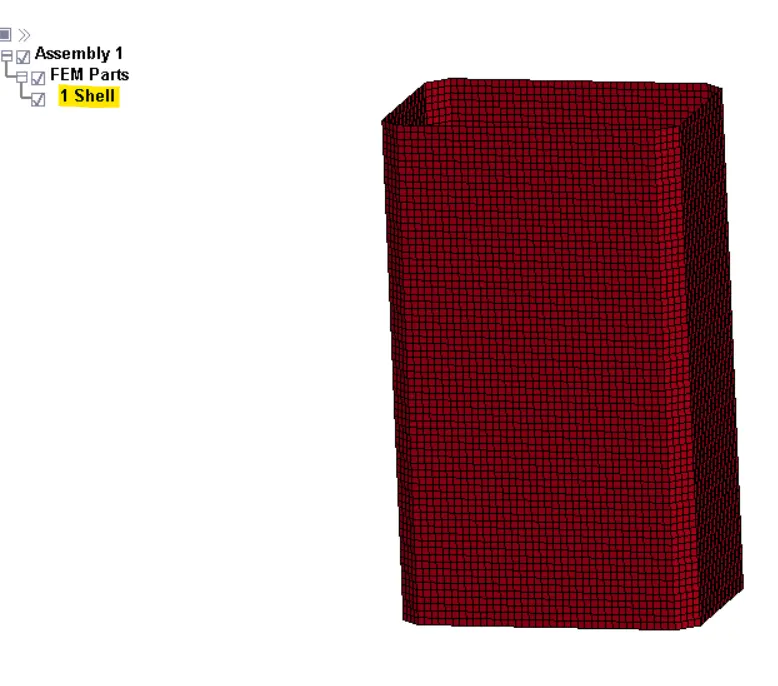
2.Creating Keywords for the test:
Material and section cards for the parts
Section Keyword:
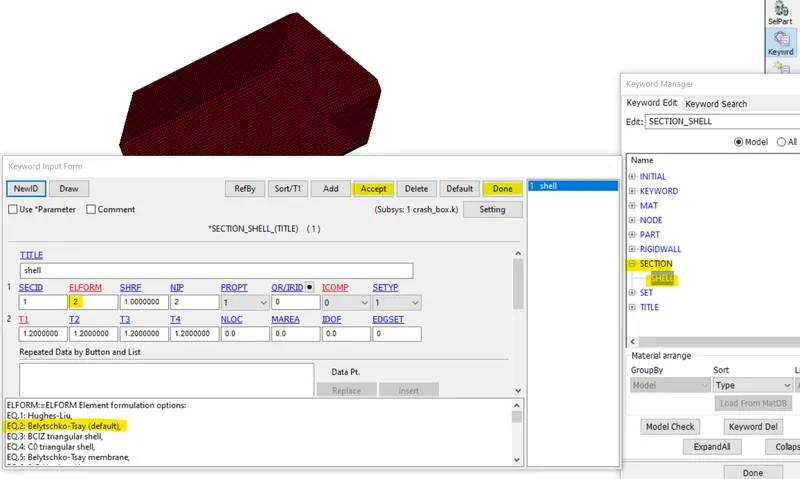
As the given mesh is a shell mesh, shell section is defined by going to Model > Keyword manager > ALL > Section > Shell
First case: Shell thickness 1.2mm
Second Case: Shell thickness 1.5mm
Material Keyword:
Piecewise linear plasticity material with only elastic data is applied as shown in the below image.
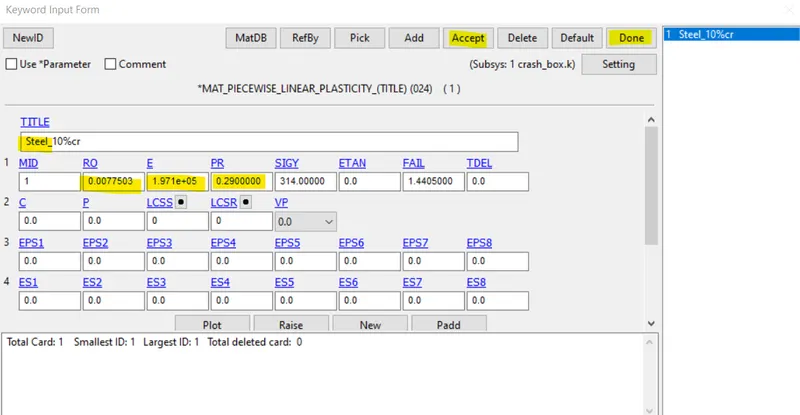
For elastic material Density, Youngs modulus and poisson’s ratio is defined in the card.
Rigidwall Keyword:
A planar rigid-wall is created for crash box to crash on when initial velocity is applied to the model.
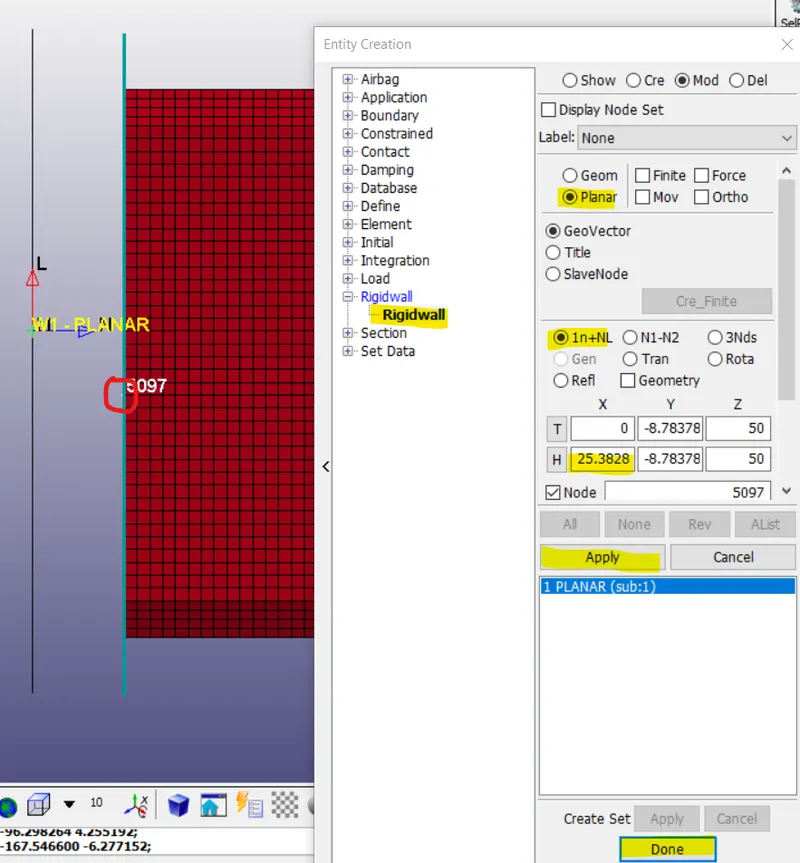
Select a point and the normal, give a distance value to keep some gap to the tube.
Contact and Initial Velocity Keyword:
Contact Keyword:
To create a self impacting contact, automatic_single_surface contact keyword is used.
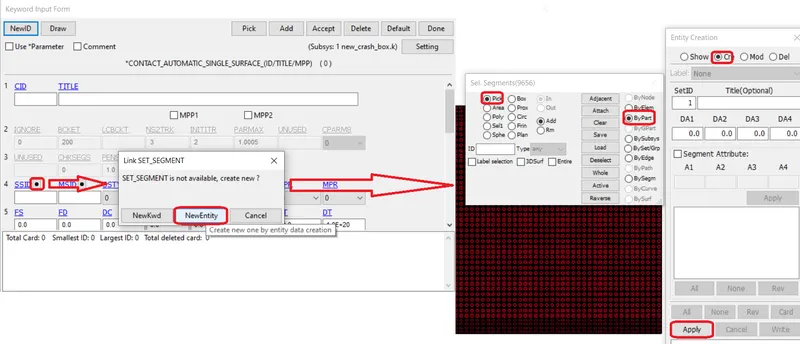
Initial velocity:
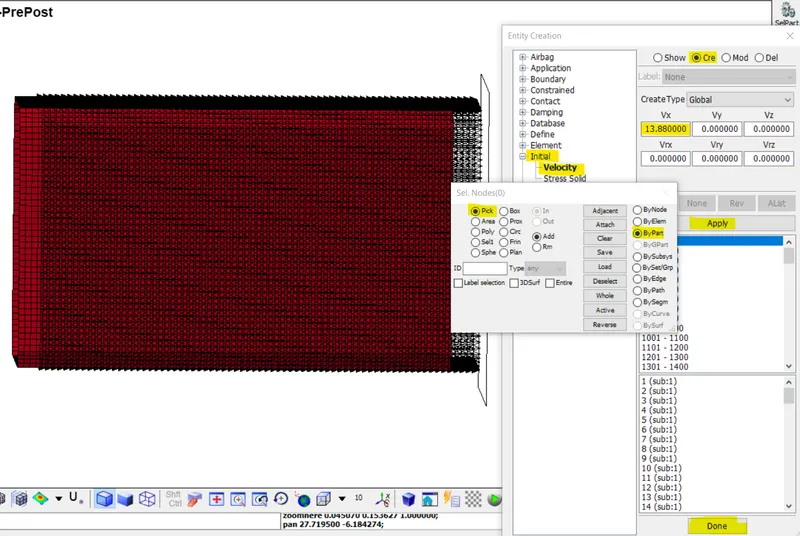
Initial velocity is applied to the component using, create entity > Initial > Velocity
Converting 50Kmph to mm/ms gives a value of 13.889mm/ms
Control Keyword options:
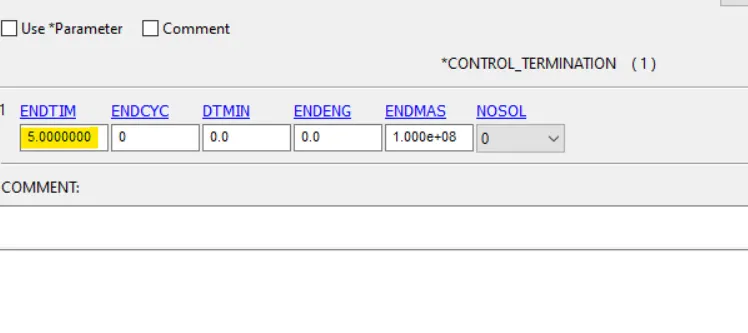
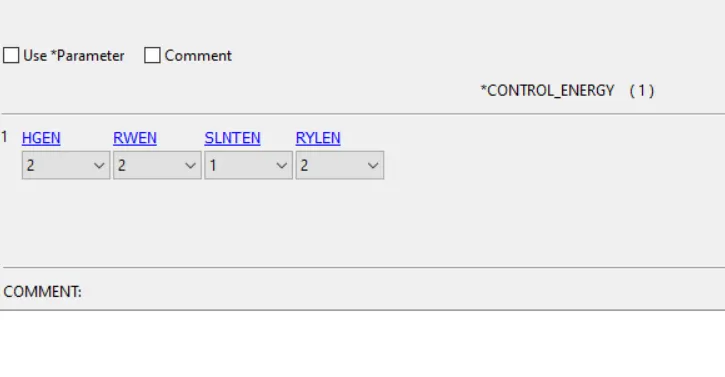
Control cards applied for this test are termination, Energy, Accuracy and Shell (optional)
Termination time of 5ms is applied, to calculate the hourglass energy the energy card is used.
Defining section to calculate sectional forces:
First create a node set and shell set with the centre nodes and shell elements of the tube as shown in the image.
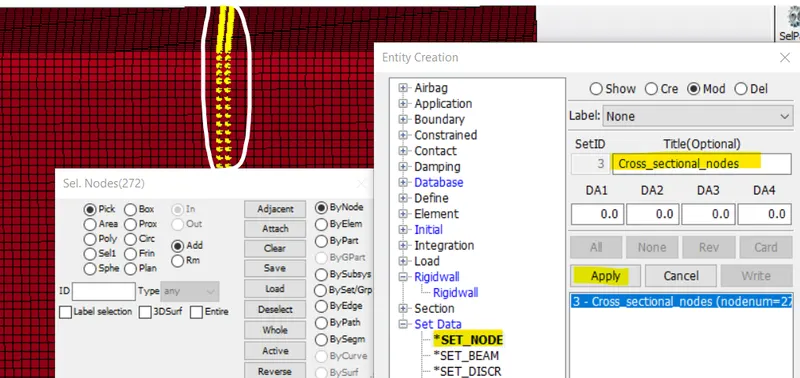
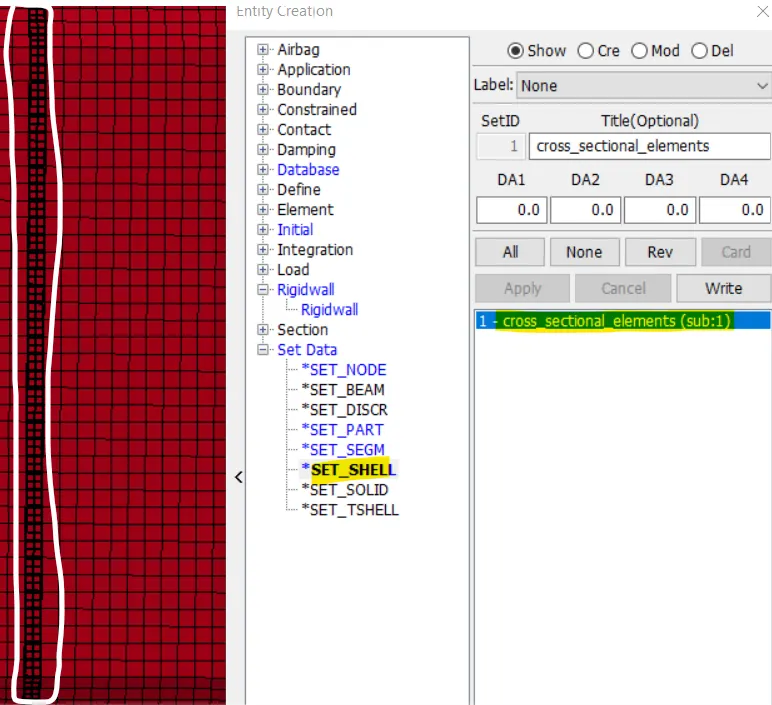
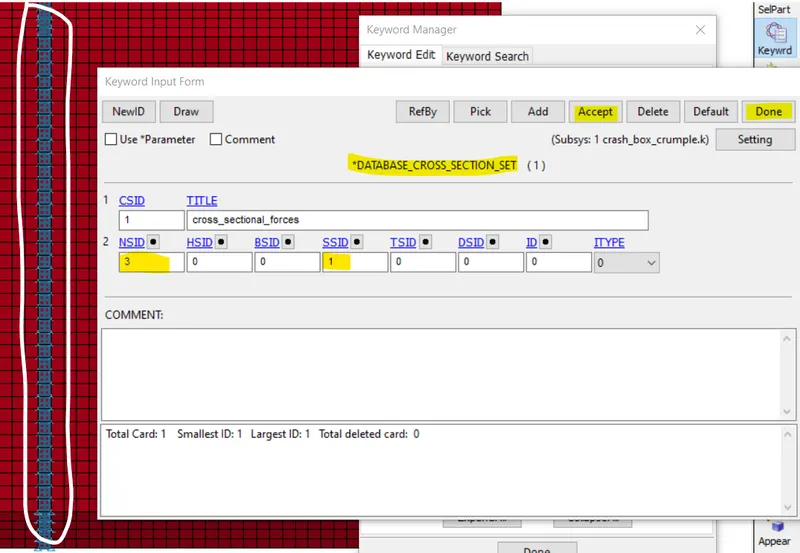
To define the section create a Dtabse_crosssection_set from the database keyword file
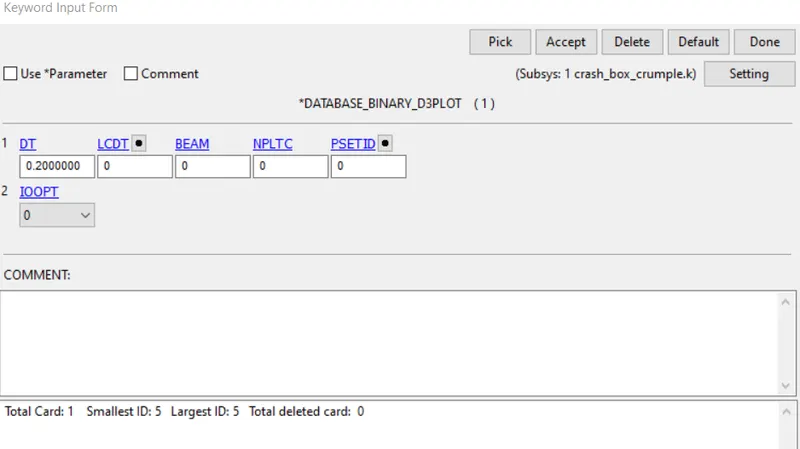
From the database keyword file define the output results required.
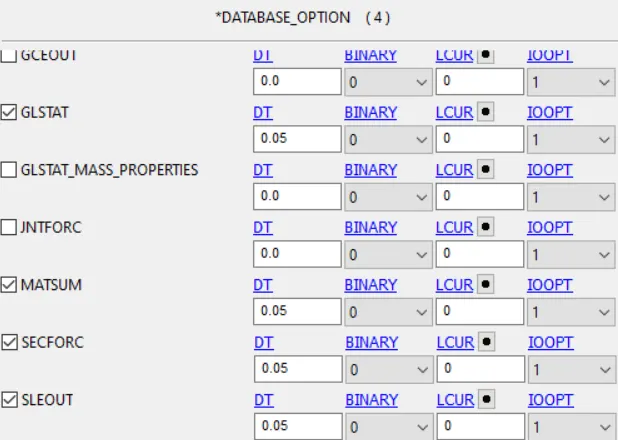
The model is now ready for run. Run the model and postprocess the results.
Results:
Stress plots of 1.2 mm:
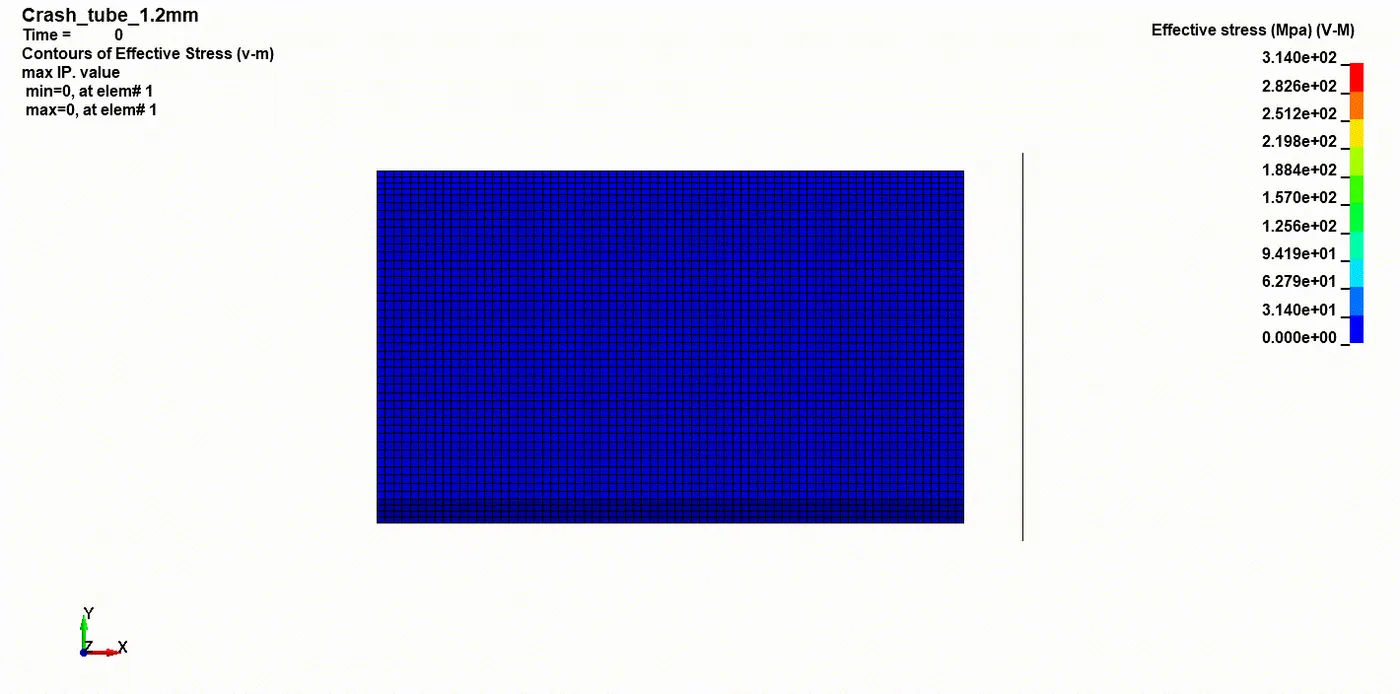
The maximum stress value is 314Mpa for crash tube with 1.2mm thickness.
Stress plots of 1.5 mm:
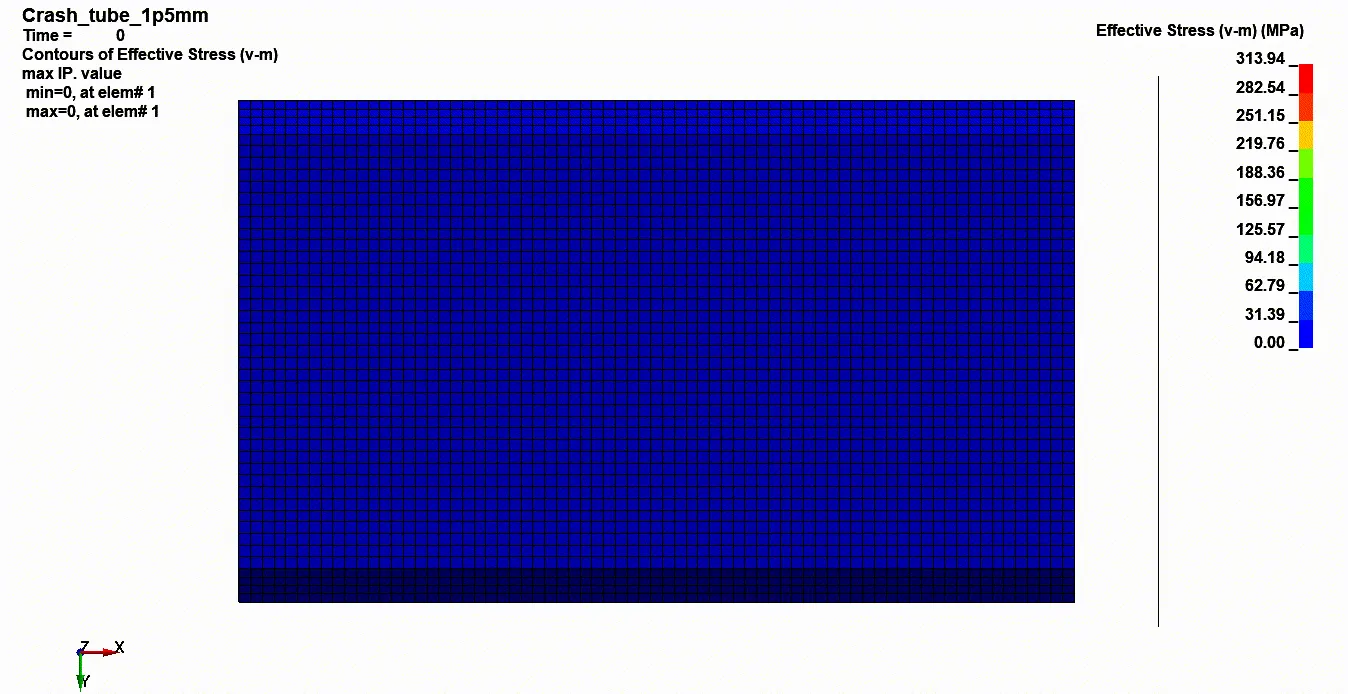
The maximum stress value is 313Mpa for crash tube with 1.5mm thickness.
Directional Stresses of 1.2mm crash tube:
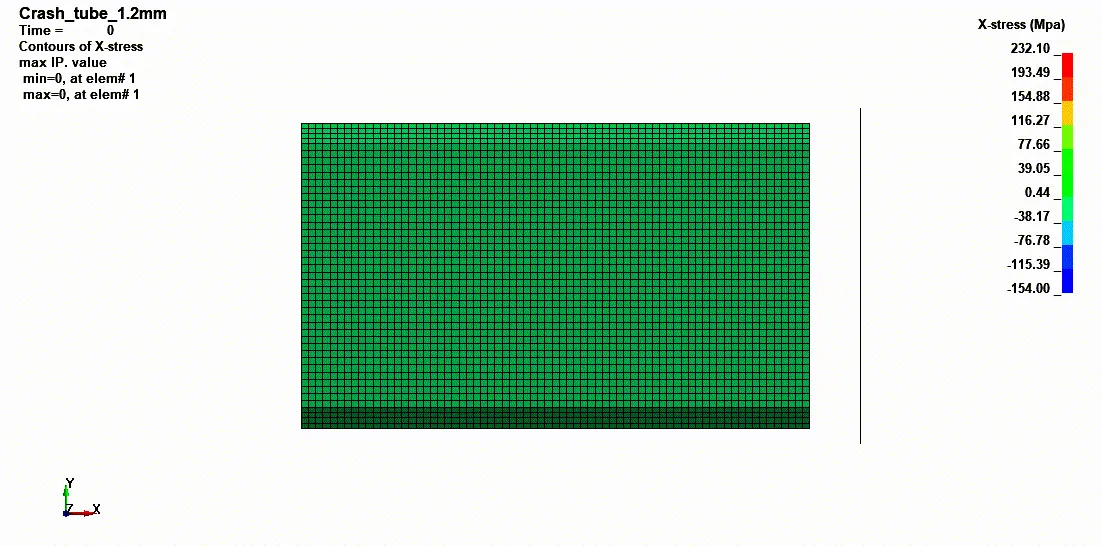
X-Stress, maximum value is 232MPa
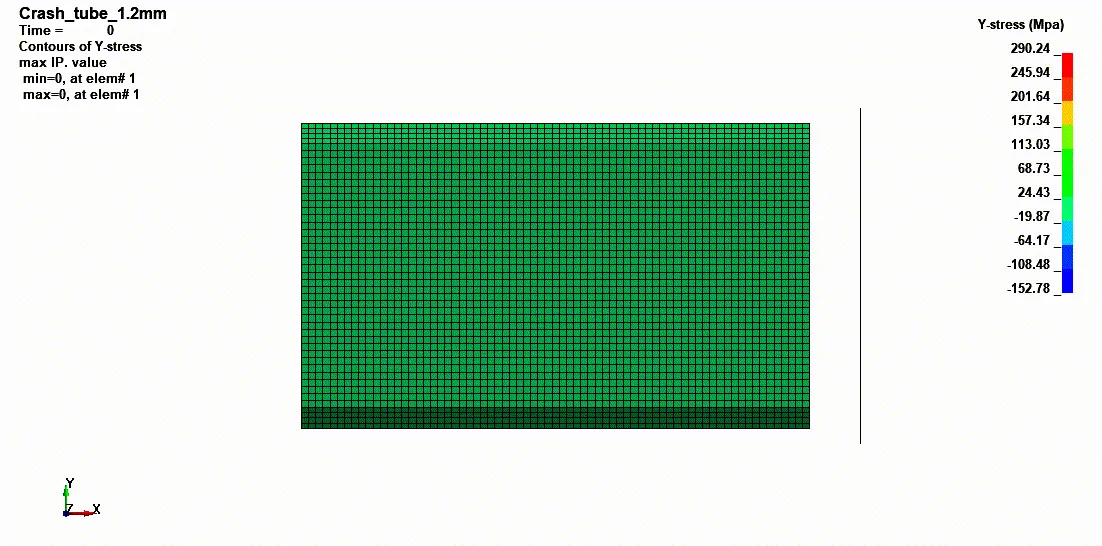
Y-Stress, maximum value is 290.24MPa
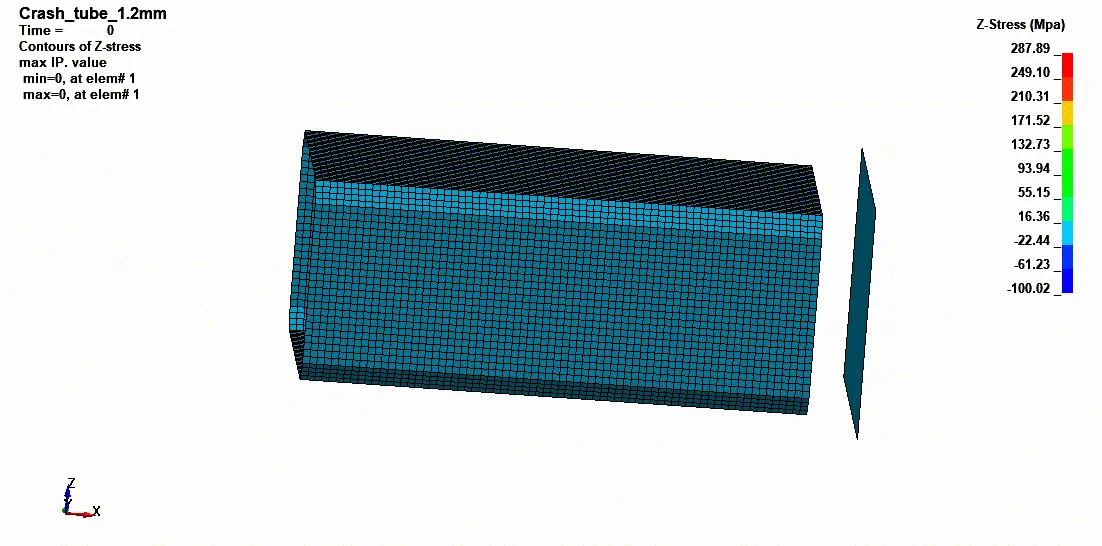
Z-Stress, maximum value is 287.89MPa
Directional Stresses of 1.5mm crash tube:
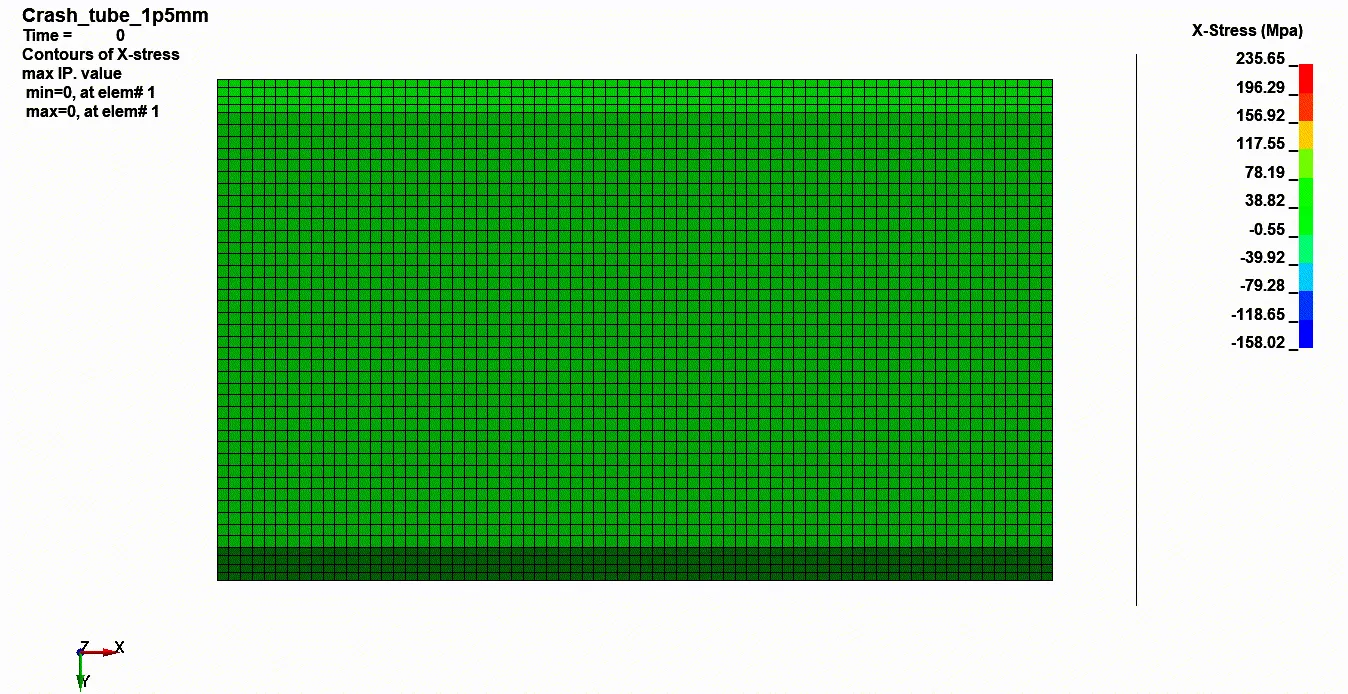
X-Stress, maximum value is 235MPa
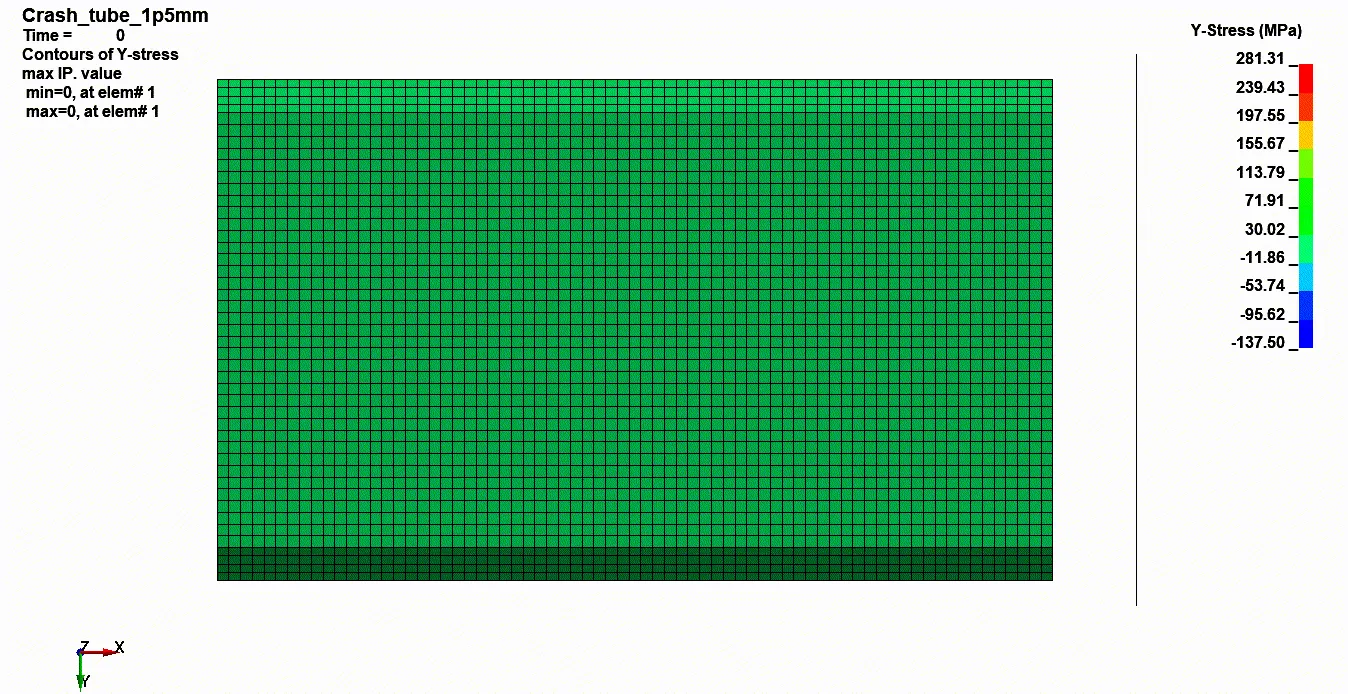
Y-Stress, maximum value is 281MPa
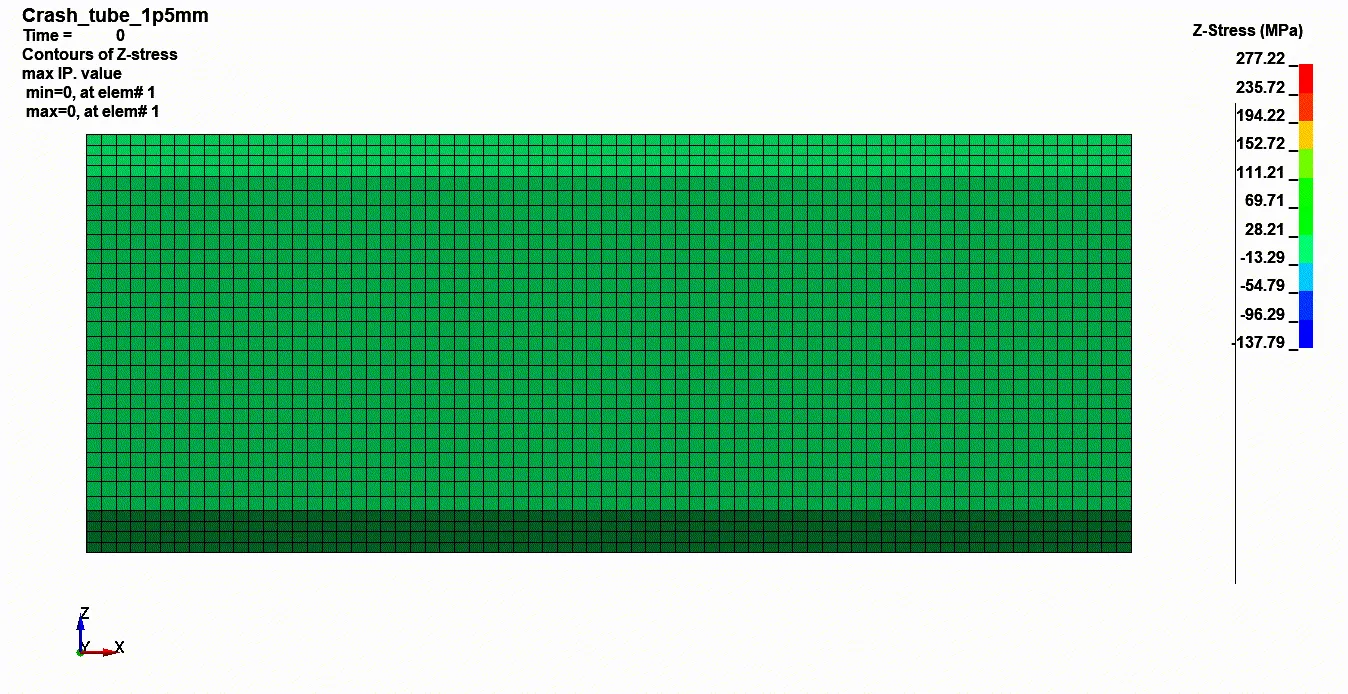
Z-Stress, maximum value is 235.72MPa
Plastic stran plots:
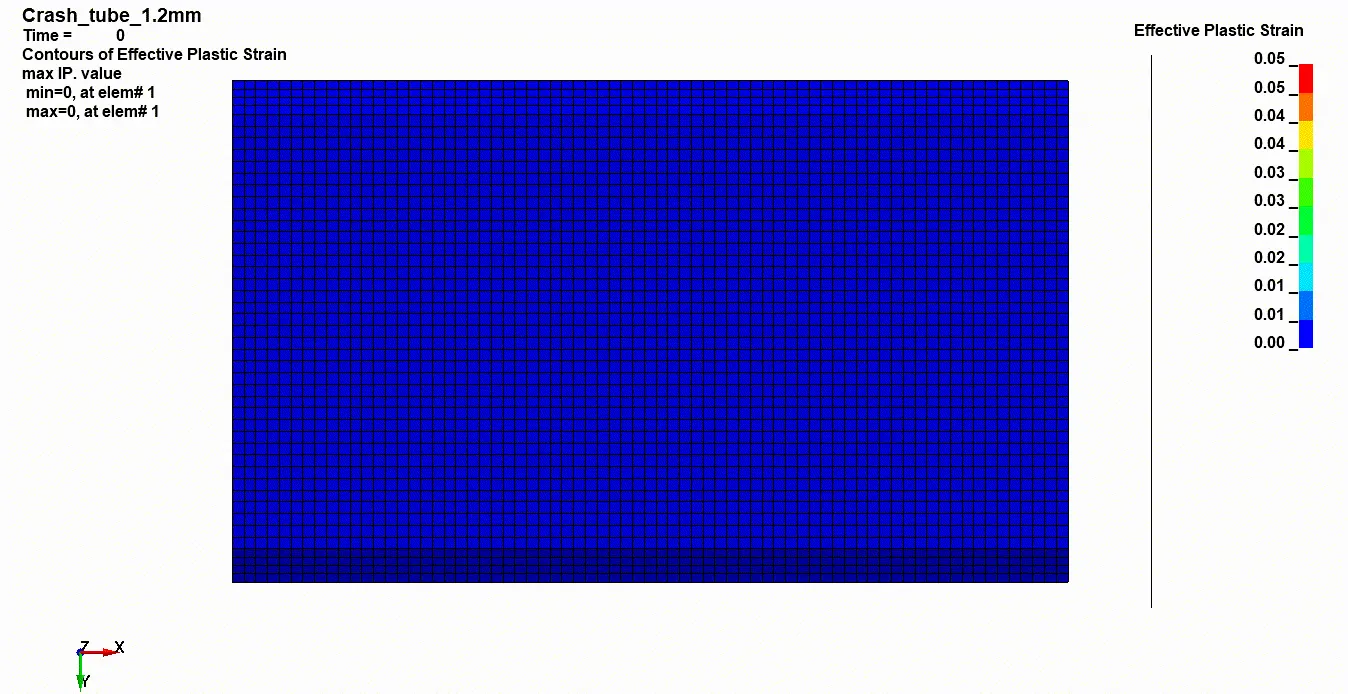
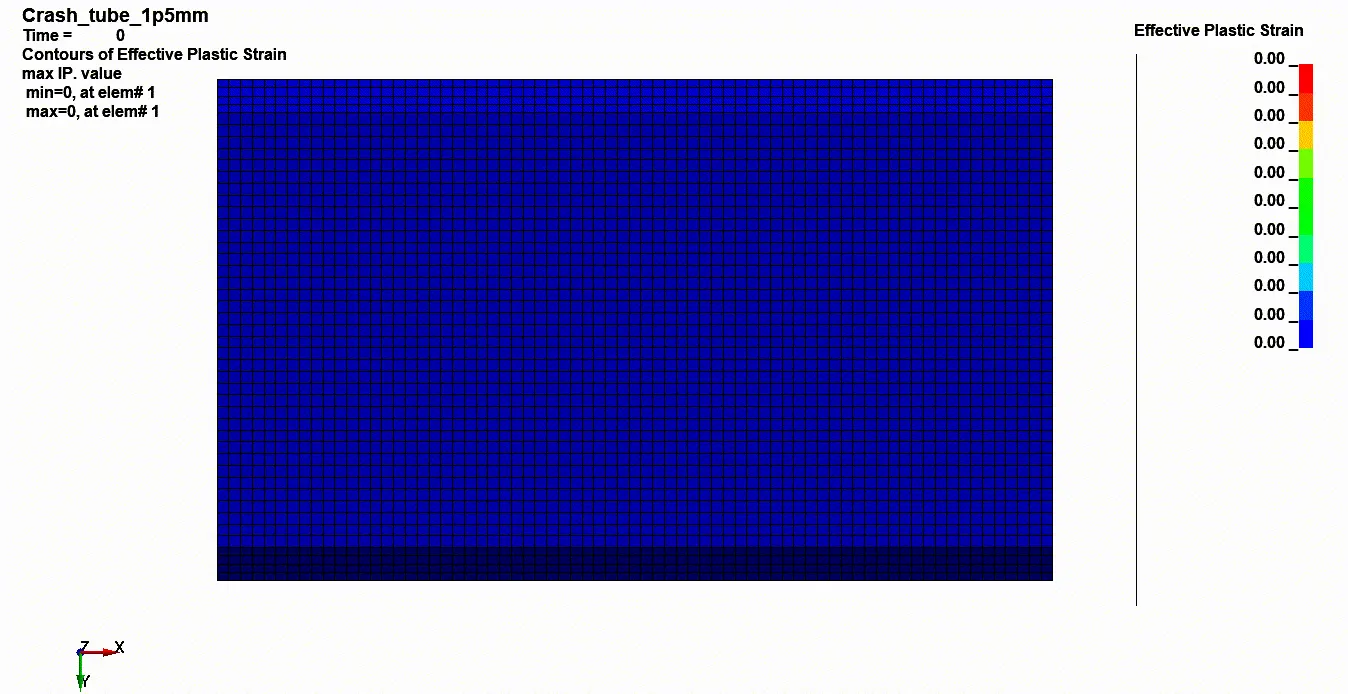
ENERGY PLOTS :
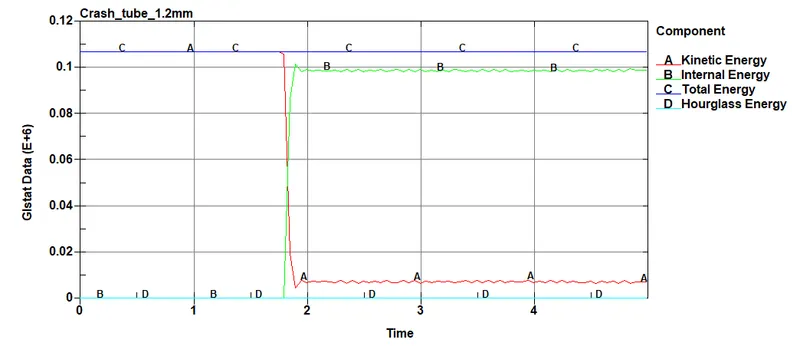
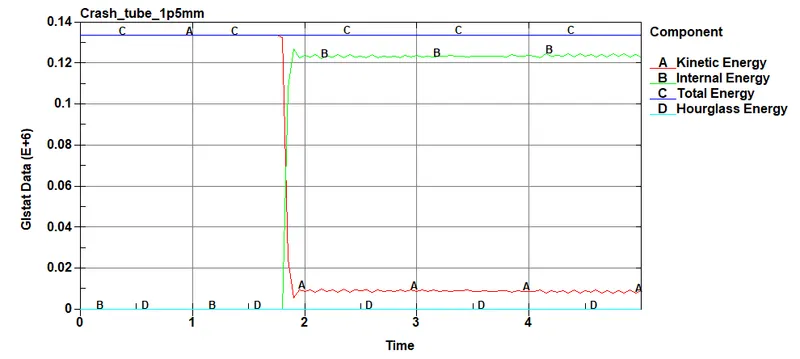
As the crash tube hits the rigid-wall the kinetic energy is transferred from crash tube to the internal energy, which is seen in the above graph.
Sectional forces:
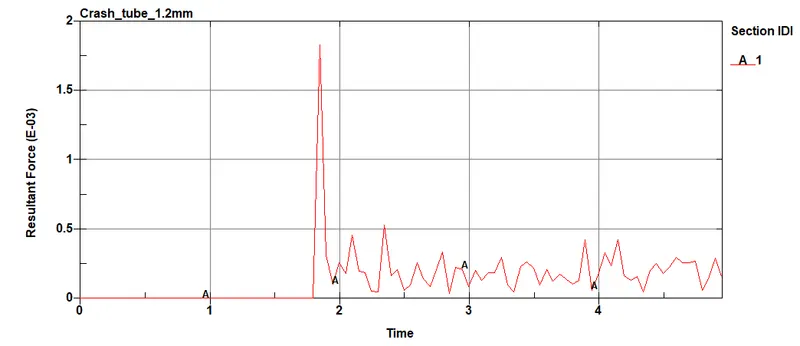
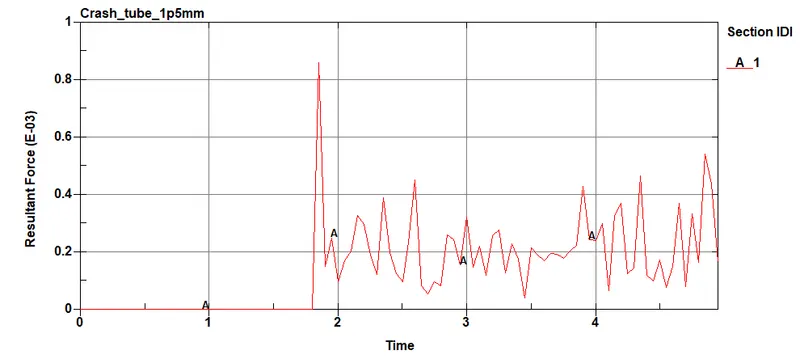
Resultant force plot from the cross-section created at the centre of the tube. the sectional forces are higher in the crash tube with 1.2mm thickness compared to 1.5mm thick tube.
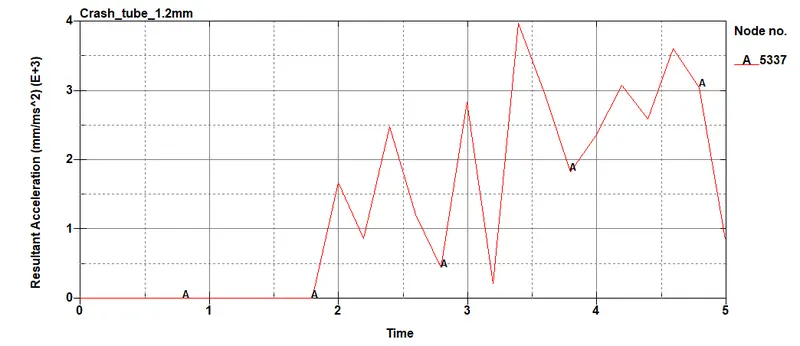
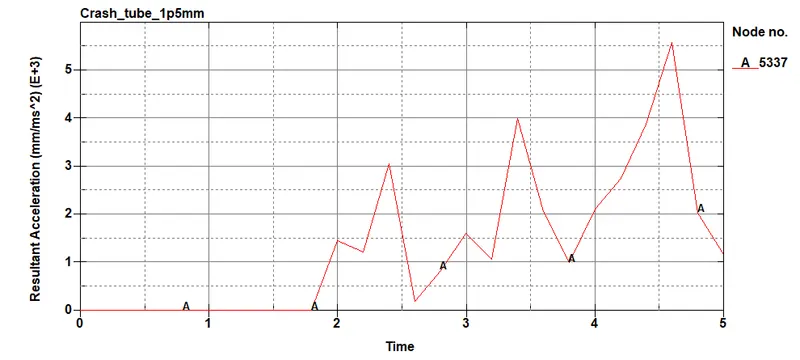
Nodal acceleration plots:
Comparison:
|
Thickness (mm) |
1.2 |
1.5 |
|
Run Time (sec) |
18 |
19 |
|
Effective stress (V-M) (Mpa) |
314 |
313.9 |
|
Effective strain |
0.05 |
0.05 |
|
Sectional forces |
1.75e-3 |
0.85e-3 |
|
Peak Acceleration of node ID 5337 (mm/ms^2) |
4e3 |
5.e35 |
Conclusion:
The crash tube test is carried out in this report, the results show that when the crash tube impacts the rigid wall the kinetic energy from the crash tube is transferred to internal energy, the sectional forces are higher in crash tube with thickness 1.2 mm the peak acceleration of the centre node of the crash tube with thickness 1.5mm is higher than that of the 1.2mm thick tube.