Week 10 - Simulating Combustion of Natural Gas.
Simulating Combustion of Natural Gas
Aim: To perform combustion simulation of natural gas.
Objectives:
Part I
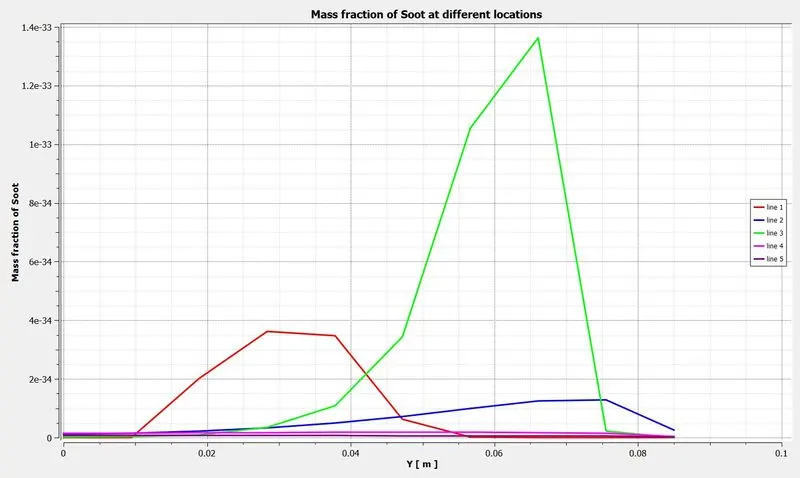
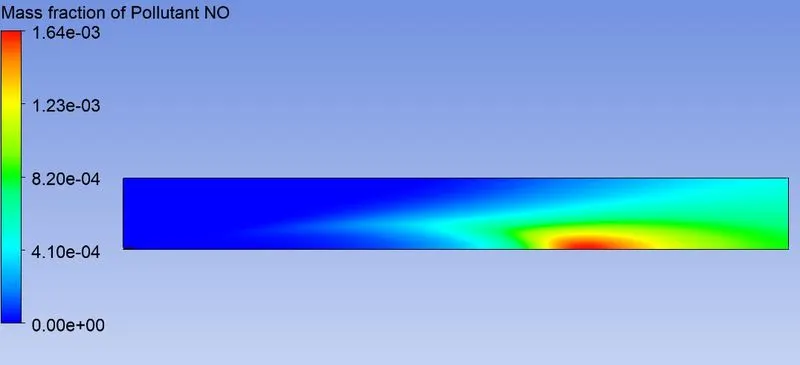
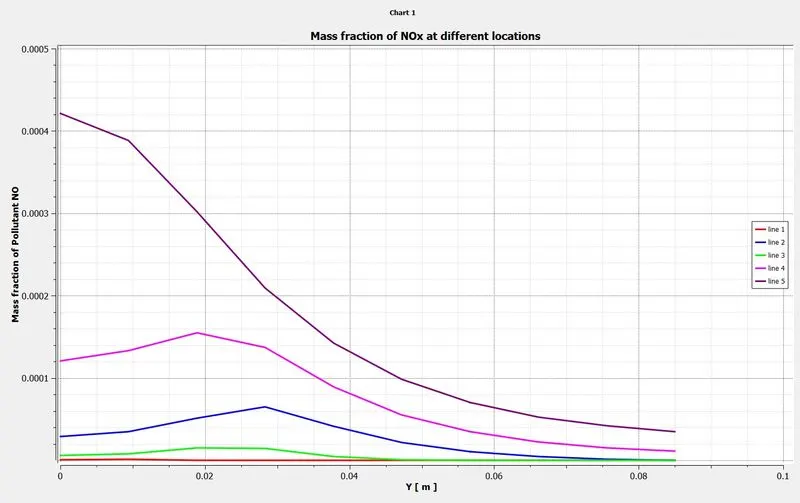
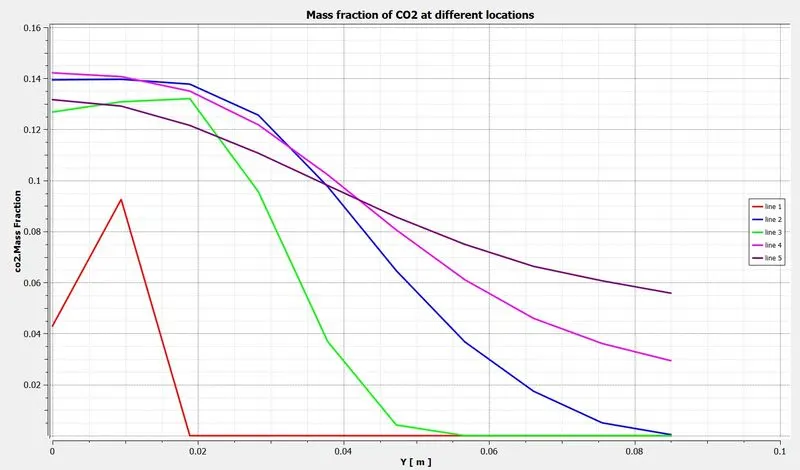
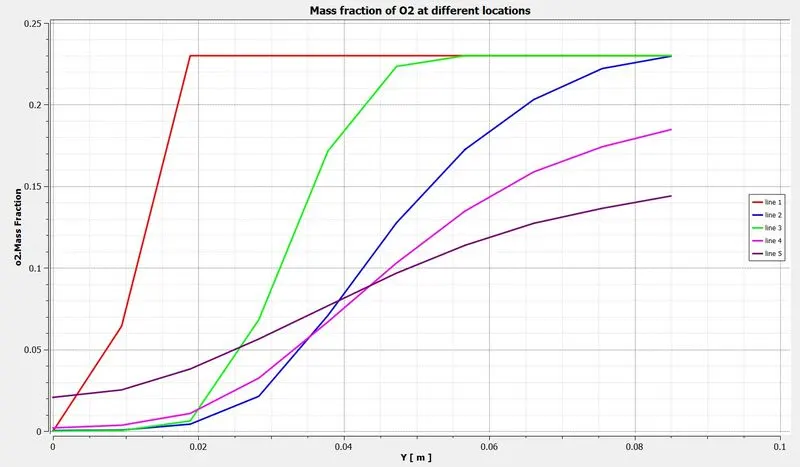
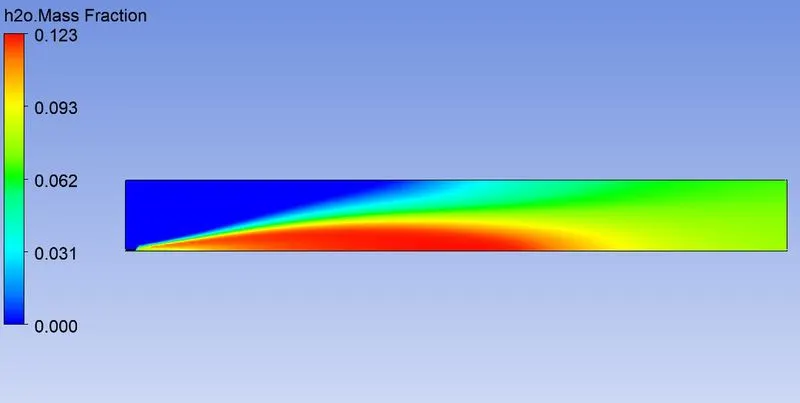
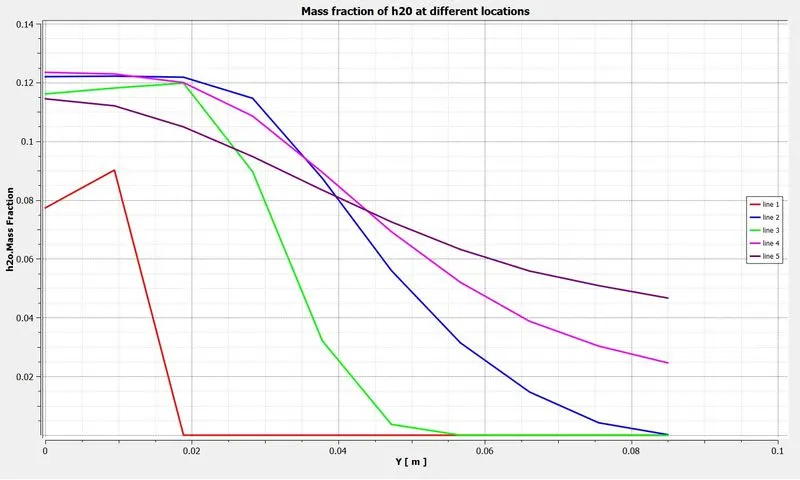
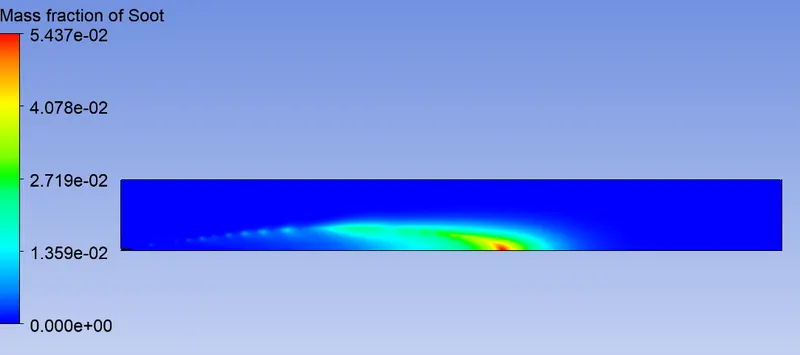
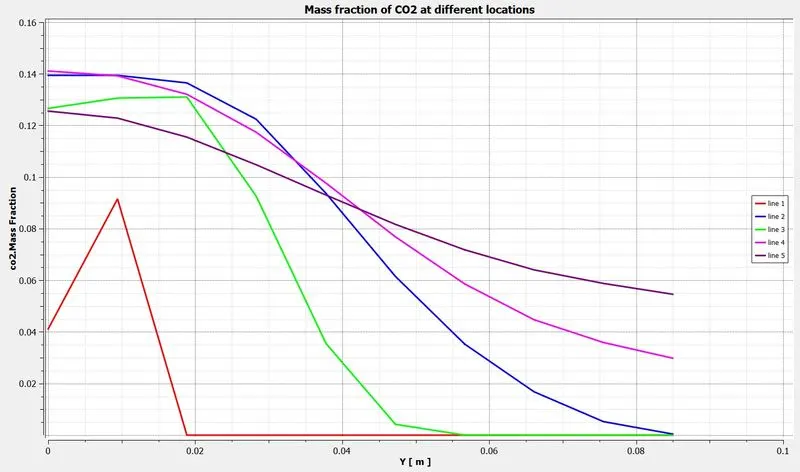
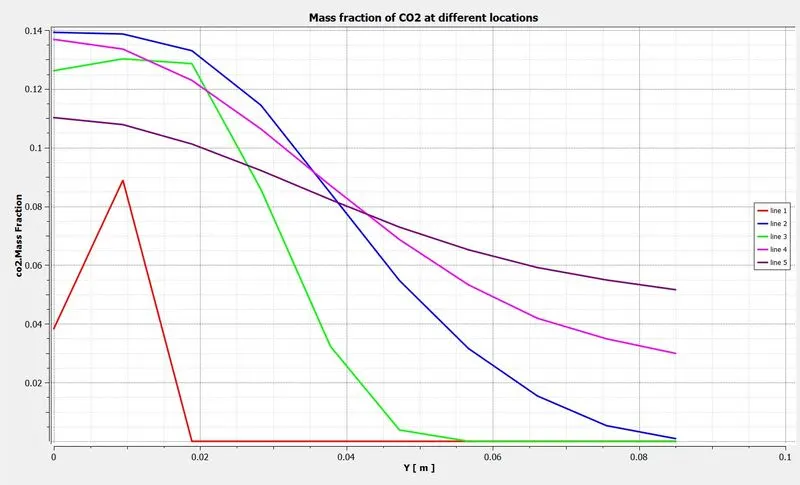
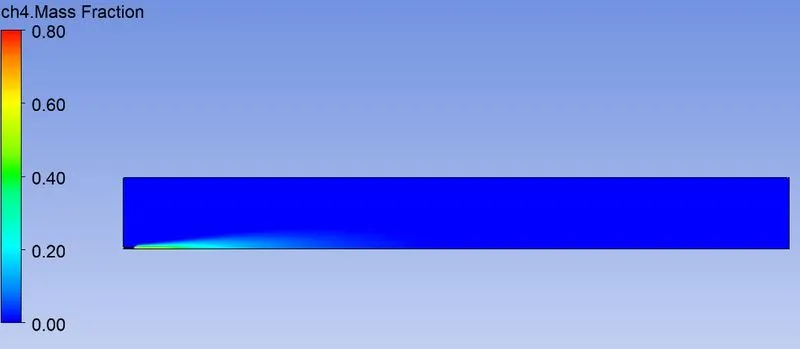
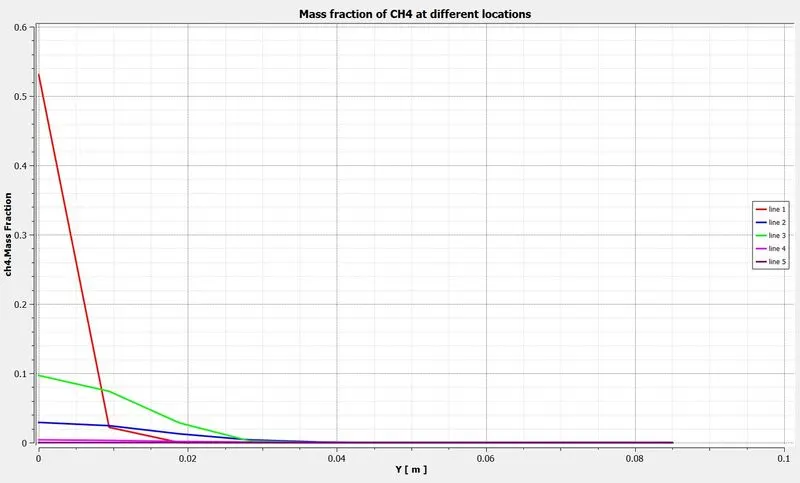
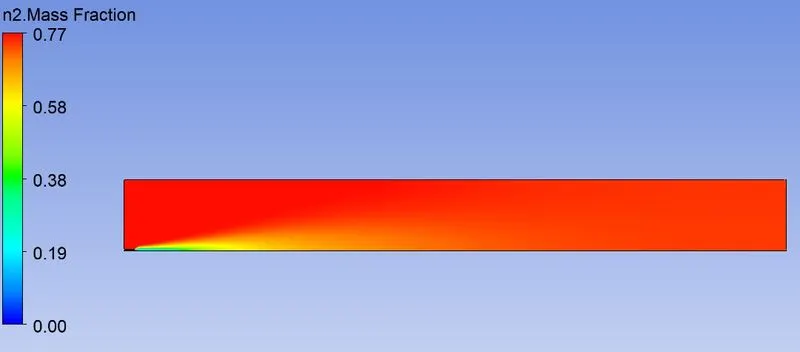
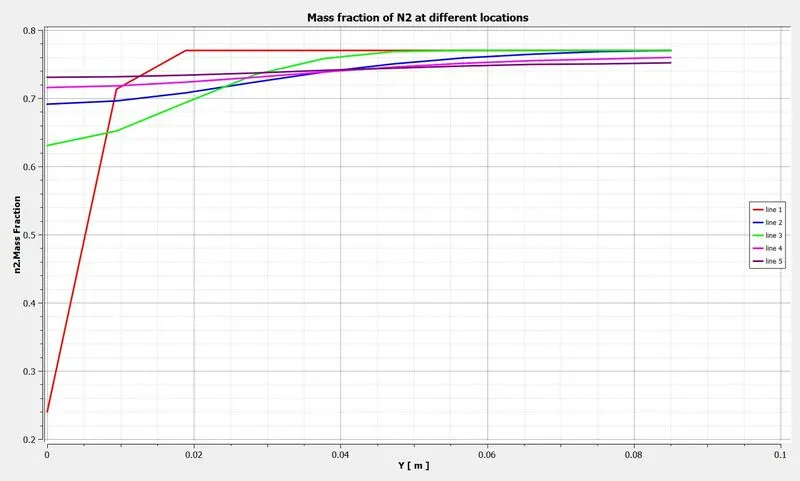
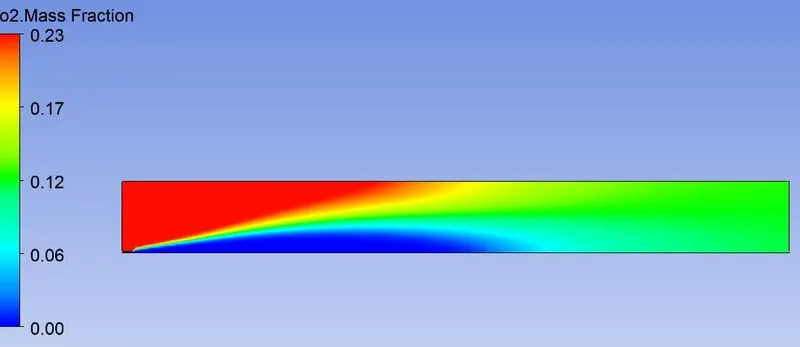
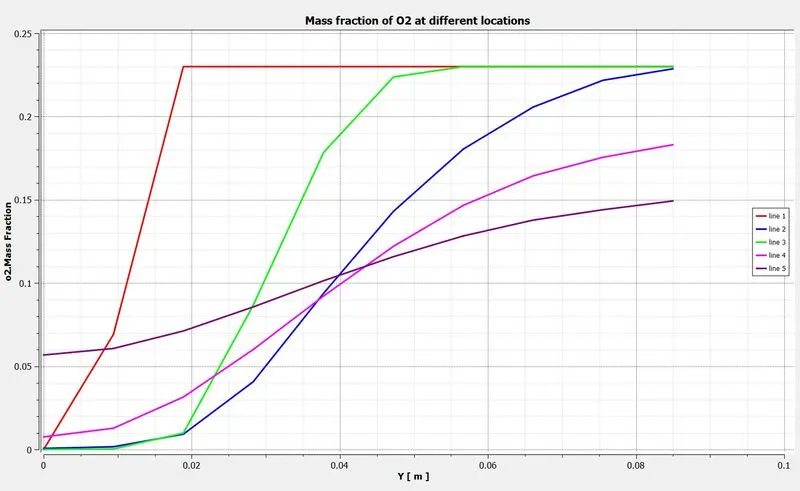
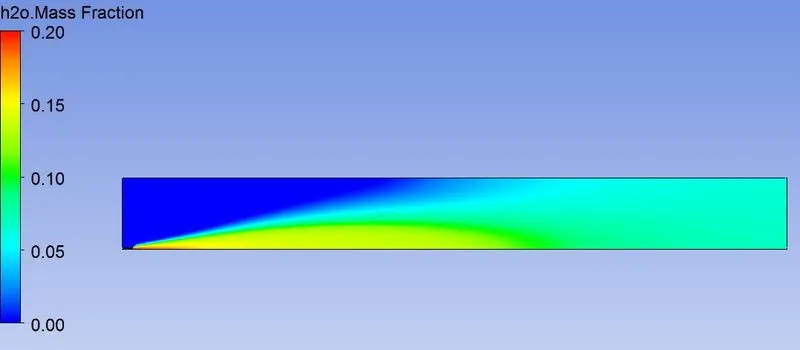
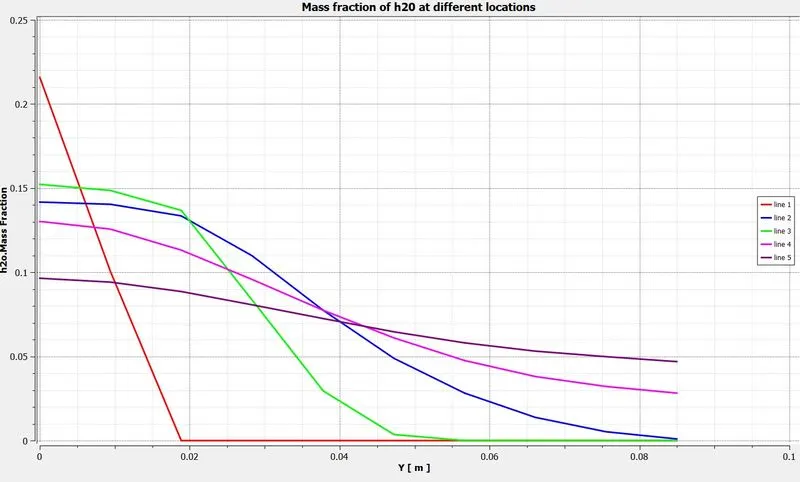
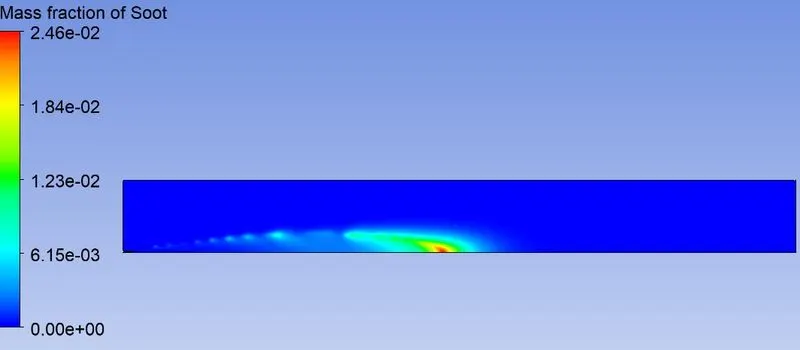
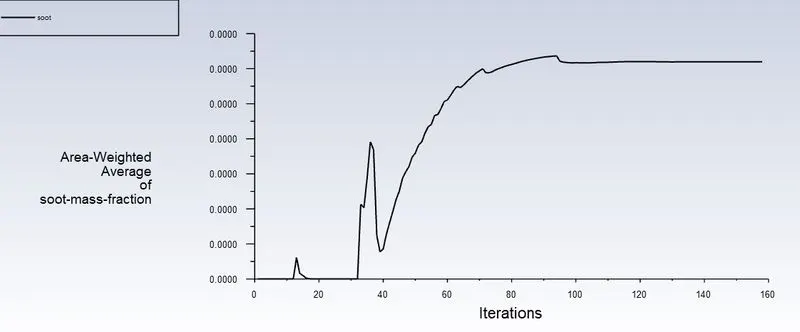
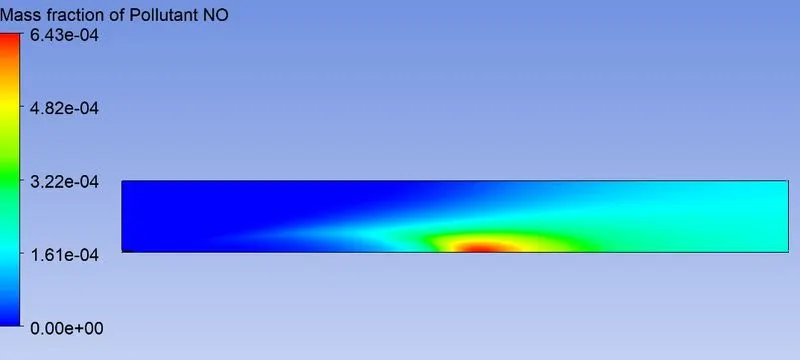
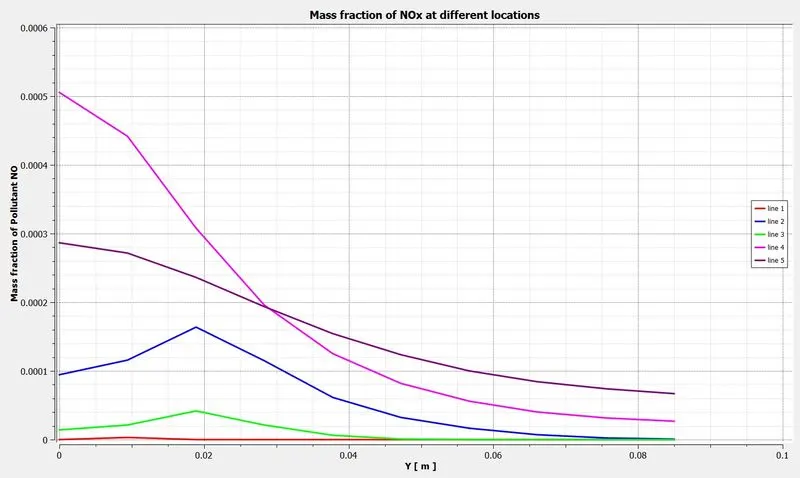
Perform a combustion simulation on the combustor model and plot the variation of the mass fraction of the different species’ in the simulation using line probes at different locations of the combustor as shown in Fig. You need to plot for CO2, H2O, CH4, N2, O2, NOx emissions & Soot formation.
Part II
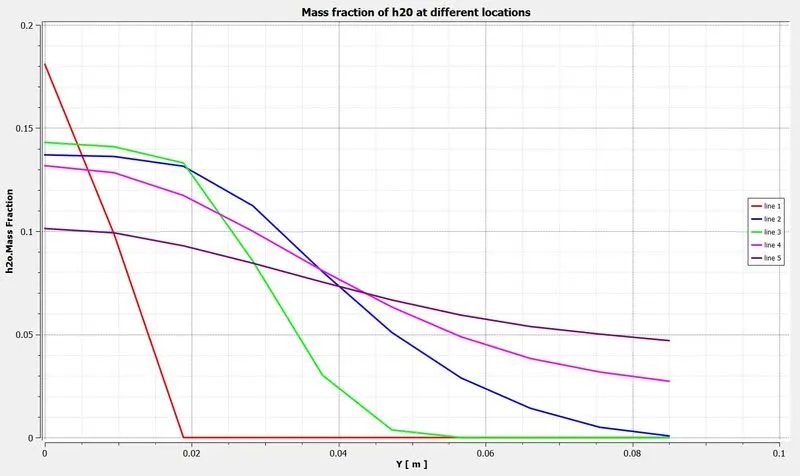
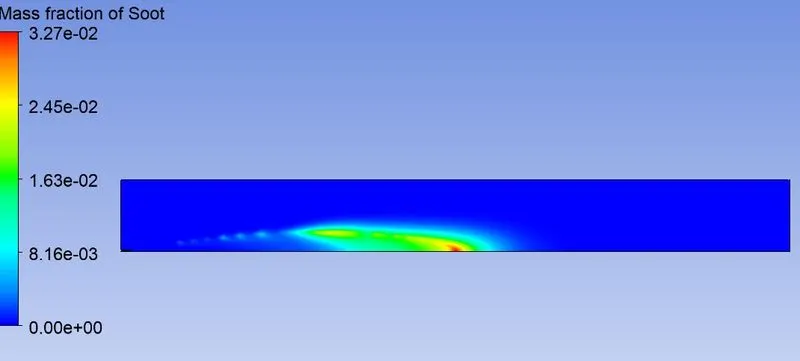
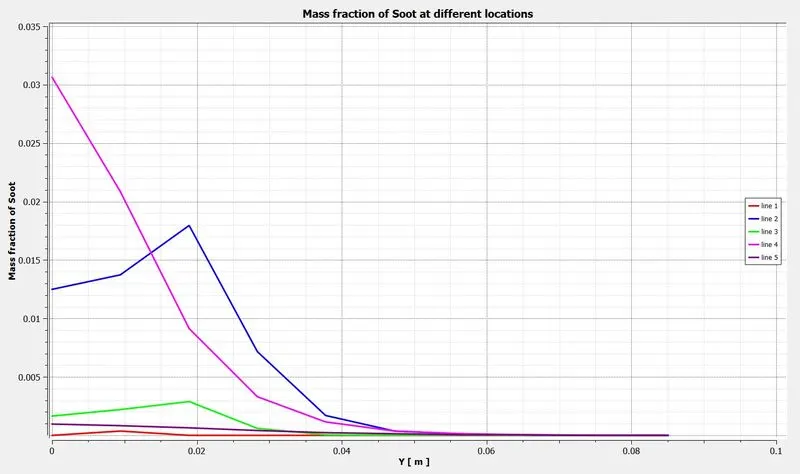
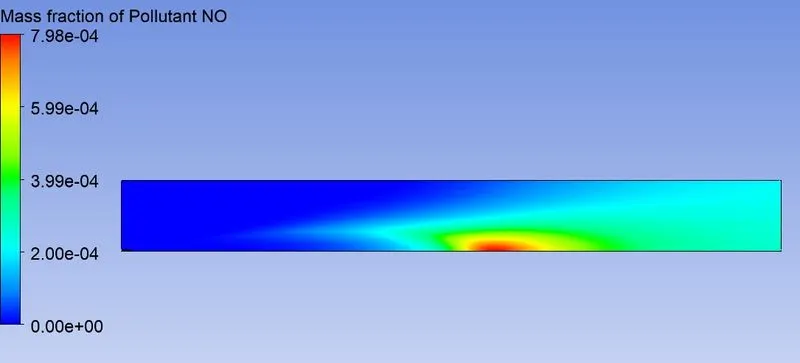
In this part, you need to add the water content in the fuel from 5% to 30% by mole and observe the effect of it on the results. It is necessary to provide line plots and contours to prove your claim.
Theory:
Combustion : Combustion is a reaction between oxidizer and fuel to produce large amount of heat and energy. It is an exothermic reaction. Combustion produces lot of bi products along with energy. Some of the common bi products of combustion are:
- CO2
- H20
- N2
- CO
- Soot
- Nox
- O2
Out of these bi products of combustion soot, NOx and carbon monoxide are harmful for the environment.
Method to reduce the formation of soot,NOx and CO :
Water injection method: Water is injected along with the fuel, this reduces the formation of soot, NOx and CO. we can run the simulation of combustion of natural gas by injecting the water in ansys and record how it effects the formation of pollutants
Possible type of combustion simulations in ansys are:
Based on mixing:
- Non- premixed combustion : Fuel and oxygen does not come premixed into the combustion chamber.
- Premixed combustion : Fuel and oxidizer comes premixed for ecalmple, Carburetor
- Partially premixed : There is a partial mixture of fuel and oxidizer
Based on phase :
- Fluid phase (Volumetric reactions) : Combustion takes in fluid medium
- Wall : Combustion takes place on the surface
- Particles (Surface reaction) : example - coal combustions
- Porous region : example - After treatment system
Fick's law :
- We use dilute approximation in the simulations.
- Instead of looking at how each species diffuses differently in presence of different species, which is very time consuming and accurate, we look how species diffuses in the entire medium
- Since most of the engineering applications are turbulent diffusion we use fick's law whic his based on dilute approximation.
Combustion source calculation:
1. Finite rate chemistry:
- It is a very time consuming process .
- Here we look at chemical kinetics and rate of production of each species
- It involves solving ODE system
- It is very costly and time consuming.
2.Mixing based models :
- The eddy dissipation model
- Combustion takes place in the presence of turbulance.
- Uses k and epsilon values to calculate time for reaction, if the k and epsilon values are sufficient combustion takes place without the presence of ignition source
3.Finite rate eddy dissipation model:
- Combination of both finite rate chemistry and eddy dissipation model
- Used to prevent instantaneous burning
Procedure:
Geometry preparation:
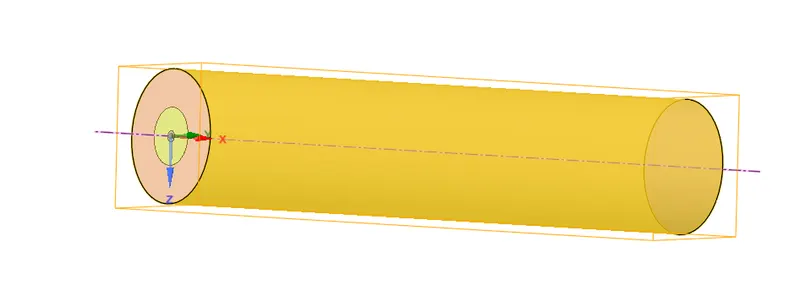
- Import the geometry into sapce claim.
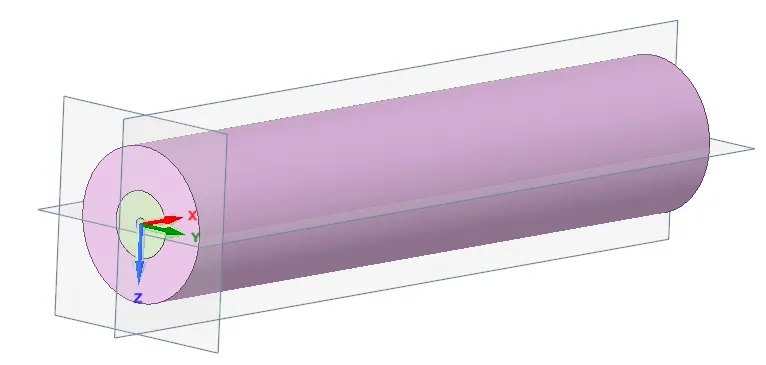
- Create planes.
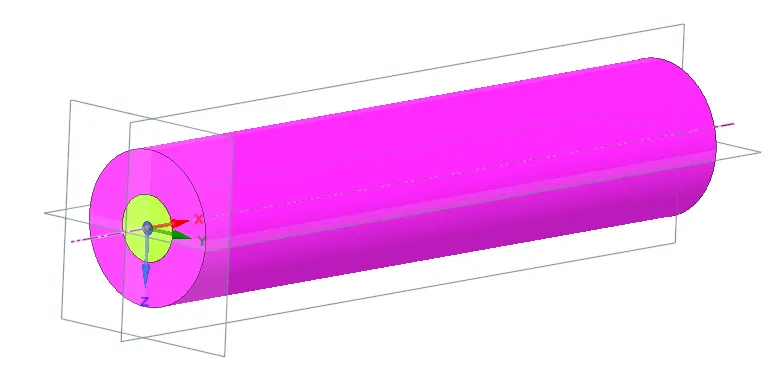
- Split the body along the planes we have created
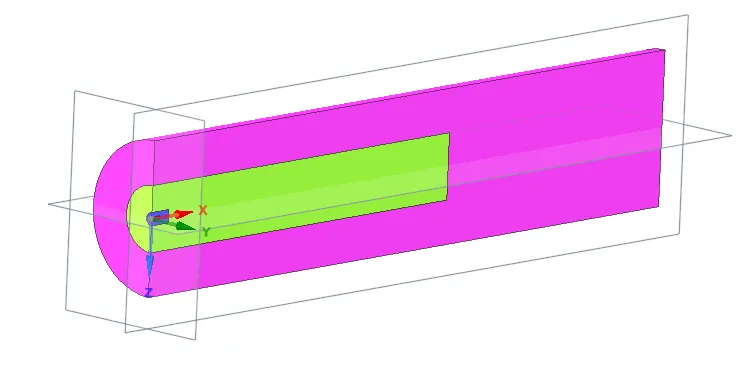
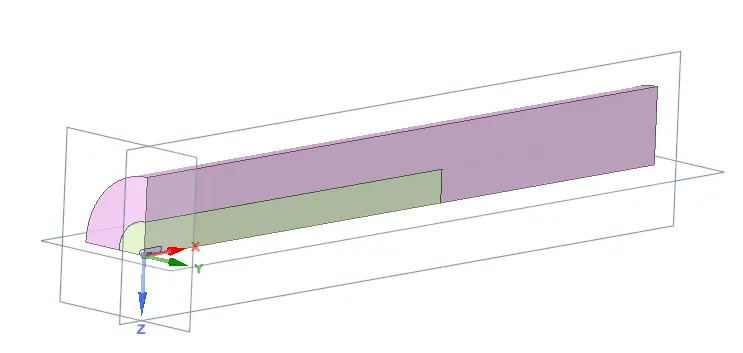
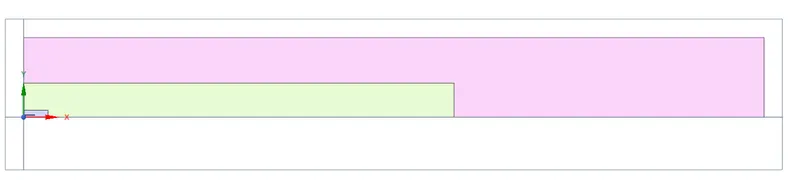
Copy the surfaces to a 2d diagram.
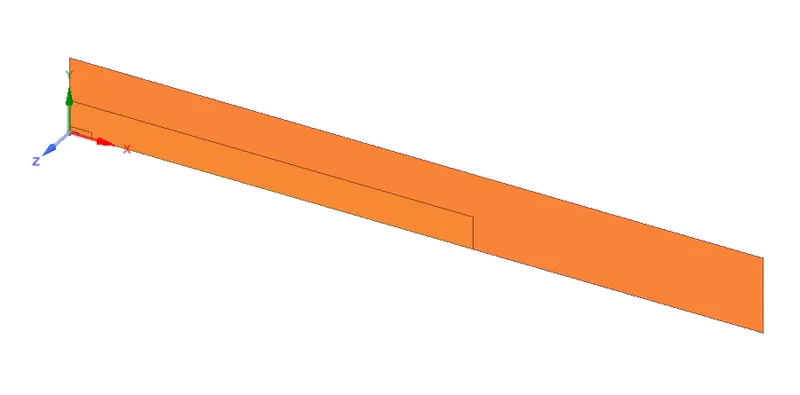
Combine the surfaces, to create a single model.

Meshing:
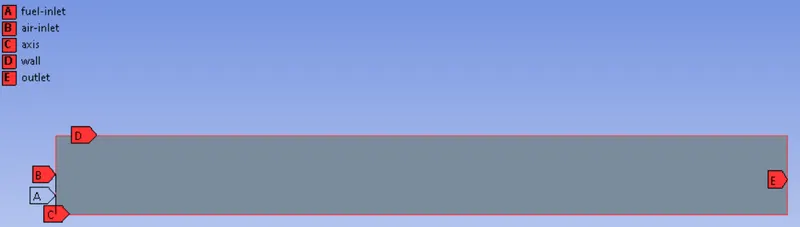
Names selections:
Name air inlet, fuel inlet , axis along x-axis, wall and outlet
Mesh size and details:
Give element size as 2mm
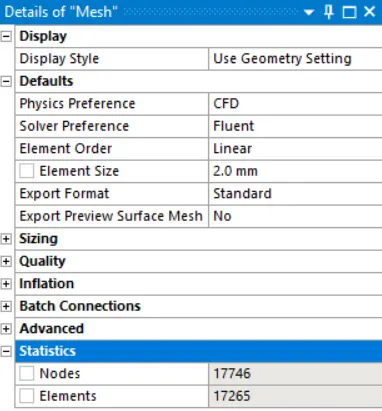
Turn on capture proximity for fine refinement of mesh at fuel inlet.

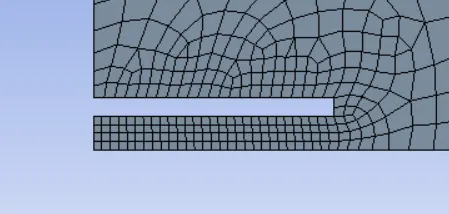
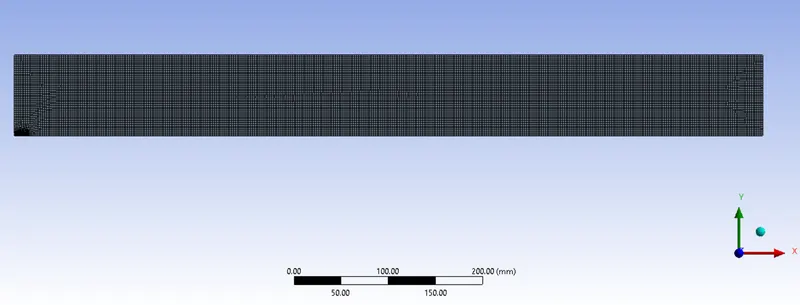
Mesh:
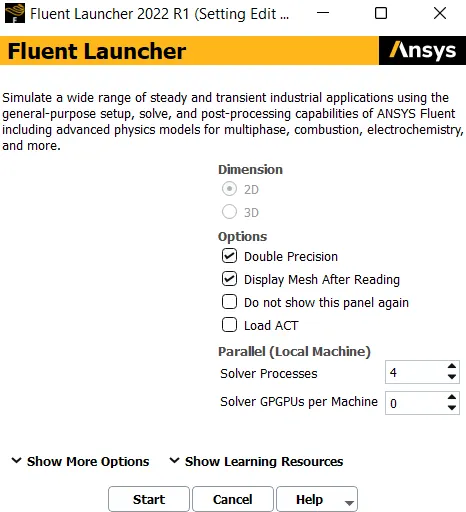
Setup:
Start the setup with double precision and 4 parallel processors.
General:
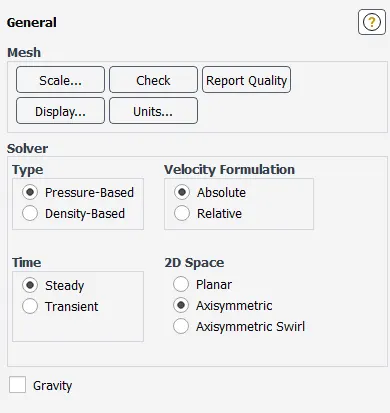
Set steady, pressure based solver with axisymmetry 2D space.
Turn on energy term
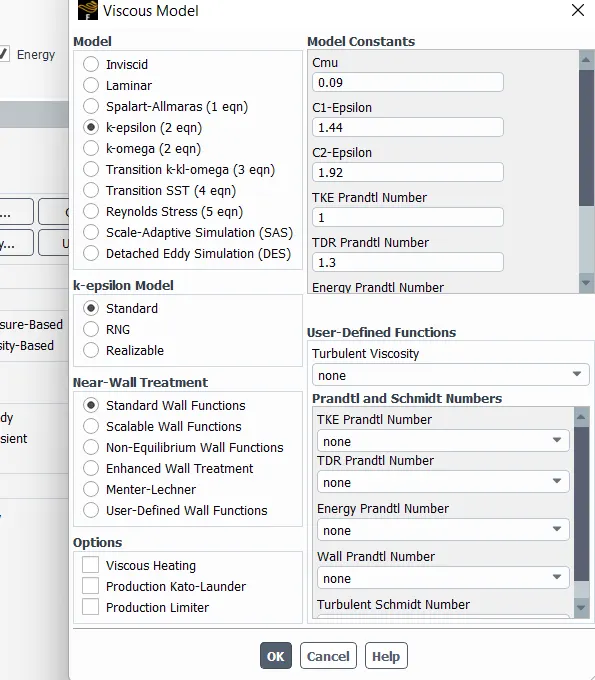
Visocus model : k-epsilon , standard with standard wall function.
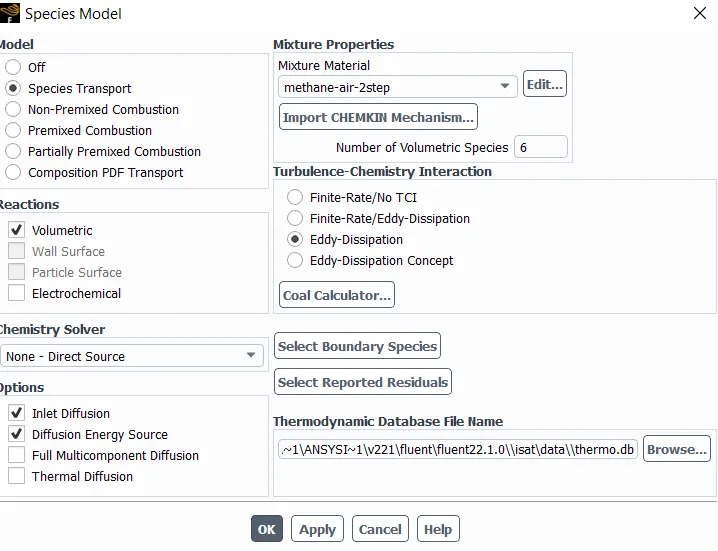
Species model:
- Model : Species transport
- Reaction: Volumetric
- options : Inlet diffusion and diffusion energy source
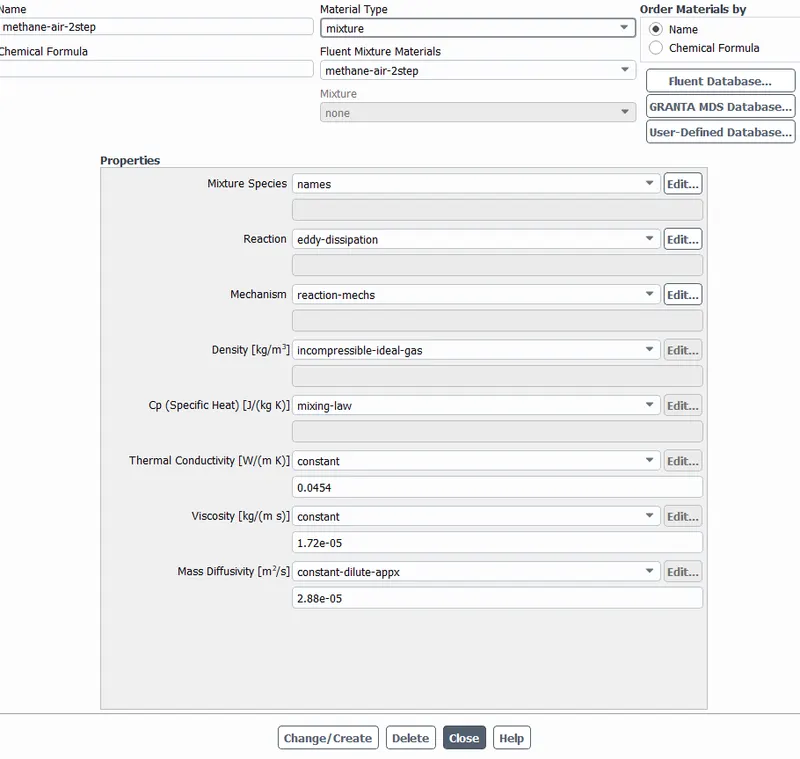
- Mixture material : methane-air-2step
- Tuebulance interaction : Eddy-dissipation
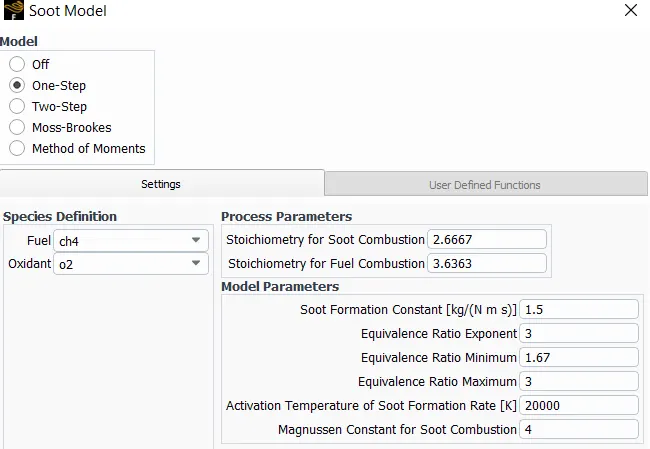
Soot model : One- step
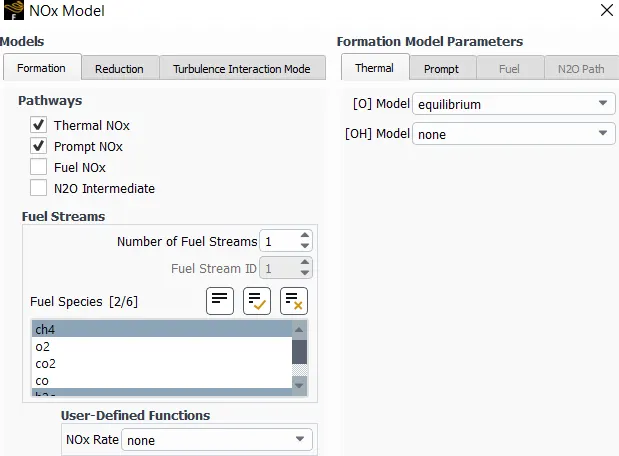
NOx model :
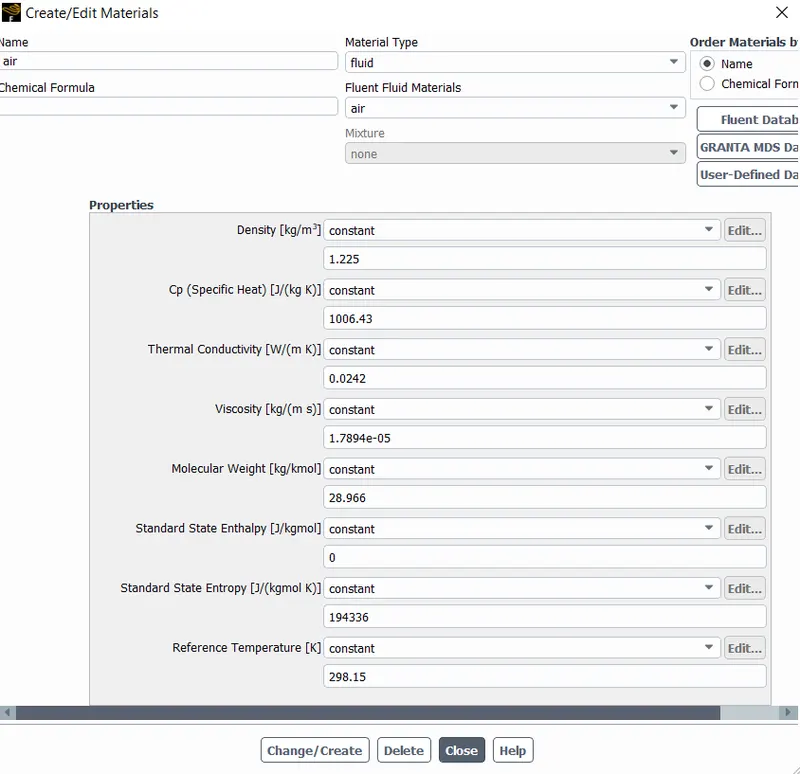
Materials:
Fluid: Air
Mixture: methane-air-2- step
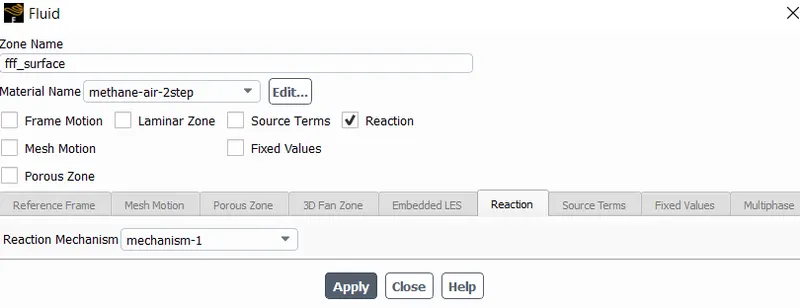
Cell zones:
fff_surface : methane-air-2step
Boundaries:
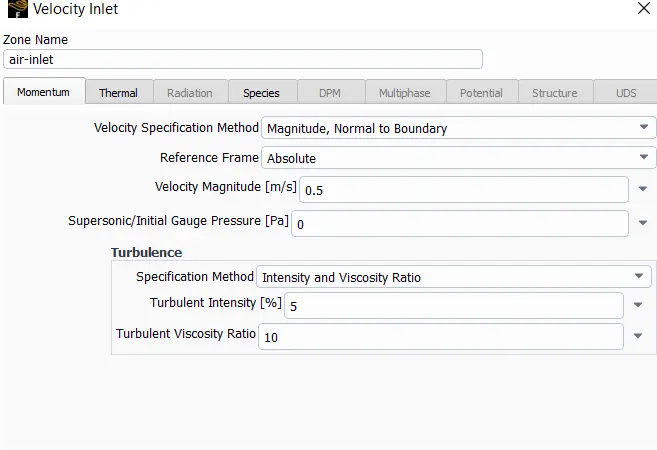
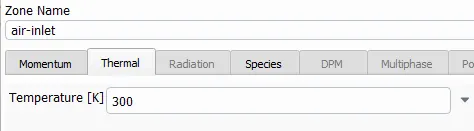
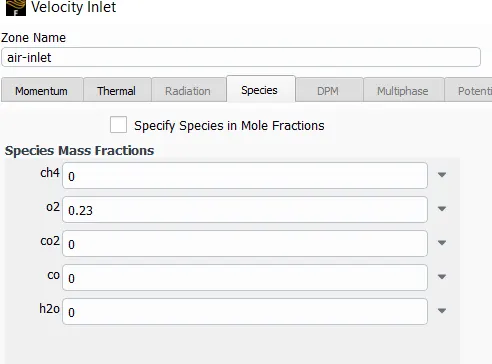
Air inlet:
- Velocity inlet
- Velocity magnitude = 0.5 m/s
- Temperature = 300k
Axis
- Axis
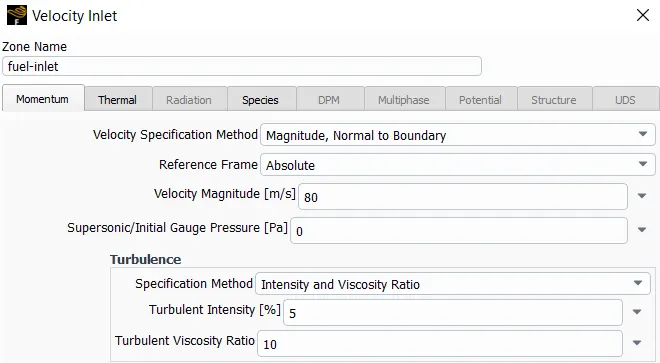
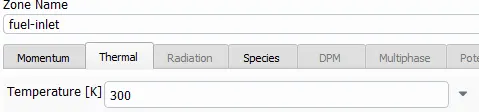
Fuel-inlet:
- Velocity inlet
- Velocity magnitude = 80 m/s
- Temperature = 300 k
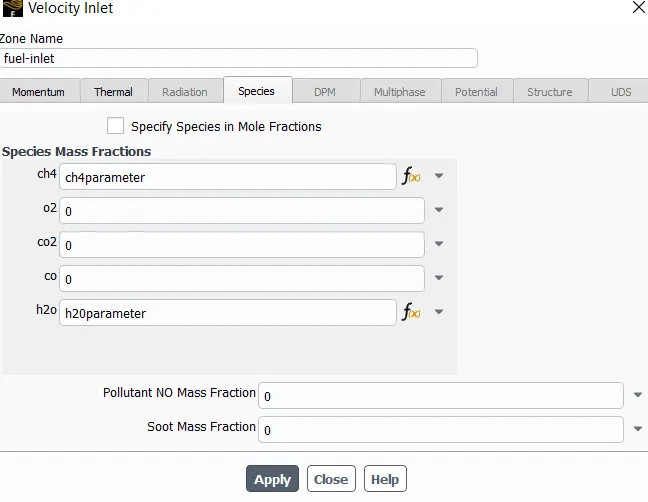
- Species:
- Create input parameters for methane (Ch4) and water (H2O)
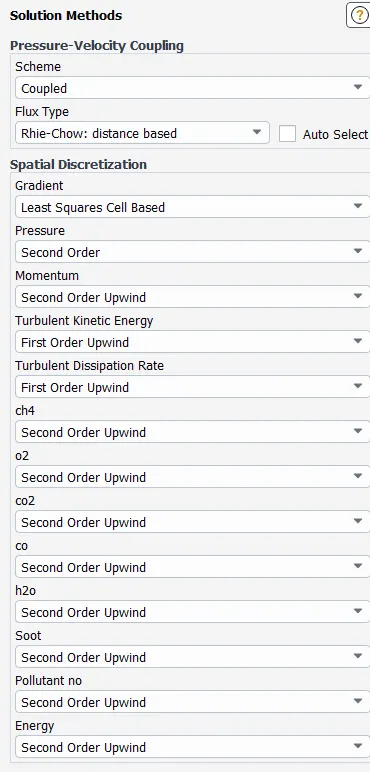
Solution methods:
Coupled
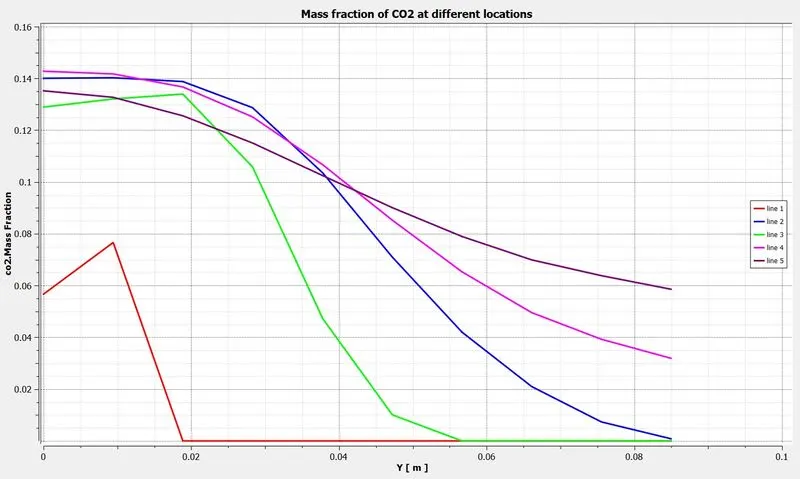
Create line probes to measure the mass fraction of the species:

Results and plots for different percenatge of methane and water:
1.
- Methane : 100%
- water : 0%
- Mass fraction of methane : 1
- Mass fraction of water : 0
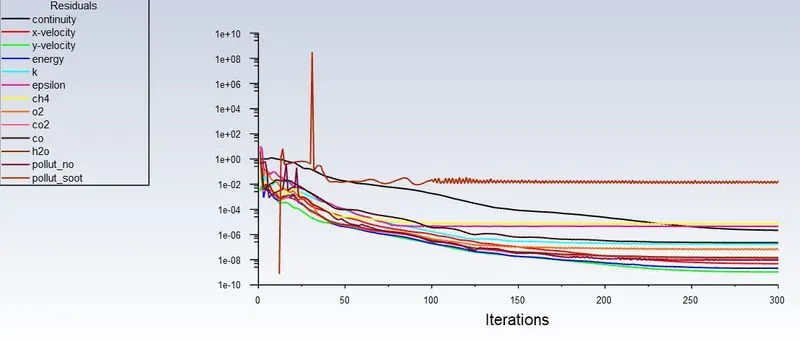
Residuals:
Temperature plot:
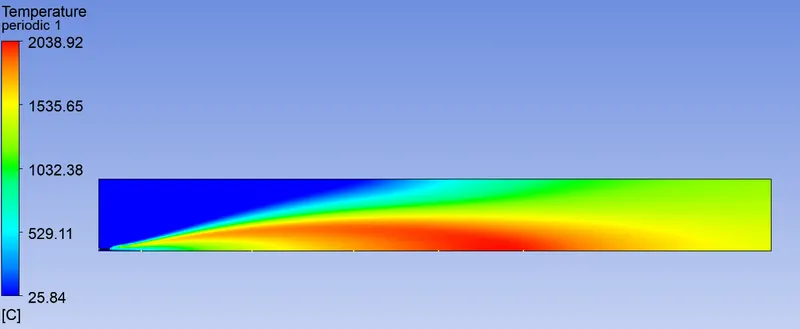
CO2 :
Mass fraction of CO2:
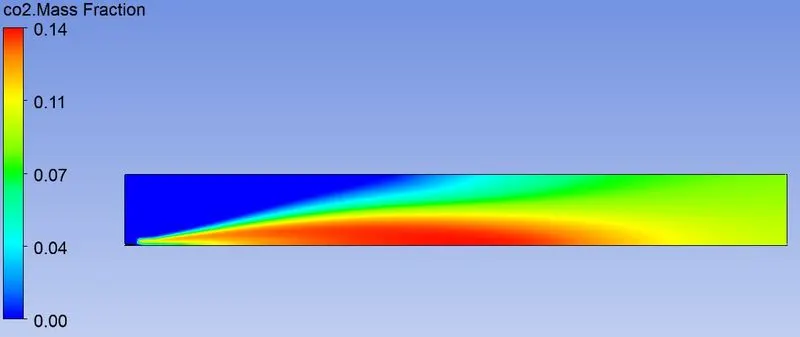
Mass fraction of CO2 at different locations:
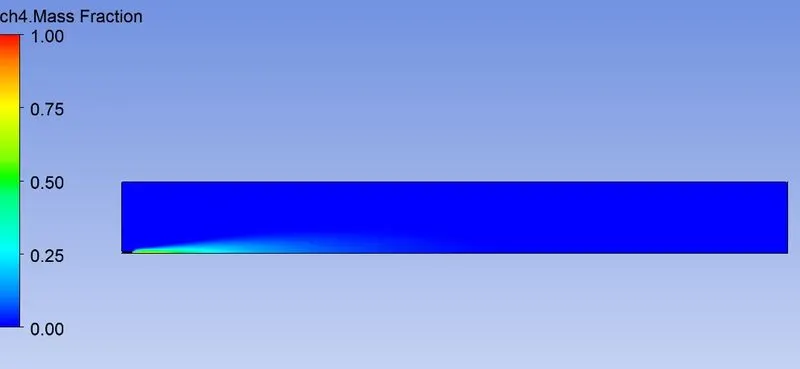
CH4 :
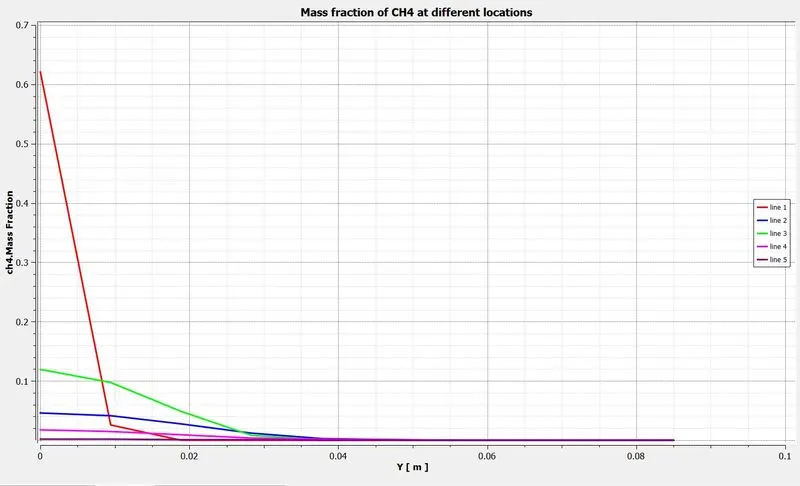
Mass fraction of CH4:
Mass fraction of CH4 at different locations:
N2 :
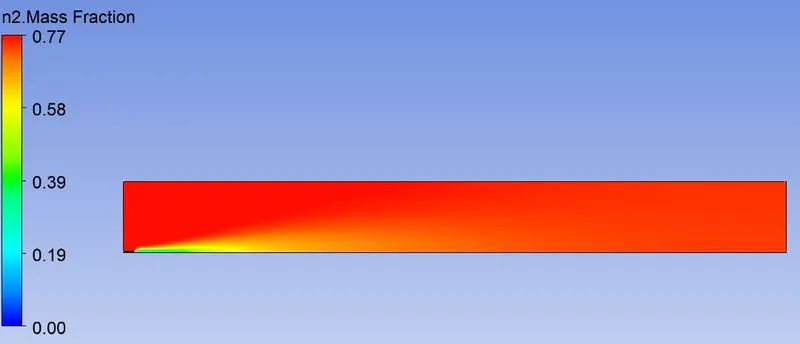
Mass fraction of N2:
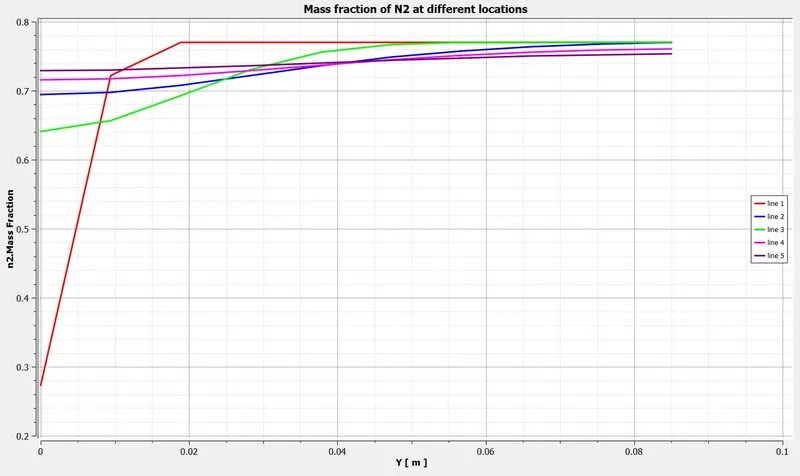
Mass fraction of N2 at different locations:
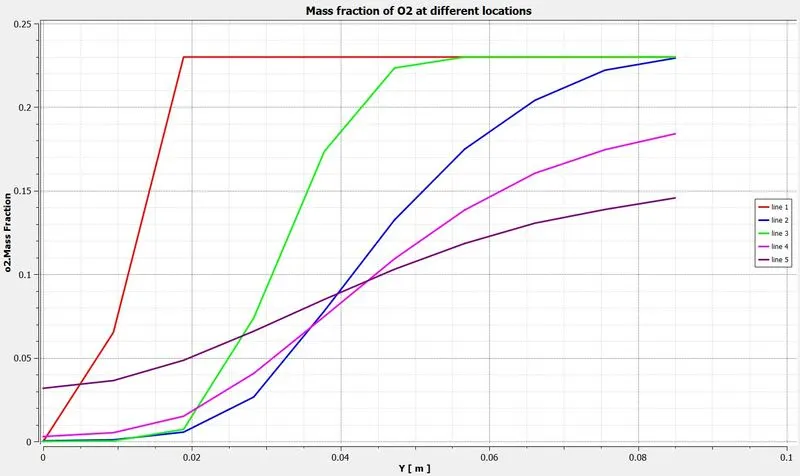
O2 :
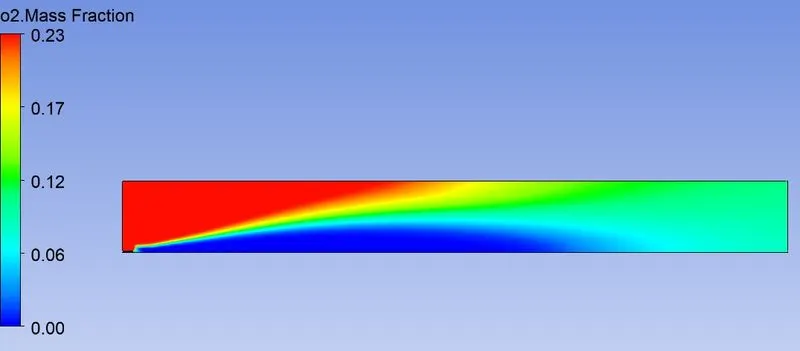
Mass fraction of O2:
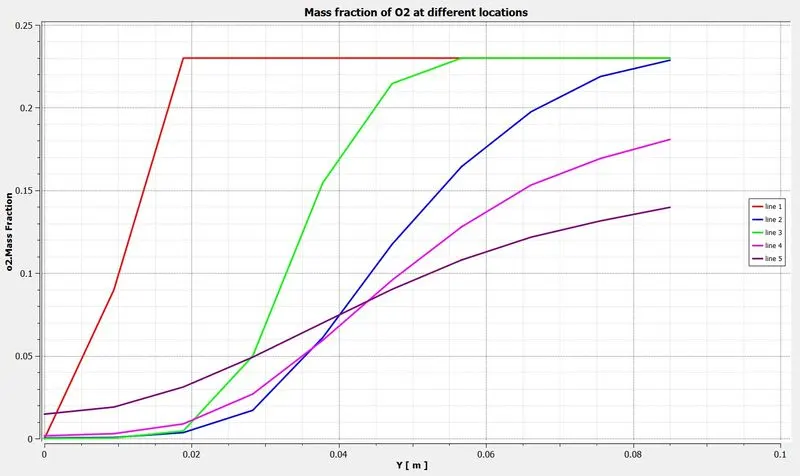
Mass fraction of O2 at different locations:
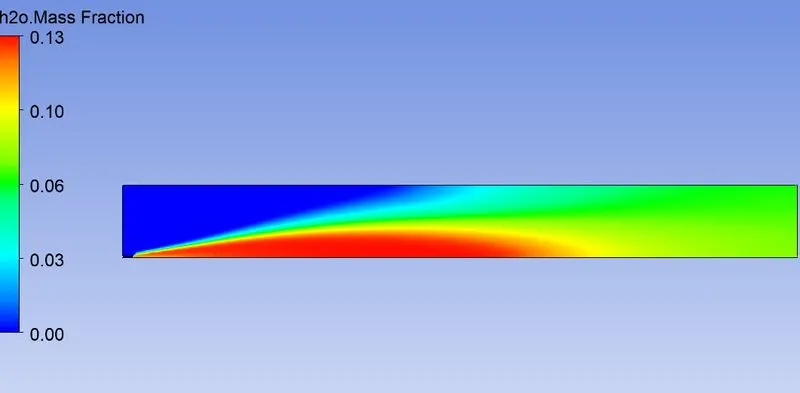
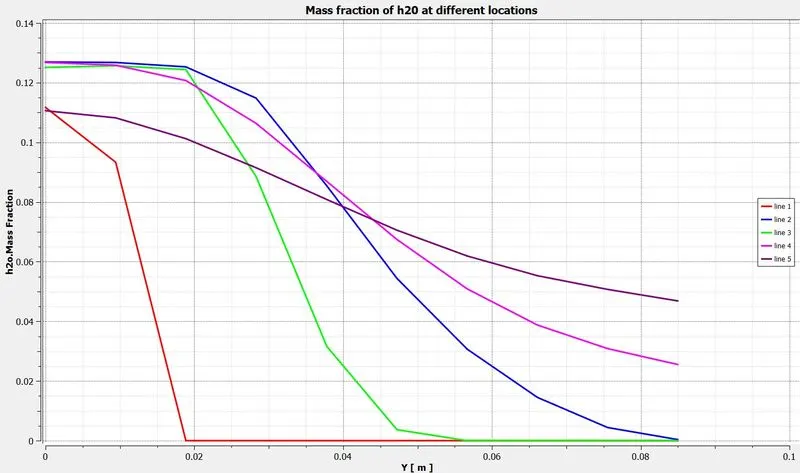
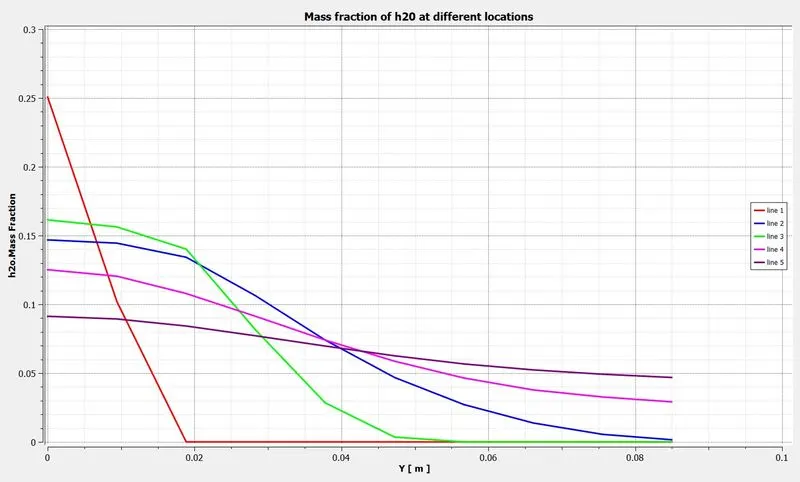
H2O:
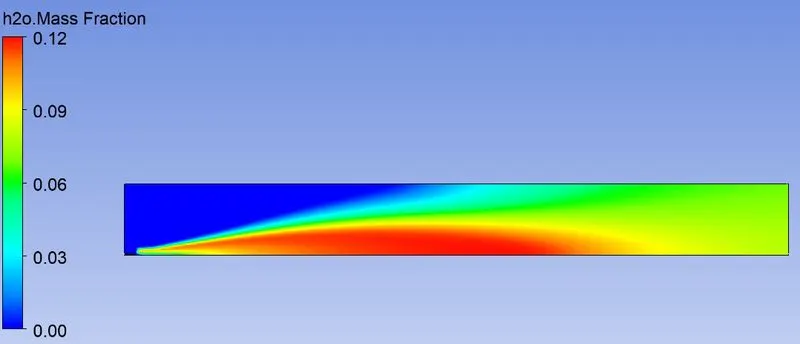
Mass fraction of H2O:
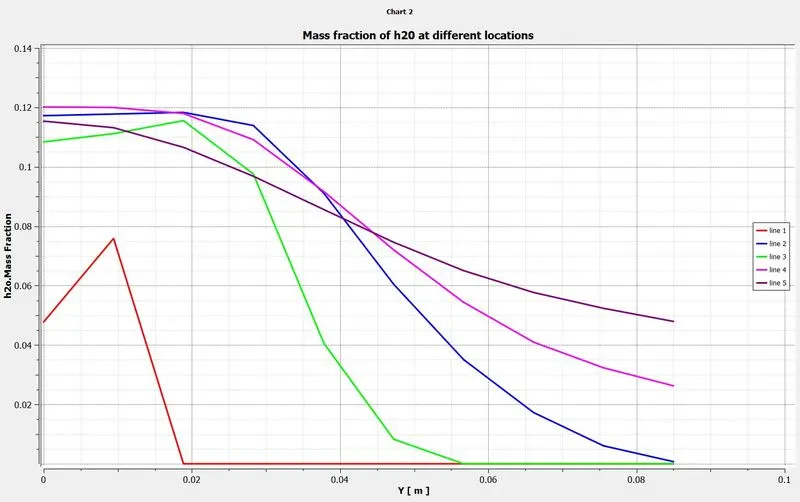
Mass fraction of H2O at different locations:
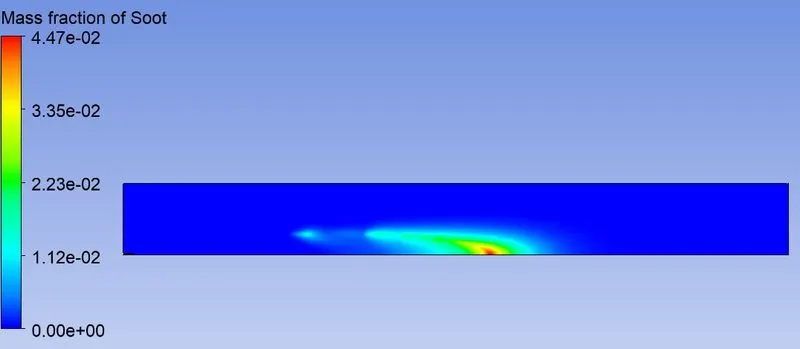
SOOT :
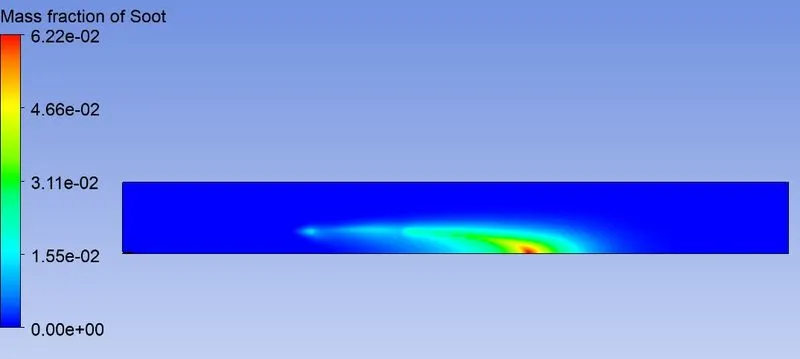
Mass fraction of SOOT:
Mass fraction of SOOT at different locations:
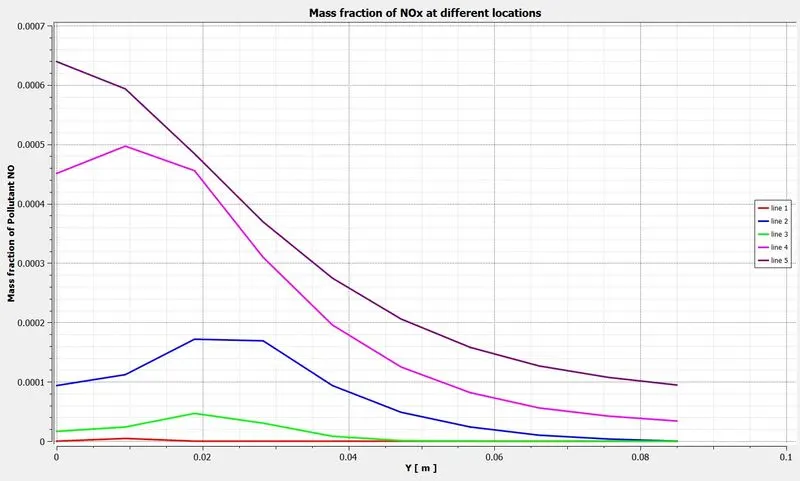
NOX :
Mass fraction of NOX:
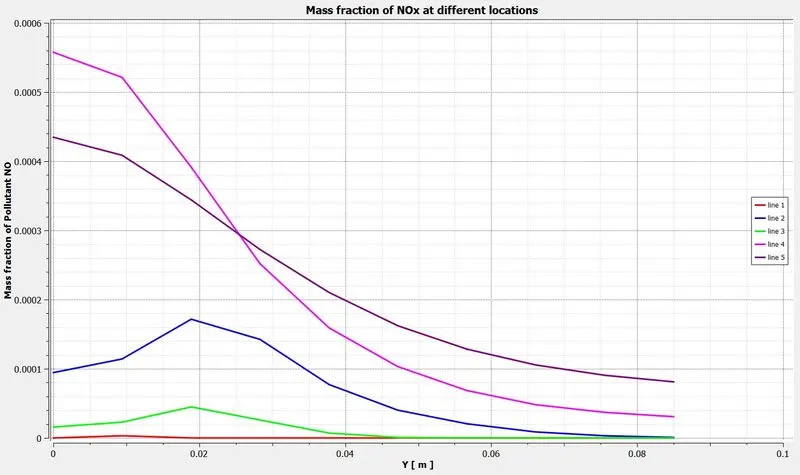
Mass fraction of NOX at different locations:
2.
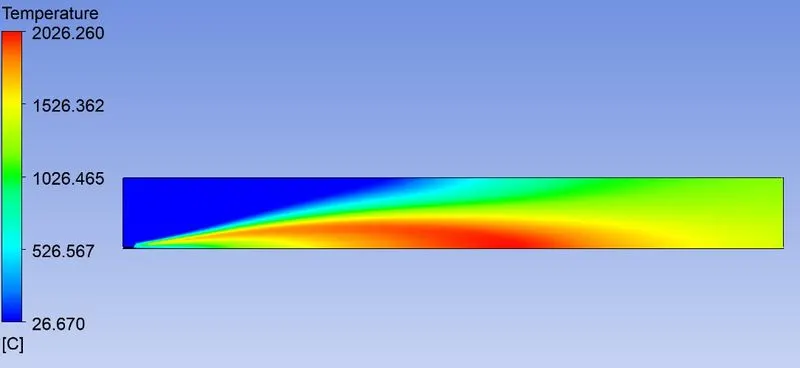
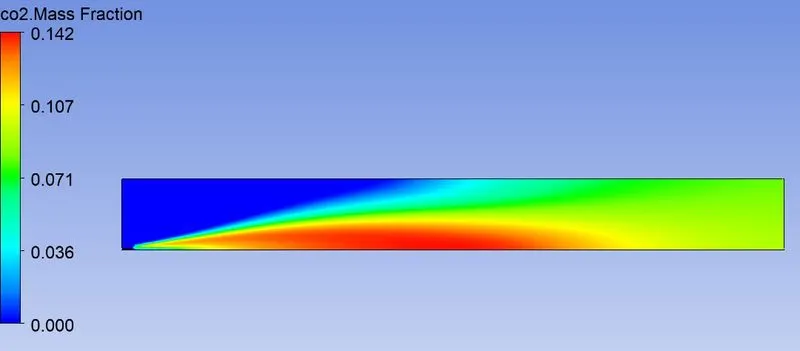
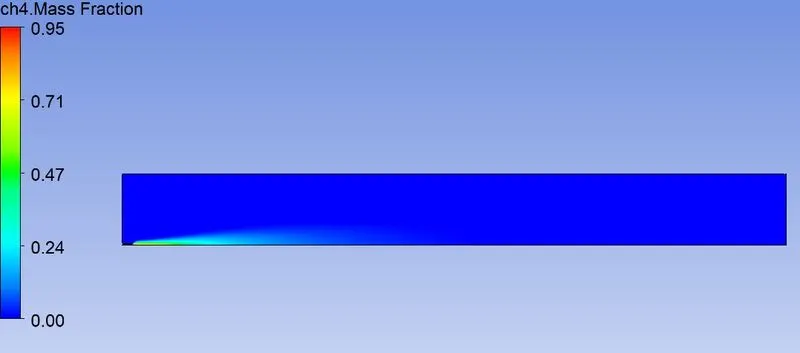
- Methane : 95%
- water : 5%
- Mass fraction of methane : 0.95
- Mass fraction of water : 0.5
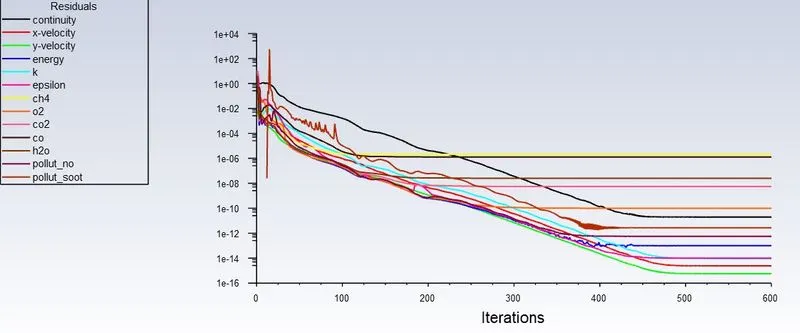
Residuals:
Temperature plot:
CO2 :
Mass fraction of CO2:
Mass fraction of CO2 at different locations:
CH4 :
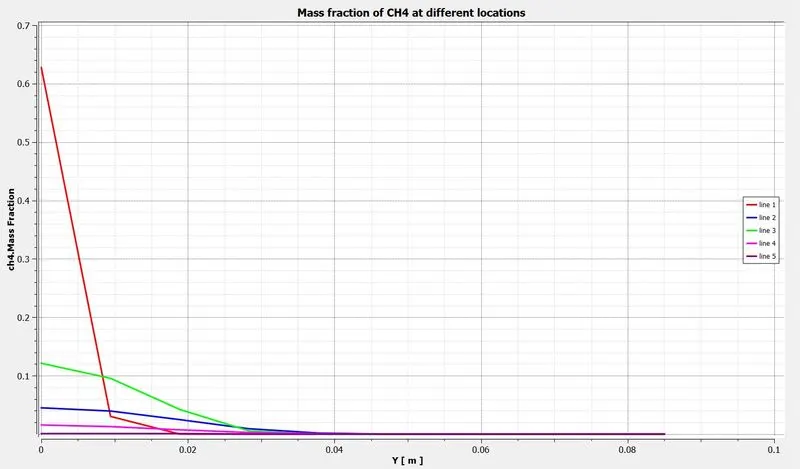
Mass fraction of CH4:
Mass fraction of CH4 at different locations:
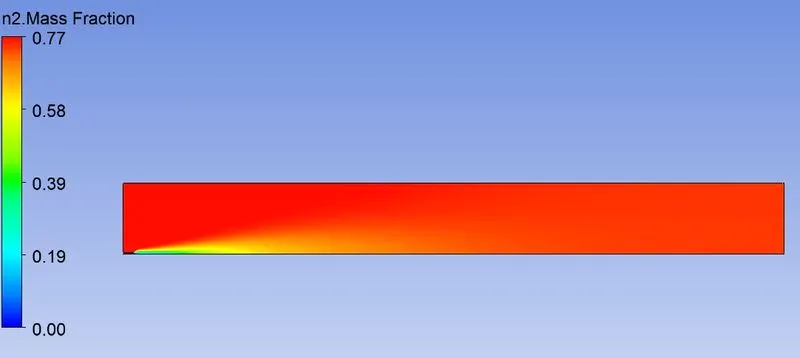
N2 :
Mass fraction of N2:
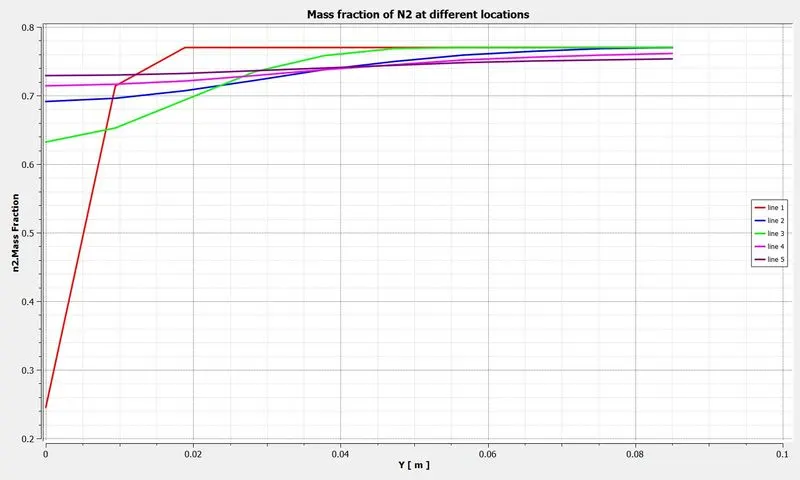
Mass fraction of N2 at different locations:
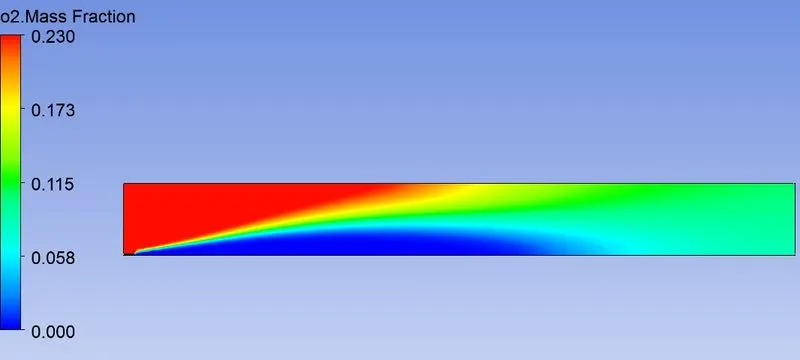
O2 :
Mass fraction of O2:
Mass fraction of O2 at different locations:
H2O:
Mass fraction of H2O:
Mass fraction of H2O at different locations:
SOOT :
Mass fraction of SOOT:
Mass fraction of SOOT at different locations:
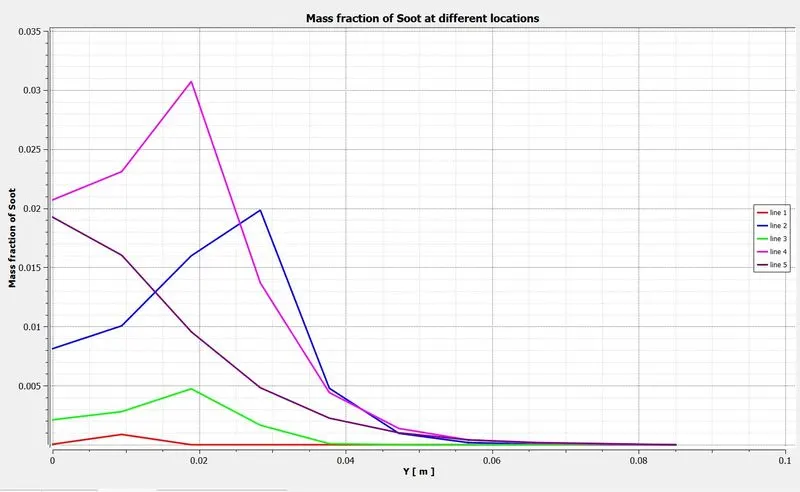
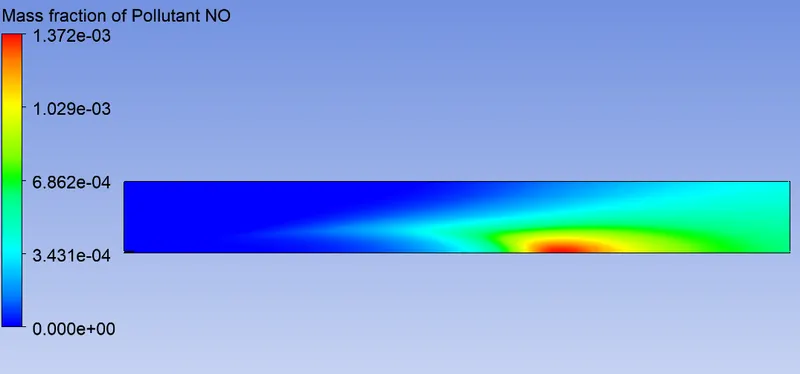
NOX :
Mass fraction of NOX:
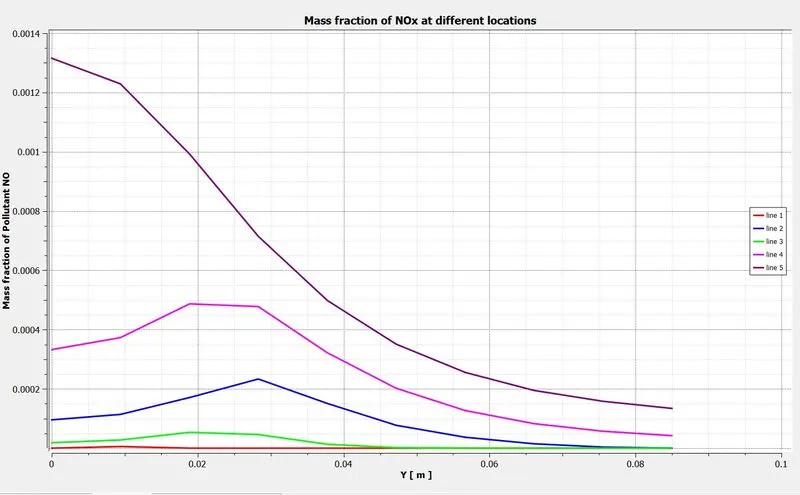
Mass fraction of NOX at different locations:
3.
- Methane : 90%
- water : 10%
- Mass fraction of methane : 0.9
- Mass fraction of water : 0.1
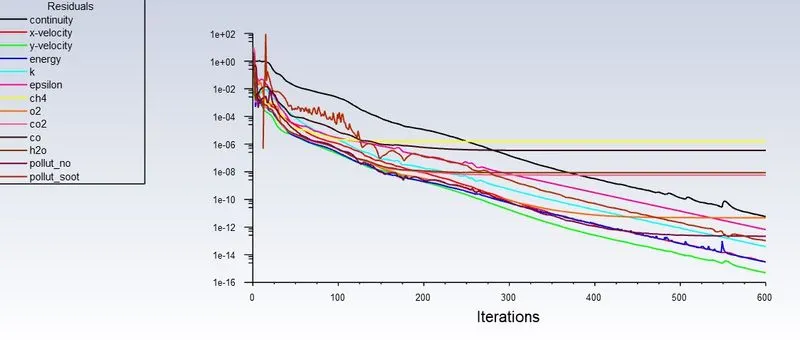
Residuals:
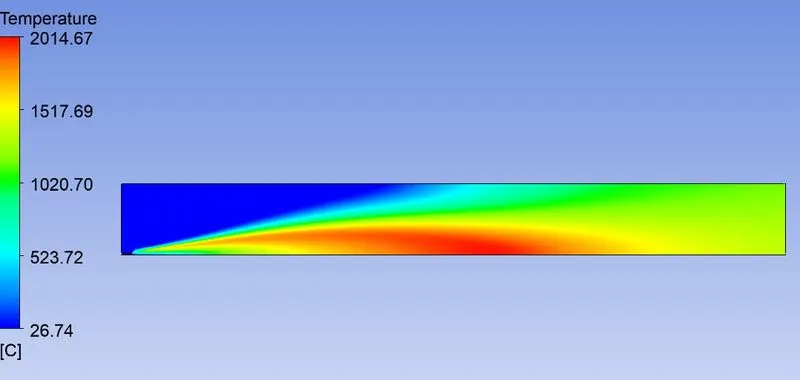
Temperature plot:
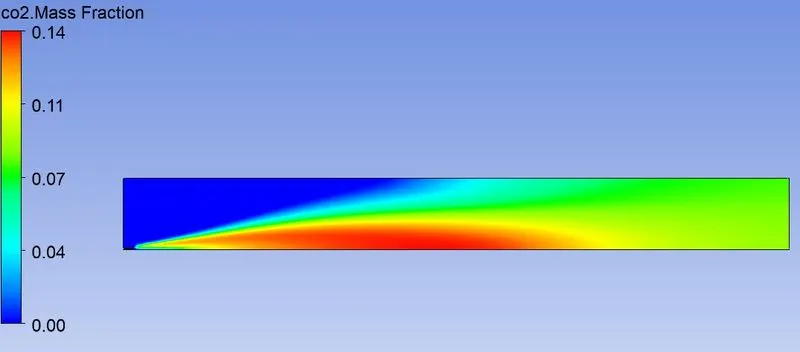
CO2 :
Mass fraction of CO2:
Mass fraction of CO2 at different locations:
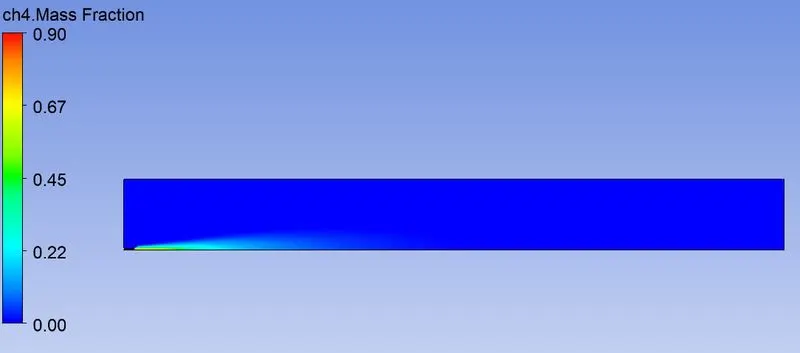
CH4 :
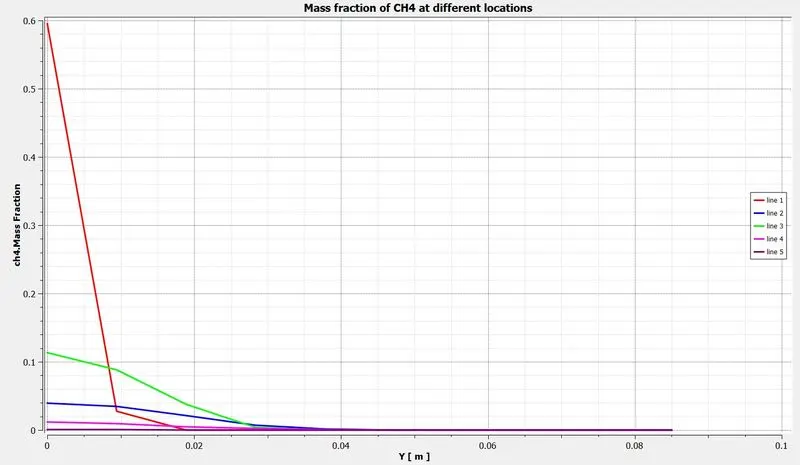
Mass fraction of CH4:
Mass fraction of CH4 at different locations:
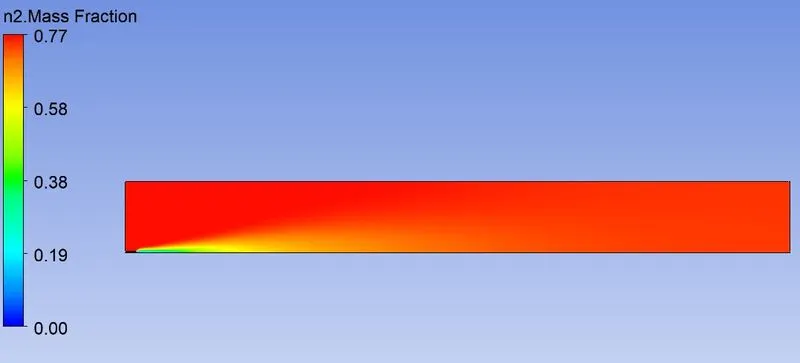
N2 :
Mass fraction of N2:
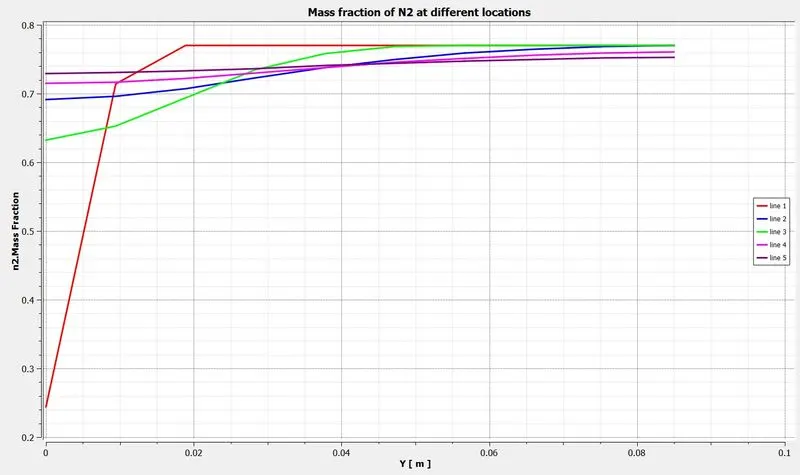
Mass fraction of N2 at different locations:
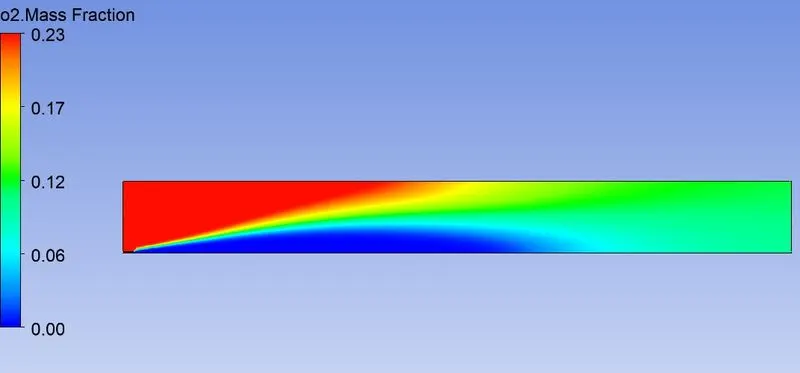
O2 :
Mass fraction of O2:
Mass fraction of O2 at different locations:
H2O:
Mass fraction of H2O:
Mass fraction of H2O at different locations:
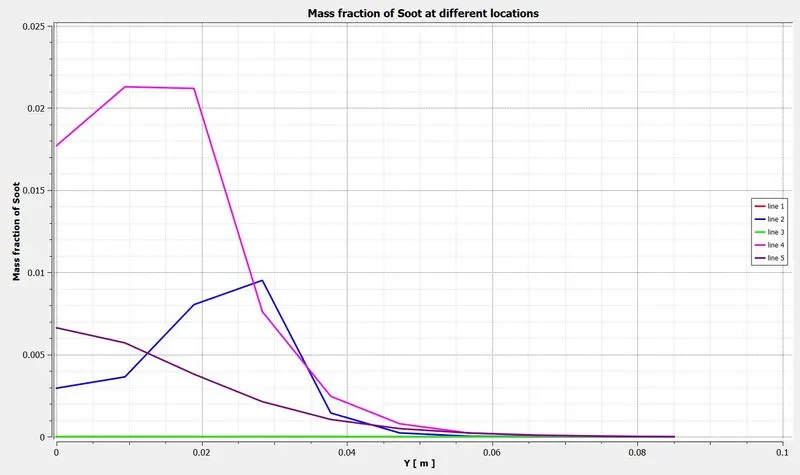
SOOT :
Mass fraction of SOOT:
Mass fraction of SOOT at different locations:
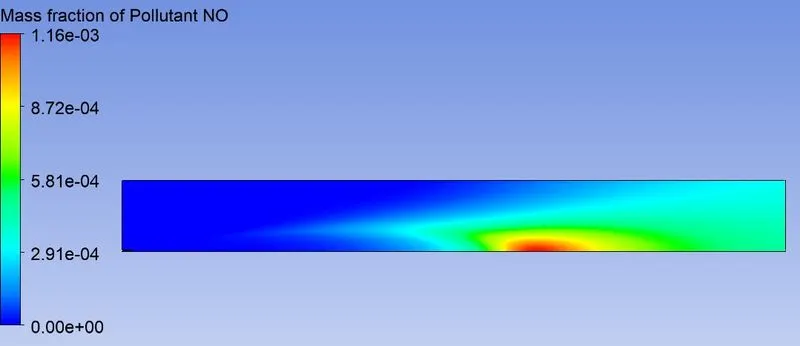
NOX :
Mass fraction of NOX:
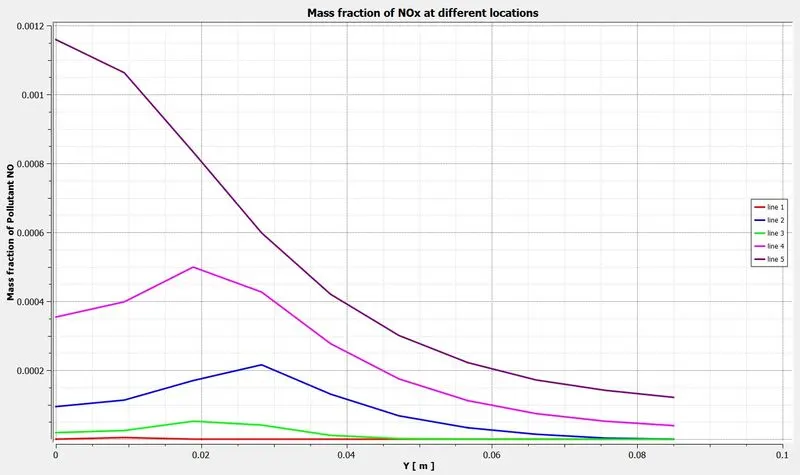
Mass fraction of NOX at different locations:
4.
- Methane : 85%
- water : 15%
- Mass fraction of methane : 0.85
- Mass fraction of water : 0.15
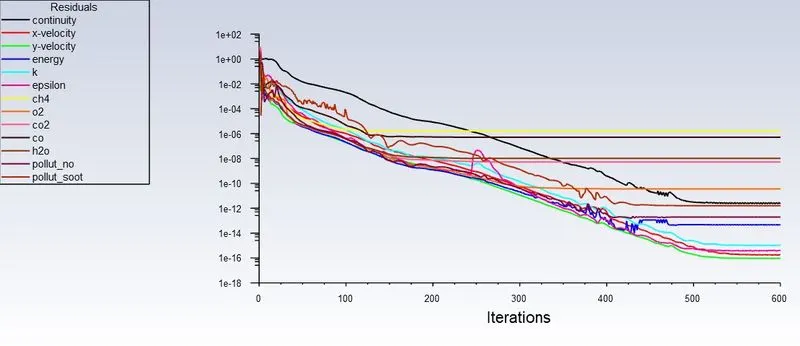
Residuals:
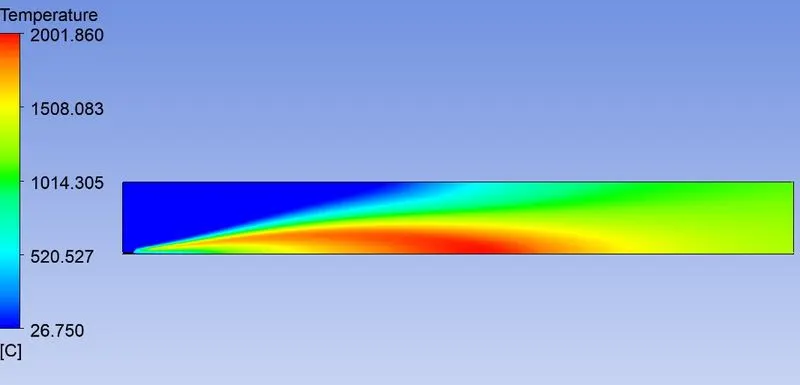
Temperature plot:
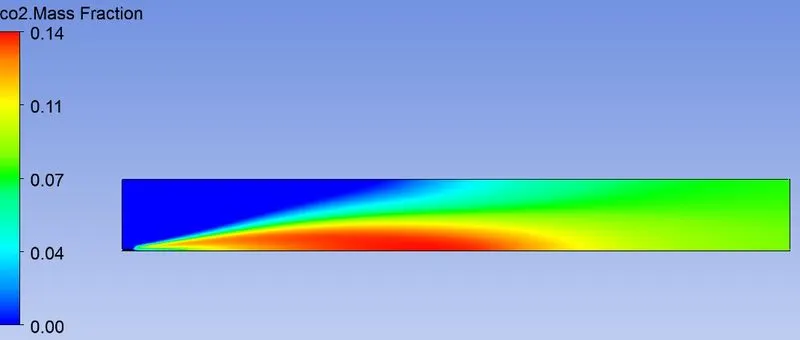
CO2 :
Mass fraction of CO2:
Mass fraction of CO2 at different locations:
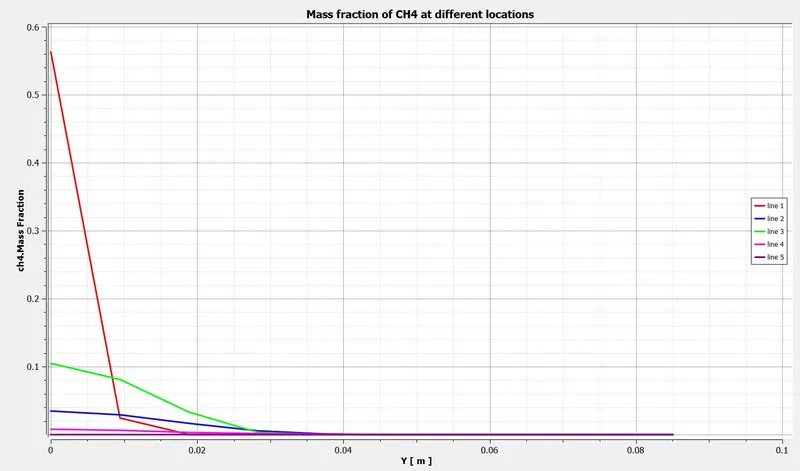
CH4 :
Mass fraction of CH4:
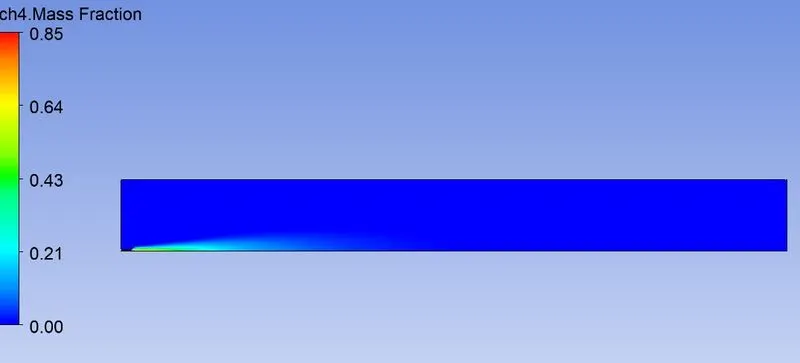
Mass fraction of CH4 at different locations:
N2 :
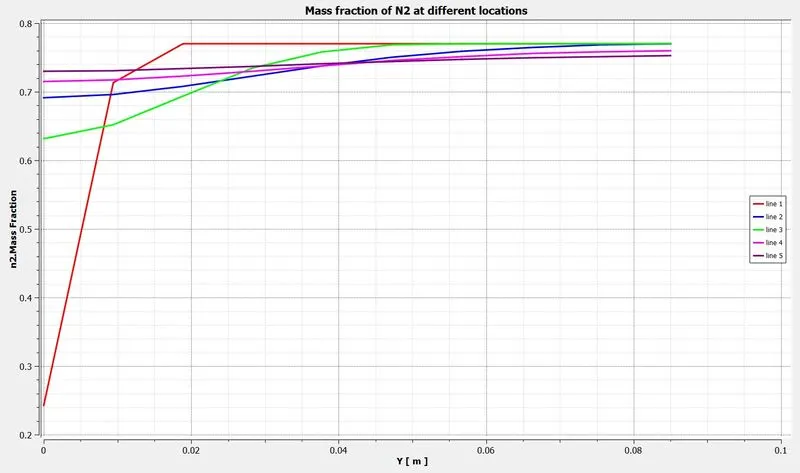
Mass fraction of N2:
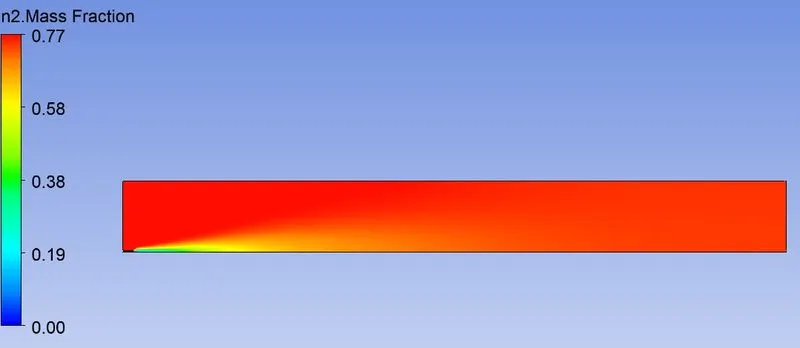
Mass fraction of N2 at different locations:
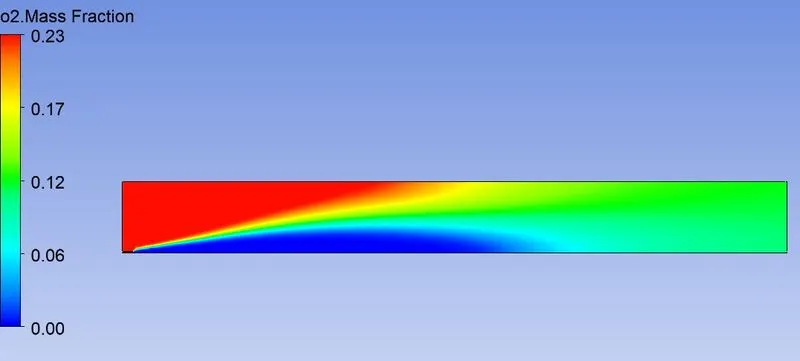
O2 :
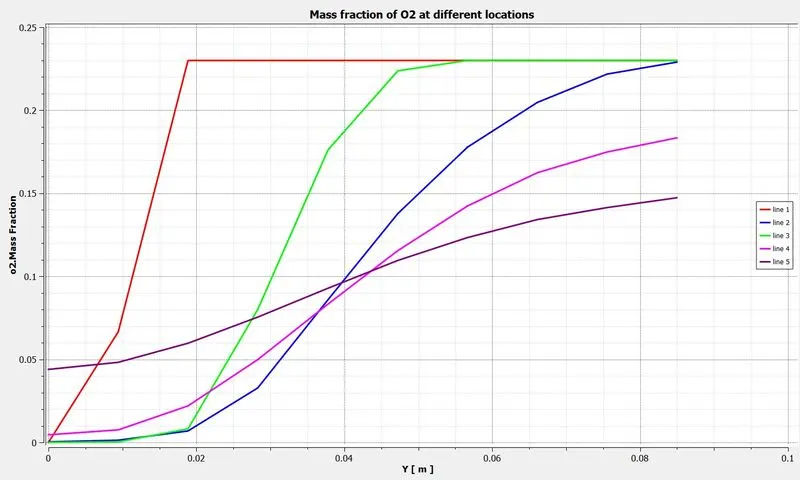
Mass fraction of O2:
Mass fraction of O2 at different locations:
H2O:
Mass fraction of H2O:
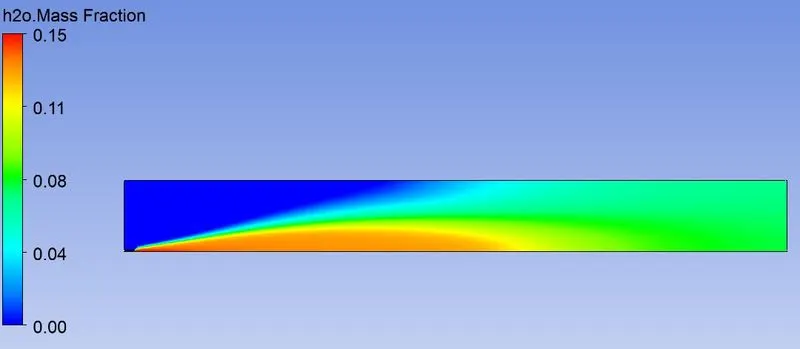
Mass fraction of H2O at different locations:
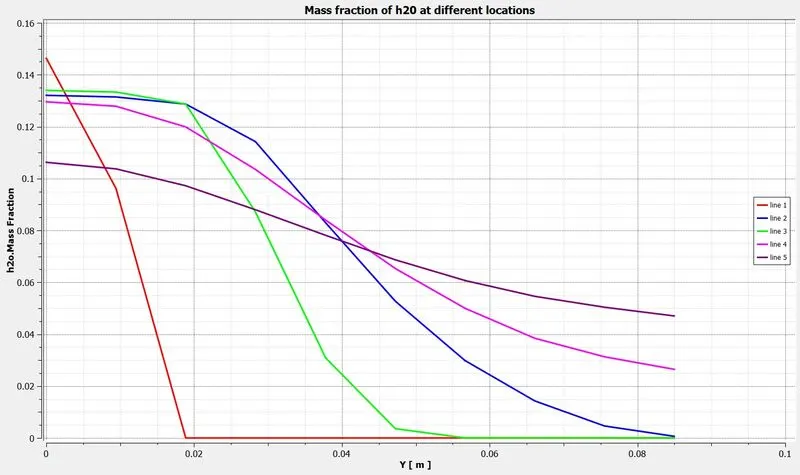
SOOT :
Mass fraction of SOOT:
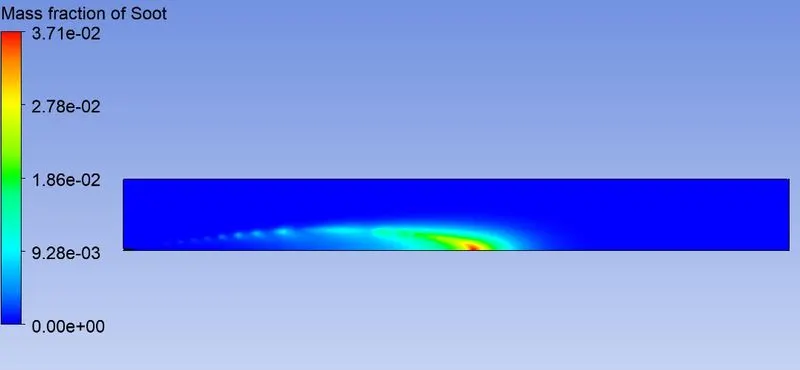
Mass fraction of SOOT at different locations:
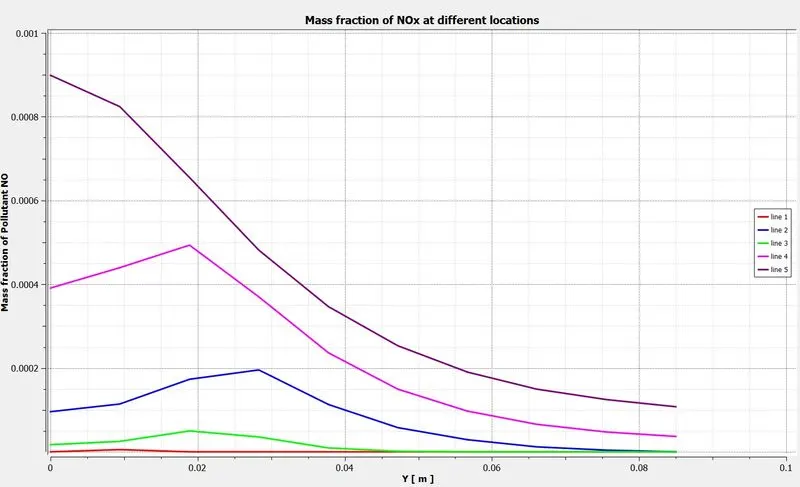
NOX :
Mass fraction of NOX:
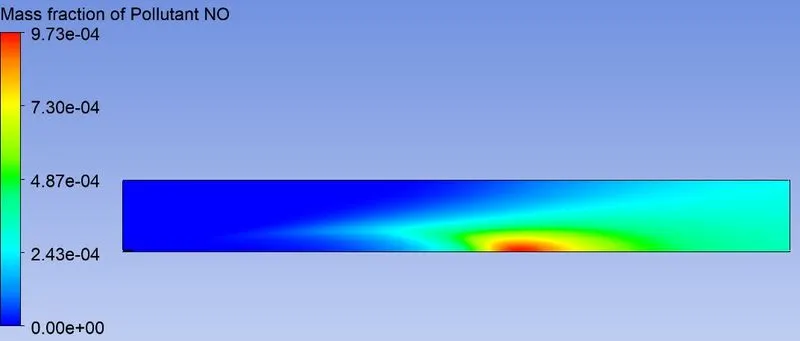
Mass fraction of NOX at different locations:
5.
- Methane : 80%
- water : 20%
- Mass fraction of methane : 0.8
- Mass fraction of water : 0.2
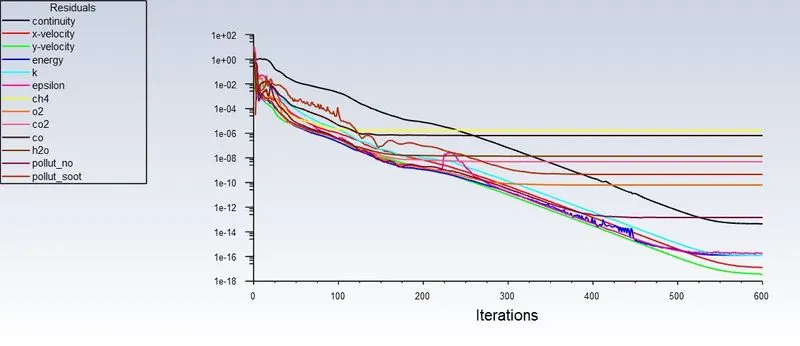
Residuals:
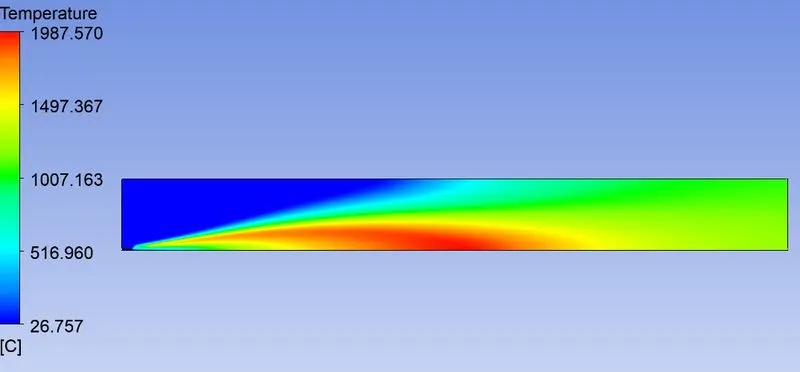
Temperature plot:
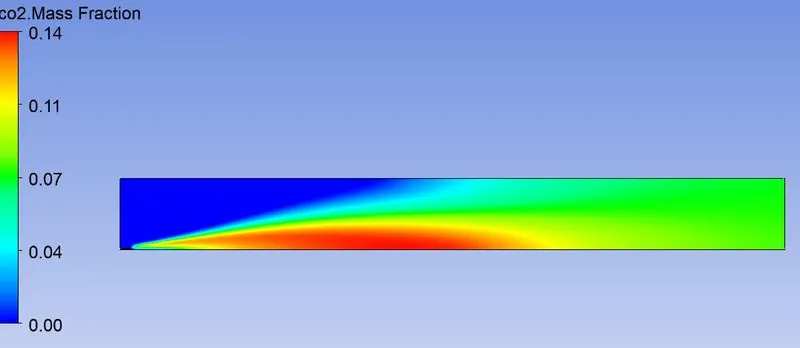
CO2 :
Mass fraction of CO2:
Mass fraction of CO2 at different locations:
CH4 :
Mass fraction of CH4:
Mass fraction of CH4 at different locations:
N2 :
Mass fraction of N2:
Mass fraction of N2 at different locations:
O2 :
Mass fraction of O2:
Mass fraction of O2 at different locations:
H2O:
Mass fraction of H2O:
Mass fraction of H2O at different locations:
SOOT :
Mass fraction of SOOT:
Mass fraction of SOOT at different locations:
NOX :
Mass fraction of NOX:
Mass fraction of NOX at different locations:
6.
- Methane : 75%
- water : 25%
- Mass fraction of methane : 0.75
- Mass fraction of water : 0.25
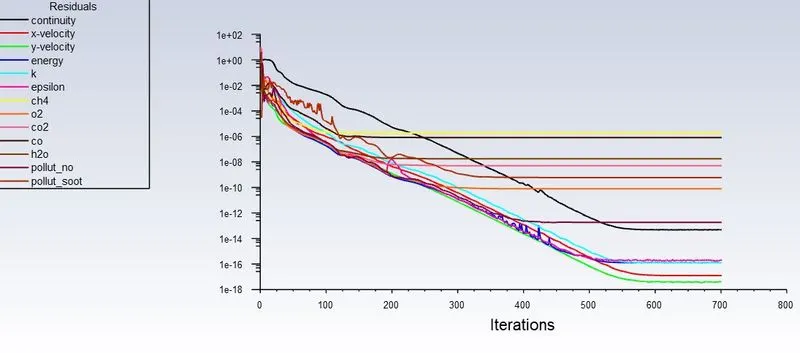
Residuals:
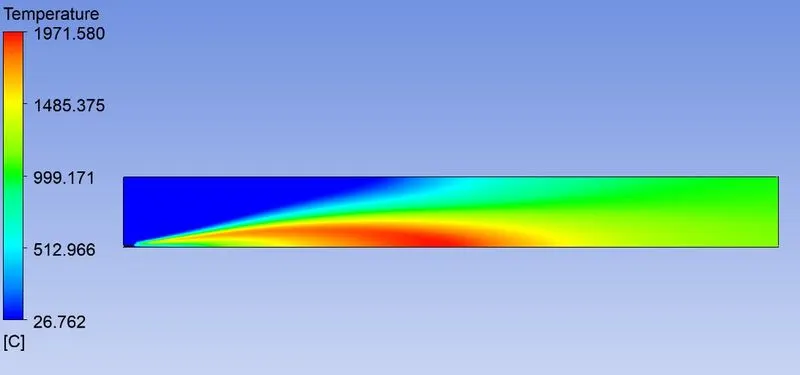
Temperature plot:
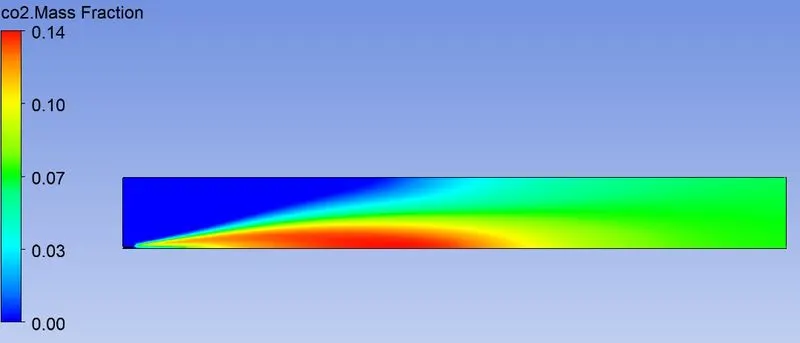
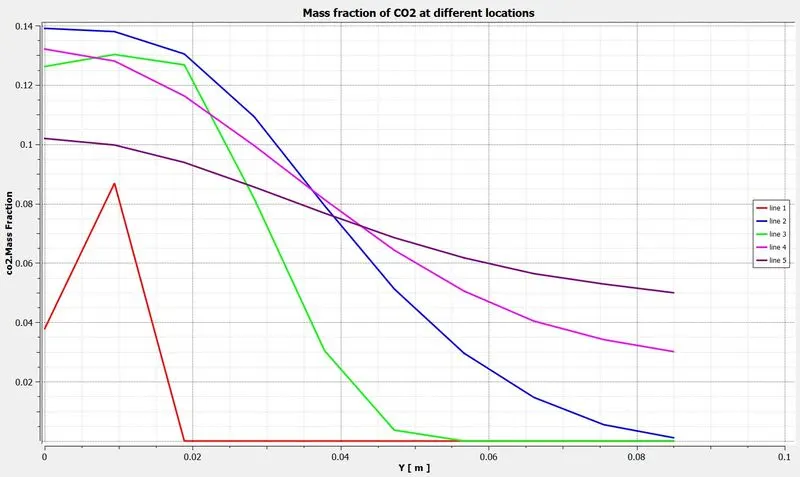
CO2 :
Mass fraction of CO2:
Mass fraction of CO2 at different locations:
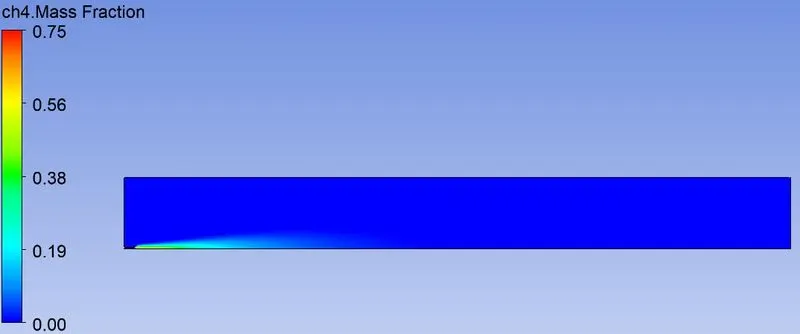
CH4 :
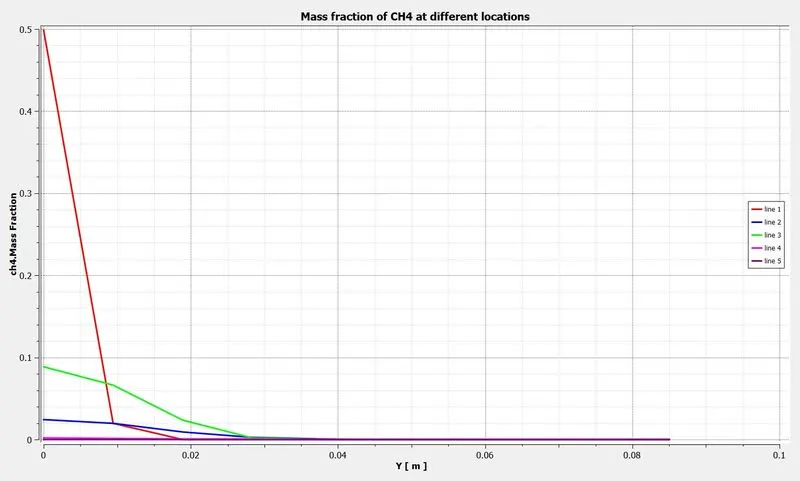
Mass fraction of CH4:
Mass fraction of CH4 at different locations:
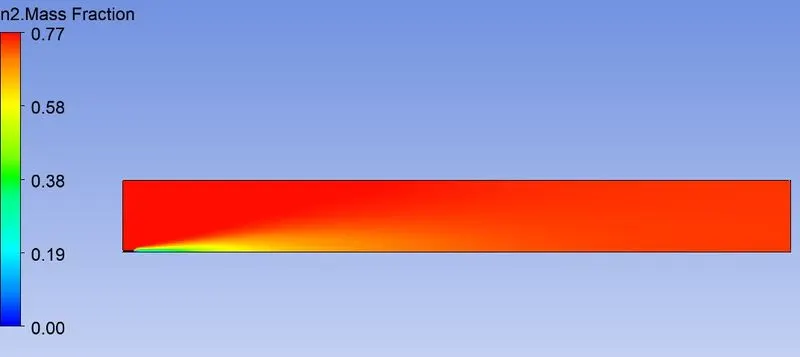
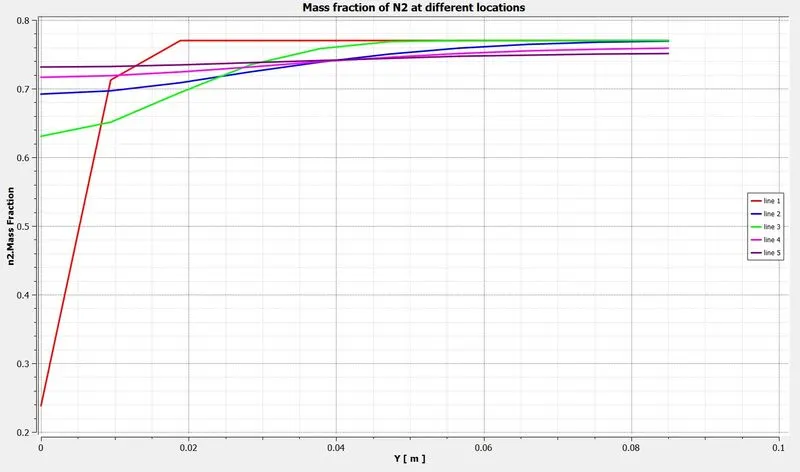
N2 :
Mass fraction of N2:
Mass fraction of N2 at different locations:
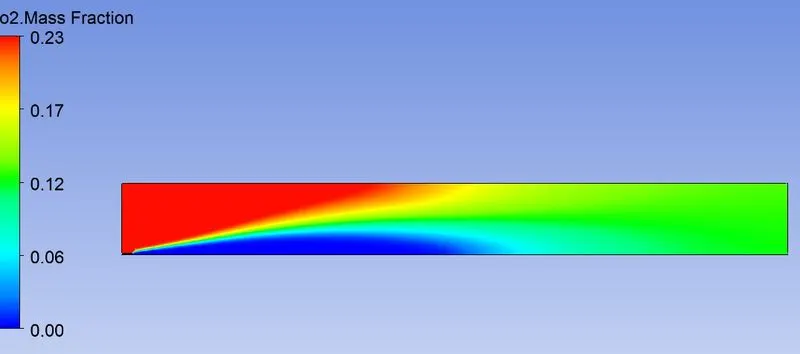
O2 :
Mass fraction of O2:
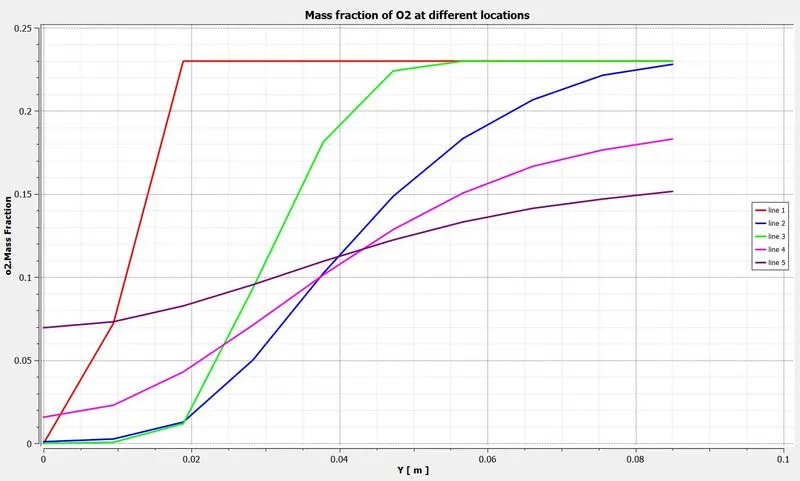
Mass fraction of O2 at different locations:
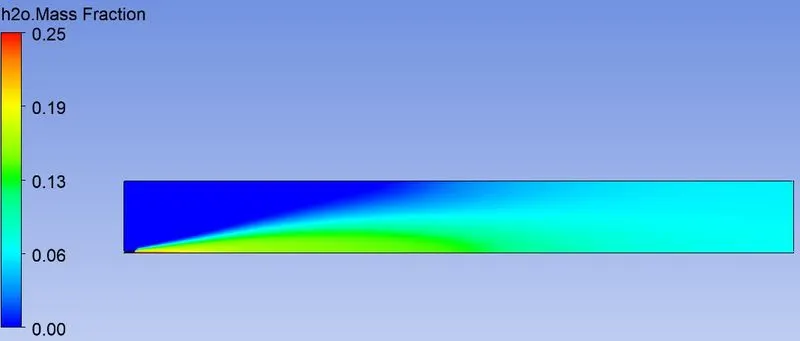
H2O:
Mass fraction of H2O:
Mass fraction of H2O at different locations:
SOOT :
Mass fraction of SOOT:
Mass fraction of SOOT at different locations:
NOX :
Mass fraction of NOX:
Mass fraction of NOX at different locations:
6.
- Methane : 70%
- water : 30%
- Mass fraction of methane : 0.7
- Mass fraction of water : 0.3
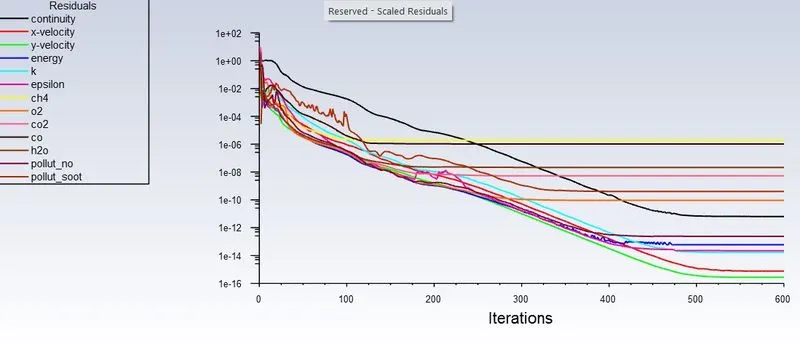
Residuals:
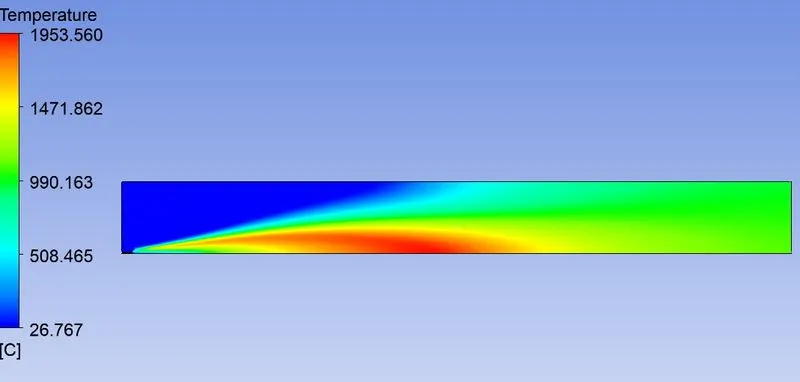
Temperature plot:
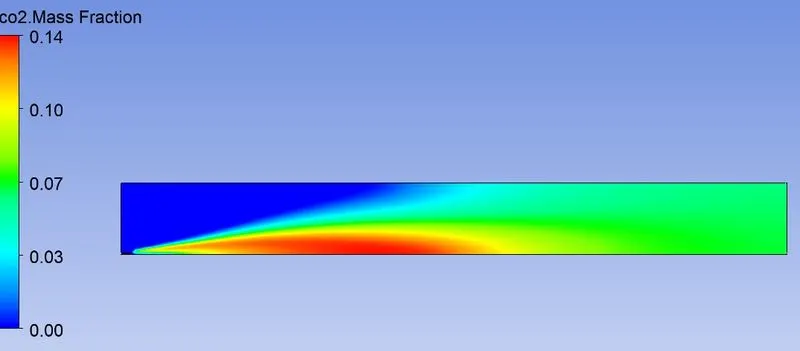
CO2 :
Mass fraction of CO2:
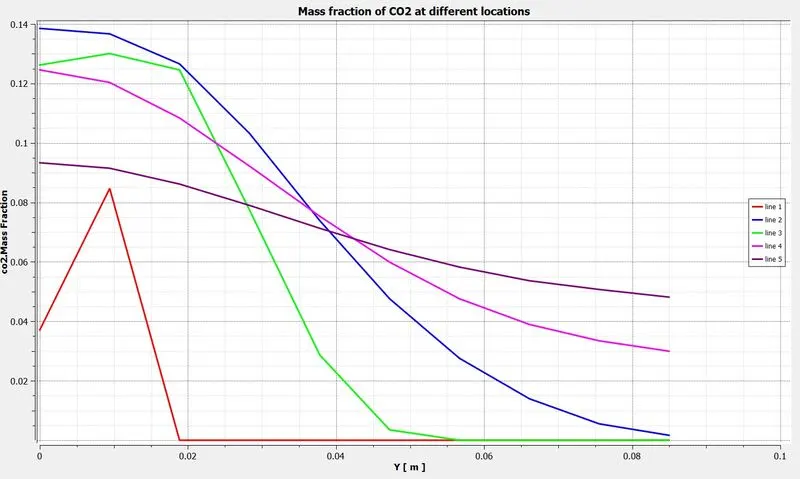
Mass fraction of CO2 at different locations:
CH4 :
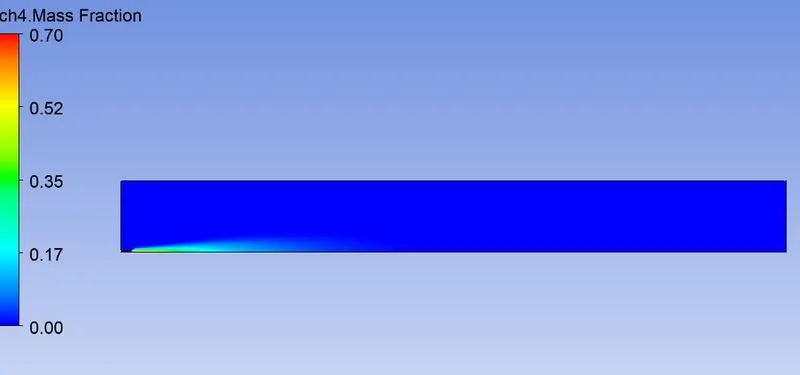
Mass fraction of CH4:
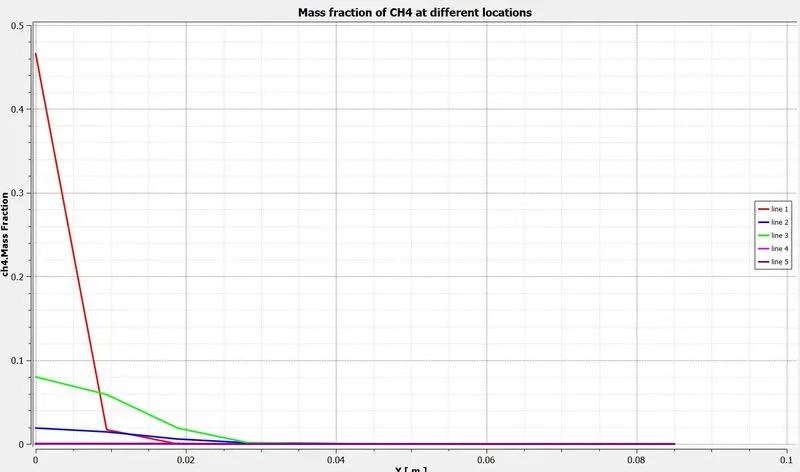
Mass fraction of CH4 at different locations:
N2 :
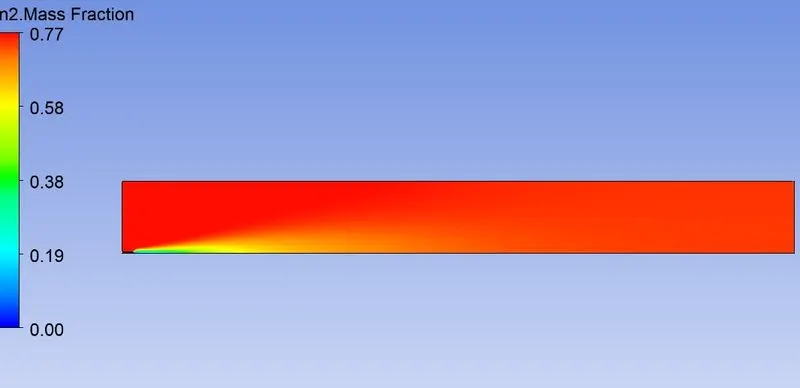
Mass fraction of N2:
Mass fraction of N2 at different locations:
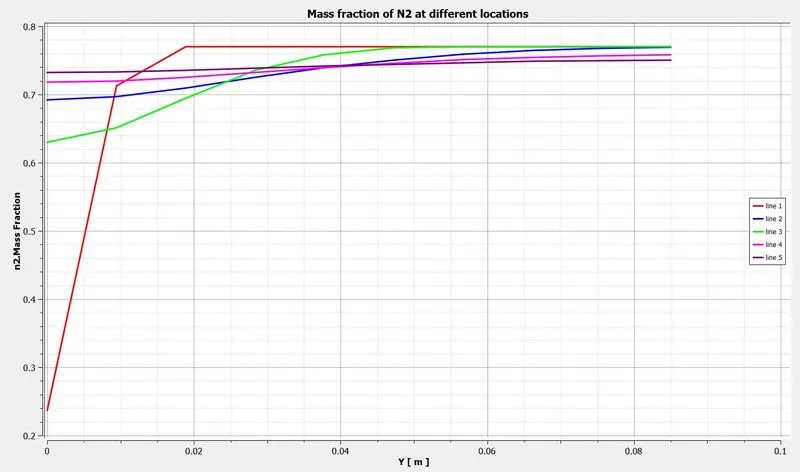
O2 :
Mass fraction of O2:
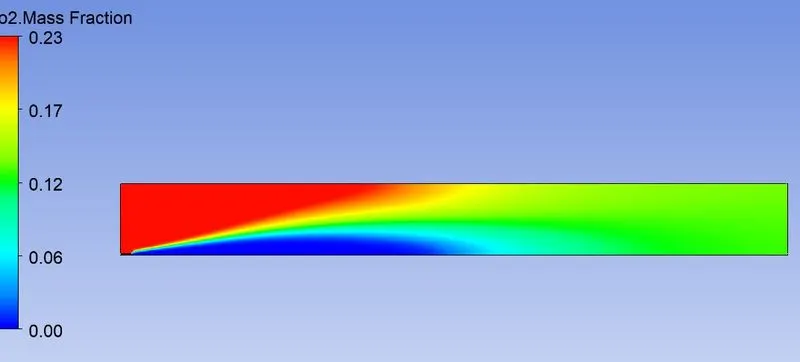
Mass fraction of O2 at different locations:
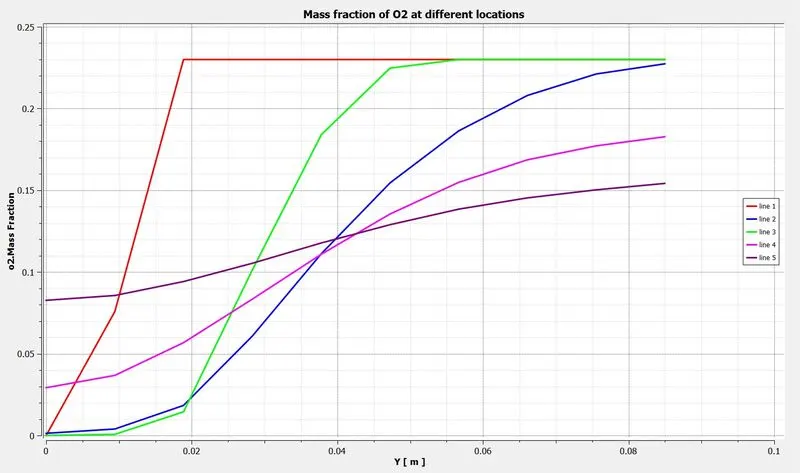
H2O:
Mass fraction of H2O:
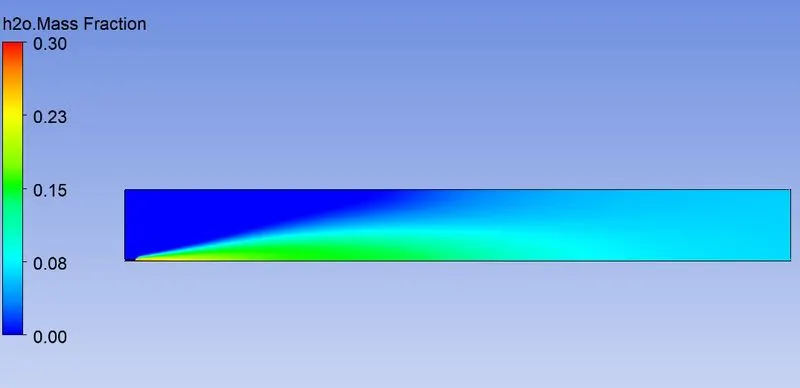
Mass fraction of H2O at different locations:
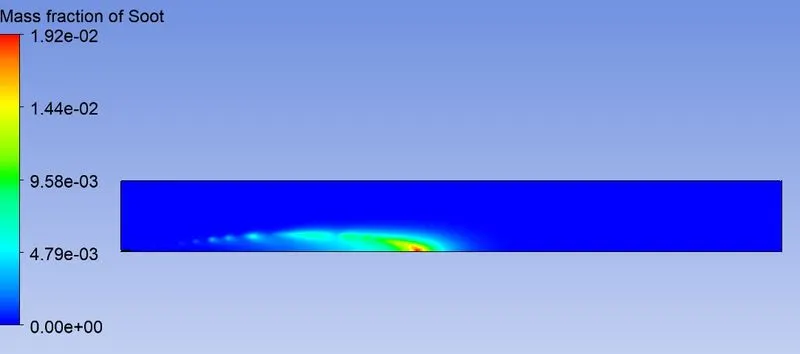
SOOT :
Mass fraction of SOOT:
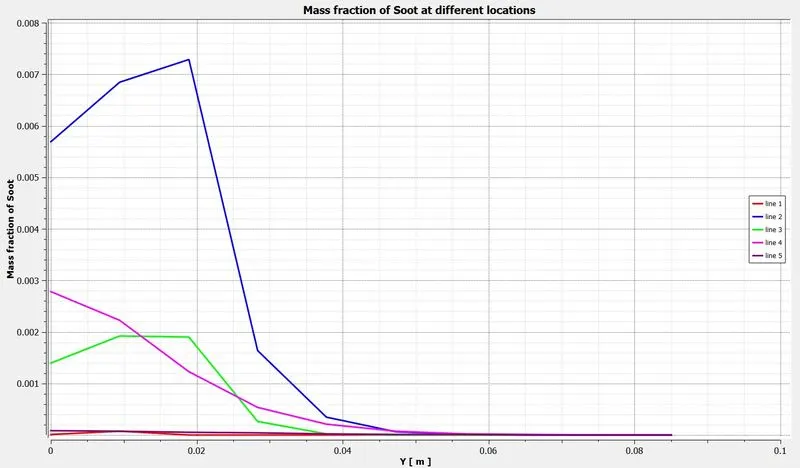
Mass fraction of SOOT at different locations:
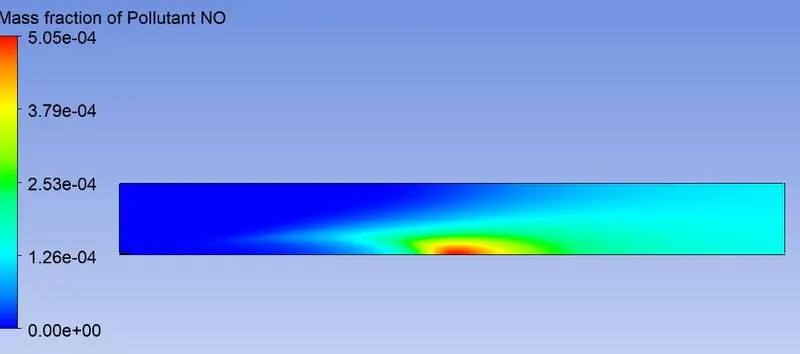
NOX :
Mass fraction of NOX:
Mass fraction of NOX at different locations:
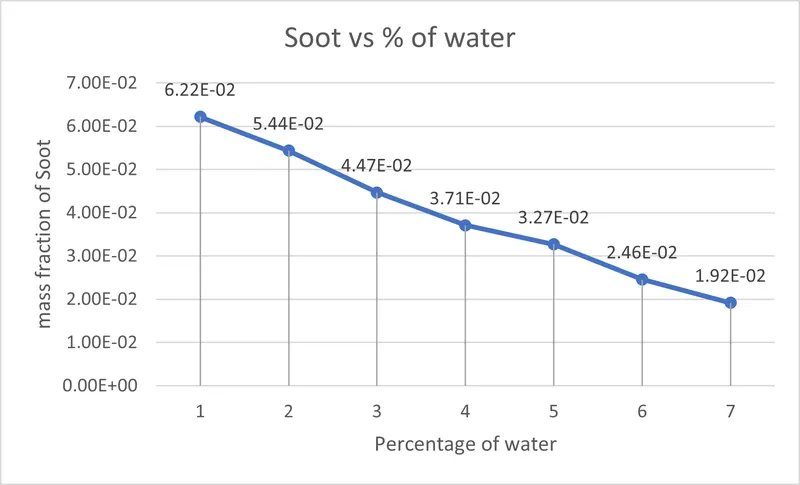
Inference:
Effect of injecting water on soot formation:
- Amount of soot formation decreases with increase in the perecentage of water.
- Mass fraction of soot drcreases with increase in mass fraction of water.
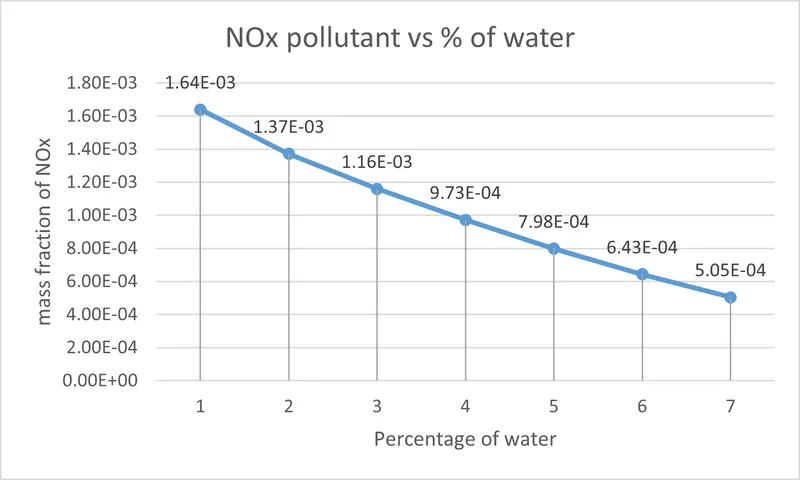
Effect of injecting water on NOx :
- The injected water also reduces the local temperature of the combustion flame and leads to lower NOx emissions
- Mass fraction of Nox decreases with increase in mass fraction of water
Effect of injecting water on N2:
- mass fraction of N2 remains same, it is not affected by the increase in the precentage of H2O
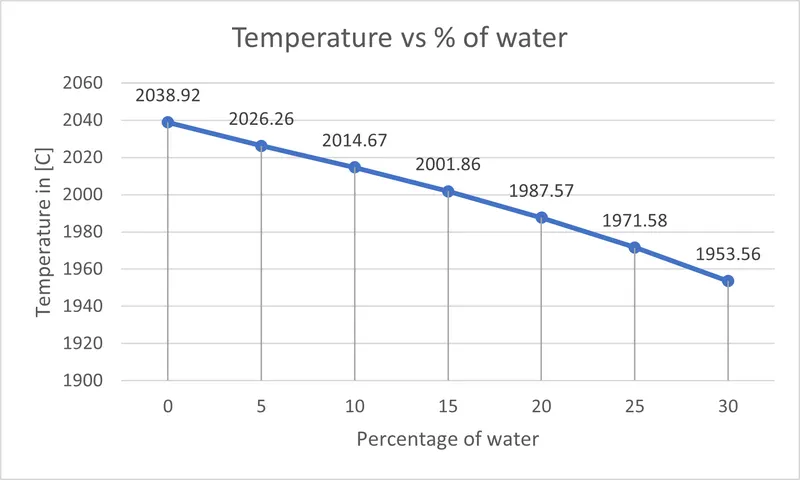
Effect of injecting water on the temperature:
- Overall temperature of the simulation keeps on decreasing with increase in the mass fraction of H2O
Conclusion:
- Simulation of combustion of natural gas is carried out and it is found that the harmful emissions of soot and NOx are reduced by increasing the amount water injected
- With increase in the percentage of water injected, the overall temperature gets reduced.
Reference Research Paper:-
1. https://www.sciencedirect.com/science/article/pii/S1876610217337724
2. https://link.springer.com/article/10.1007/s00773-015-0303-8