Week 10 Bullet penetrating a Bucket Challenge
Bullet penetrating a Bucket
Objective
To perform an explicit dynamic analysis of bullet penetrating into metal bucket. Simulate the analysis for different cases by assigning different NL materials to bucket and figure out the results to perform a comparative analysis.
Material assigned to Bucket :
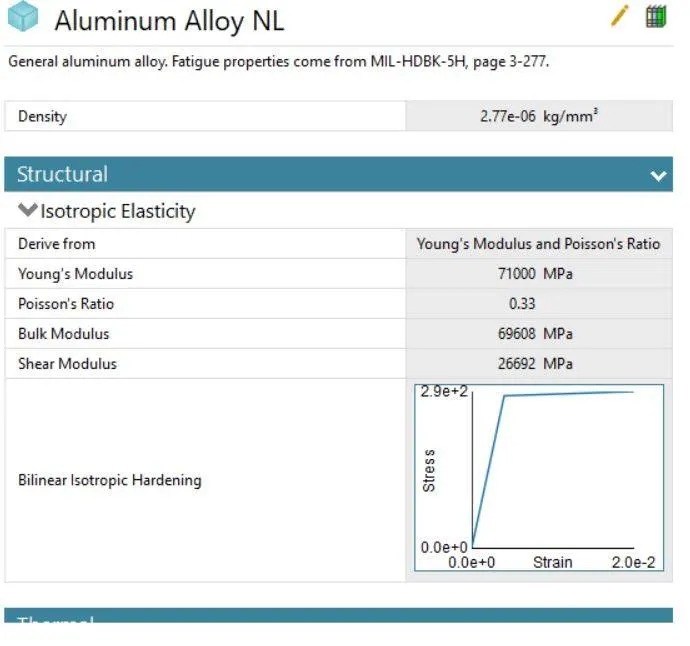
Case 1. Aluminum alloy NL
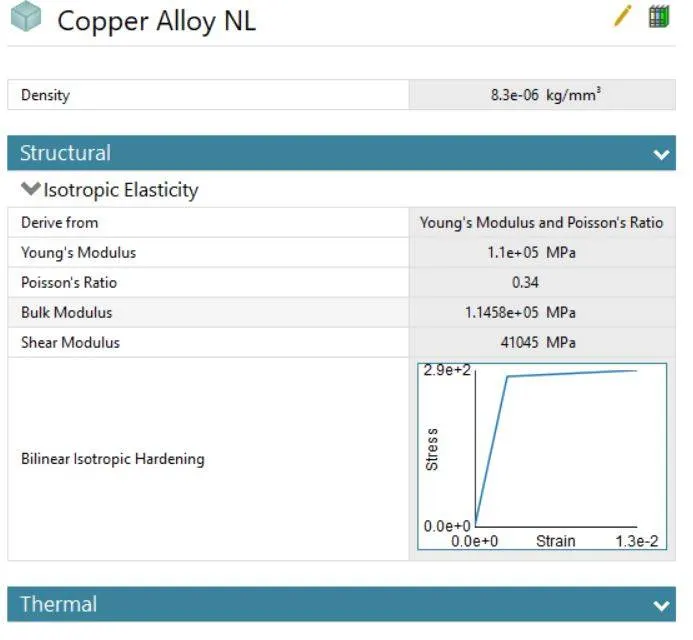
Case 2. Copper alloy NL
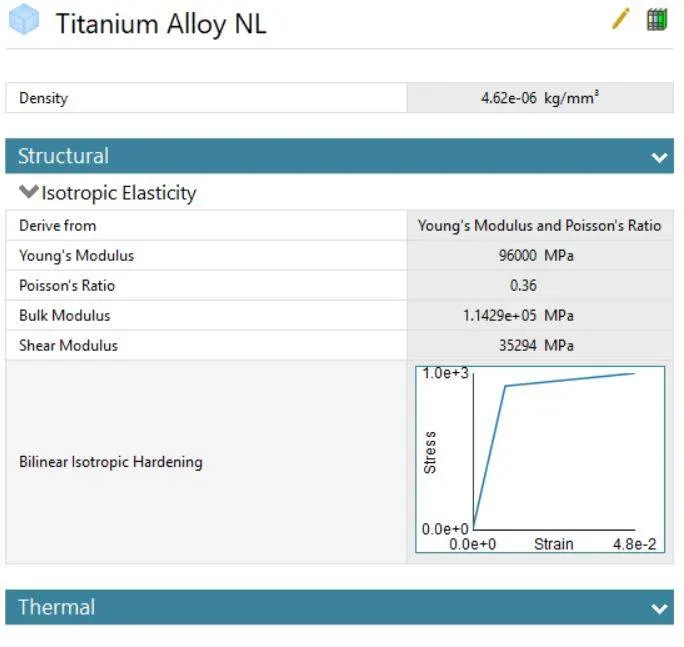
Case 3. Titanium alloy NL
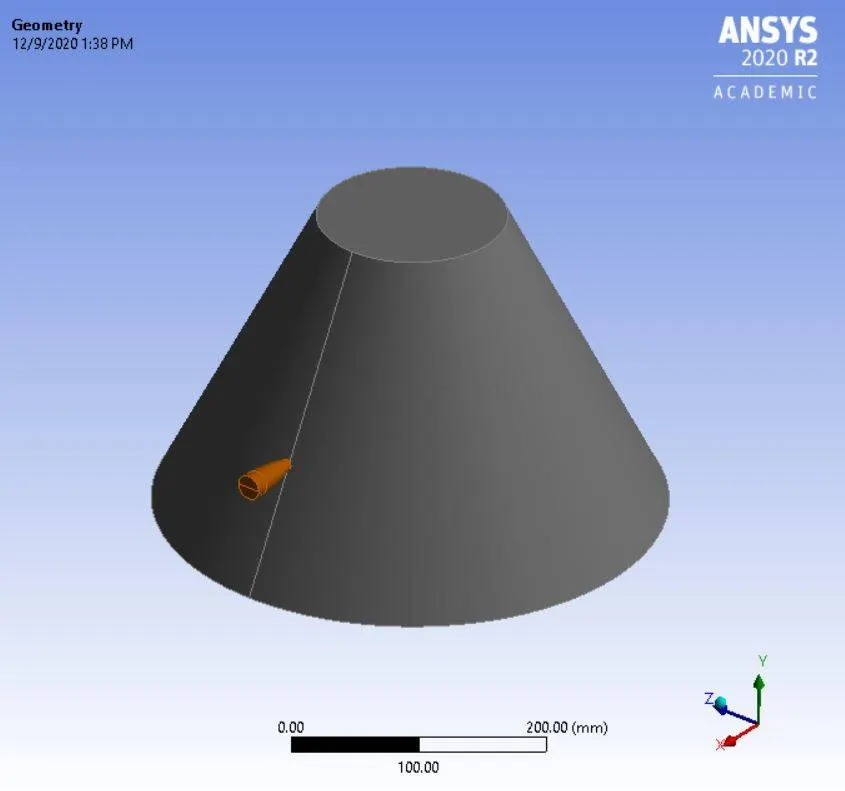
Fig. Geometry for the case
Case Setup
- Material :
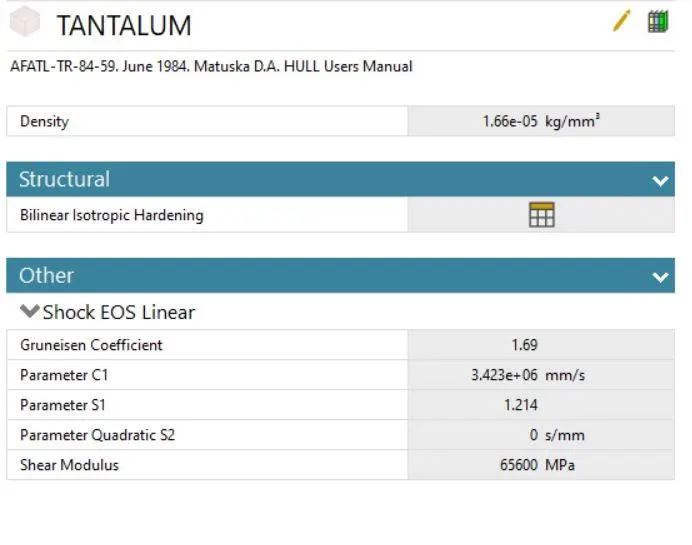
Tantalum is applied to the Bullet from the Ansys explicit materials library with rigid stiffness behavior. While to setup different cases, different material are assigned to Bucket.
Case 1. Aluminum alloy NL
Case 2. Copper alloy NL
Case 3. Titanium alloy NL
Tantalum for Bullet
- Meshing:
Mesh element size is controlled at entry and exit point of bullet using body sizing with a specific sphere of influence & element size.
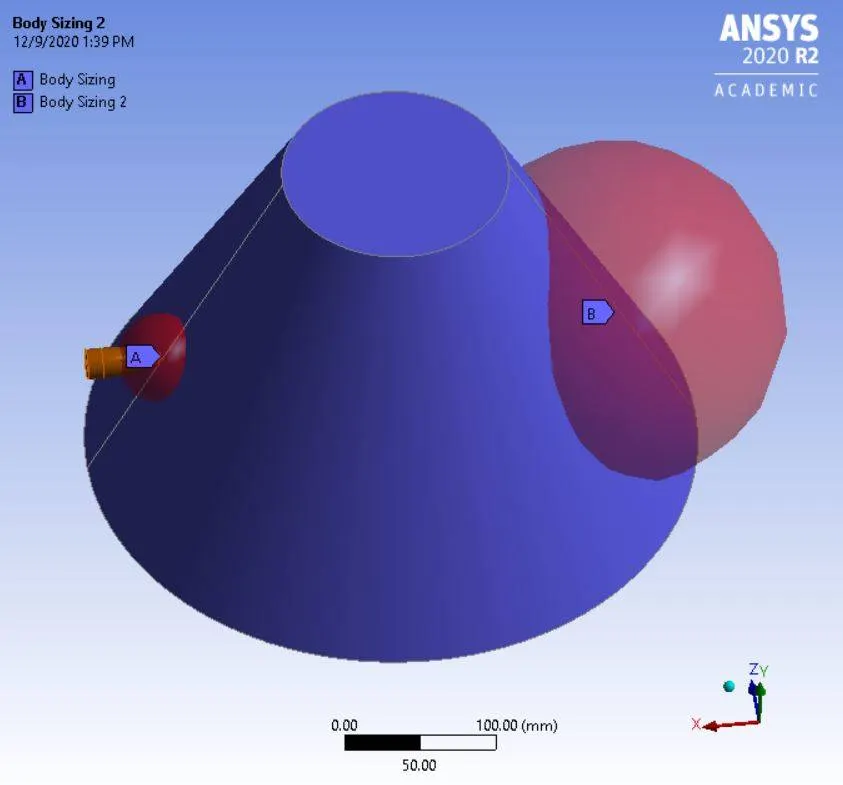
Fig. Body sizing using two sphere of influence at the entry and exit point.
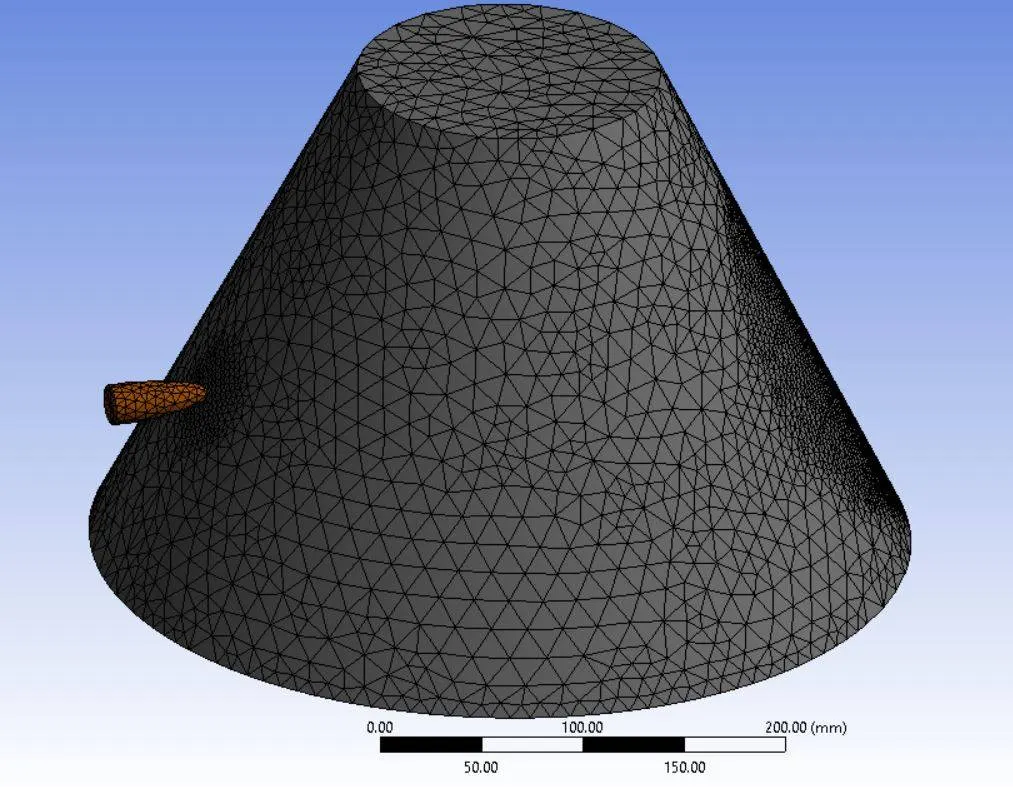
Fig. Meshed geometry
- Physical constraints or Boundary Conditions:
- Bucket is fixed at its position by providing fixed support boundary condition.
- An initial velocity of 360m/s is provided to bullet along the negative X-axis such that it penetrates the Bucket.
- Simulation is allowed to run for the time interval of 0.018-0.002 seconds.
- Energy error is set to 5.
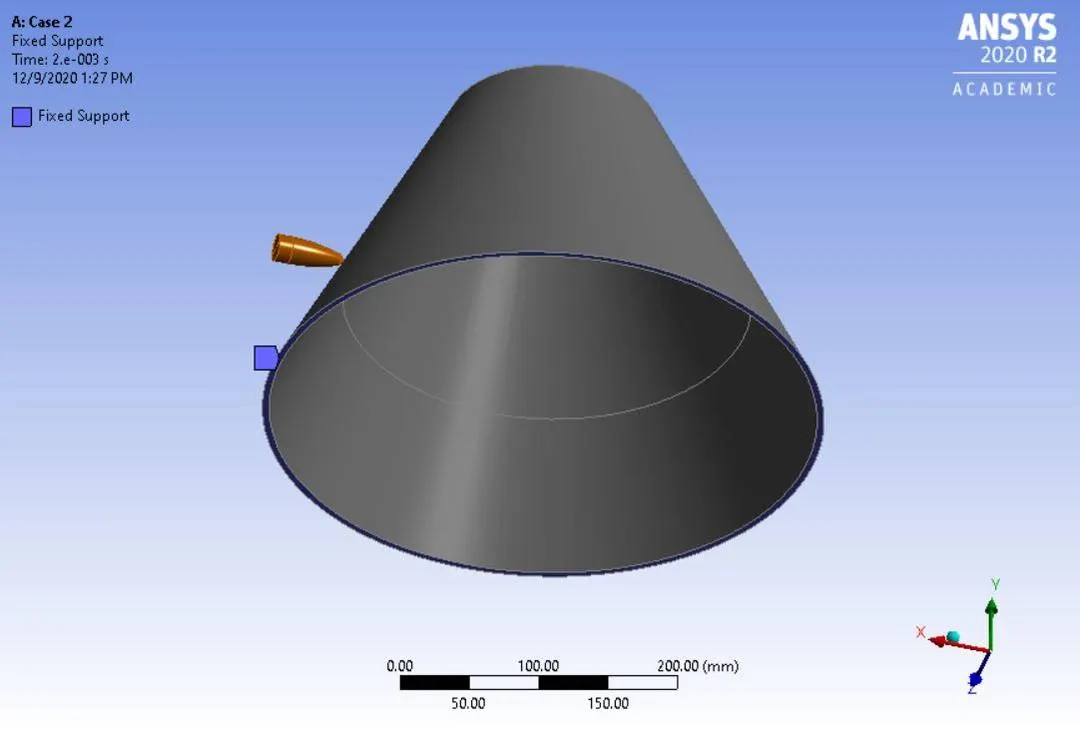
Fig. Fixed support applied to the Bucket to keep it intact at its position
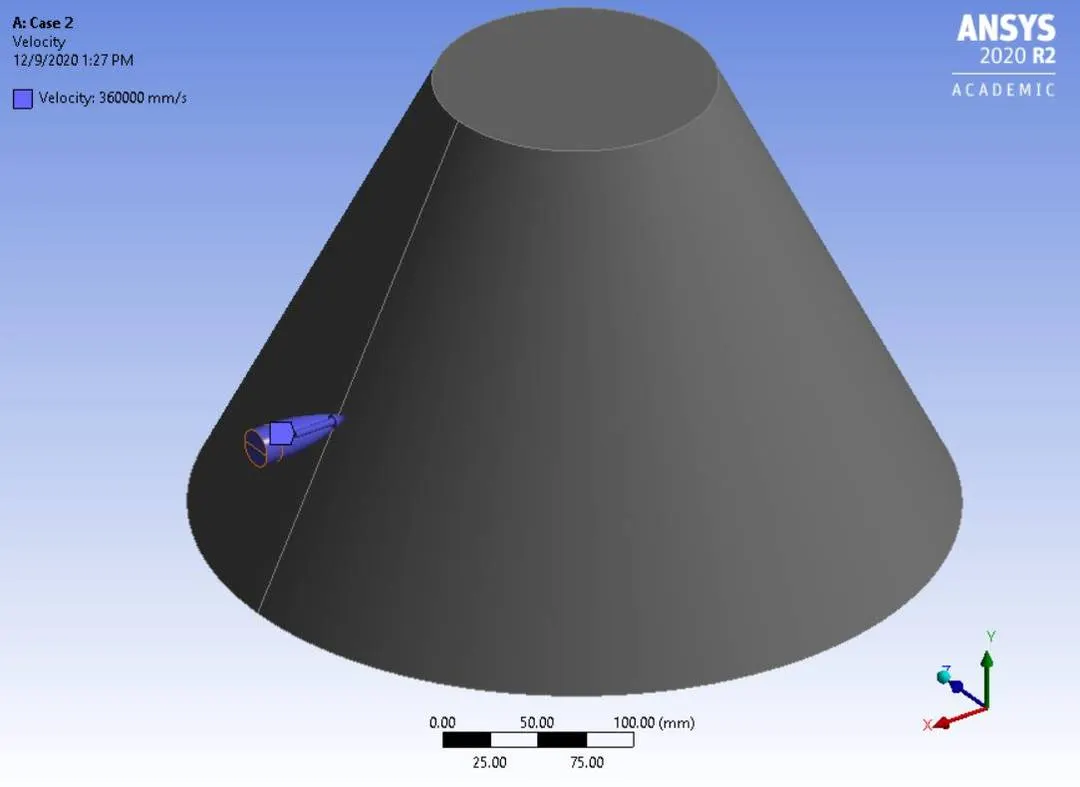
Fig. Initial velocity condition of Bullet (360m/s along -ve X-axis)
Results
Case1. When Bucket is assigned with Aluminum alloy NL
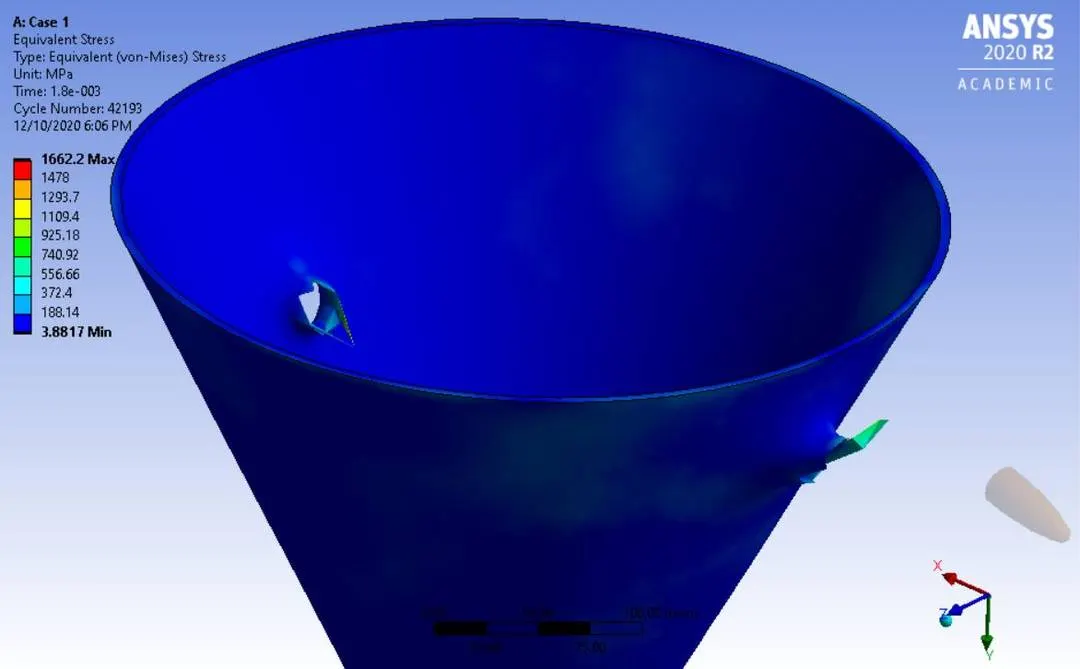
Equivalent Stress:
Total Deformation:
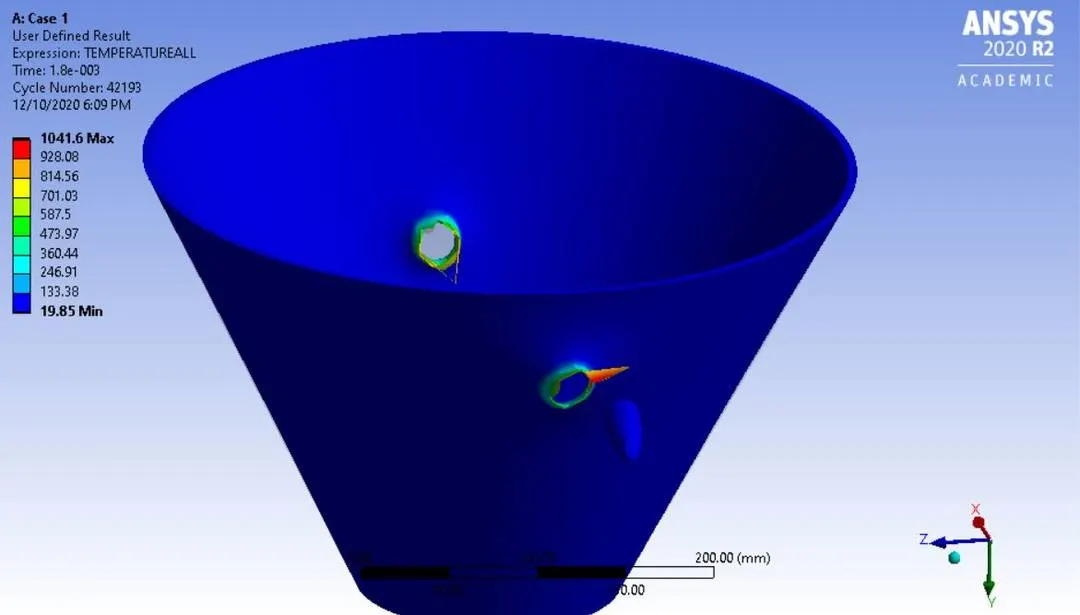
Temperature of the Bucket:
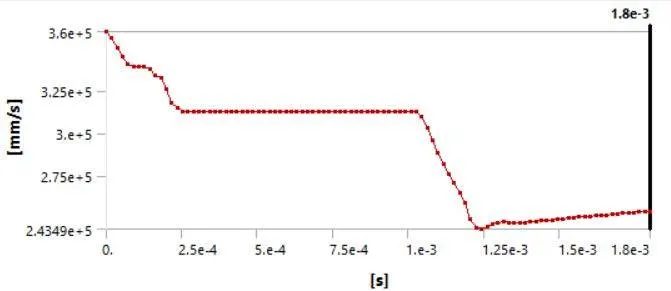
Velocity Profile of Bullet
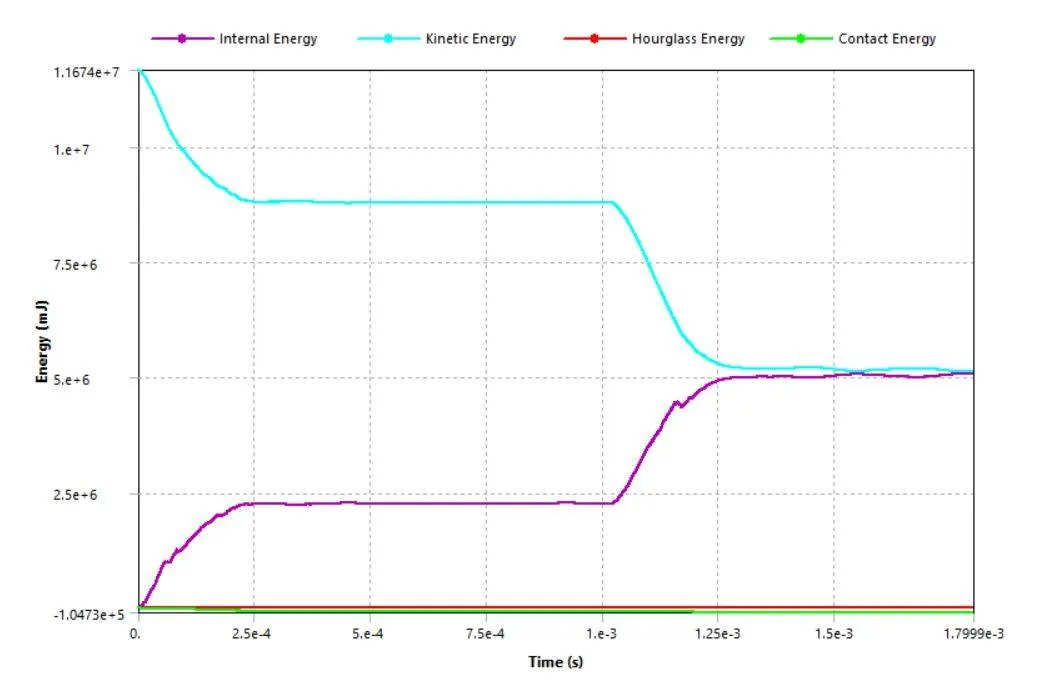
Energy Summary
Case2. When Bucket is assigned with Copper alloy NL
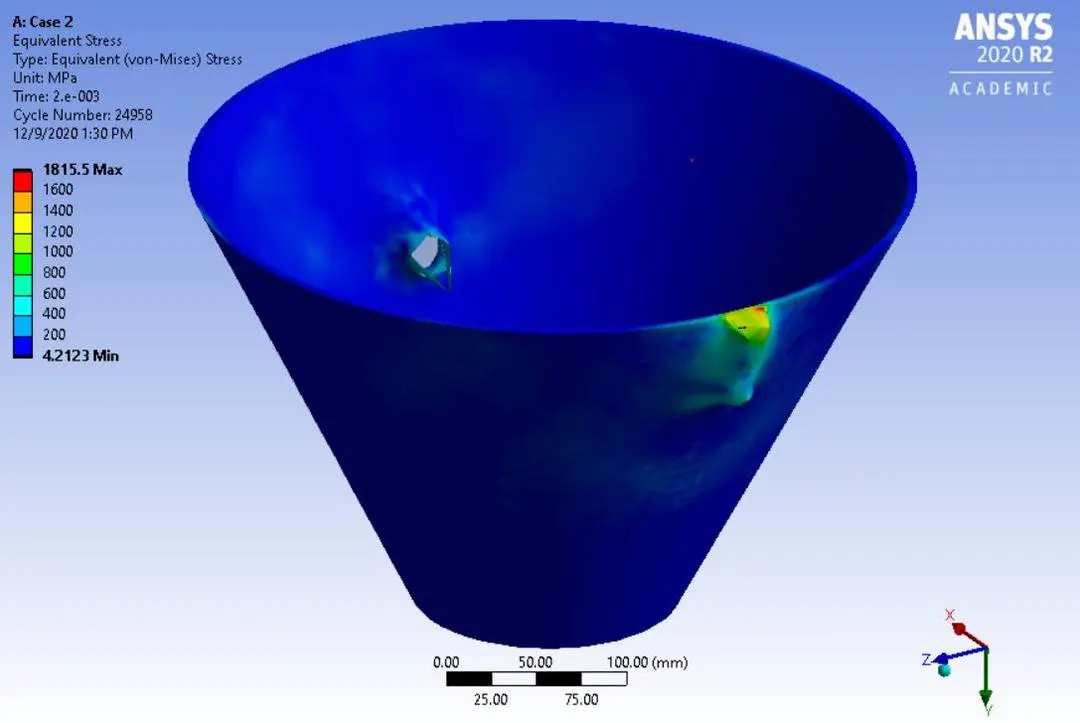
Equivalent Stress:
Total Deformation:
Temperature of the Specimen:
Velocity Profile of Bullet
Energy Summary
Case3. When Bucket is assigned with Titanium alloy NL
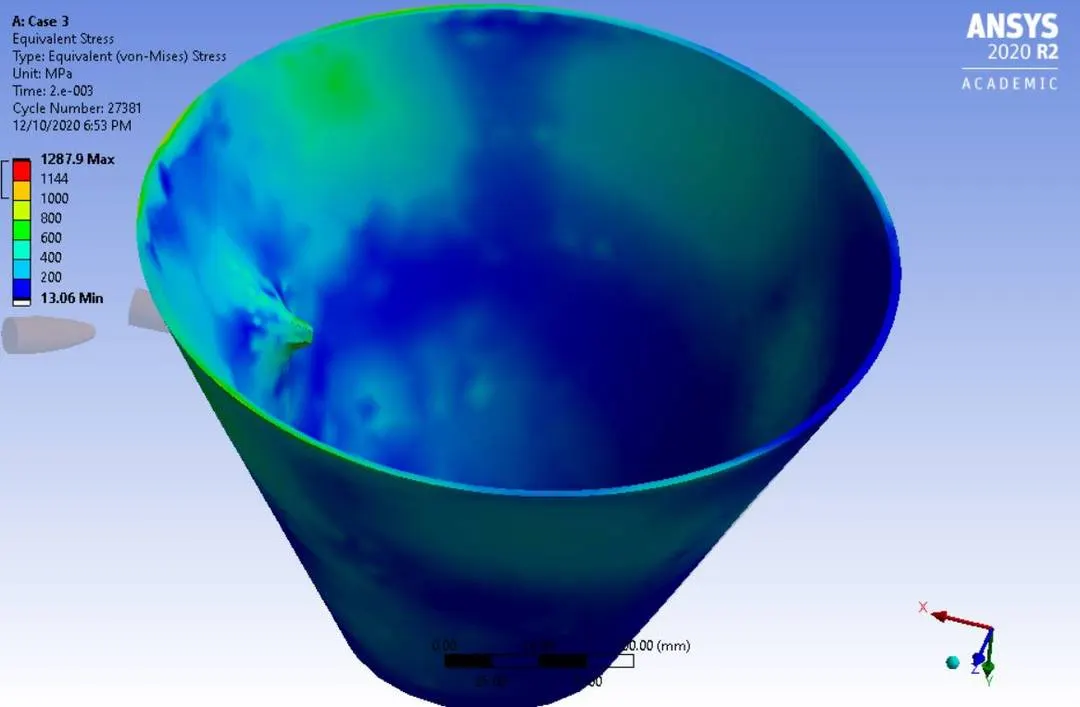
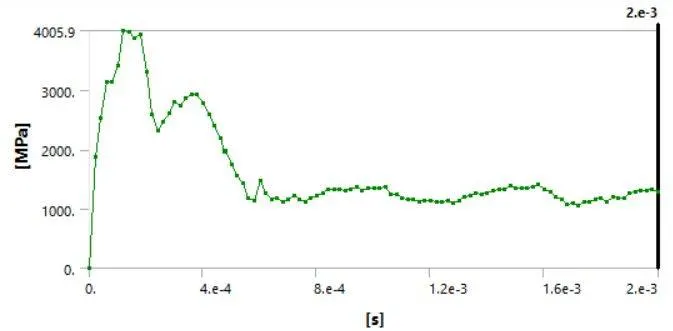
Equivalent Stress:
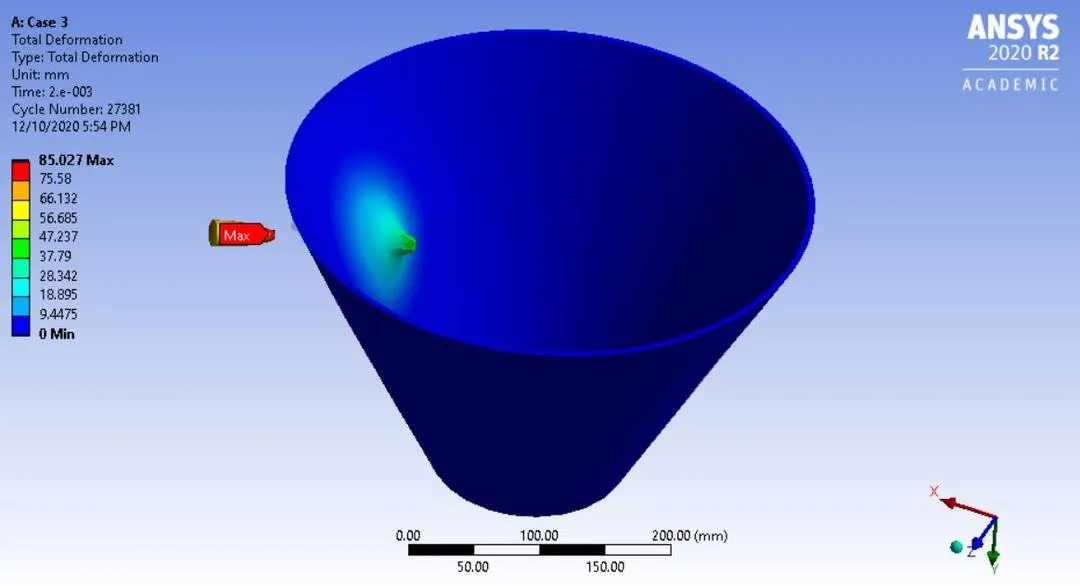
Total Deformation:
Temperature of the Specimen:
Velocity Profile of Bullet
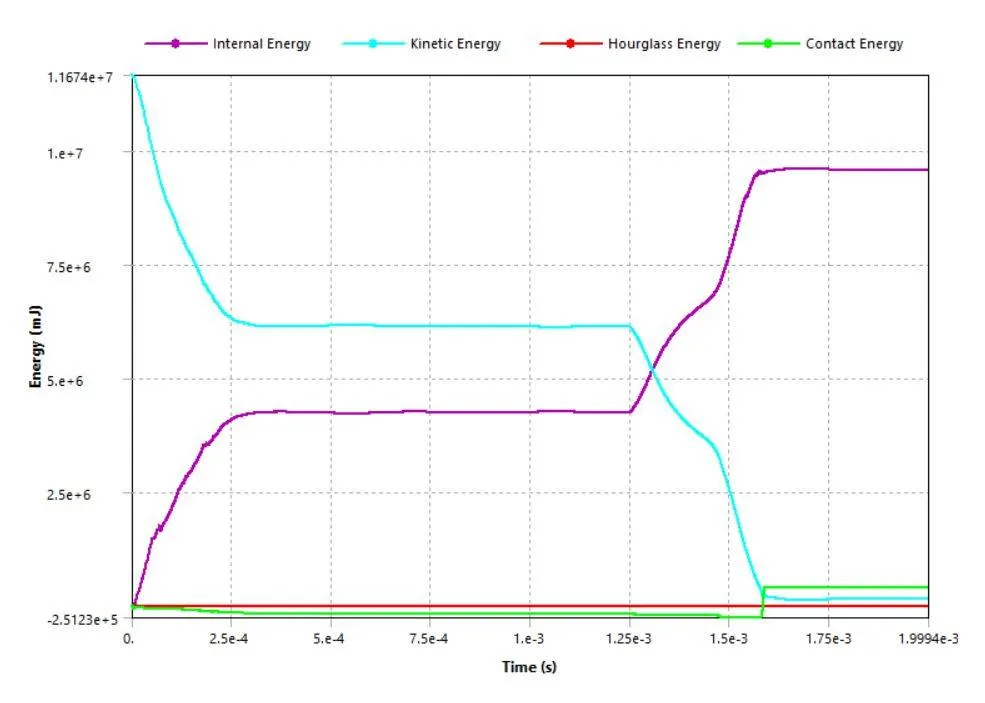
Energy Summary
Summary of Results
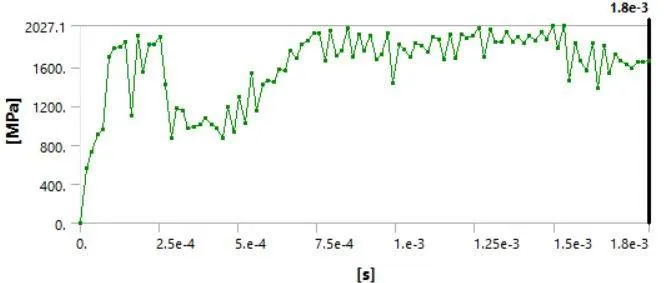
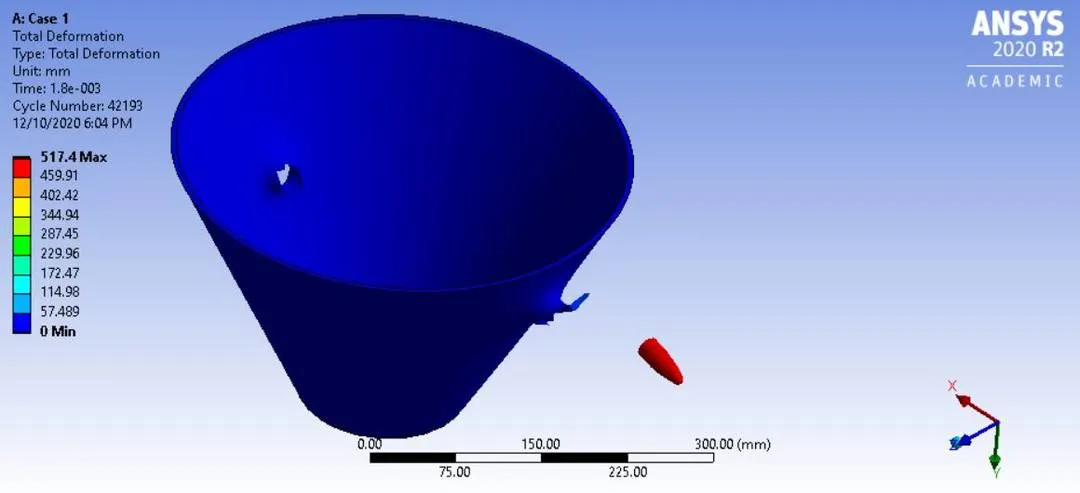
Case 1. When aluminum alloy NL is applied to Bucket, then bullet penetrates through both the diametrically opposite surfaces. This shows that materials doesn’t offered much resistance to bullet moving at speed of 360 m/s. Max. resistive stress developed in bucket is about 2027 MPa.
Stress plots & velocity profile plot clearly shows the results that bullet is resisted twice in its path. Max. Temperature developed in Bucket is about 1041 degree Celsius.
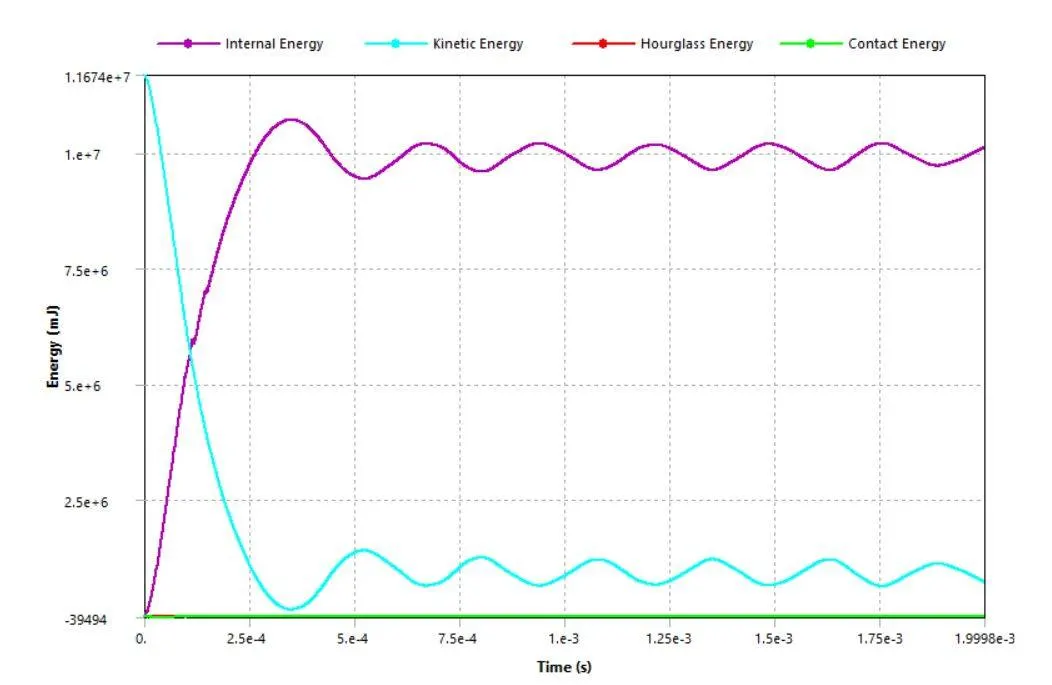
Energy summary shows the conversion of kinetic energy into the internal energy which also further explains the energy conversion behind the analysis.
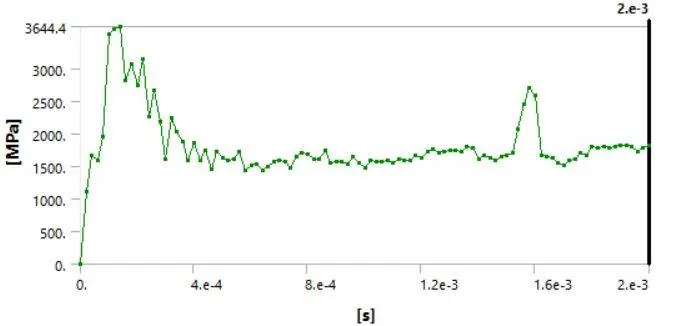
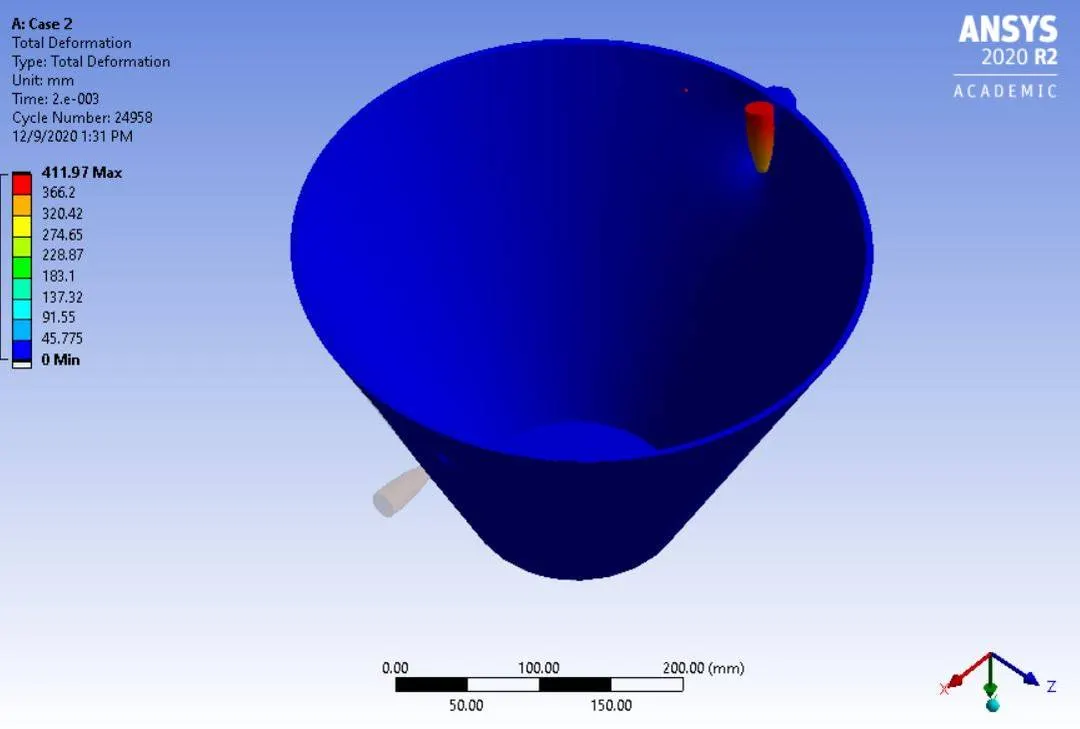
Case 2. When Copper alloy NL is applied to Bucket, this time bullet made through one surface but fails to pierce the other surface of Bucket. This shows that copper alloy has given higher resistance to bullet compared to Aluminum alloy.
Max. Equivalent stress offered by copper alloy Bucket is 3644 MPa.
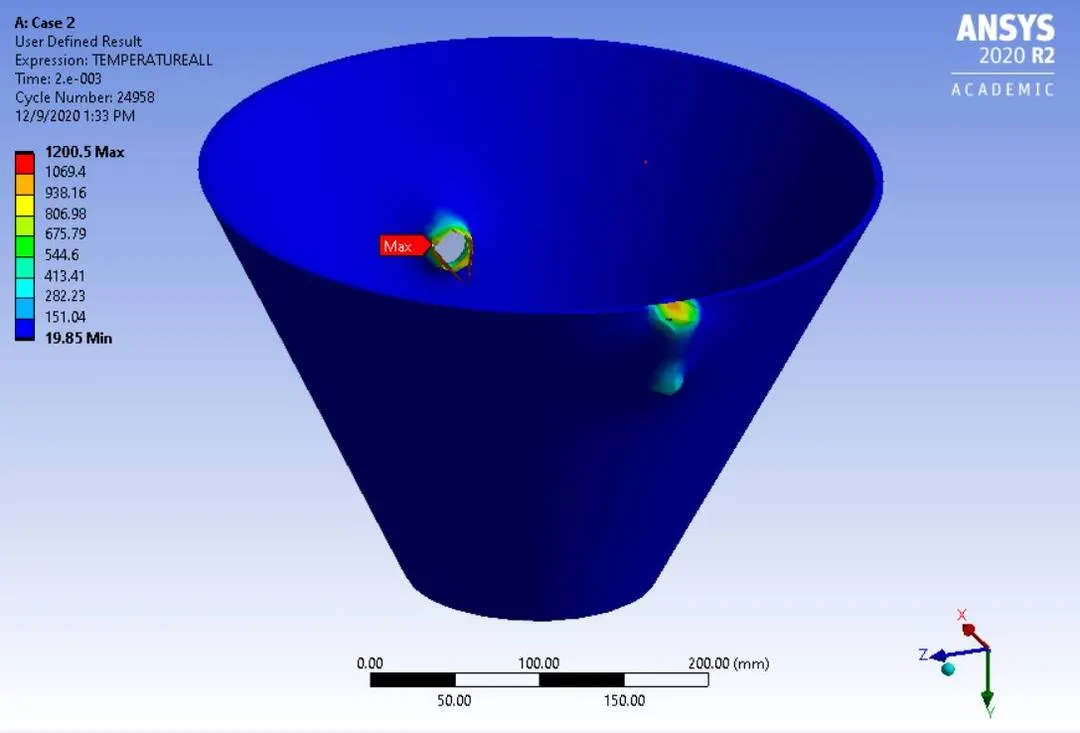
Max. Temperature developed is about 1200 degree Celsius.
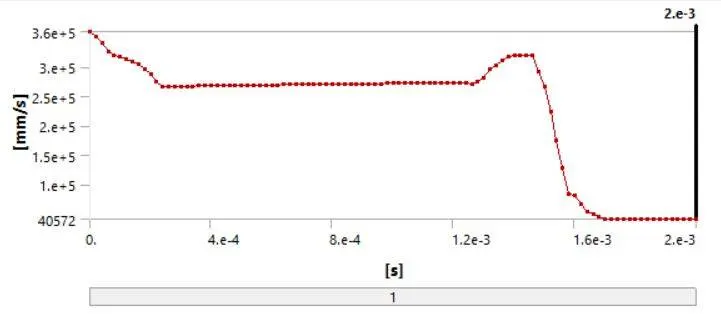
In Energy summary a small rise in contact energy is seen when bullet fails to pierce the second surface of Bucket. In velocity profile a significant reduction in bullet velocity is seen as bullet is almost about to get trapped in second surface of Bucket.
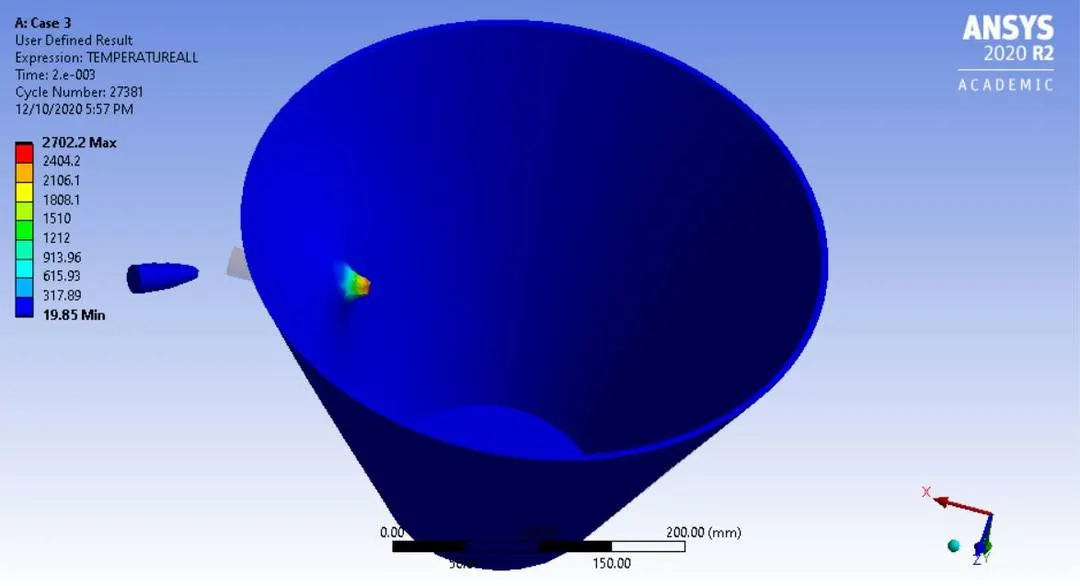
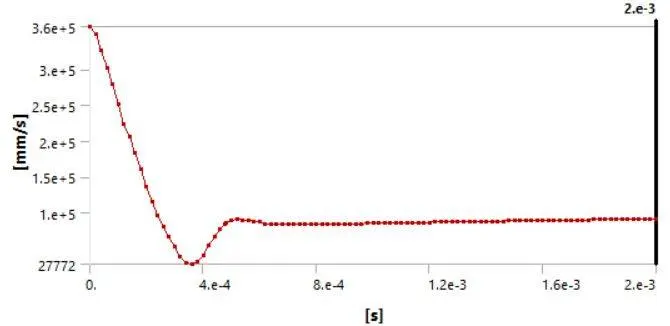
Case 3. When Bucket is assigned with Titanium alloy NL, bullet even failed to make through the first surface of Bucket. It made a deep dentation in Bucket & then bounces off. This shows that titanium offered much resistance & its high toughness behavior is highlighted during the simulation.
Max. Equivalent Stress developed in Bucket is 4000 MPa
Max. Temperature is of about 2700 degree Celsius.
Velocity profile of Bullet shows a drastic reduction in bullet velocity which clearly shows, how titanium toughness has absorbed the kinetic energy of bullet.
Animation