Week 9 Machining with Planer Challenge
Objective
To perform an explicit dynamics simulation of a workpiece which is machined by cutting tool, to find out the Equivalent Stress, Total Deformation & Temperature of the body. In the 1st case, cutting velocity of tool is 20000mm/s and in 2nd case cutting velocity is of 15000mm/s.
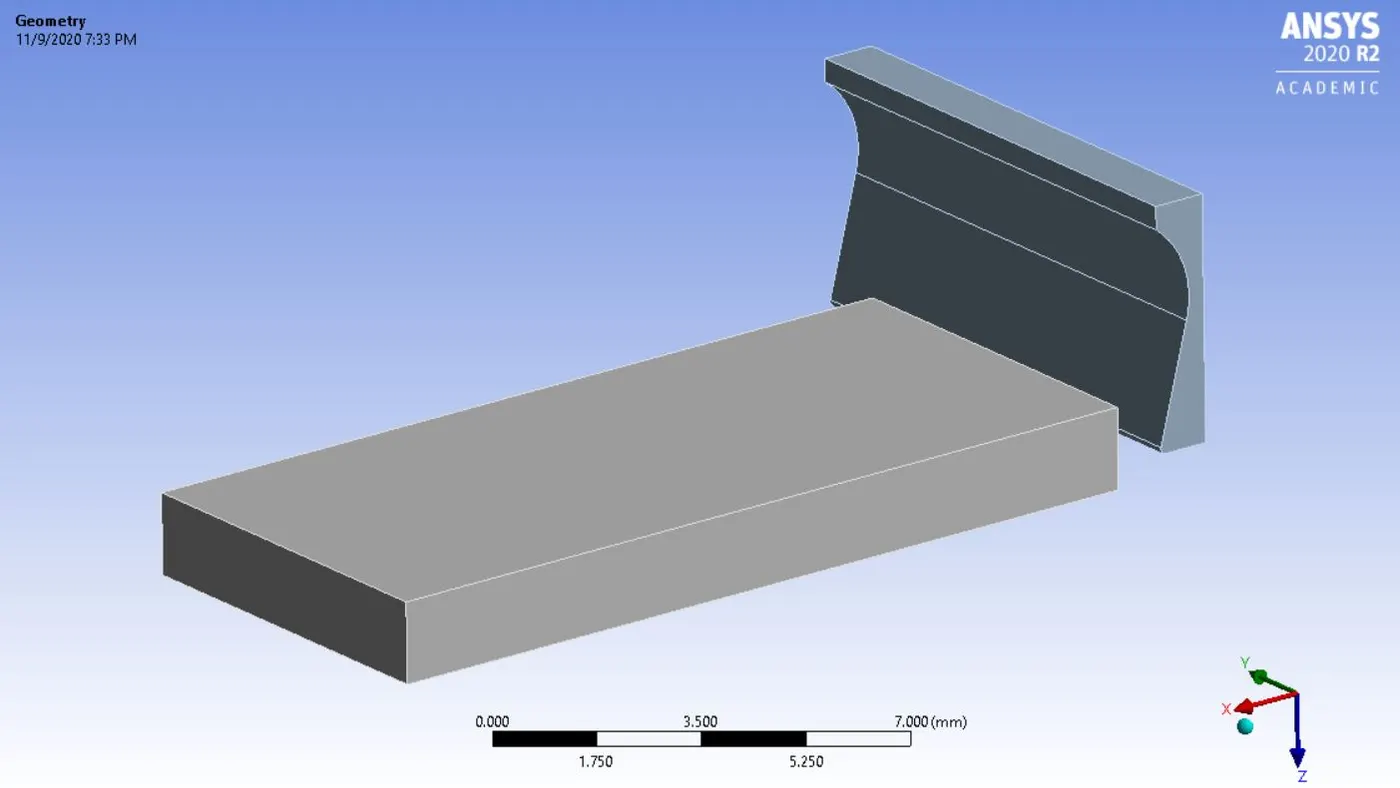
Fig. Geometry
Case Setup
- Material : Steel 1006 is applied to workpiece from the Ansys explicit materials library with flexible stiffness behavior, while cutting tool is simulated as a rigid body with structural steel as its material.
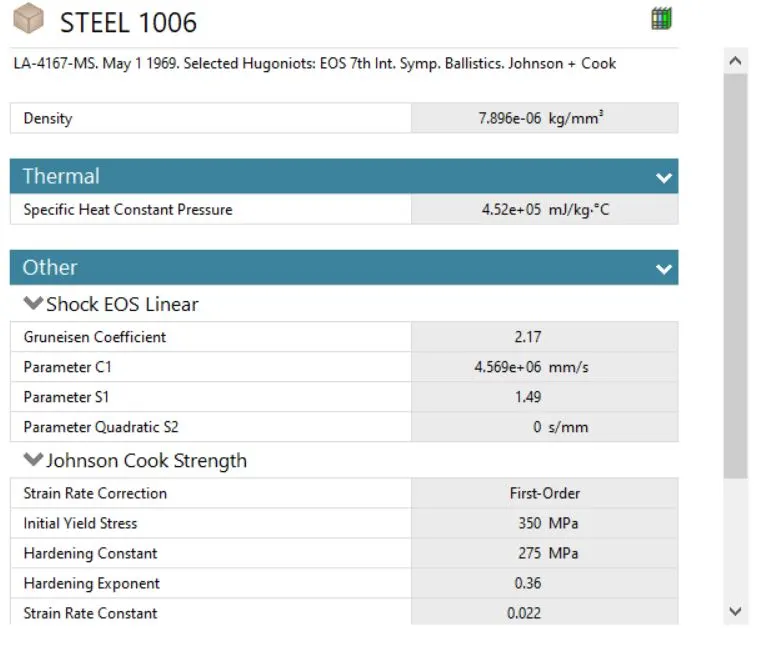
Fig. Prop. of Steel 1006
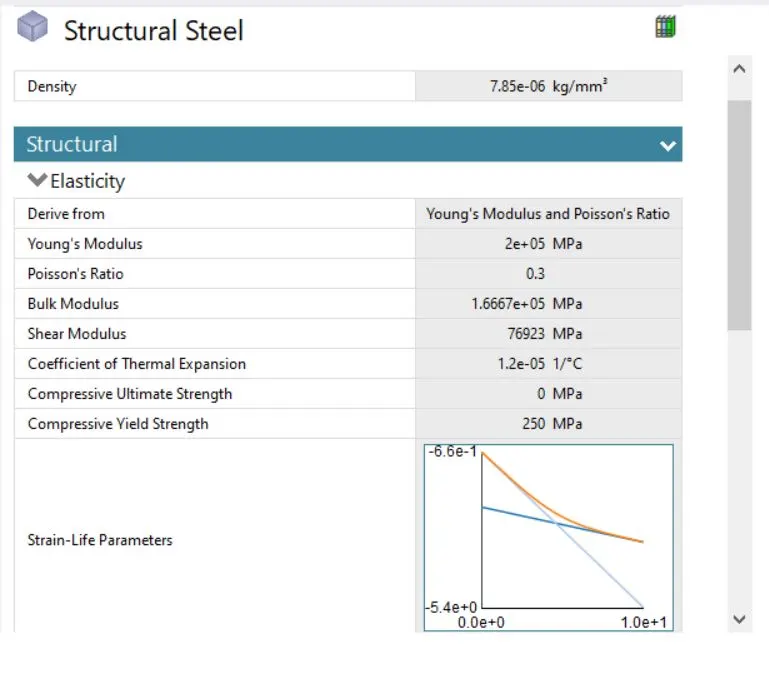
Fig. Prop. of Structural Steel
- Meshing: Workpiece mesh size is controlled using edge sizing while cutting tool is meshed with tetrahedrons mesh elements.
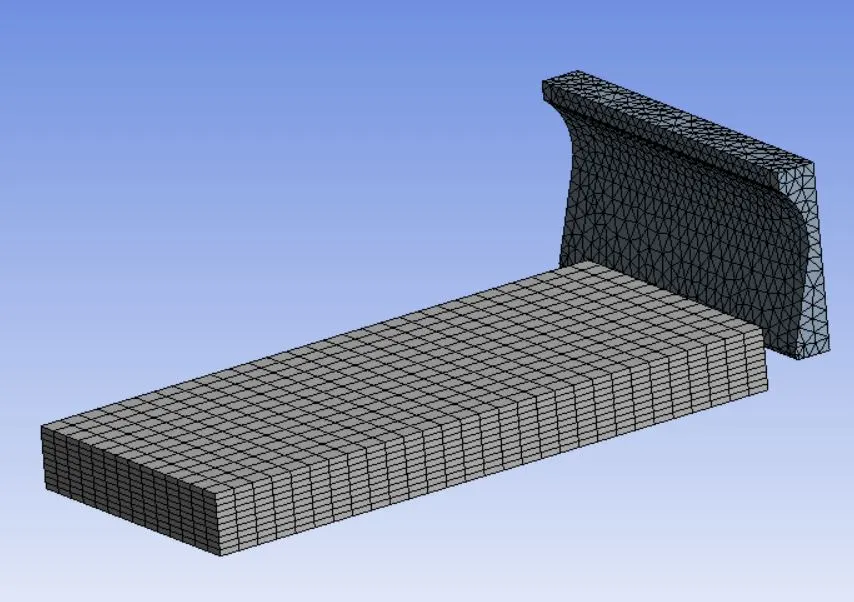
Fig. Meshed Model
- Physical constraints or Boundary Conditions:
- Frictionless Body interaction is applied between the two solid bodies i.e. w/p and cutting tool.
- Workpiece is fixed at its place by providing fixed support boundary condition.
- Cutting tool is constrained such that it can allow traverse along the workpiece i.e. along X-axis with specific cutting velocity.
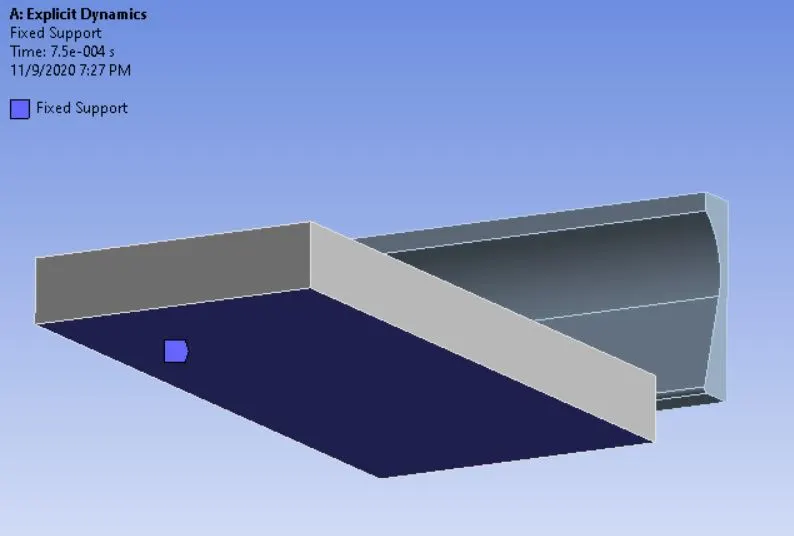
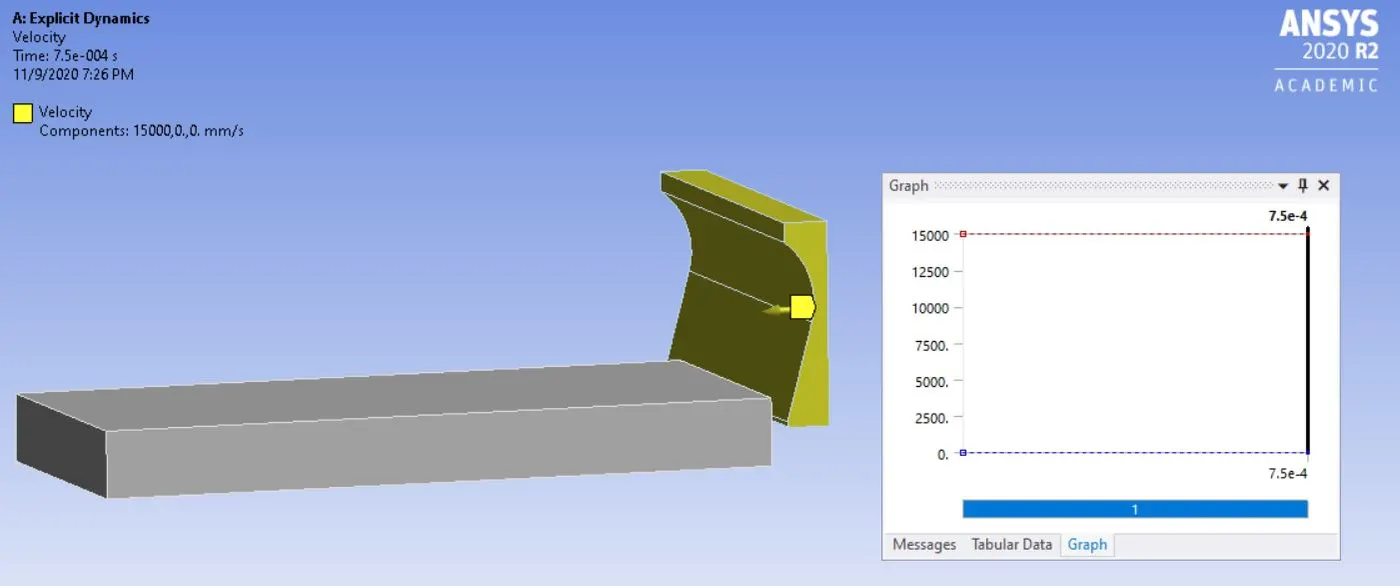
Fig. Boundary Condition
Results
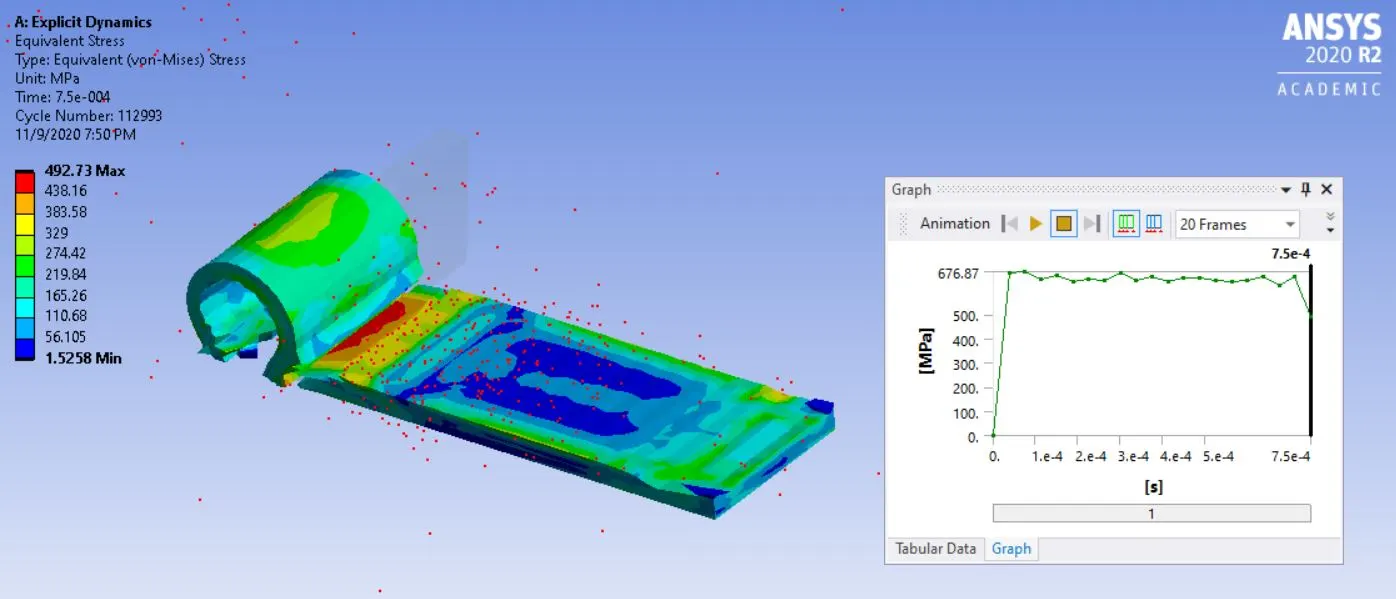
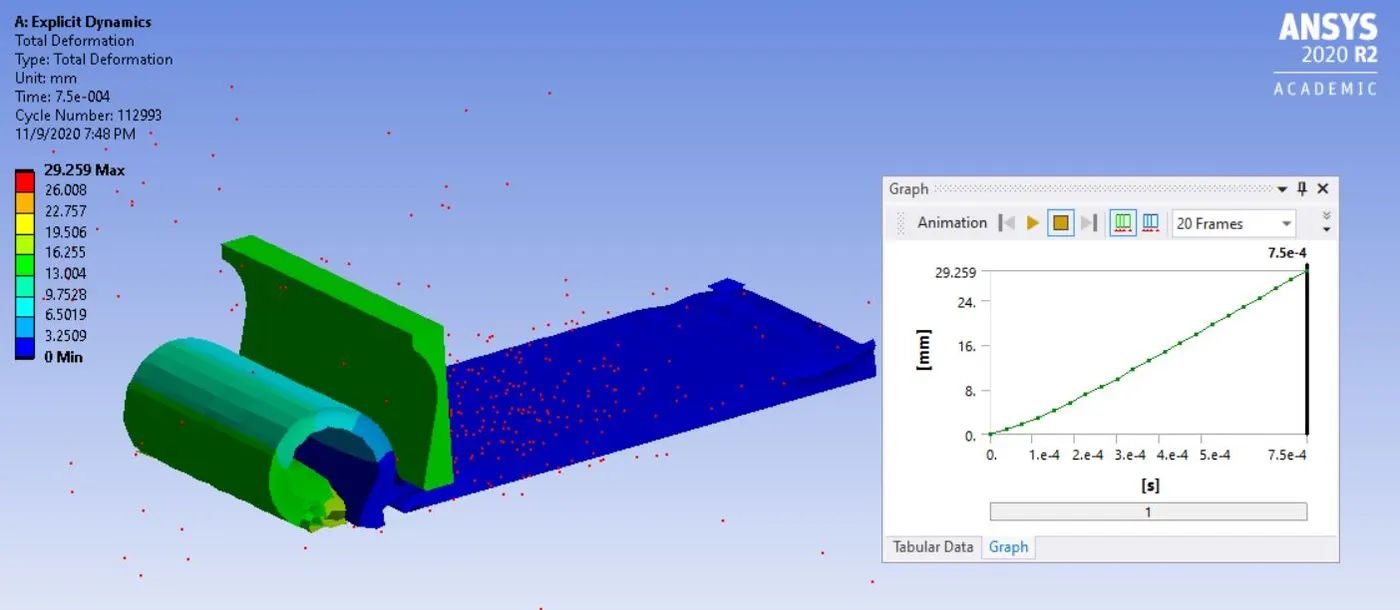
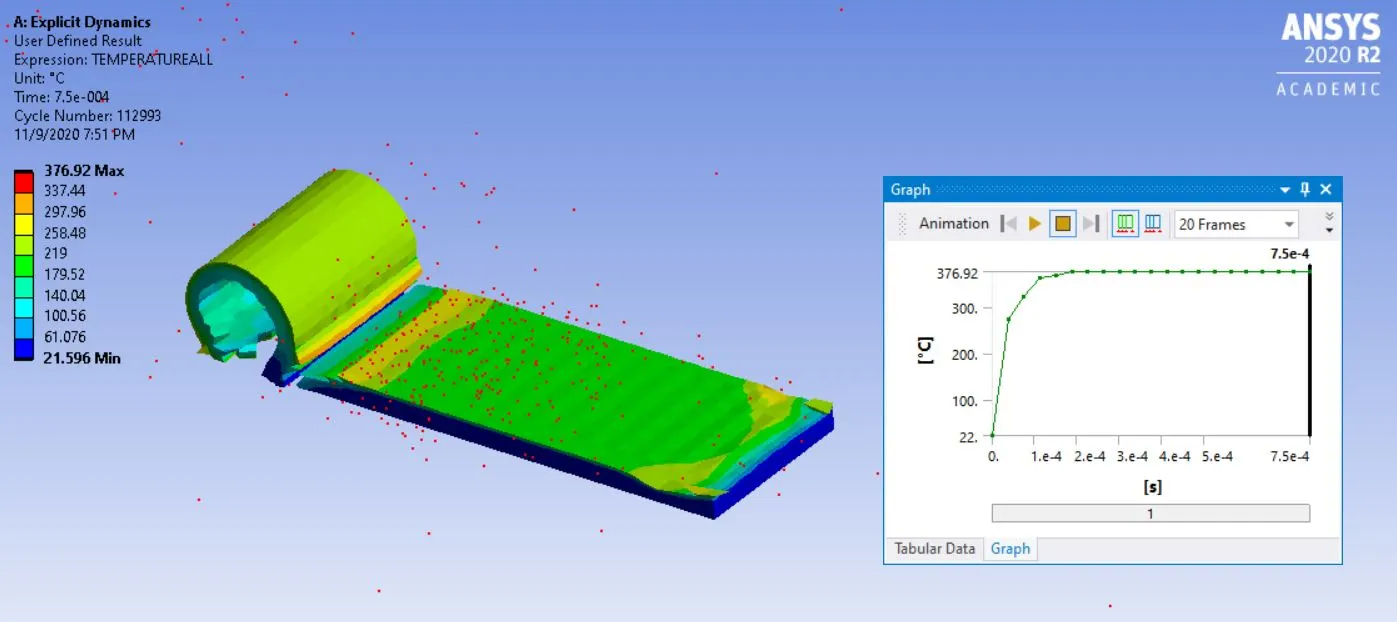
Case1. When Cutting tool velocity = 20,000 mm/s
Equivalent Stress: Max. Value = 676.87 MPa
Total Deformation: Max. Value = 29.25 mm
Temperature of the Body: Max. Value = 376.92 `C
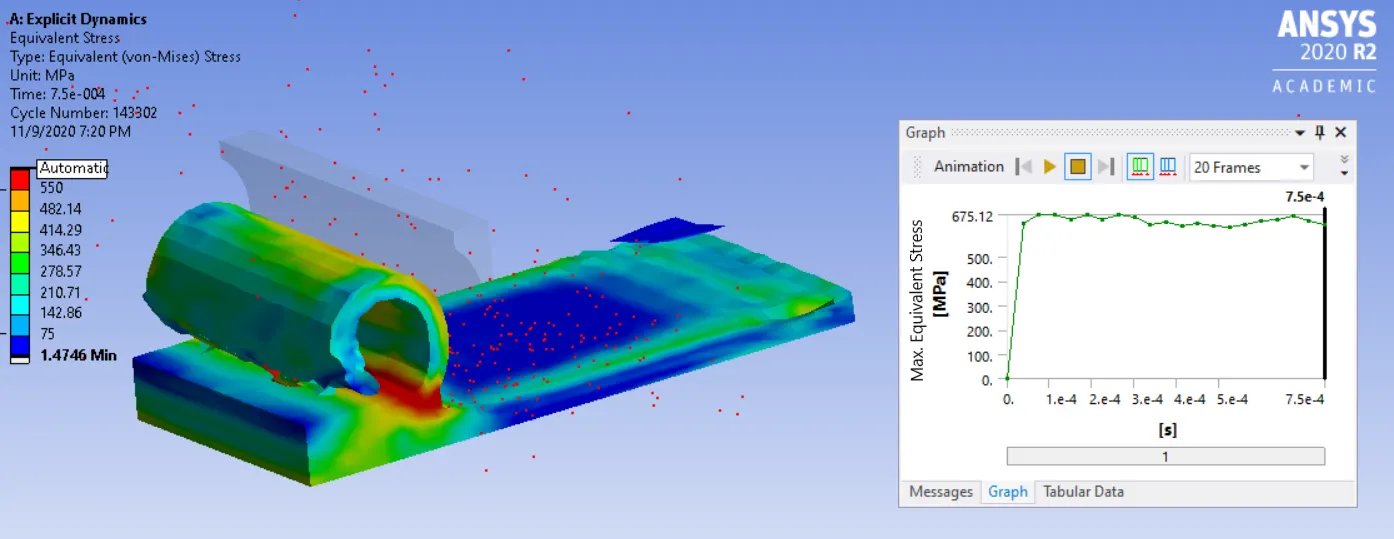
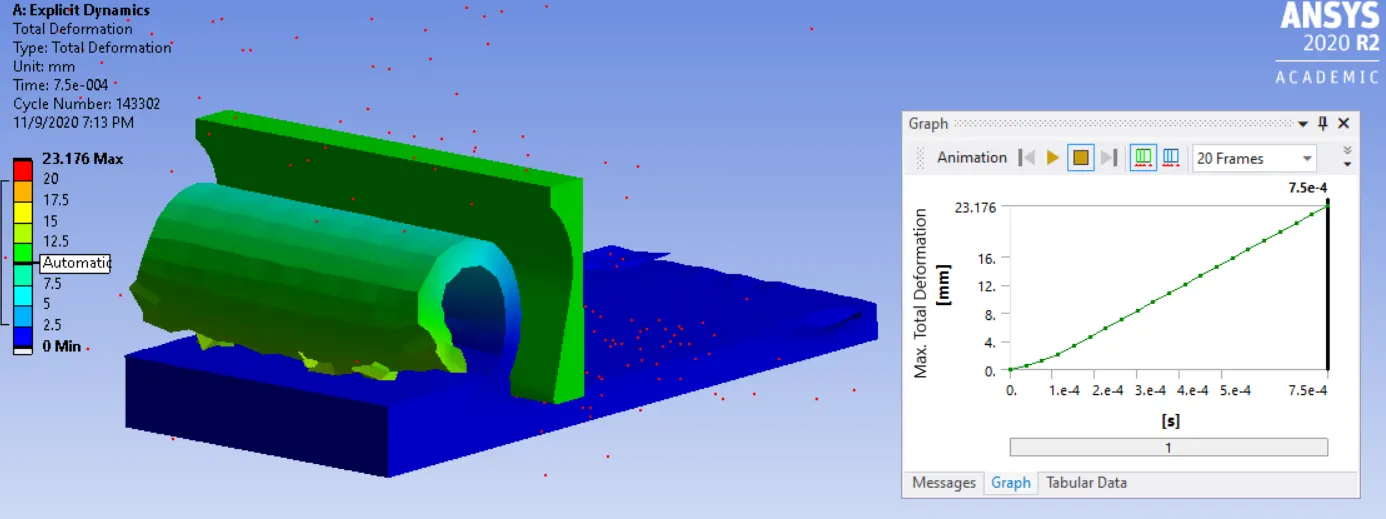
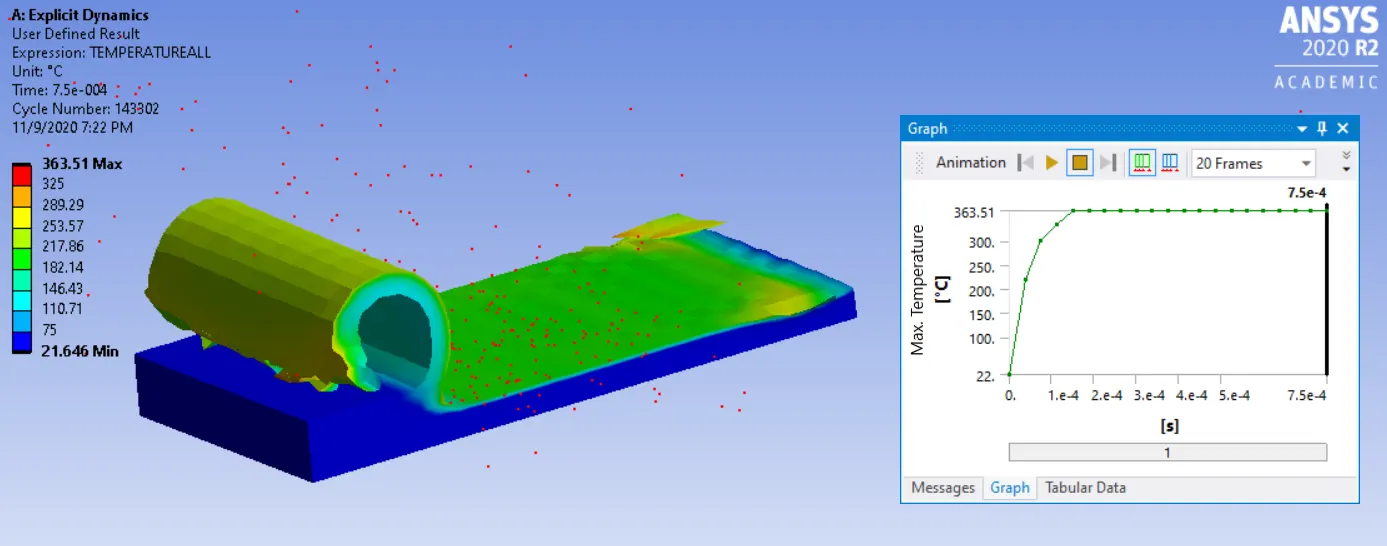
Case2. When Cutting tool velocity = 15,000 mm/s
Equivalent Stress: Max. Value = 675.15 MPa
Total Deformation: Max. Value = 23. 176 mm
Temperature of the Body: Max. Value = 363.51 `C
Conclusion
From the results it can be seen that there is no significant change in the development of Equivalent stress in both the cases while direct consequences can be seen in results of Total Deformation and the development of temperature. With lower cutting speed, temperature is not raised that much as in Case 1 (i.e. with higher cutting velocity) this is because higher kinetic energy being resisted by material which ultimately causes higher rise in temperature. In Total Deformation results, because of the lower velocity, lesser distance is traversed by the cutting tool, therefore lesser magnitude is observed in Total Deformation results.
No change in Stress results, is because there is no such significant change in material properties or way in which material is being sheared or machined. This change in speed will only have slight change in the stress gradient w.r.t time. In higher cutting speed, stress will rise quickly to a shear limiting state i.e. from which it cannot hold the material together, while in case of lower speed, this change will be more gradual.
Animation