Section Modulus calculation and optimization
Section Modulus
Section Modulus is a geometric property used to calculate the bending stresses in a structural member.
Mathematically,
It is defined as the ratio of the moment of inertia of a section about its centroidal axis and to the distance of the extreme layer from the neutral axis.
It is denoted by S.
In general, the Design Elastic section modulus is used. Which is calculated by using following formula,
S = I/y
Were,
S = Section Modulus
I = Moment of Inertia(mm⁴)
y = distance between the neutral axis and the extreme end of the object(mm)
The unit of section modulus is mm³.
Case 1: Section Modulus on Designed Hood
Using the Hood challenge for the section modulus challenge
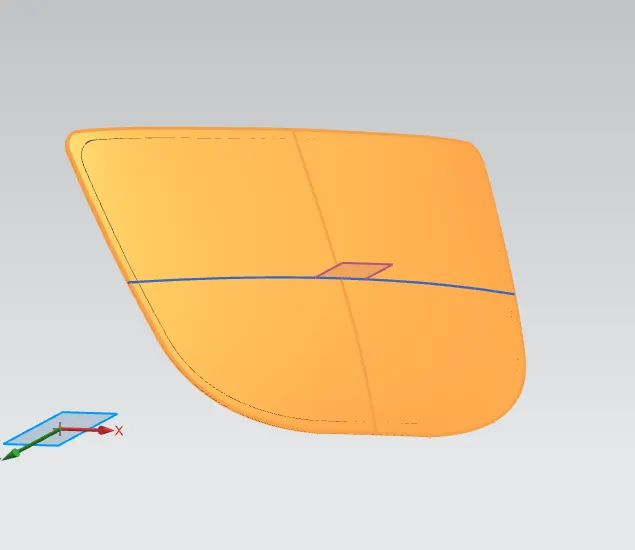
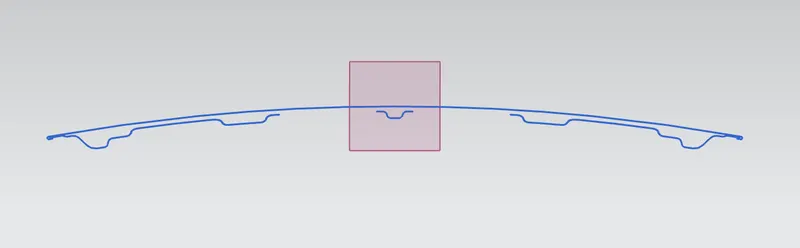
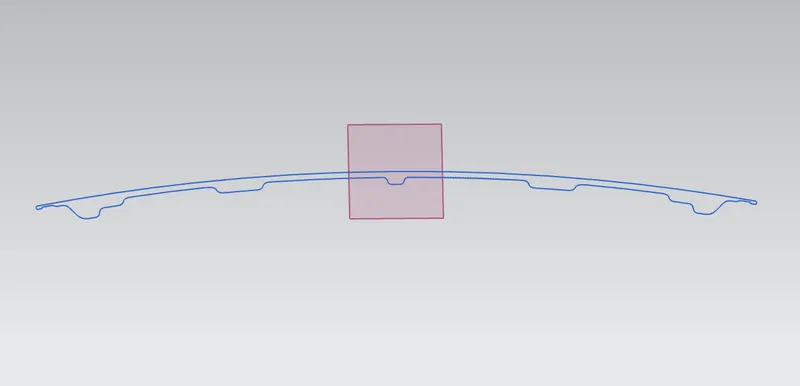
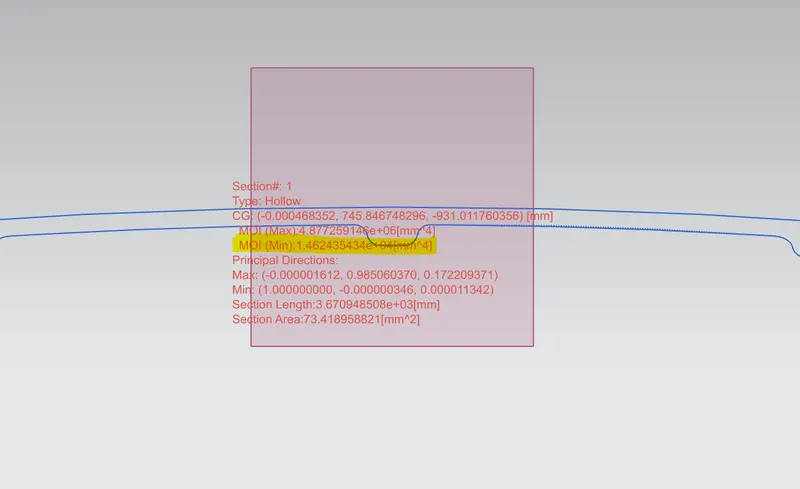
First, we have to only work on solid body of inner and outer body of Hood, then place a plane in the middle of the Hood and then with the help of Intersection curve command take a intersection on the hood, then sketch the intersection and trim the thickness of outer and inner body and join them. then with the help of section inertia analysis command find the minimum Moment of inertia. The calculate the Section Modulus with formula.
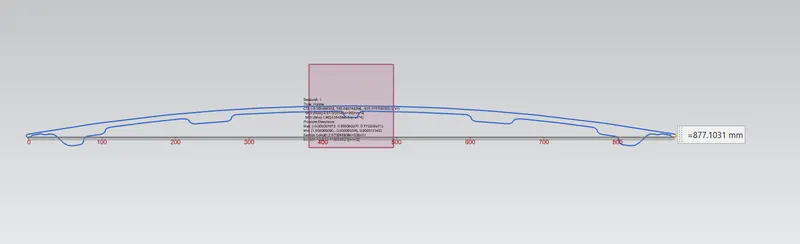
Calculation:
I (min)=1.462435434*104
=14624.35434 mm⁴
Y=877.1031 mm /2 =438.551 mm
S=I/Y
S=14624.35434 / 438.551 mm
S=33.3469 mm³ .......1
Case 2: Section Modulus on Modified Hood:
In Case 2 increasing the cross-section area by offsetting the inner panel by 0.5mm
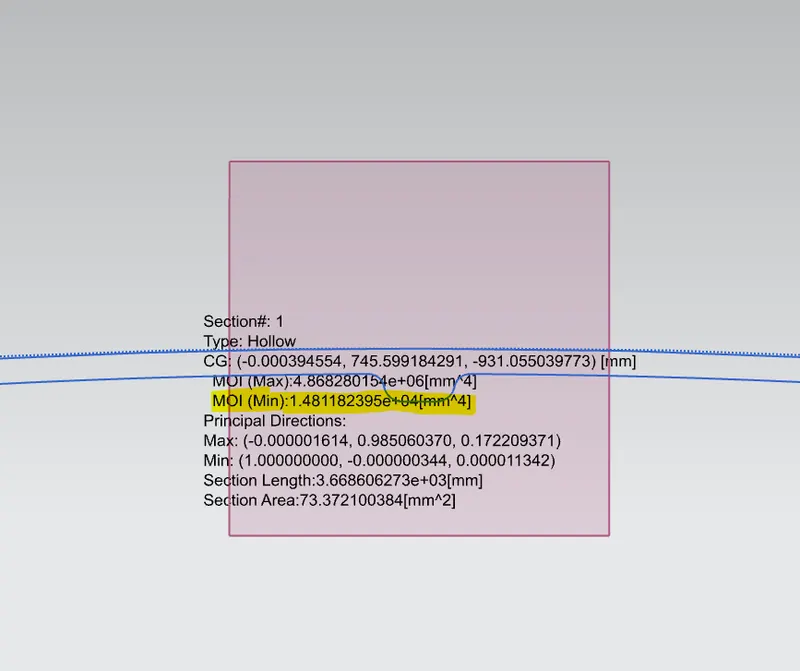
Calculation:
I (min)=1.481182395*104
=14811.82395 mm⁴
Y=877.1031 mm /2 =438.551 mm
S=I/Y
S=14811.82395 / 438.551
S=33.774 mm³ .......2
Conclusion: If the cross-section area increases the section modulus also increases or by increasing gap between inner and outer panel, its strength can be improved.