Benchmarking
Aim: To explain about Benchmarking and finding a good car for Mr. D.S.Pughazhyendhii's family by comparing the cars according to his budget.
Benchmarking:
Benchmarking involves a structured comparison between similar products, services or processes on some dimensions of performance. For example, it can be used to compare the availability and delivery of features in a product and in this form often provides the basis of consumer tests and reviews. These look at products and services and provide recommendations based on which is best or some form of ranking amongst competitors.
It is particularly useful when comparing not only performance but also practice – in other words what do the different organizations do to enable that performance to be delivered? And applied in this way it is a powerful tool in process innovation sin e studying how the ‘best’ achieve their performance can provide powerful clues for changing the way processes operate. Process benchmarking of this kind can operate at several levels:
• Between similar processes in the same factory or service branch
• Between different factories or service branches
• Between different competing organizations
• Between different sectors using the same process
Whilst if offers a significant learning opportunity benchmarking between competing organizations is harder than the other three because competitors do not want to disclose their process information since it is a source of competitive advantage to team. So, benchmarking of this kind often involves a third party who can collect the data, make the comparison and provide feedback but all on a confidential basis. A good example of this was the Automobile Industry Benchmarking Study at the heart of a long-running programme organized by MIT with other academic partners around the world called ‘The future of the automobile’. This programme was co-funded by most of the major auto industry players and explored a variety of aspects of the industry including product design and innovation, service delivery, retailing and supply chain management. Its results appeared in many books and articles and over a sustained period of time provided a powerful stimulus for change in the industry. The benchmarking study was the most influential, giving birth to the concept of ‘lean’ thinking which revolutionized first car making and then other manufacturing before Joe Tidd and John Bessant http://www.innovation-portal.info/ John Wiley and Sons Ltd
diffusing into services and the public sector. The original study was published in 1991 under the title’ The machine that changed the world’.
The project involved a systematic benchmarking study of 68 car assembly plants around the world using a standard structured framework to ensure direct comparisons were made. Researchers from the various university teams looked in detail at all aspects of productivity and compared performance factors like labour hours to produce a car, number of defects per car, inventory levels per car, space utilization, etc. Their findings were significant and challenging for the This massive difference in performance provided a powerful incentive for the lower-performing firms to explore how the best plants were able to deliver these different productivity levels. Various studies began to focus on trying to understand the process innovations involved and gradually it became clear that the differences were not down to levels of automation or other physical investments but rather in the underlying organization and management of production. The successful plants had an integrated philosophy backed up by an extensive toolkit of approaches which focused on eliminating or reducing waste in all areas and activities. They achieved this through a mixture of teamwork and employee involvement in innovation. This focus on waste and its reduction led the researchers to think of the successful systems as being ‘lean’ – rather like an athlete who carries not extra weight or fat and is therefore able to perform better. The term stuck and became a label for an approach which has had enormous impact on process innovation
around the world. Benchmarking remains an important tool within this framework and continues to provide the motivation for change in many sectors. A good example can be found in the case of South Africa where the approach has been used to enable innovation in automotive, chemicals, textiles and clothing and other sectors.
Requirement:
Benchmark with presently available cars in the market for the following case.
The vehicle benchmarking program considers 10 main attributes scoring up to 815 single criteria. The 10 main attributes are as follows:
- Performance
- Drivability
- Advanced Driver Assistance Systems (ADAS)
- Sound / NVH
- RDE: CO2 / Real life fuel consumption
- Pollutant emissions
- Friction
- Thermal, energy management
- Vehicle dynamics, handling
- Ride Comfort
Suitable cars:
- TATA NEXON
- HYUNDAI VENUE
- MARUTI SUZUKI VITARA BREZZA
- FORD ECO SPORT
Basic characteristics of cars:
- Good seating arrangement.
- Safety.
- BS6 Engine used.
- Good Mileage.
- Good Interiors.
- Lightweight Car body.
- Specifications of cars
TATA NEXON:
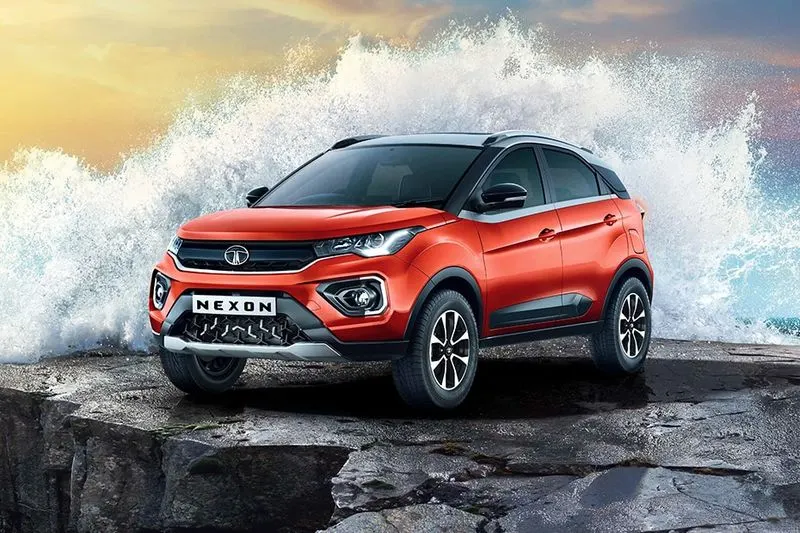
Tata is offering its sub-four-metre SUV with the corporate discount of Rs 5,000 this November. The Nexon’s prices have bumped up by up to Rs 18,000.
Price: The SUV is now sold for between Rs 7.70 lakh and Rs 14.18 lakh (ex-showroom).
Variants: It can be had in eight broad trims: XE, XM, XM (S), XM+ (S), XZ+, XZ+ (HS), XZ+ (L) and XZ+ (P). The Dark Edition is offered on trims starting from XZ+, while the Kaziranga Edition and the new ‘Jet’ Edition are available on the top-spec XZA+ (P) trim.
Seating Capacity: Tata Nexon is a five-seater SUV.
Engine and Transmission: The subcompact SUV comes with two engine choices: a 1.2-litre three-cylinder turbo-petrol (making 120PS and 170Nm) and a 1.5-litre four-cylinder turbodiesel mill (110PS and 260Nm). Both engines are paired to either a six-speed manual or a six-speed automatic transmission.
Features: It has a seven-inch touchscreen infotainment system with Android Auto and Apple CarPlay, a digital instrument cluster, voice commands, a cooled glovebox, auto AC with rear vents, cruise control and rain-sensing wipers. The top trims also get ventilated front seats, auto-dimming IRVM, an eight-speaker sound system and an air purifier with air quality display.
Safety: Passenger safety is ensured by dual front airbags, ABS with EBD, rear parking sensors, a rear-view camera, electronic stability program (ESP), tyre pressure monitoring system (TPMS) and ISOFIX child-seat anchors.
Pros:
- Best in class safety package
- Powerful engines (petrol & diesel)
- Ride and feels like a big vehicle
Cons:
- Quality of plastic inside the cabin
- Sluggish infotainment
- Slightly hard ride
|
MODELS / SPECIFICATIONS |
TATA NEXON |
|
ARAI Mileage |
21.5 kmpl |
|
Engine Displacement (cc) |
1497 |
|
Max Torque (nm@rpm) |
260Nm@1500-2750rpm |
|
Transmission Type |
Automatic |
|
Fuel Tank Capacity |
44 |
|
Max Power (bhp@rpm) |
108.5bhp@4000rpm |
|
Seating Capacity |
5 |
|
Boot Space (Litres) |
350 |
|
Body Type |
SUV |
|
Safety |
16.06/17 |
HYUNDAI VENUE:
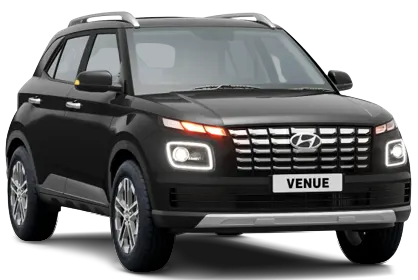
Hyundai Venue price starts at ₹ 7.53 Lakh and goes upto ₹ 12.72 Lakh (Avg. ex-showroom). Venue comes in 16 variants. Venue top model price in petrol is ₹ 12.72 Lakh. Venue base model price in diesel is ₹ 10.00 Lakh. Whereas the price of Venue automatic version starts from ₹ 10.00 Lakh.
Variants
The Hyundai Venue is available in E, S, S(O), S+, SX, and SX (O) variants.
Market introduction
The Hyundai Venue was first introduced in June 2019 whereas the facelift version was launched on 16 June, 2022.
Engine and Specification
The first one is the 1.2-litre naturally-aspirated petrol engine that puts out 82bhp and 114Nm of torque and is mated only to a five-speed manual gearbox. Next up is the potent 1.0-litre turbo-petrol mill that is paired with a seven-speed DCT and a six-speed clutchless manual transmission. This motor delivers 118bhp and 172Nm of peak torque. The DCT version also benefits from paddle shifters and three drive modes – Eco, Normal, and Sport.
The last one is the 1.5-litre oil-burner alternative that pushes out 99bhp and 240Nm of torque. While most of the competition offers an automatic transmission with their diesel powertrain, the choice on the Venue is limited to a six-speed manual gearbox.
Exterior
Visually, the new Venue is fitted with a new front grille with a small square pattern in chrome finish and black surrounds. The turn indicators are on either side of the bonnet while the headlamps are mounted on the reworked bumpers which now get new wider air inlets instead of fog lamps. Other changes include a chrome window line, a new dual-tone design for alloy wheels, and split tail lamps with a connecting light bar and revised graphics.
Interior
Inside, the cabin looks modern with the utilisation of black and beige colours on the dashboard, door pads, and seat upholstery. The new Hyundai Venue is also equipped with an air purifier, a digital instrument cluster, a four-spoke steering wheel, reclining rear seats, and an electrically-adjustable driver seat.
The touchscreen infotainment system of the Venue has been updated with support for Alexa and Google assistant in 10 regional languages. Other highlights include over 60 connected car features, automatic climate control, electric sunroof, push start/stop button, and cooled glovebox.
Colours
The Hyundai Venue is offered in six colours that include Fiery Red, Phantom Black, Denim Blue, Typhoon Silver, Titan Grey, and Polar White. The Fiery Red shade is also available with a dual-tone contrasting black roof.
Seating capacity
The Hyundai Venue can accommodate five passengers.
Pros:
- Ease of driving on offer
- Three different engine options
- Feature loaded
Cons:
- Isn't as big as rivals
- No diesel automatic on offer
- 1.2 petrol is weak on punch
|
MODELS / SPECIFICATIONS |
HYUNDAI VENUE |
|
ARAI Mileage |
18.14kmpl |
|
Engine Displacement (cc) |
998 |
|
Max Torque (nm@rpm) |
171.6Nm@1500-4000rpm |
|
Transmission Type |
Automatic |
|
Fuel Tank Capacity |
45 |
|
Max Power (bhp@rpm) |
118.35bhp@6000rpm |
|
Seating Capacity |
5 |
|
Boot Space (Litres) |
350 |
|
Body Type |
SUV |
|
Safety |
4 stars NCAP rating |
MARUTI SUZUKI VITARA BREZZA:
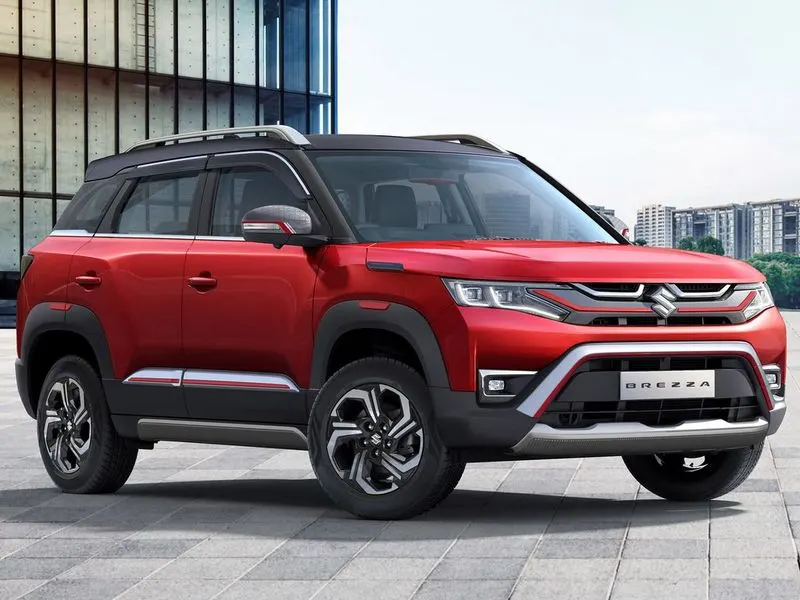
The Maruti Brezza price starts at ₹ 7.99 Lakh and goes up to ₹ 13.96 Lakh (Avg. ex-showroom). Brezza comes in 11 variants. Brezza top model price in petrol is ₹ 13.96 Lakh. Whereas the price of Brezza automatic version starts from ₹ 10.97 Lakh.
Variants
The new Maruti Suzuki Brezza is available in four variants including LXi, VXi, ZXi, and ZXi (O).
Market introduction
The 2022 Maruti Brezza was launched in India on 30 June.
Engine and specification
The new Maruti Suzuki Brezza is powered by a 1.5-litre K12C petrol engine producing 103bhp and 138Nm of torque. This motor is paired with six-speed manual and automatic units.
Exterior Design
On the outside, the 2022 Maruti Brezza features LED projector headlamps, twin L-shaped LED DRLs, a new grille with chrome inserts, fog lights, contrast-coloured skid plate, new front and rear bumpers, roof rails, new 16-inch dual-tone alloy wheels, blacked-out A, B, and C-pillars, wraparound LED tail lights, Brezza lettering on the boot lid, an integrated spoiler with a high-mounted stop lamp, and a shark-fin antenna.
Interiors and features
The interiors of the new Maruti Brezza come equipped with an electric sunroof, paddle shifters, Head-Up Display (HUD), Suzuki Connect telematics, a new nine-inch freestanding touchscreen infotainment system, a new flat-bottom steering wheel, six airbags, and ESP.
Colours
The Maruti Suzuki Brezza is available in six colours including Pearl Arctic White, Splendid Silver, Magma Grey, Sizzling Red, Brave Khakhi, and Exuberant Blue.
Seating capacity
The 2022 Maruti Brezza has a seating capacity of five occupants.
Pros:
- Peppy & efficient 1.5 petrol
- Good value for money
- Neutral ride, easy to drive
Cons:
- No more diesel option
- Rivals offer more space
- Design isn�t attractive as before
|
MODELS / SPECIFICATIONS |
MARUTI SUZUKI VITARA BREZZA |
|
ARAI Mileage |
18.76kmpl |
|
Engine Displacement (cc) |
1462 |
|
Max Torque (nm@rpm) |
138Nm@4400rpm |
|
Transmission Type |
Automatic |
|
Fuel Tank Capacity |
48 |
|
Max Power (bhp@rpm) |
103.26bhp@6000rpm |
|
Seating Capacity |
5 |
|
Boot Space (Litres) |
328 |
|
Body Type |
SUV |
|
Safety |
12.51/17 |
FORD ECO SPORT:
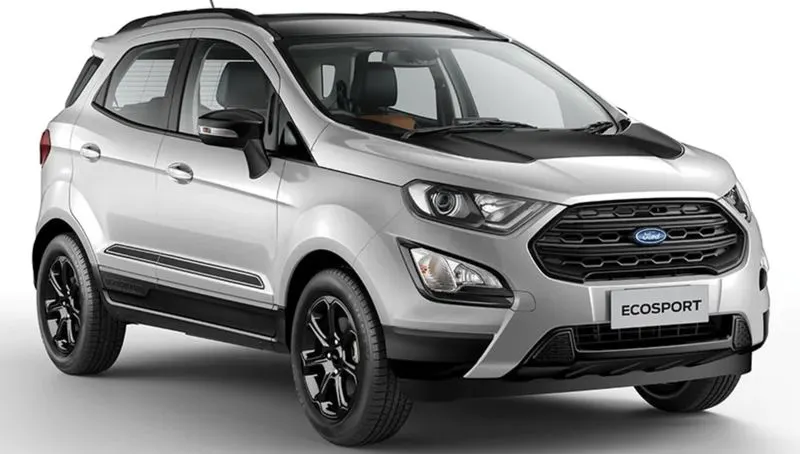
Ford has announced that it will not manufacture cars in India anymore. That said, the current lineup will be on sale till stocks last and the company will continue to offer support to existing Ford car owners.
Ford EcoSport Price: Ford has priced its sub-4m SUV between Rs 8.19 lakh and Rs 11.69 lakh (ex-showroom, Delhi).
Ford EcoSport Variants: It is available in six trims: Ambiente, Trend, Titanium, Titanium+, SE, and Sports.
Ford EcoSport Seating Capacity: The EcoSport is a five-seater.
Ford EcoSport Engine and Transmission: It gets 1.5-litre petrol (122PS/149Nm) and 1.5-litre diesel (100PS/215Nm) engines, both paired with a 5-speed MT as standard. The petrol also gets an optional 6-speed torque converter.
Ford EcoSport Features: Ford has equipped it with a sunroof, auto climate control, rain-sensing wipers, FordPass connected car tech, and (up to) a 9-inch touchscreen infotainment system with Android Auto and Apple CarPlay.
Ford EcoSport Safety: Standard safety features include dual front airbags, ABS with EBD, and rear parking sensors.
Pros:
- Build Quality
- Powerful and Responsive Engines
- Looks
- Driving Dynamics
- Long List of Safety Features
Cons:
- Not So VFM
- Feels Dated
- Stiff Suspension Setup
- Narrow Second Row
- Thick A-Pillar Causes Blind Spot
|
MODELS / SPECIFICATIONS |
FORD ECO SPORT |
|
ARAI Mileage |
21.7kmpl |
|
Engine Displacement (cc) |
1498 |
|
Max Torque (nm@rpm) |
215Nm@1750-2500rpm |
|
Transmission Type |
Manual |
|
Fuel Tank Capacity |
52 |
|
Max Power (bhp@rpm) |
98.63bhp@3750rpm |
|
Seating Capacity |
5 |
|
Boot Space (Litres) |
352 |
|
Body Type |
SUV |
|
Safety |
4 stars NCAP rating |
COMPARISON OF ABOVE CARS:
|
MODELS / SPECIFICATIONS |
TATA NEXON |
HYUNDAI VENUE |
MARUTI SUZUKI VITARA BREZZA |
FORD ECO SPORT |
|
0ARAI Mileage |
21.5 kmpl |
18.14kmpl |
18.76kmpl |
21.7kmpl |
|
Engine Displacement (cc) |
1497 |
998 |
1462 |
1498 |
|
Max Torque (nm@rpm) |
260Nm@1500-2750rpm |
171.6Nm@1500-4000rpm |
138Nm@4400rpm |
215Nm@1750-2500rpm |
|
Transmission Type |
Automatic |
Automatic |
Automatic |
Manual |
|
Fuel Tank Capacity |
44 |
45 |
48 |
52 |
|
Max Power (bhp@rpm) |
108.5bhp@4000rpm |
118.35bhp@6000rpm |
103.26bhp@6000rpm |
98.63bhp@3750rpm |
|
Seating Capacity |
5 |
5 |
5 |
5 |
|
Boot Space (Litres) |
350 |
350 |
328 |
352 |
|
Body Type |
SUV |
SUV |
SUV |
SUV |
|
Safety |
16.06/17 |
4 stars NCAP rating |
12.51/17 |
4 stars NCAP rating |
CONCLUSION:
The suggestion of the best automotive car for Mr. D.S. Pughazhyendhii's family is TATA NEXON. Among all the comparison it is suitable And the Five star G-NCAP Safety and it has more power (BHP),BS6 Complaint and spacious cabin compared to rivals. Over all it has good performance. As told Mr. D.S. Pughazhyyendhii is fond of big cars so i have compared SUV's to him.
References:
- cardekho.com
- carwala.com
- Wikipedia