RIB DESIGN
AIM: To create ribs on the coin holder.
SOFTWARE USED: CatiaV5
INTRODUCTION:
Ribs are thin wall-like structures that add support and rigidity to injection molded parts. They are thinner than primary walls and are used to support these walls, as well as bosses, by running perpendicular to these structures. Ribs are often used to replace thick wall sections to avoid sink marks, warp, and voids. By placing ribs in a load bearing direction, such as long unsupported stretches of your part, instead of making a section thicker, you can retain the support and rigidity you want and eliminate problems caused by thick walls.
DIMENSIONS:
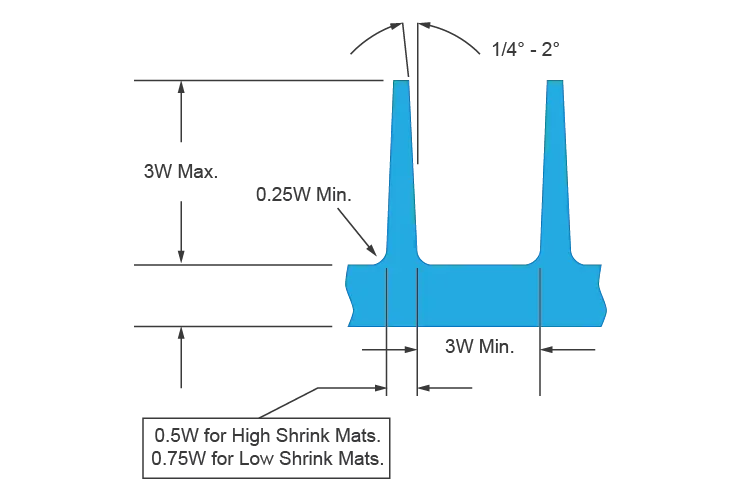
1.Rib thickness should be 50 - 75% of the wall thickness.
2.Fillet radius should be 40 - 60% of the rib thickness.
3.Rib root thickness should not be more than 25% greater than the wall thickness.
4.Rib depth should not be more than 5 times the rib thickness.
5.Taper ribs for mould release.
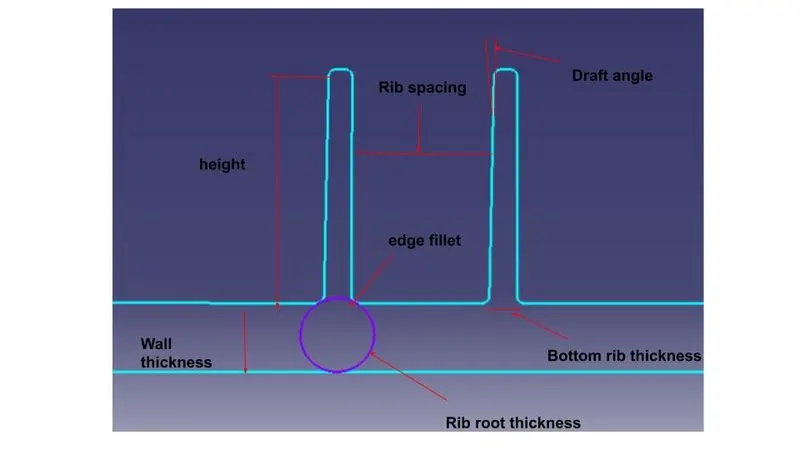
RIB HEIGHT:
Rib height should not exceed 3 times the thickness of the primary wall. This height cap is recommended because if your ribs are too tall, they can break during use or ejection from the mold. If damage occurs during ejection of tall ribs, it is likely due to draft angles tapering them to slivers at their tips. Ideally, you want to keep your ribs as short as possible while still being functional.
|
RIB HEIGHT: 3*W (WALL THICKNESS) |
An additional problem that this combination of tall ribs and draft causes is that the plastic may not be able to reach the tip of the rib. This can cause voids if the plastic can’t flow into the very tip of the rib. Deep ribs can also be expensive to tool. To avoid these problems, you can use several short ribs in place of one tall rib.
RIB WIDTH:
Thick ribs can result in huge problems in your part. If a rib is too thick, the point where it attaches to the primary wall or boss will be thickened as well. This can easily cause sink marks, warp, and voids where there is this excess material. In particular, sinks are visible indicators of bad design, which will affect the appearance of your finished part. If severe enough, sinks and voids can reduce a part’s strength as they become concentrated centres of stress. To prevent these problems, it is recommended that your rib’s width fall between 0.5 and 0.75 times the primary wall’s thickness.
|
RIB WIDTH:0.5-0.75*W (WALL THICKNESS) |
Top rib thickness should be minimum of 0.75mm.
RIB SPACING:
Increase the number of ribs rather than their height in order to increase stiffness. Ribs should be spaced a minimum of two times the nominal wall thickness apart from one another.
|
RIB SPACING: MINIMUM 2*W (WALL THICKNESS) |
RIB DRAFT:
A minimum 1-degree draft will ensure that they release from the tool during molding.
|
RIB DRAFT:(0.5-1) DEGREE |
RIB RADII OR FILLET:
Radii at feature intersections should be a minimum of 0.25 of nominal wall thickness to increase rib strength.
|
RIB RADII OR FILLET:0.25W (WALL THICKNESS) |
RIB CORING:
Core thick ribs from the back or below to create a blank area and thinner rib walls. This will help mitigate cosmetic sinks.
COMPONENT:
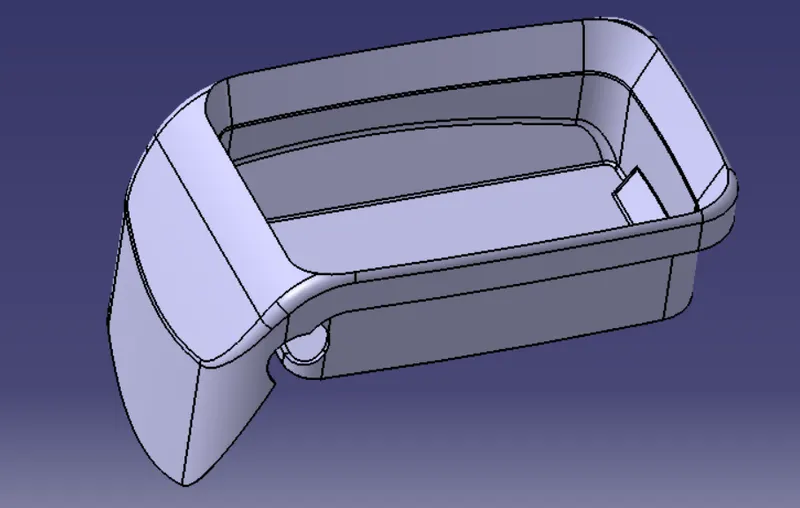
RIBS ON THE COIN HOLDER:
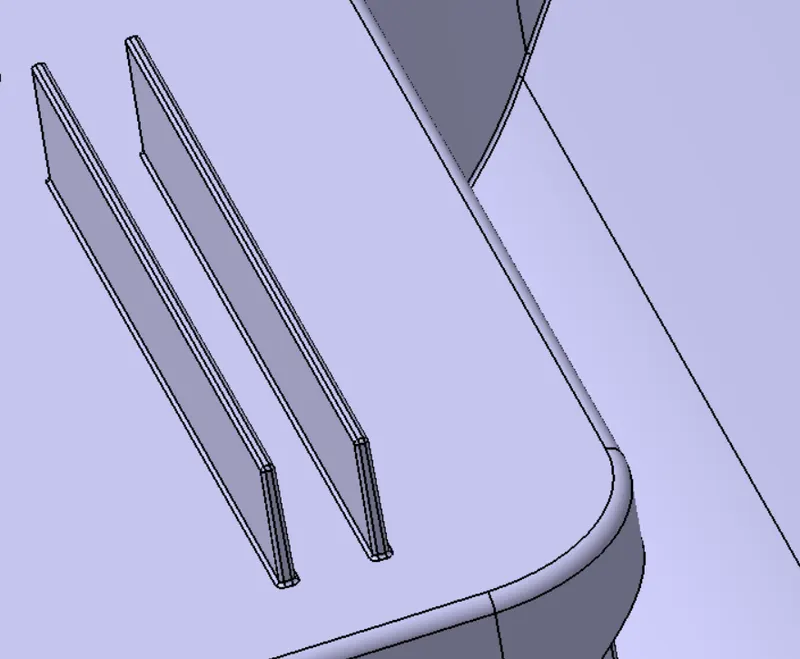
DESIGN TREE:
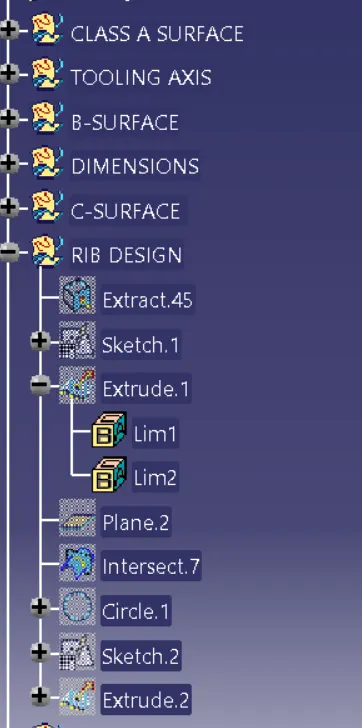
CONCLUSION:
The rib has been designed following the design rules/principles.