QUICK RETURN MECHANISM AND CV JOINT ASSEMBLY
OBJECTIVE: To create quick return mechanism and CV joint parts in part work bench or generative work bench and assemble them following all the guidelines.
SOFTWARE USED: CATIA V5.
INTRODUCTION:
a) QUICK RETURN MECHANISM:
A quick return mechanism is an apparatus to produce a reciprocating motion in which the time taken for travel in return stroke is less than in the forward stroke. It is driven by a circular motion source (typically a motor of some sort) and uses a system of links with three turning pairs and a sliding pair.
There are three types of quick return mechanism
- Hydraulic drive
- Crank and slotted link mechanism
- Whitworth mechanism
A quick return mechanism is a mechanism which produces a reciprocal effect so that the system takes less time in the return stroke while comparing with forward stroke. In the quick-return mechanism, a circular movement like the crank and lever mechanism is converted into reciprocal movement but the return time is different from the forward moment. In several applications, this process is used. Some of them are shaper, slotter, screw-press, mechanical drive, etc. The time required for cutting is reduced with the assistance of a quick return mechanism.
b) CV JOINT:
Constant-velocity joints (also known as homokinetic or CV joints) allow a drive shaft to transmit power through a variable angle, at constant rotational speed, without an appreciable increase in friction or play. They are mainly used in front wheel drive vehicles. Modern rear wheel drive cars with independent rear suspension typically use CV joints at the ends of the rear axle halfshafts and increasingly use them on the drive shaft.
All front-wheel drive cars have Constant Velocity joints or CV joints on both ends of the drive shafts (half shafts). Inner CV joints connect the drive shafts to the transmission, while the outer CV joints connect the drive shafts to the wheels. Many rear-wheel drive and four-wheel drive cars as well as trucks also have CV joints.
The CV joints are needed to transfer the torque from the transmission to the drive wheels at a constant speed, while accommodating the up-and-down motion of the suspension. In front-wheel drive cars, CV joints deliver the torque to the front wheels during turns. There are two most commonly used types of CV joints: a ball-type and a tripod-type. In front-wheel drive cars, ball-type CV joints are used on the outer side of the drive shafts (outer CV joints), while the tripod-type CV joints are mostly used on the inner side (inner CV joints).
PROCEDURE:
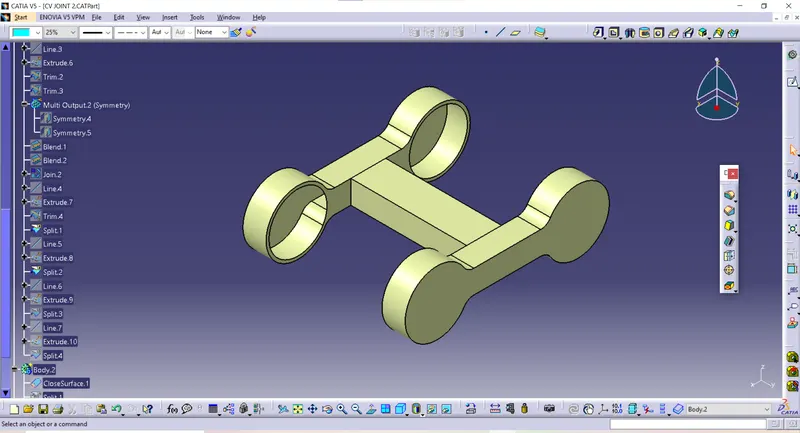
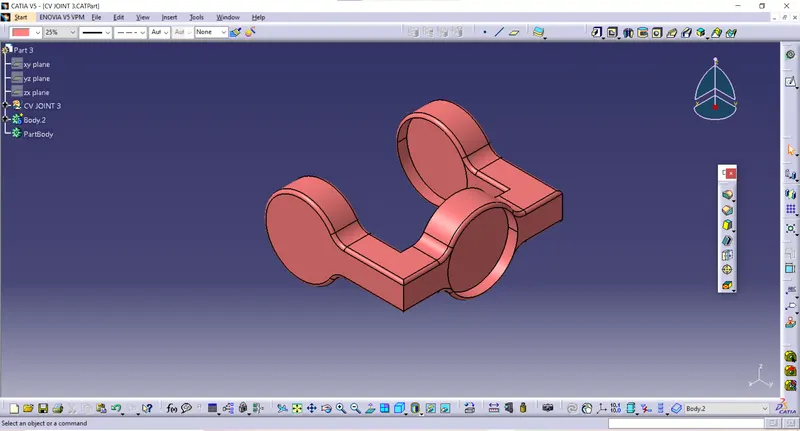
1)First create all the parts of QUICK RETURN MECHANISM as well as of CV JOINT.
2)Create all the parts separately in the part work bench or generative work bench.
3)First create the sketch of the part in sketching work bench and make sure that the sketch is Iso constraint.
4)Then pad that sketch using pad feature in part work bench or extrude and trim accordingly in generative work bench.
5)Use Boolean operations and add or remove to obtain the required output.
6)While creating the parts in generative work bench make sure that you close surface the part you created.
7)Create all the parts and save the CAT. Part of all the parts that you have created separately.
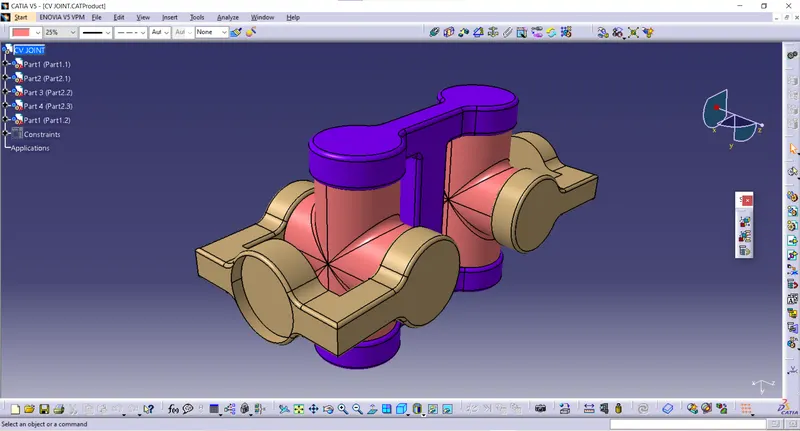
8)Then go to the assembly work bench and open the all the parts that you created using “open existing component” feature.
9)Then assemble them accordingly using the constraint tool box and move the parts in various directions as you need using move tool bar.

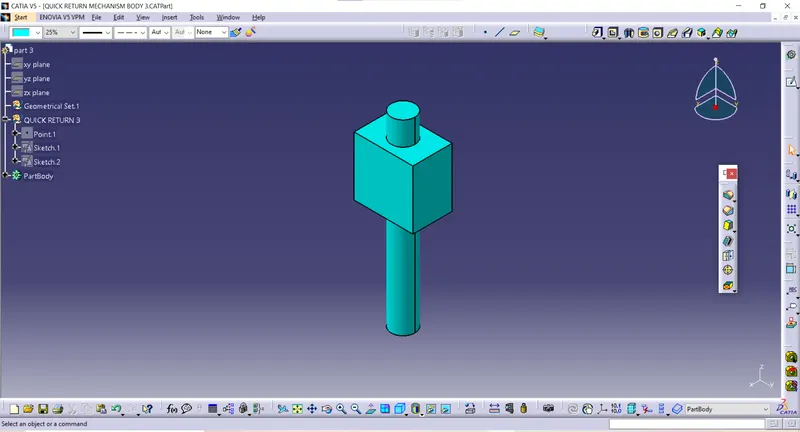
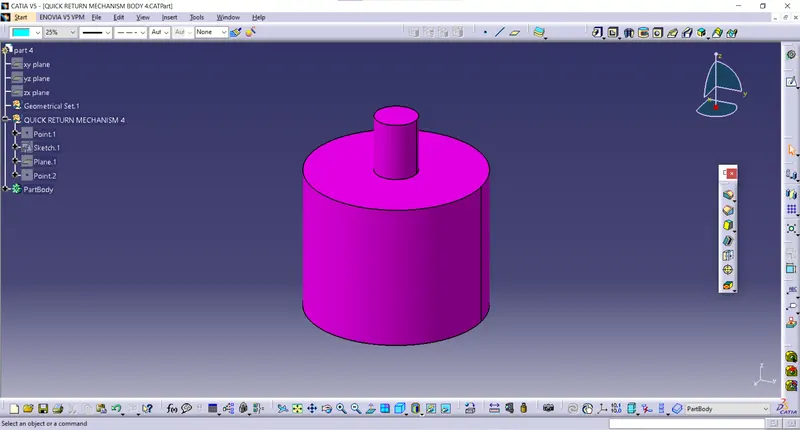
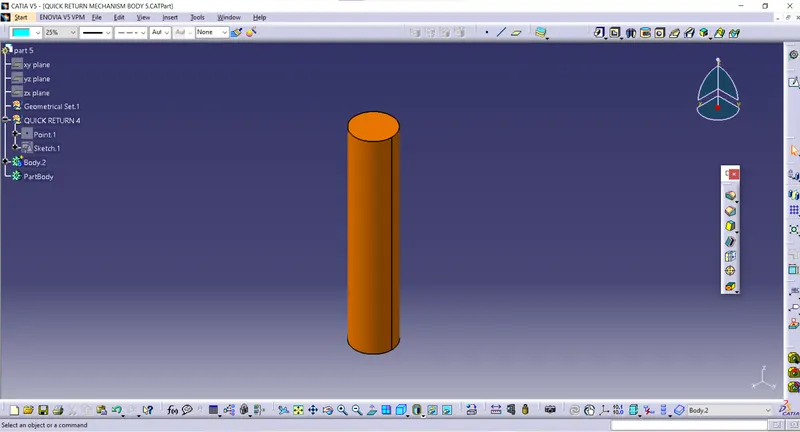
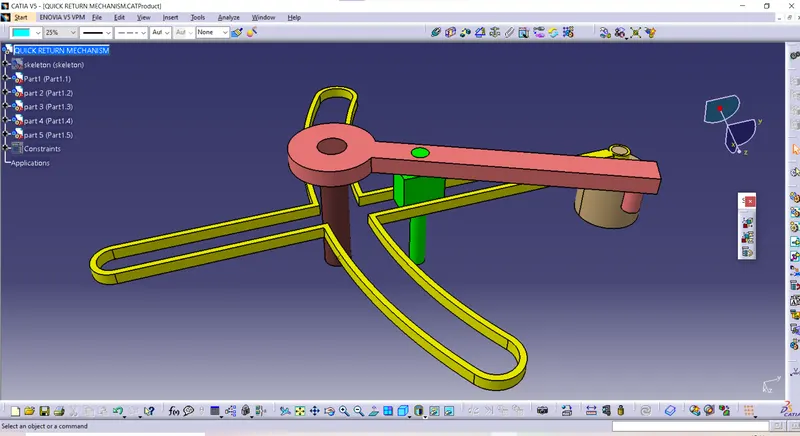
PARTS OF QUICK RETURN MECHANISM:
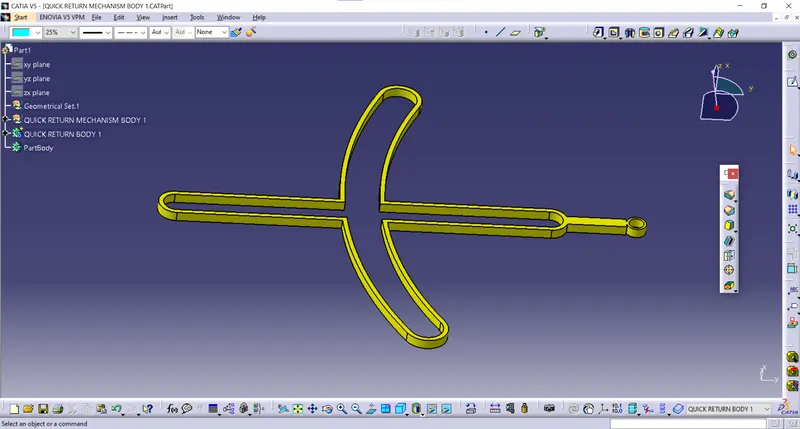
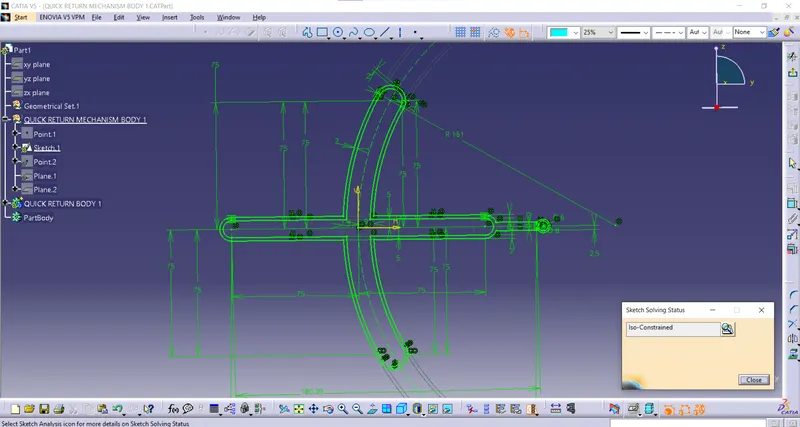
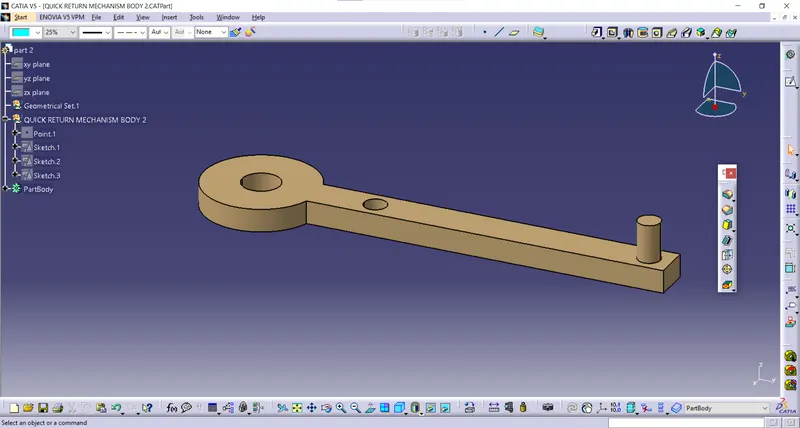
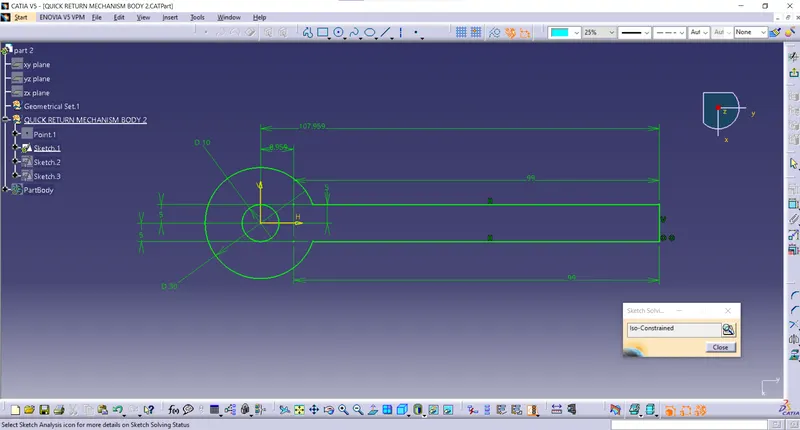
PARTS OF CV JOINT:
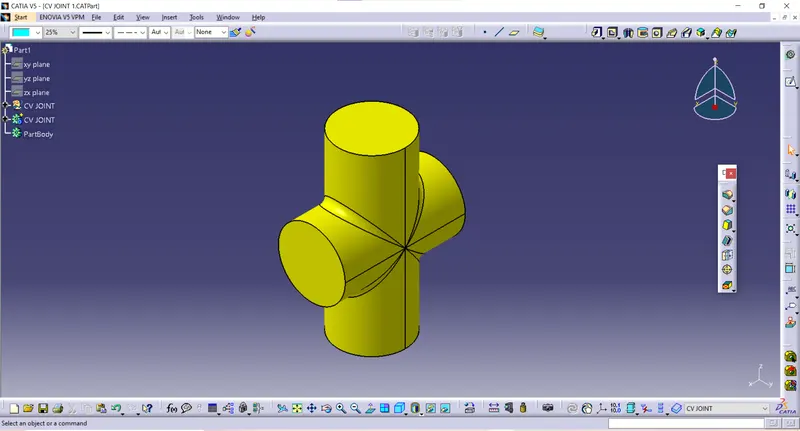
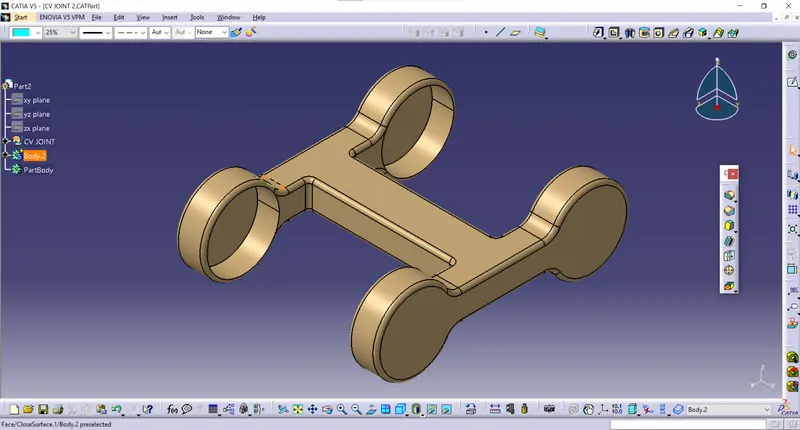
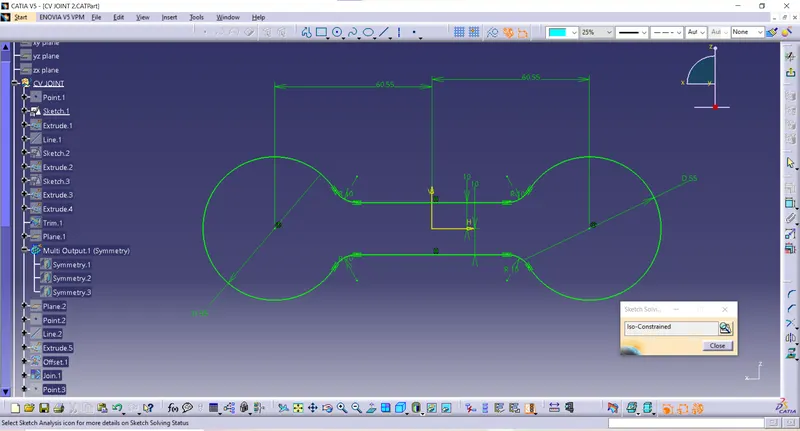
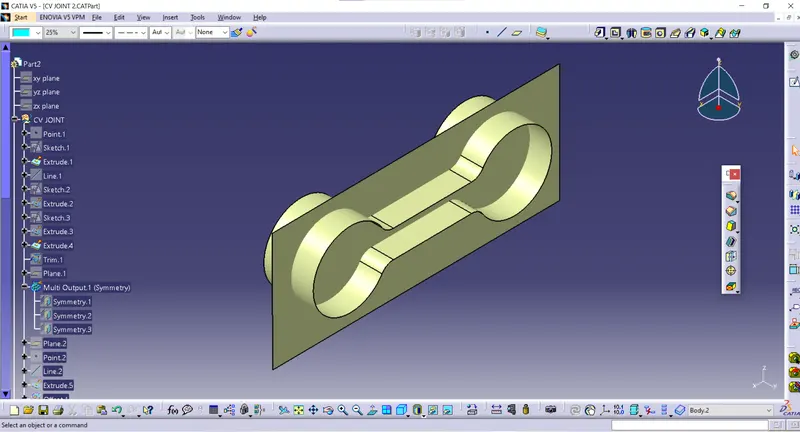
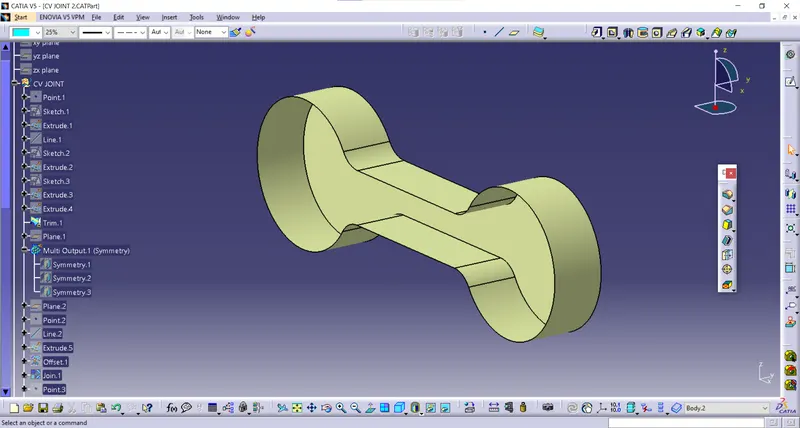
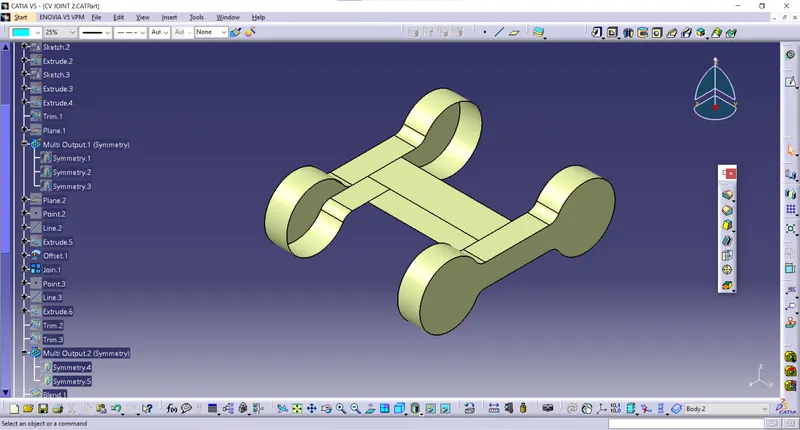
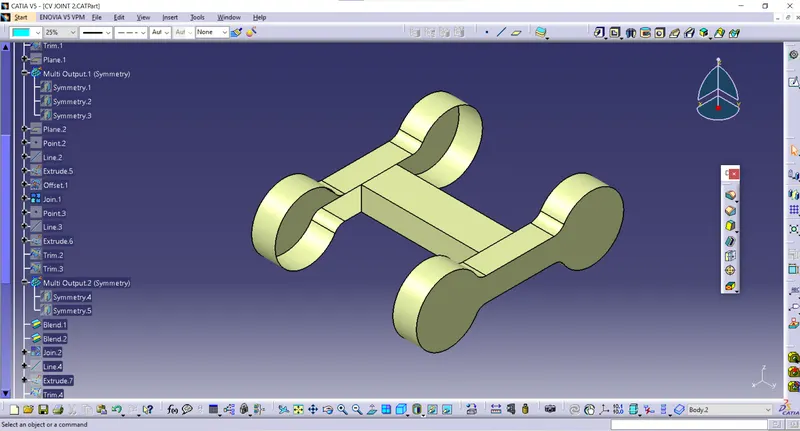
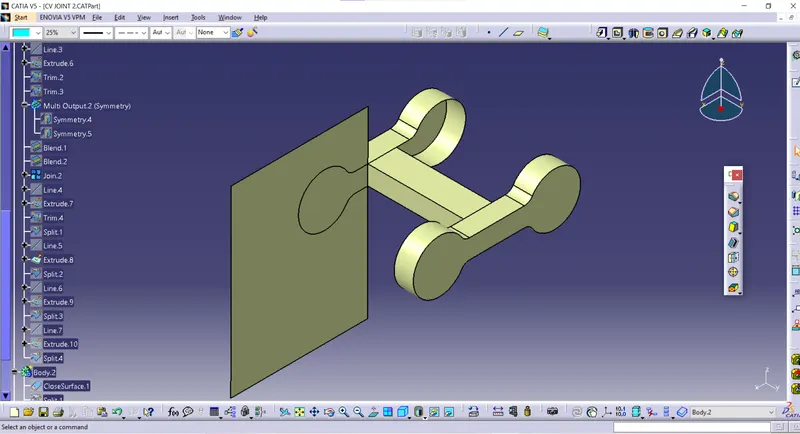
COMMANDS USED:
1.PAD
2.UNION TRIM
3.EXTRUDE
4.EXTRAPOLATE
5.TRIM
6.SPLIT
7.CLOSE SURFACE
8.COINCIDE
9.CONSTRAINT
10.MOVE
CONCLUSION:
The quick return mechanism and cv joint assembly has been done following all the guidelines.