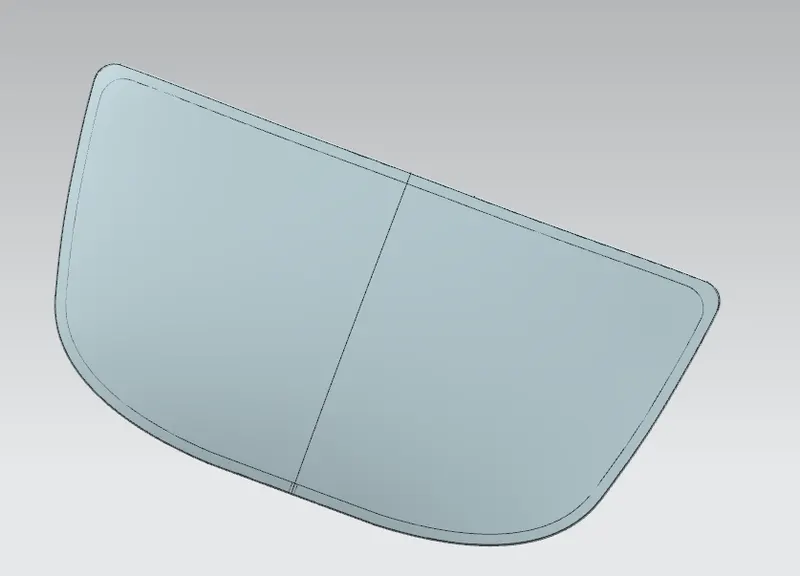
Create the hood inner panel and its assembly as per the given hood outer panel surface and master-section
REPORT AND PRESENTATION OF HOOD DESIGN
AIM : Create the hood inner panel and its assembly as per the given hood outer panel and master-section.
Objective :
- To create Hood inner panel as per the master section, and design consideration.
- To create complete Hood assembly with proper positioning of Hinge, Latch and Striker.
INTRODUCTION :
HOOD :
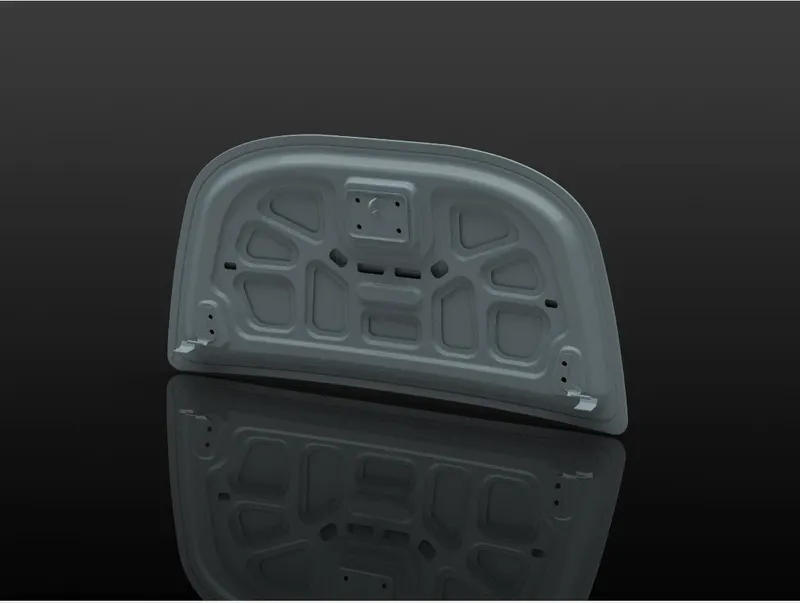
- The Hood or Bonnet is an opening body panel that covers the engine in a front-engine vehicle.
- The hood is also considered as another type of door in a vehicle as it consist of an outer panel and inner panel provides strength while the outer panel function as the metal cover.
- The hood is that part of car or any vehicle that desipates the energy outside the car bosy or vehicle body rather than inside car body.
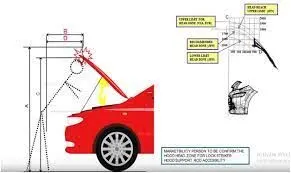
- Hood Opening Angle : The Hood opening angle is that angle which define how much of car hood is open. While designing of hood the we have to decide the opening angel of hood. The opening angel of the hood is varries from zone to zone.
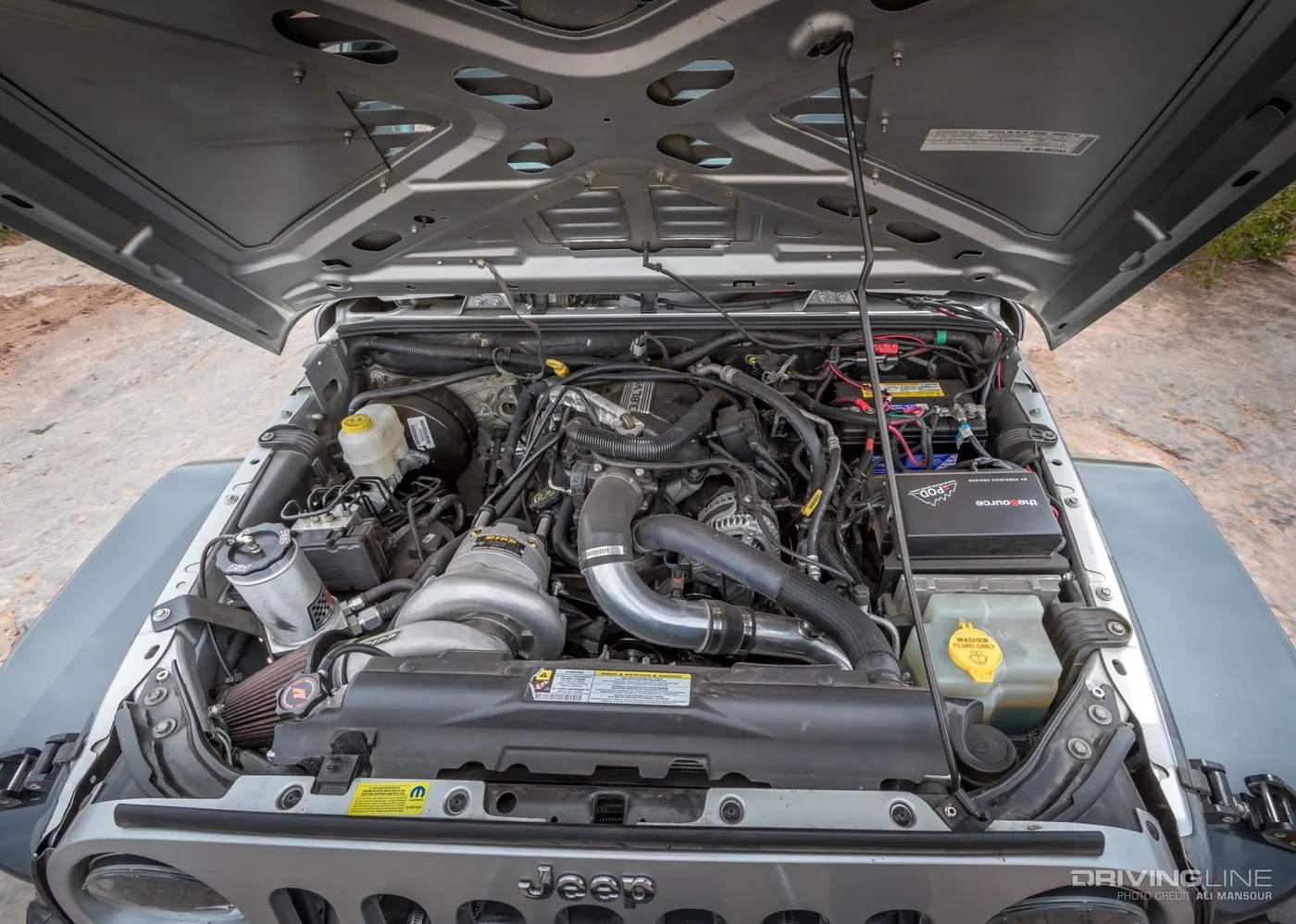
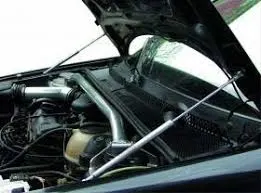
- Hood Stay : A device for supporting the engine hood of a motor vehicle in its open position. There are mainly two type of Hood stay - 1) Support rod 2) Gas stay.
1.SUPPORT ROD :
2. GAS STAY
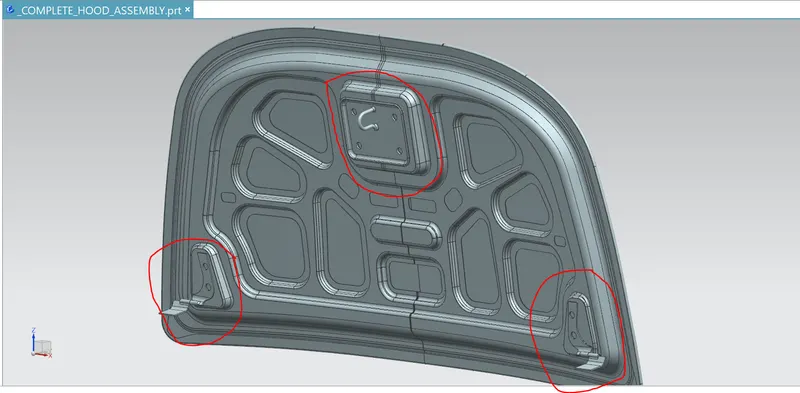
- Re-Inforcement : It is addition of material to improve or compenset the strength of part which loose in addition of part like striker and hinge.
GIVEN DATA :
Hood thickness data :
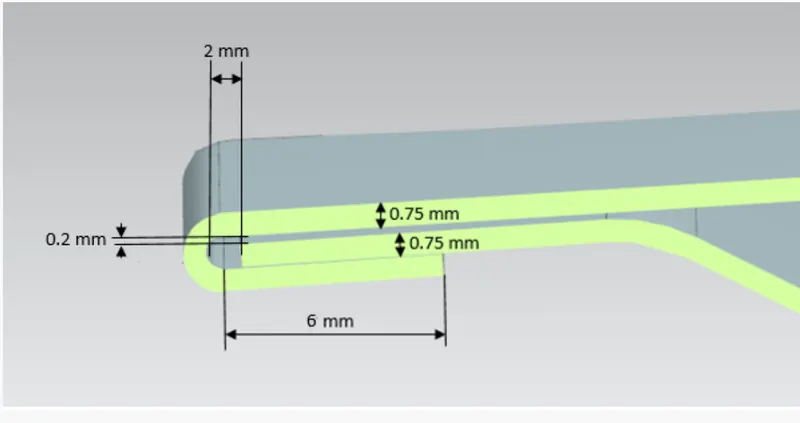
- Outer Panel Thickness: 0.75 mm
- Inner Panel thickness : 0.75 mm
- Re-Inforcement thickness : 1.5 mm
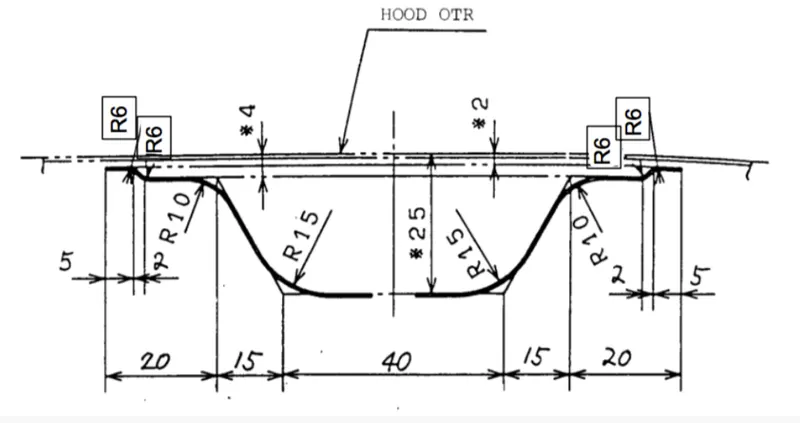
Master Sketch :
Hemming data :
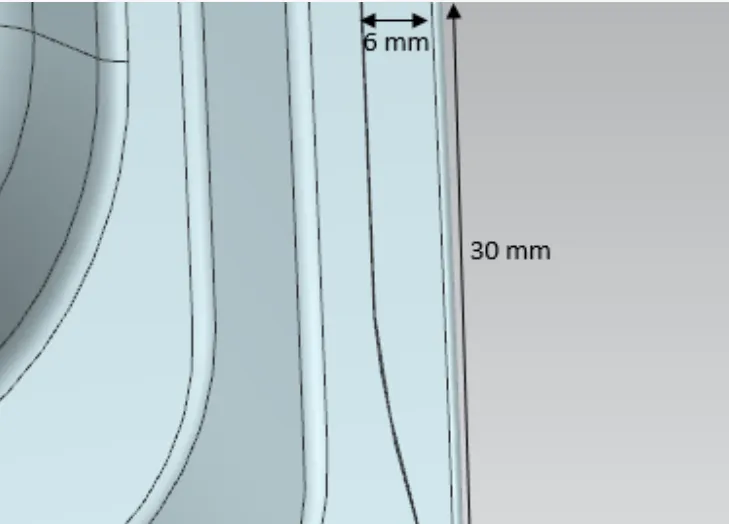
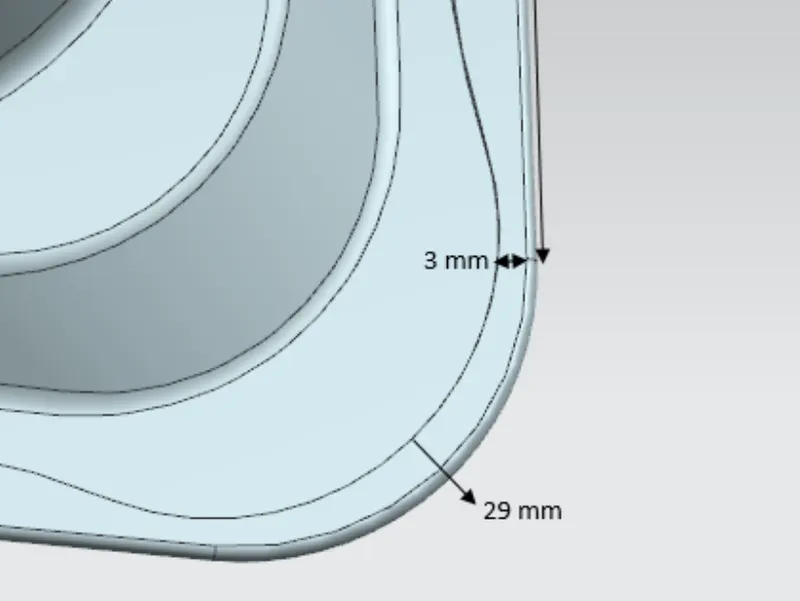
Relief rear section :
Guideline for good Mnufacturing :
- Minimum draft of 7 degrees given for sheet metal.
- Sharp edges are avoided for easy manufacturing.
- complex shape is avoided.
SAFETY CONSIDERATION :
- Pedestraine safety : In japan and Europe regulation have come into effect that the place a limit on the severity of pedestrain head injury when struck by a motor vehicle. This is leading to more advanced hood design, as evidence by multicone hood inner panel designs, othere changes are being made to use the hood as an active structureand push its surface several centimeter away from the hard motor componenet during a pedestrain crash.
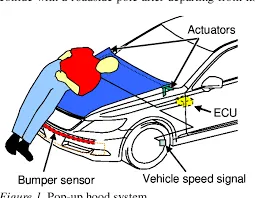
- Protecting Head : The hood in most vehicle is usually fabricated from sheet metal, which is complaint energy obsorbing structure which poses a comparatively small threat. Most serious injuries occures when there is insufficient clearance between the hood and the stiff underlying engine component. A gap of approximately 10 cm is usually enough to allow the pedestrain head to have a controlled decleratiobn and a significantly reduce risk of death.
- Wrap Around Distance (WAD) : When the car crashes on the pedestrain the whole body wraps around the front shape of the car, and the head impact on the bonnet or the windscreen. The distance at which the head impact on the car from the ground is mentioned as Wrap Around Distance (WAD).
NOISE VIBRATION HARSHNESS (NVH) :
Noise Vibration harshness (NVH)is the study and modification of the noise and vibration characteristic of the vehicle, perticuarly cars and trucks. to improves NVH, mastic sealent where provided on the inner panel. Here mastic panel plays a major role to avoid noise and vibration into cabin.
Deep Drawing :
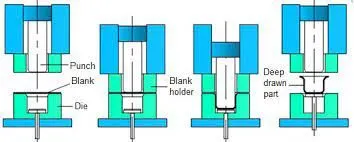
Deep drawing is a sheet metal formal process in which a sheet metal blank is radially drawn into a forming die by the mechanical action of a punch. It is tjus a shape transformation process with material retention. The process is consridered "Deep Drawing" when the depth of the drawn part exceeds its diameter.
Embossing :
Embossing is a stamping process for producing raised or sunken design or relief in sheet metal. This process can be made by means of matched male and emale roller dies, or by passing sheet or astrip of metal between rolls of the desired pattern, theoretically with no change in metal thickness, or by passing sheet or a strip of metal between rolls of the desired pattern.
Mastic Sealent :
A mastic sealent is a type of liquid sealent that curea in an elastic state, thus making it flexible while holding the bond of the surface that has attached together. It adheres to just about any material making an all-purpose type of sealent.

Position of Striker and Hinge :
For the proper opening and closing of the hood, the striker should be perpendicular of the hood. For this, hinge is assembled at its position, Once it is placed, hinge axis is drawn.
Latch Trajectory :
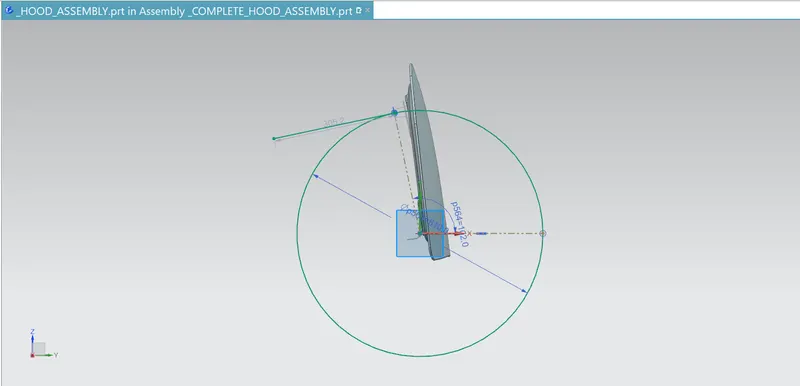
The latch trajectory shows the path of the striker when the hood is opened and closed on a vehicle.
ISOMETRIC VIEW :
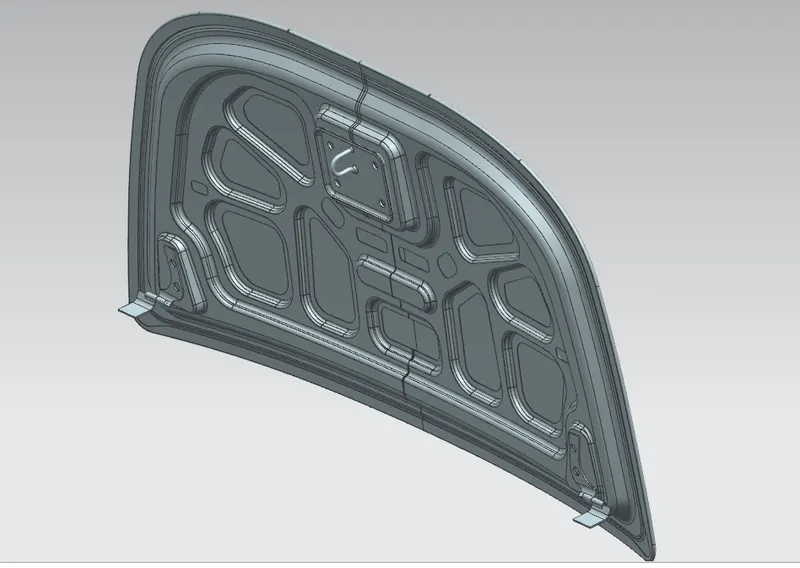
FRONT VIEW :
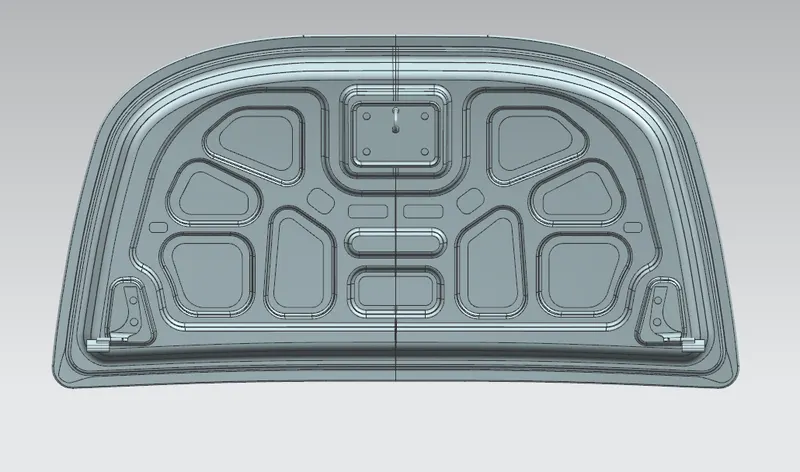
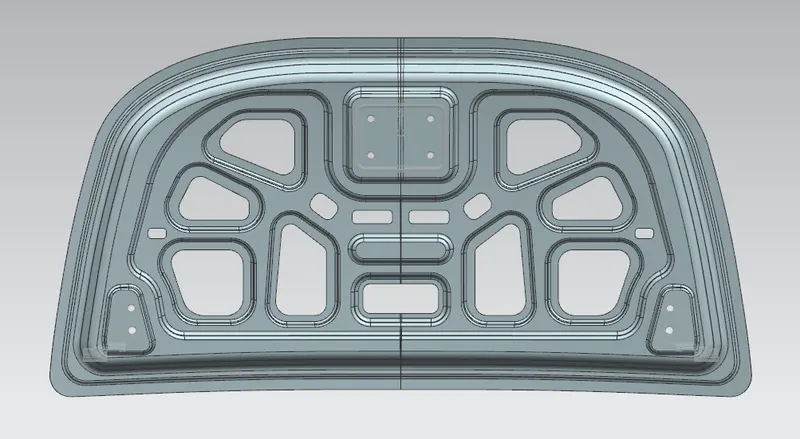
SIDE VIEW :
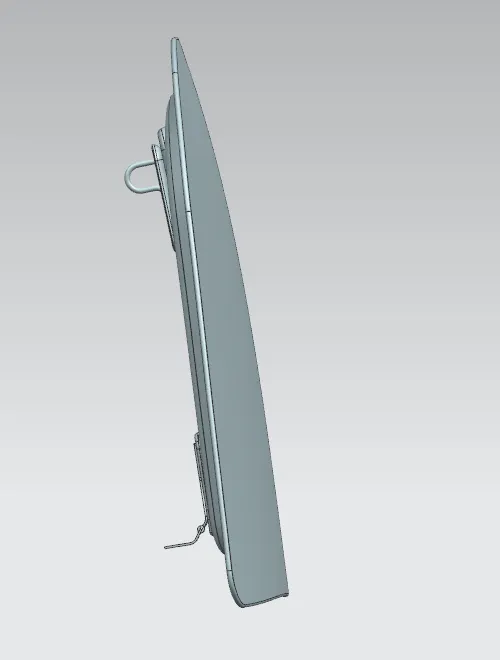
TOP VIEW :
FINAL PART :