Fender Design
FENDER:
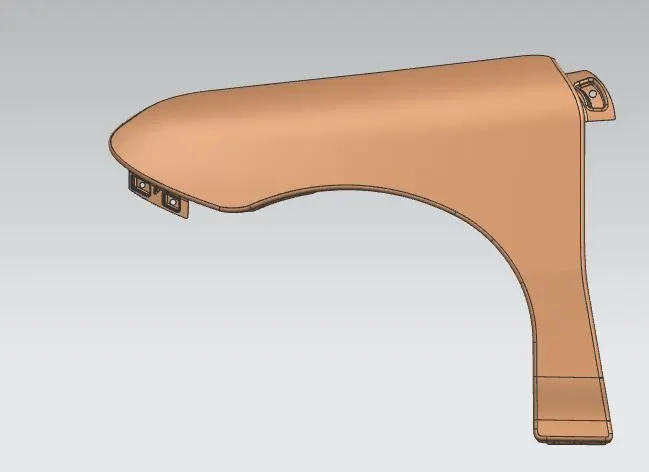
The car fender covers the wheel. It’s a prominent part, especially in the front of older vehicles. The design is usually flatter in modern cars, lying against the frame. The purpose of the fender is to hold back debris kicked up by the tires. When the tire rotates, rocks, debris, dust and water are all picked up from the road. The tires throw these materials, leading to impact to nearby objects or an accident. However, fenders prevent these items from being thrown away from the vehicle.
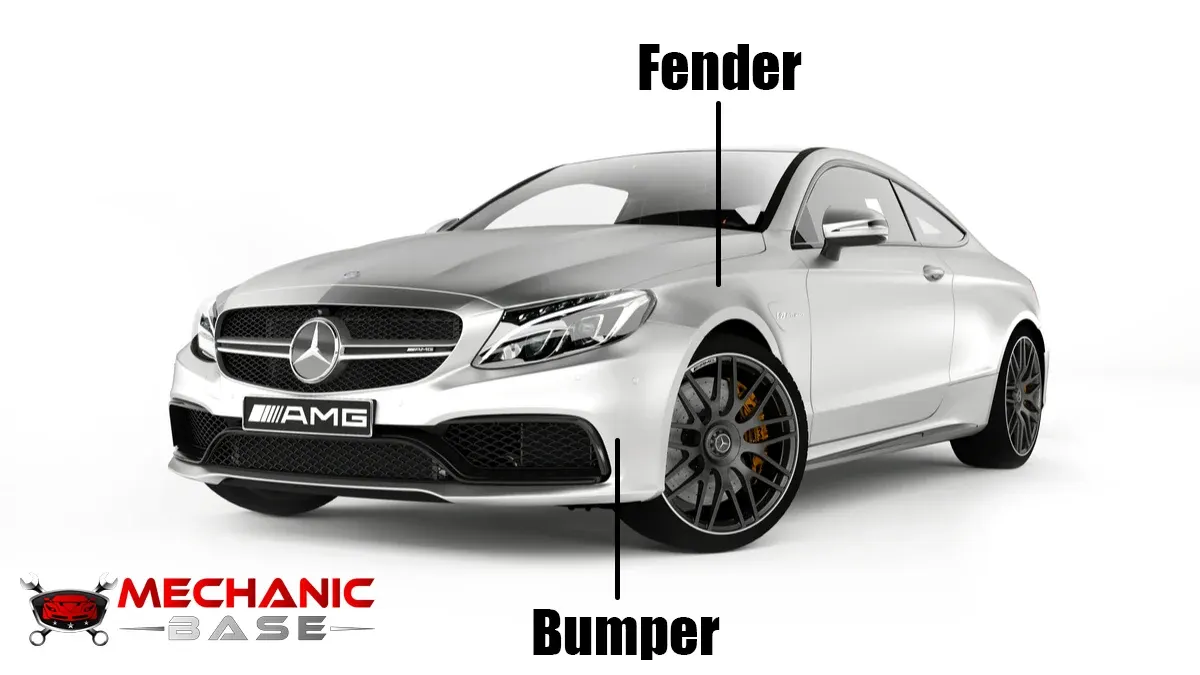
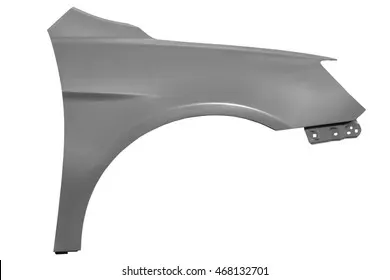
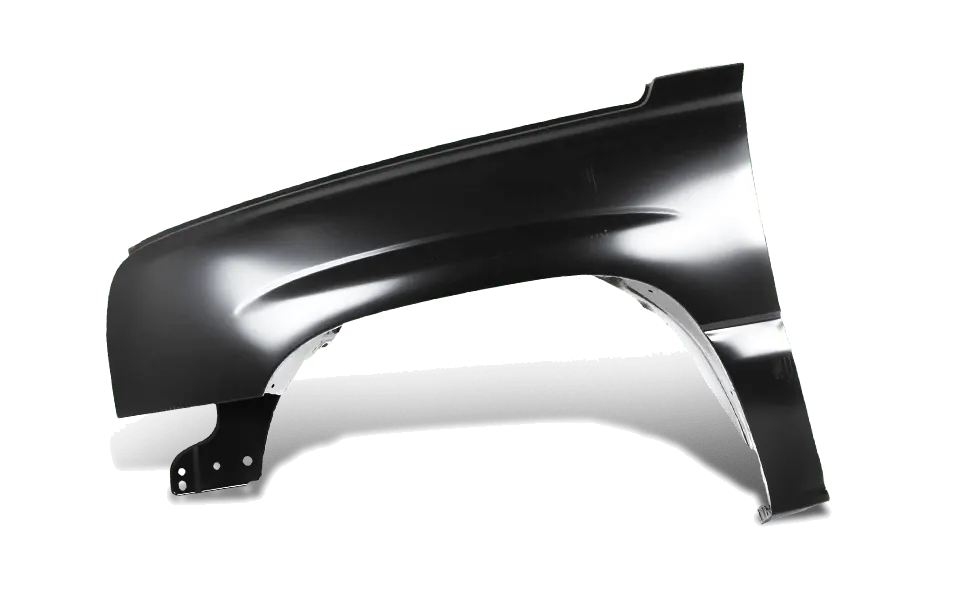
You can find a long fender on some classic cars that’s welded on. It runs the entire length of the vehicle from the front to the back. Today, cars have separate fenders for the front and back of the vehicle. Fenders can be designed from numerous materials. You can find some built from ABS, a high-strength plastic. There are also some designs made from a metallic material.
USES OF FENDER :
- Get other vehicles or pedestrians on the roadside dirty.
- Hurt pedestrians.
- Scratch the bodies of other vehicles.
- Cause minor, and even major damage to other vehicles.
Car Fender Pros:
The fender is responsible for protecting the body of the car. If debris could flow freely from the moving tires, a lot more body damage would occur, requiring repairs. The fender is the shield that protects both your car and others near you on the road.The fender also helps to keep the car from getting too messy. Because the fender blocks dust and mud from being sprayed from the tires, you will need to clean your car less frequently.
On top of that, the vehicle fenders have such a beautiful appearance, perfectly complementing your vehicle's style. When perfectly matched, the fenders flow seamlessly with the rest of its appearance.
Car Fender Cons:
If a car repair occurs and the fender isn’t put on the vehicle properly, you will notice the trouble. It has a dramatic impact on the way the vehicle looks. The protruding fender will draw attention, especially if the color isn’t matched perfectly.
Oversize fenders can also impact the aerodynamics of the car. If you are driving at higher speeds, there could be higher resistance that could create a level of instability.
If the fenders are set too low, they can start to brush into the wheels. This can create noise and damage to the fenders over time.
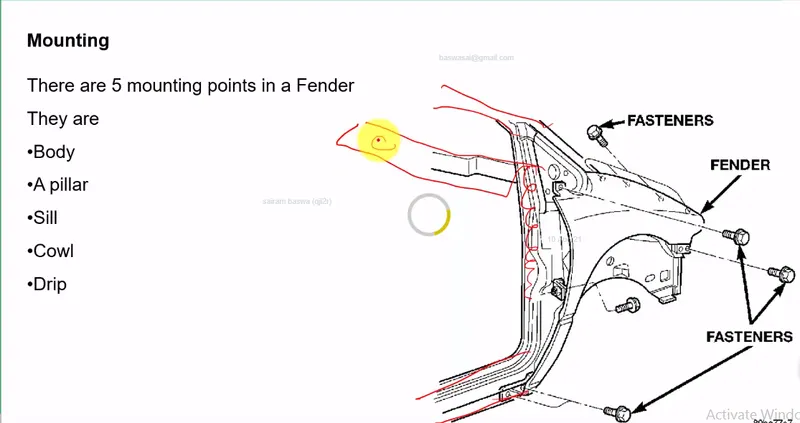
There are 5 mounting points in a fender,They are,
- Body
- a pillar
- Sill
- Cowl
- Drip
MANIFACUTRING PROCESS OF FENDER
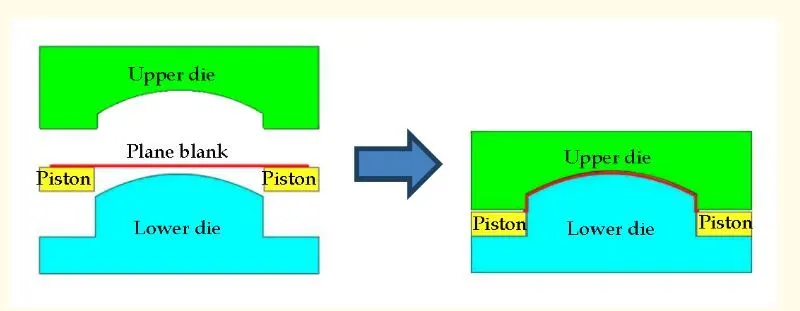
The manufacturing process includes the following steps that firstly, unfolding and shearing are carried out on a plate, wherein a proper cold roll specification is selected at first, a cold roll is unfolded, and then the unfolded cold roll is sheared to an iron plate of the corresponding size according to production material specifications; secondly, oil pressing and punching are carried out, wherein the iron plate is extended at first, then side shearing and punching are conducted on the iron plate, folding and shaping are carried out on the iron plate, and finally reshaping is carried out on the iron plate; thirdly, small first parts of the fender are machined, wherein first of all, the iron plate is punched to a needed outer contour blank, then the iron plate completing the outer contour blank is further shaped, and the iron plate is punched at last; fourthly, installation and welding of a metal plate are conducted. The manufacturing process for the car fender is simple and high in production efficiency; a body of the fender and the small parts can be separately machined, so waiting time is shortened; working efficiency of production is improved.
Design Parameters
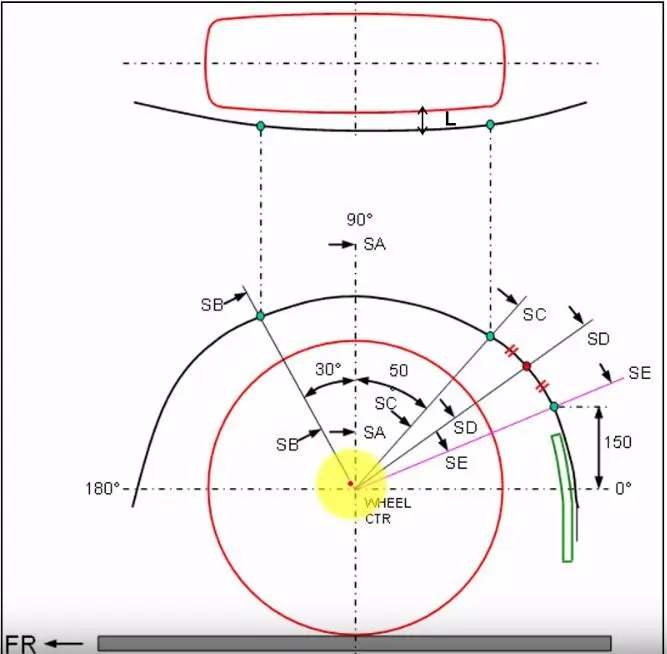
For the European requlations the measure CL L at sections SA-SA- SB-SB SC-SC SD-SD SE-SE and produce CL check chart to validate.At all five sectios the CL L value should be greater than 10 mm to the satisfy the European regulations.Wheel guard reqmt ; the value of 'a' shall be more than 5 mm at a line 30 forward and 50 rearward from the central vertical axis of axis of wheel. The thikness of the fender is 0.75mm
TYPES OF FENDER:
There are mainly two types of fenders :
1. Half bumper type
This half bumper type is used for mainly cost and material cutting purpose as this type is also provides ease of manufacturing and the strength is also improved for half bumper type fender.
2. Full bumper type
The full bumper type model is used in the olden days this creates much wastage of material and the unnecessery cost is increased.
INPUT DESIGN PARAMETERS:
MOUNTINGS :
DESIGN OF DRIP :
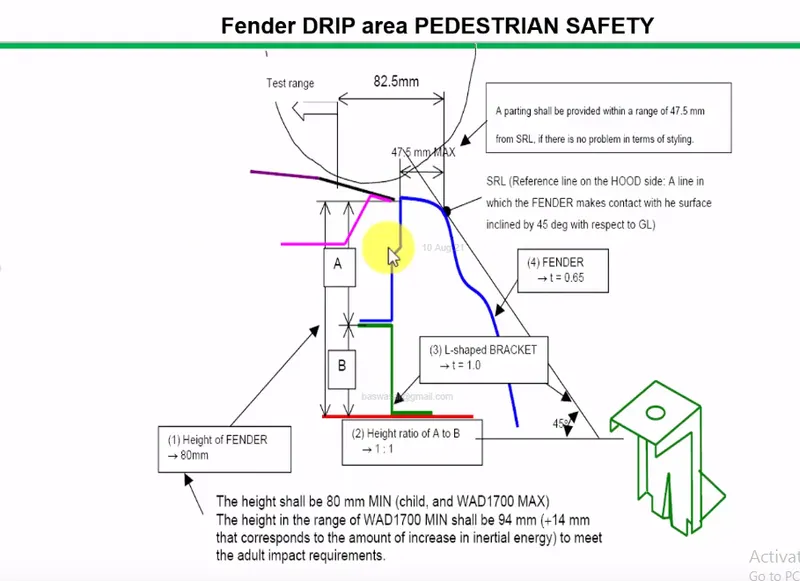
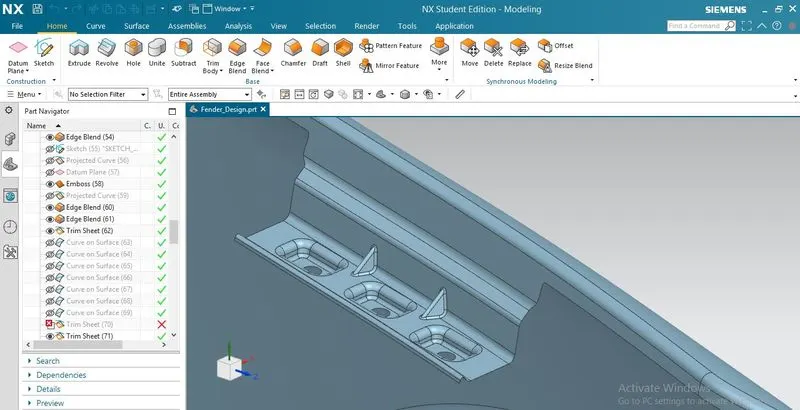
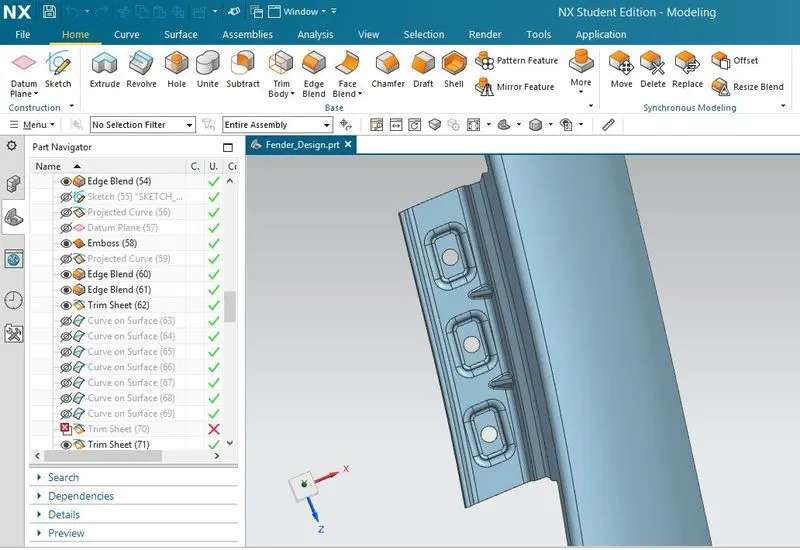
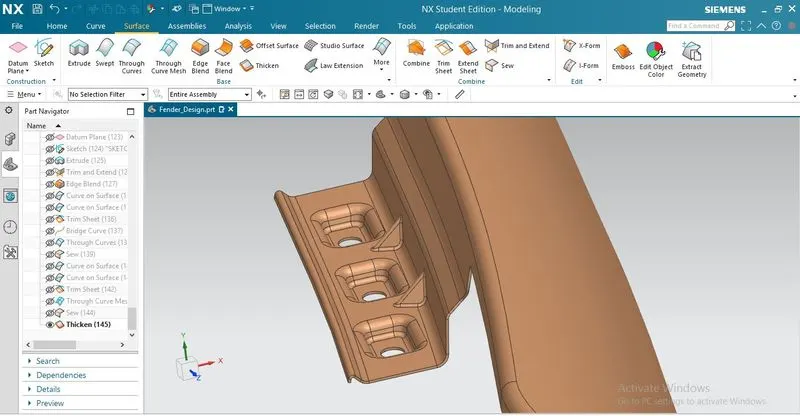
- The curve selection command is used for creating curves on the surface of flange to trim the extra sheet metal.
- The position is considered as 200 mm from cowl and 150 mm from headlight position.
- The flange should be about 7 degree, then 40 degree down and 5 degree down which should be total length of 40 mm or less from top of fender.
- Then the flat length of 25 mm is given.
- The last projection is followed as per dimensions using pythogrous theorem.
- Then the flange holes were created for mouting points.
A-PILLAR MOUNT DESIGN :
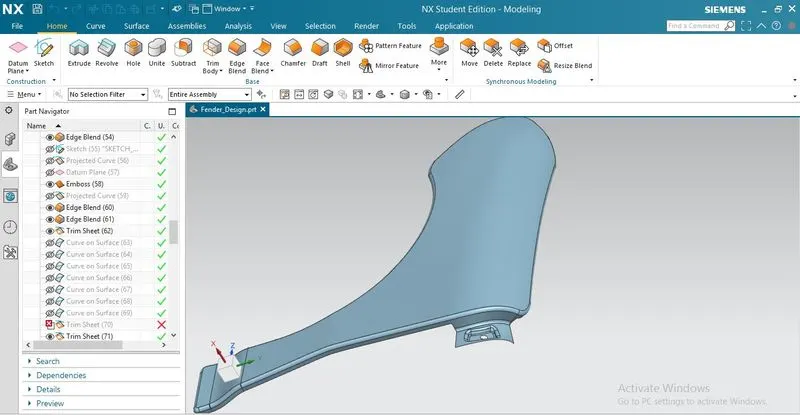
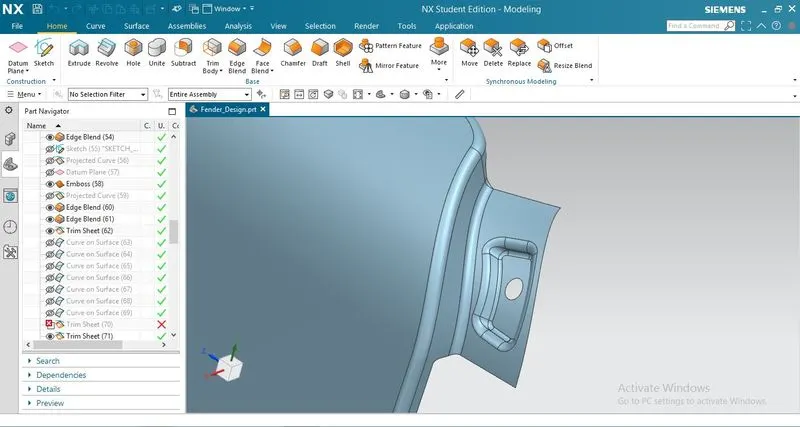
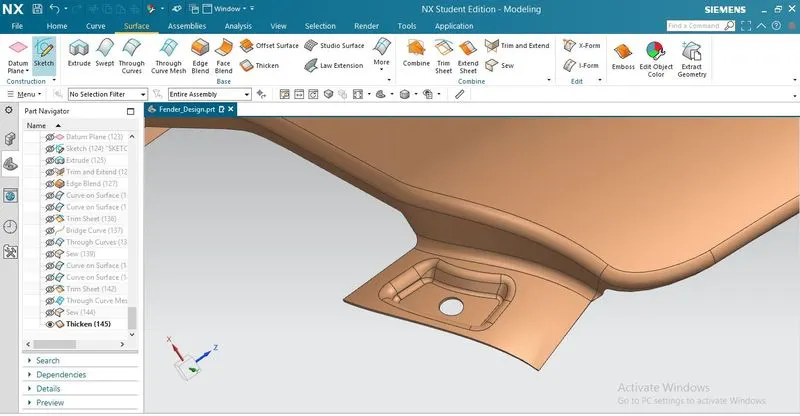
- The consideration is taken from the place at cowl is placed.
- It is taken at the back of the drip mount.
BUMPER MOUNTING :
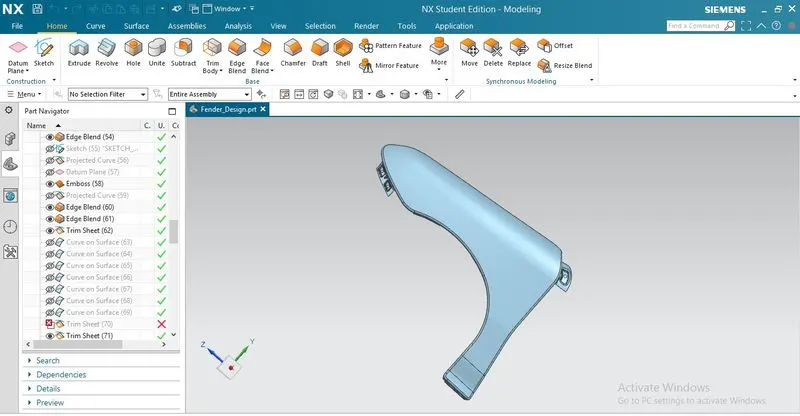
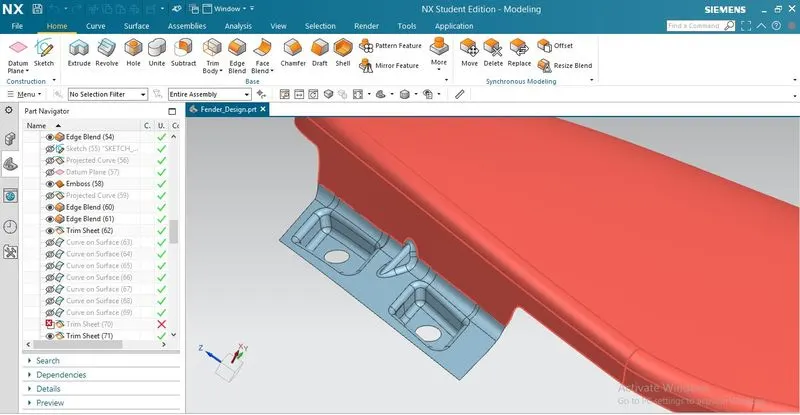
- The bumper mounting is placed at the mating of head light position.
- This is also has a flange with holes for mountings.
SILL MOUNTINGS :
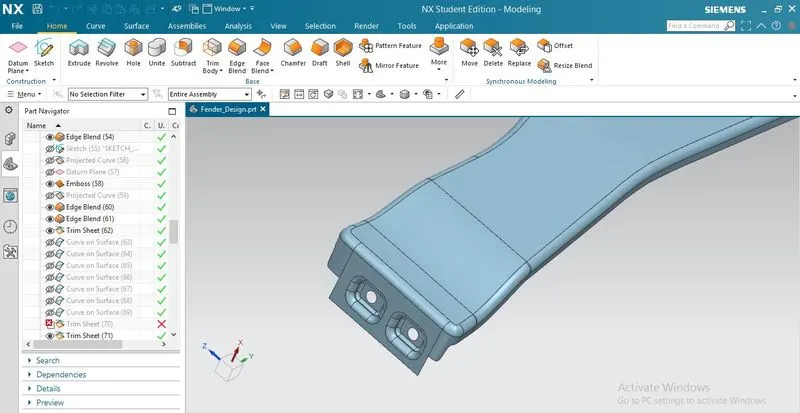
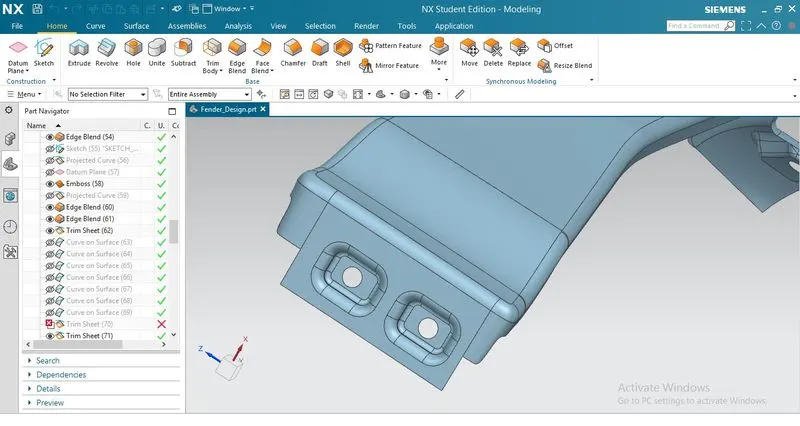
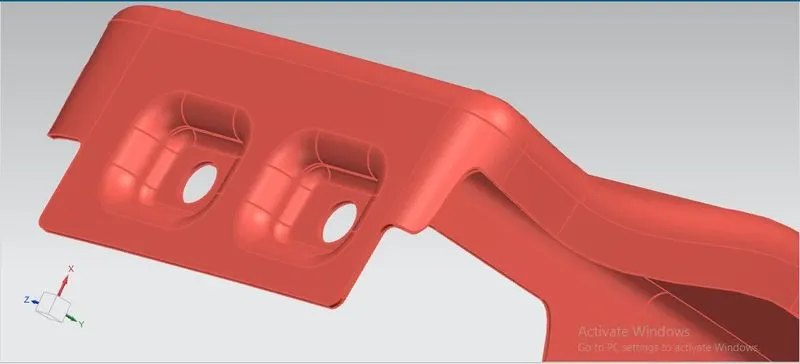
- The sill mounting is done by extension of sill area flange
- After extension of flange holes were made for mountings.
- Embosses were created for the hole moounting points that provides more strength.
WHEEL ARCH MOUNTINGS :
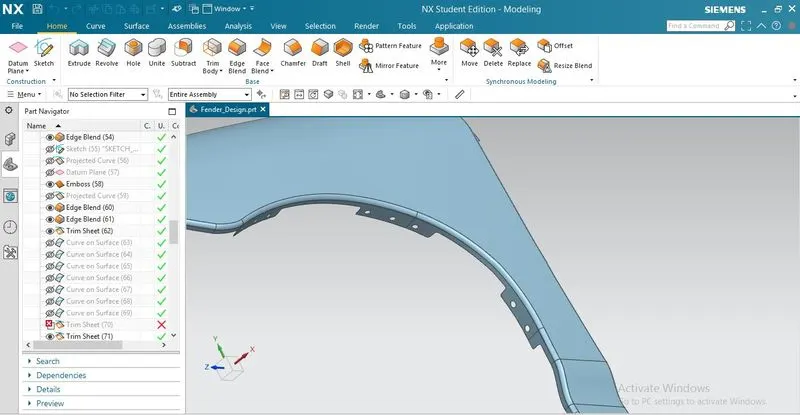
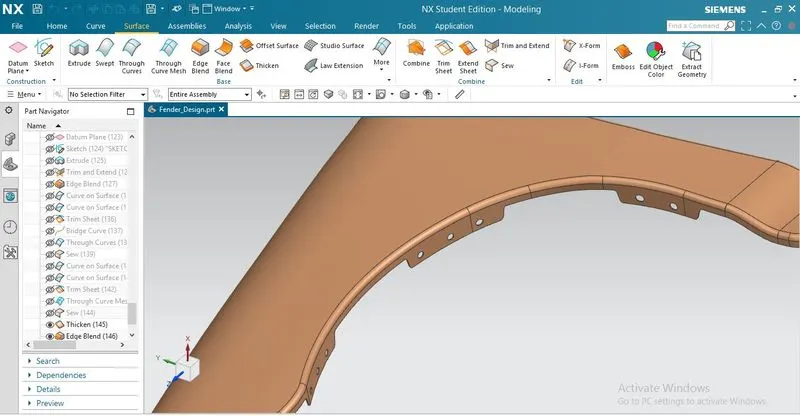
- The wheel arch design is always depends on regulations based on different countries like European, Japan, US etc.
- The flange provided for the wheel arch is provided with just holes for push pin clips to mount wheel arch.
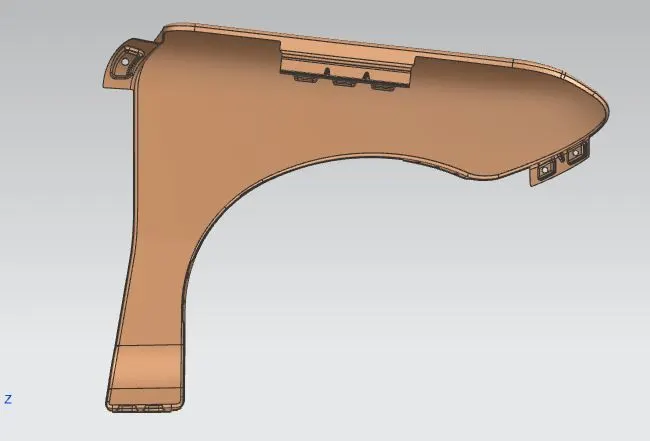
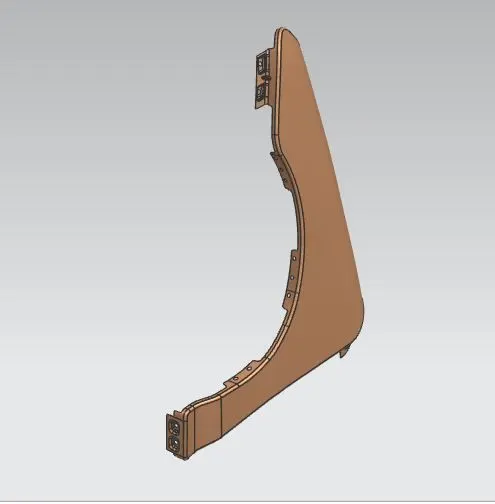
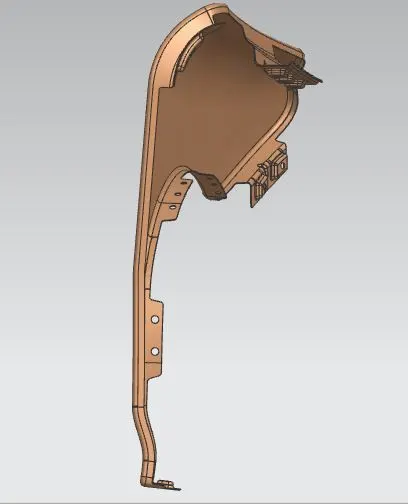
DIFFERENT VIEWS OF FENDER :