Benchmarking
WHAT IS BENCHMARKING?
Benchmarking is a process of measuring the performance of a company’s products, services, or processes against those of another business considered to be the best in the industry, aka “best in class.” The point of benchmarking is to identify internal opportunities for improvement. By studying companies with superior performance, breaking down what makes such superior performance possible, and then comparing those processes to how your business operates, you can implement changes that will yield significant improvements.
That might mean tweaking a product’s features to more closely match a competitor’s offering, or changing the scope of services you offer, or installing a new customer relationship management (CRM) system to enable more personalized communications with customers.
There are two basic kinds of improvement opportunities: continuous and dramatic. Continuous improvement is incremental, involving only small adjustments to reap sizeable advances. Dramatic improvement can only come about through reengineering the whole internal work process.
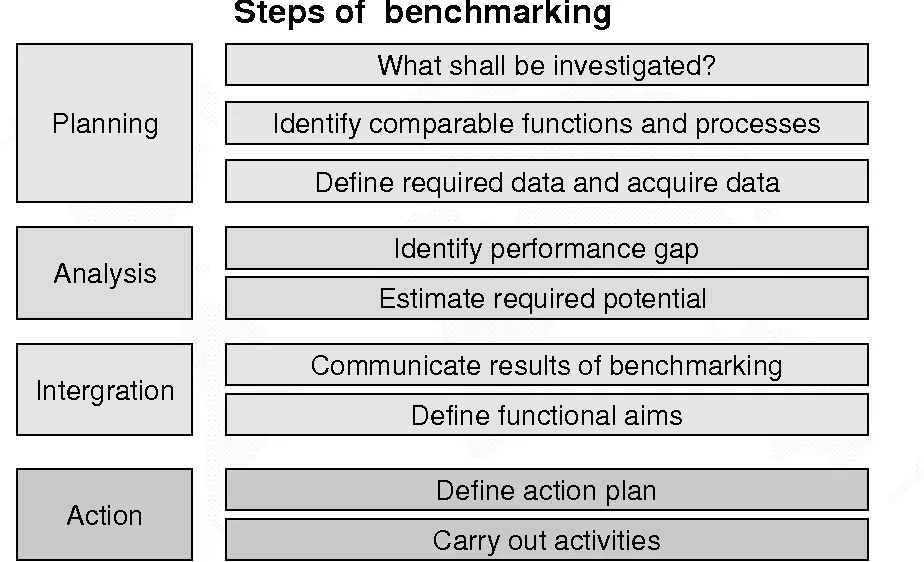
STEP-BY-STEP BENCHMARKING:
Benchmarking is a simple, but detailed, five-step process:
- Choose a product, service, or internal department to benchmark
- Determine which best-in-class companies you should benchmark against.
- Gather information on their internal performance, or metrics.
- Compare the data from both organizations to identify gaps in your company’s performance
- Adopt the processes and policies in place within the best-in-class performer.
BENCHMARKING IN AUTOMOTIVE INDUSTRY:
Basically, Benchmarking in the automotive industry will be in two stages. They are:
- BENCHMARKING I
- BENCHMARKING II
BENCHMARKING-I: Benchmarking I involves in define the competitors, price specifications, and Features on the segment.
BENCHMARKING II: Benchmarking II involves Component wise comparison in order to improve the performance and decrease the weight.
BENCHMARKING OF THE CARS:
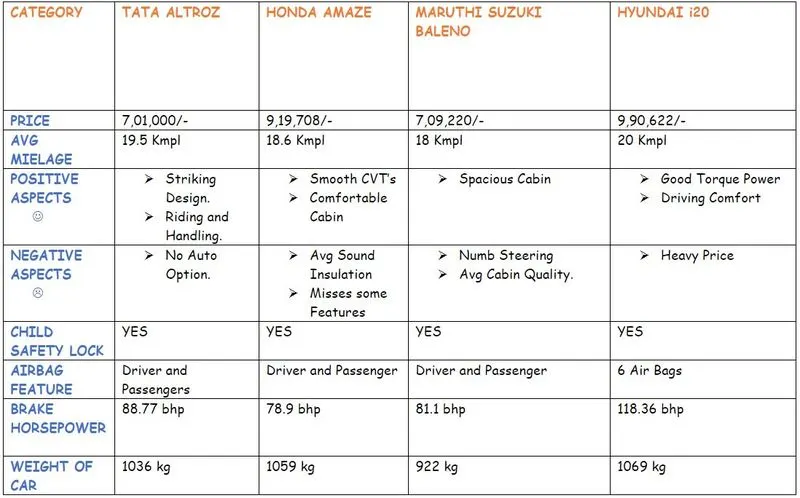
AFFORDABLE CAR: