Assignment 2-RADIOSS Engine File Editing & 3D Meshing Challenge
RADIOSS Engine File Editing & 3D Meshing Challenge
INTRODUCTION
With dynamic loadings, Radioss is a structural analysis solver that assesses and maximizes product performance for extremely nonlinear issues. It is utilized in every industry sector globally.
Radioss is a finite element solver that solves engineering problems using both explicit and implicit integration strategies. When big nonlinear motion and nonlinear material behaviour are the dominant characteristics, it aids engineers in considering the overall behaviour of the system.
In the fields of automotive collision and safety, shock and impact analysis, terminal ballistics, blast and explosion effects, and high-velocity impacts, Radioss has led the industry and set the standard for more than 30 years. Respected by research and development facilities, automotive, aerospace, electronics, and defence companies, Radioss facilitates comprehension and accurate, reliable forecasts of combined multiphysics behaviours in intricate settings, like crashworthiness, aeroplane ditching, terminal ballistics, or blast effects on automobiles. By utilizing Radioss' sophisticated multi-processor versions, large-scale, highly nonlinear structural simulations can have the best scalability available in the industry.
Radioss is a potent multiphysics design tool that is an essential component of Altair's simulation solutions. It has optimization-ready integrations with both other Altair products and outside solutions.
A 3D mesh is a polygon-based 3D model's structural build. 3D meshes define shapes with height, width, and depth by using reference points in the X, Y, and Z axes.
An assembly of faces, edges, and vertices that collectively create a three-dimensional object is known as a 3D mesh model. The faces enclose the edges to form the object's surface. The vertices are the coordinates in three-dimensional space. The edges connect any two adjacent vertices.
Tetrahedral meshes are three-dimensional structures composed of pyramids with four sides. They may be applied to intricate and highly curved geometries since they are adaptable and simple to use.
First or second-order tetrahedral elements are filled with an enclosed volume using tetrahedral meshing. In addition, it can produce element configurations that are hexahedral, wedge, and pyramidal.
Brick or hex meshes are other names for hexahedral meshes. With eight vertices, twelve edges, and six quadrilateral faces, they are topological cubes. Hexahedral meshes offer the best accuracy of solutions for the same amount of cells.
OBJECTIVES
1. Check the material properties of the rail component and calculate the speed of sound in steel rail=_______
2. The length of the rail is about 1000 mm. Calculate the time takes for a shock wave to travel from one end of the rail to the other.
3. Time for sound to travel the length of rail=______
4. Edit the engine file so that the stress wave can be monitored, moving from one end of the rail to the other during impact -this will require a termination time equal to the time it takes for the sound to travel the length of the rail(set on/RUN card)
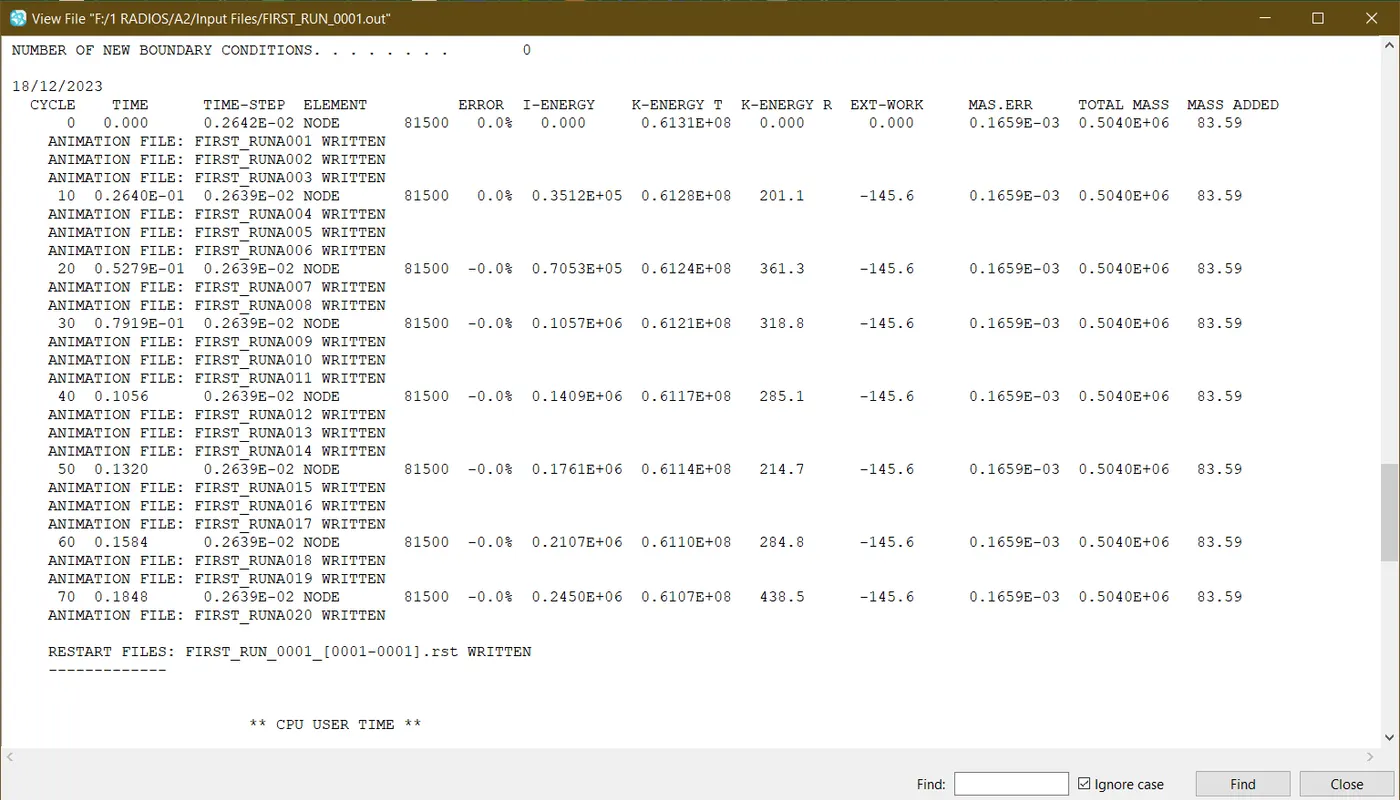
5. Set the frequency of animation output to a time that will give 20 animation steps(/ANIM/DT)
6. Change /print -10.
7.3d meshing tetra mesh and hex mesh
-
Repeat class examples and, maintain the quality.
-
Target tet size=5mm, hex size=10mm, tet collapse=0.15.
PROCEDURE
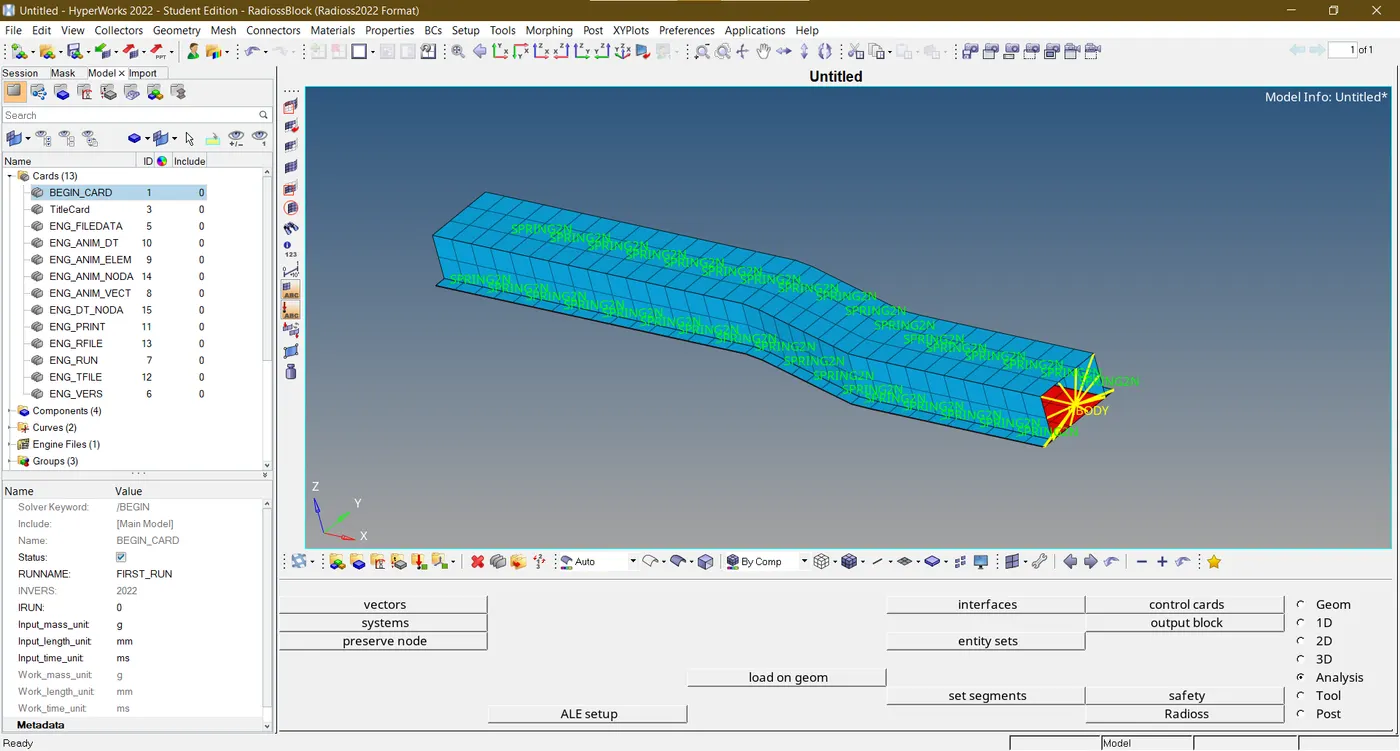
- Import first run engine file as shown below into RADIOSS block solver input of hypermesh. Make sure to keep RADIOSS as the selected solver in User-profiles.
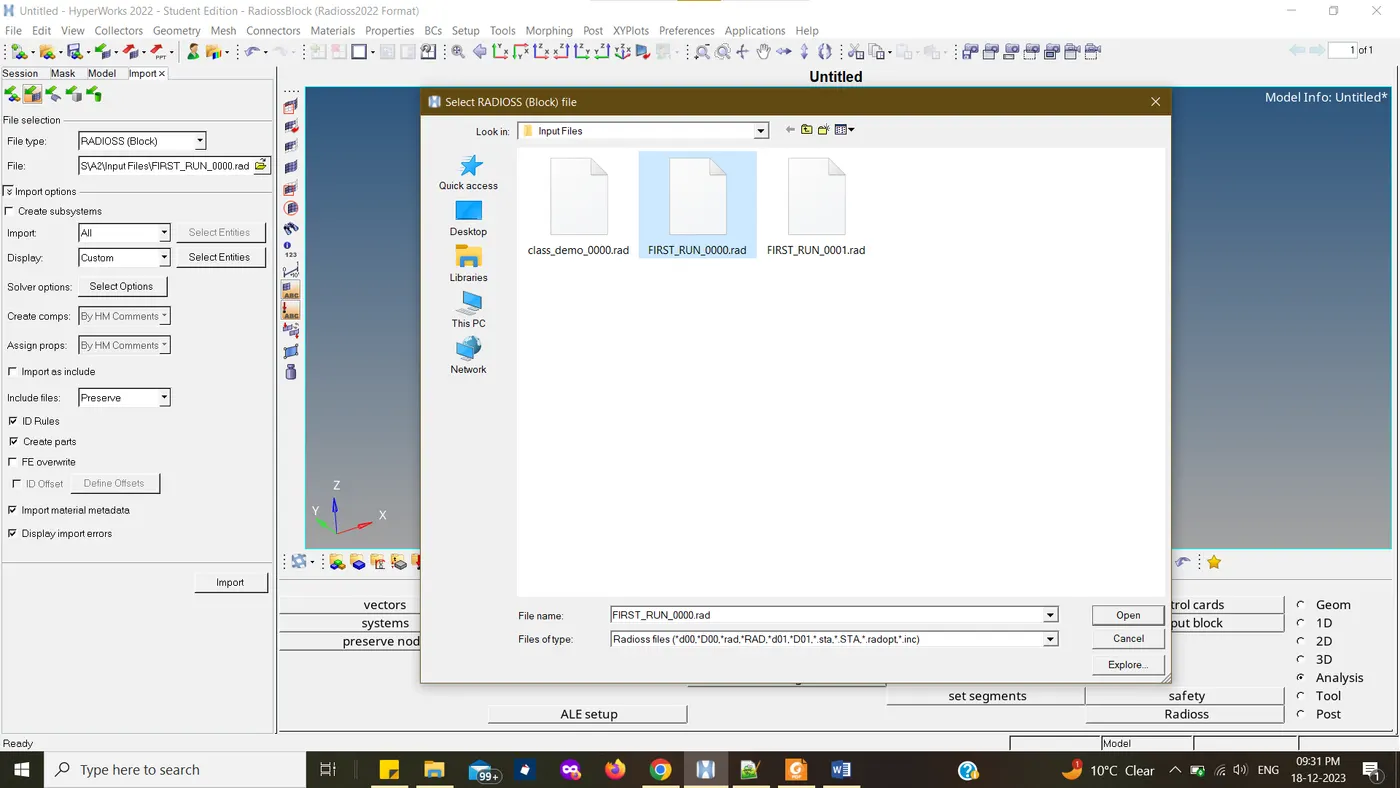
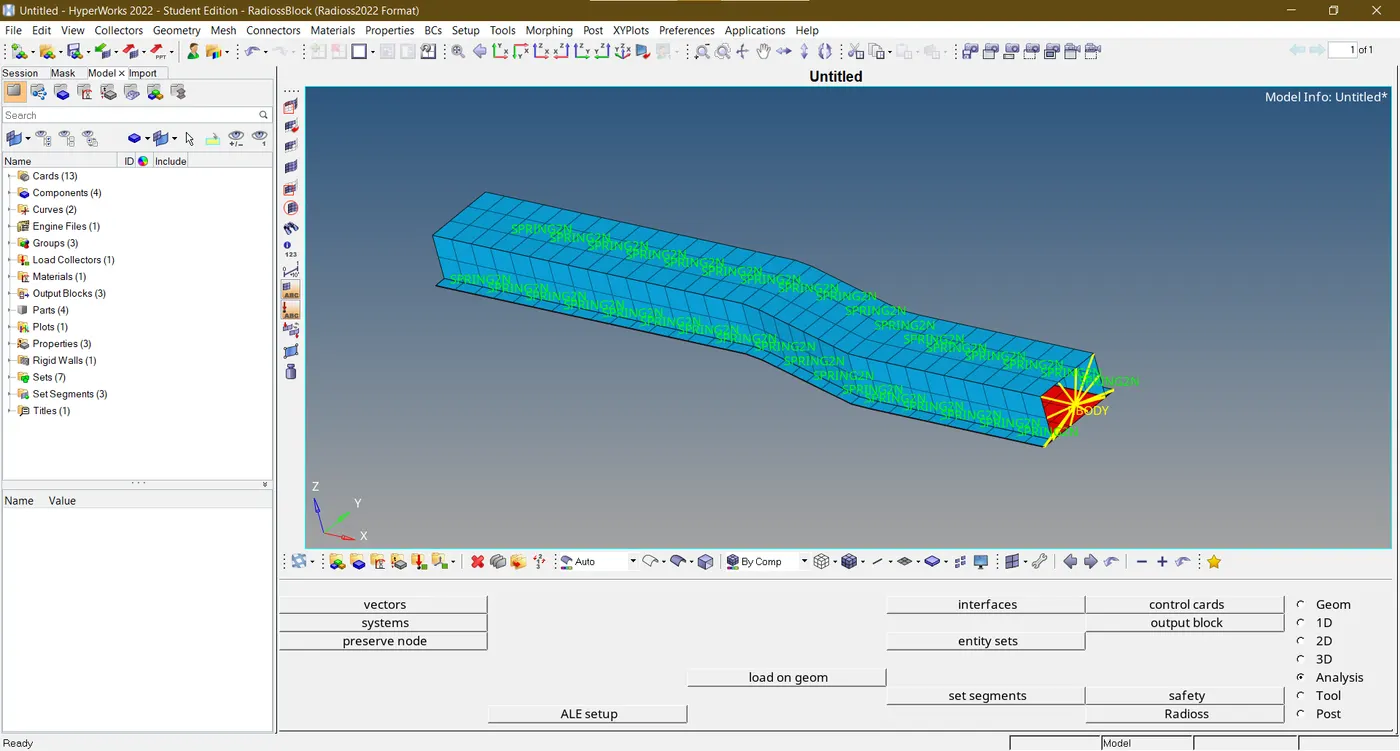
1. Check the material properties of the rail component and calculate the speed of sound in steel rail=_______
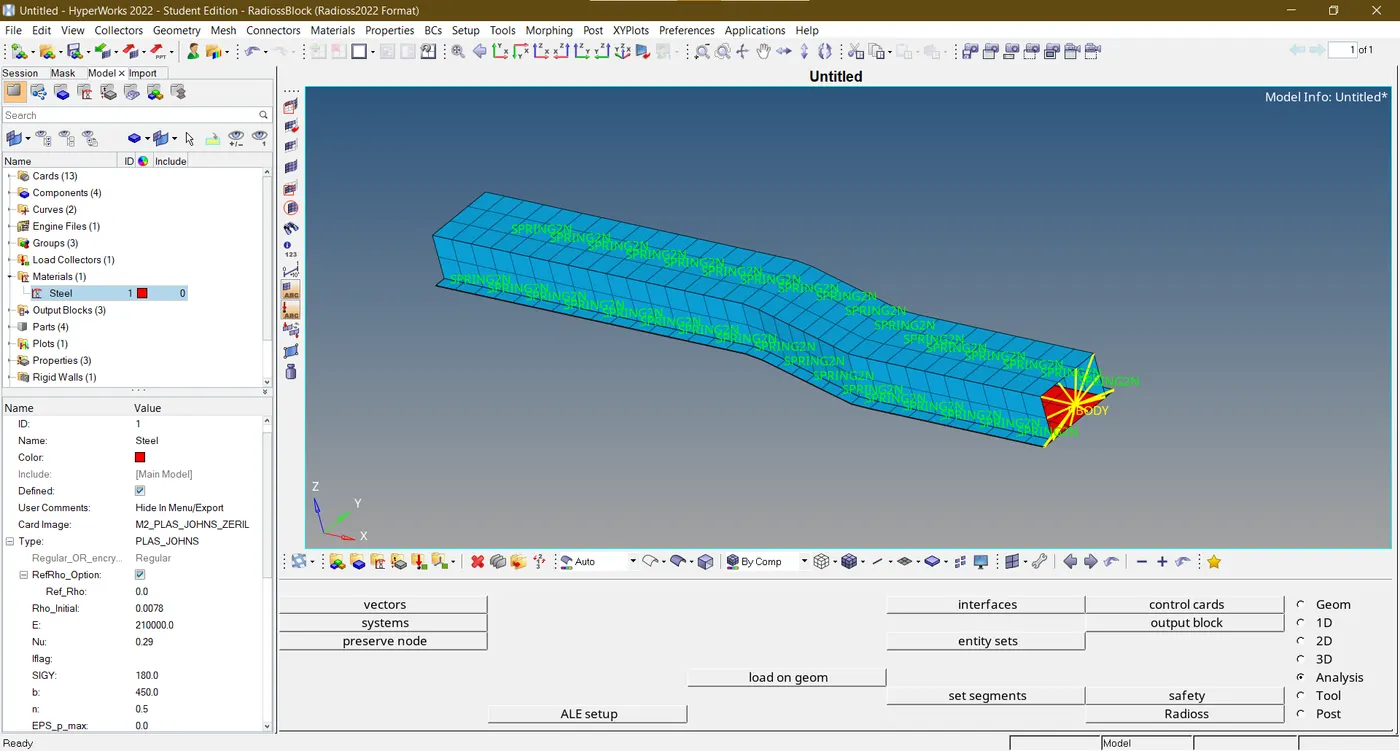
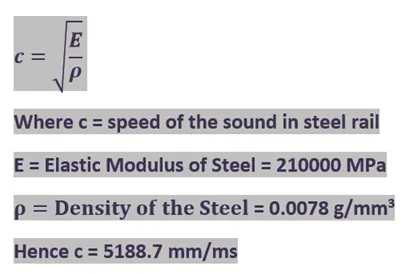
2. The length of the rail is about 1000 mm. Calculate the time takes for a shock wave to travel from one end of the rail to the other.
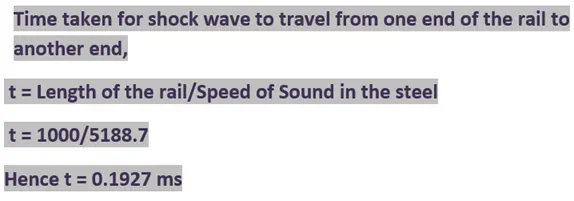
3. Time for sound to travel the length of rail=______

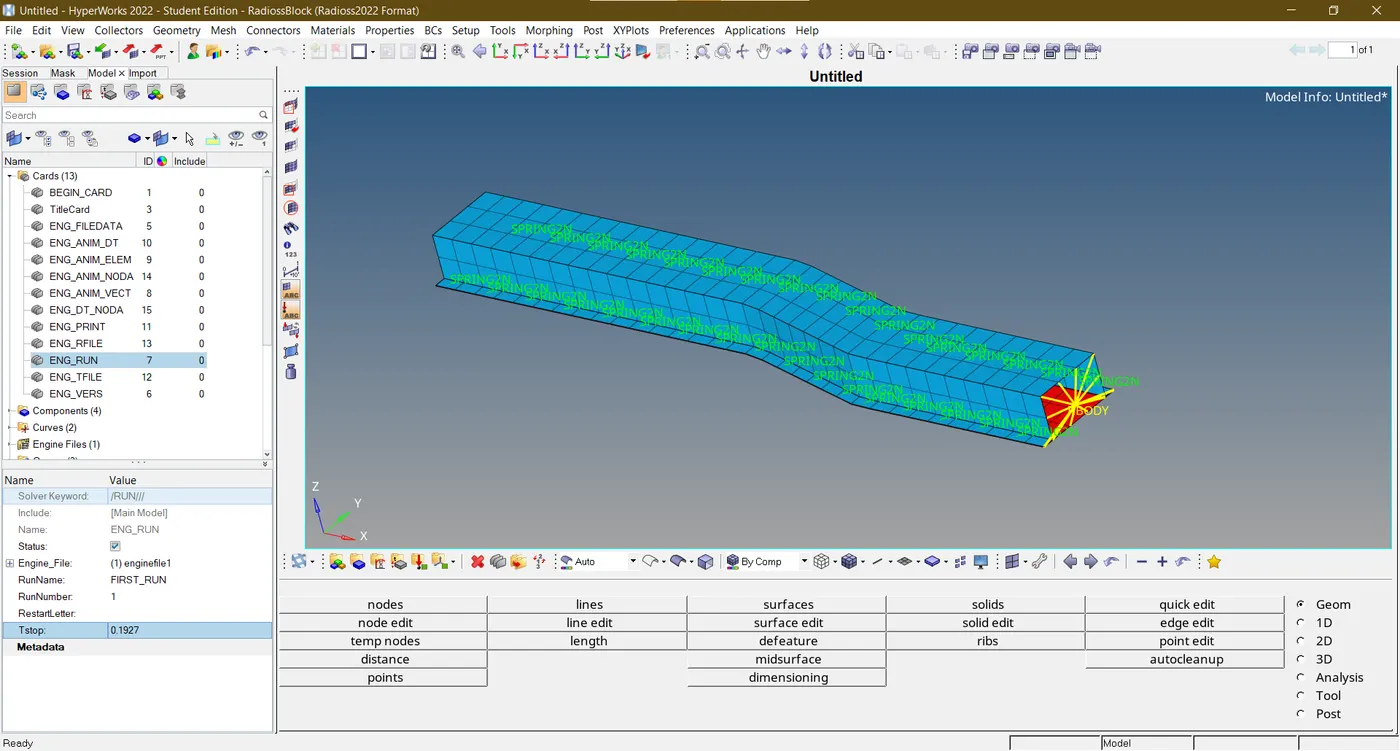
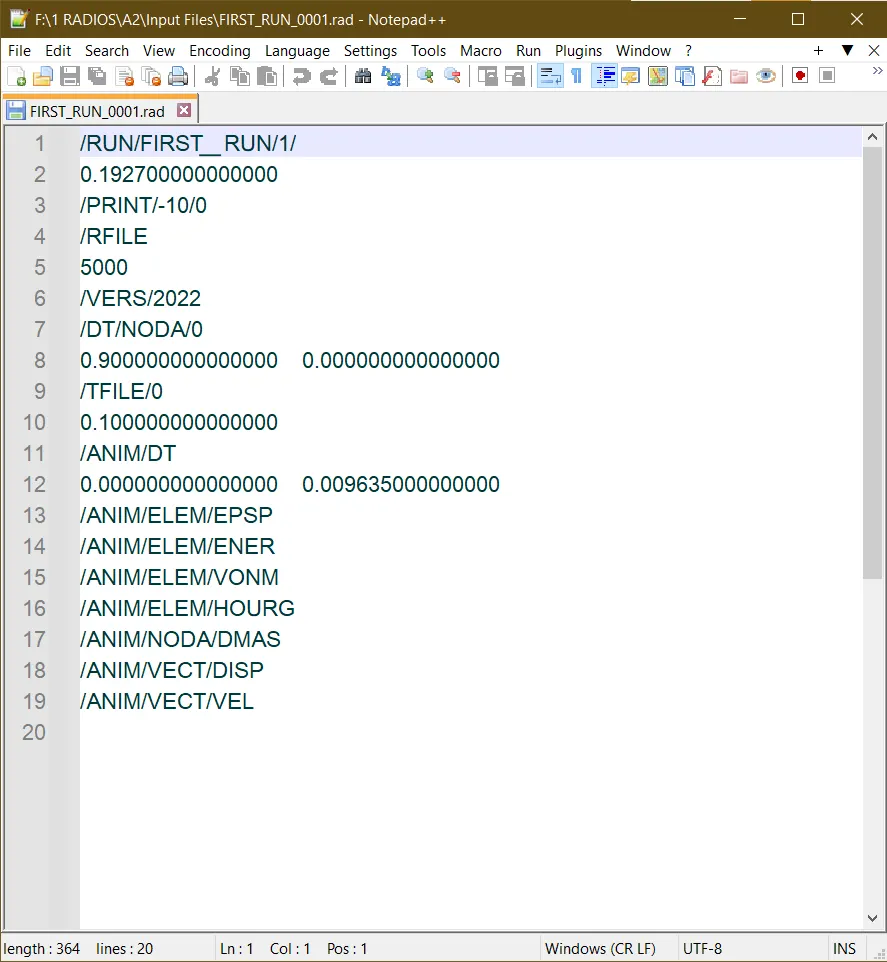
4. Edit the engine file so that the stress wave can be monitored, moving from one end of the rail to the other during impact -this will require a termination time equal to the time it takes for the sound to travel the length of the rail(set on/RUN card)
- Edit the input engine files in Notepad ++ and check the various parameters required to be modified.
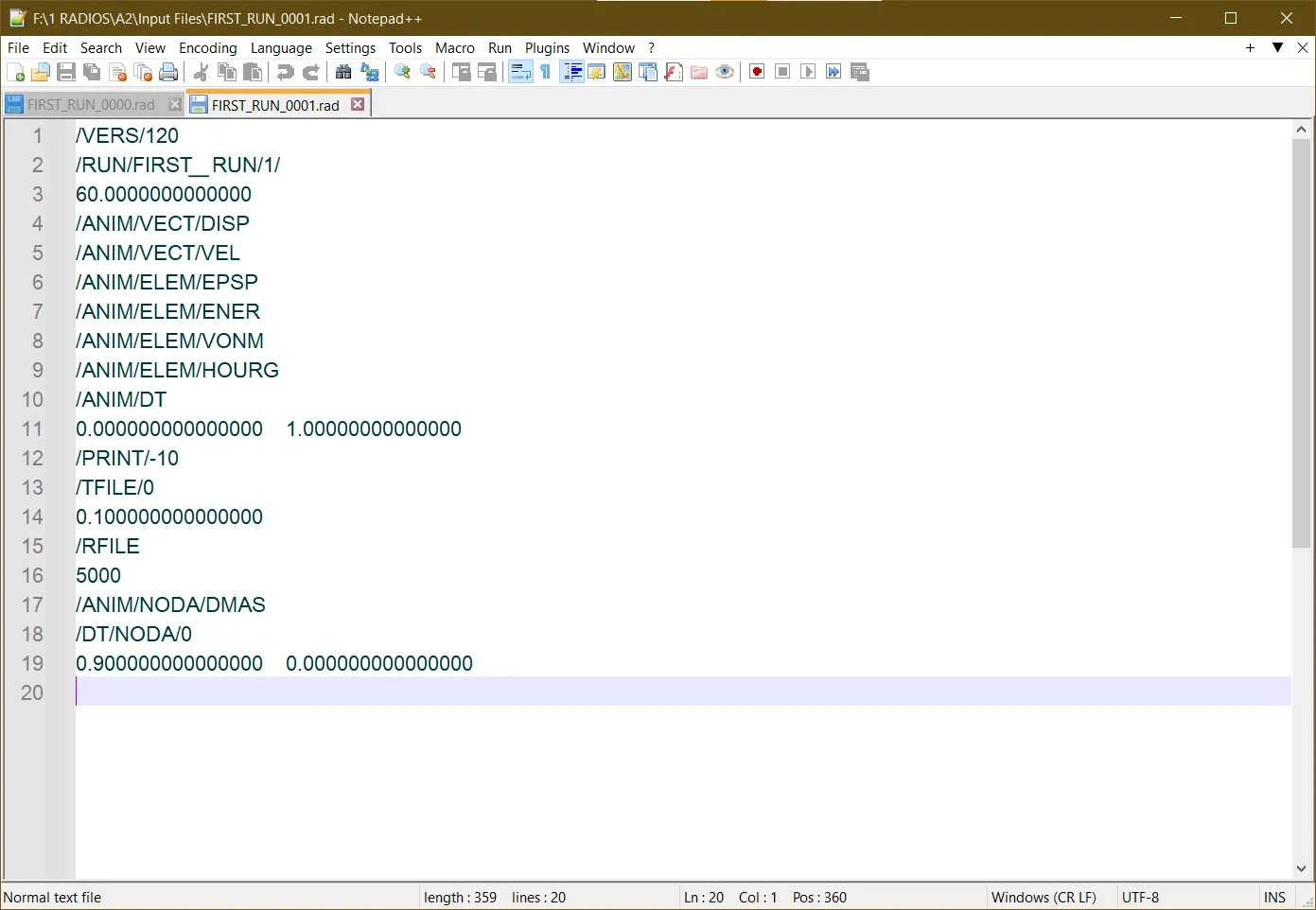
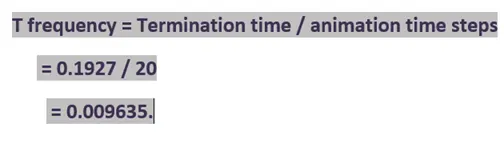
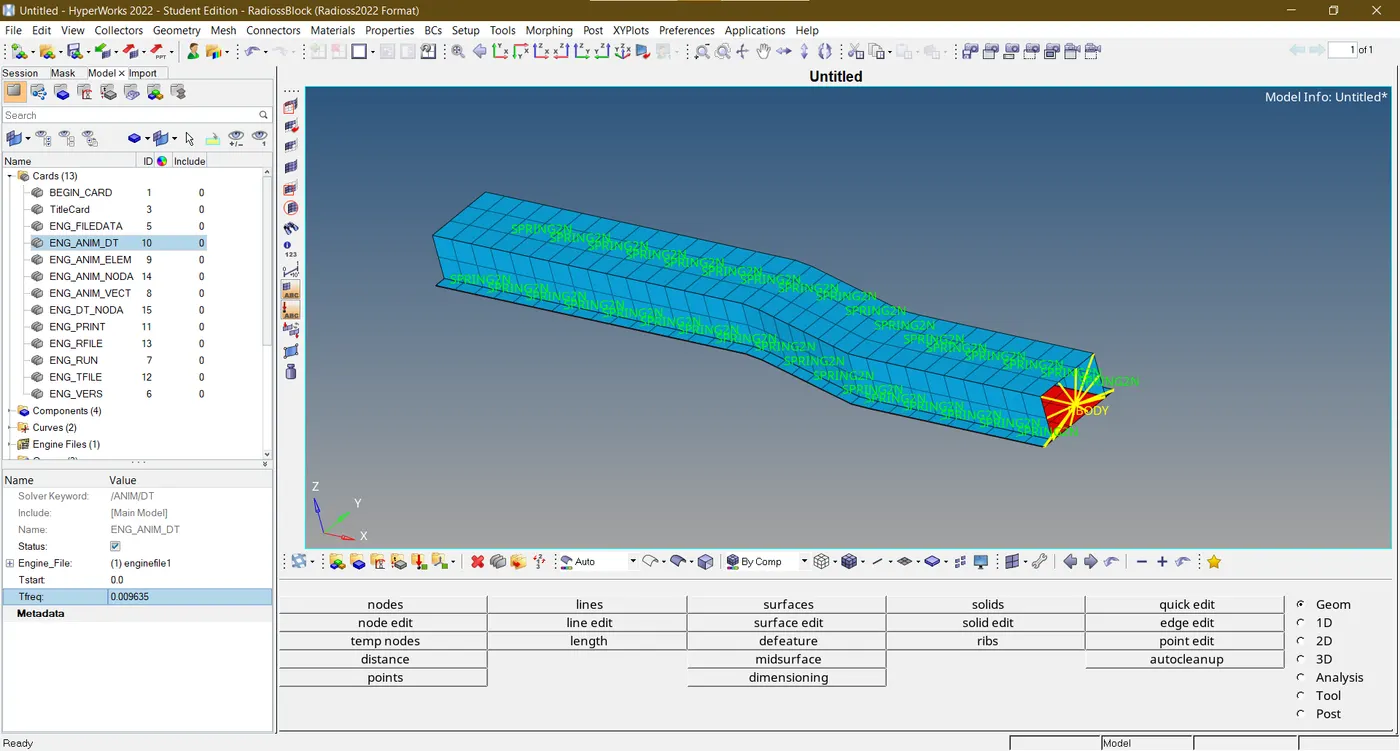
5. Set the frequency of animation output to a time that will give 20 animation steps(/ANIM/DT)
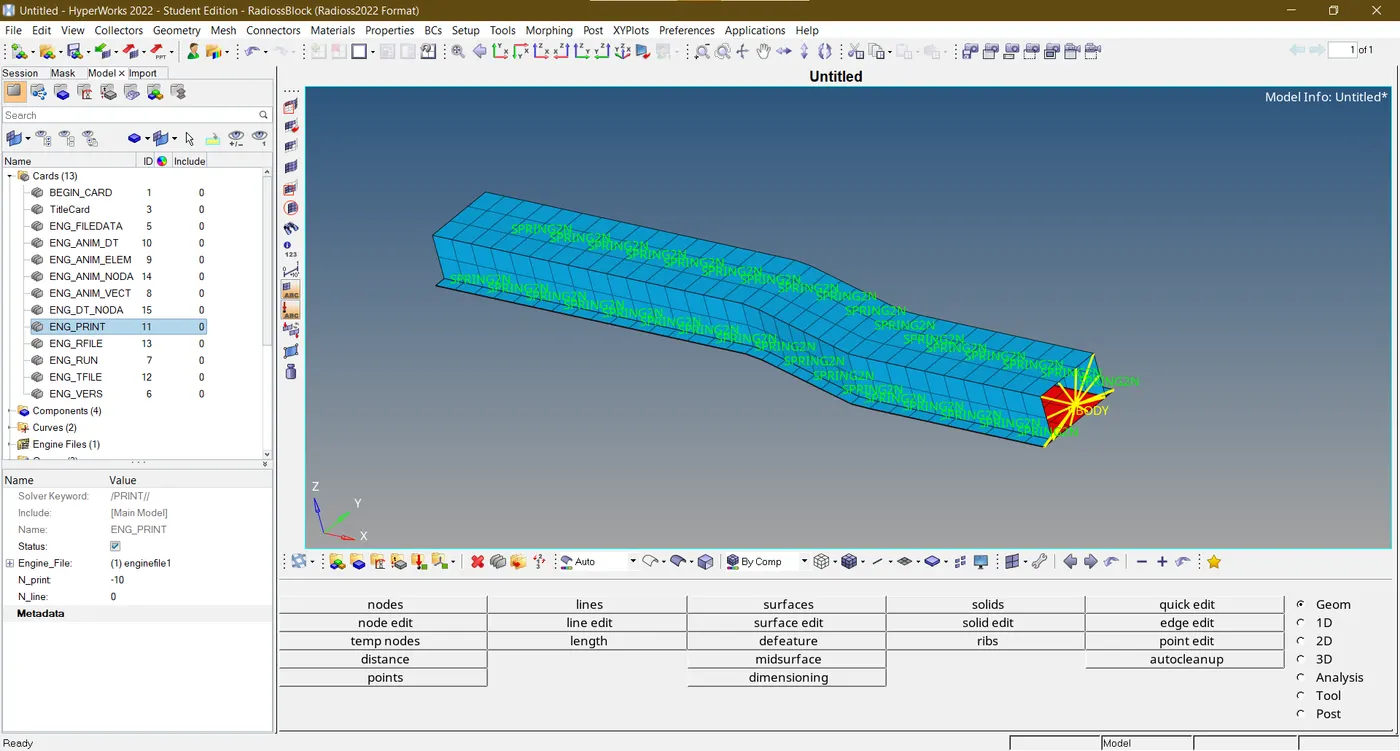
6. Change /print -10.
- Once all cards are regulated we can do an analysis using the RADIOSS solver to check the confirmation of desired values.
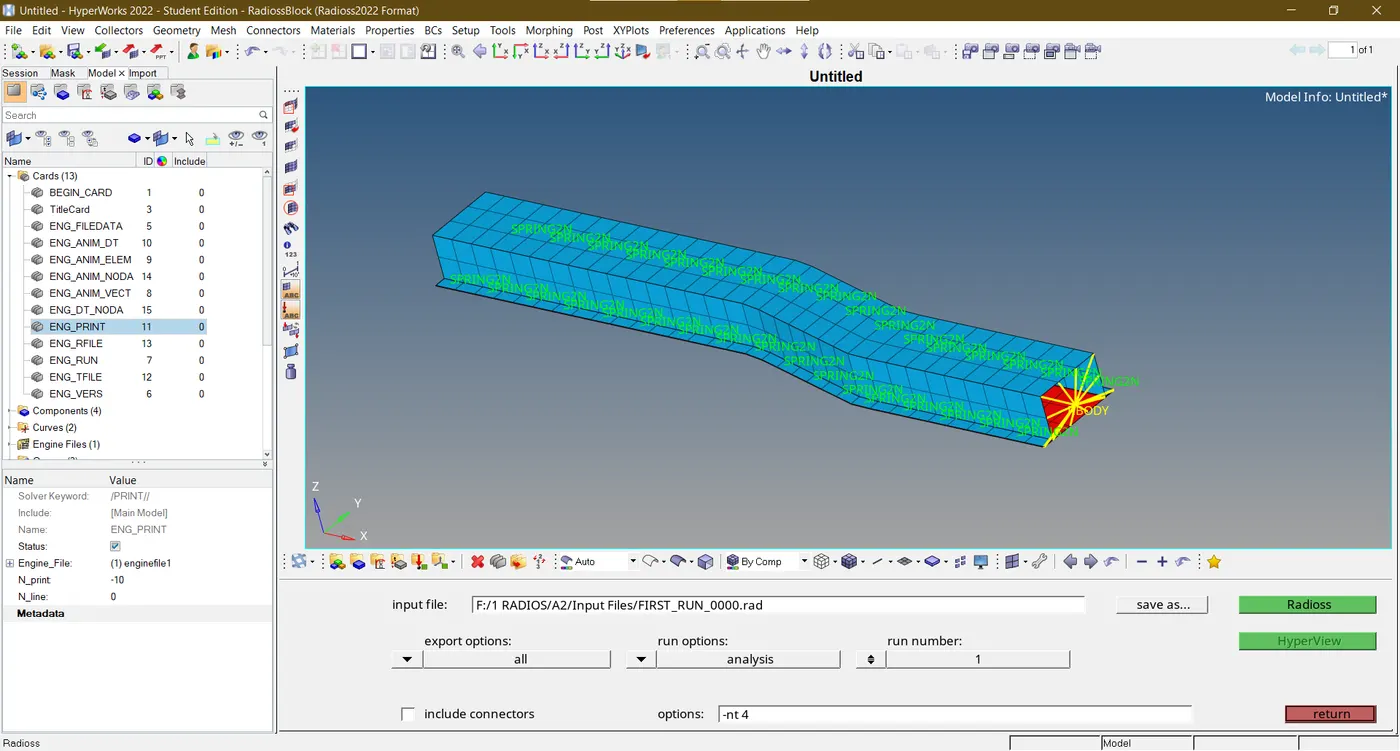
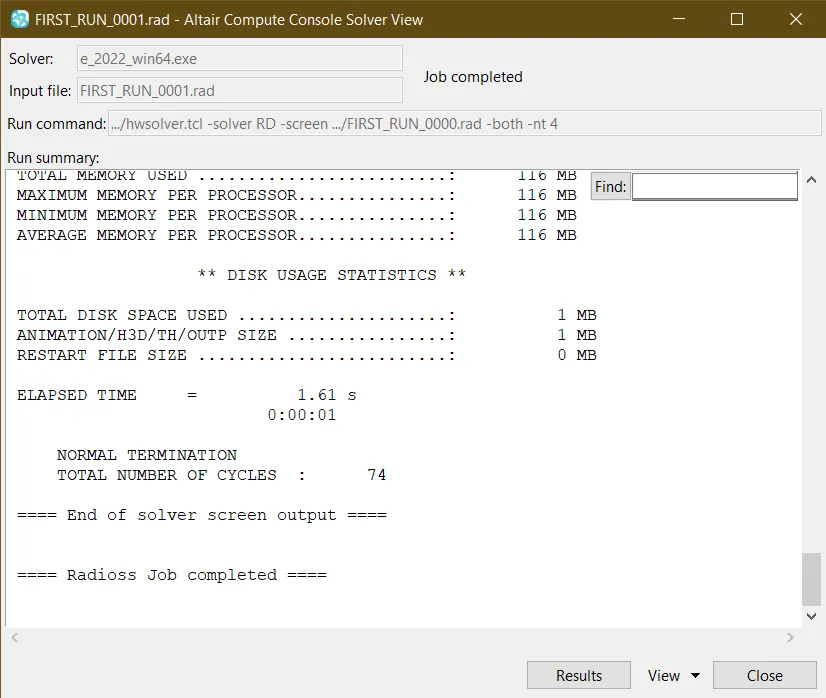
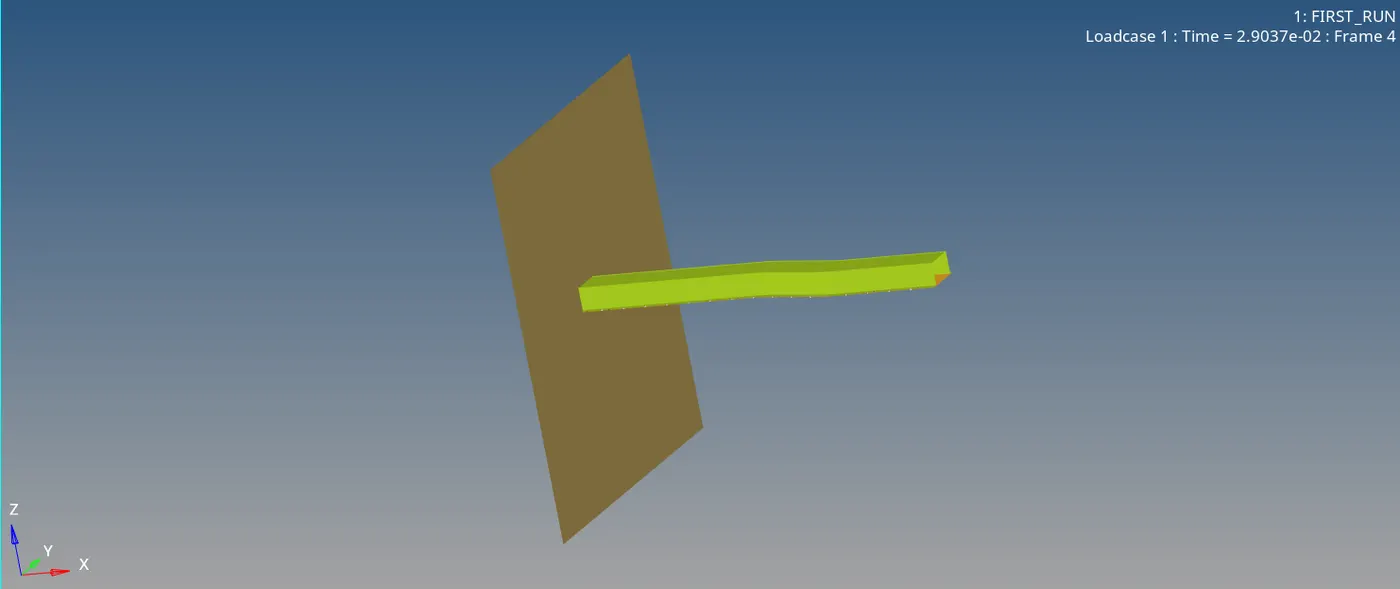
- In the solution output file, it is visible that 20 animation plots are established.
- Hence the final engine file is formulated with respective values.
7.3d meshing tetra mesh and hex mesh
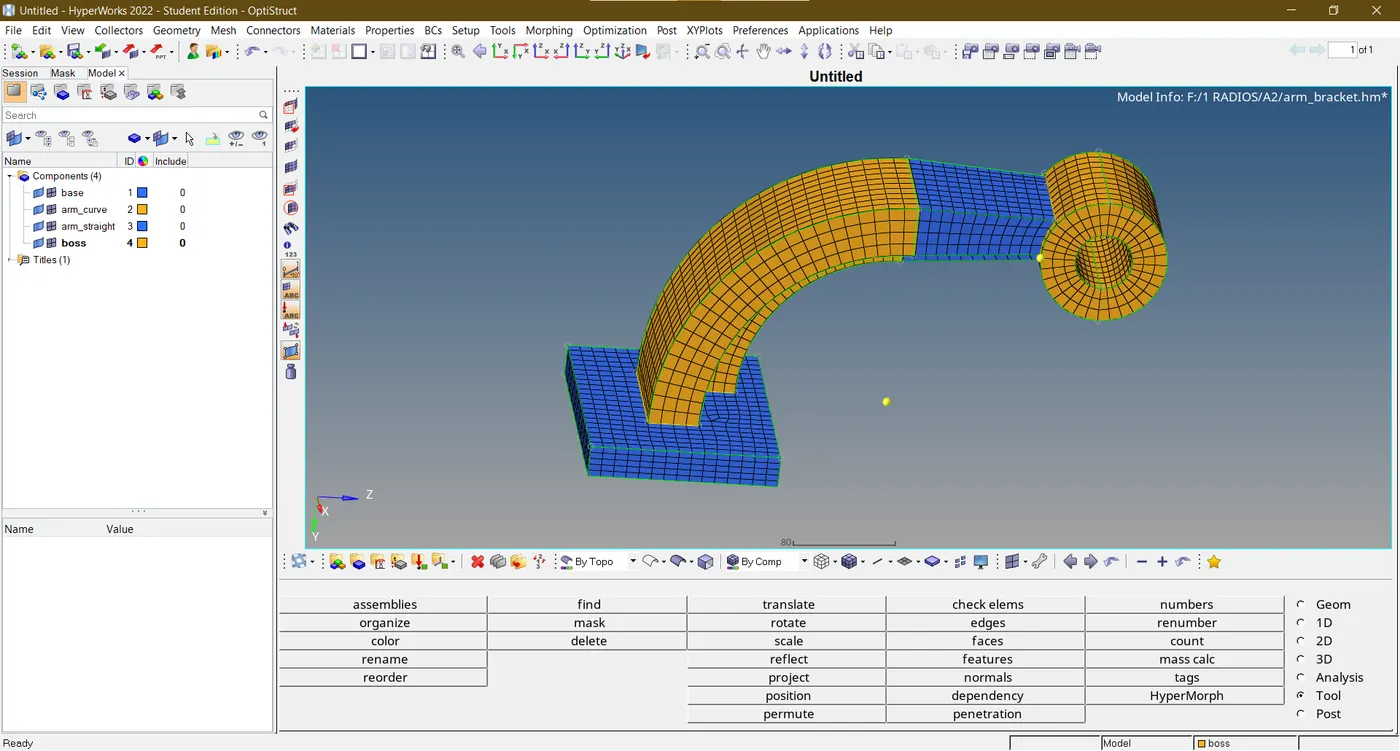
- The arm bracket model as shown below is treated with hexa mesh with prescribed quality criteria.
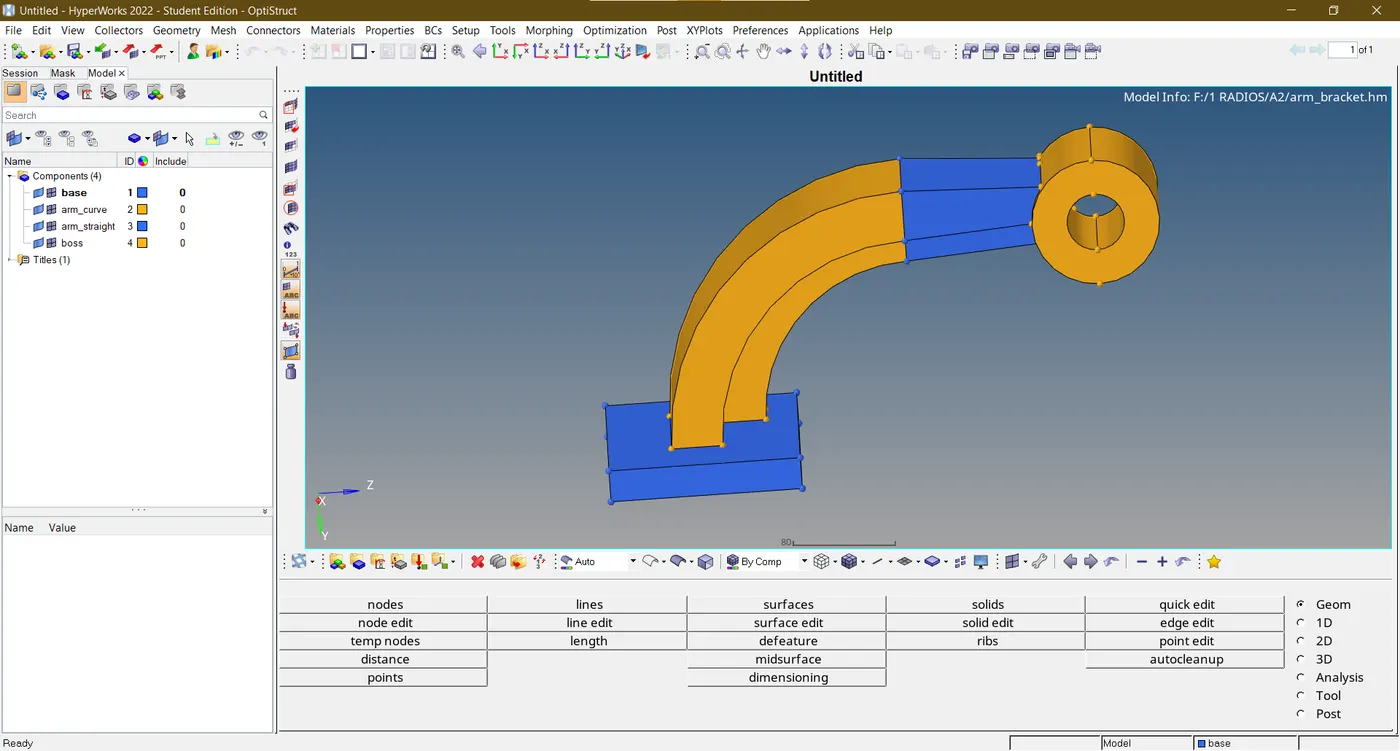
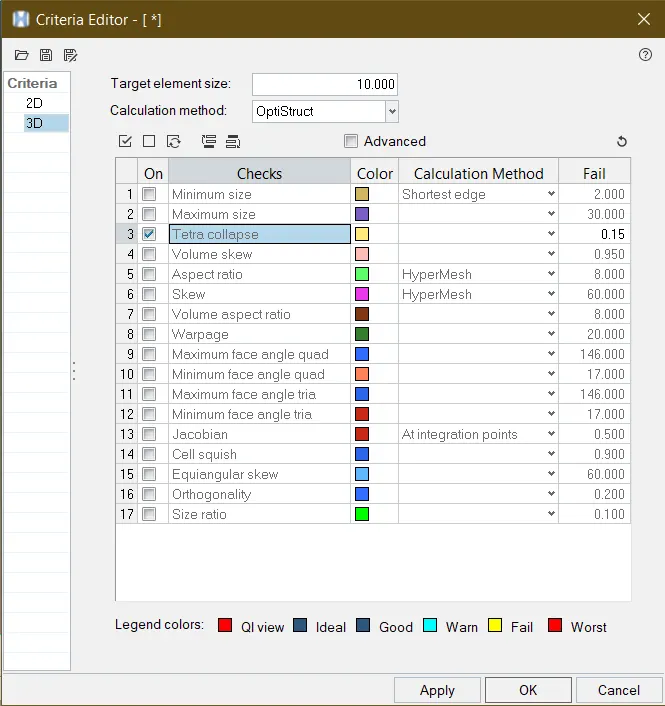
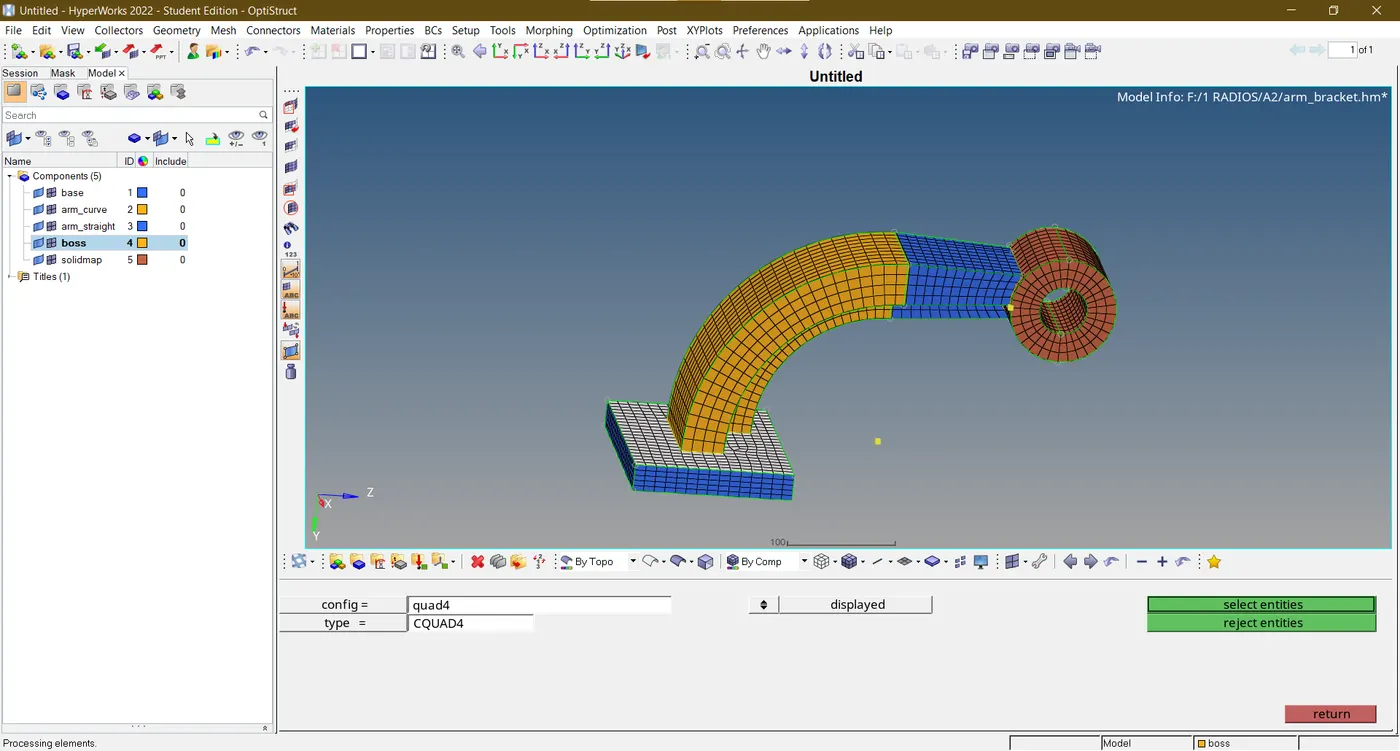
- The step-by-step process is done on each component by using various 3D tools to convert 2D mesh into 3D mesh. Elem offset, Solid map, spin so forth and so on tools are used concerning the shape of components in this model.
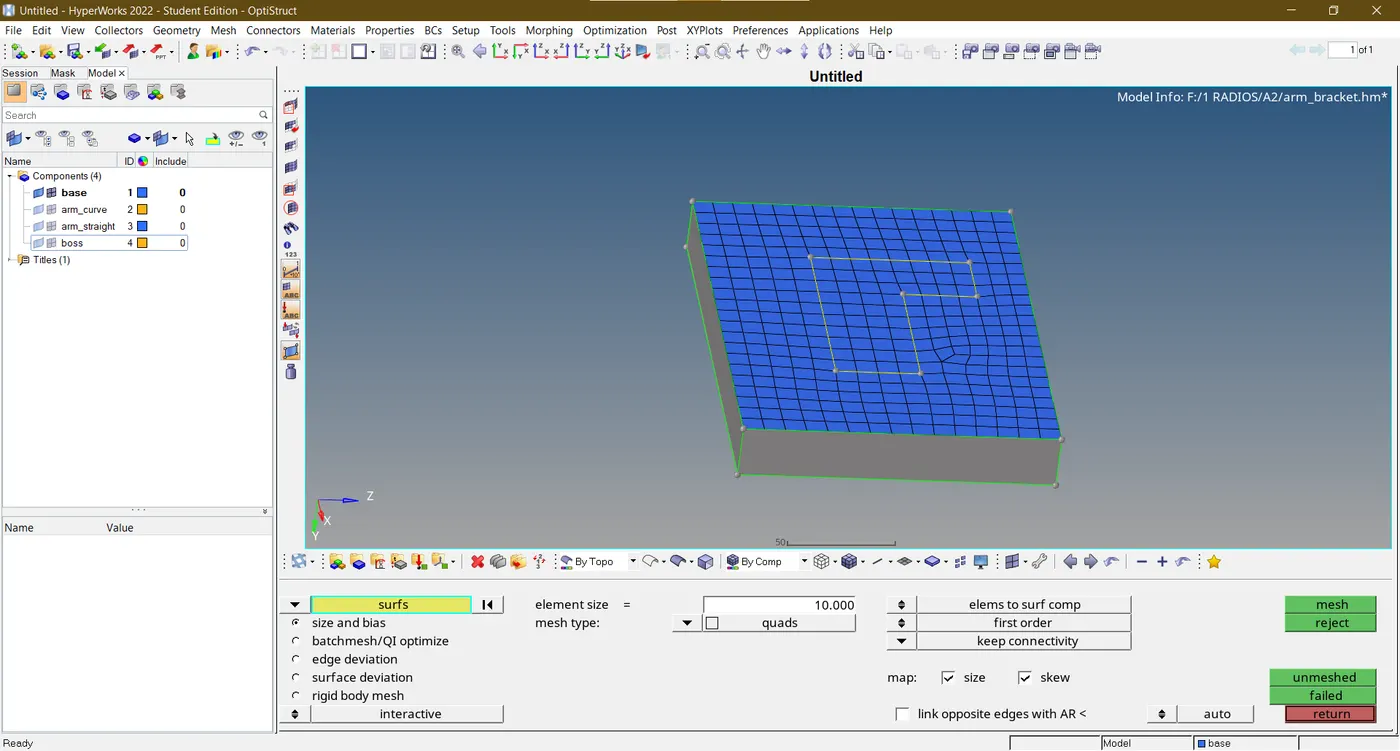
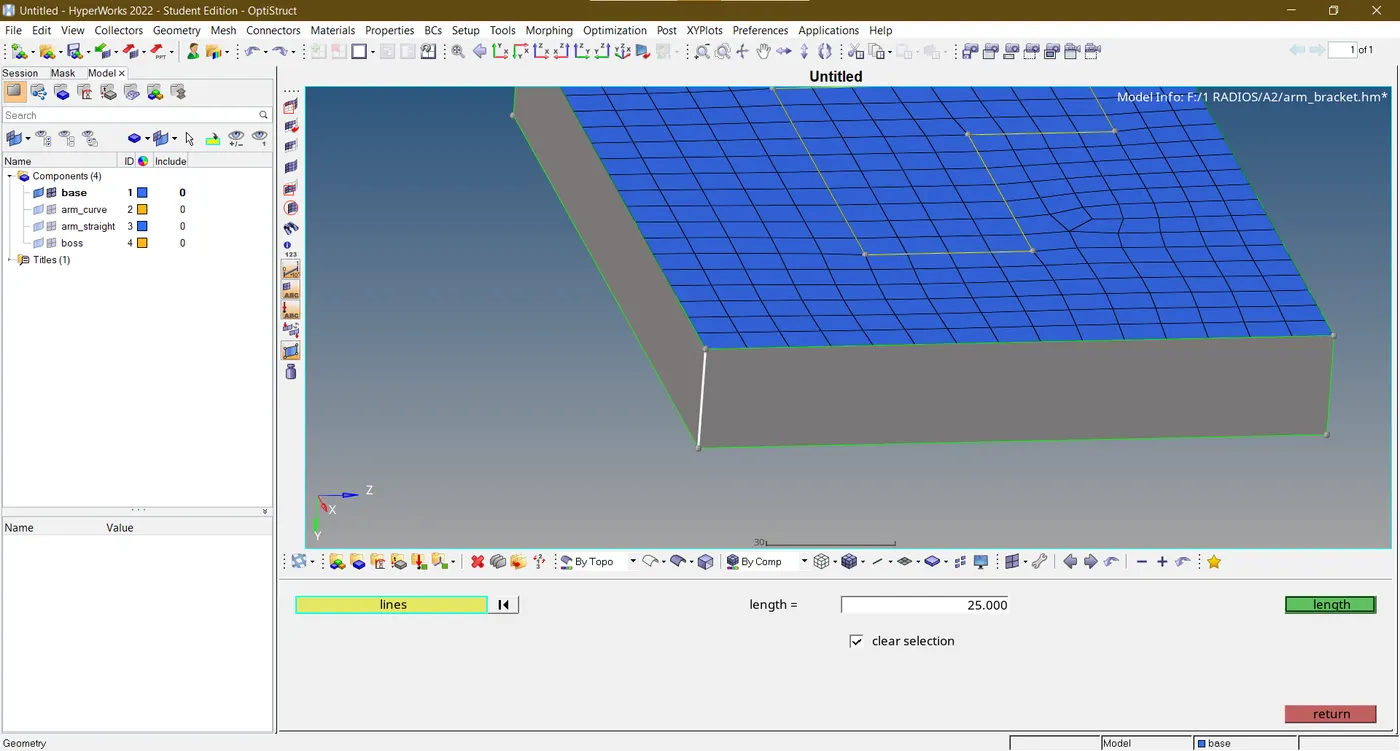
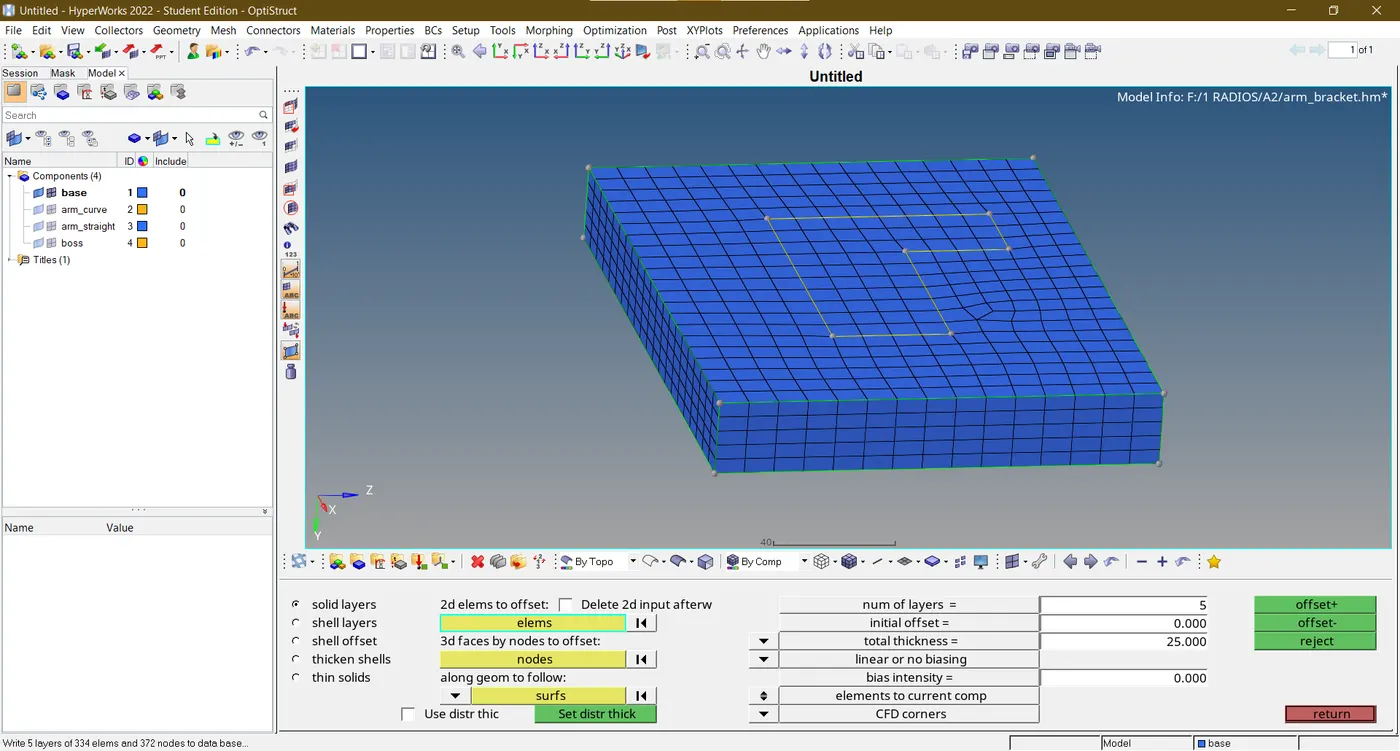
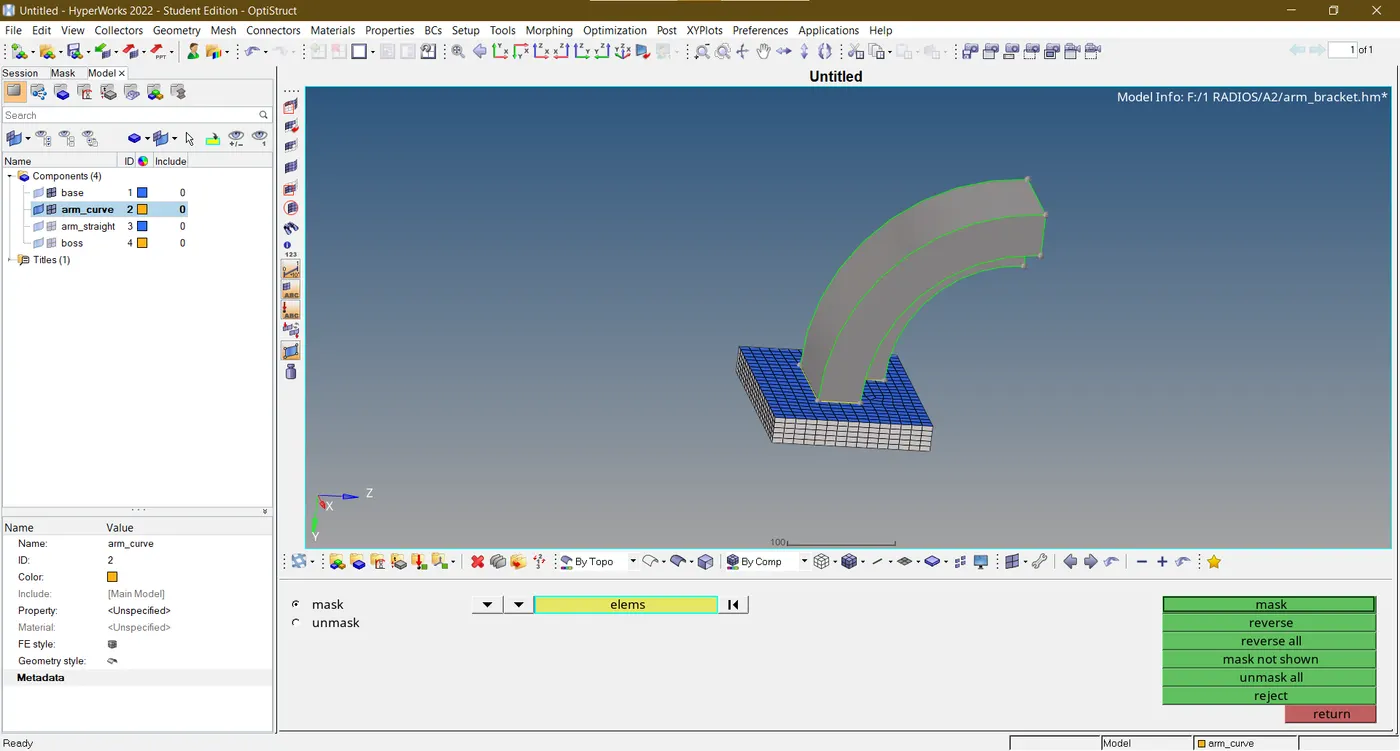
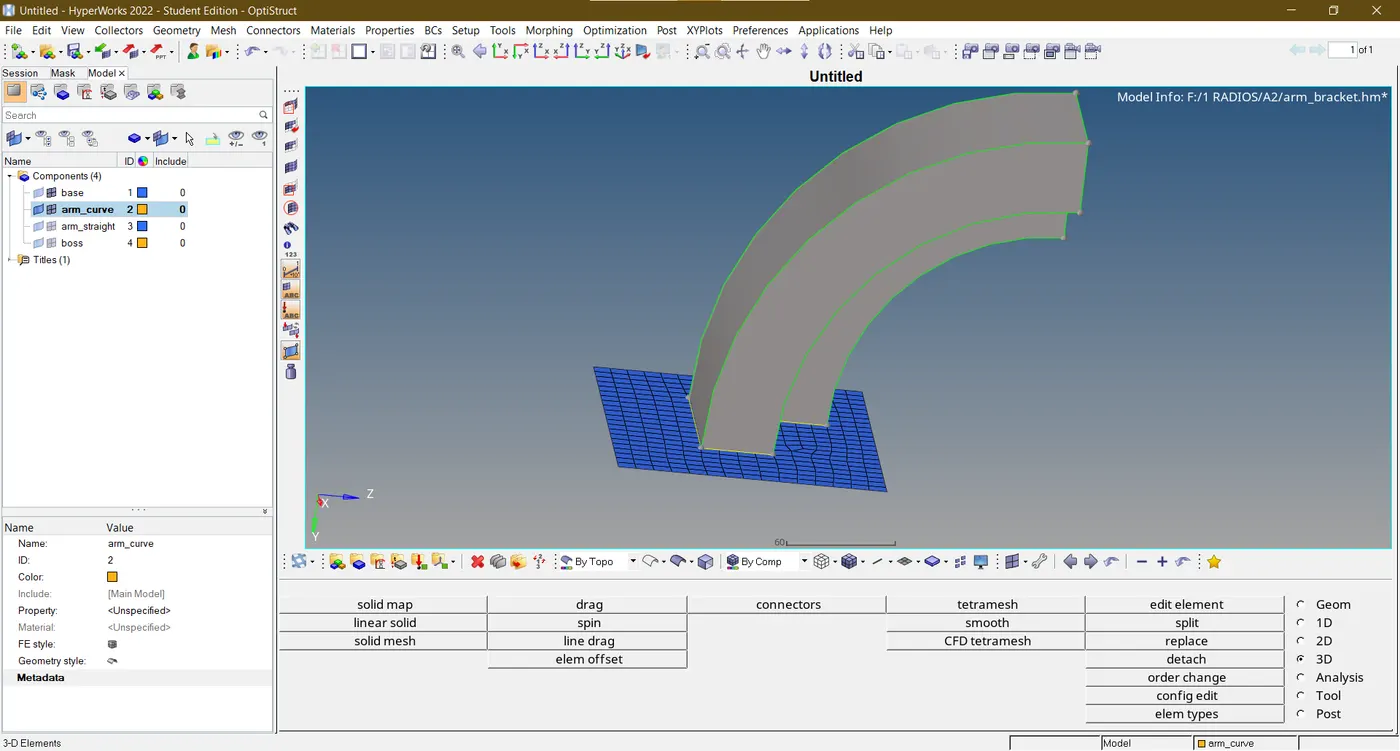
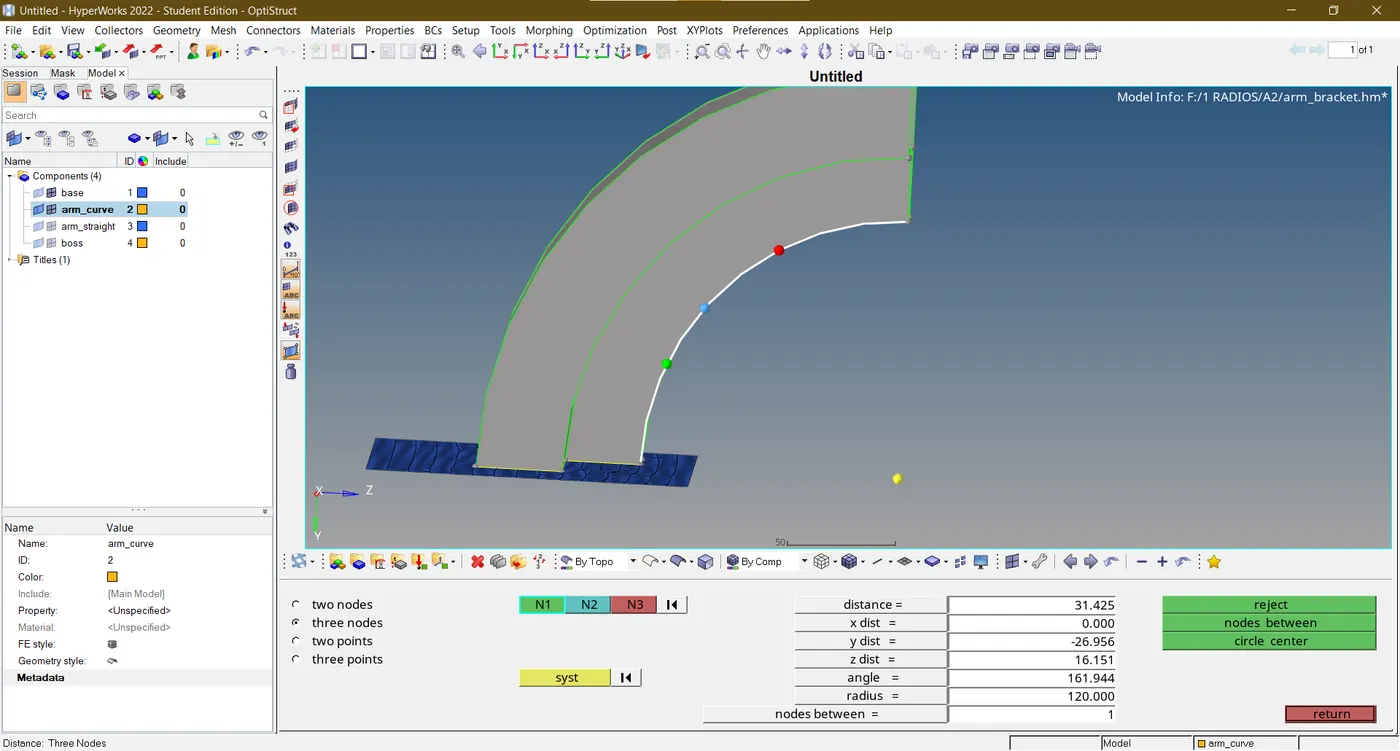
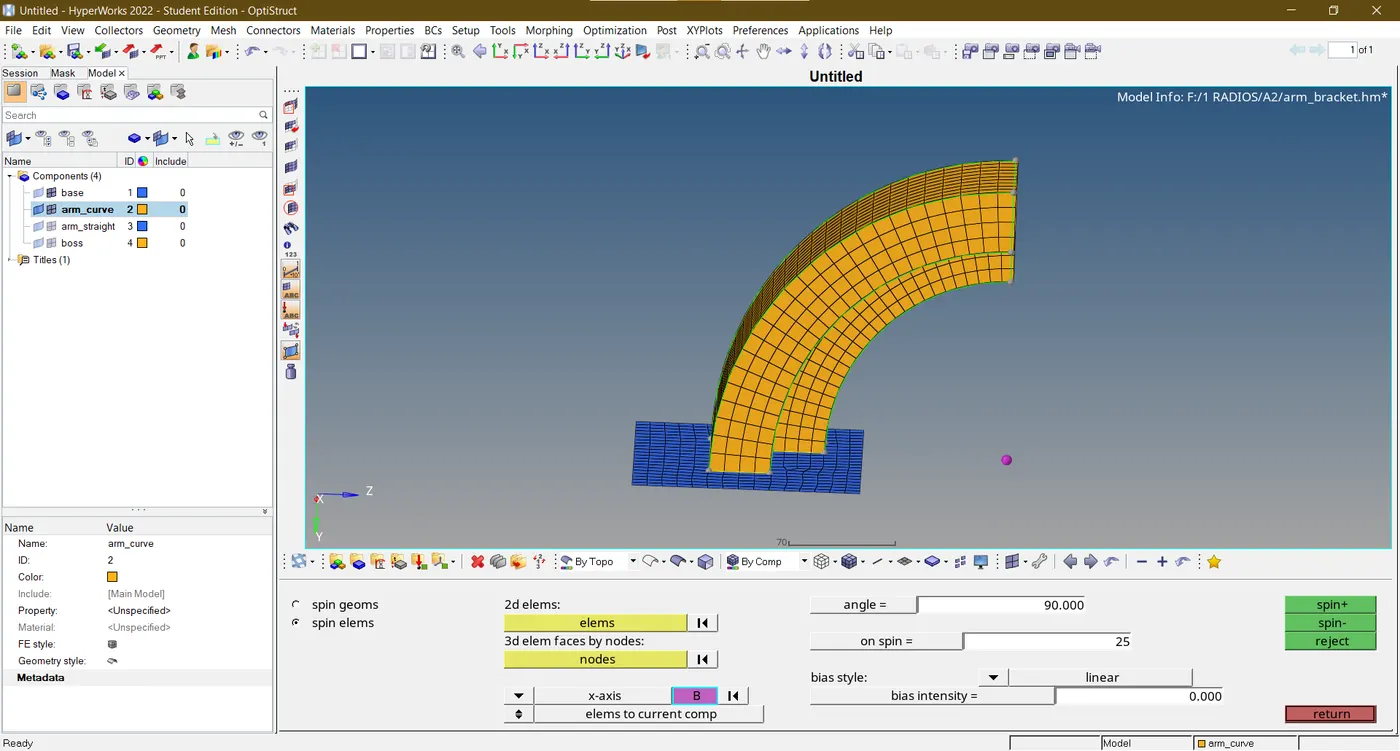
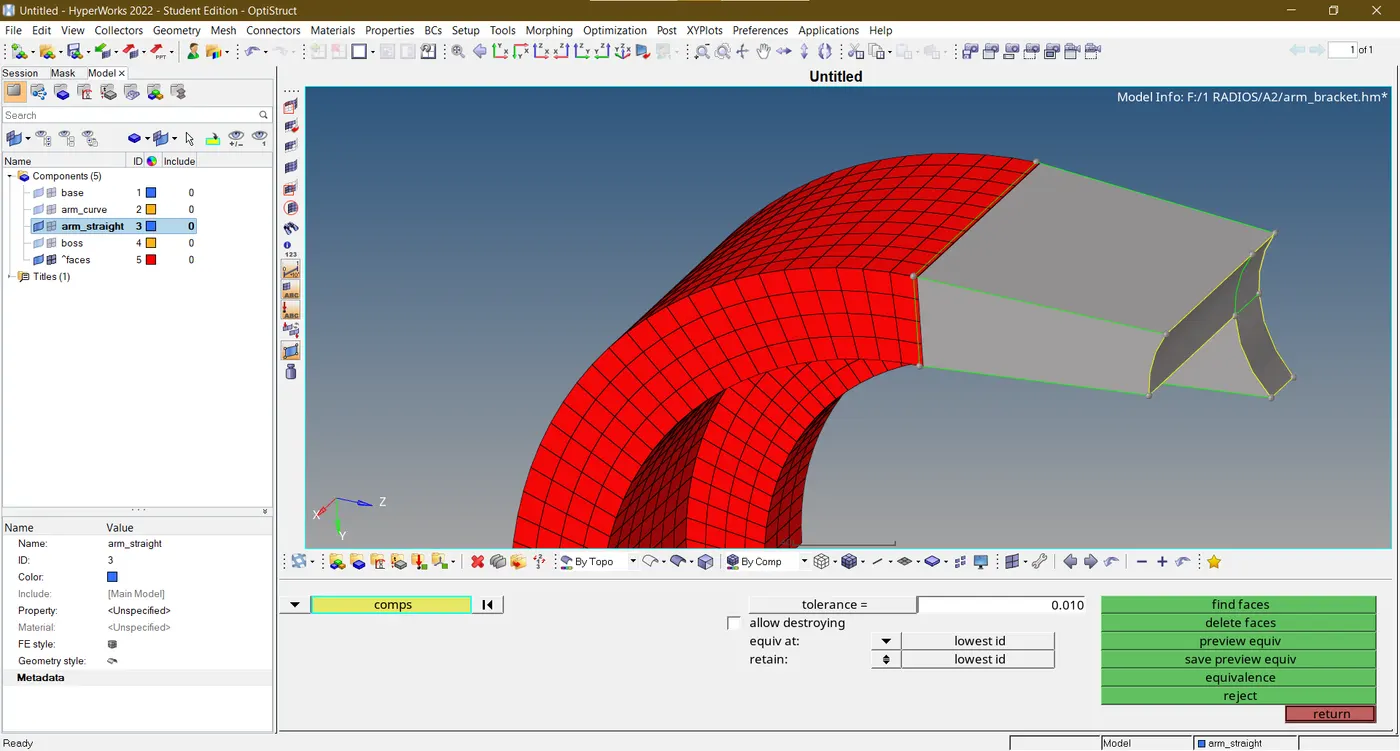
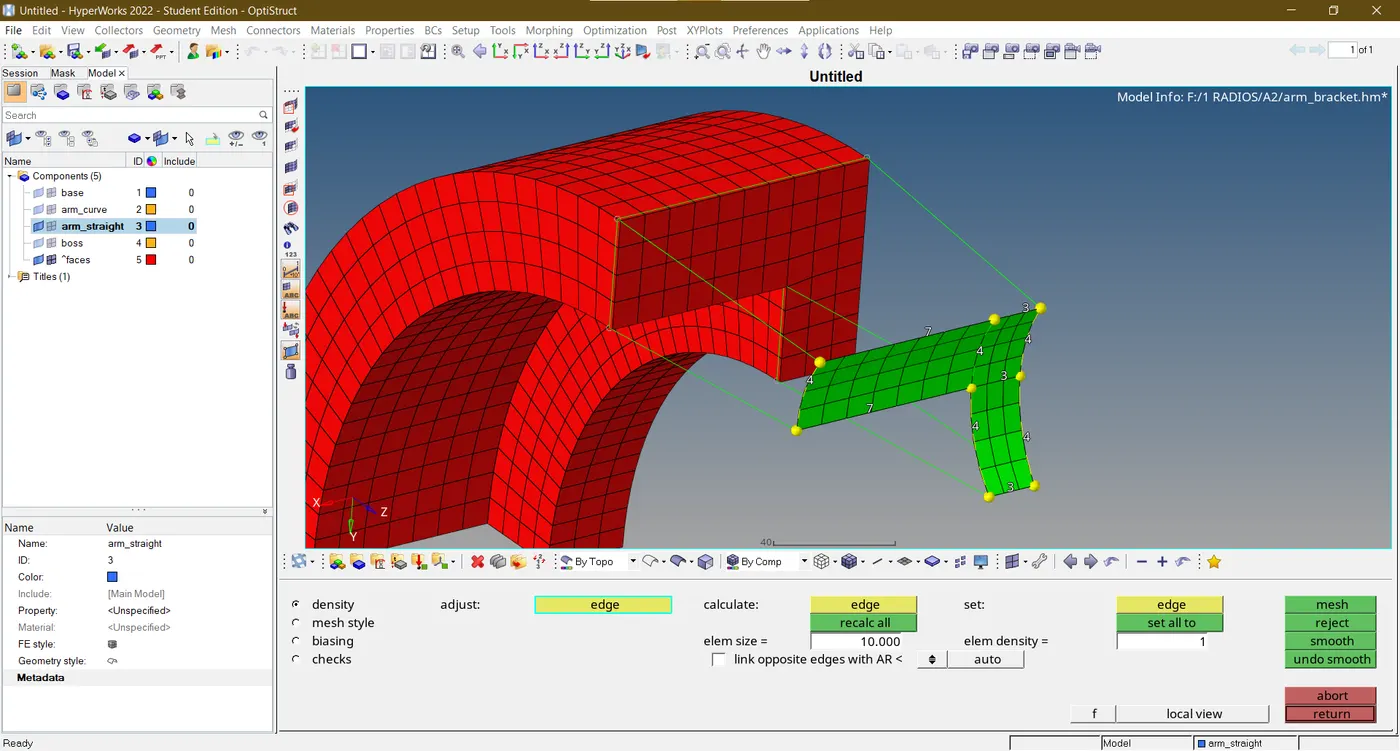
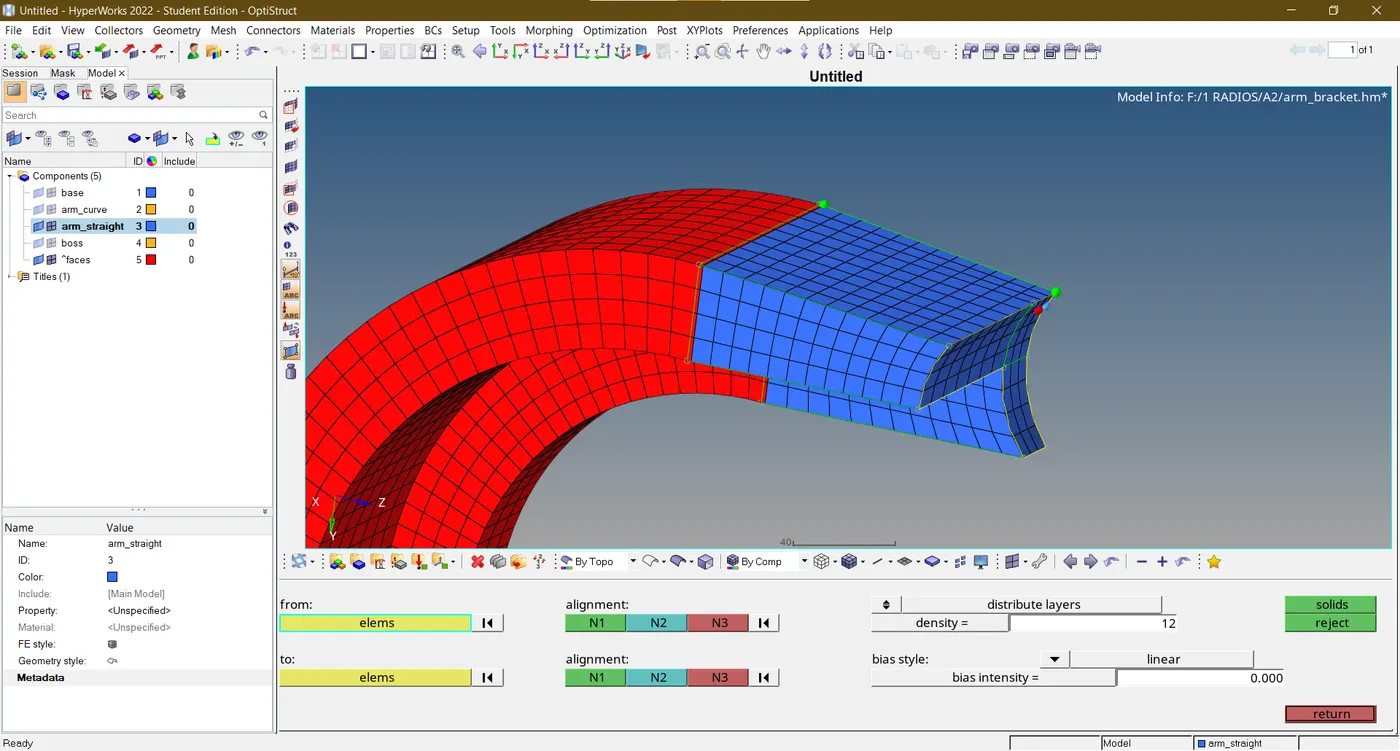
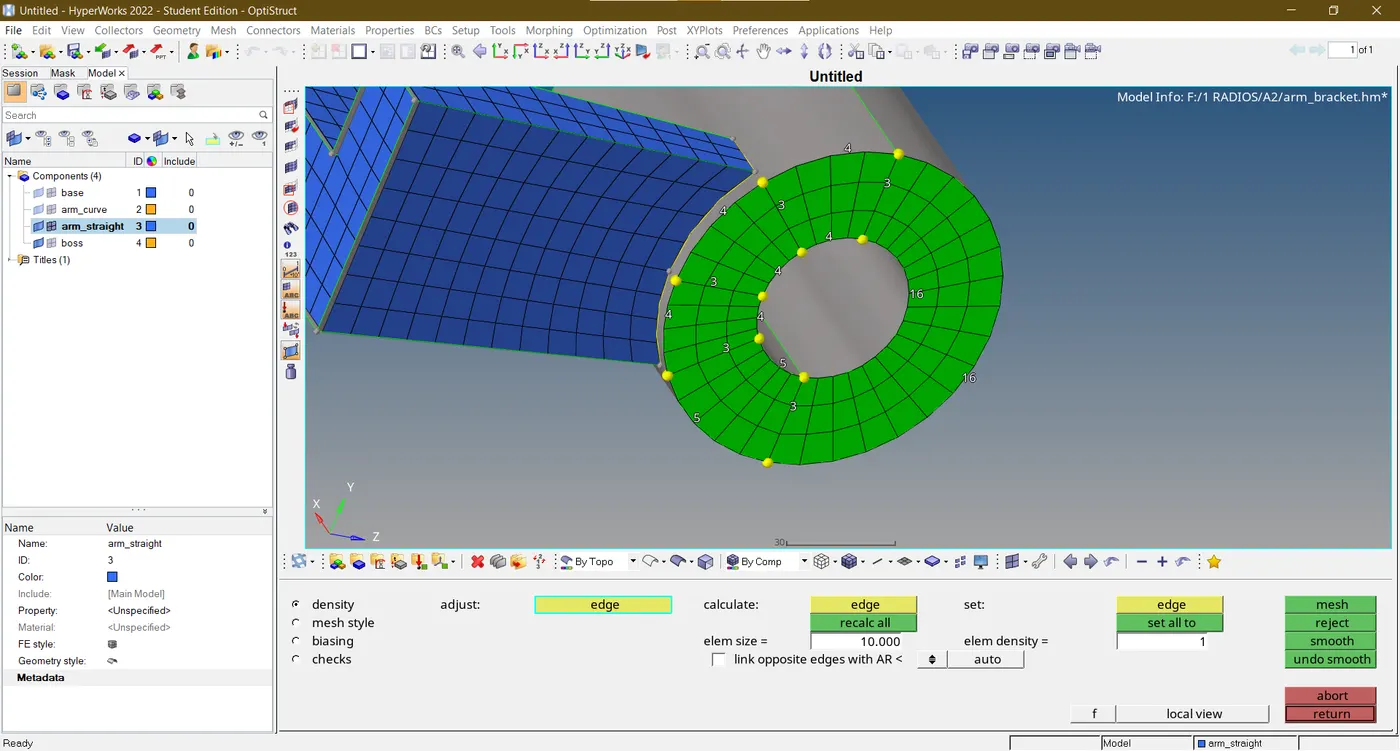
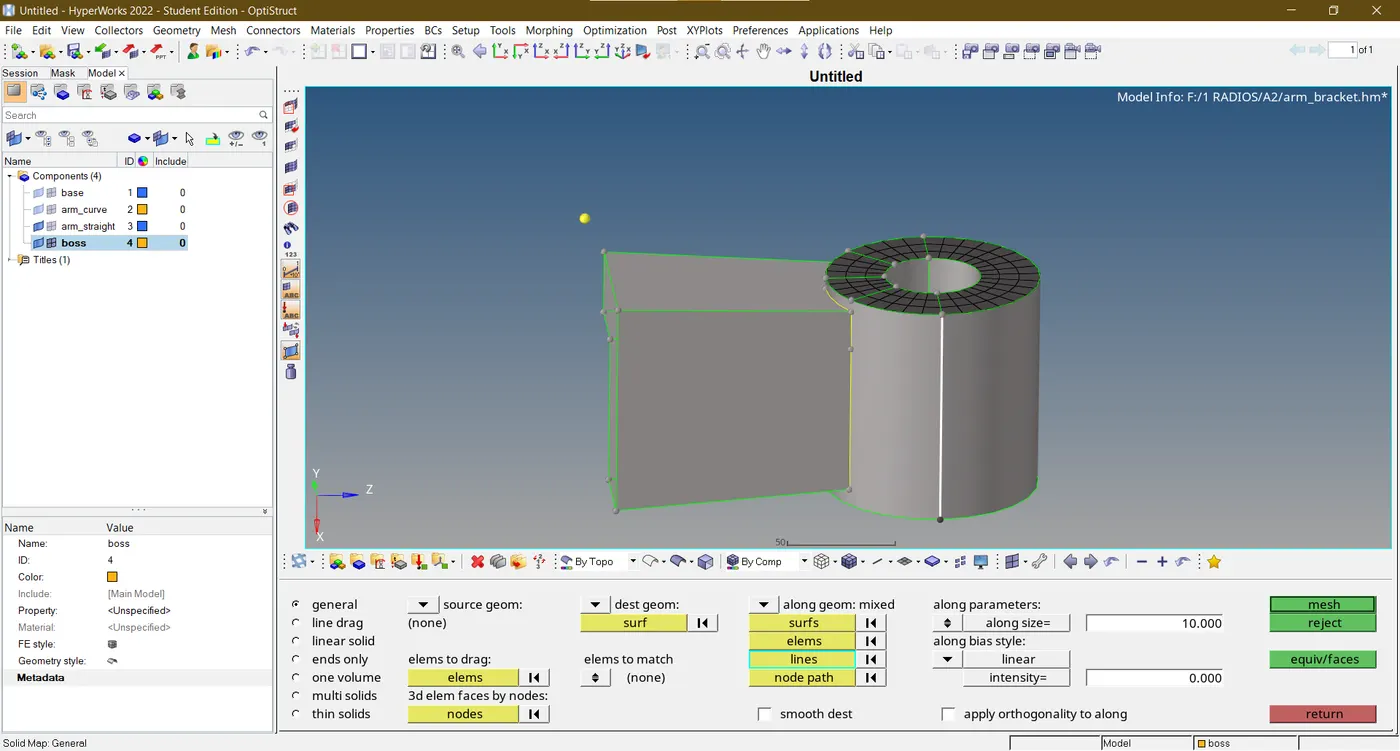
- Lastly, all 2d elements(QUAD4) which are used as reference for creating 3D elements are deleted.
- The final image of the hexa meshed arm bracket is portrayed below.
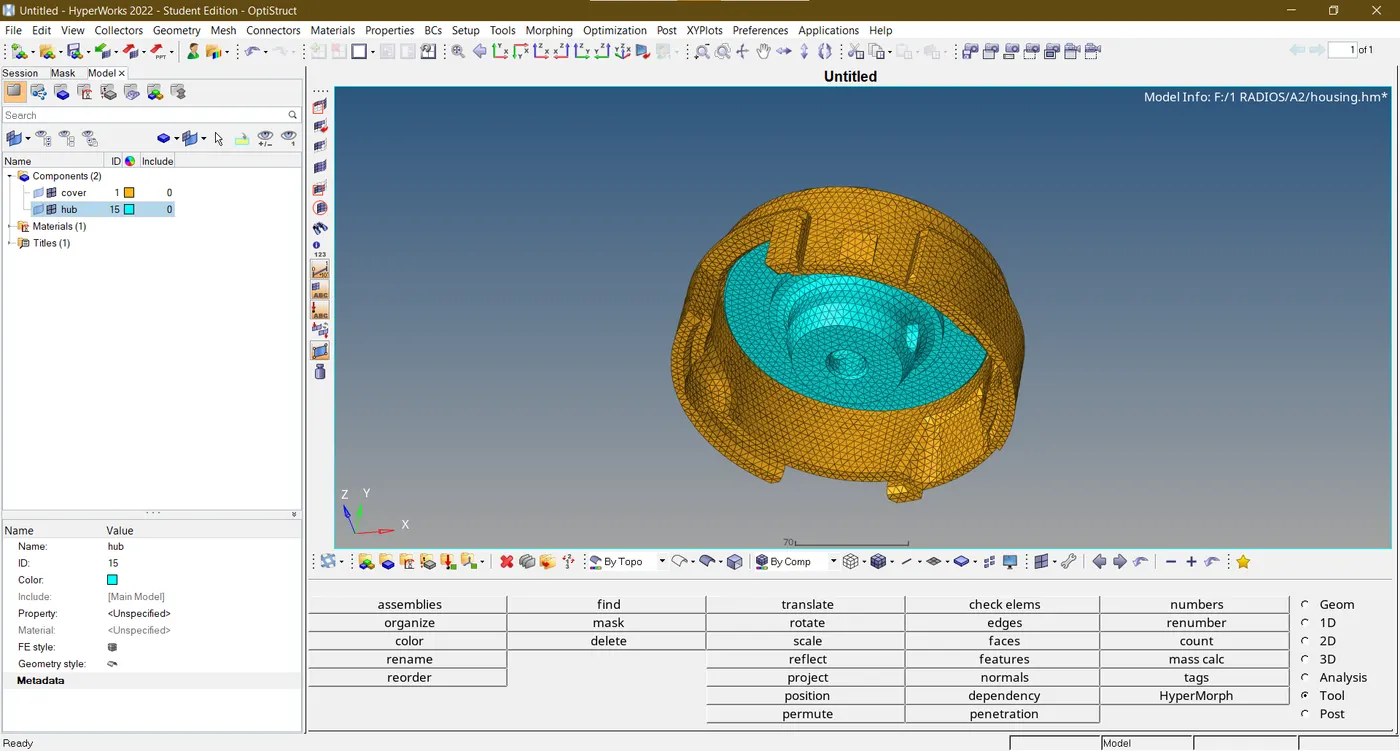
- In this housing model tria elements are used for meshing with prescribed quality criteria.
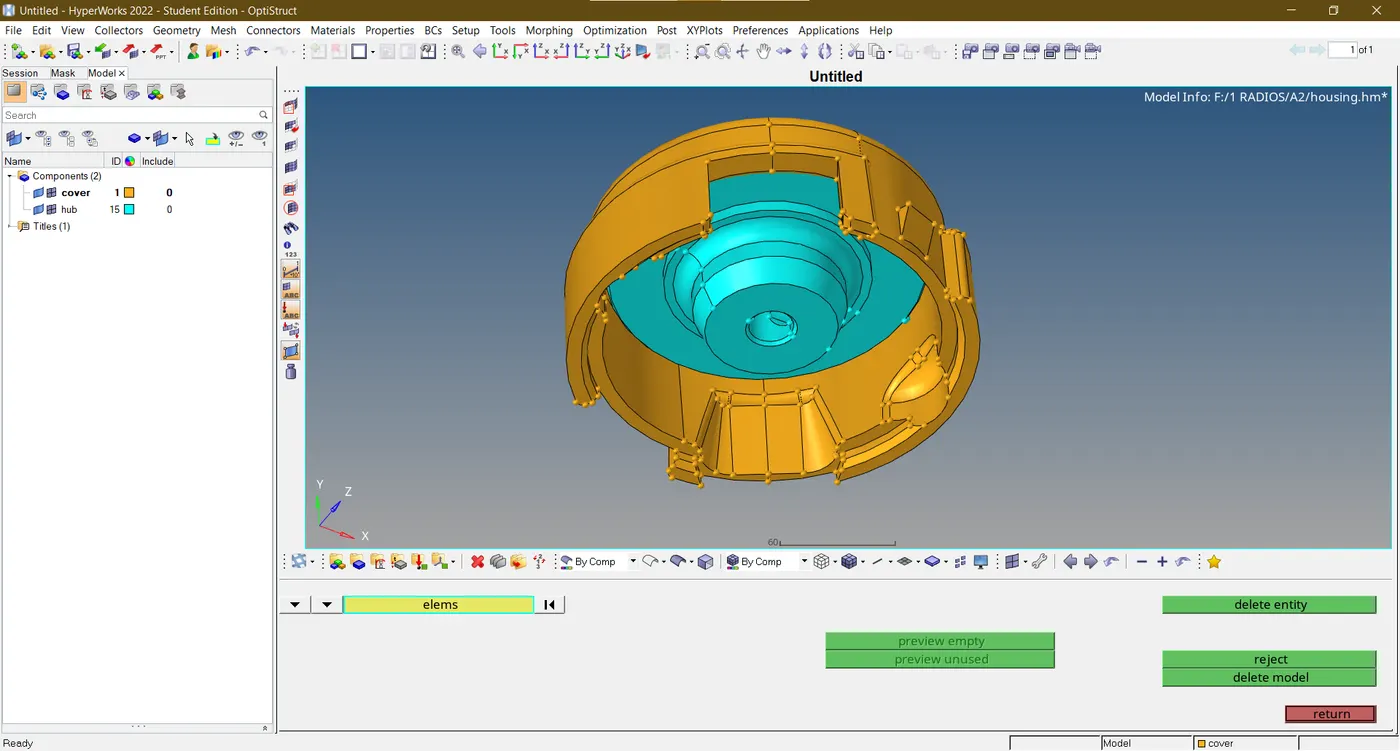
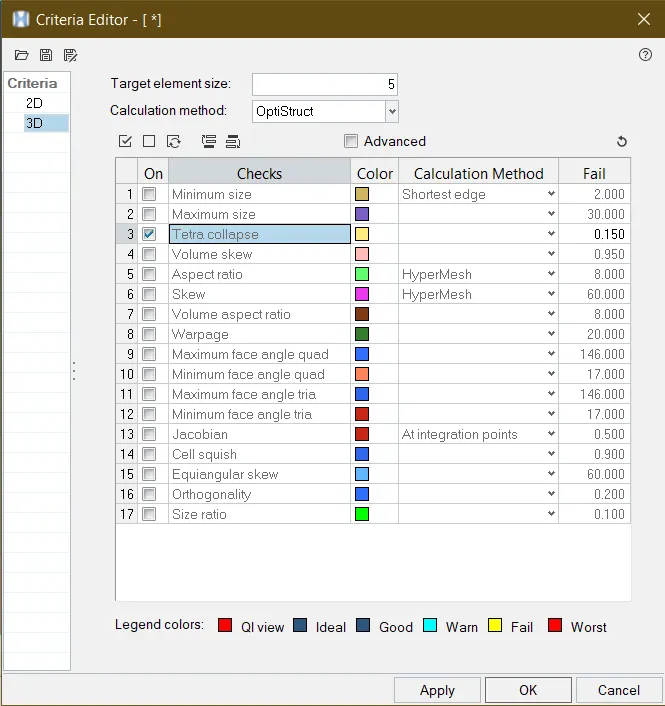
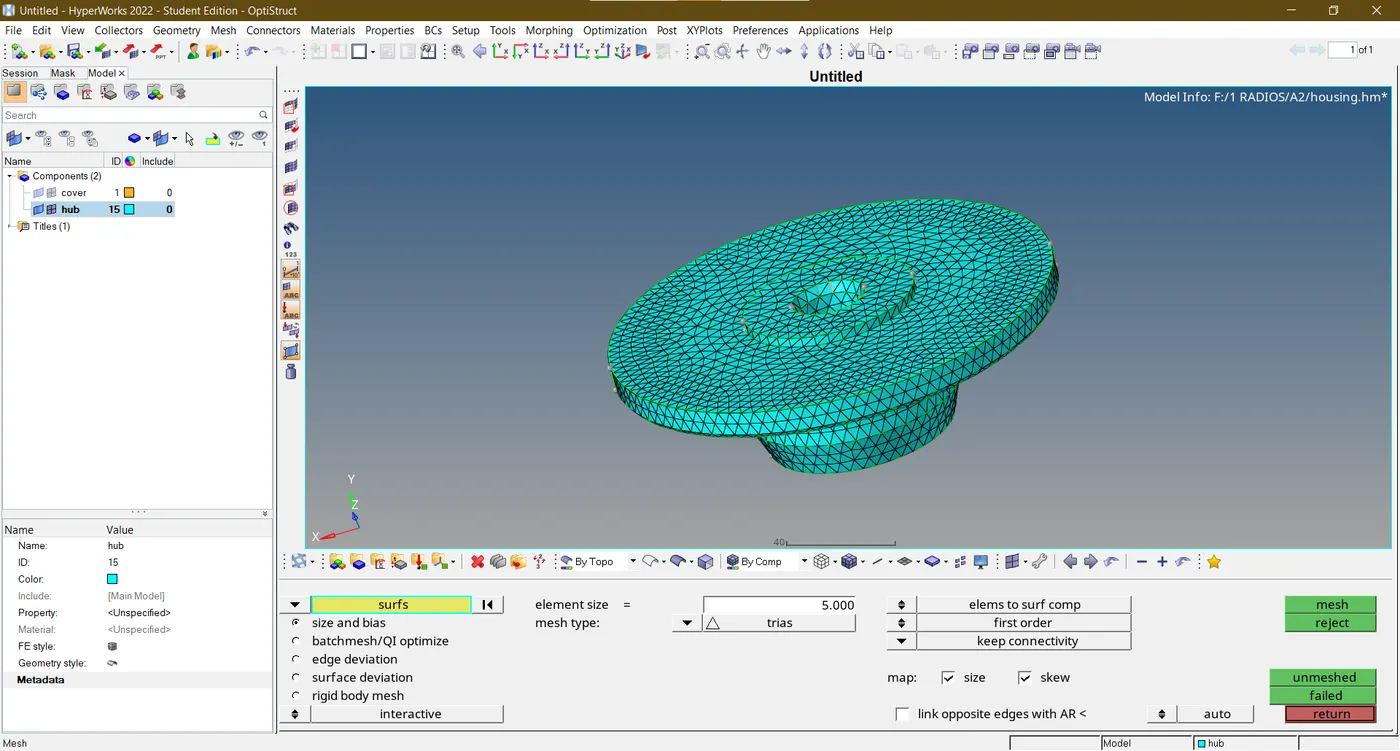
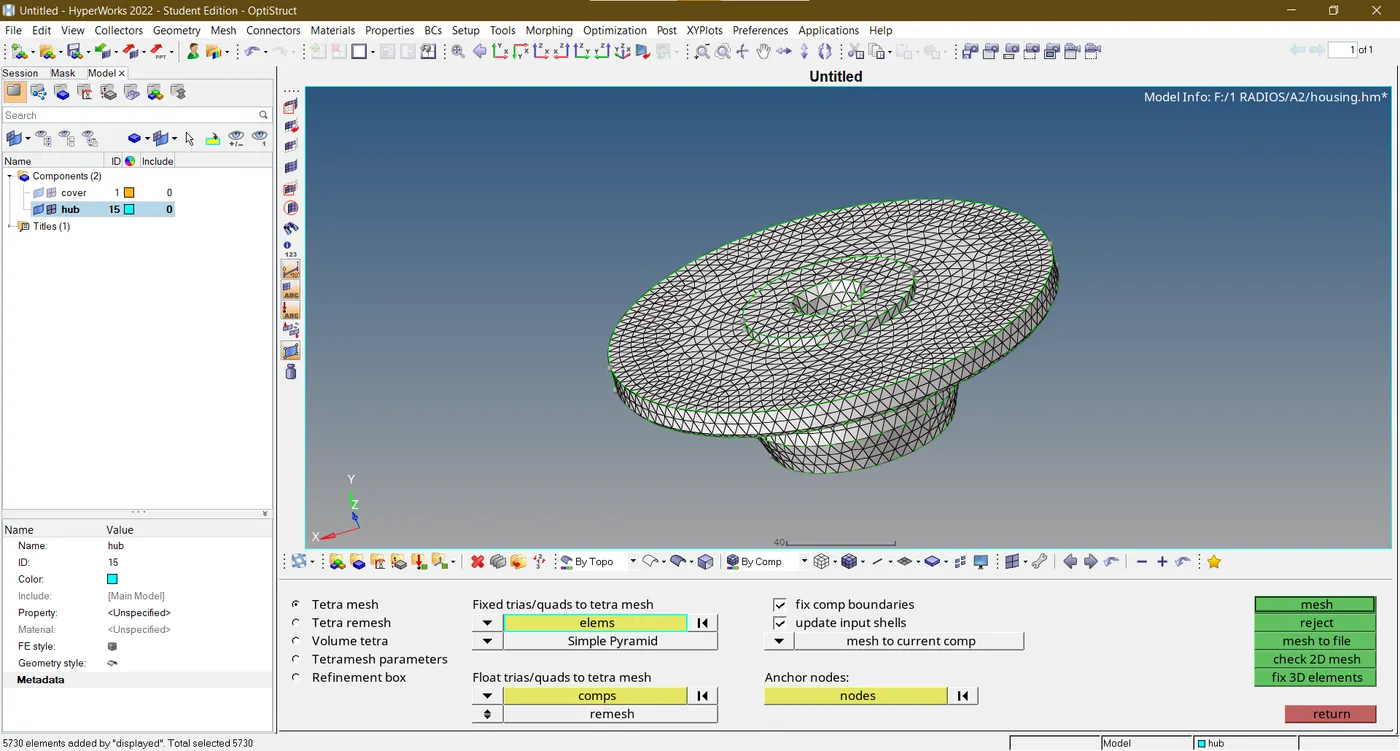
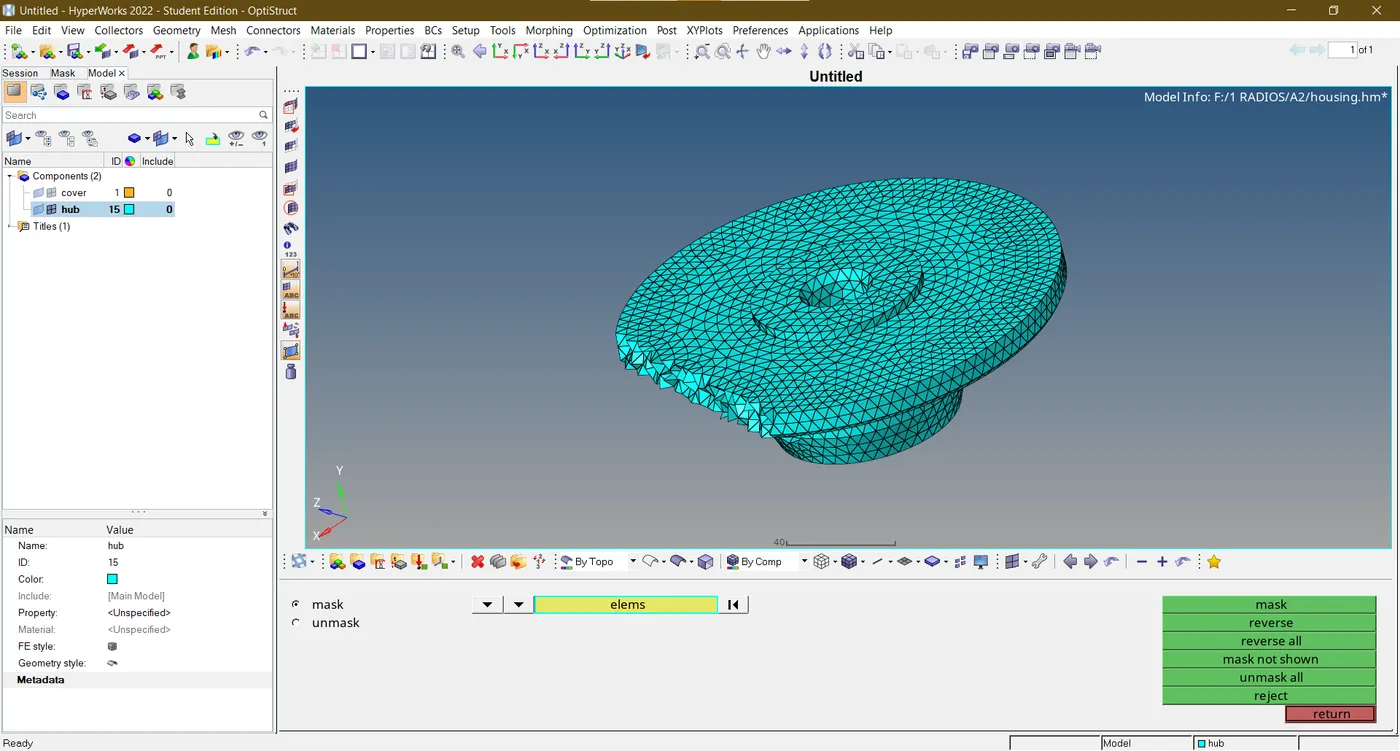
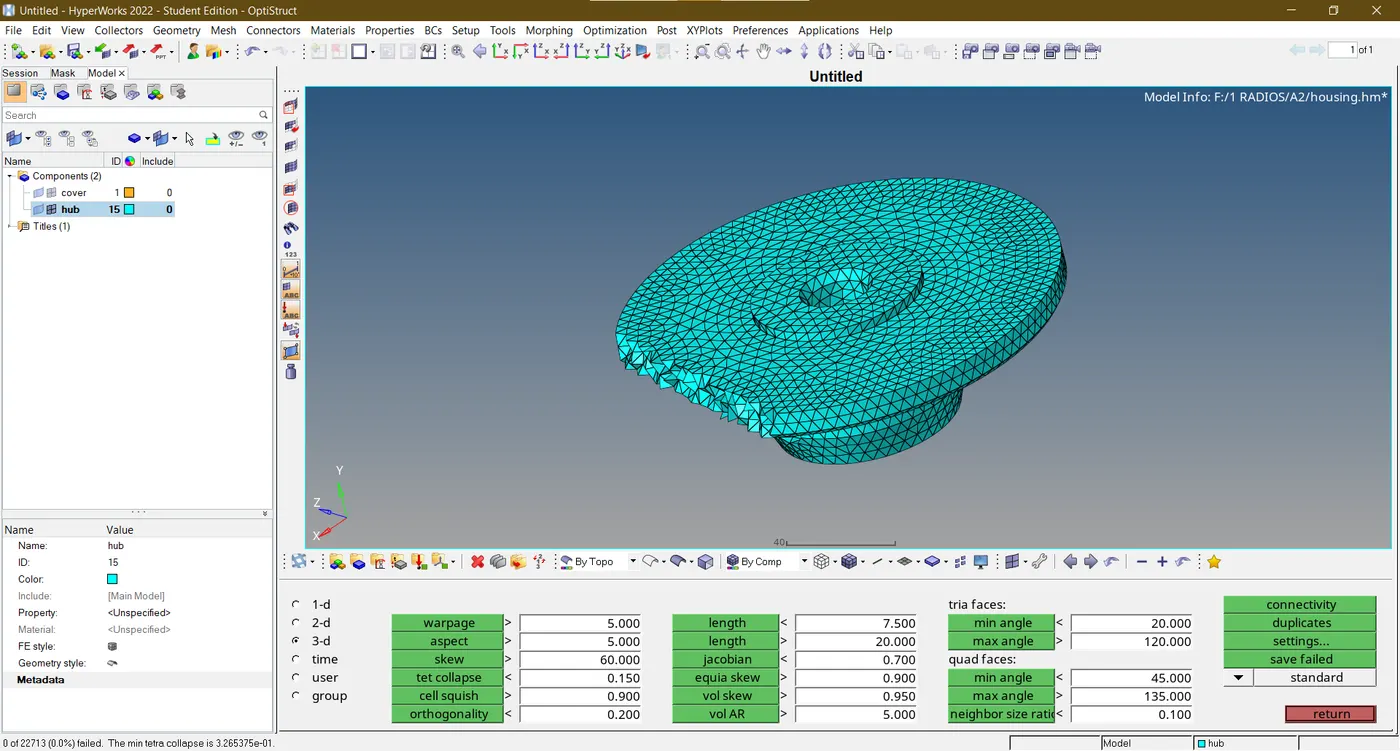
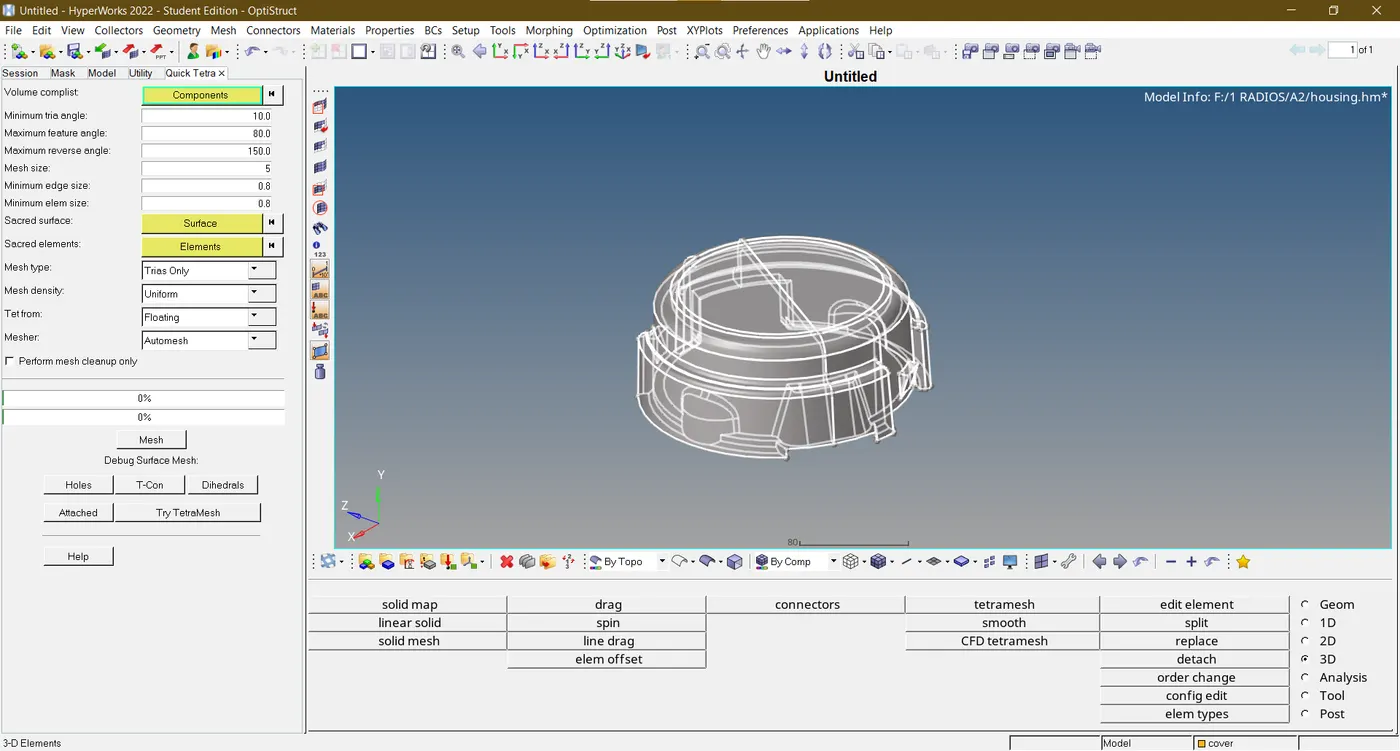
- On the housing component Quick tetra mesh is used from the Utility tab to establish 2d and 3d elements with auto geometrical clean up.
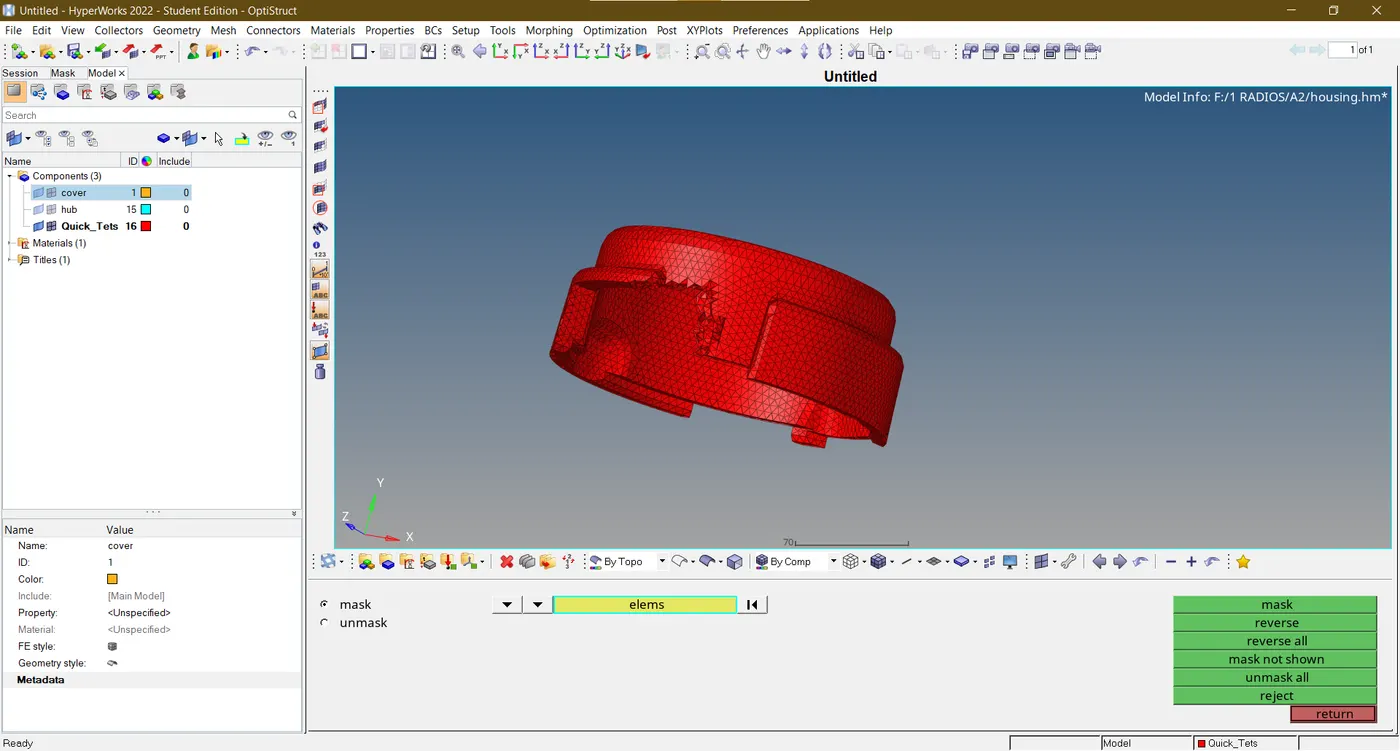
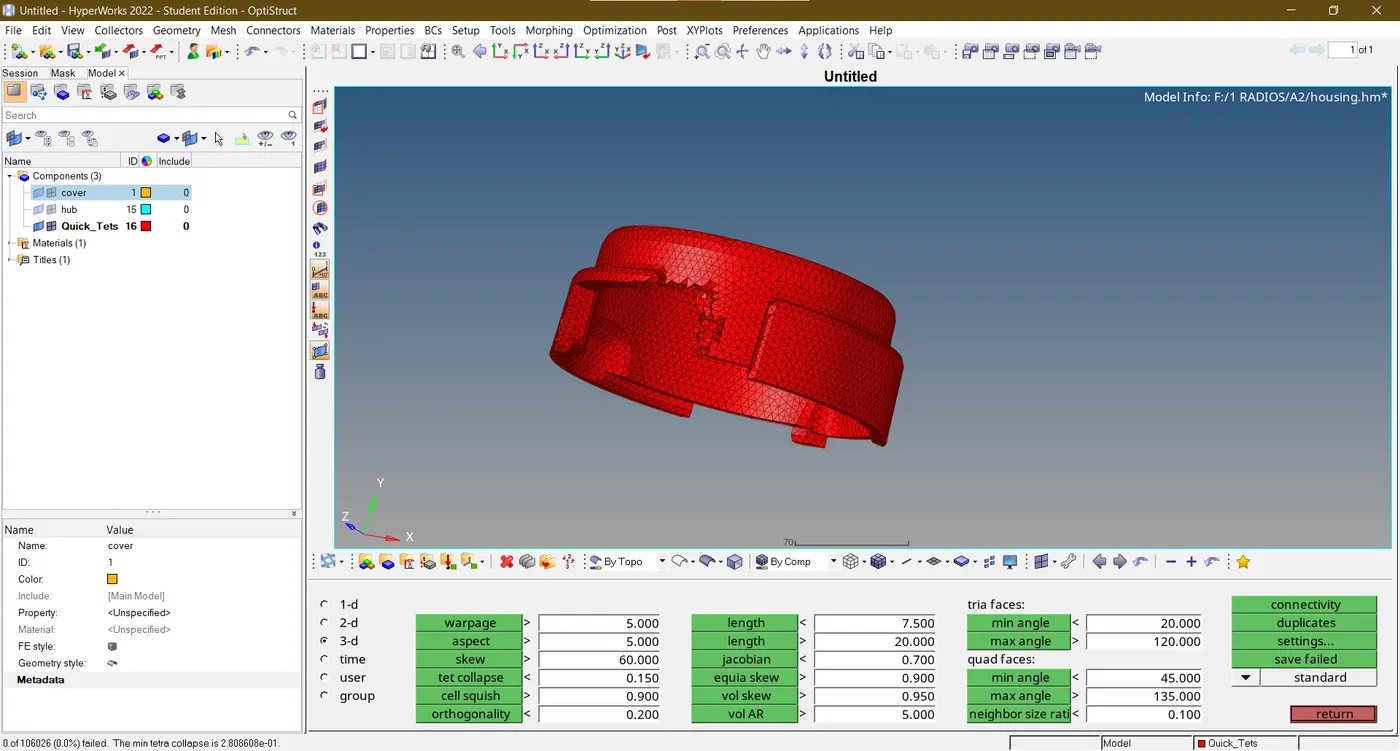
- The final image of the housing and hub displayed below is zero % tet collapse elements.
CONCLUSION
- The editing of various cards and files in RADIOSS Solver gives a basic experience of using it effectively further ahead with bigger components.
- The hexa mesh tools used in this assignment give a thorough idea of how to manage intricate geometries with different configurations.
- The tetra mesh methods also add to the scope of our skill set corresponding to different conditions and scenarios of time and geometries.