Mechanical · Course

Advanced Aerodynamic Simulations using CONVERGE

A comprehensive course on CFD for Aerodynamic Applications using CONVERGE-CFD Software. This course is highly suited for beginners

Duration
12 weeks
Content
13 hours
Projects
3
Mode
Online
Overview

What you'll
be able to do.

  • This course aims to provide a hands-on exposure to major aerodynamic simulations performed in the industry.
  • Students will be working on base grid generation, case setup, boundary and initial conditions, simplified forms of the Navier-Stokes equations, and then solve them in CONVERGE.
  • Through this course, students will gain a good insight into how to solve CFD problems in a 3D environment and approach solutions to real-world problems using transport equations.
Tools you'll use
CONVERGEParaview
Curriculum

4 modules,
built with industry.

Get the full syllabus ↓
  1. 01Advanced Aerodynamic Simulations using CONVERGE4 modules
    1. Preparing the Surface for Flow SimulationW01
      • In this module, you will learn,
        • To import your CAD designs into CONVERGE Studio for performing flow analyses.
      • The CAD geometry contains information on what the model is supposed to look like.
      • You will work on fixing any errors, if present, and then split the geometry into boundaries so as to set up the simulation.
      • This involves, but is not limited to:
        • CAD import and cleanup
        • Splitting the model into boundaries and flagging these boundaries
    2. Setting up the SimulationW02
      • In this module, you will learn about
        • Creating virtual wind tunnel
        • Setting the boundary conditions effectively
        • How to choose the right turbulence model?
          • K-Epsilon Vs. K-Omega SST
        • Understanding Y+ and choosing suitable grid sizes for our simulation.
    3. Physics ModellingW03
      • A student of aerodynamics needs to familiarise themselves with how different concepts in physics are captured by mathematical models.
      • Without this understanding, an engineer will not be capable of setting up an external flow simulation with accuracy. We will cover the following modules under physical modelling:
        • Turbulence Modelling
        • Conjugate Heat Transfer
        • Shock Capturing
    4. Extracting Aerodynamic QuantitiesW04
      • The main reason for performing an aerodynamic simulation is to extract vital information from solutions like the drag and lift on specific boundaries.
        • Understanding the wake and the effect this will have on the aerodynamic parameters.
        • Extracting information such as drag and lift force from Converge CFD.
Industry projects

3 projects
you'll ship.

Our projects are designed by experts in the industry to reflect industry standards. By working through our projects, Learners will gain a practical understanding of what they will take on at a larger-scale in the industry. In total, there are 3 Projects that are available in this program.

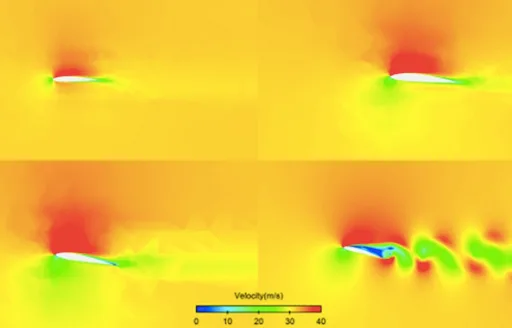
Flow over an Airfoil NACA 2412

Flow over an Airfoil NACA 2412

In this project, students will work on a NACA 2412 Airfoil and run cases for different angle of attacks (AOA). They will simulate to analyze the drag and lift force experienced by …
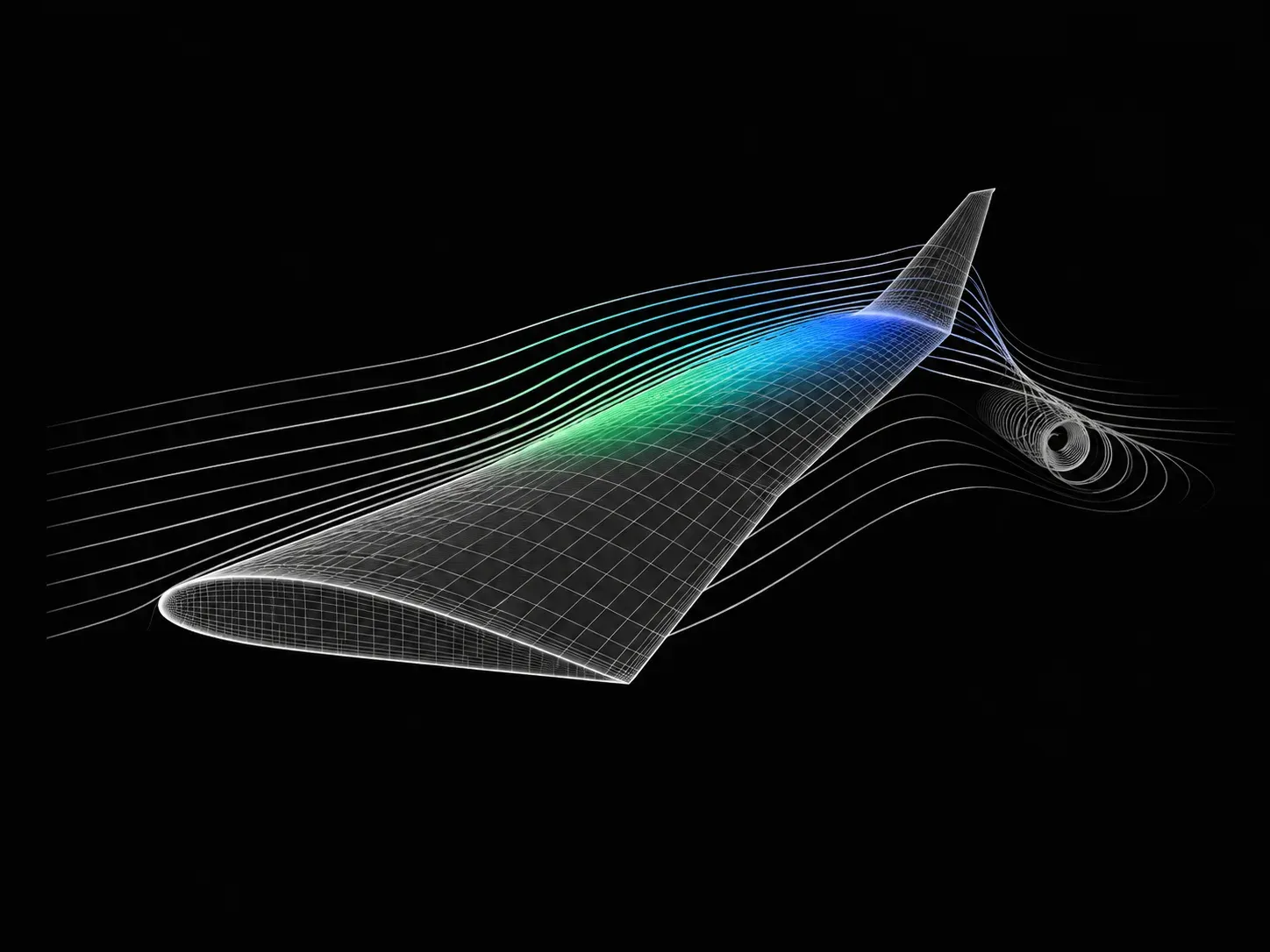
Modeling and Simulation of Flow around an Ahmed Body

Modeling and Simulation of Flow around an Ahmed Body

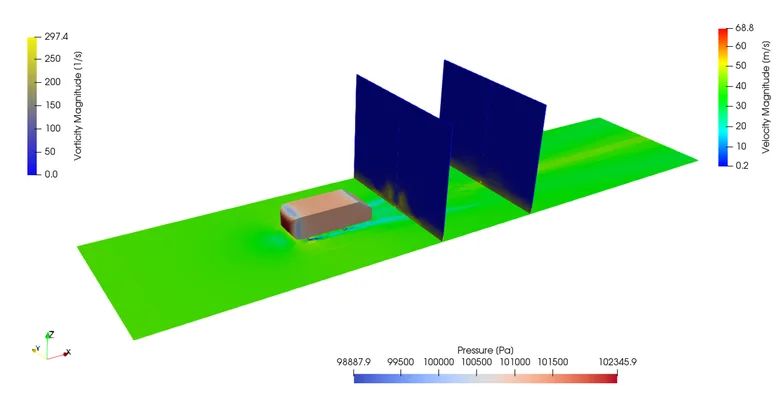
In this project, students will create the Ahmed body geometry of 35 degree slant angle and set up the case in Converge Studio. They will then simulate to analyze the drag and the d…
Flow over the FSAE Racing Car

Flow over the FSAE Racing Car

In this project, the students will simulate a FSAE racing car in two different conditions, one with plenty of turns and one with a straight track, in the Converge CFD software. The…

Fee

One fee.
Everything included.

Become job ready with our comprehensive industry focused curriculum for freshers & early career professionals

Premium
₹40,000
Inclusive of all charges
  • 1 Year Access
  • Personalized Page
  • Live Individual & Group Sessions
  • Personalized & Hands-On
  • Job-Oriented Industry Relevant Curriculum
Check eligibility →
FAQ

Questions,
answered.

Do I need to be an engineer to pursue the aerodynamics engineering course?

You may not necessarily be an engineer, as a student from Mechanical, Aerospace, or Automobile Engineering can also take up this course.

Can I pay my fee in installments?

Skill-Lync provides you with a no-cost EMI option to pay the fee for the aerodynamic design course.

What will I learn in the aerodynamic design course?

The course will cover different aspects of aerodynamic simulations, and you will also get to work on projects with industry professionals.

Will I be taught any industry-relevant tools during the course?

You will get hands-on experience using CONVERGE and Paraview during the course duration.

What salary will I earn once I pursue the course?

The salary for an aerodynamic engineer depends on experience. But the average salary of an aerodynamic engineer lies between Rs. 10 Lakhs to Rs. 25 Lakhs.

Will I get a certificate post the completion of the course?

Yes, you will get a certificate of completion once you finish this course.

What is the duration of the course?

The duration of the course is 12 weeks.

Next step

Not sure it's
the right fit?

A counsellor will walk you through the syllabus, projects and fee options — and tell you honestly if another course suits you better.

Get the syllabus + a call back

We'll email the full syllabus and call within one working day.

By submitting you agree to our Terms and Privacy Policy.

Call usEnquire

Talk to a career counsellor

Free 20-minute call. We'll map the right course to where you want to work.

By submitting you agree to our Terms and Privacy Policy.
