Week 9 - Attachment Feature Creation - Challenge 1
DESIGNING RIBS FOR THE COIN HOLDER
OBJECTIVE
To create the Ribs in the coin holder by following design rules
INTRODUCTION
Ribs
When the normal wall thickness is not stiff enough or strong enough to stand up to service conditions the part should be strengthened by adding ribs rather than making the whole wall thicker. The principle is the familiar one used in steel girders where 'I' and 'T' sections are almost as rigid as solid beams but are only a fraction of the weight and cost. Ribs are used to improve the rigidity of a plastics part without increasing the wall thickness so much that it becomes unsuitable for injection moulding. Ribs are important in the design of plastics parts because they allow us to make a component rigid without making it too thick.
Points to be considered while designing ribs
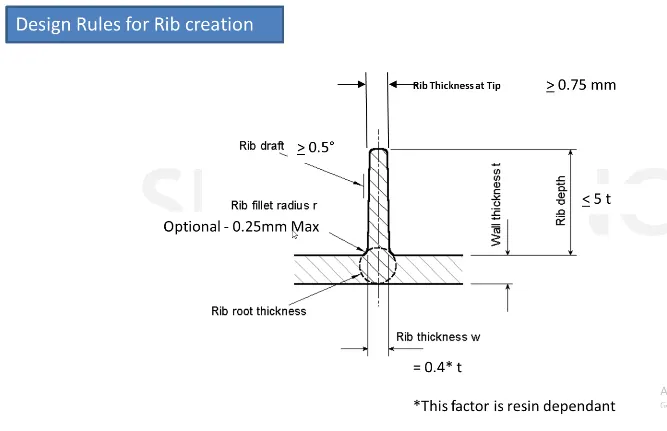
- The draft angle should be minimum 0.5° per side. Taper ribs for mould release.
- The rib thickness should be minimum 40% to maximum 75% of the wall thickness
- Rib depth should not be more than 5 times the rib thickness.
- Rib root thickness should not be more than 30% greater than the wall thickness.
- Fillet radius should 0.25mm maximum.
- Ribs should not be placed in the side walls.
- Unidirectional ribs should be spaced apart by at least 2 and preferably 3 or more times the nominal wall thickness.
Procedure for creating ribs
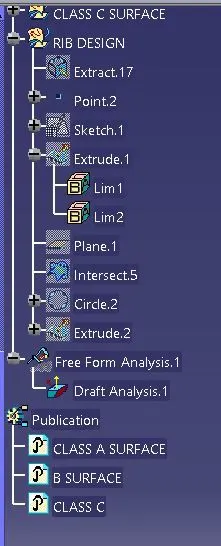
- Extract the bottom surface of the coin holder solid part.
- Create a line on the extracted surface
- Extrude the created sketch along the direction of tooling axis. Extruded length should be 5xt. component thickness =2.5mm 2.5x5=12 mm and 1mm in opposite direction
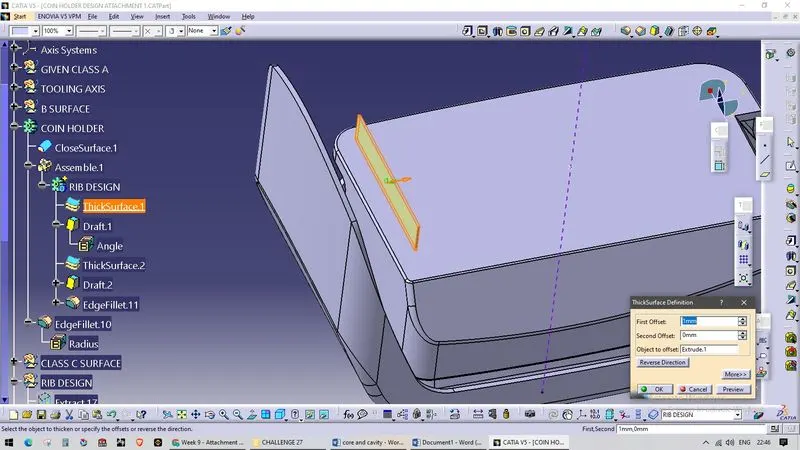
- Insert a new body switch to part design thicken the extruded surface to 1mm. consider the design rule 40% of thickness, 0.4x2.5=1mm
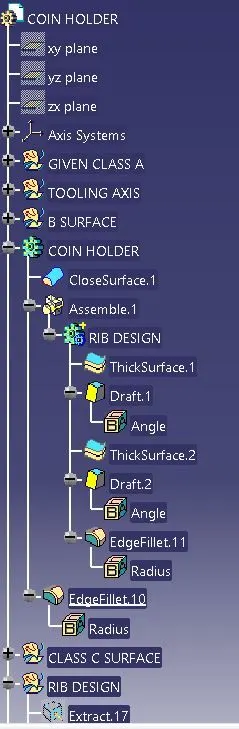
- Using Boolean operation assemble the part body to main coin holder
- Using the same procedure create an another rib
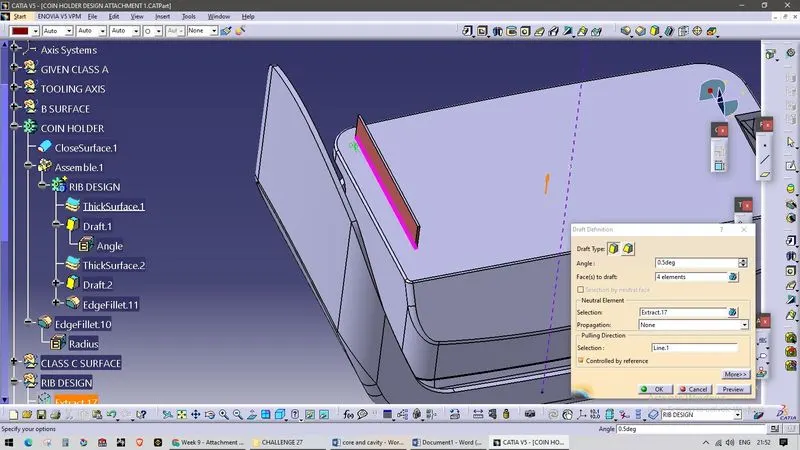
- Create draft on all the vertical surface with 0.5° draft angle, pulling direction as tooling axis and neutral element as extracted surface
- The top rib thickness should be more than 0.75mm
- Apply edge fillet r0.25mm to all the edges of the ribs
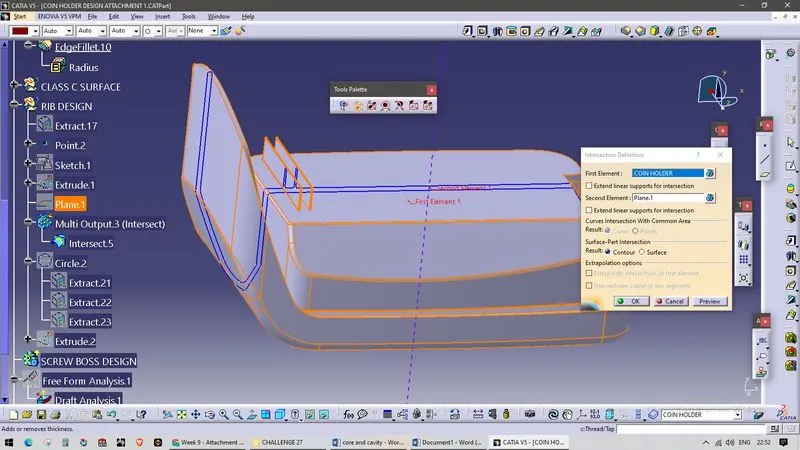
- To check whether the rules are followed correctly create an intersect. Create a plane with respect to tooling axis point and XY plane. create intersection to the coin holder part w.r.t the plane you created.
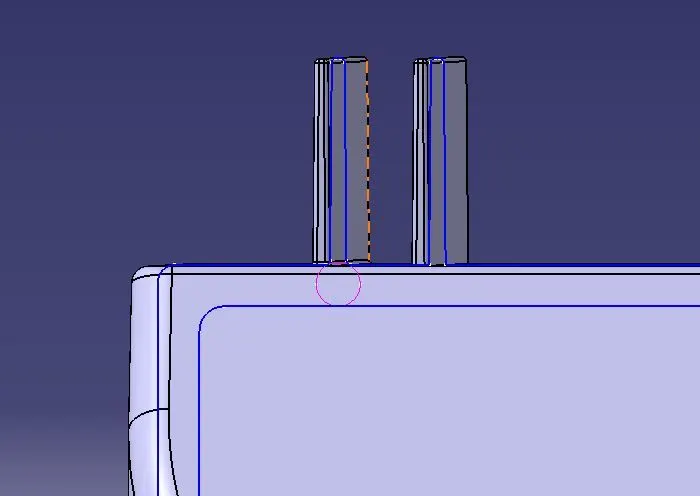
- To measure the rib root thickness, create a circle using tritangent option. Measure the diameter that should be + or - the 30% of the wall thickness.
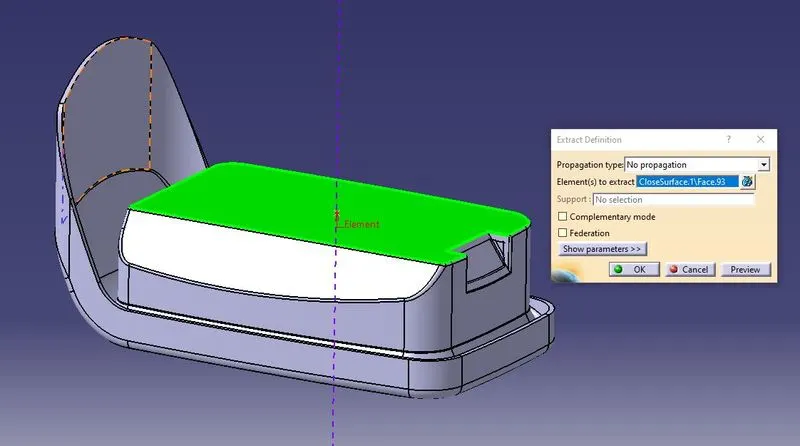
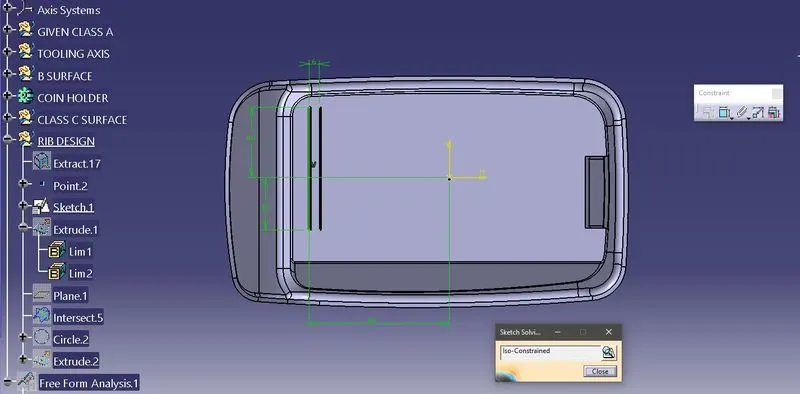
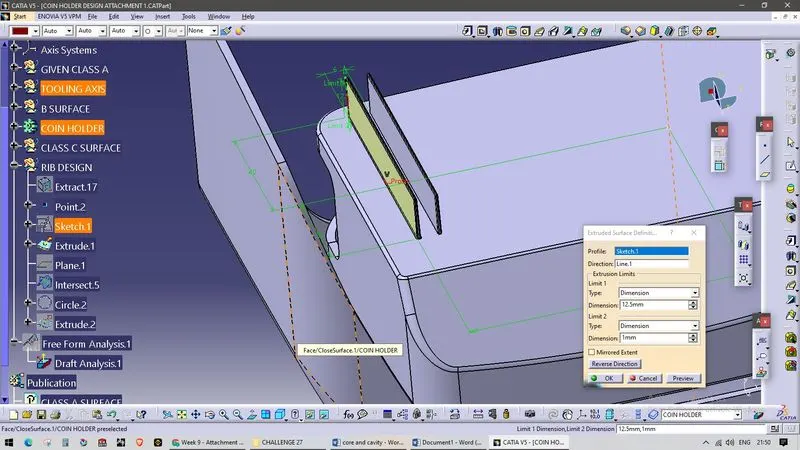
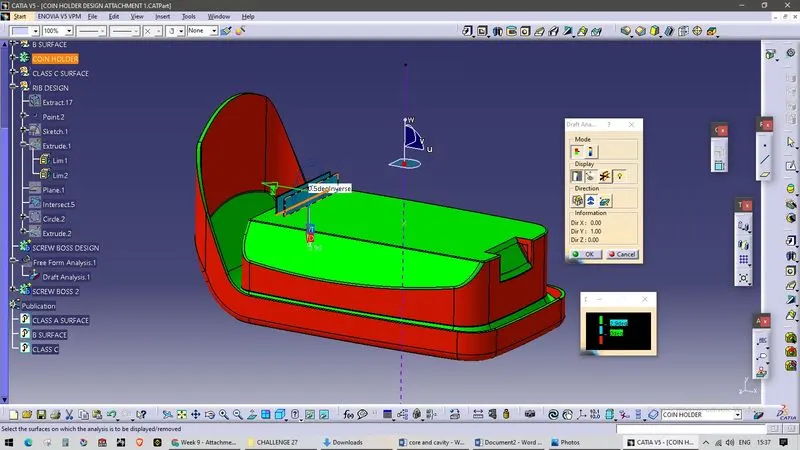
Feature tree
CONCLUSIOM
Thus the Rib attachment has been created in the coin holder