Week 8 - Challenge 2 - Base Bracket Design
Create the Base Bracket Plastic component through the given Class-A surface. To begin with, the tooling axis for the given Class-A Surface should be created meeting the requirements of the draft angle and at the end perform the Draft analysis on the model.
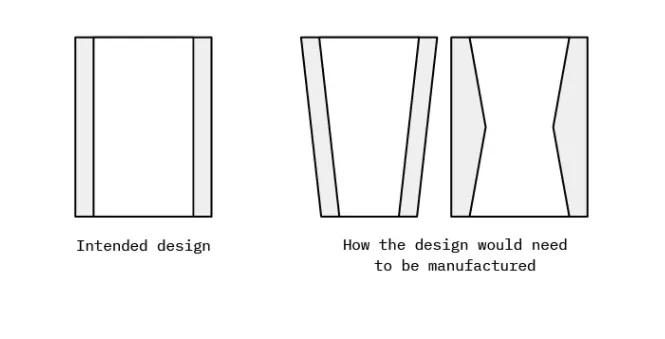
DRAFT
They are a required feature. A functional part for injection molding has to have drafts facing both cavity and core sides to reduce the risk of damage to the parts and ensure ejection. As the molten plastic flows into the closed die and fills the cavity, the material shrinks inside the mold upon cooling and as a result grips the core
PROCEDURE
- OPEN THE MODEL IN GENERATIVE SHAPE MODULE
- DEFINE TOOLING AXIS FOR GIVEN INPUT(A-CLASS SURFACE)
- CHECK DRAFT ANALYSIS
- CONSTRUCT B-CLASS SURFACE
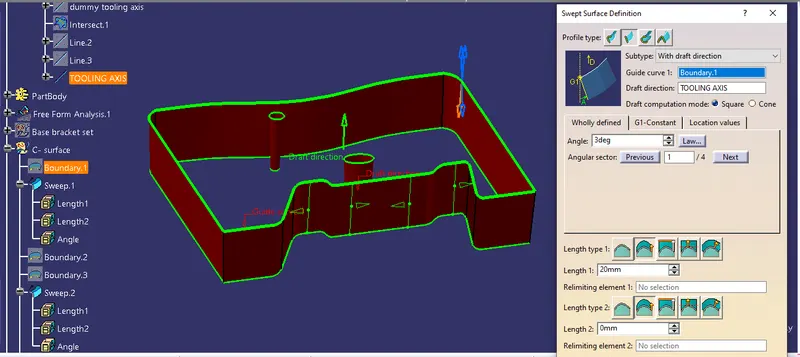
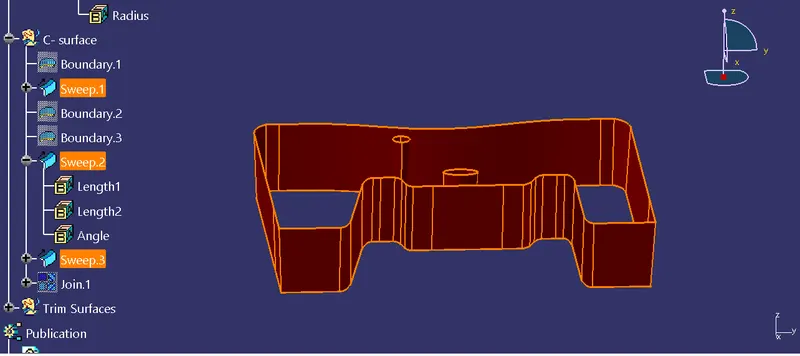
- CONSTRUCT C-CLASS SURFACE
- JOIN A & C CLASS SURFACE
- TRIM (A+C) WITH B SURFACE
- CHECK BOUNDARY -ENSURE CLOSED SURFACE
- MAKE CLOSED SOLID IN PART MODULE
- AGAIN CHECK THE DRAFT ANALYSIS FOR GENERATED SOLID PART
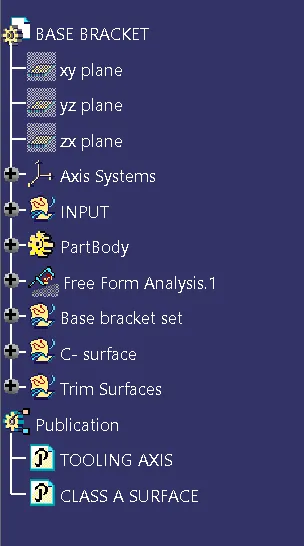
TREE STRUCTURE
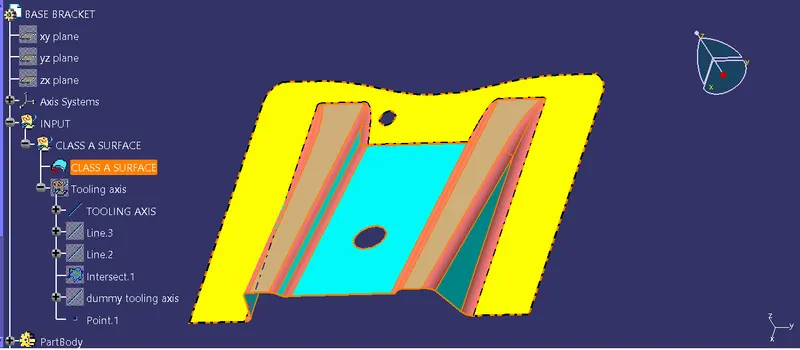
A-CLASS SURFACE
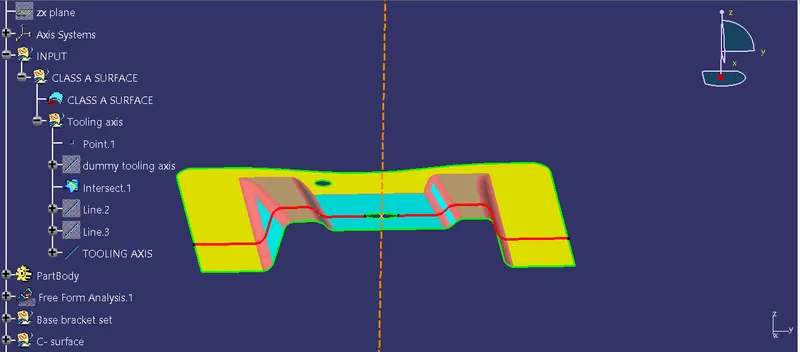
TOOLING AXIS
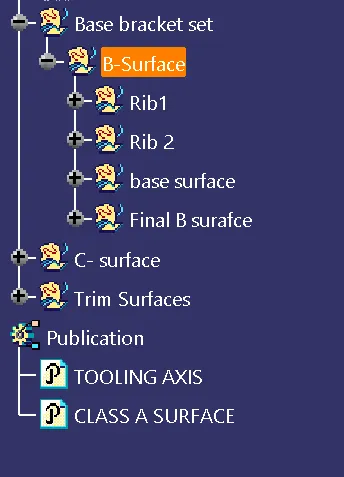
B-SURFACE
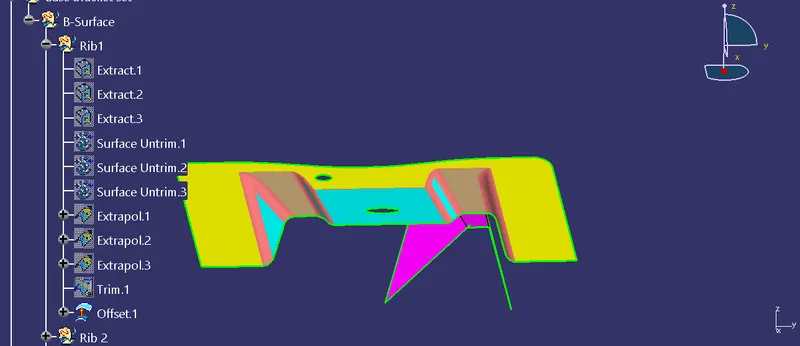
OFFSET RIB1
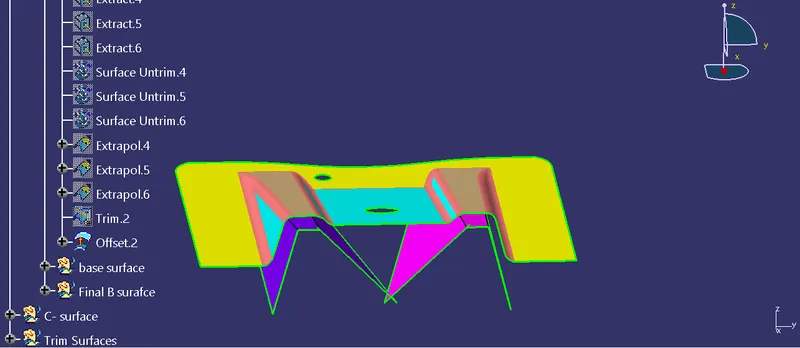
OFFSET RIB 1 AND RIB 2
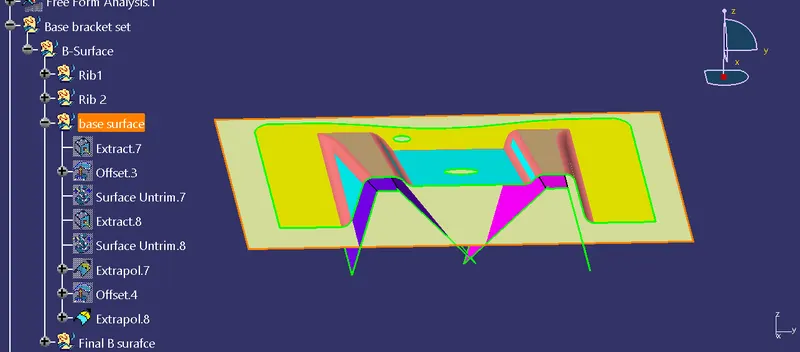
OFFSET-EXTRAPOLATED BASE SURFACE
TRIM SURFACE
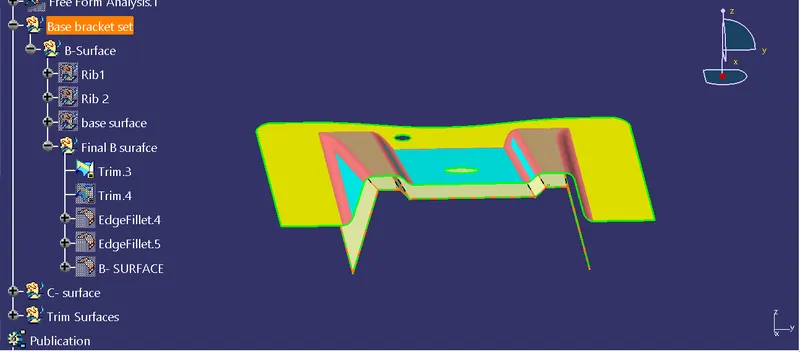
B-SURFACE WITHOUT FILLETS
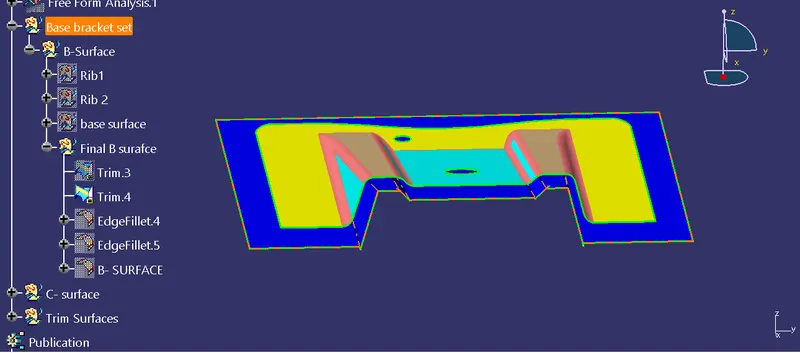
EDGE FILLETS 1
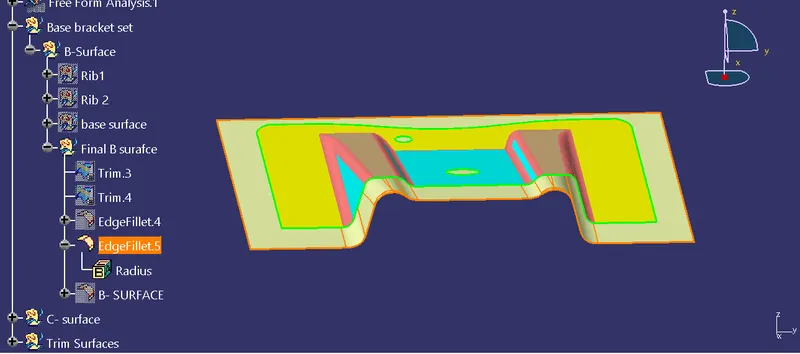
EDGE FILLETS 2
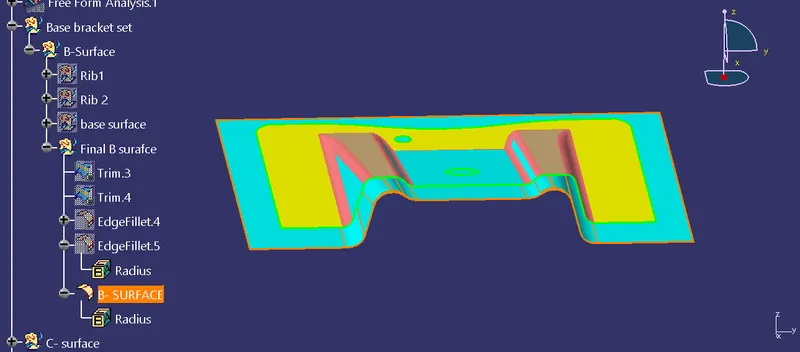
C-SURFACE(BOUNDARY-> SWEEP ALONG TOOLING AXIS)
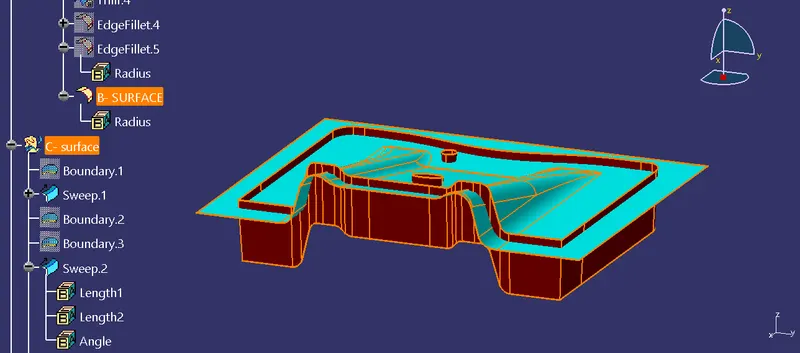
jOIN A-CLASS AND C-SURFACE
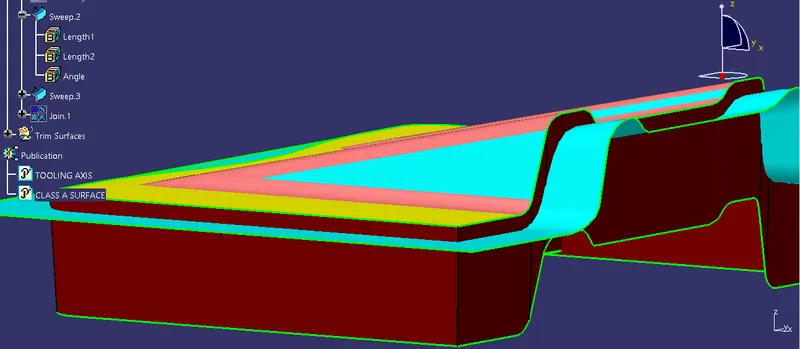
FINALTRIMMED CLOSED SURFACE
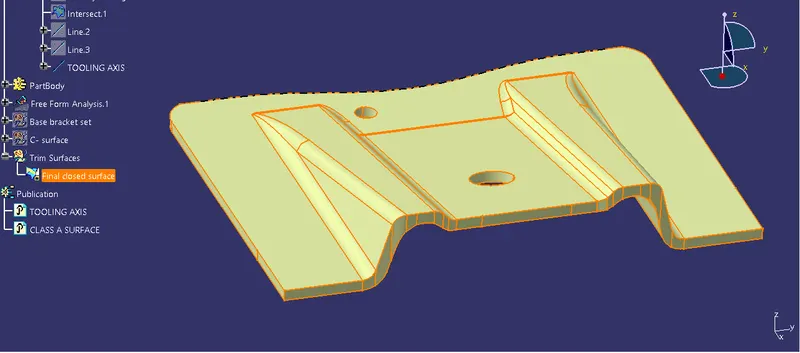
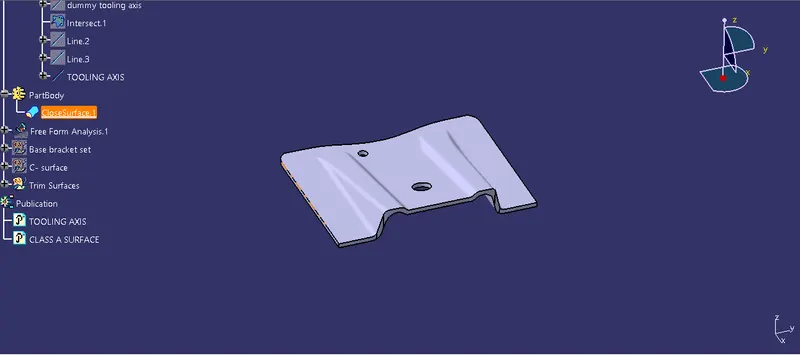
CLOSED BODY FROM FINAL TRIM CLOSED SURFACE
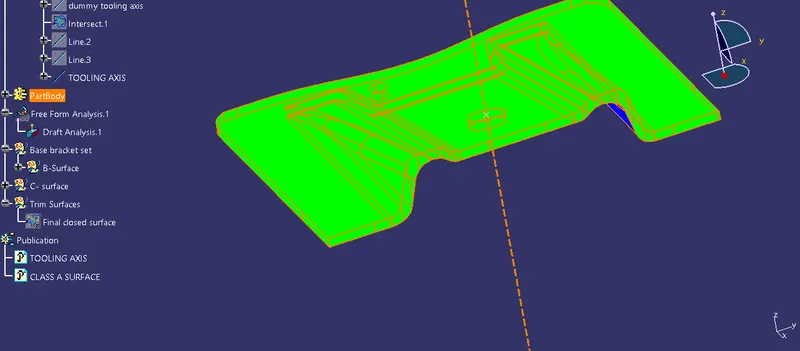
DRAFT ANALYSIS ALONG TOOLING AXIS( FOR 3 DEGREE DRAFT)
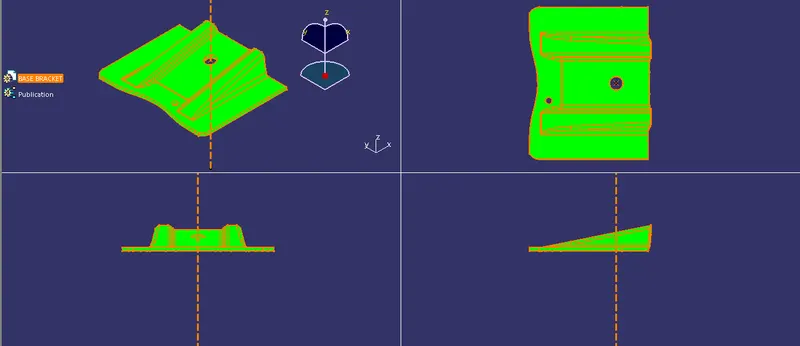
Draft angle in various orientations
CONCLUSION:
We have successfully created B and C class surfaces from the input as an A-class surface. The tooling axis is generated and draft analysis is performed for the 3-degree draft for the component. The green shade representation shows the acceptance for the preferred draft angle.