Week - 5 - Modelling Spotwelds
OBJECTIVE:-
- To model spotwelds for the given assembly of parts and run a crash test.
PROCESS:-
Given:-
- Material of the crash box - Mild Steel.
- System Unit - gm/mm/ms.
CASE 1: Beam spotweld used.
Material and Section was taken as -
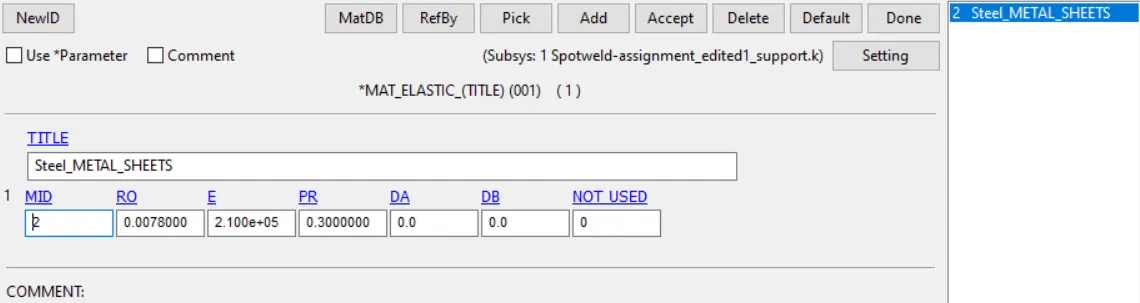
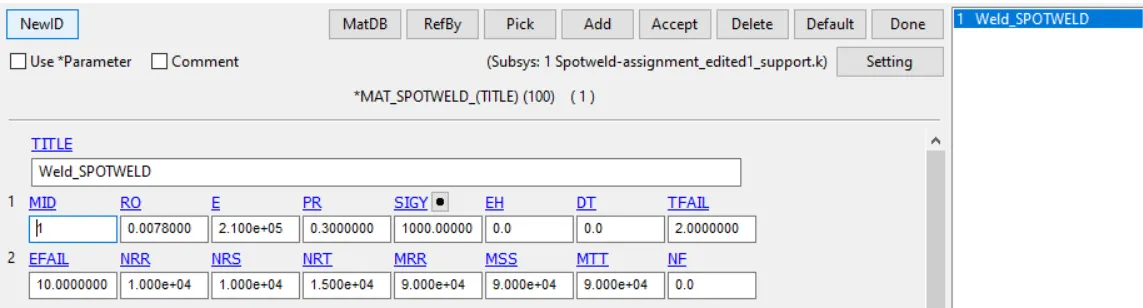
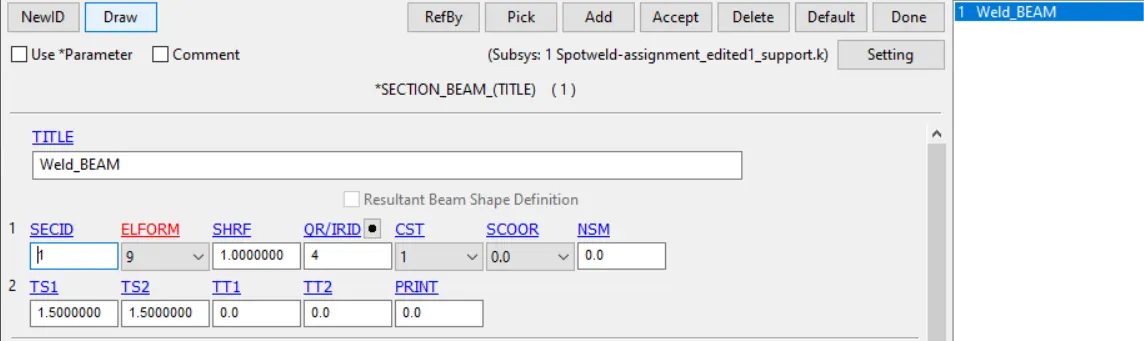
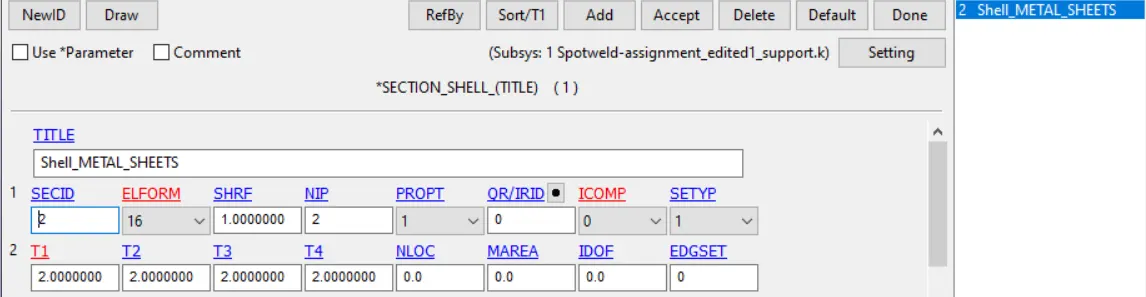
Velocity:- Using the conversion method, 50kmph was converted into 13.88mm/ms.
Boundary:- At the extreme end of the crashbox, SPC_BOUNDARY was created.
Rigidwall:-
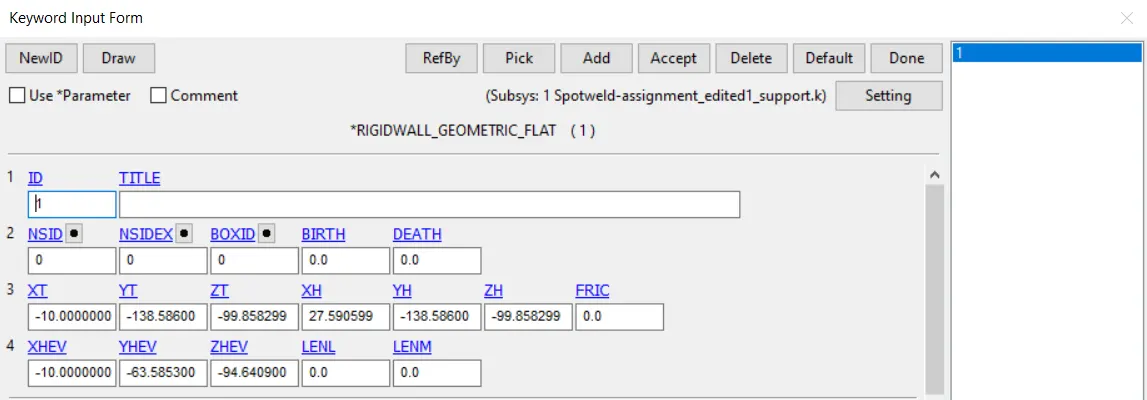
Rigidwall was created at the opposite end of the SPC_Boundary.
Contact:- AUTOMATIC_SINGLE_SURFACE and TIED_SHELL_EDGE_TO_SURFACE was used.
Control:- The Termination is set to 10ms.
Database:-
- ASCII option- ELOUT (For element Output Data), GLSTAT (Global Statistics), MATSUM (Material Energies), NODOUT (Nodal Displacement/Velocity/Acceleration data), RCFORC (Resultant Interface Forces), SECFORC (Cross Section Forces data).
- BINARY_D3PLOT
CASE 2: Solid spotweld used.
OUTPUT:-
Von-mises Stress (Beam vs Solid) :
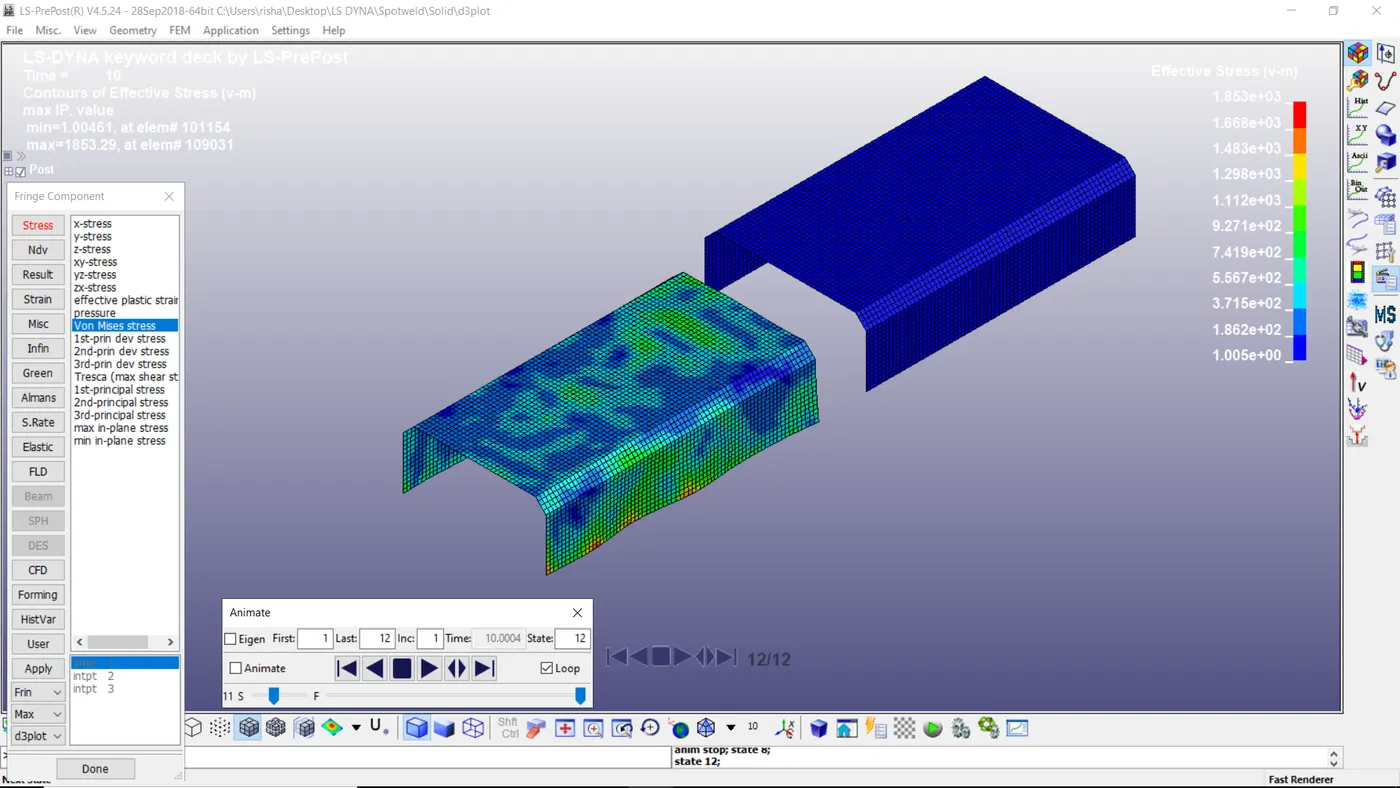
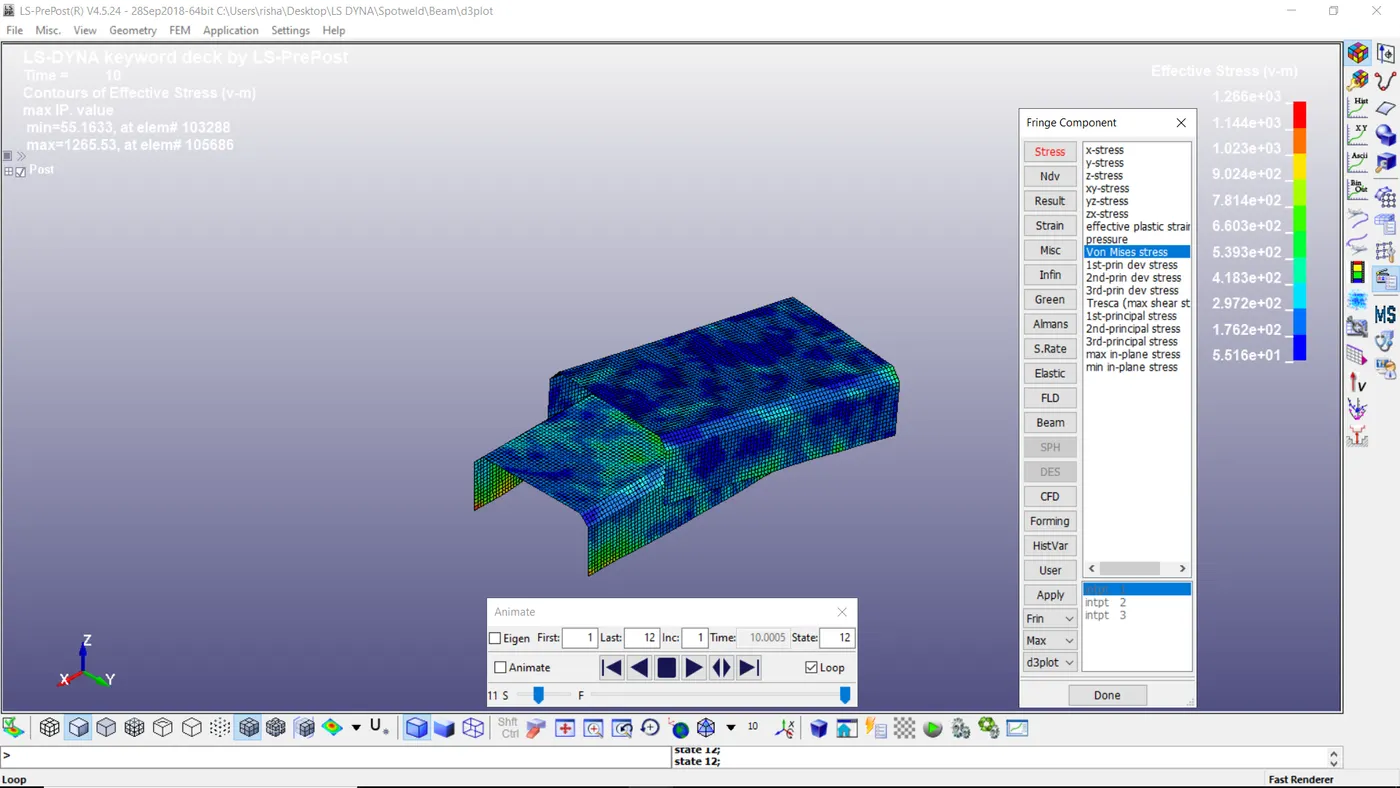
Beam Spotweld: Min- 1.00461 MPa ; Max- 1853.29 MPa
Solid SPotweld: Min- 55.1633 MPa ; Max- 1265.53
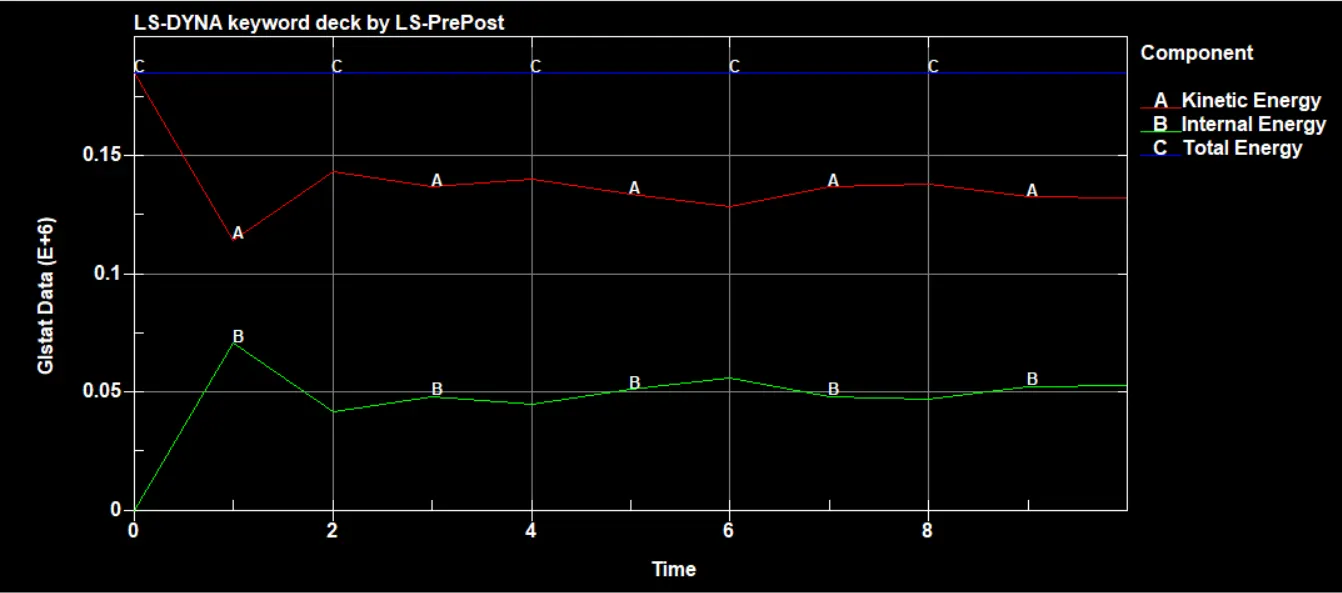
Glstat (Beam vs Solid) :
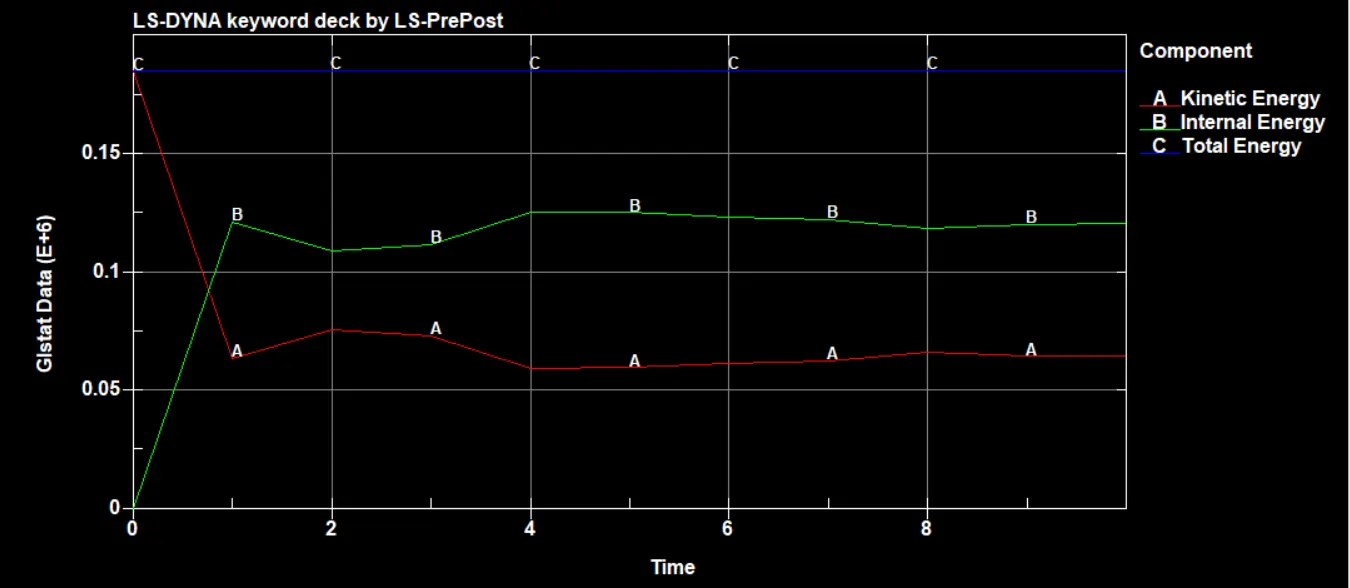
CONCLUSION :-
- Hence from the above we can conclude that the Stress experienced in the Solid spotwelds is higer than that of Beam spotwelds.
- Solid Spotwelds also offer greater resistance as it gives more stiffness to the weld elements as comapred to beam spotwelds.