Week-3 Challenge: ADVISOR Tool
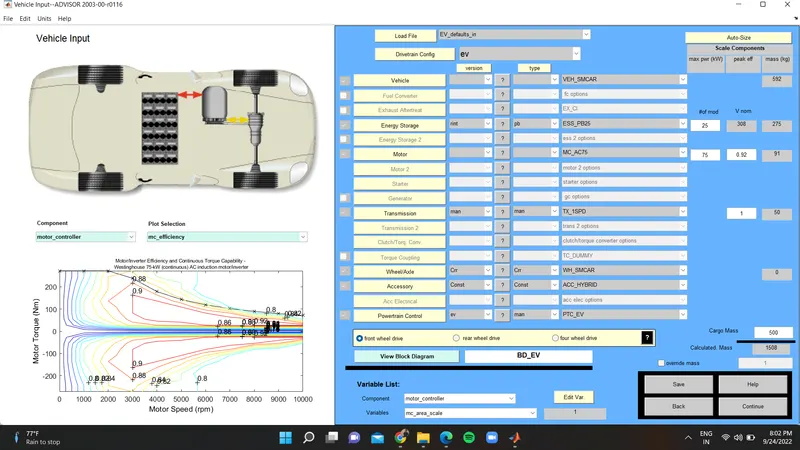
CASE I: In the ADVISOR Vehicle Input GUI select Load File as 'EV_defaults_in file' from the drop down menu. Also change the Cargo mass to 500 kg in the bottom right corner of the interface.
then next is select 'continue'. Here from the drop-down menu of the Drive Cycle select the 'CYC_FTP' driving cycle.
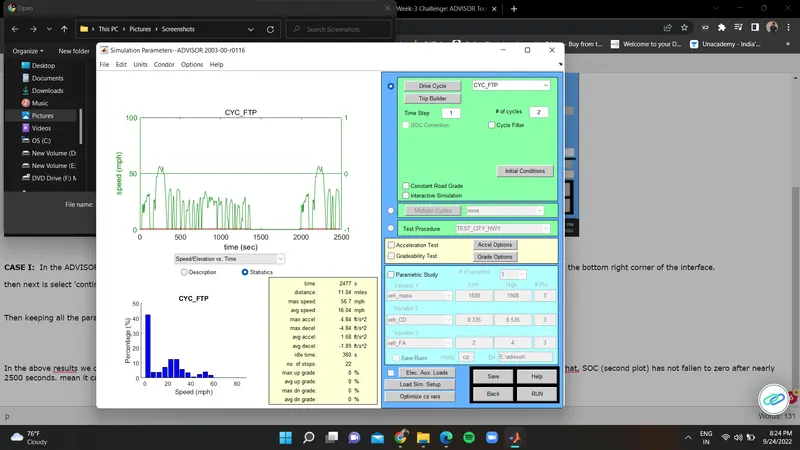
Then keeping all the parameters as default, select 'RUN' in the bottom right corner of the interface. we will see the result in net step
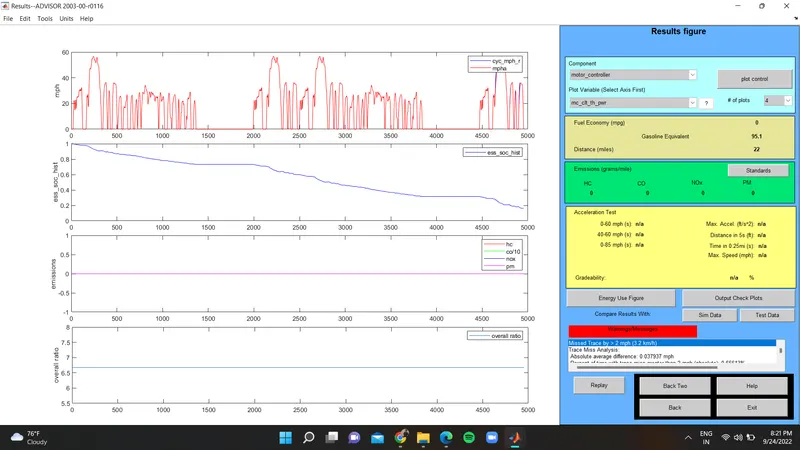
In the above results we can see that, Distance (km) is 22 km. So, the vehicle can't travel a distance of 45 km in a single recharge. Also, it can be seen that, SOC (second plot) has not fallen to zero after nearly 50000 seconds. mean it can go further more distance
CASE II: In the above case, try changing the battery capacity and repeat the simulation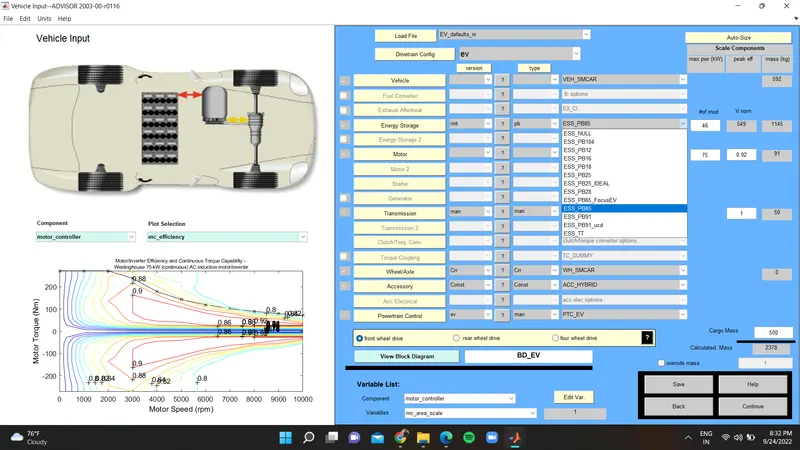
Changing the Energy Storage to 'ESS_PB85' and keeping the other parameters similar to the last case.
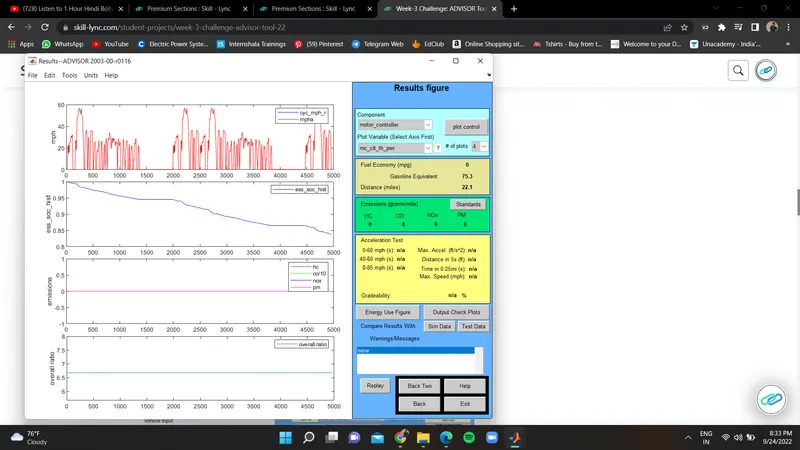
from the result we can see that the result is same as the distance is still same and it has covered two cycle and still we can see that the graph of SOC has not completely fallen to zero which means it can cover more ...... lets see by changing the no of drive cycle
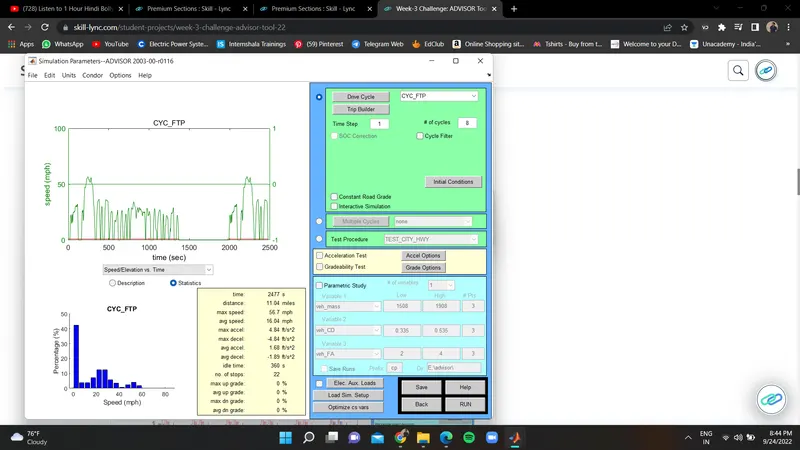
Change the value of #of cycles value to 8 from 1. Then RUN the simulation.
lets see
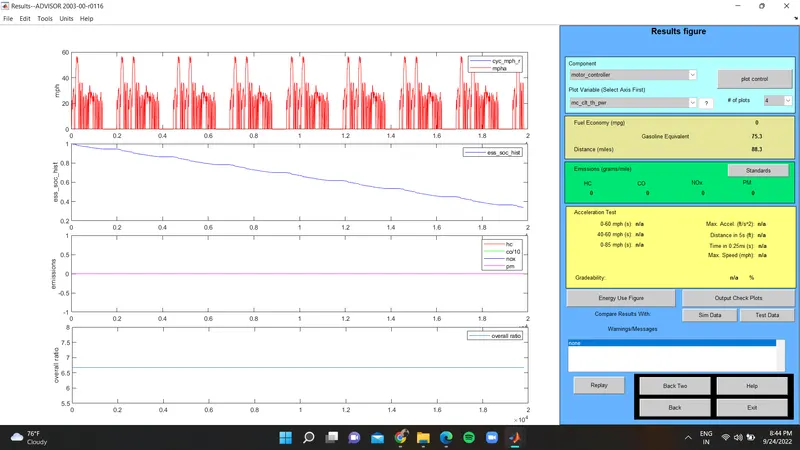
From the above results, we can see that, Distance (km) is 88.3 km and also the % of SOC as indicated by the second plot is not zero approximately. So in a single charge, the vehicle with this configuration can travel a distance of more than 88.3 km in a single charge.
CASE III: Perform gradeability test with PRIUS_Jpn_defaults_in file. Compare your results and conclusions.
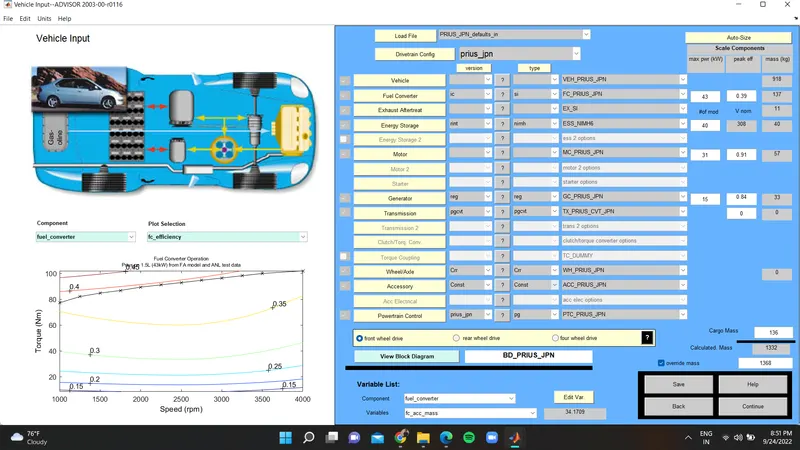
tap on continue to see next step
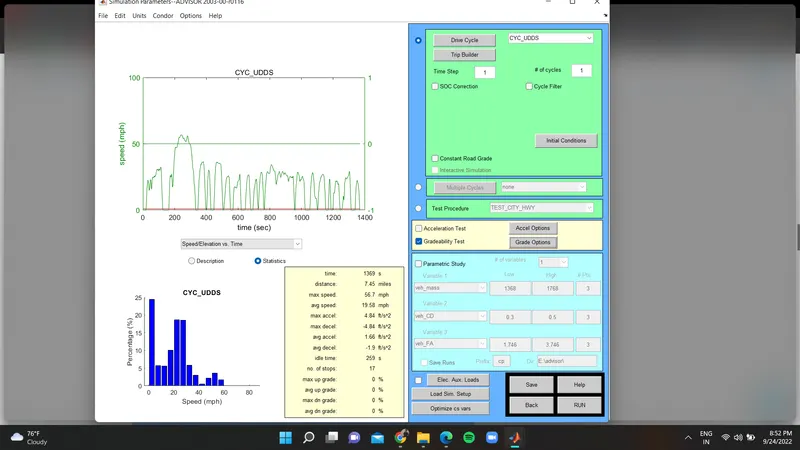
Select the Gradeability checkbox and then select Grade Options.
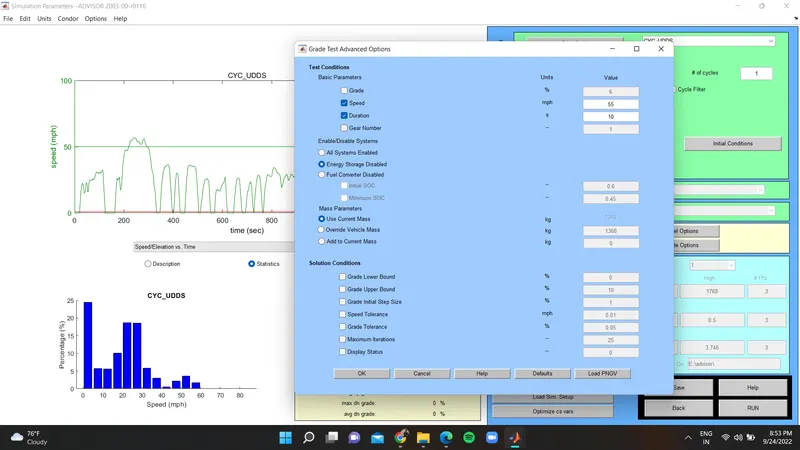
the speed is 55mph whereas the duration is 10s
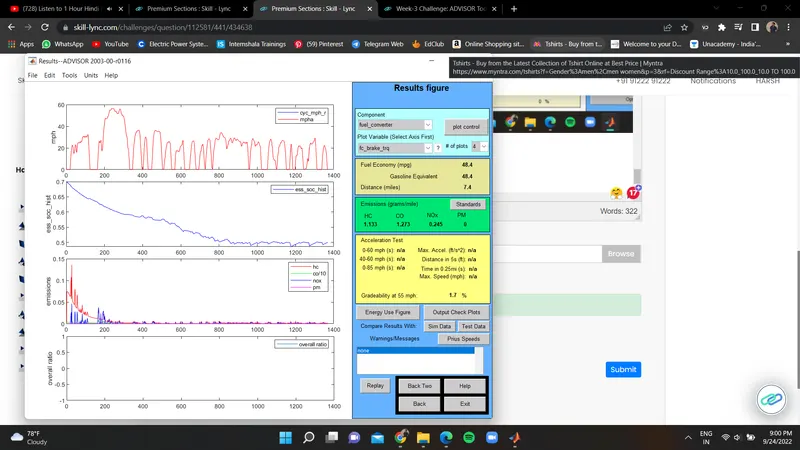
the gradability is 1.7% at speed of 55mph
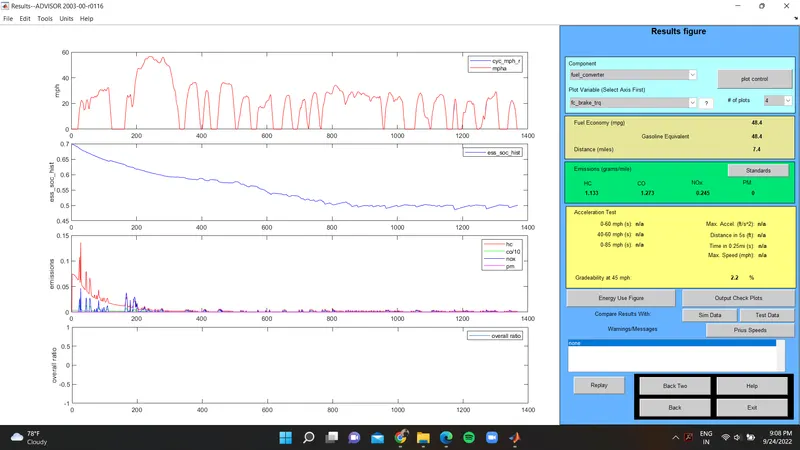
so this is the result when speed was changed to 45mph where as u can see the gradability which has come to 2.2% has increased
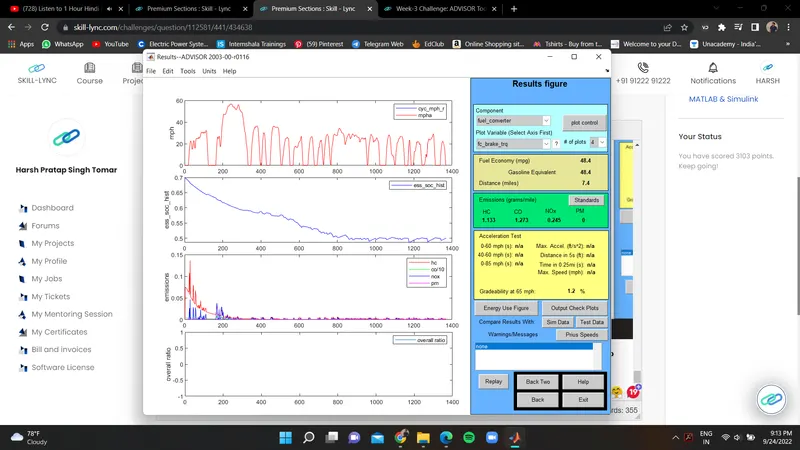
so this is the result when speed was changed to 65mph where as u can see the gradability which has come to 1.2%
now we can compare all the result
and can say that as
as speed increases the gradability decreases.
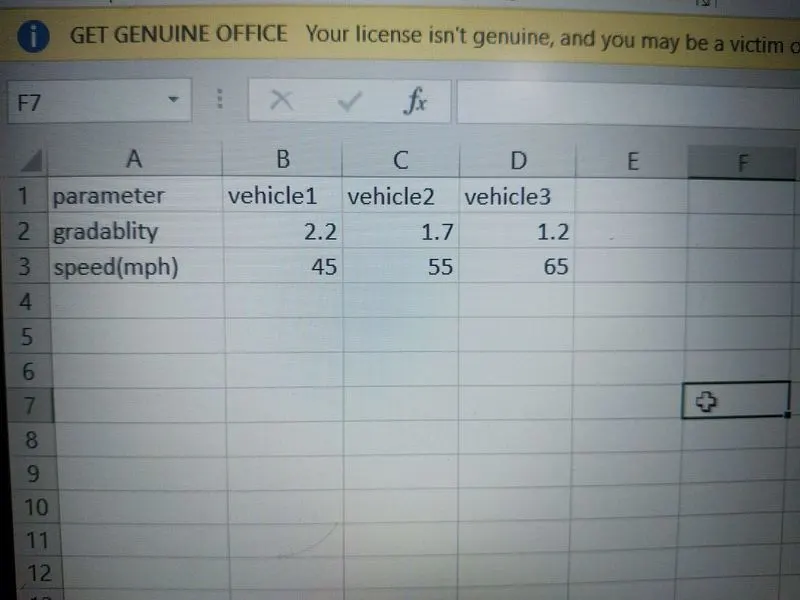
here we conclude by sharing the comparison of all speed with gradablity