Week 1- Mixing Tee
MIXING TEE
Objective:
To simulate the flow of air at different temperatures through a mixing tee and understand the effects of length of pipe and momentum ratio on the efficiency of mixing.
Introduction:
In industries, mixing is a process that can be seen in a vast range of applications. It is a simple process that allows the transfer of heat and/or mass between one or more streams. The intent is to homogenize a physical system.
Mixing Tees are widely used in industries for the efficient mixing of two working fluids into one combined stream. The name is derived from the purpose and the ‘T’ shape of these devices. The ‘T’ is formed by 2 pipes that are fitted at right angles to each other.
They are commonly used mainly due to the simplicity of operation and their efficiency.
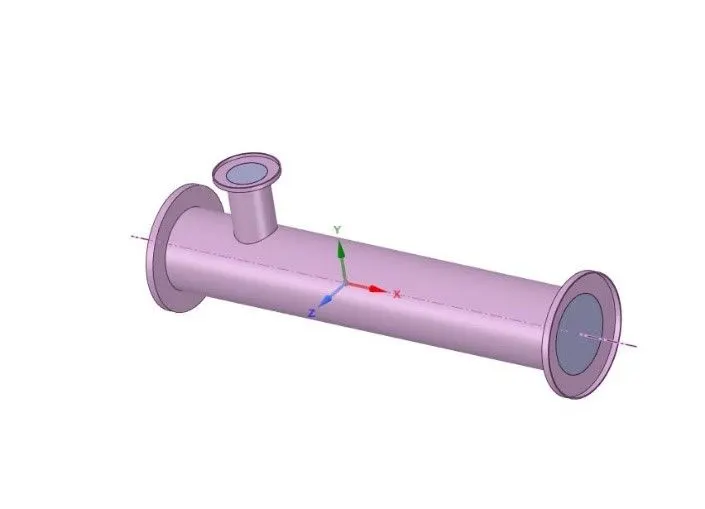
The use of mixing tees is prominent in petrochemical industries, HVAC applications, and any other applications that include low viscosity mixing.
Due to the notable use of mixing tees in industrial processes, it is important to understand the factors affecting the degree of mixing.
Description:
To understand the affecting factors for degree of mixing, a model of a mixing tee with 2 inlets and 1 outlet was considered.
Hot fluid (air in this case) enters through the hot inlet and cold air enters through the cold inlet. Mixing is then carried out.
The degree of mixing depends upon the length of the pipe and also the inlet flow velocities. The purpose of this project is to highlight this very fact.
Approach:
To carry out this experiment,
2 pipes, one short and one long, were used to simulate mixing for different momentum ratios of inlet velocities.
A steady state simulation was set up to understand the dependence of mixing efficiency on length of pipe and momentum ratio.
2 different RANS models namely K-Epsilon and K-Omega SST were considered and the most suitable model was then used.
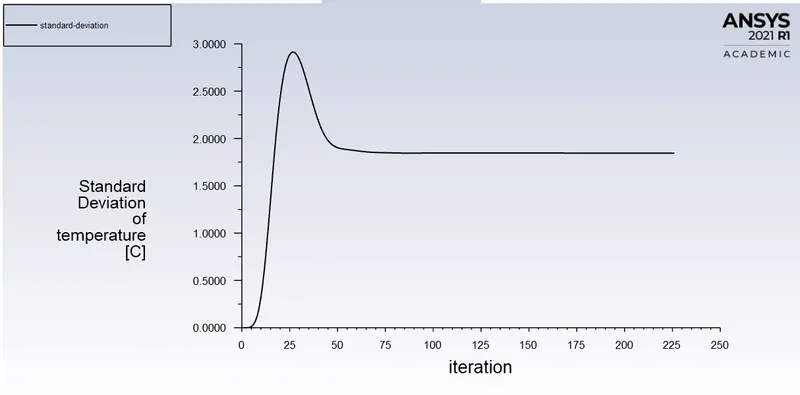
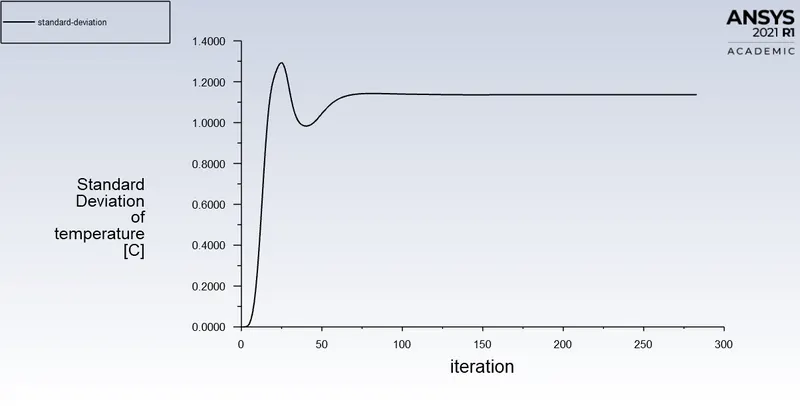
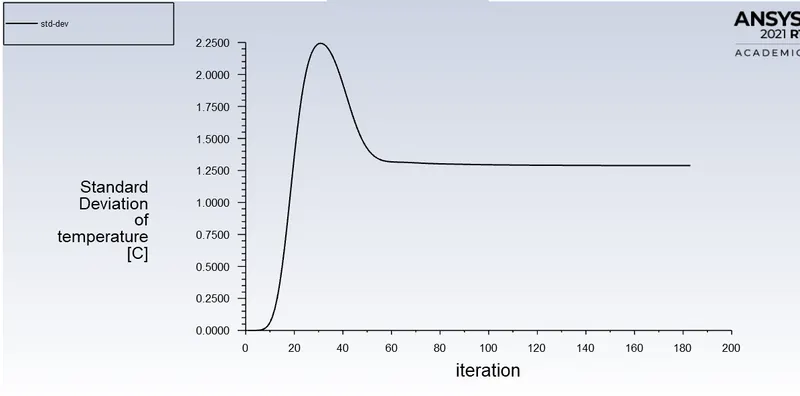
Standard deviation of the Temperature directly points to the degree of mixing.
Temperature and velocity contour/line plots were generated.
Inlet Temperatures:
Hot inlet temperature - 36°C
Cold inlet temperature - 19°C
Cases: Hot inlet velocity = 3m/s for all cases
1.A. Short Mixing Tee – Momentum Ratio: 2
1.B. Short Mixing Tee – Momentum Ratio: 4
2.A. Long Mixing Tee – Momentum Ratio: 2
2.B. Long Mixing Tee – Momentum Ratio: 4
Comparison between k-epsilon and k-omega SST model
The first case was considered and a simulation was carried out using both, the k-epsilon and the k-omega SST model.
A mesh size of 0.002 was used to create a mesh of sufficiently good quality.
The following results were compared to choose a more suitable model for this particular problem.
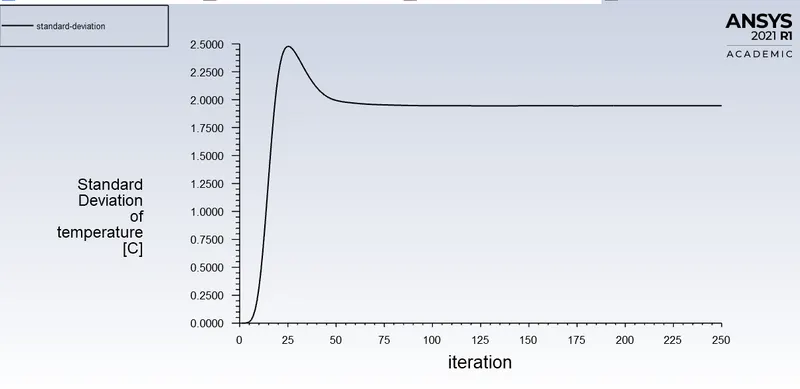
- Standard deviation
K-epsilon
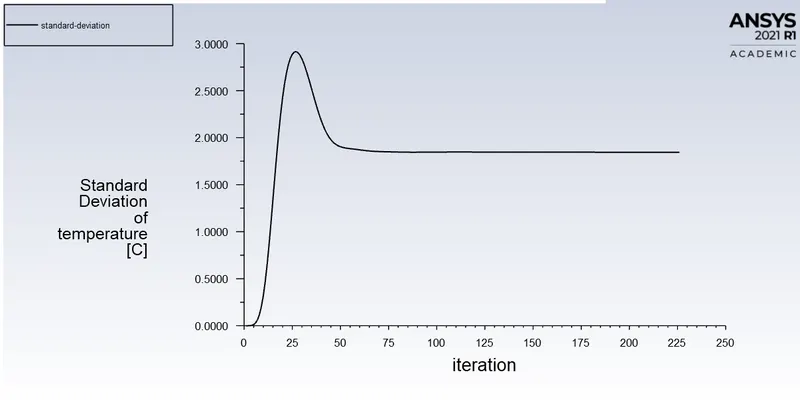
K-omega SST
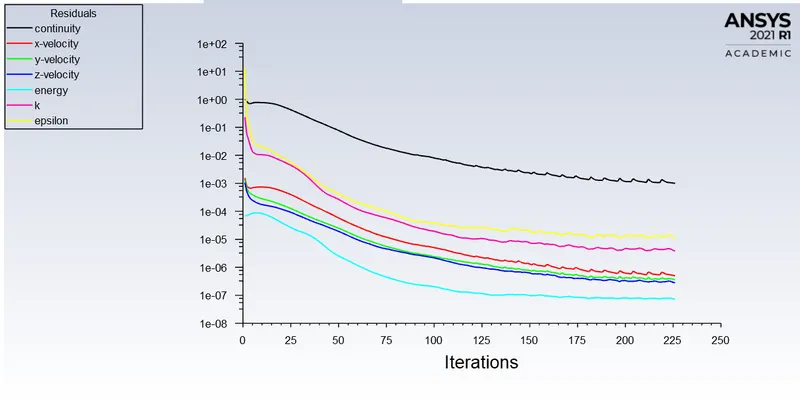
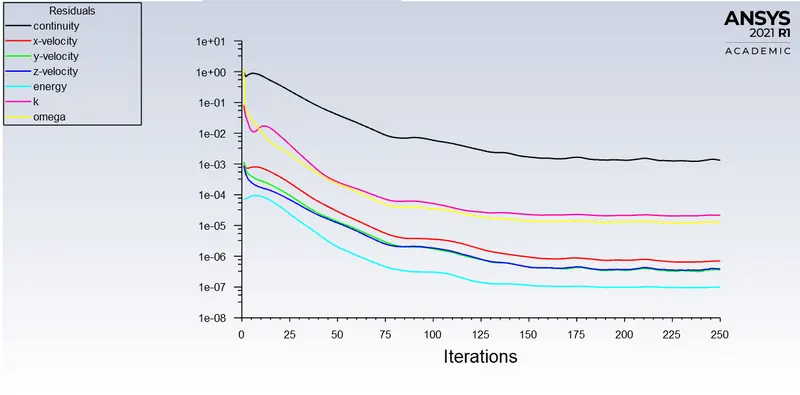
- Residual plots
K-epsilon
K-omega SST
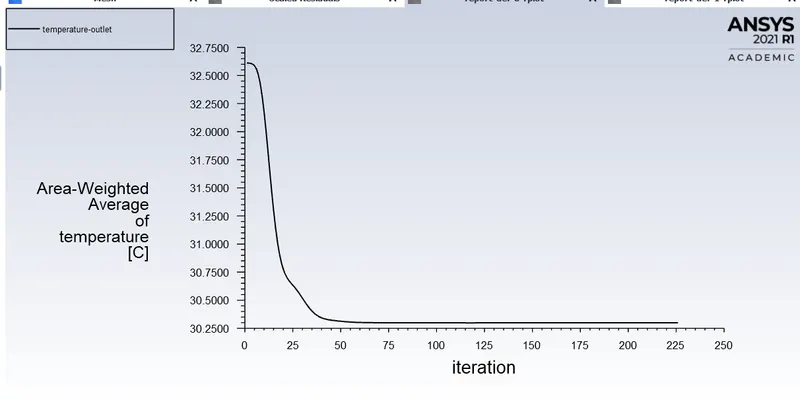
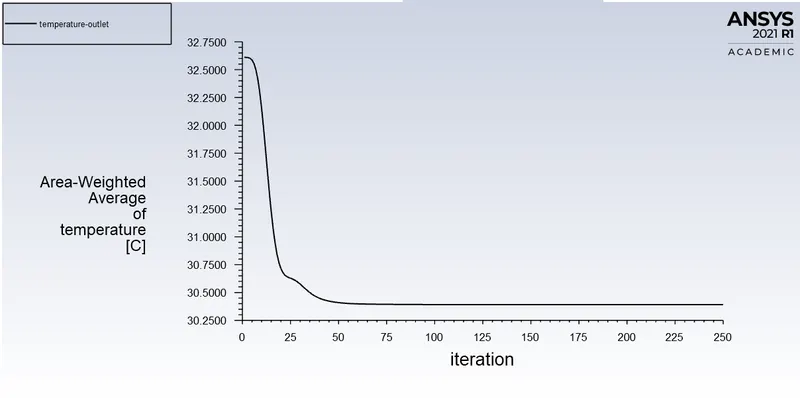
- Temperature plot
K-epsilon
K-omega SST
The observations are as follows:
- Standard Deviation of Temperature for both models was found to be approximately the same
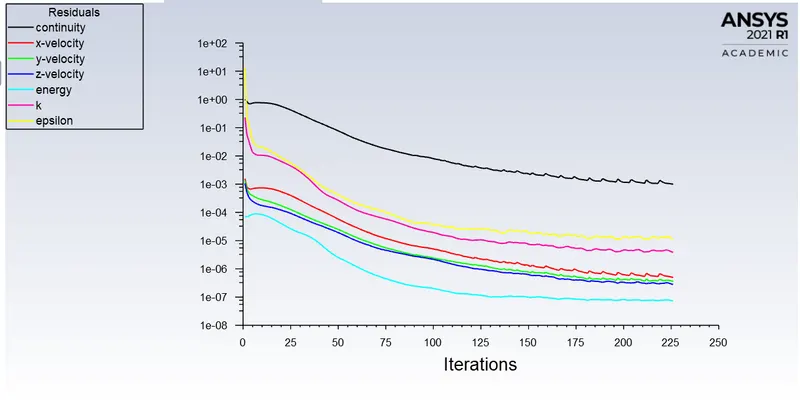
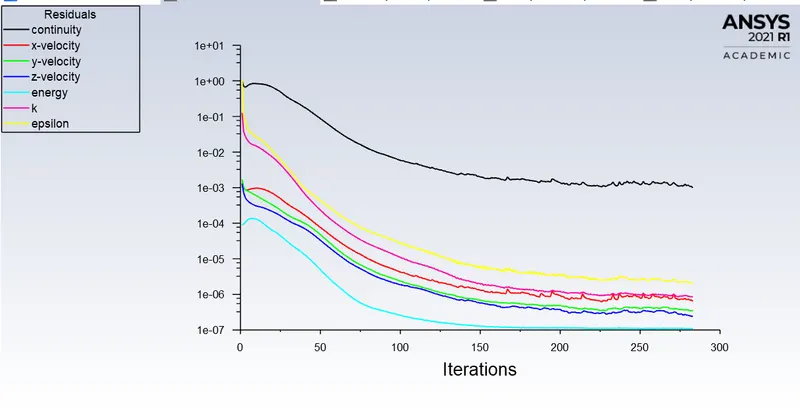
- However, the k-epsilon model shows better convergence.
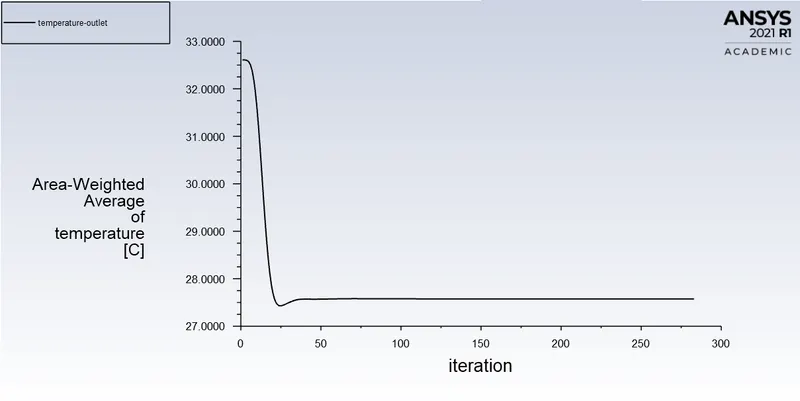
- Area weighted average temperature found out using the k-epsilon model is lower. This suggests that the k-epsilon model captures the physics more accurately.
The k-epsilon model makes fairly accurate predictions away from the wall. On the other hand, the k-omega SST model would be more useful to capture near-wall physics. Since no heat or energy transfer from the walls is involved in this particular analysis, we can focus on the free flow away from the walls.
For this reason, we could use the k-epsilon model to make fairly accurate predictions for all the 4 cases involved in this project.
CASE 1: SHORT MIXING TEE
Hot inlet temperature - 36°C
Cold inlet temperature - 19°C
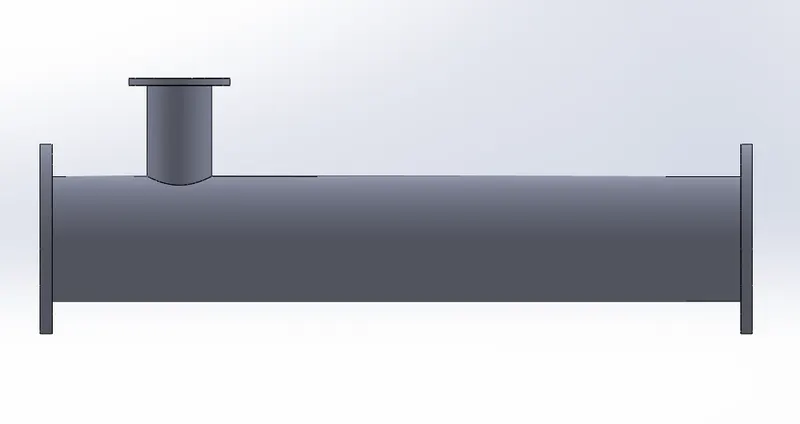
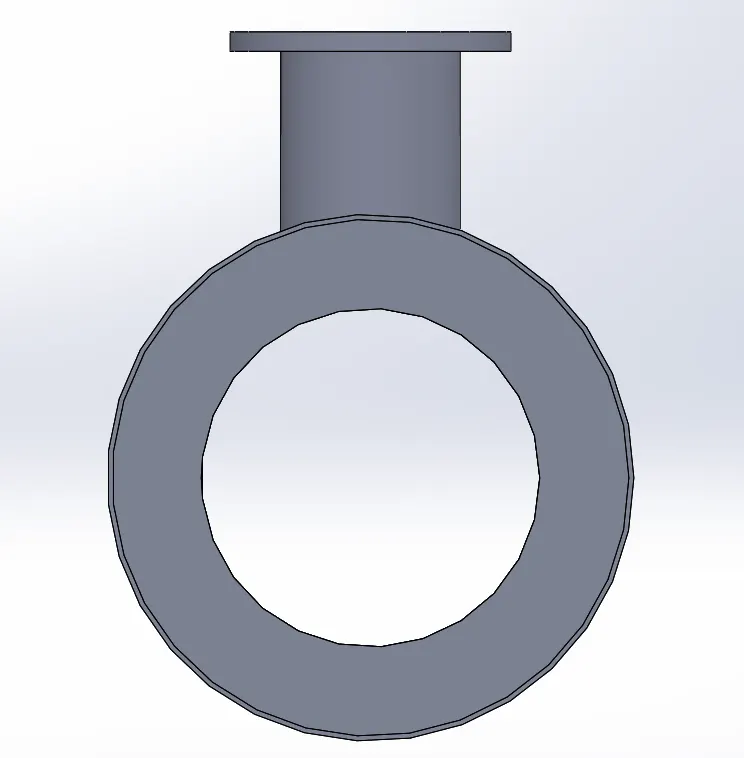
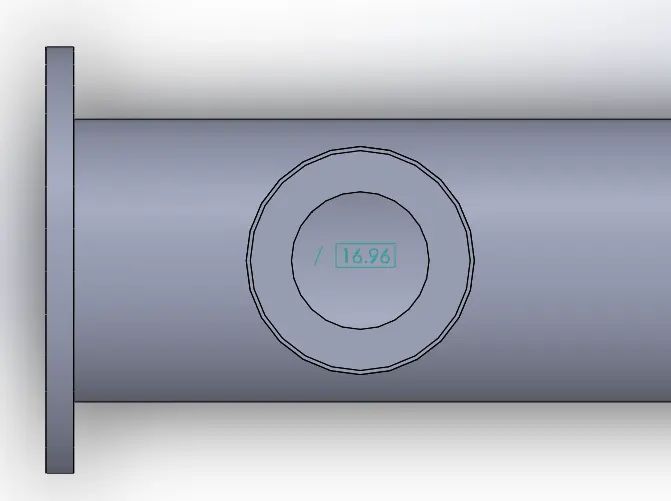
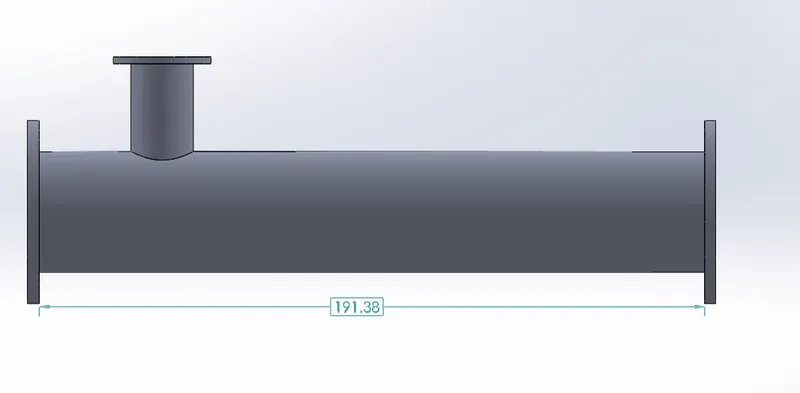
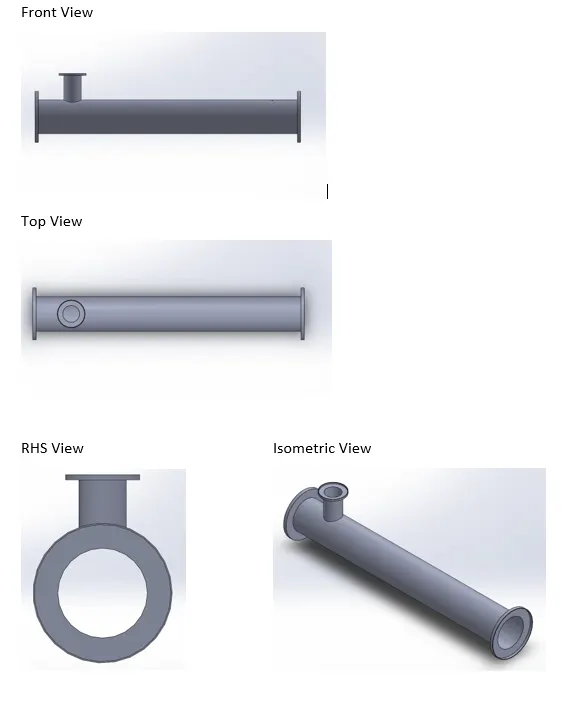
Geometry of Mixing Tee
Front View
Top View
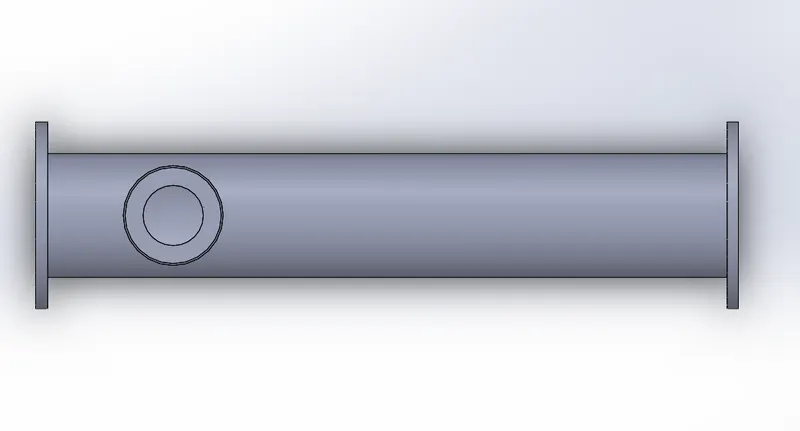
RHS View
Isometric View
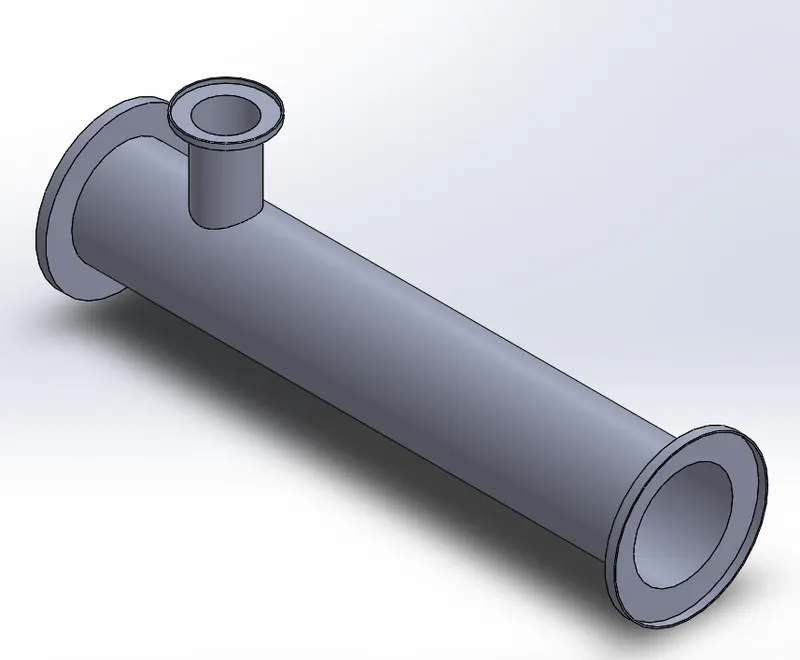
Dimensions:
Hot inlet diameter = 33.88mm
Outlet diameter = 33.88mm
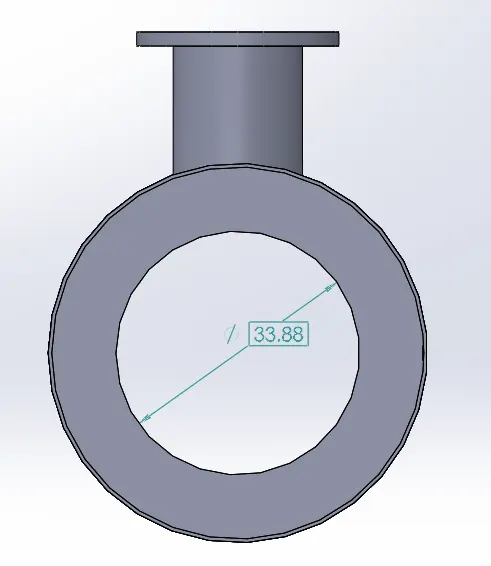
Cold inlet diameter = 16.96mm
Length of pipe = 191.38mm
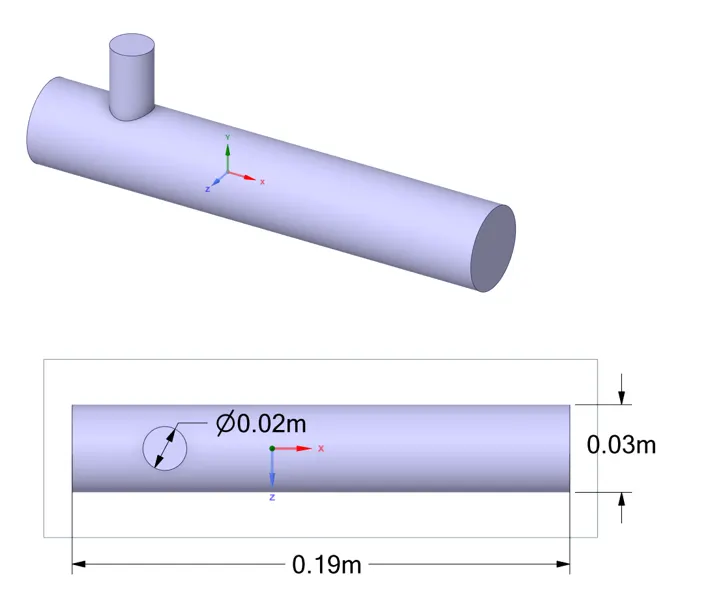
Final part for analysis of fluid volume:
Only the volume extract has been considered since we are only dealing with the flow simulation inside the pipe.
MESH DETAILS
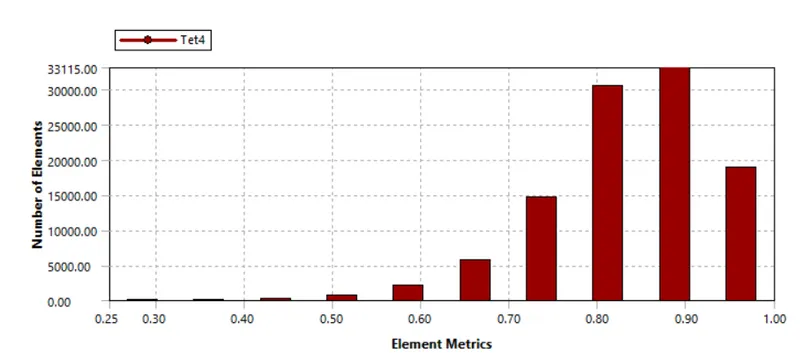
Mesh size – 0.002
Cell count – 105618
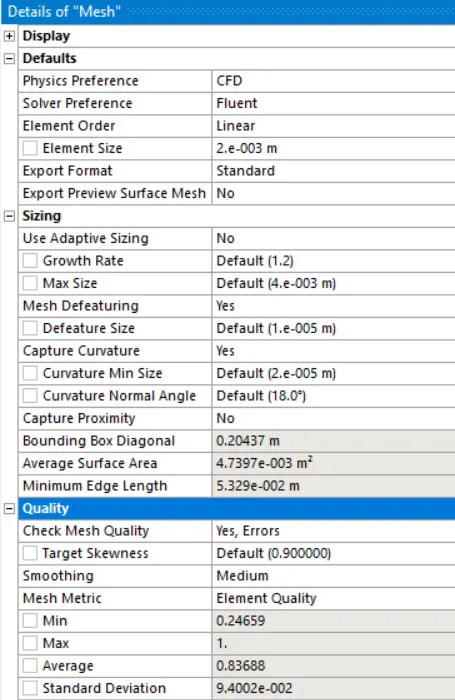
To check the quality of mesh, a mesh element metric was employed and it was found that most of the elements were in the range of 0.7-1
Thus, a mesh of acceptable quality was generated.
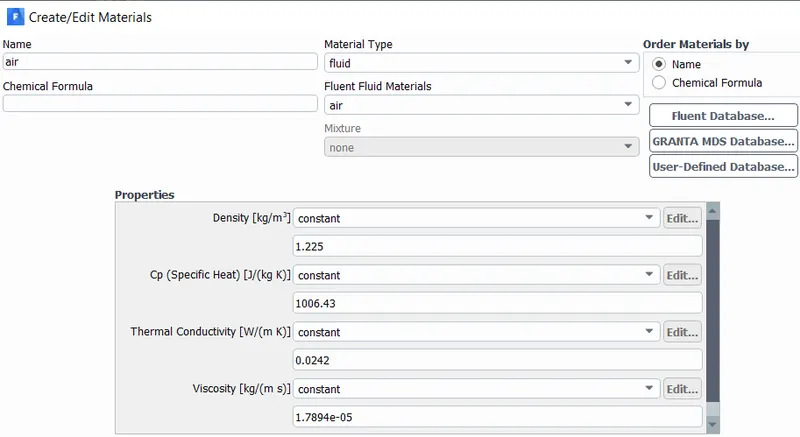
Materials: Air was the fluid used.
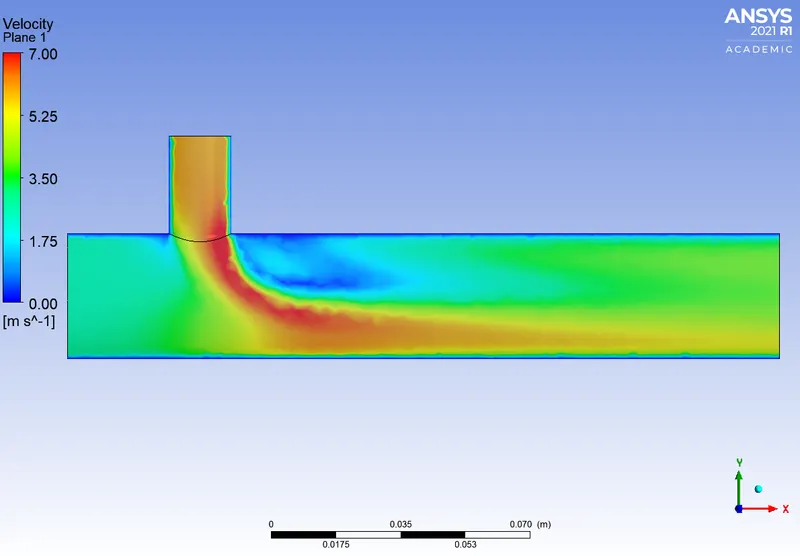
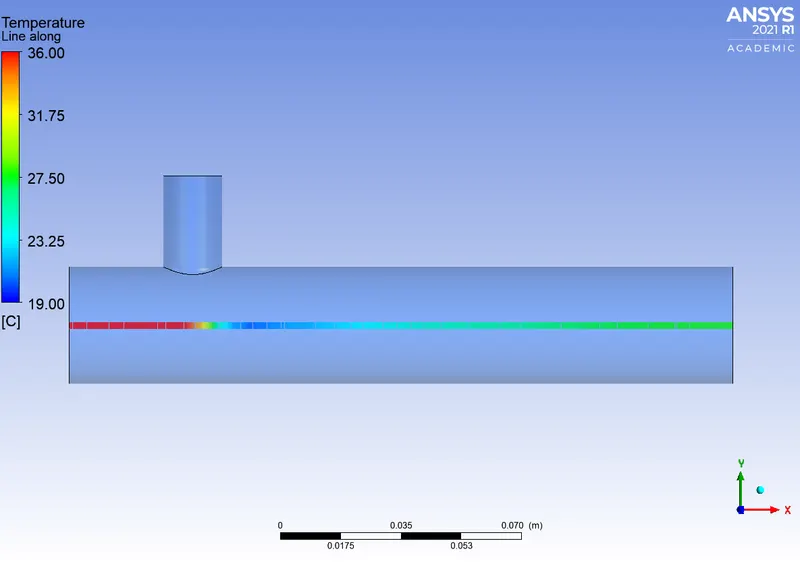
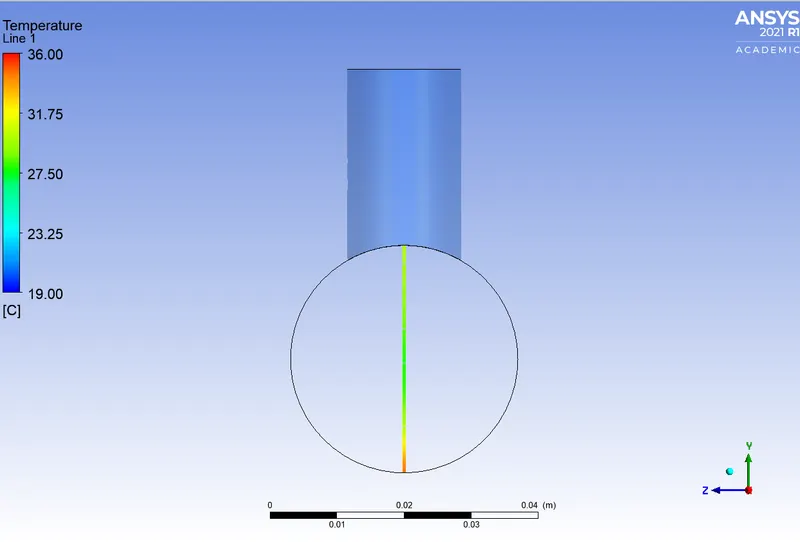
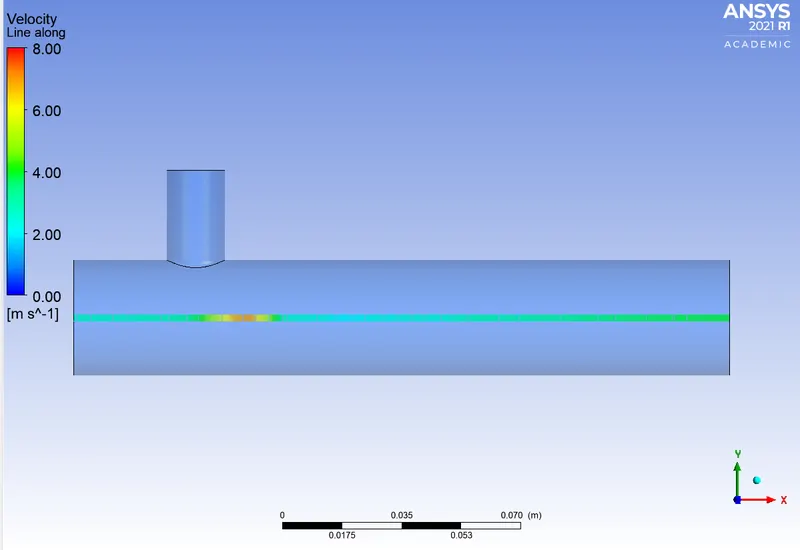
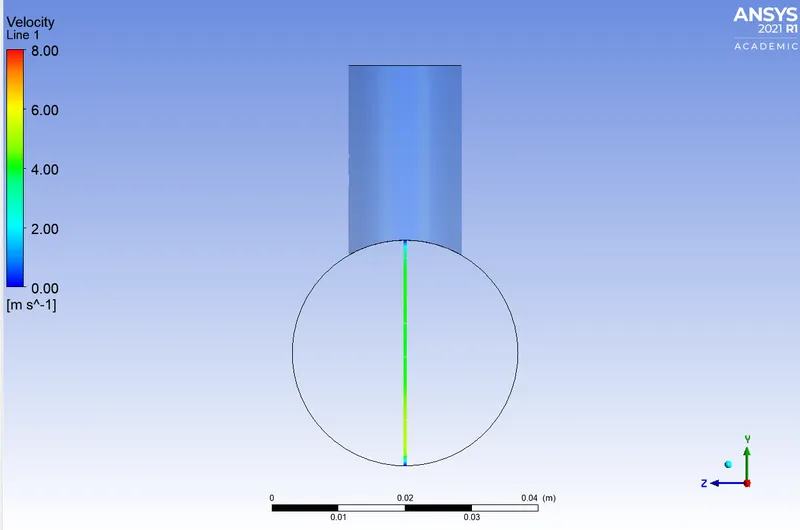
CASE 1A: Momentum ratio=2
Cold inlet velocity = 6m/s
Residual plot
Standard Deviation of Temperature
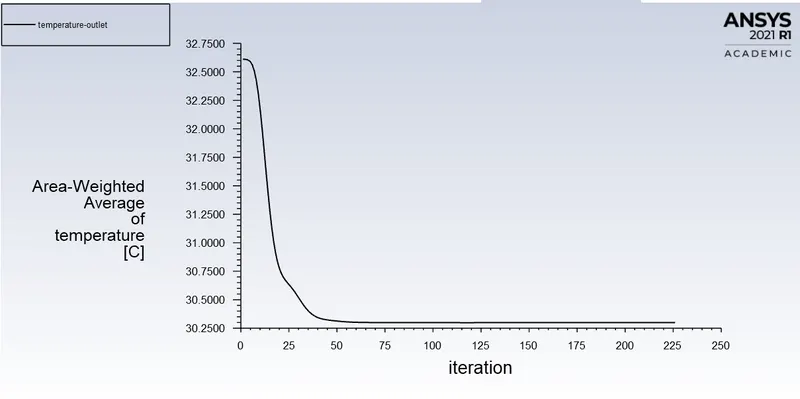
Area weighted average of Temperature – At Outlet
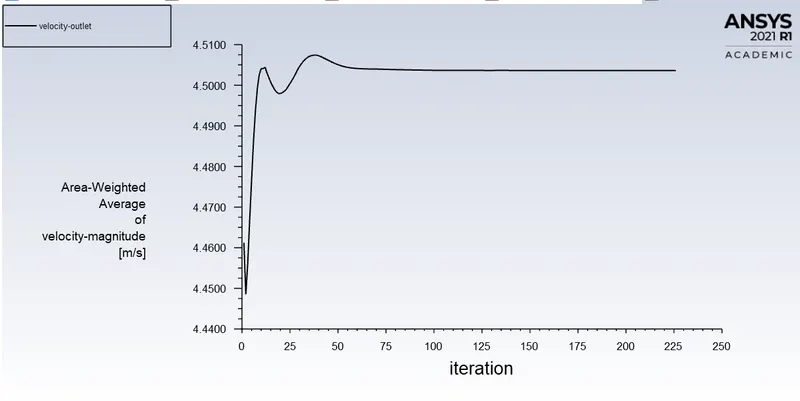
Area weighted average of Velocity – At Outlet
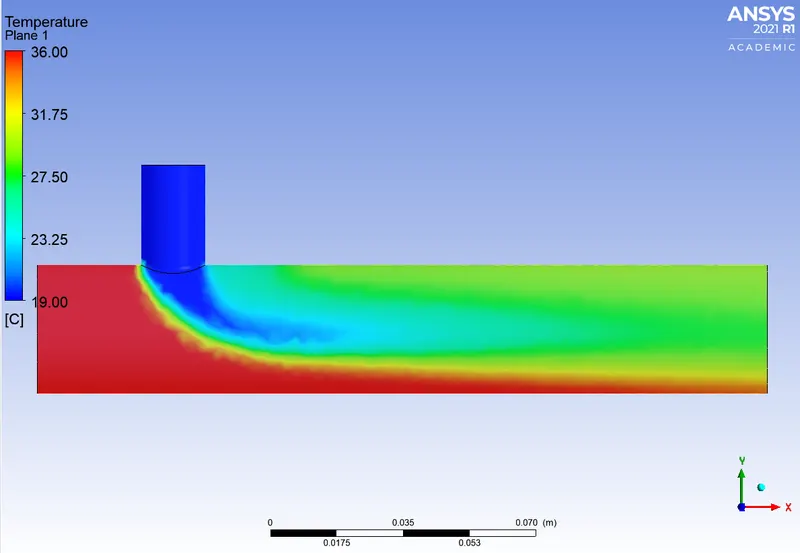
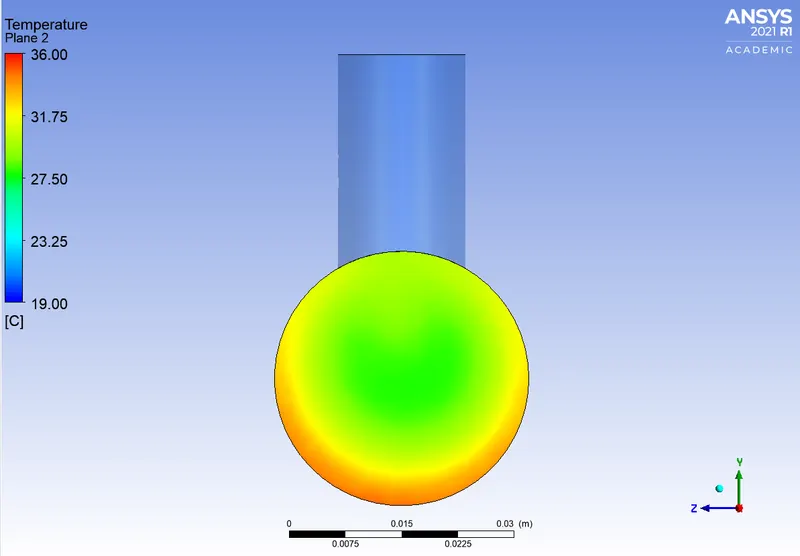
Contour plot – Temperature along pipe
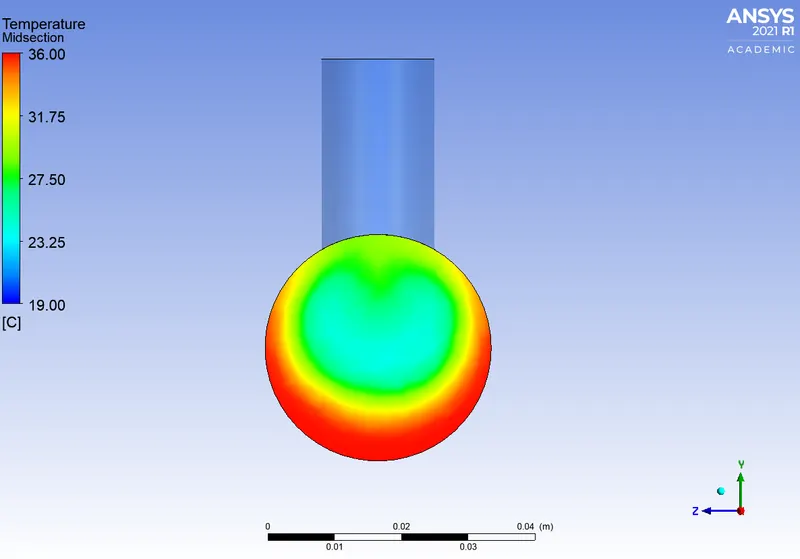
Contour plot – Temperature across pipe (Mid-section)
Contour plot – Temperature across pipe (Outlet)
Contour plot – Velocity along pipe
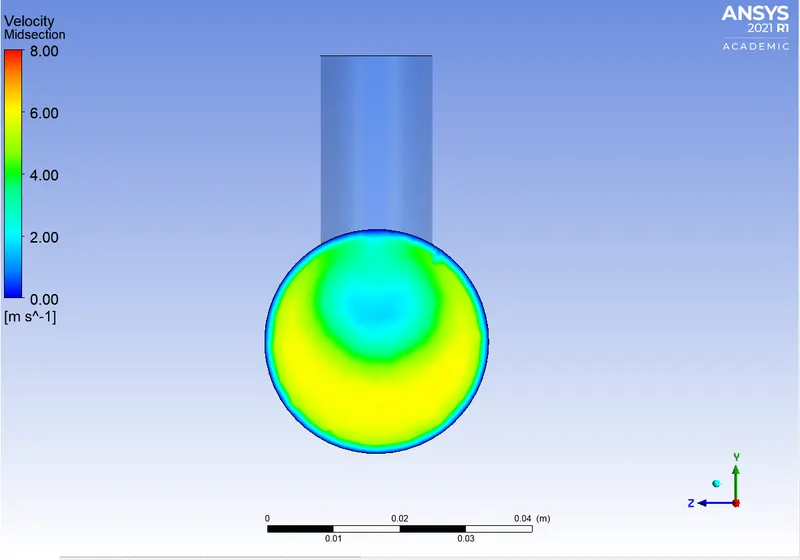
Contour plot – Velocity across pipe (Mid-section)
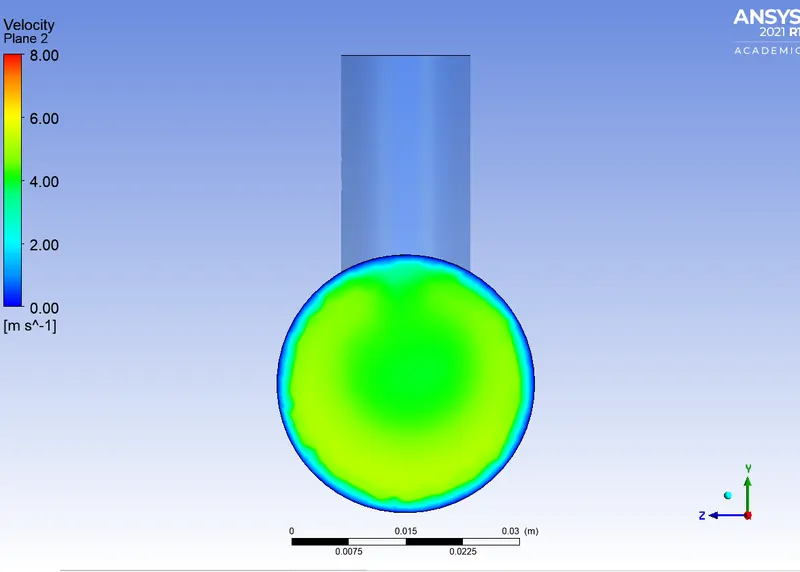
Contour Plot – Velocity across pipe (Outlet)
Line plot – Temperature along pipe
Line plot – Temperature across pipe outlet
Line plot – Velocity along pipe
Line plot – Velocity across pipe outlet
CASE 1B: Momentum ratio=4
Cold inlet velocity = 12m/s
Residual plot
Standard Deviation of Temperature
Area weighted average of Temperature – At Outlet
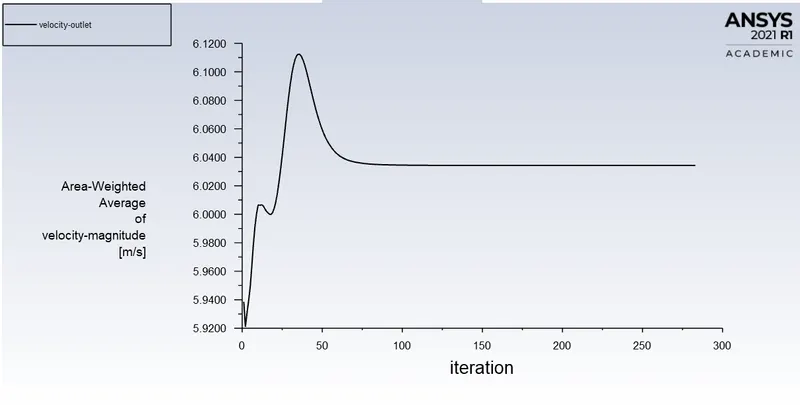
Area weighted average of Velocity – At Outlet
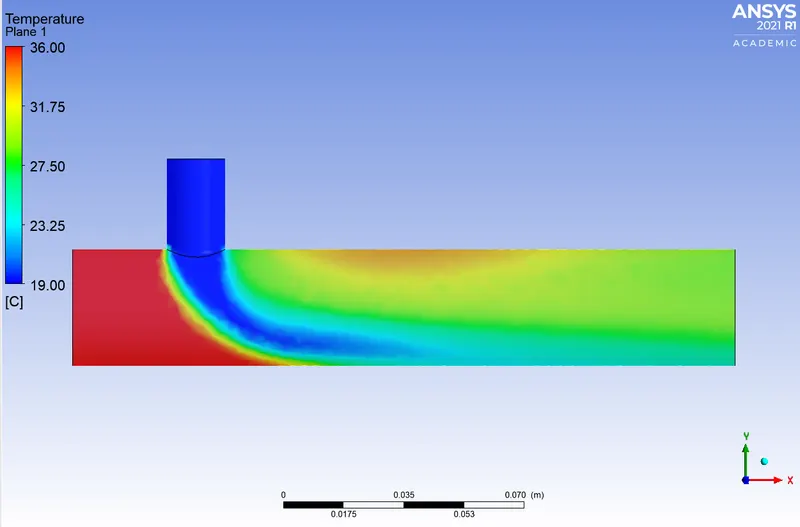
Contour plot – Temperature along pipe
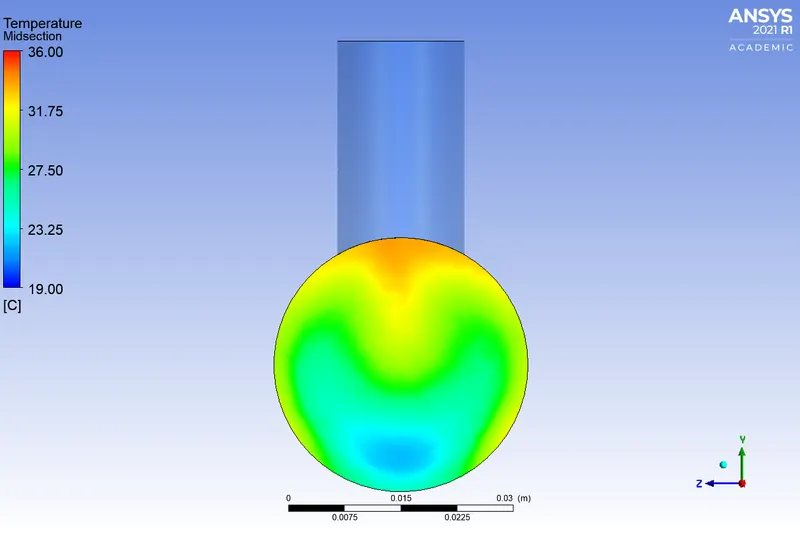
Contour plot – Temperature across pipe (Mid-section)
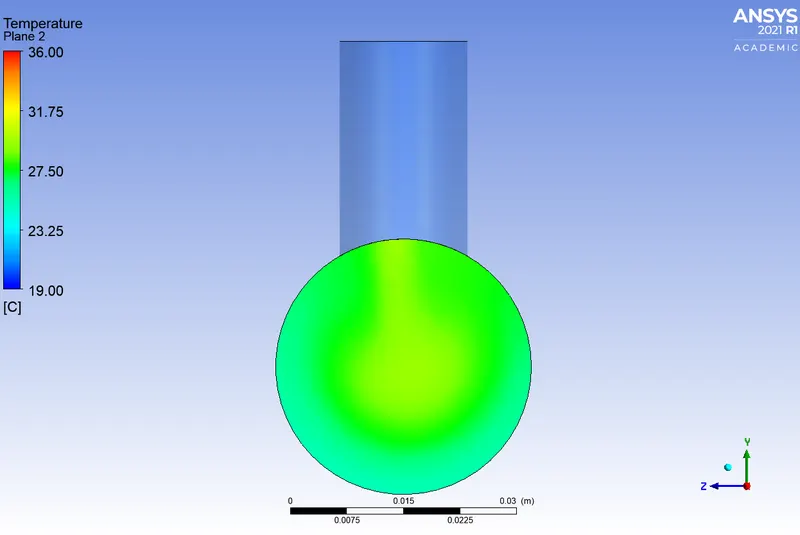
Contour plot – Temperature across pipe (Outlet)
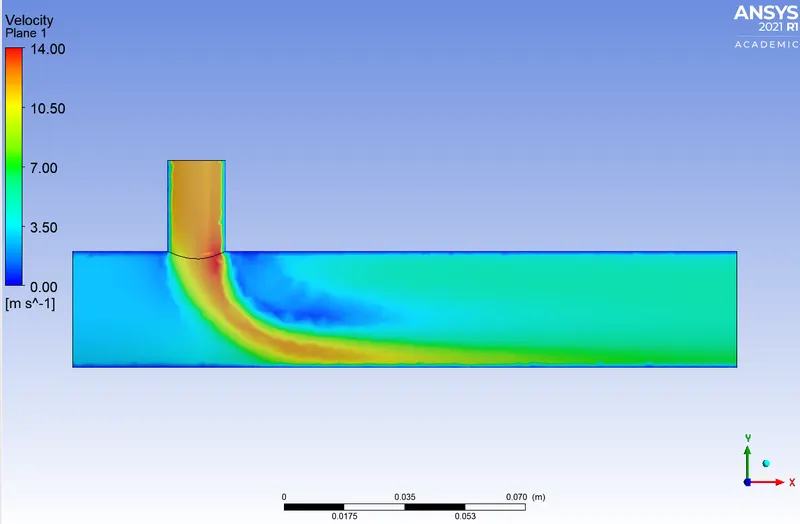
Contour plot – Velocity along pipe
Contour plot – Velocity across pipe (Mid-section)
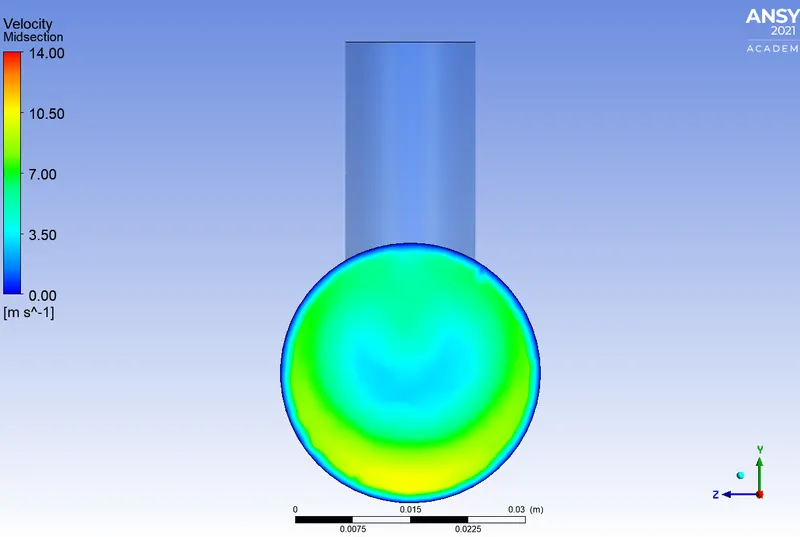
Contour Plot – Velocity across pipe (Outlet)
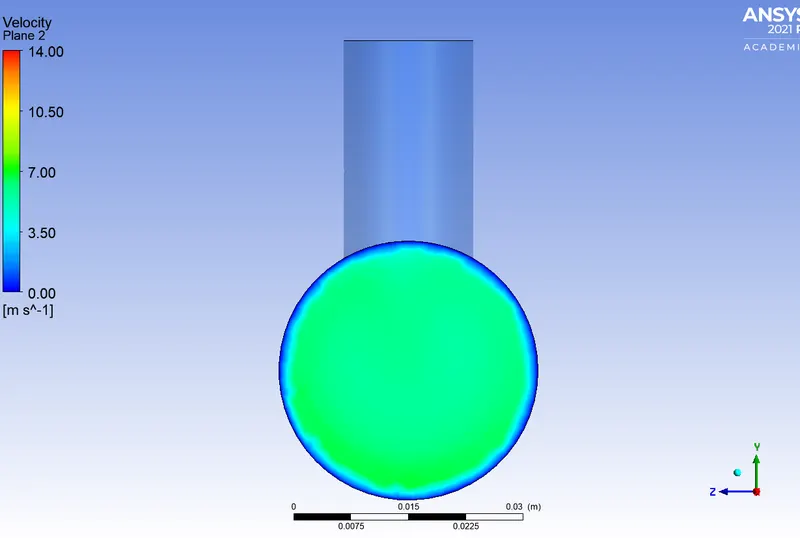
Line plot – Temperature along pipe
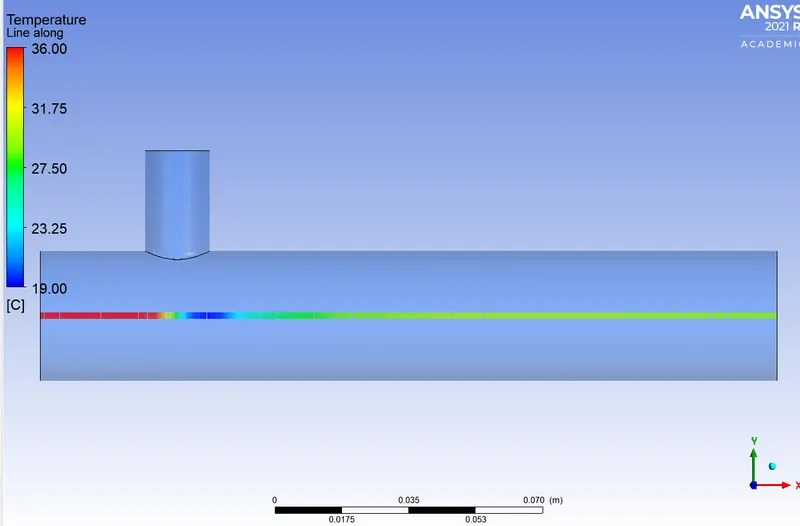
Line plot – Temperature across pipe outlet
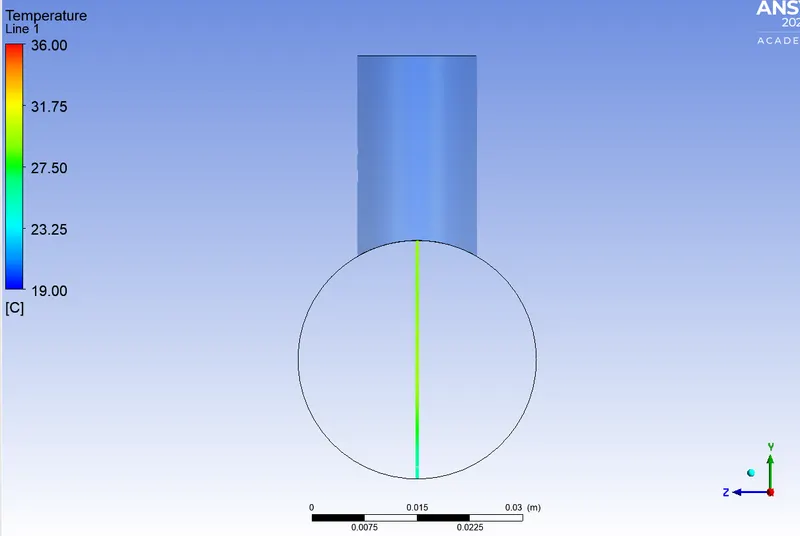
Line plot – Velocity along pipe
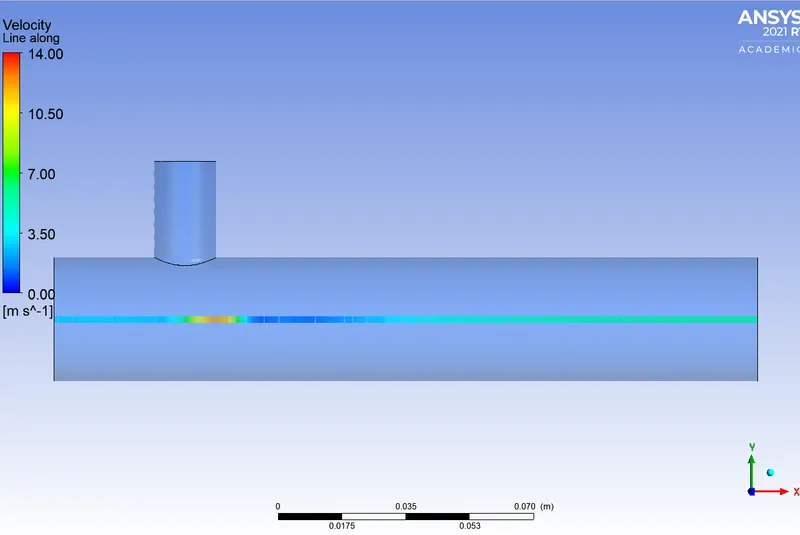
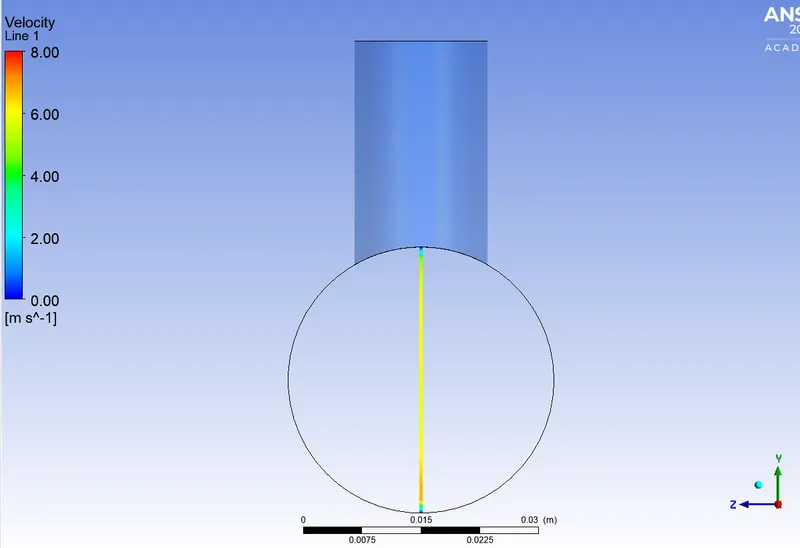
Line plot – Velocity across pipe outlet
CASE 2: LONG MIXING TEE
Hot inlet temperature - 36°C
Cold inlet temperature - 19°C
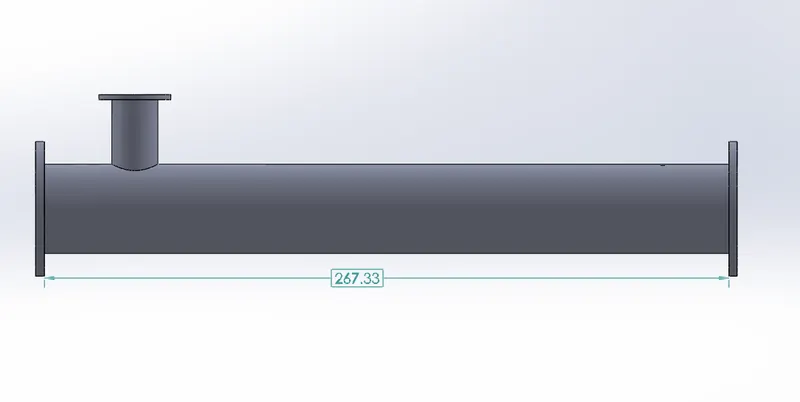
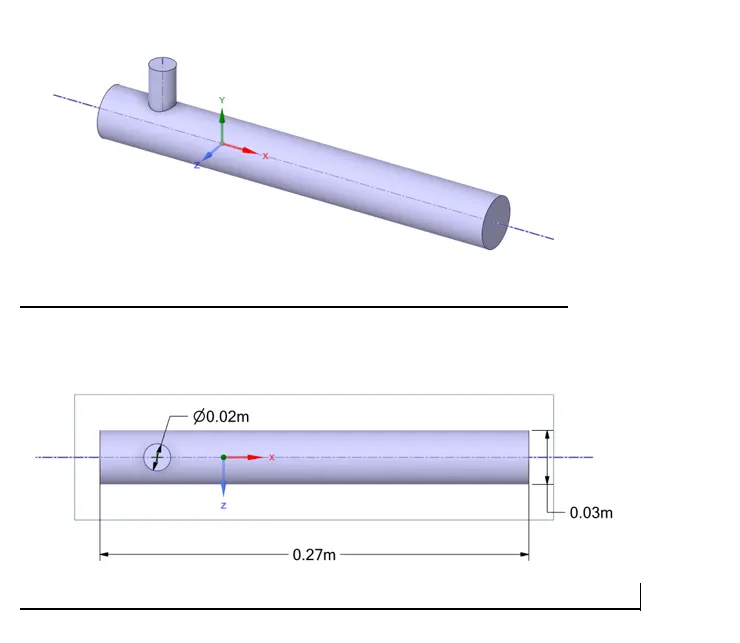
Geometry of Mixing Tee
Dimensions:
Hot inlet diameter = 33.88mm
Outlet diameter = 33.88mm
Cold inlet diameter = 16.96mm
Length of pipe = 267.33mm
Final part for analysis of fluid volume:
MESH DETAILS
Mesh size – 0.002
Cell count – 140025
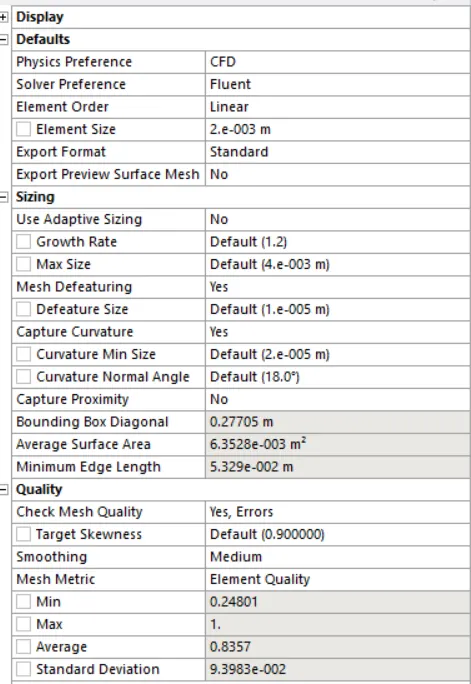
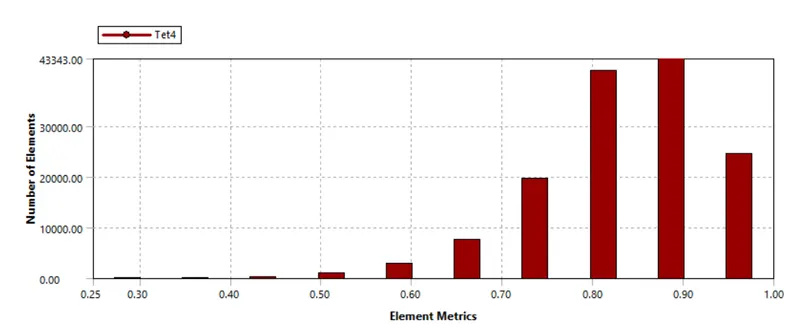
Mesh quality:
Maximum elements have a quality of 0.7 – 1.
Since the minimum quality is not less than 0.25, the mesh is acceptable.
Materials: Air was the fluid used.
CASE 2A: Momentum ratio=2
Cold inlet velocity = 6m/s
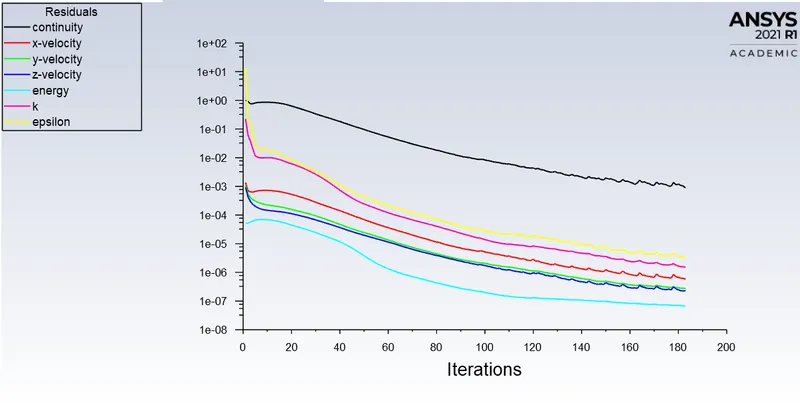
Residual plot
Standard Deviation of Temperature
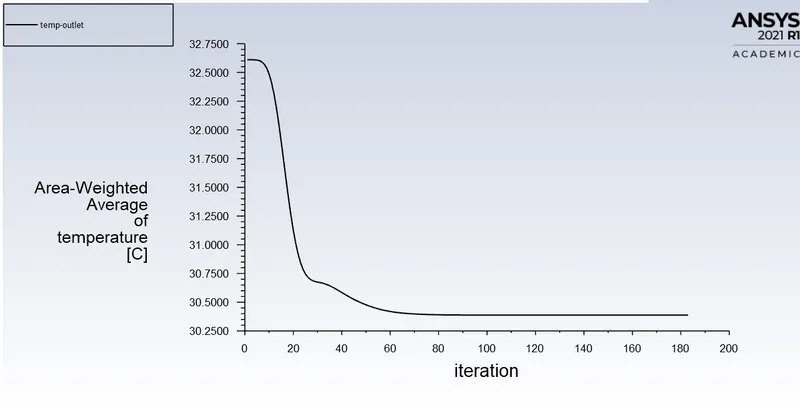
Area weighted average of Temperature – At Outlet
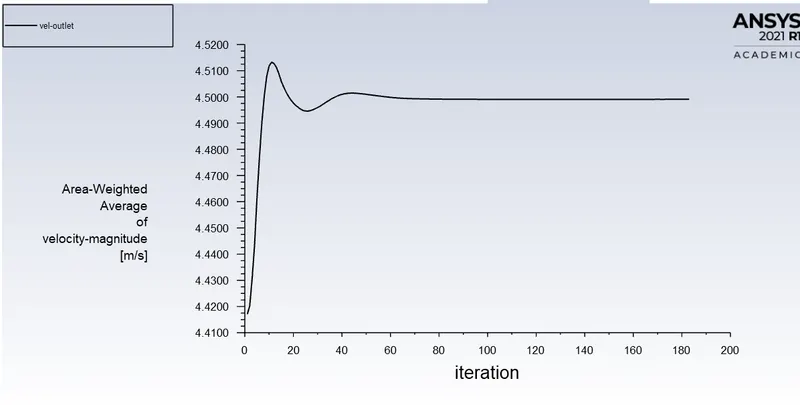
Area weighted average of Velocity – At Outlet
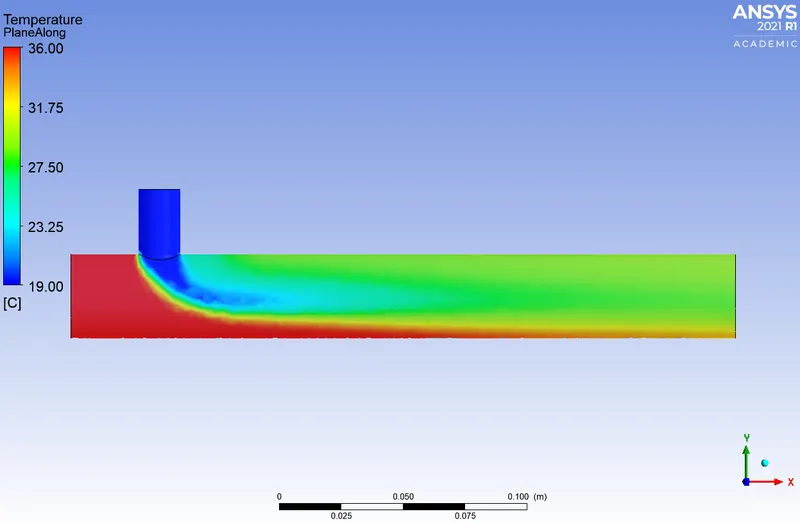
Contour plot – Temperature along pipe
Contour plot – Temperature across pipe (Mid-section)
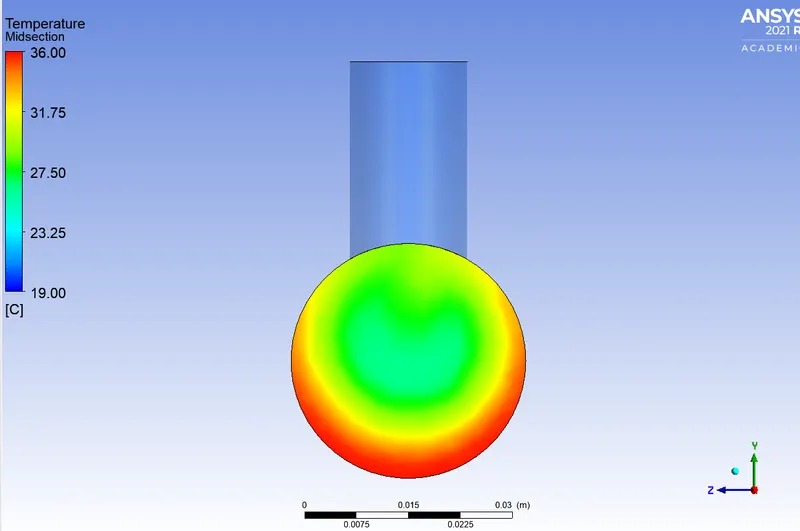
Contour plot – Temperature across pipe (Outlet)
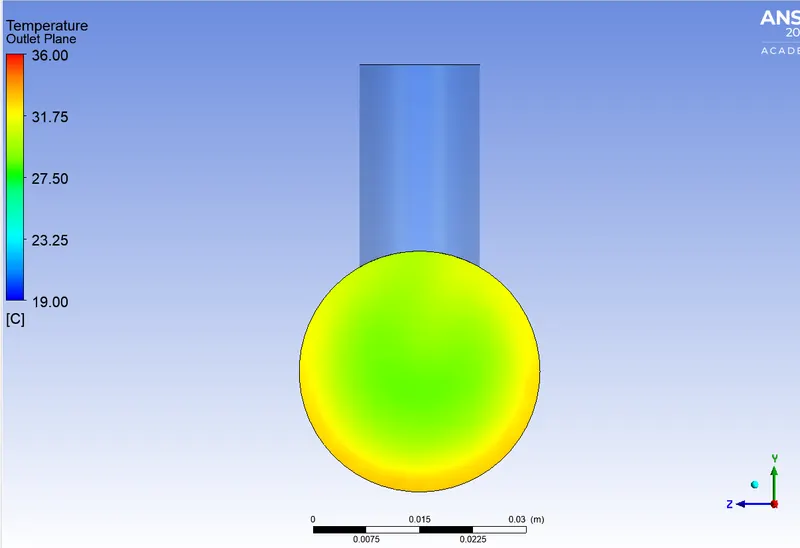
Contour plot – Velocity along pipe
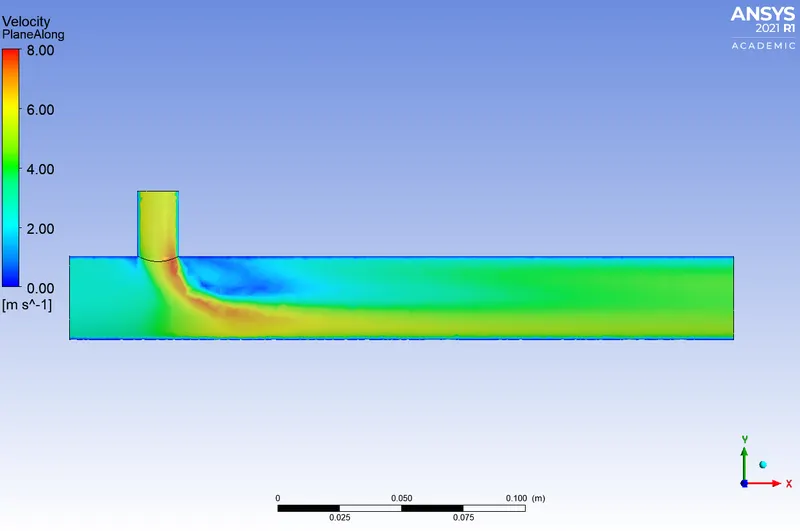
Contour plot – Velocity across pipe (Mid-section)
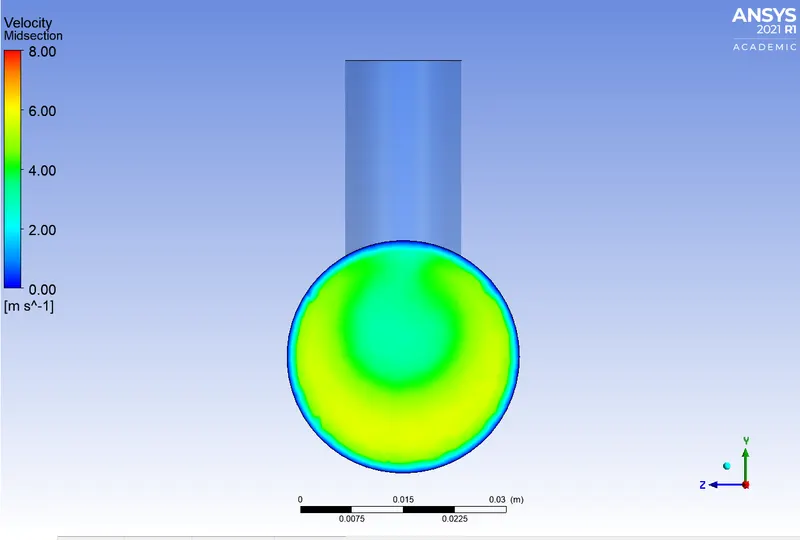
Contour Plot – Velocity across pipe (Outlet)
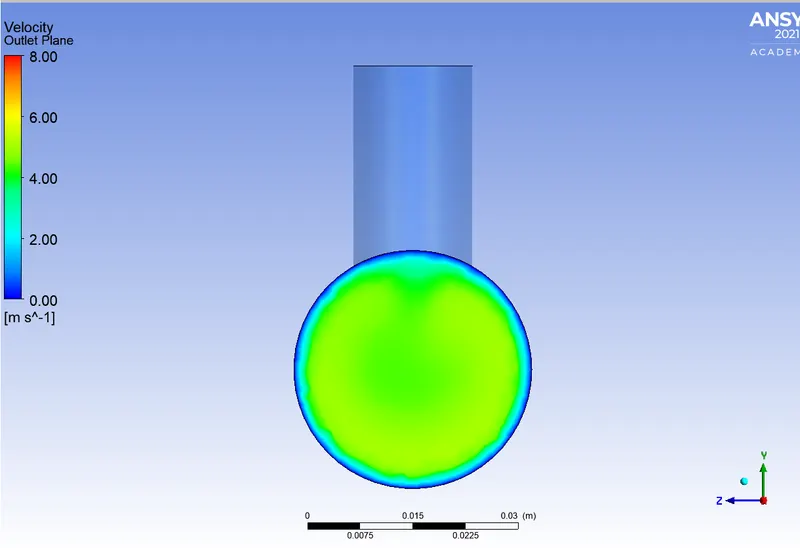
Line plot – Temperature along pipe
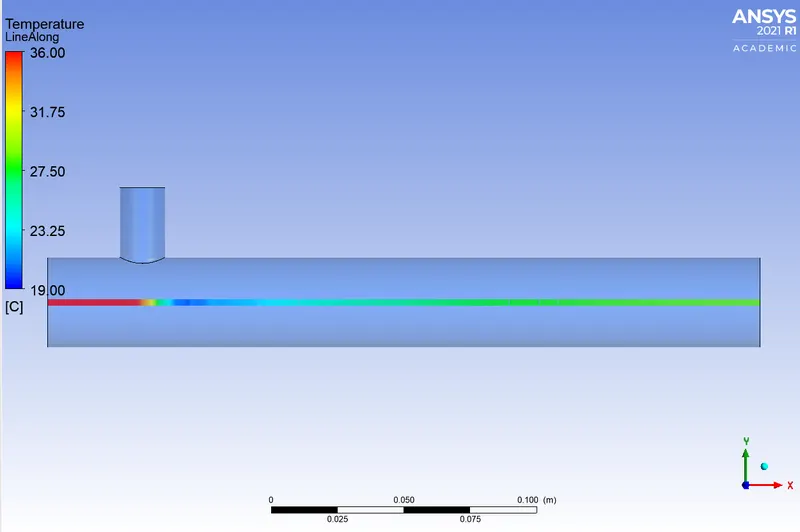
Line plot – Temperature across pipe outlet
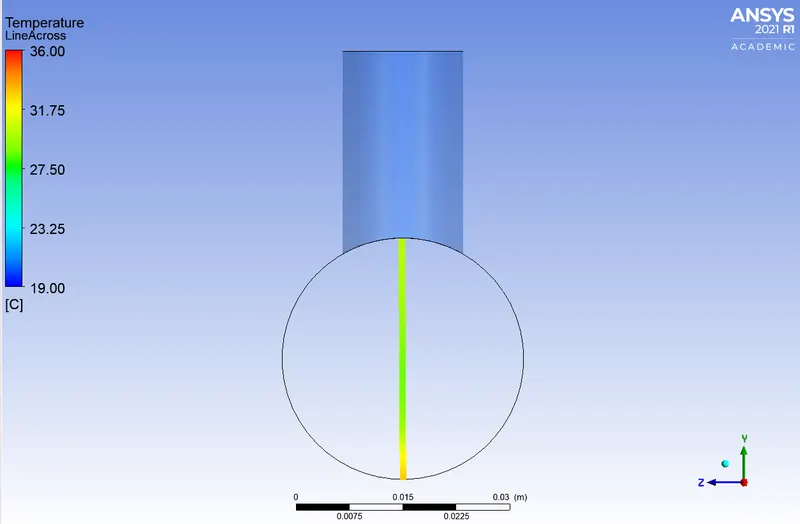
Line plot – Velocity along pipe
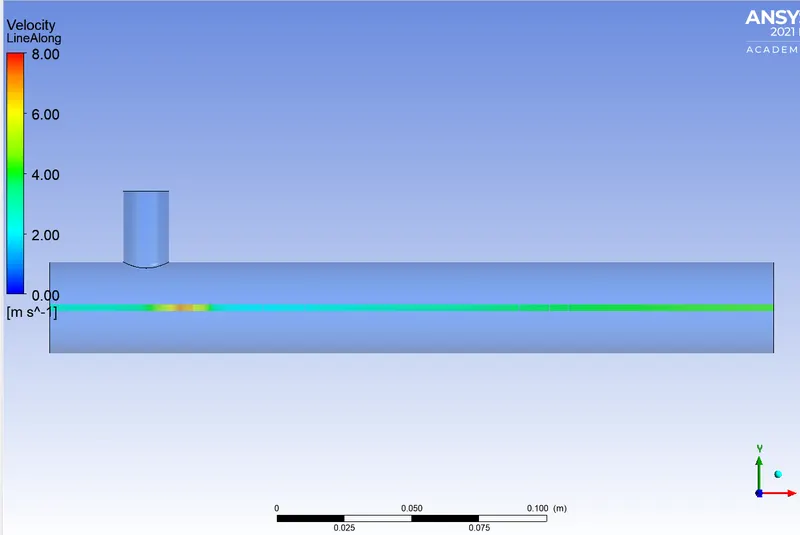
Line plot – Velocity across pipe outlet
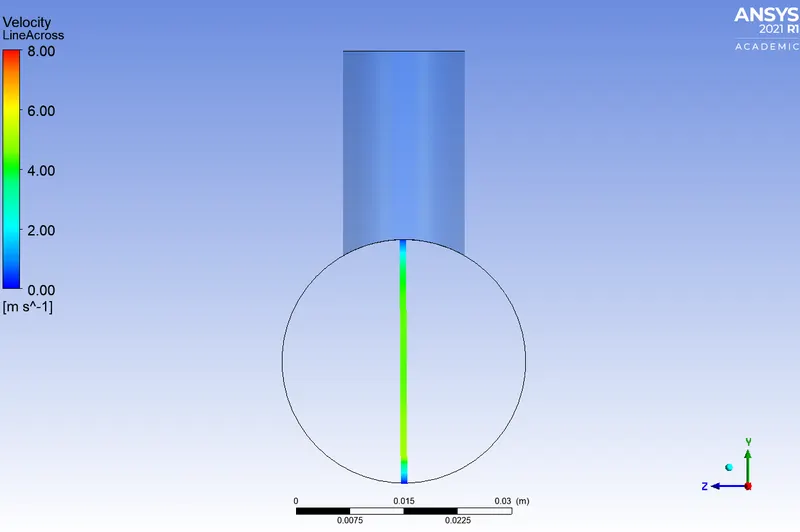
CASE 2B: Momentum ratio=4
Cold inlet velocity = 12m/s
Residual plot
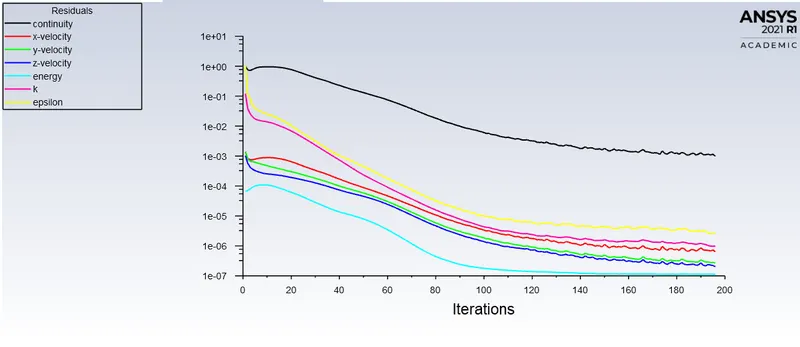
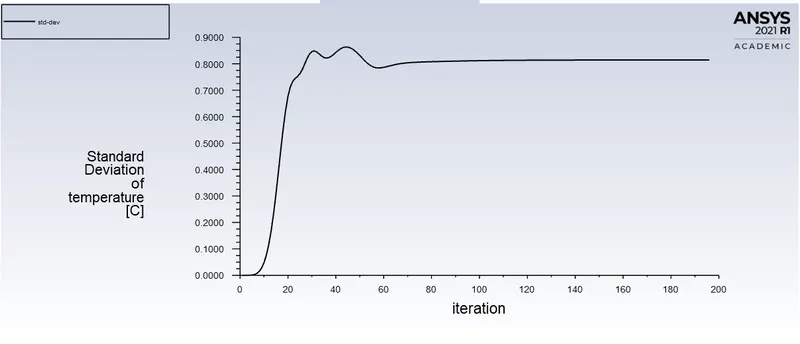
Standard Deviation of Temperature
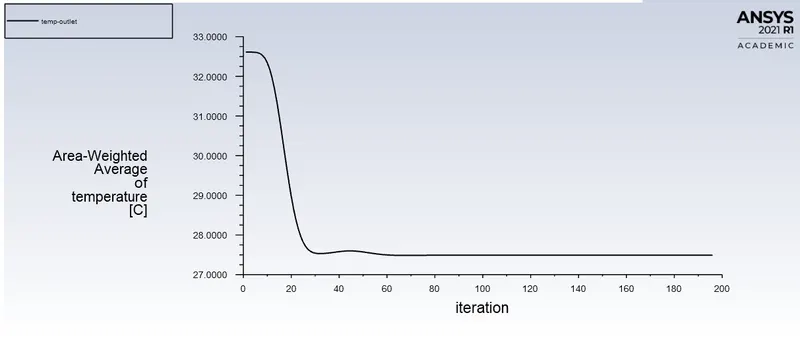
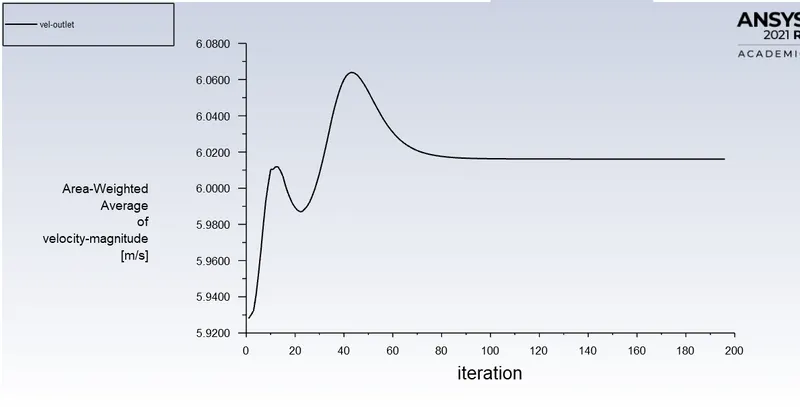
Area weighted average of Temperature – At Outlet
Area weighted average of Velocity – At Outlet
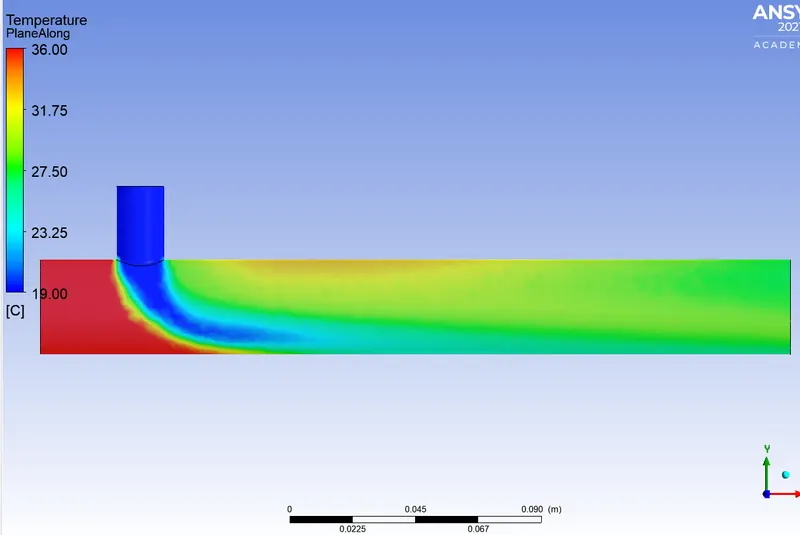
Contour plot – Temperature along pipe
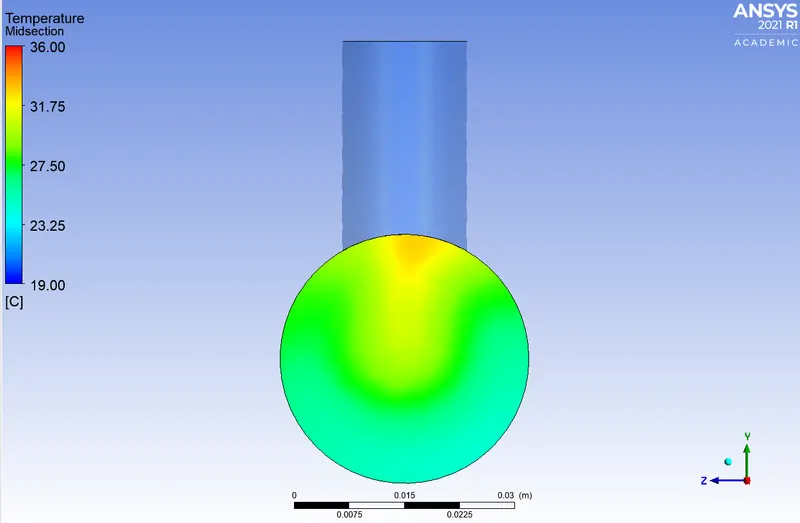
Contour plot – Temperature across pipe (Mid-section)
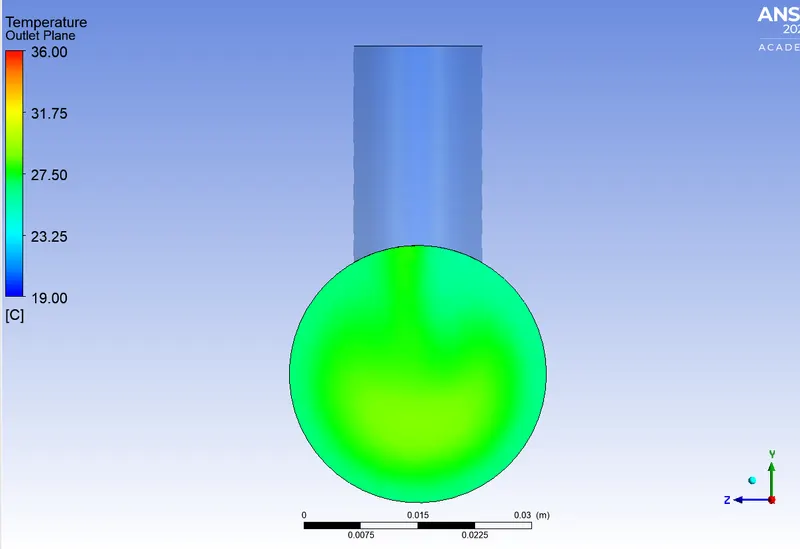
Contour plot – Temperature across pipe (Outlet)
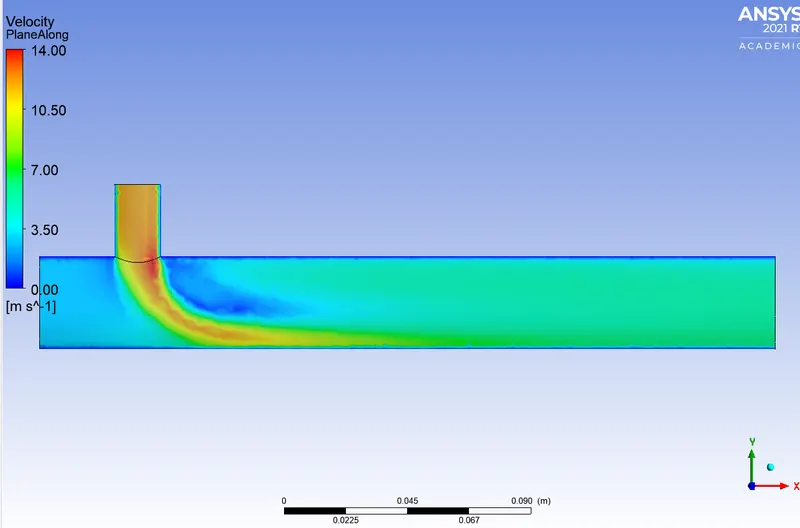
Contour plot – Velocity along pipe
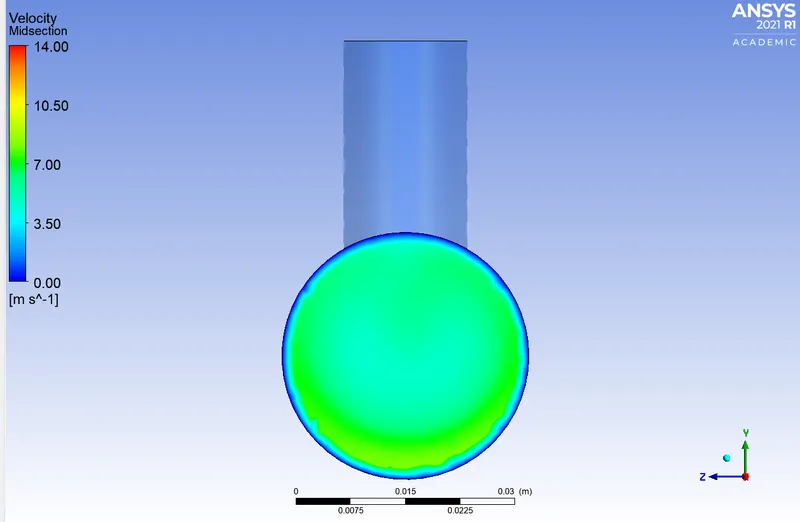
Contour plot – Velocity across pipe (Mid-section)
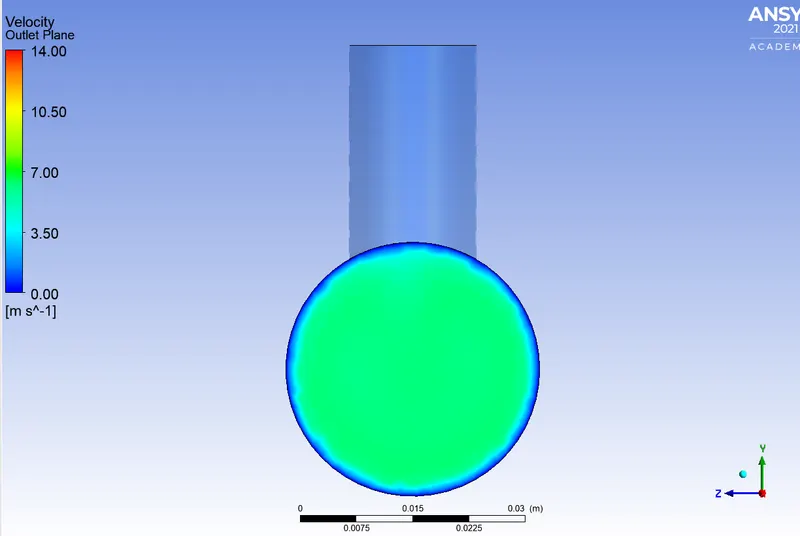
Contour Plot – Velocity across pipe (Outlet)
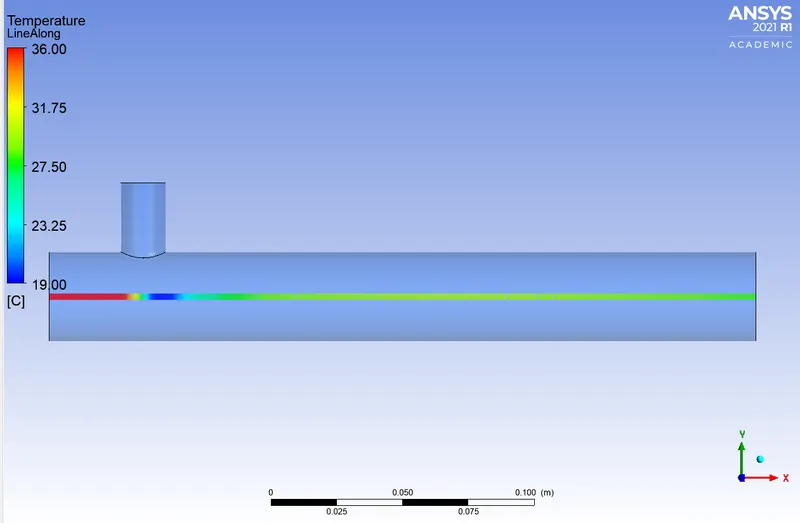
Line plot – Temperature along pipe
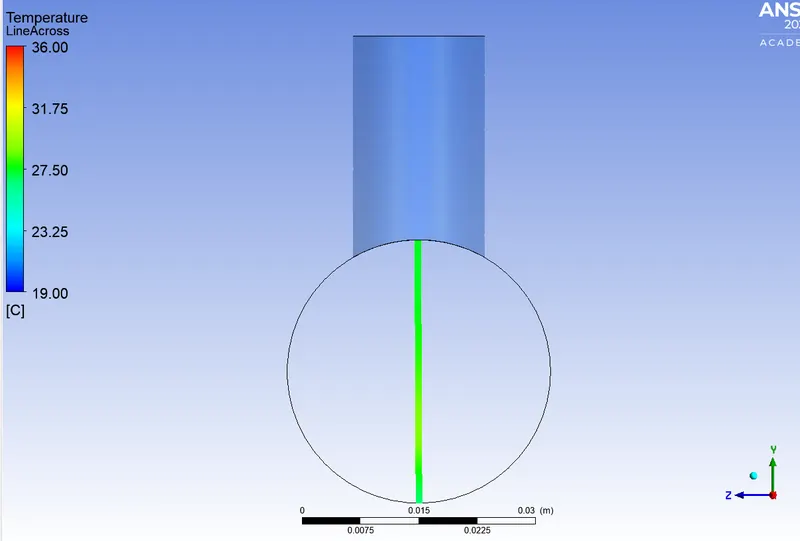
Line plot – Temperature across pipe outlet
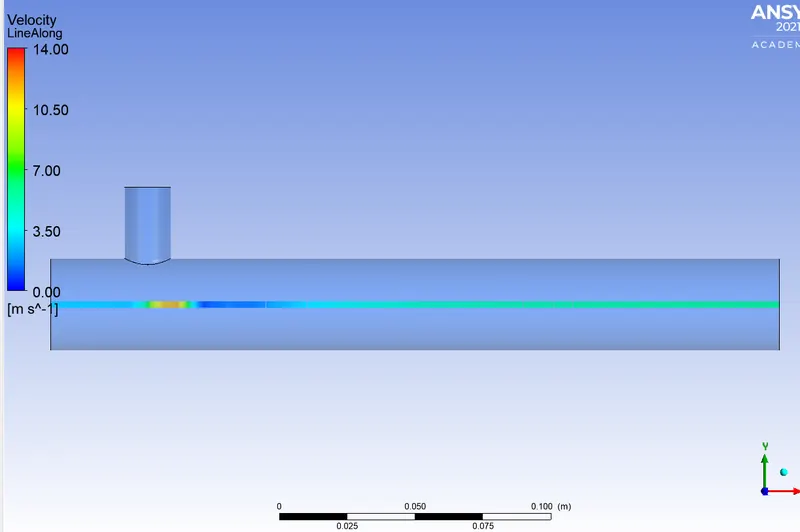
Line plot – Velocity along pipe
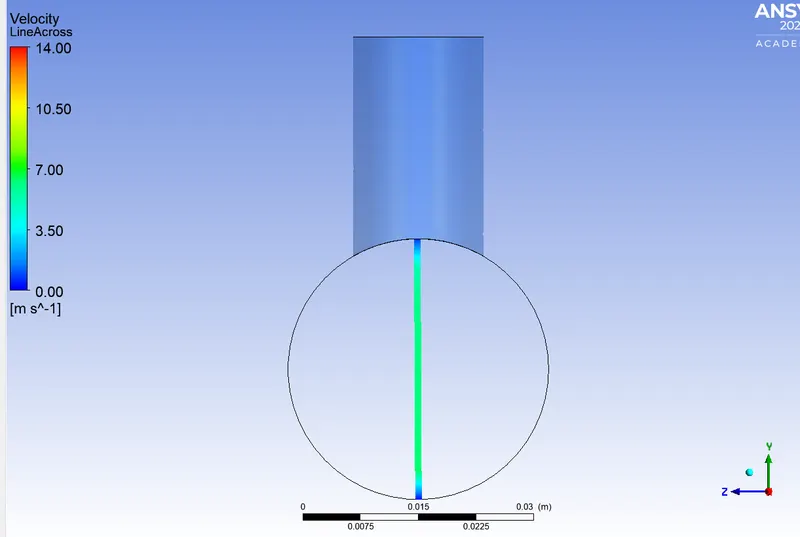
Line plot – Velocity across pipe outlet
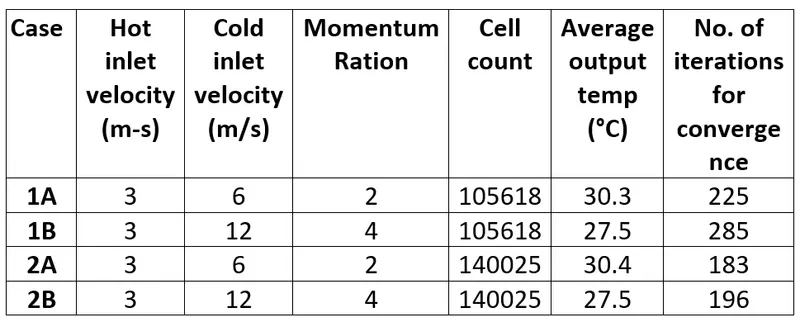
Tabular comparison of the 4 cases
Mesh Independence Test:
Case 2B was considered for the mesh independence test.
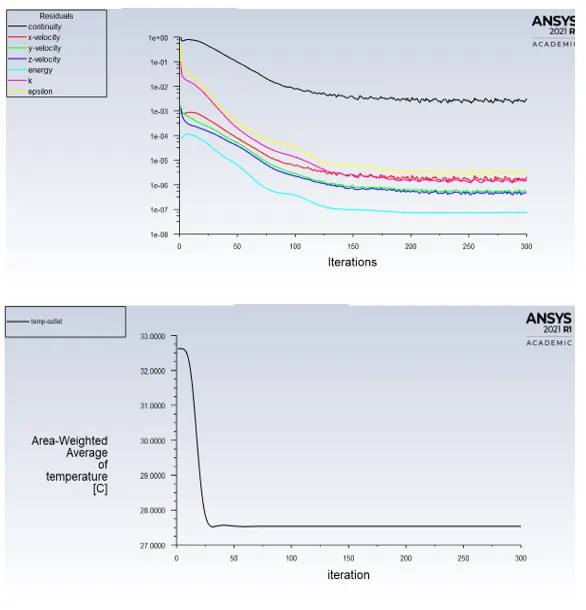
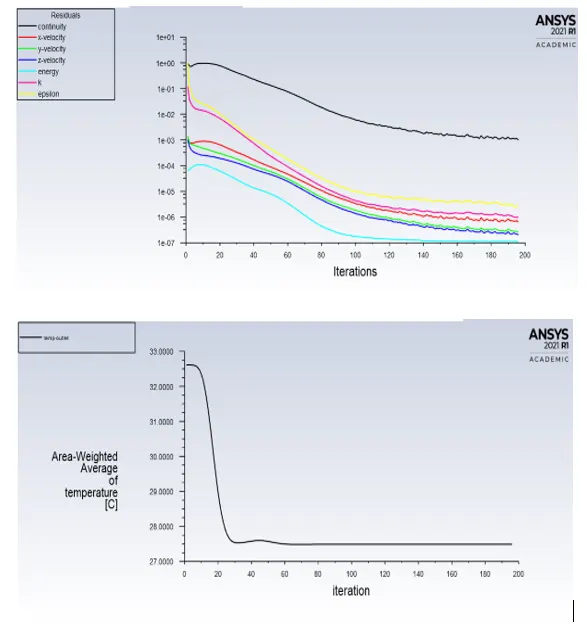
The residual plot and Area Weighted Average of Temperature at outlet were obtained to study the effect of mesh size on the results.
MESH SIZE – 2.5mm
MESH SIZE – 2.0mm
MESH SIZE – 1.5mm
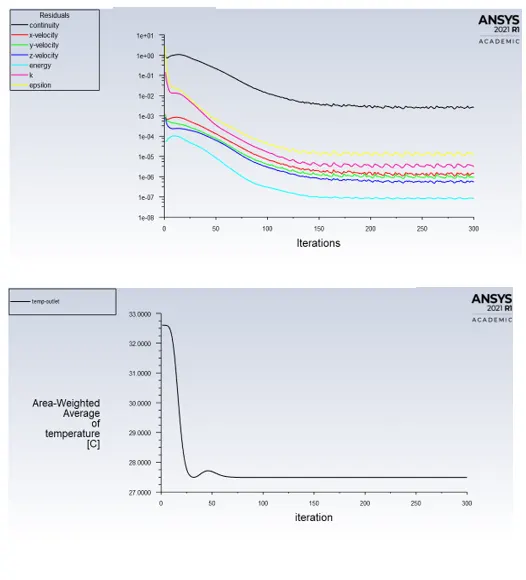
The temperature plots were found to be comparable. However, a finer mesh provided better convergence and the third case (finest mesh) provided the most accurate results.
Conclusion:
- As the velocity of the cold inlet air increased, better mixing was observed in case 1B and 2B. This is possible due to the better turbulent mixing in the tee. This goes to show that a higher Momentum ration provides better mixing.
- The temperature contour plots along the pipe show that, as the length of the pipe and momentum ratio increases, a more uniform output is obtained due to better mixing.
In case of the short mixing tee, some part of the hot air sweeps out through the outlet without being mixed. - Long mixing tee with a high momentum ratio helps to optimize the mixing process.
- K-epsilon model is better suited for this particular problem as it captures the flow away from the wall accurately.
- Element size of 2mm generates mesh of acceptable quality for analysis of the problem.