Effectivness of Mixing Tee
AIM:
To set up steady-state simulations to compare the mixing effectiveness when hot inlet temperature is 360C & the Cold inlet is at 190C.
INTRODUCTION:
Computational fluid dynamics (CFD) is a branch of fluid mechanics that uses numerical analysis and data structures to analyze and solve problems that involve fluid flows. Computers are used to perform the calculations required to simulate the free-stream flow of the fluid, and the interaction of the fluid (liquids and gases) with surfaces defined by boundary conditions. With high-speed supercomputers, better solutions can be achieved, and are often required to solve the largest and most complex problems. Ongoing research yields software that improves the accuracy and speed of complex simulation scenarios such as transonic or turbulent flows. Initial validation of such software is typically performed using experimental apparatus such as wind tunnels. In addition, previously performed analytical or empirical analysis of a particular problem can be used for comparison. A final validation is often performed using full-scale testing, such as flight tests.

THEORY:
To understand the mixing phenomena of a Tee-joint by means of numerical simulations utilizing the Finite volume method and CFD technique. In the current study air at two different temperature is mixed using the Tee junction and the outlet temperature & enthalpy are studied. In addition we compare two popular turbulence models the k-w SST model and the k-e model, also understand grid independency. This problem has wide practical applications in the petrochemical industries, HVAC industry, pipeline sector, nuclear power plants.
Solving & Modelling approach The fluid volume is extracted from the provided CAD model, wet volume obtained from the Spaceclaim is meshed i.e discretized which becomes the computational domain and for ease of identification while setting up the physics appropriate names are given to the boundary surfaces. The computational domain is applied with appropriate physical models in this case the RANS along with the turbulence model as well as energy equations. Then most importantly correct boundary conditions are applied (velocity inlet, pressure outlet, and no-slip wall). The equations get solved and we monitor its convergence using residuals.
GEOMETRY USED:
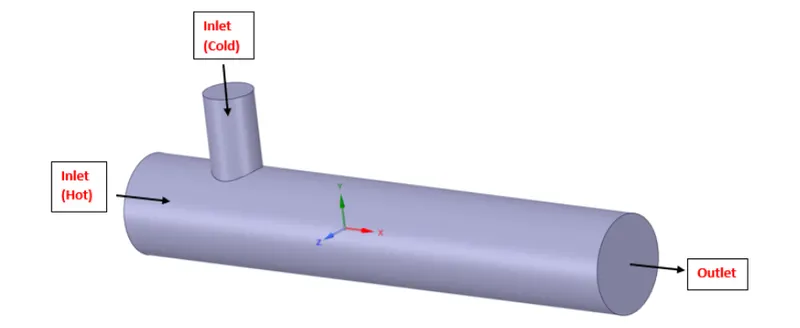
Fig 1: Geometry of mixing Tee
METHODOLOGY:
1. Run base case simulation for two different turbulence models to select a suitable turbulence model.
2.Perform grid independence study and choose a suitable grid size.
3.Perform the required simulation to understand the effect of momentum ratio & length of the tee in mixing.
4.Make inferences from the performed simulation and find areas of improvement if any
PROCEDURE:
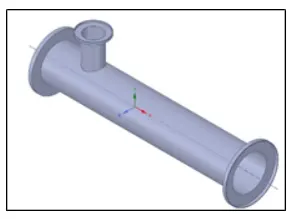
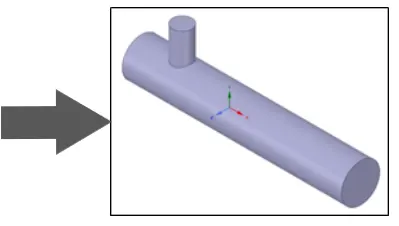
Pre-processing The first step is to import the given CAD model to Spaceclaim and extract the fluid (wet) volume from the provided CAD model as illustrated below
SETTING UP THE PHYSICS
Once the mesh has been loaded to FLUENT, choose appropriate units of quantities from the unit's options, by default they will be SI units. The next step is to perform mesh check followed by clicking the energy option in "physics" tab since we need to measure temperature. In the "physics" tab open the viscous option and choose the required turbulence model.
The next step is to select the appropriate boundary conditions and assign values for the same, for example in the case of the short tee, with momentum ratio = 2 the inlet temperature and velocity of hot air is 36°C & 3m/s, for cold air, it is 19°C & 6m/s. In the outlet boundary condition, the gauge pressure by default is zero, and temperature by default is 26.78°C. Once the boundary conditions are specified, one has to make report definitions so that we can obtain data of temperature, enthalpy so that we may be able to calculate the average outlet temperature and enthalpy at the end of the simulation. We then have to initialize the solution by clicking the hybrid option. Then specify the number of iterations that need to be run and hit on calculate.
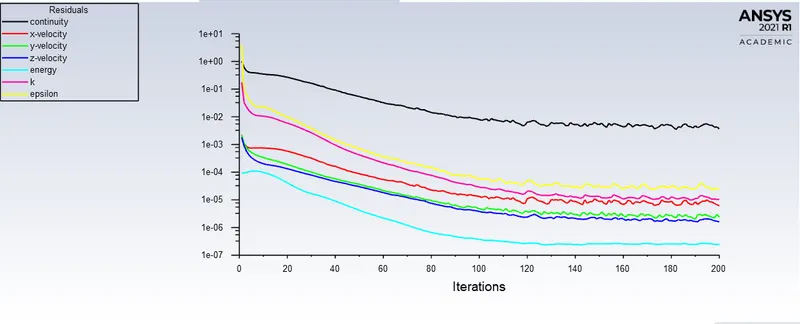
Check for convergence based on the residuals, once the solution has converged compute the average outlet temperature from the report definitions options under the solutions tab, and check with the analytically calculated outlet temperature. Then post-process the data and obtain the required plots.
K-epsilon
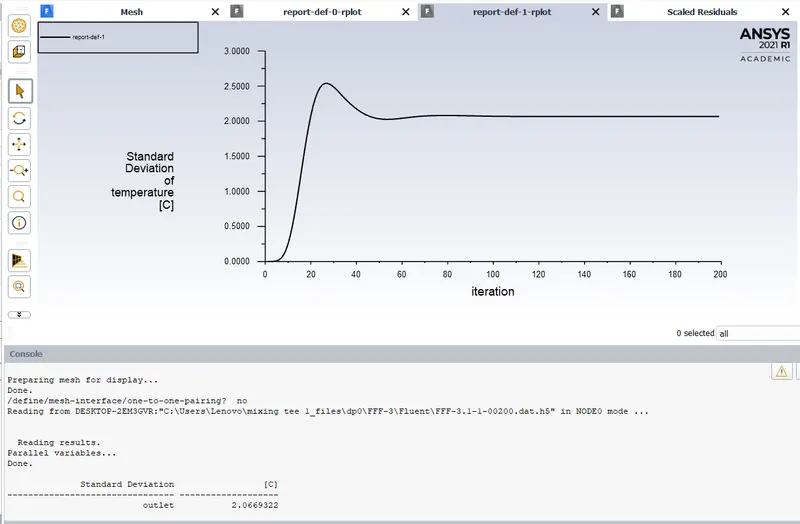
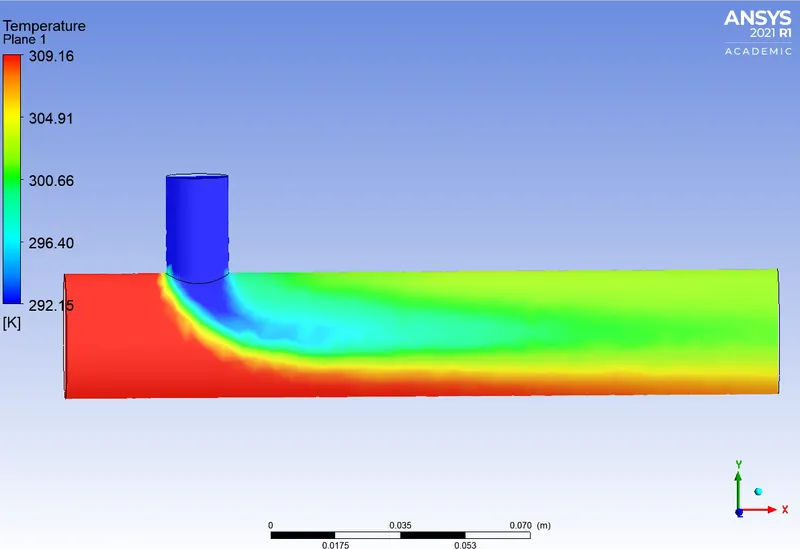
K-omega
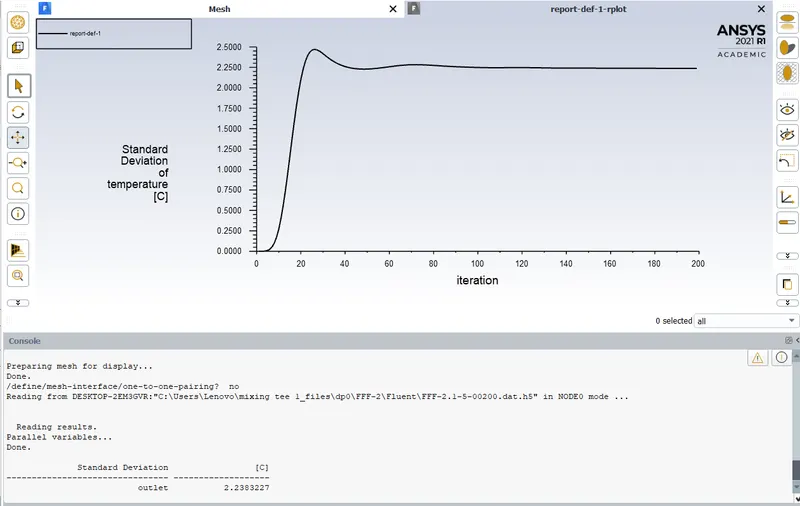
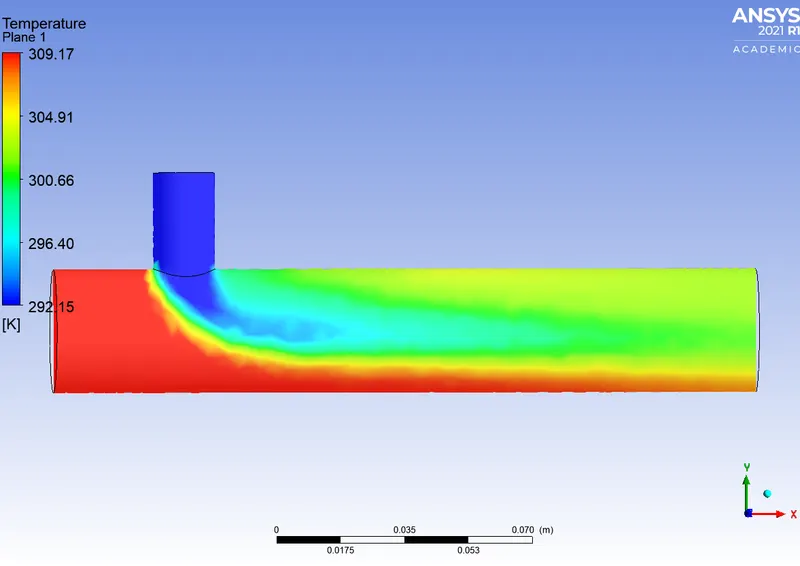
Hence from the above images, we can conclude k-epsilon model can be used to simulate as it has a lower standard deviation of temperature and a faster convergence also K-omega model is used where the viscous layer is important as it predicts a well near-wall, unlike the k-epsilon which predicts well far from the wall. As our case is dealt with mixing we can proceed with k-epsilon
GRID DEPENDENCY TEST: This test can be done to find out the ideal mesh size for model for this simulation . Hence we use 3 sizes which are 3mm,4mm, 5mm and 6mm.

Hence considering the above statistics 5mm is the most ideal case as it has the lowest standard of deviation
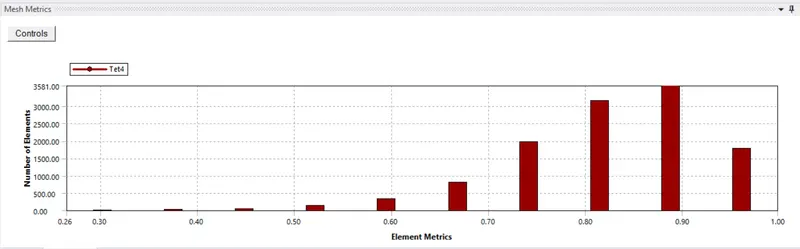
Here we can see most of our element quality lies in the range of 80-90% which is a good sign to move on
RESULTS:
CONVERGENCE PLOTS
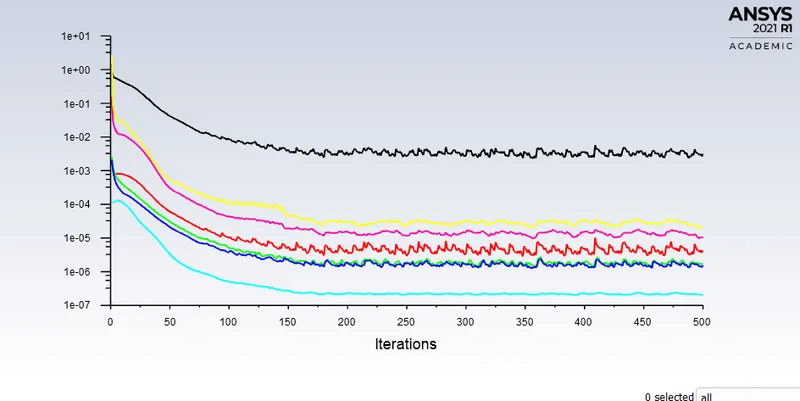
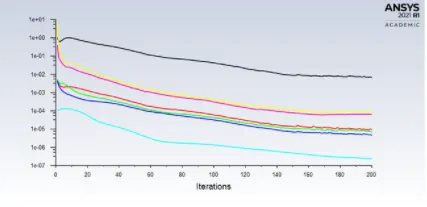
CASE I a CASE I b
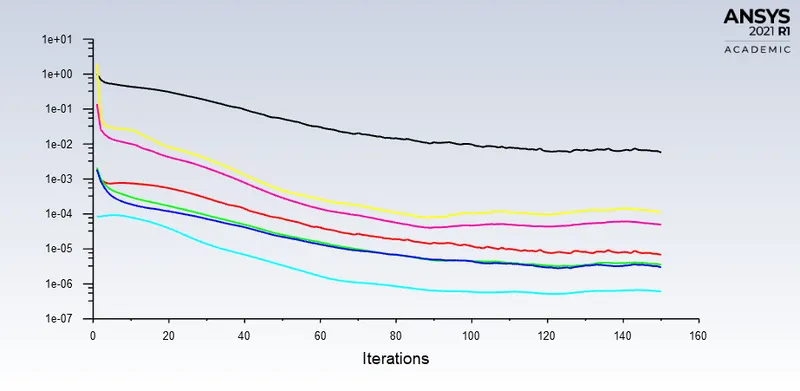
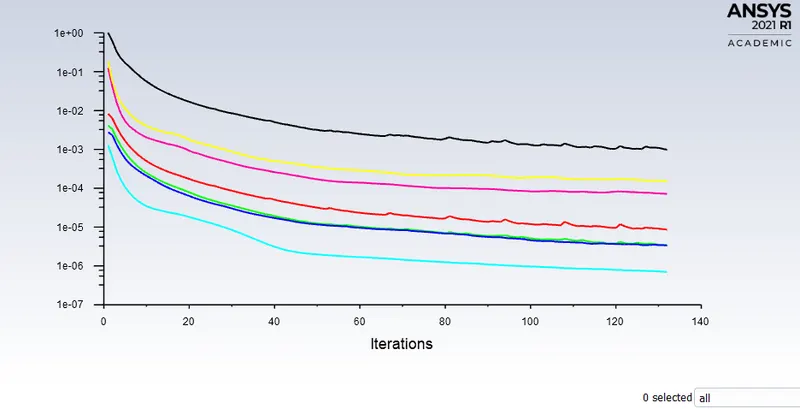
CASE II a CASE II b
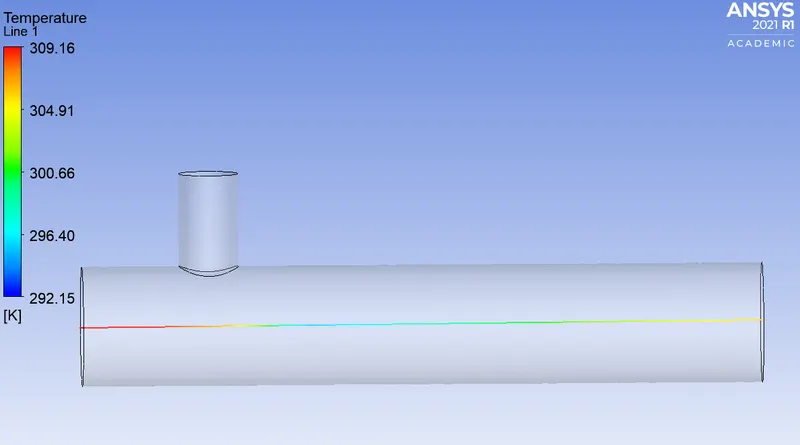
CASE I:SHORT PIPE
Velocity and temperature contour plots on the cut planes along and across the pipe.
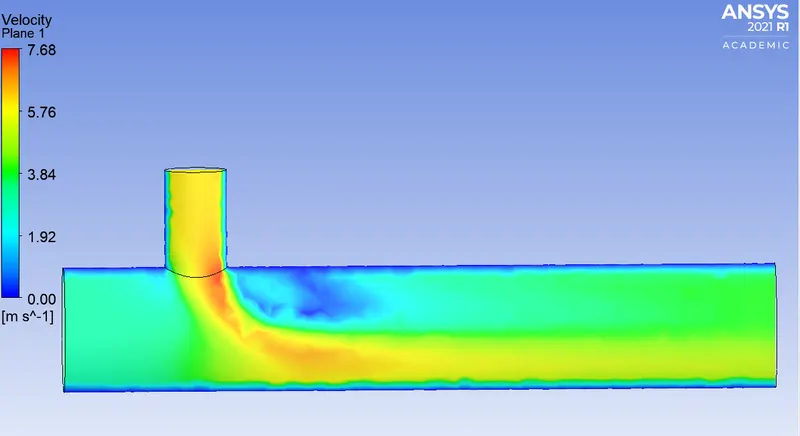
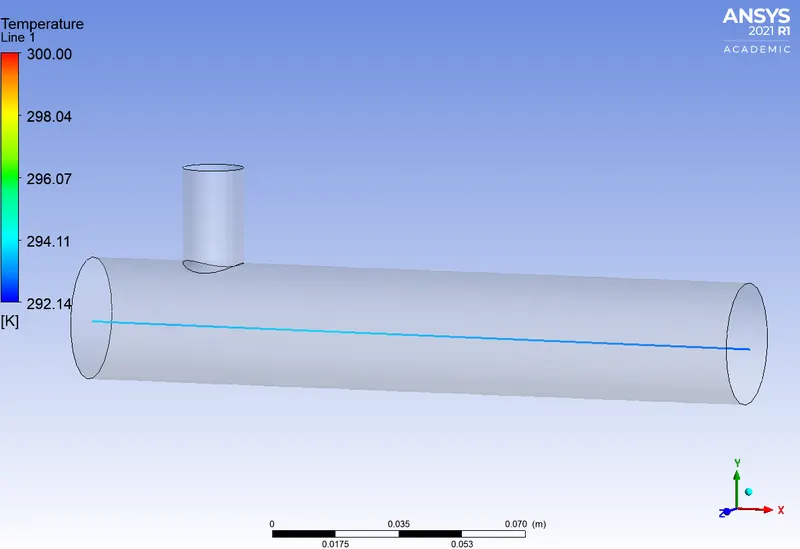
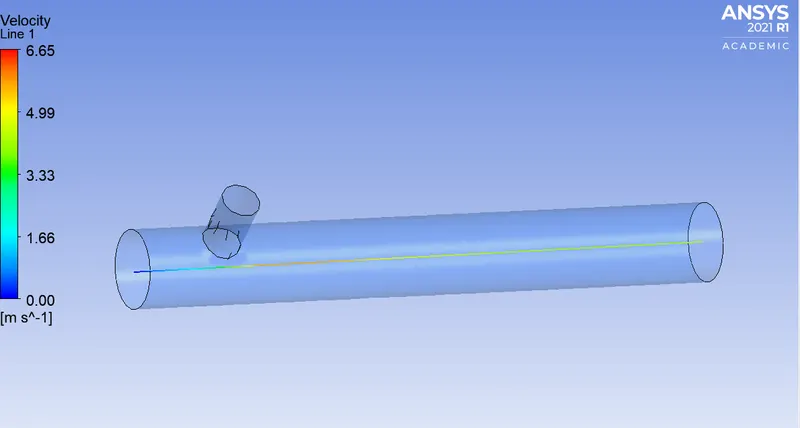
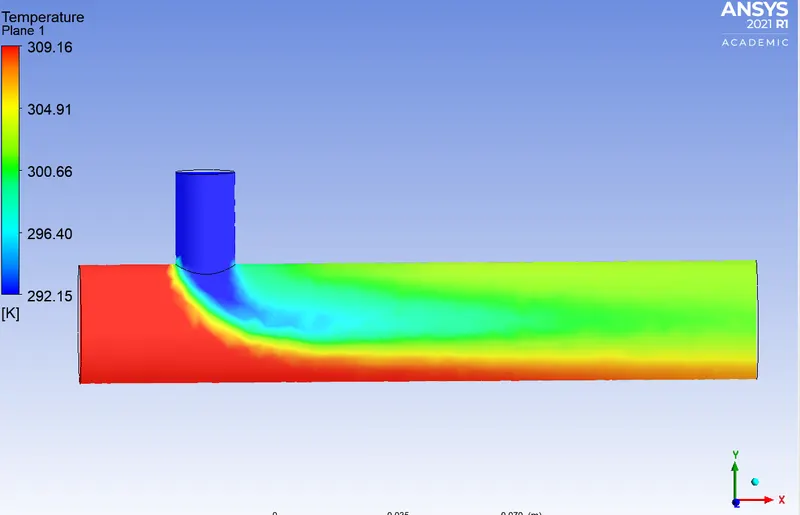 Velocity and Temperature line plots along and across the length of the pipe.
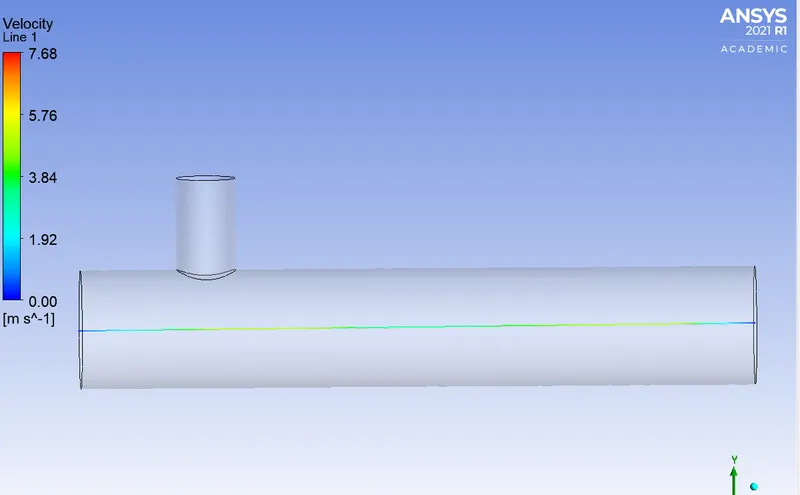
CASE I b[m=4]
Velocity and temperature contour plots
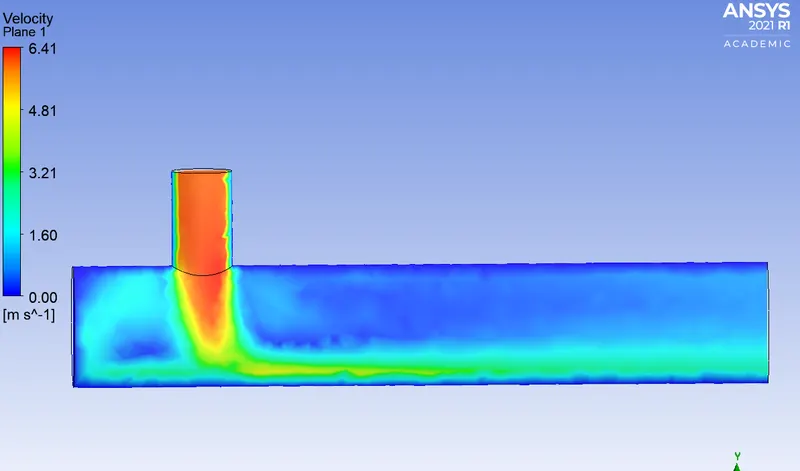
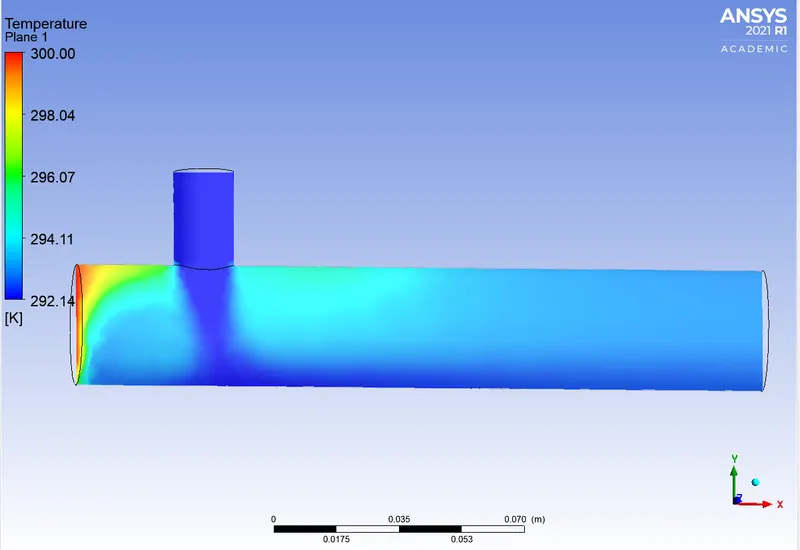
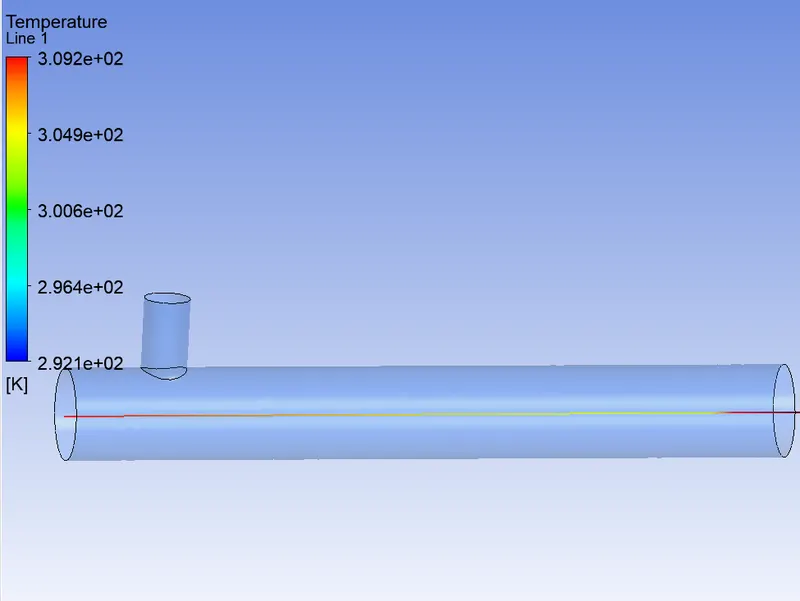
Velocity and Temperature line plots along and across the length of the pipe.
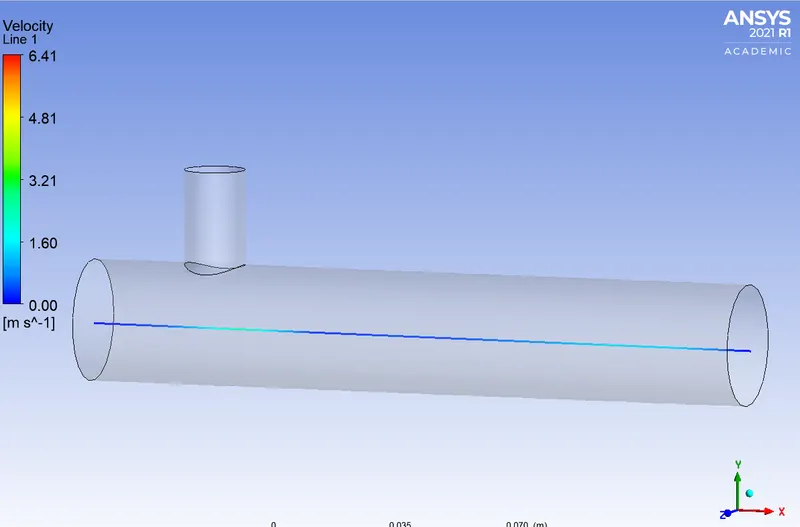
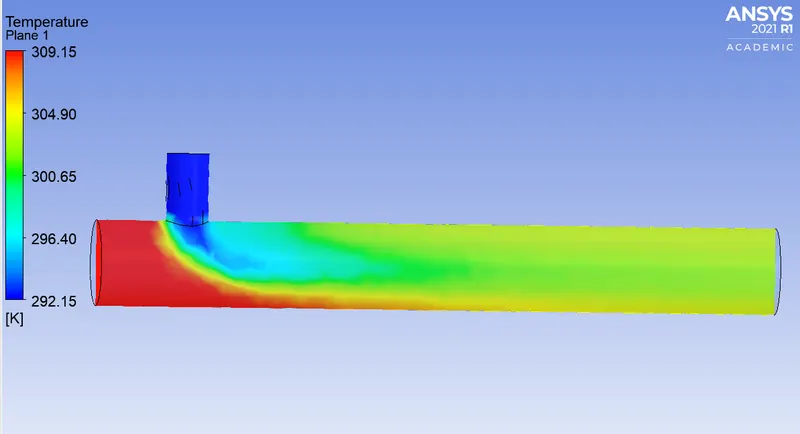
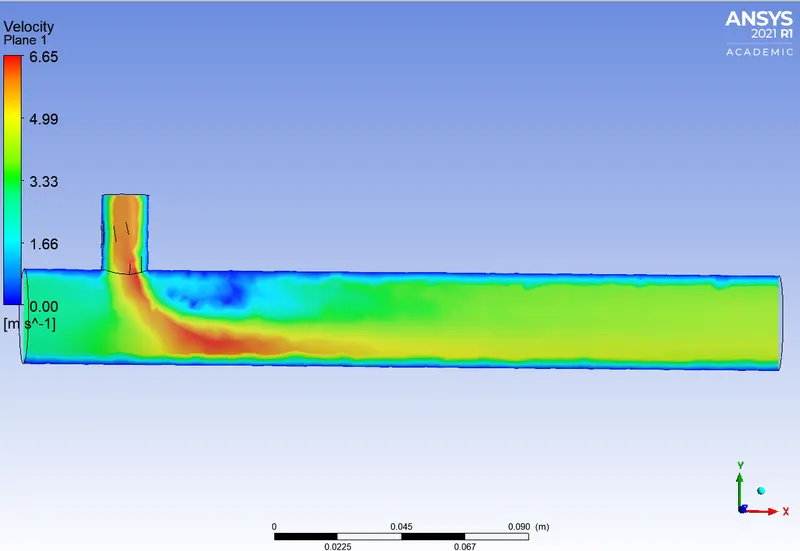
CASE II:LONG PIPE
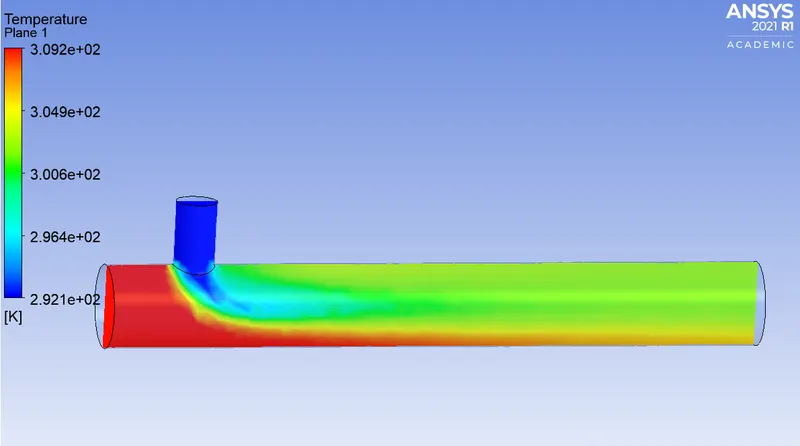
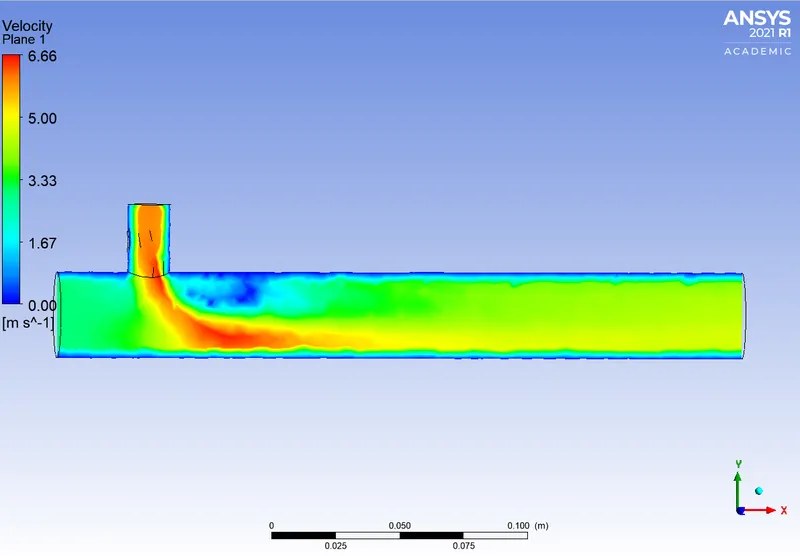
Velocity and temperature contour plots
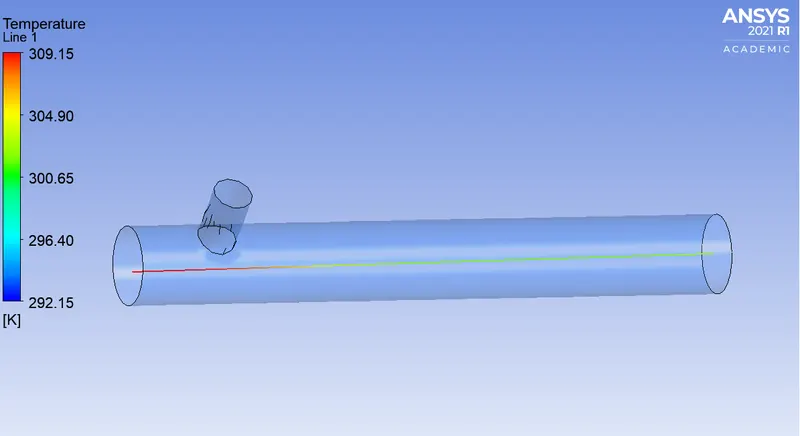
Velocity and Temperature line plots along and across the length of the pipe.
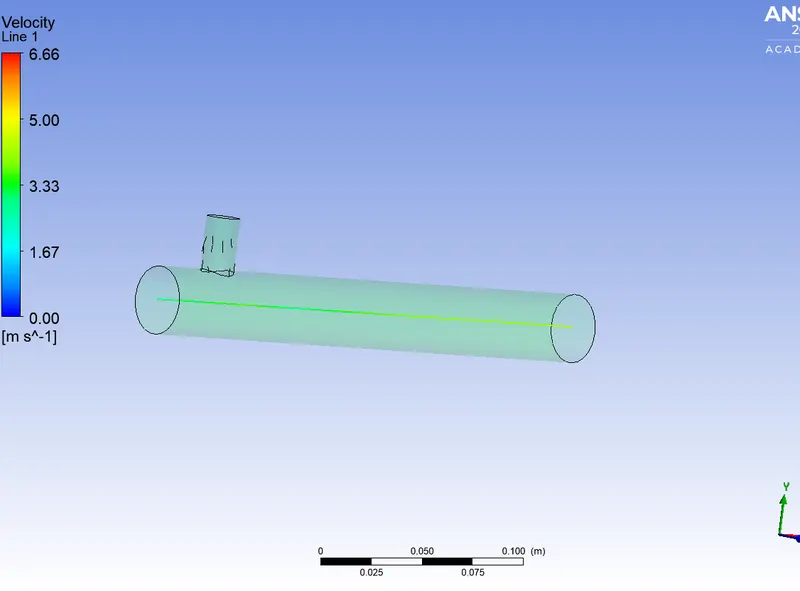
CASE II b[m=4]
Velocity and temperature contour plots on the cut planes along and across the pipe.

CONCLUSION:
1. A larger momentum ratio is preferred as it significantly lowers the outlet temperature
2. The temperature contour at the outlet for short tee cases shows that some of the high temperatures flow sips through without properly mixing with the flow. Whereas, in the temperature contour of long tee cases, the high temperatures flow thoroughly mixes with the rest of the flow.
3. Therefore, we can recommend using the long tee and high-velocity inlet for application. This is because we have a low standard deviation in case of long tee compared to the short tee for both momentum ratios.
4. K- epsilon model predicts well far from the boundaries (wall) and k- omega model predicts well near the wall. Even though it depends on Y+. Therefore, K-epsilon model is majorly used for free flow away from the wall and as in this project, there is no dealing with the wall of the mixing tee for change in temperature along the length of it, so K-epsilon model was chosen for further simulations.