Underbody Coating
UNDER- BODY COATING
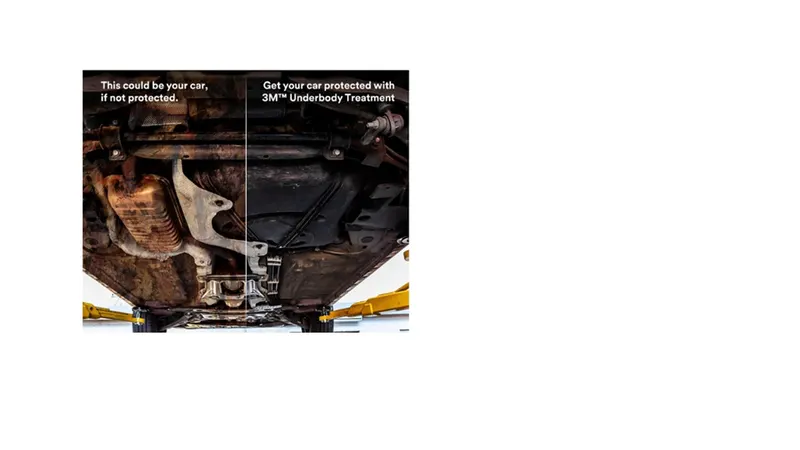
Underbody coating is a protective layer applied to the underside of a vehicle to prevent corrosion, abrasion, and other forms of damage caused by exposure to various elements. The coating is typically made of a rubber or polymer-based material that is sprayed or brushed onto the undercarriage of the vehicle.
The purpose of underbody coating is to create a barrier between the metal components of the vehicle and the environment, particularly salt, moisture, and other contaminants that can cause corrosion. Corrosion can weaken the integrity and metal structure of a vehicle over time, leading to safety issues and costly repairs.
In addition to corrosion protection, underbody coating can also provide insulation against noise, vibration, and heat. This can improve the driving experience by reducing road noise and heat transfer into the cabin.
Underbody coating is especially important for vehicles that are regularly exposed to harsh environments, such as those driven in areas with heavy snowfall, salted roads, or coastal areas with high humidity or under high temparatue conditions or extreme conditions . It is often applied as a factory option, but can also be added later as an aftermarket service.
The choice of underbody coatings depends on factors such as ,
# Type of vehicle
# The intended use and nature of use
# Environmental conditions being exposed to .
The different types of underbody coatings are
# Wax based under body coating
# Rubberised Asphalt coating
# PVC Under body coatings
# Polyurethane under body coatings.
Wax based under body coating
A wax-based coating refers to a type of coating material that is composed of wax blended with other materials. Wax is a natural or synthetic material that is typically derived from petroleum, plants, or animals. Wax coatings are commonly used in various industries for their protective and decorative properties.
Coatings are applied to surfaces to provide a layer of protection against moisture, dust, and other environmental factors. They can also enhance the appearance of the surface by providing a glossy or matte finish. Additionally, wax coatings can be used to reduce friction and improve the strength and durability of surfaces.
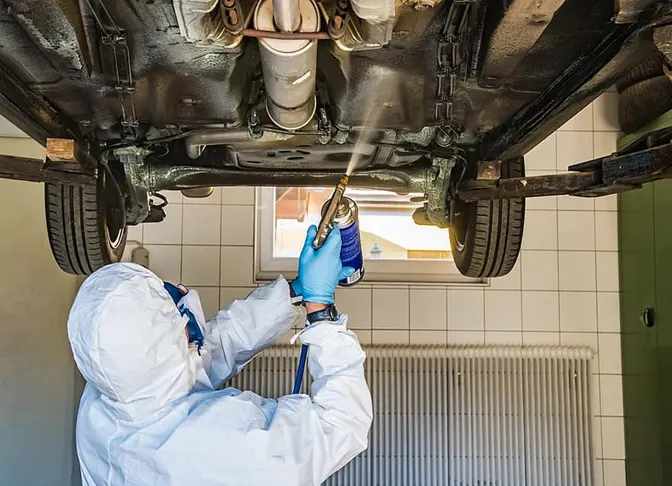
The coatings are usually applied using brush or by spray gun.
Advantages of wax based coatings
1 Wax based coatings are easy to apply
2 Less expensive than other coatings
3 They provide good protection against moisture ,salt and other environmental conditions.
4 The application is easy.
Disadvantages of wax based coatings
1 Wax based coatings are not much durable and longlasting than other coatings.
2 May require more frequent reapplication.
Rubberised Asphalt coatings
Rubberized asphalt coatings are a type of protective coating made by blending asphalt with a synthetic rubber polymer. The resulting mixture creates a durable, flexible, and waterproof coating that is commonly used for a variety of applications.
Once applied, the rubberized asphalt coating forms a seamless and waterproof membrane that helps protect the underlying surface from water damage, corrosion, and other forms of wear and tear. The coating is also resistant to UV radiation.
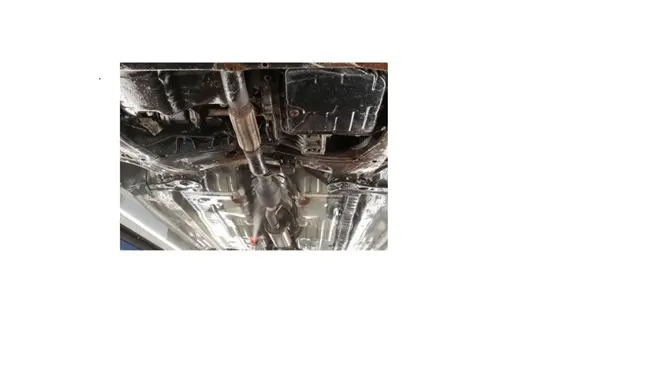
They are usually applied using spray guns or specialised equipments.
Advantages of Rubberised Asphalt Coatings
1 Durability of these coatings are longer.
2 Resistance to corrosion and rust which prolong the life
3 They provide good protection against moisture ,salt and other environmental conditions.
Disadvantages of Rubberised Asphalt Coatings
1 Expensive than other coatings.
2 Requires professional level for application.
3 They are very difficult to remove and maintan.
PVC underbody coatings
PVC underbody coating is a type of protective coating used in the automotive industry to protect the underbody of a vehicle from rust, corrosion, and other types of damage caused by road debris, moisture.
The PVC underbody coating is typically applied as a thick, black, rubberized material that adheres to the underbody of the vehicle. The coating is applied using a specialized spray gun, coats the surface of the underbody.
PVC underbody coating forms a durable and waterproof barrier that helps prevent moisture and road debris from reaching the metal surfaces of the underbody. This helps to prevent rust and corrosion, which can significantly reduce the lifespan of a vehicle.
Advantages of PVC underbody Coatings
1 Coating provides resistance against rust,corrosion and moisture.
2 Enhances durability and prolong the life.
3 Easy maintainance of surface .
4 Provides asthetic appeal to the surface.
Disadvantages of PVC underbody Coatings
1 Not suitable of high temperature application.
2 Cost of pvc coatings are high.
3 PVC coating are toxic and harmful for environment.
Polyurethane underbody coatings
Polyurethane underbody coating is a type of protective coating applied to the underside of a vehicle to protect it from rust, corrosion, and other forms of damage caused by exposure to the elements. It is a durable, waterproof, and flexible coating that is designed to withstand the harsh conditions of the road.
Polyurethane underbody coatings are applied to the underside of the vehicle using a spray gun or other specialized equipment. The coating forms a thick, protective layer that adheres to the metal surface of the vehicle, creating a barrier between the metal and the environment.
Advantages of Polyurethane underbody Coatings
1 Polyurethane coatings are highly durable and provides resistance against rust,corrosion and moisture.
2 Excellent adhesion to wide range of surfaces.
3 Asthetic appeal to the surface .
4 Easy application using various methods.
Disadvantages of Polyurethane underbody Coatings
1 Polyurethane coatings are highly expensive .
2 Health concern is there due to the release of volatile gases and inorganic components.
3 These coatings are sensitive to uv rays which causes yellowish colour to the surface.