Structural analysis of a buidling using Robot Structural Analysis
#1 - Structural analysis of a buidling using Robot Structural Analysis
WEEK - 8_CHALLENGE
N.KEERTHANA
1) What are HVAC systems? Why are they essential in the modeling of buildings?
- HVAC systems - Heating, Ventilation, and Air conditioning systems
- These systems are milestones of building mechanical systems that provide thermal comfort for the people who occupy the building, accompained with indoor air quality
- HVAC systems are more used in different different types of buildings such as industrial, commercial, residential and institutional buildings
- Efficient HVAC systems make buildings safer and healthier
- HVAC is an essential and integral part of a building and thus, specially-trained HVAC consultants are an important authority in the industry
- Now-a-days, no building is complete without a proper HVAC system, these features greatly reduces the risk of allergies, lung-related problems, and seasonal flu
- In research by Environmental Protection Agency, poor air quality was the largest factor for environment-related sickness. Efficient HVAC systems solve this problem. It circulates the air, regulates the temperature according to the weather, and removes harmful gases from the air
- Hence, the HVAC systems are essential in the modeling of buildings
2) From week 7 assignment, based on the building designed use the same Revit file to design a HVAC system for each floor to cover the topics included in the class.
a. Typical HVAC unit includes Distribution center
b. Collector
c. Ducts
d. Blower
Based on the layout choose appropriate ducts and elevation using property browser and assign the components to appropriate groups to complete modeling of the HVAC unit
AIM : To add HVAC system to each floor for the model created in week 7 which includes all the components such as: Distribution center, Collector, Ducts and Blowers
TOOLS USED:
- Mechanical Template
- Manage links
- Collaborate tool
- Specify coordinates
- Acquire coordinates
- Air terminals
- Supply diffusers
- Return diffusers
- Air handling unit
- Ducts
PROCEDURE:
- Open a new Mechanical template and save it accordingly
- In the collaborate tab click on collaborate tool and select with in network option
- Draw the grids to form a base point and specify the coordinates (0'-0")
- Go to manage links and link the saved Architectural model by using the option as 'by shared coodinates'
- The model will be placed at the grids
- Open the floor plan level

- Now, go to the SYSTEMS TAB and select the Air terminals
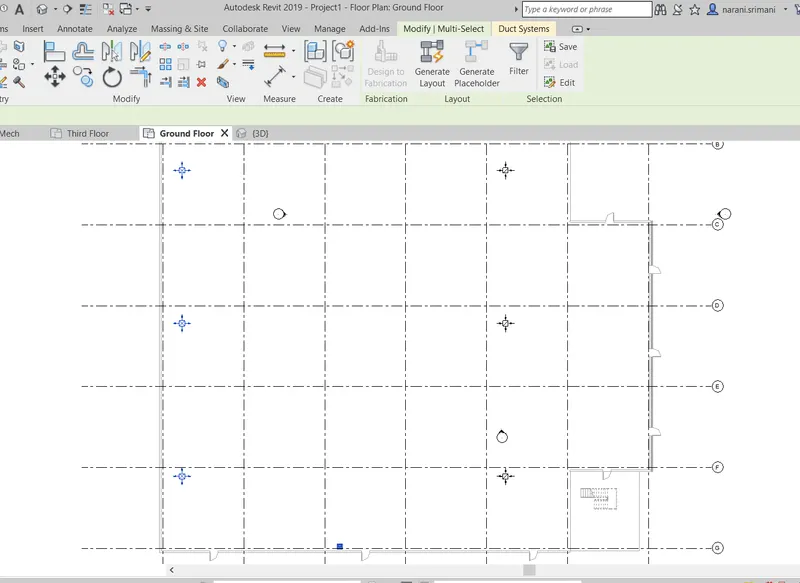
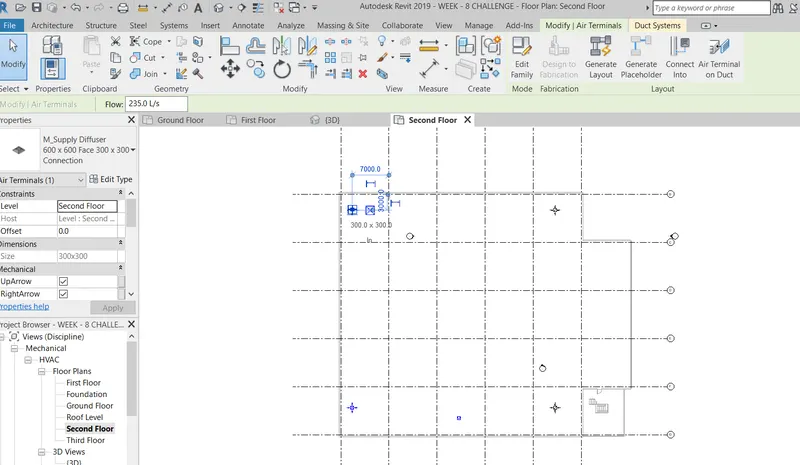
- Place the Supply diffusers and Return diffusers in appropriate places
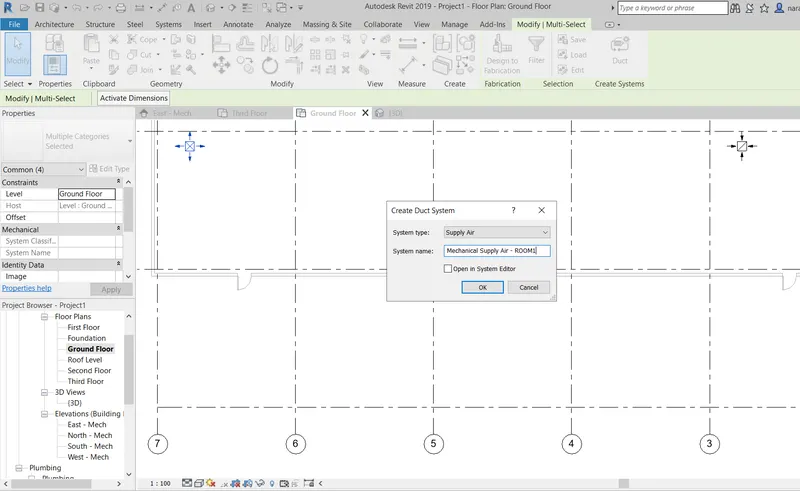
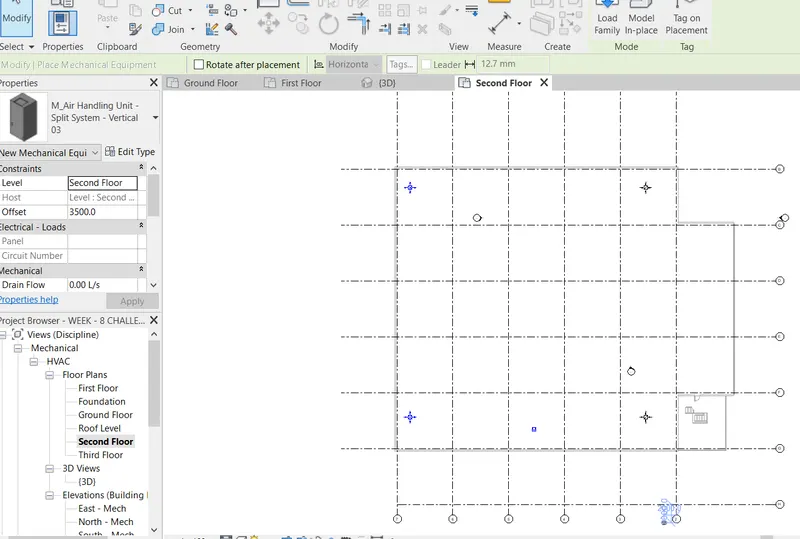
- Click on mechanical equipment and place the Air handling unit on the outer walls
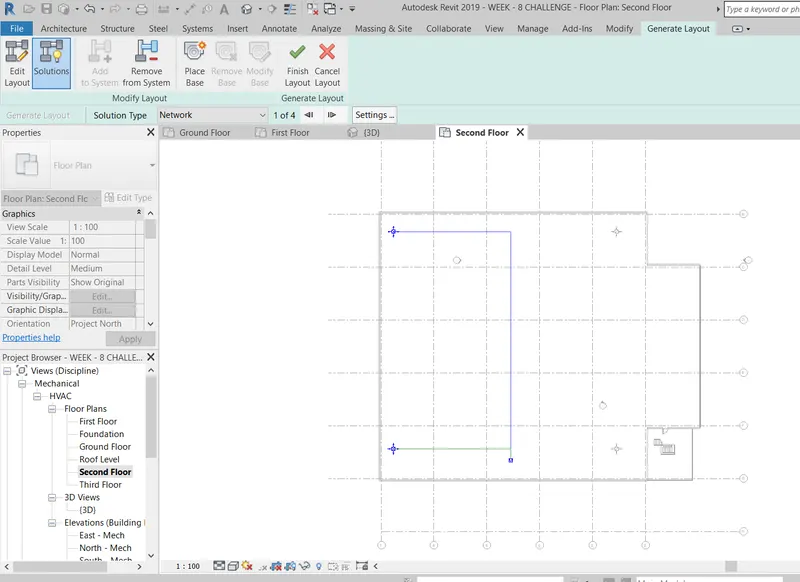
- Now select the diffusers and air handling unit and connect them using GENERATE LAYOUT option
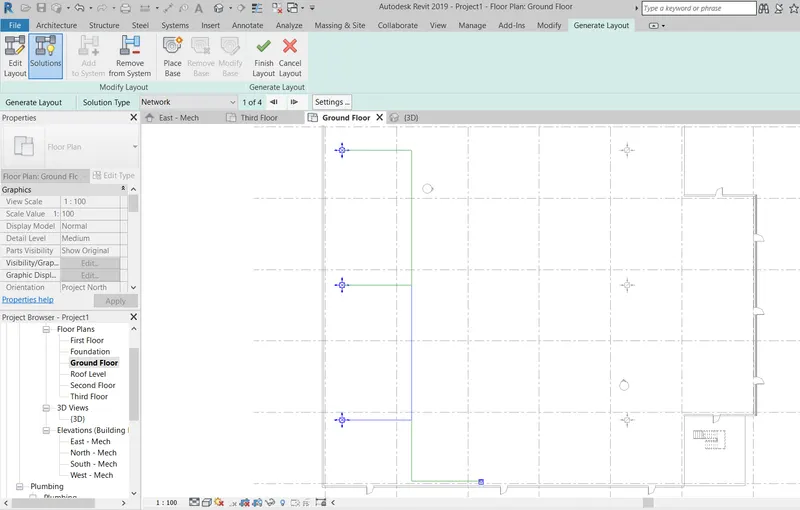
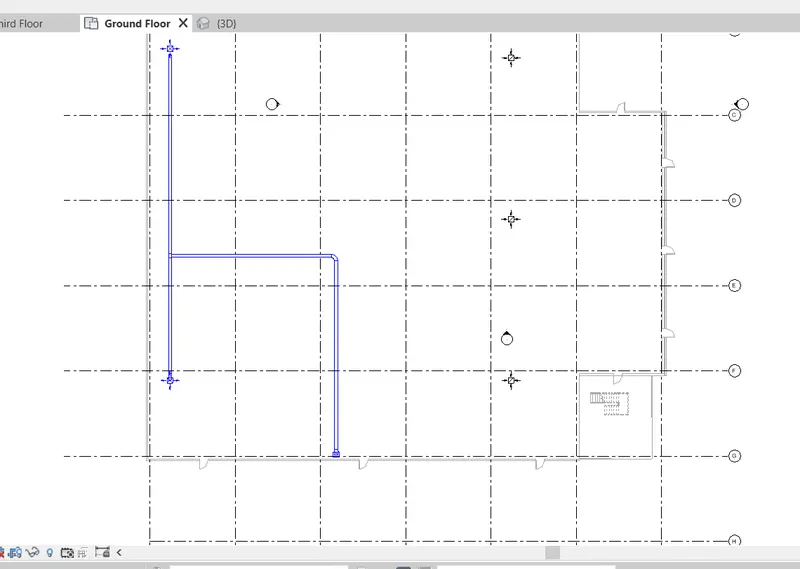
- Choose the best possible option and connect
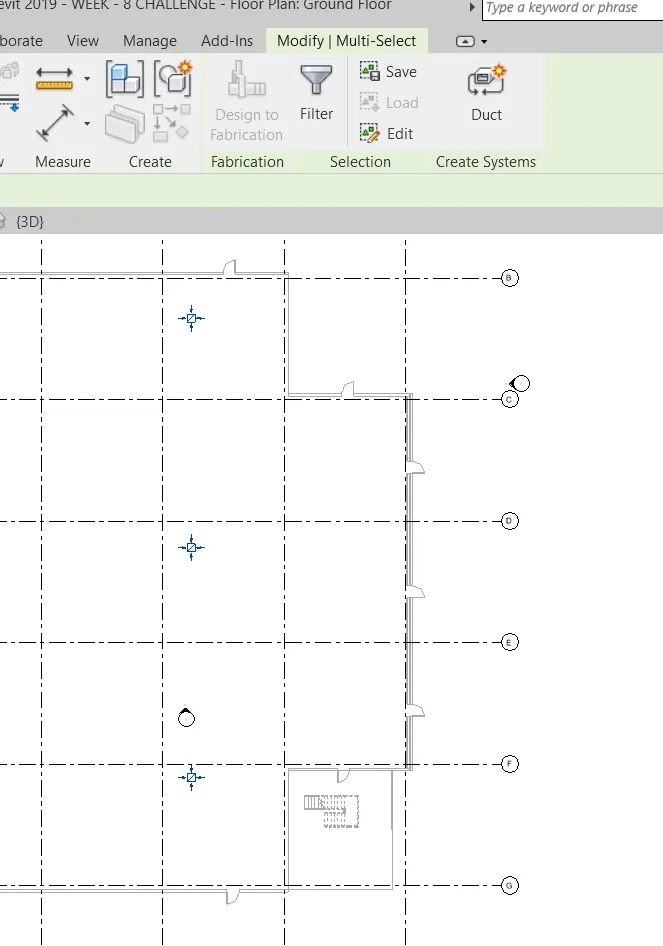
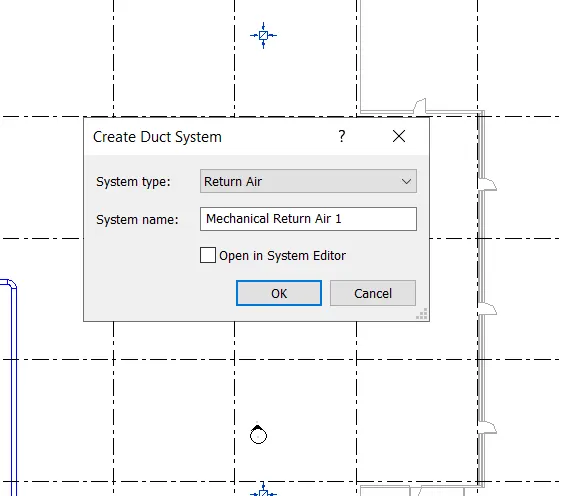
- Repeat the same for the Return diffusers as well
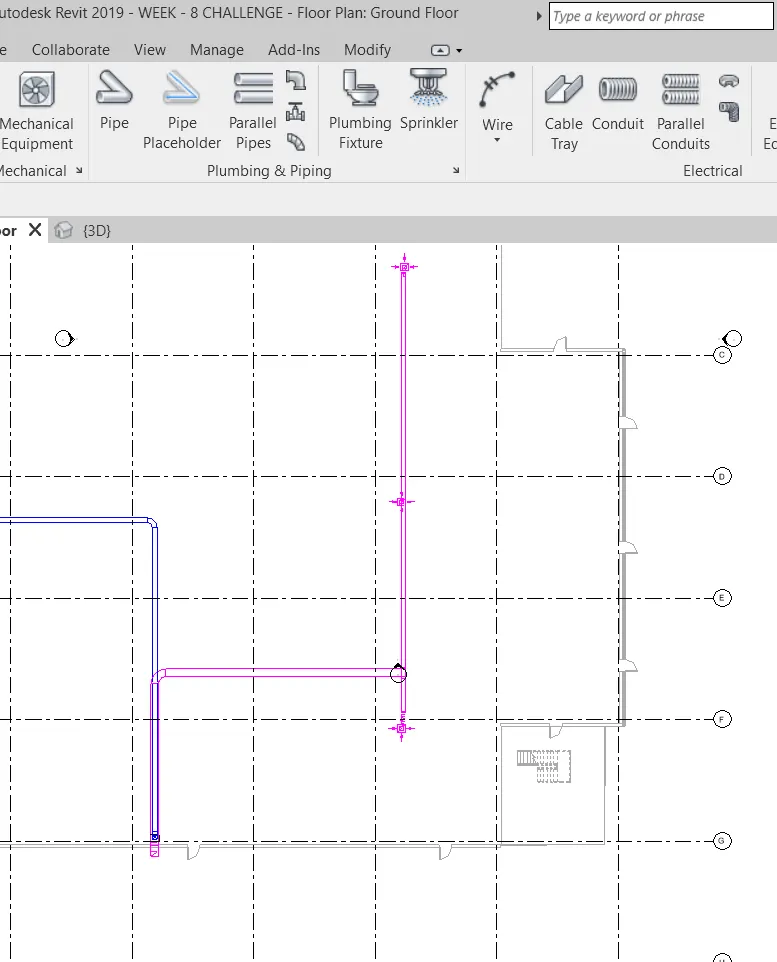
- Then adjust the ducts ensuring no clashes
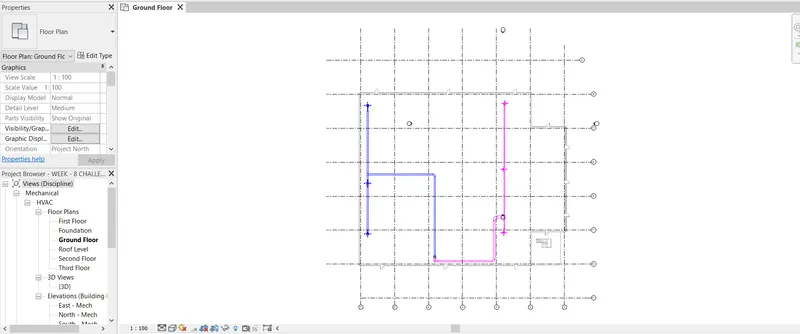
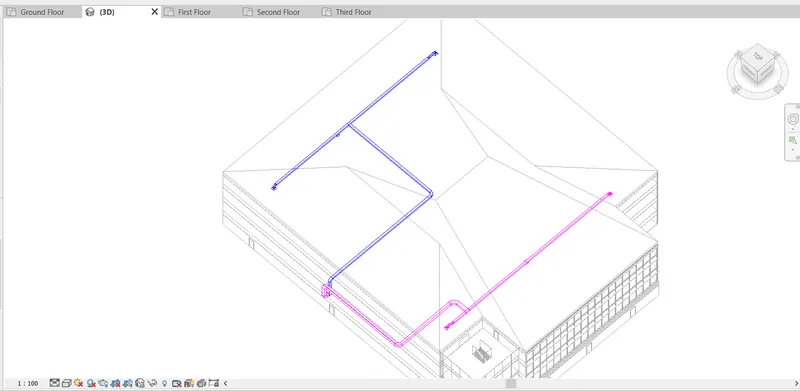
- The final 3D view is shown
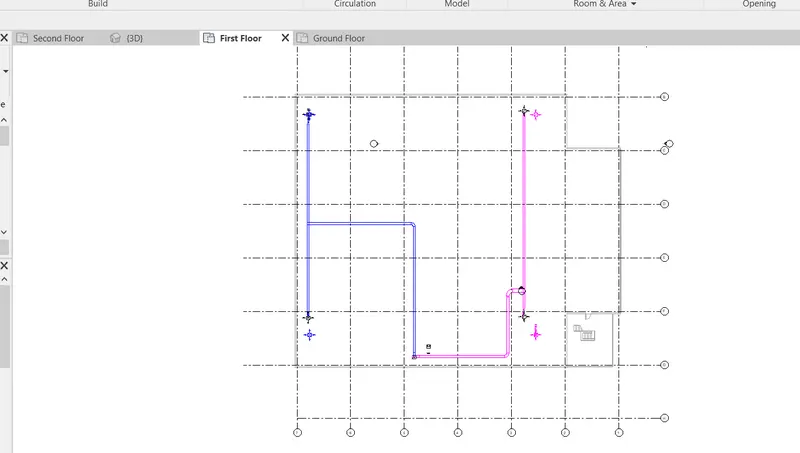
- The same steps are repeated for the first and second floor levels
3) Use the add-ins tab to load plug-ins for robot structural analysis to your Revit software
AIM : To use the add-ins tab to load plug-ins for robot structural analysis
TOOLS REQUIRED: Autodesk App Store
PROCEDURE:
- Open the Revit software and on the top right we can see the Autodesk shopping cart icon
- Click on it and select the Robot structural analysis and install it
4) Why do we need to assess buildings/analyze while modeling elements? Does design affect modeling in anyways?
- Structural Analysis is important as it provides a basis for structural design and also it evaluates whether a specific structural design will be able to withstand the loads both external and internal.
- It helps to determine the cause of a structural failure
- We need to analyze the structure while modeling because the structure is the important and basic component of the building and its main function is to take the loads and transfer the loads safely to the base/ground
- It provides the alternate designs which can bear the loads safely and effectively
- Structural analysis is important to make the model serviceable
Design effects modeling in many ways:
- The design effects modeling in many ways, such as in fixing the geometry of a member, to decide the material of a structural frame, it also decides the serviceability of the model and failure of the model
- The model has to be re-corrected or managed when the loads are higher in real-time scenario or during the design of the structure
6) What is energy analysis and why do we need to consider it while modeling in Revit?
- Energy analysis is the process of calculating the amount of energy, both the emboided and operational energy that the structure or the building is used in an operation involving the physical or chemical processing of materials and the conversion of energy
- Energy analysis of the building can be done in Revit using the tools called 3D Energy model view
- This provide us the functionality of the model, sustainability of the building
- Energy analysis is an important factor which calculates the amount of green house gases are being released, calculates the life cycle of the building and sustainability of the model
- A building model which is analyzed in energy terms will result in an efficient design
How does the factor of sustainability improve the quality of your design?
- As a Civil engineer or a design engineer, we must try to design sustainable buildings which increases the life span of the building and also ensure safety
- The factor of sustainability shows that how much amount of global warming is being caused due to our high energy design, so that we can modify the design accordingly and get a best alternative design
- For example, when we design the building with the best possible ventilation, the amount of usage of artificial lights will be reduced during the day time