Hood design-Week 2
- Aim Design Hood outer panel, inner panel and the necessary reinforcements by following the Master section mentioned with the design parameter.
- Method:
- The hood or bonnet is the hinged cover over the engine of motor vehicles. Hoods can open to allow access to the engine compartment or trunk for maintenance and repair.
- Safety is the most important criteria in automobile designs which concentrate on both pedestrian and occupant safety. Pedestrians are the most vulnerable road users and are at high risk of traffic accidents. The major reason for the fatality of the pedestrian in a traffic accident is due to the head injury resulting from the hard impact of the head against the stiffer hood or the ground. This leads to the necessity of a new inner hood panel that is less stiff and pedestrian-friendly. The head impact analysis on the present hood of the car was done to study the response of the adult head form at two different locations.
- Structural and modal analysis for the same present hood assembly was done to observe the local and global stiffness. In order to reduce the head injury of the pedestrian, the local stiffness over the area of head impact has to be reduced thus the new design of the hood inner panel was focused on that and the structural and modal analysis was done for the new design. The design with lesser local stiffness and similar global stiffness compared to the existing hood was finalized.
- Some basic concepts to know:
- In order to design a hood 1st most important thing to consider is the opening angle position. It is necessary to understand the angle at which the hood will open and it can be clamped. This generally is necessary because as per the different market this angle generally varies as per the average human height in that particular region.
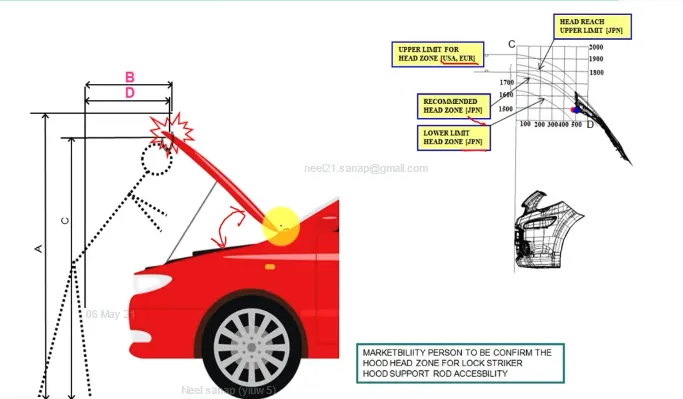
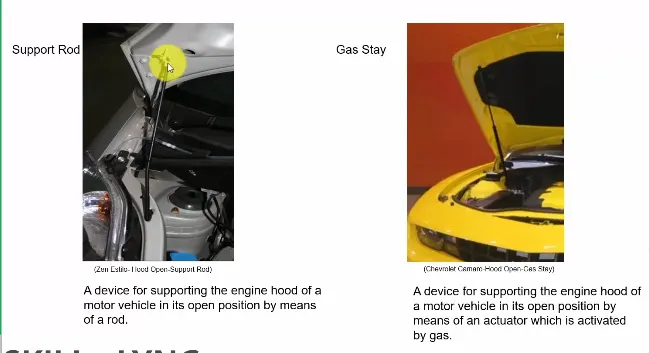
- Hoos stay is an apparatus for an engine room for a car, which can safely keep the hood in the open position even though external force is applied due to vibration, wind, etc.
- Support rods can also be used as per the requirement which serves the same purpose as that of hood stay.
- Mastic seals:
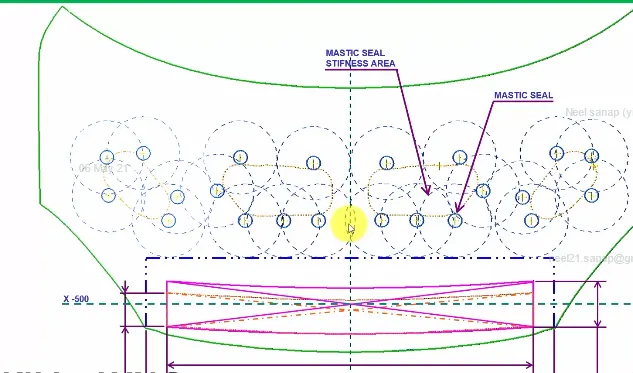
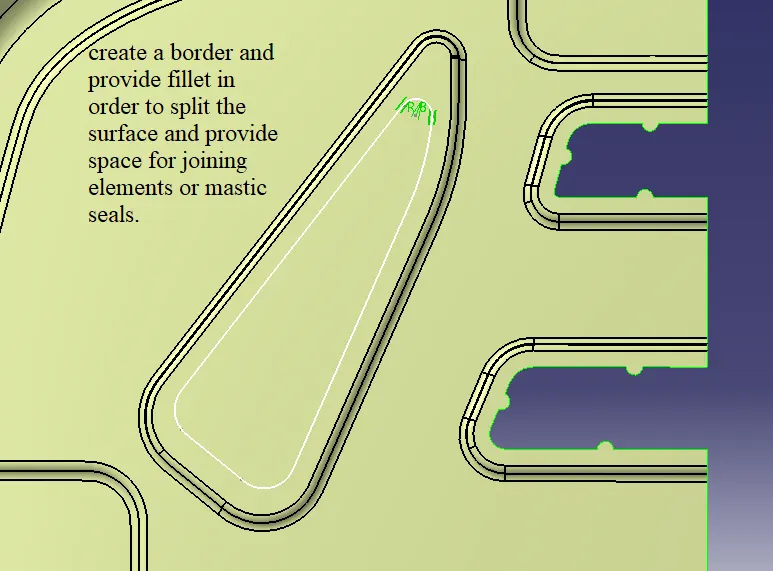
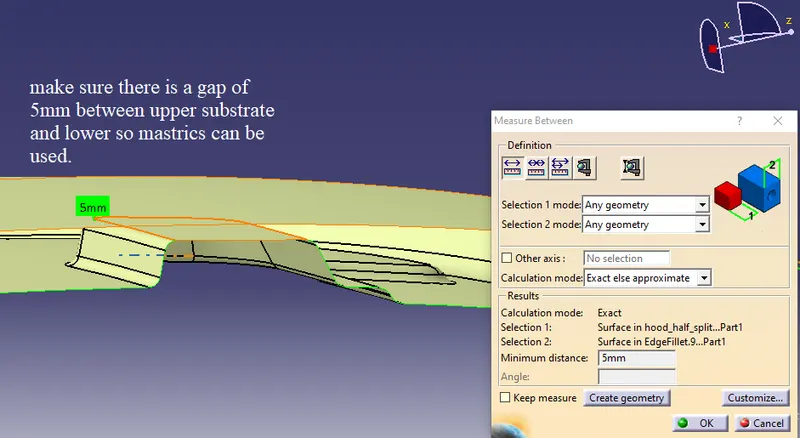
- Mastic seals are used to attach the inner and outer panel but this also serves the purpose of forces absorption and improve NVH as well. These are kind of hard rubber, represented as a seal.
- As on the outer panel it is not a practical thing to weld the outer panel with the inner panel, as this will reduces the overall quality of the surface which is visible to the end user. Mastic seals provide the best option.
- Master-section:
- It is a predefined sketch adaptable in different situations. This master section will show us how exactly the inner hood can be designed.
- Embossing:
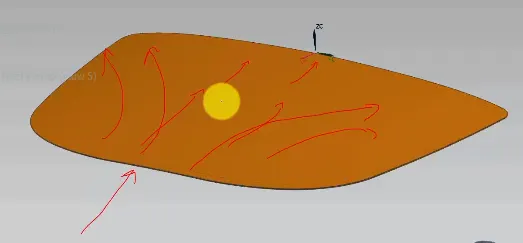
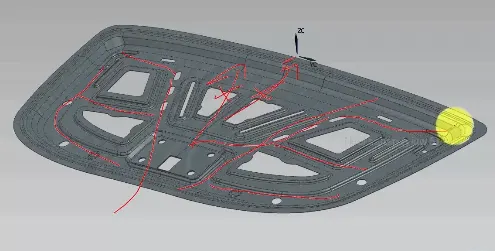
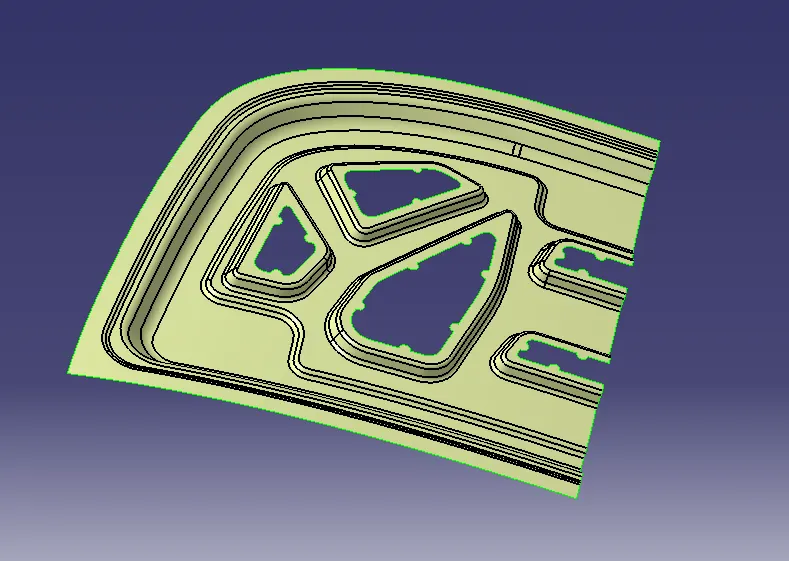
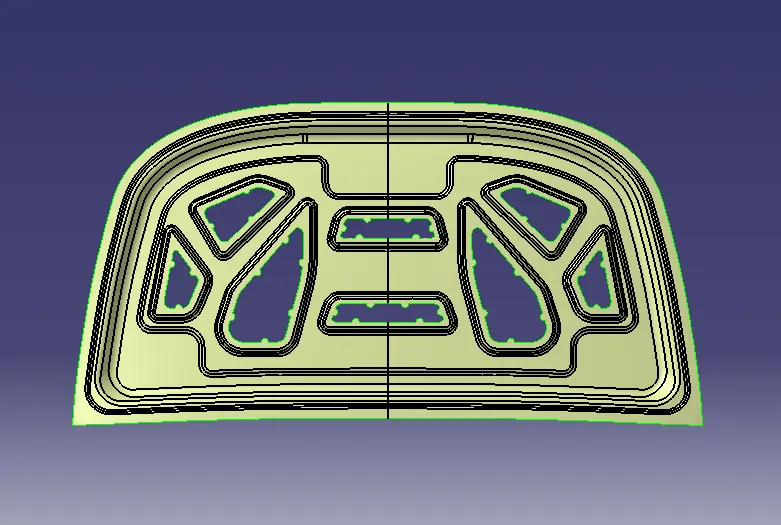
- In order to distribute the forces away from the passenger and make sure a lesser amount of forces travel in that direction embossing is done.
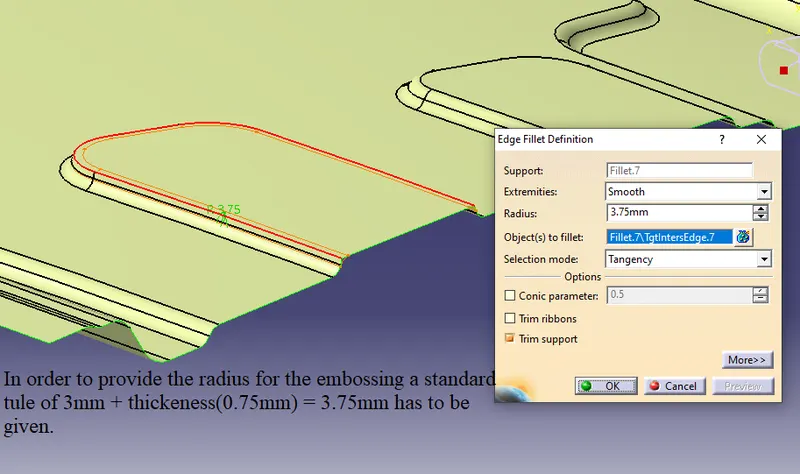
- The height to which this embossing is needed to be done is decided by the height to which the mastic seal can be used. In this challenge, there is a gap of 5mm between the embossing and the outer panel in order to provide sealing between the two.
- Hemming:
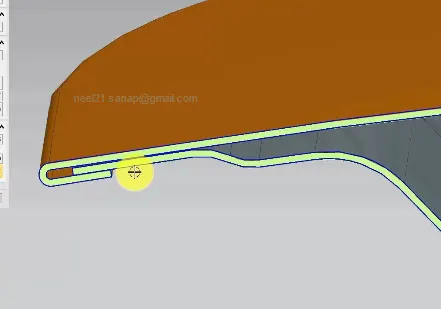
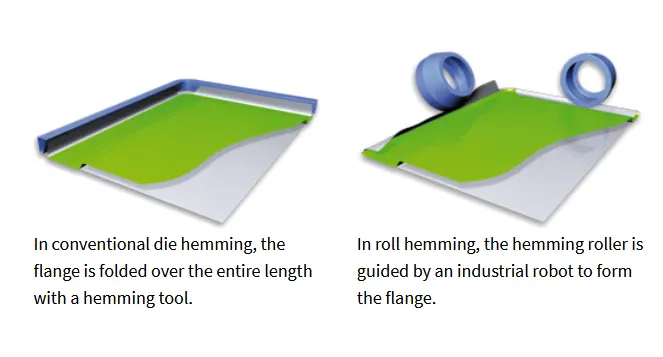
- Hemming is a forming operation in which the edges of the sheet are folded or folded over another part in order to achieve a tight fit. Normally hemming operations are used to connect parts together, to improve the appearance of a part and to reinforce part edges.
- In-car part production, hemming is used in assembly as a secondary operation after deep drawing, trimming and flanging operations to join two sheet metal parts (outer and inner) together. Typical parts for this type of assembly are hoods, doors, trunk lids and fenders.
- The accuracy of the hemming operation is very important since it affects the appearance of the surface and surface quality. Material deformations, which occur during the hemming process, can lead to dimensional variations and other defects in parts.
- Head impact zones:
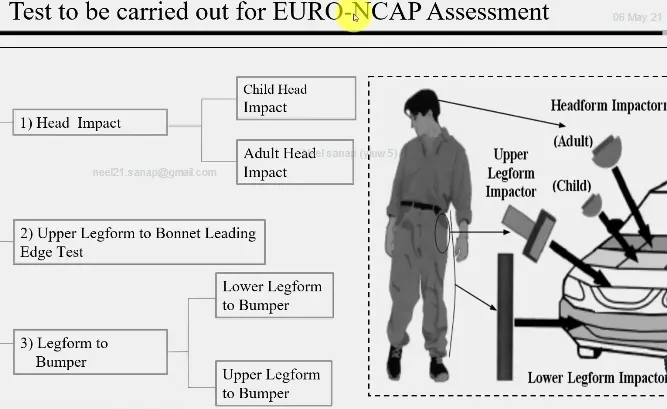
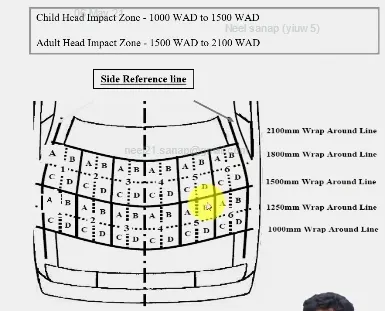
- While designing a hood, this is the most important factor which has to be taken into consideration and where most of the manufacturers try to get maximum attention.
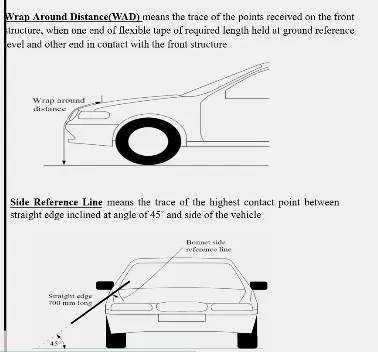
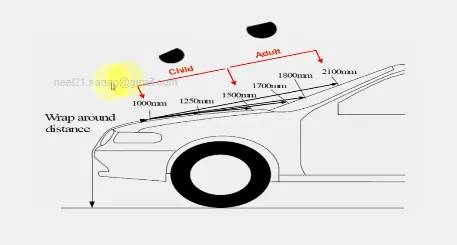
- As per the norms there are some values provided wherein any uncertain conditions when a vehicle hits a pedestrian the distance to which his/her head collapse on the hood, is an important factor to be considered.
- This distance generally varies for both adults and child and it is shown in the image below. This is the factor that decided the safety rating of the vehicle. As it should not happen that the pedestrian hits the area where the hood is having more rigidity and end up getting more saviour enjury.
Crumple zones:
- Are a structural safety feature used in vehicles, mainly in automobiles, to increase the time over which a change in velocity (and consequently, momentum) occurs from the impact during a collision by controlled deformation.
- Crumple zones are designed to increase the time over which the total force from the change in momentum is applied to an occupant, as the average force applied to the occupants is inversely related to the time over which it is applied.
- This also results in the absorption of forces are resulting in the deformation of the hood. The design of the embossing also matters for this purpose.
- Procedure to create emboss and other components:
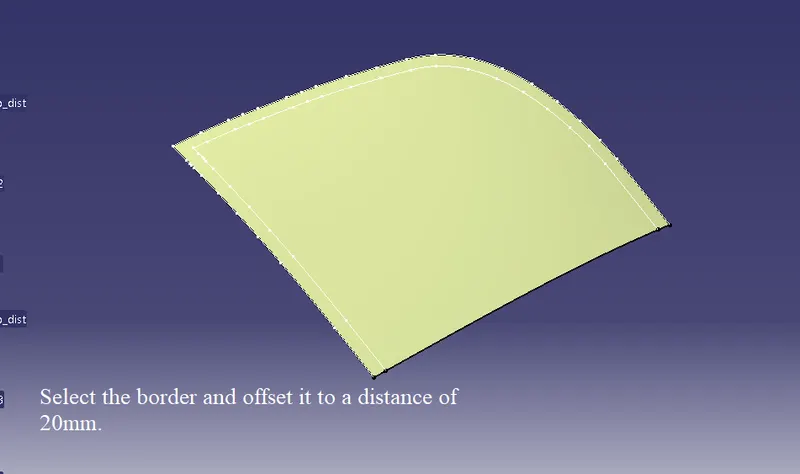 |
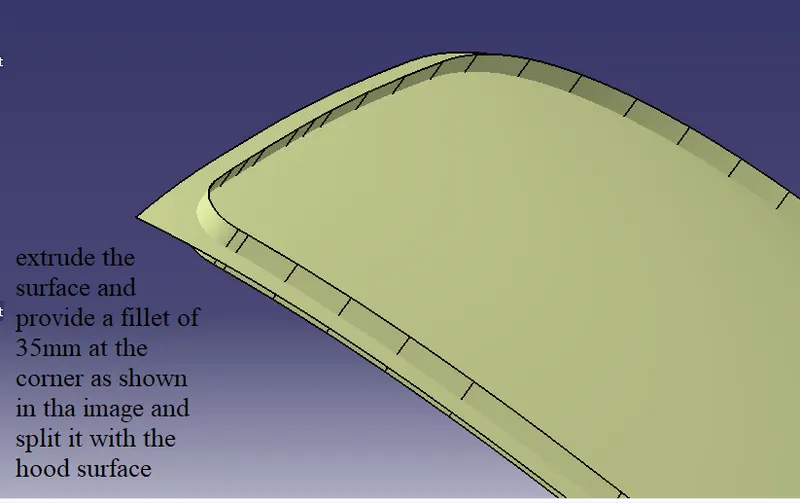 |
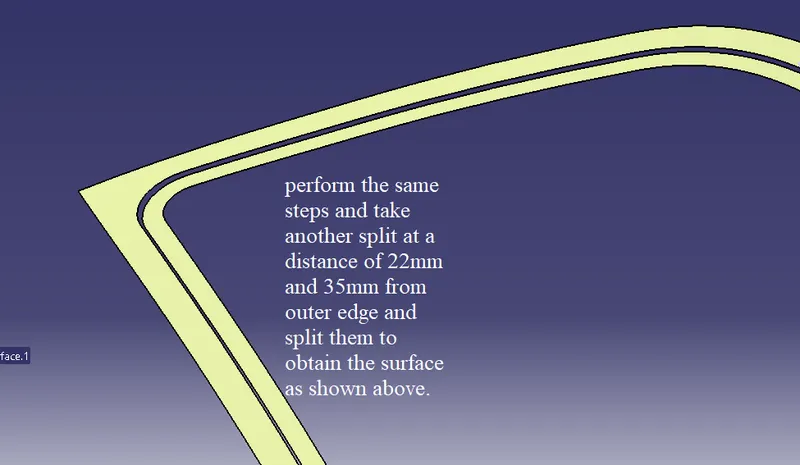 |
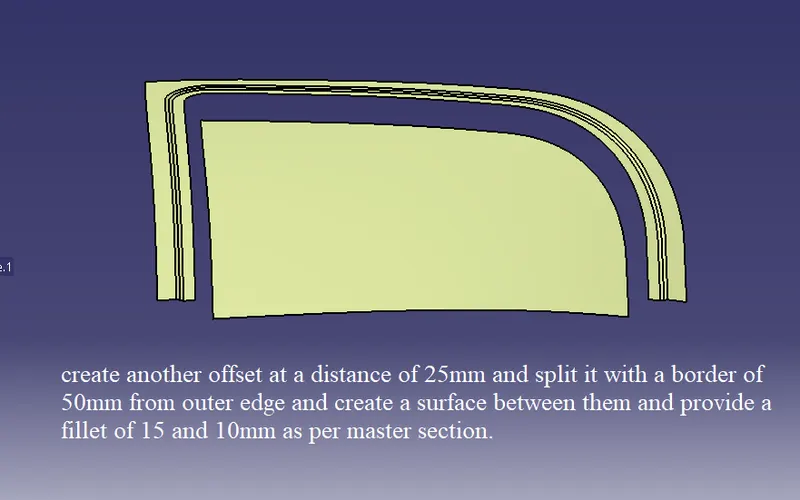 |
 |
 |
 |
 |
 |
 |
 |
 |
 |
 |
 |
 |
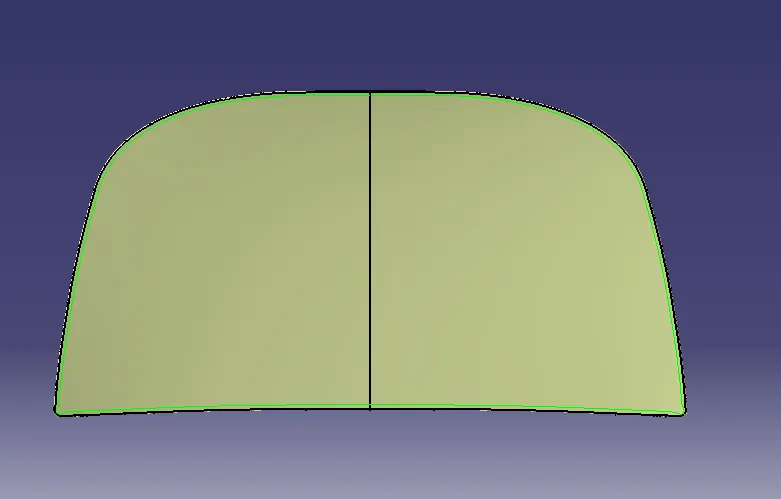 |
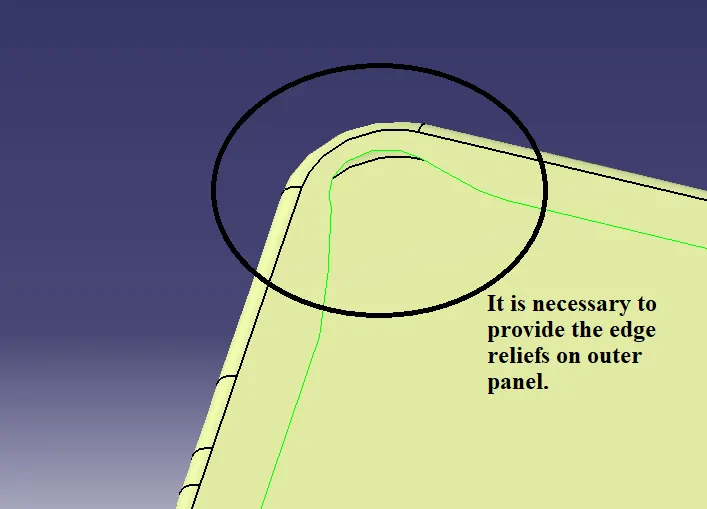
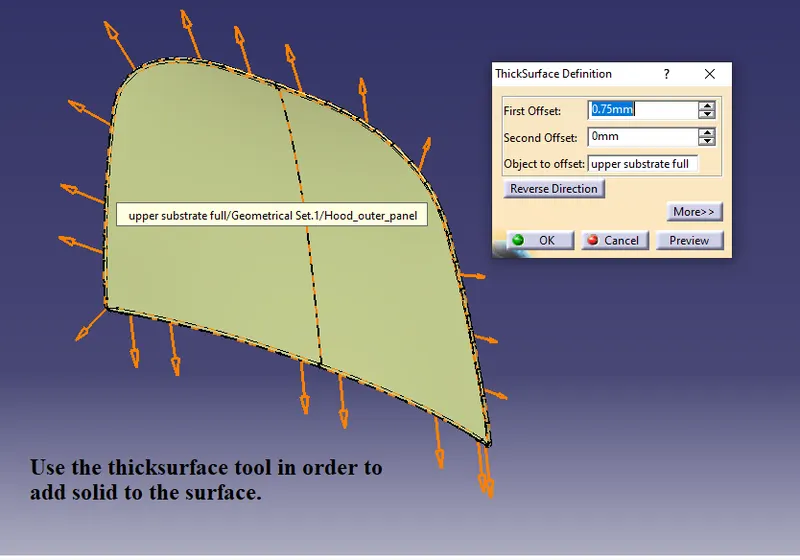
Also in order to provide the fillet to the outer panel, the tri-fillet option in the edge fillet is used to provide the fillet on the outer edge. |
 |