Foundation Design using SAFE
Aim:- To design the foundation by using a SAFE software
Introduction:-
There are 2 types of foundation
- Shallow foundation
- Deep foundation
Shallow foundation are of 5 types they are
- Isolated footing
- Combined footing
- Strip footing
- Strap footing
- Raft or Mat footing
Deep foundation are of 2 types they are
- Pile foundation
- Drilled shaft or caissons
Isolated footing
- It is the simplest form of foundation used world wide depending upon the soil type
- These are independent footings designed to support single column. This footing is used when the distance of column large
- This footing is suitable where the safe bearing capacity of soil is good and it's economical
Pile foundation
- Pile foundation is a kind of deep foundation and it's used in a place where the water table of soil is above or if the soil is clayey type
- Pile foundation is a type of slender column below the soil which is used to transfer the load at desired depth either by end bearing or skin friction
- The depth of pile decided by the depth of the hard strata
- Each pile will have a pile cap for connecting the column
SAFE :-
- The safe software is used for design the foundation slab system and concrete floors
- Safe offers single user interface to perform modelling, analysing, designing and reporting
- Safe offers many templates for quickly start new model
- This software is developed by the computers and structures INC
- This software provides the details about deformation shape, soil pressure, reinforcement details, punnching shear etc.,
Data required
Square footing column size = 400x400mm
Compression axial load combination of (1.5DL + 1.5LL) = 2000KN
The safe soil bearing capacity 150KN/m^2 at a depth of 2m bellow EGL
Assume M-25 concrete grade
Data required for the safe analysis and design
Unfactored load = 2000/1.5 = 1333.3 KN
Dead load break up = 1333.3/2 = 666.7 KN
Live load break up = 1333.3/2 = 666.7 KN
Subgrade modulus of the soil = (Safe bearing capacity x Factor of safety) / Maximum settlement
K = (150 x 3) / 0.05
K = 9000KN/m^3
Here the maximum settelement is 50mm = 0.05m
Rebar yield strength Fy = 500N/mm^2
Rebar ultimate strength Fu = 575N/mm^2
Elastic modulus of M-25 grade concrete = 5000`sqrtfck`= 5000 x (25)^1/2 = 25000 N/mm^2
Procedure:-
Step1:-
- Open the safe software by double clicking on it
- Then click on the new model
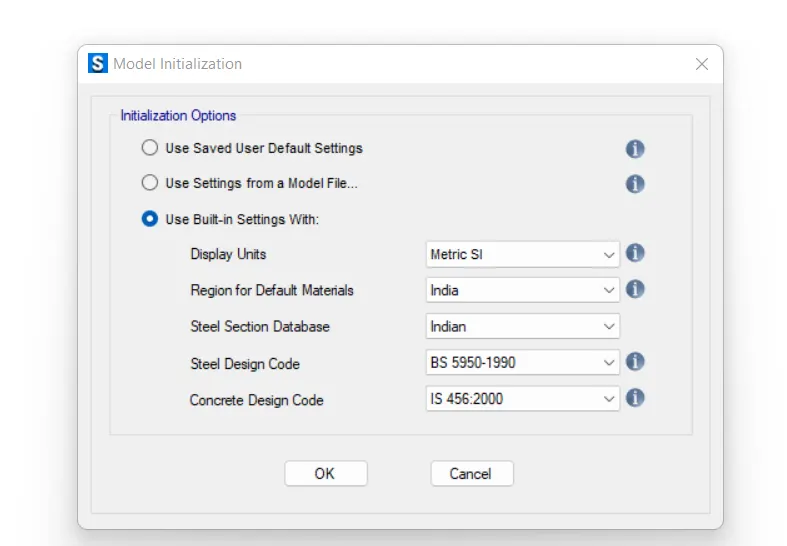
- After that the model initialization dialouge box opens
- Then change the setting Display unit as metric SI , Region for default material as India, Steel section data based as Indian,Steel design code as BS 5950-1990, Concrete design code as IS 456:200
- Then click on OK
Step2:-
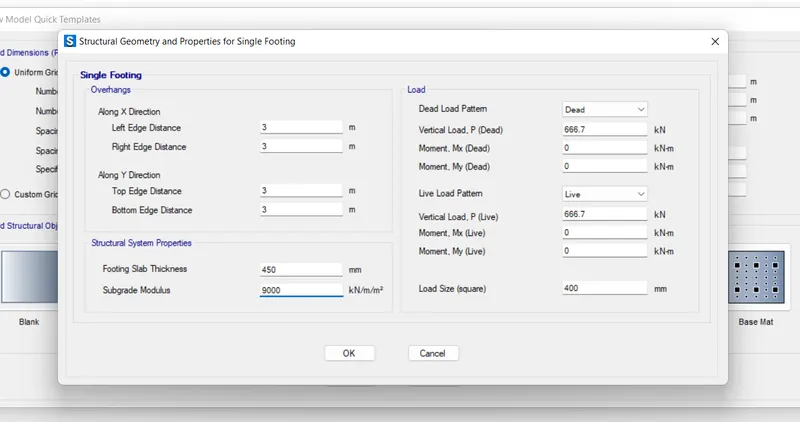
- Click on the isolated footing option (Which is a default template)
- Here change the x and y direction distance as 3m
- Assume the footing thickness as 450mm (If it is not satisfied in the software then change it - It's not constant value)
- Subgrade modulus is 9000KN/m^3 (Which is a calculated value)
- The dead and live load 666.7KN (Which is a calculated value)
- Then click on OK
Step3:-
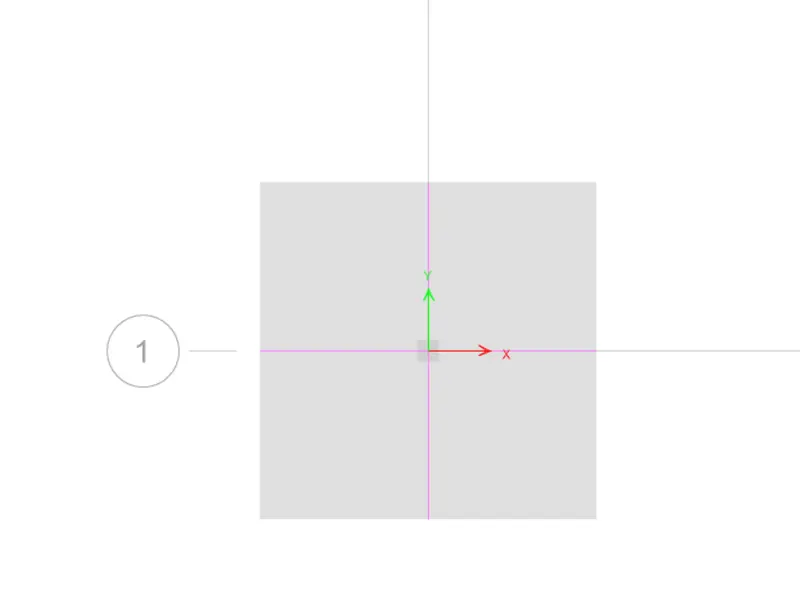
- After the completion of the input data the model will look like as shown below
- Make sure that the footing and column placed correctly
Step4:-
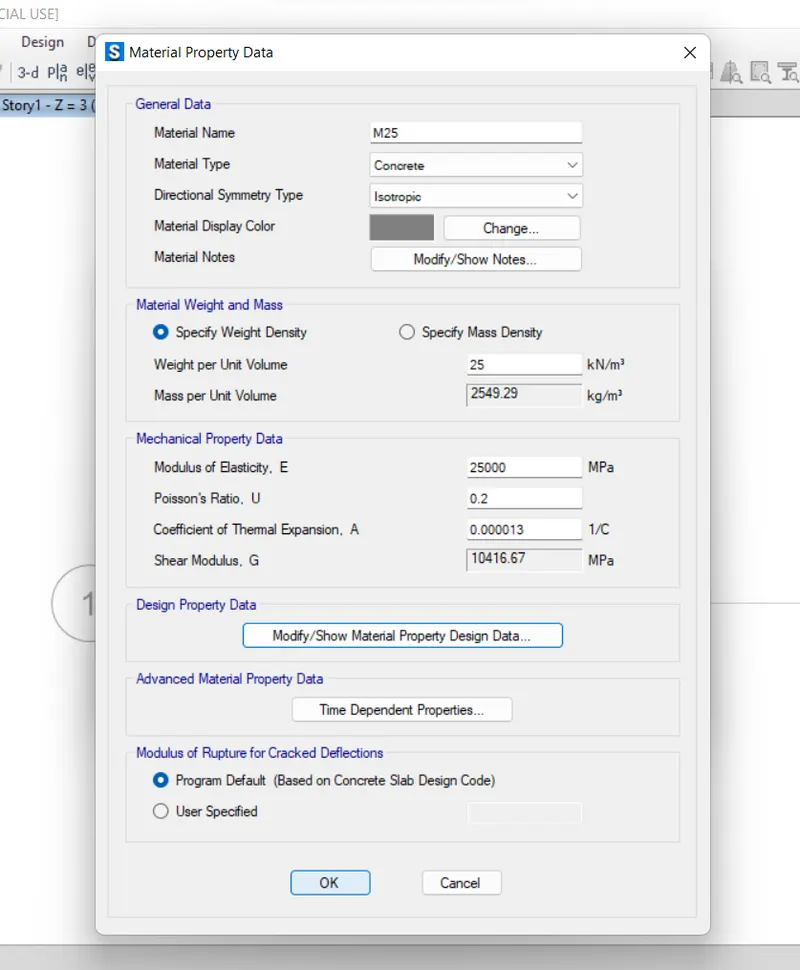
- After the model then assign the material
- Click on the define then click on the material property
- Then click on the add new material
- Then create the M-25 concrete as shown
- Then click on OK
Step5:-
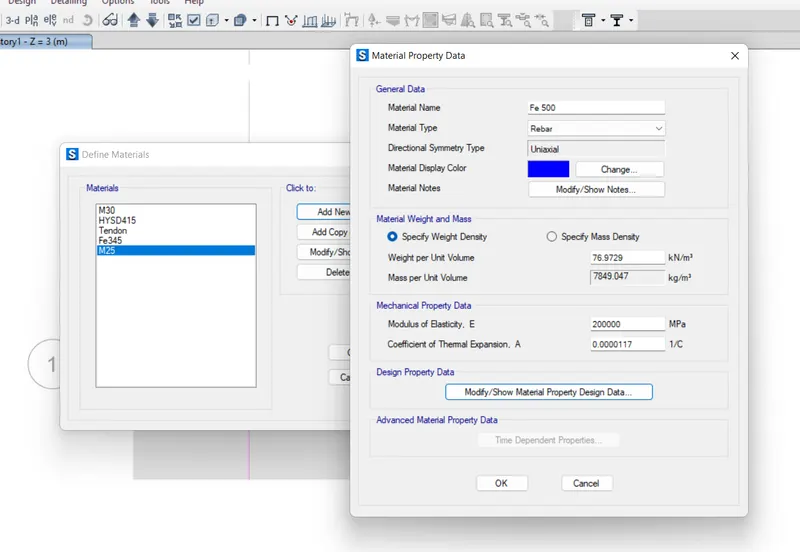
- Then click on the add new material
- Then create the Fe 500 steel as shown
- Then click on OK
Step6:-
- Click on the define then click on the seection property
- Then click on slab section
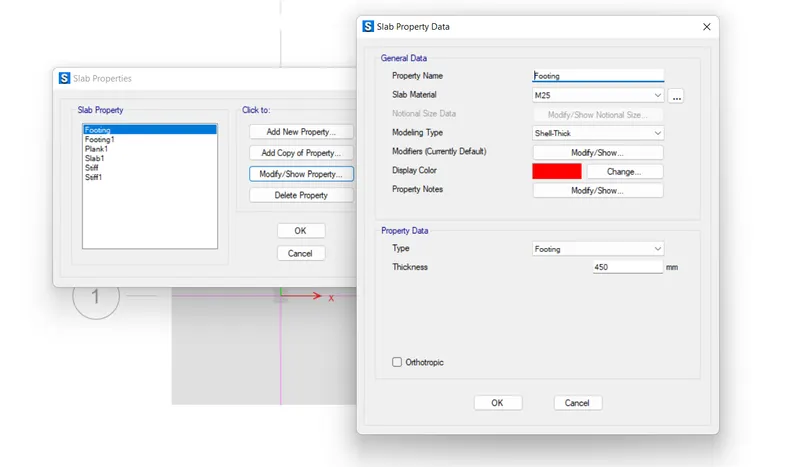
- Then click on the add new material
- Then create the Footing 450mm as shown
- Then click on OK
Step7:-
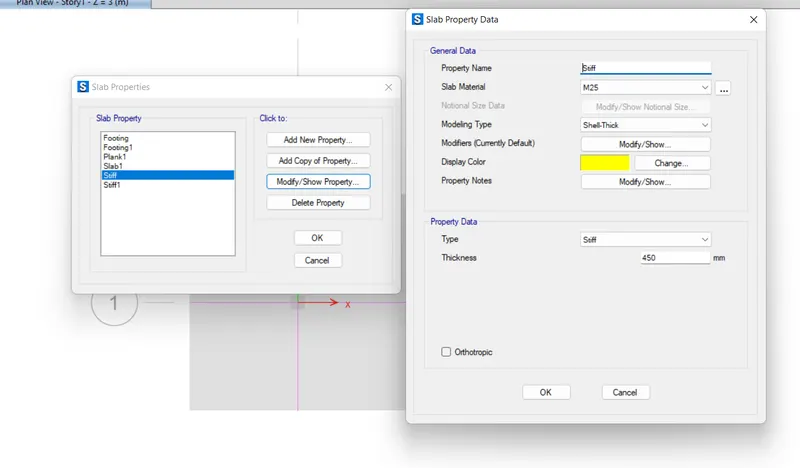
- Then click on the add new material
- Then create the Stiff 450mm as shown
- Then click on OK
Step8:-
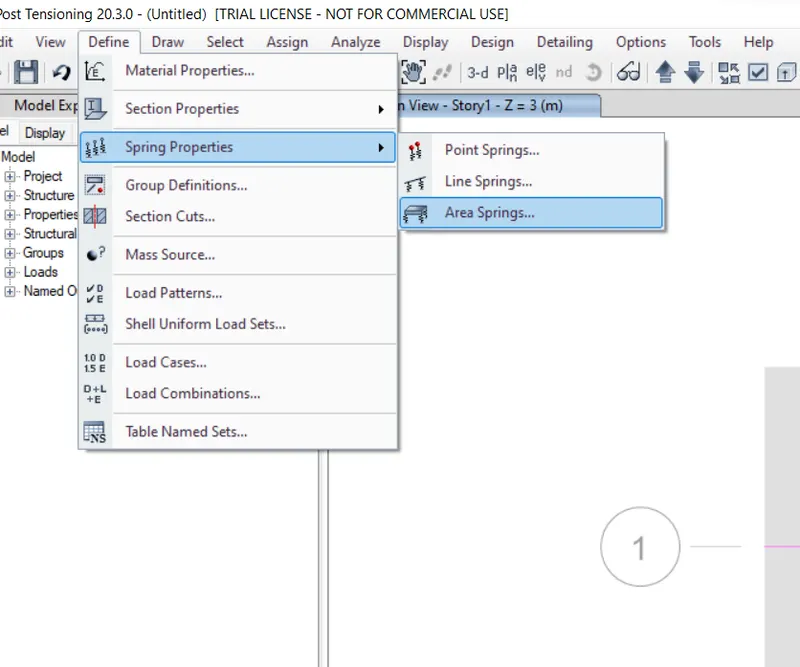
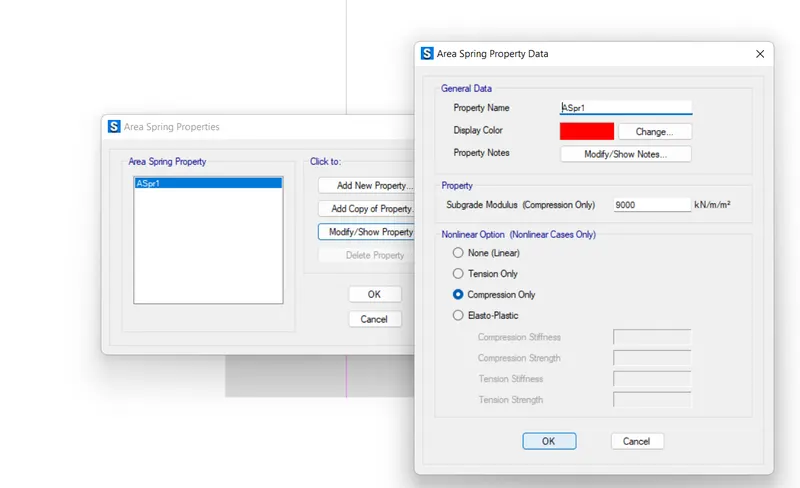
- Here we are defining the spring property which is used to stiff the foundation
- The point spring is used to point loads and area spring is used for the providing unoform spring (load) throughout
- Click on the define then click on the spring properties
- Then click on the area spring
Step9:-
- After selecting the area spring property click on the modify property
- Edit the subgrade modulus as 9000KN/m^3
- Keep the load as compression
- Then click on OK
Step10:-
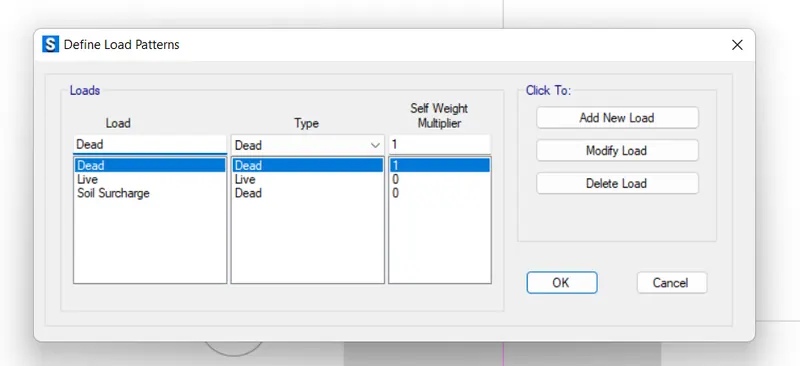
- After defining all these things then define the load patterns
- Click on the define then click on the load patterns
- Add the DL, LL and Soil surcharge load
- Except DL keep the self weight multiplier for others as 0
- Then click on OK
Step11:-
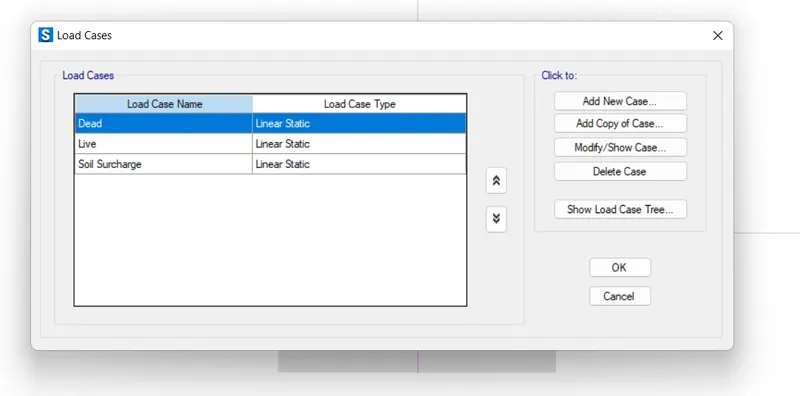
- After that go to the load cases
- Click on the define then click on the load cases
- The loads what we defined in the load pattern as visible in the load cases
- Then click on OK
Step12:-
- After defining the load patterns and load cases
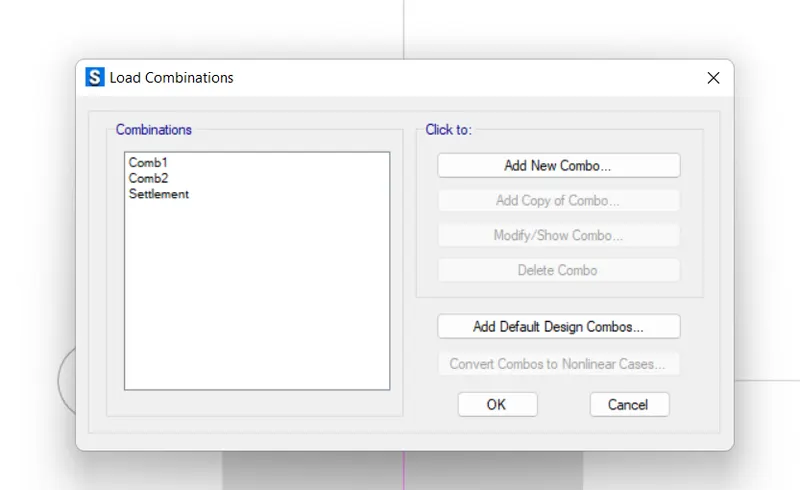
- Then go to the load combinations
- Click on the define then click on the load combination
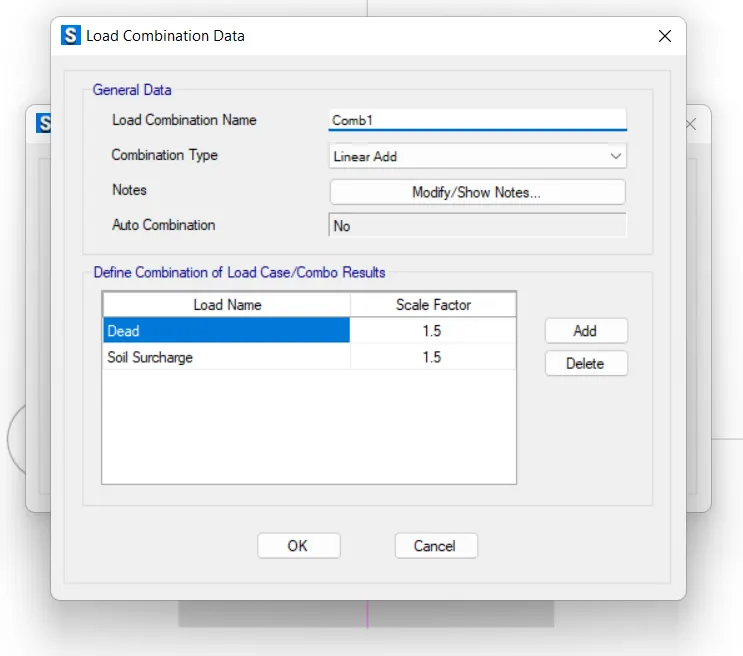
- Then click on the add new combo
- Add the comb 1 combination which includes a Dead load and soil surcharge as a 1.5 scale factor
- Then click on OK
Step13:-
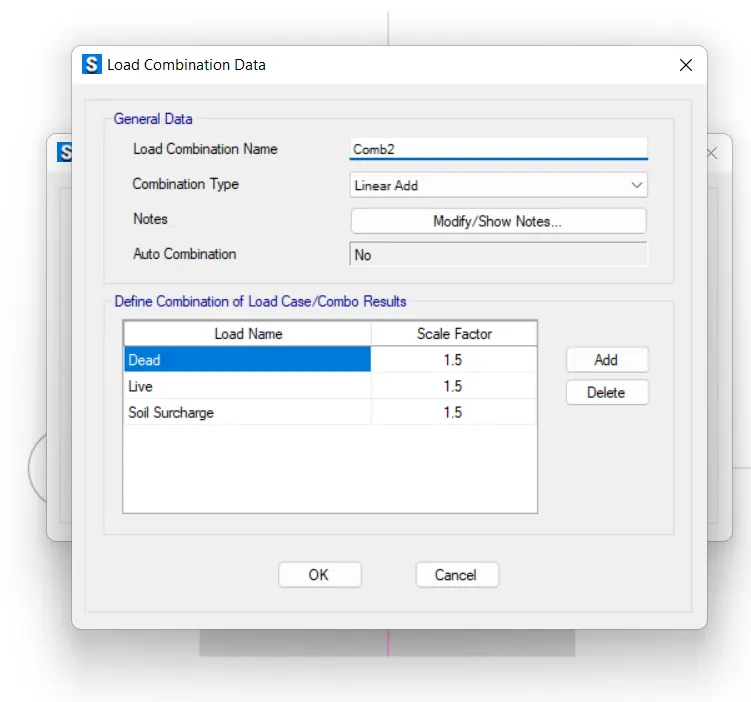
- Then click on the add new load combo
- Add the comb 2 combination which includes a Dead load, Live load and soil surcharge as a 1.5 scale factor
- Then click on OK
Step14:-
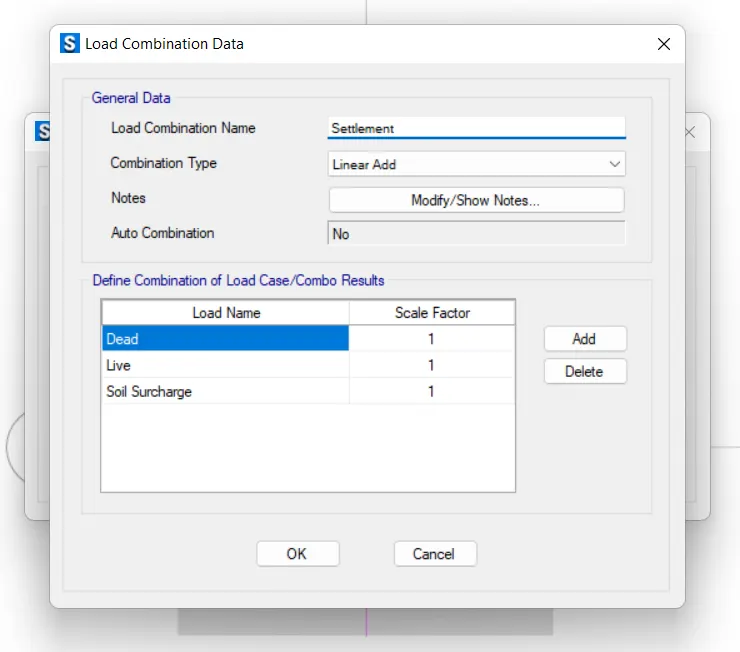
- Then click on the add new load combo
- Add the Settlement combination which includes a Dead load, Live load and soil surcharge as a 1 scale factor
- Then click on OK
Step15:-
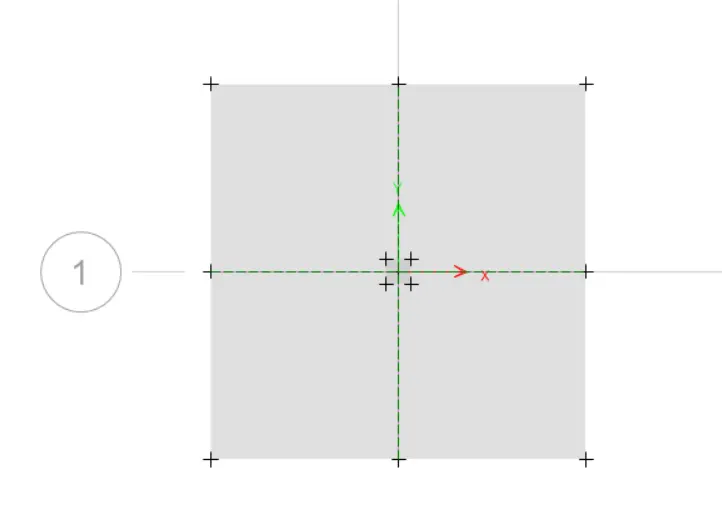
- After the load defining then assign the strips these strips are used to identify the longitudinal rebars
- click on the lines which is a diaphragm lines
- Then click on right button of your mouse
Step16:-
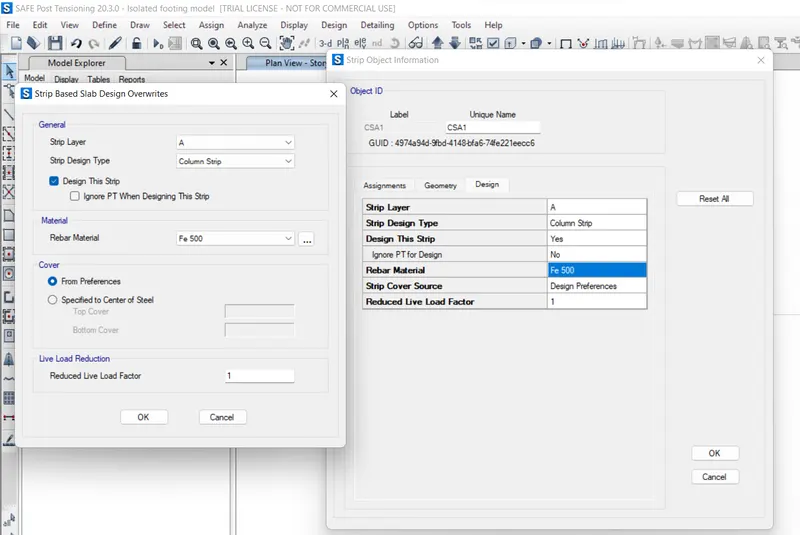
- After that strip object information dialouge box opens
- Then make sure that the all the input datas are correct
Step17:-
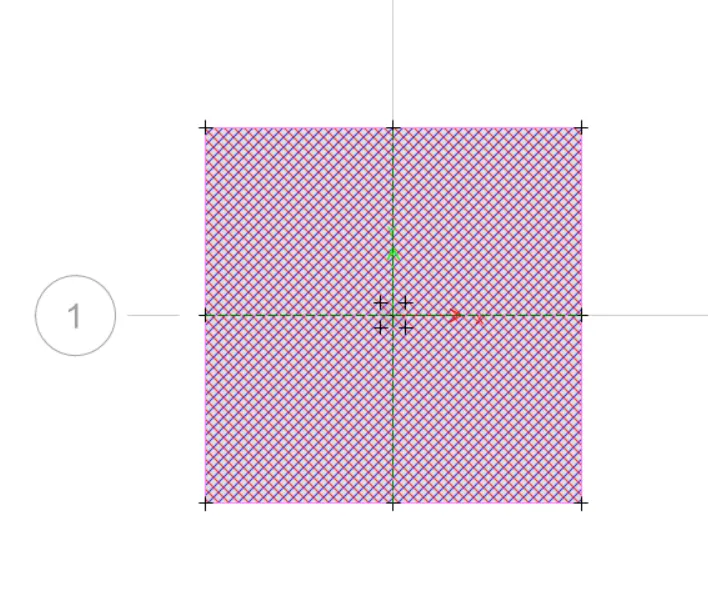
- The strips which is assigned to footing is as shown below
Step18:-
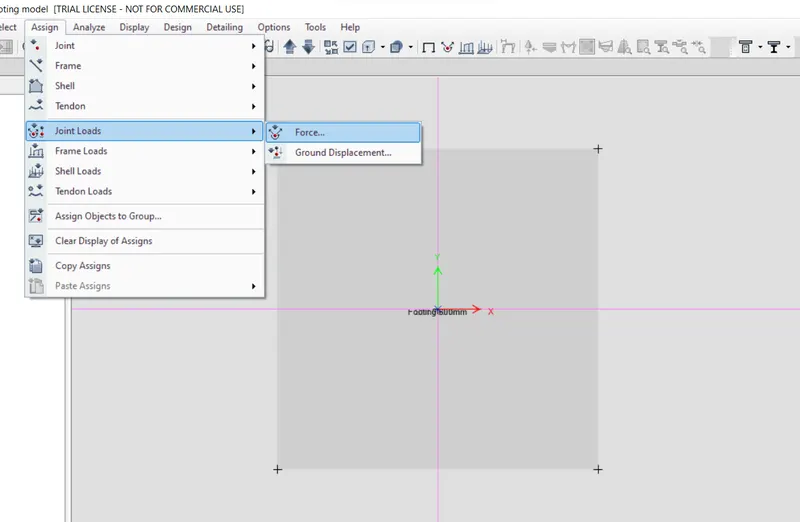
- After assigning the design strips then assign the loads to the column
- Assign the dead load as well as live load in to the column
- Click on the assign then click on the joint loads then click on the force
Step19:-
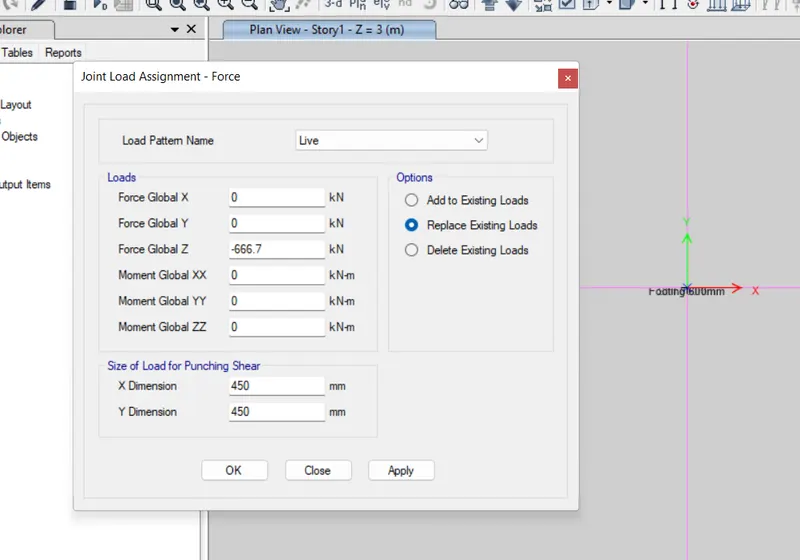
- After selecting the joint loads then joint load assignment dialouge box opens
- Then apply the dead load as -666.67 in the force global z
- Then click apply
- Then apply the live load as -666.67 in the force global z
- Then click apply
- Then click OK
- Now the loads are assigned to the column
Step20:-
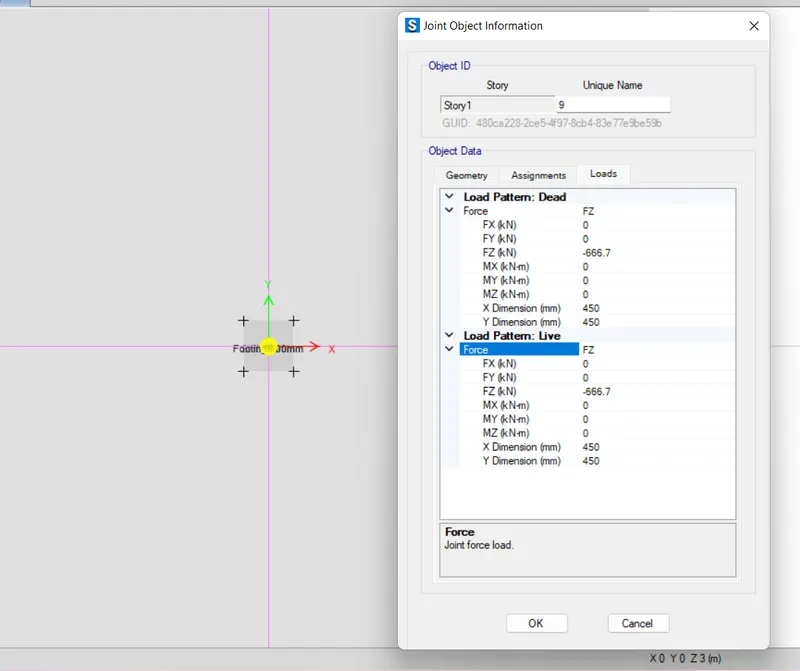
- To make sure the loads are assigned or not
- Click on the point where you mentioned the loads
- Then click right button of your mouse
- Then you will see the loads in the table as shown
Step21:- After defining and assigning the property then run the analysis
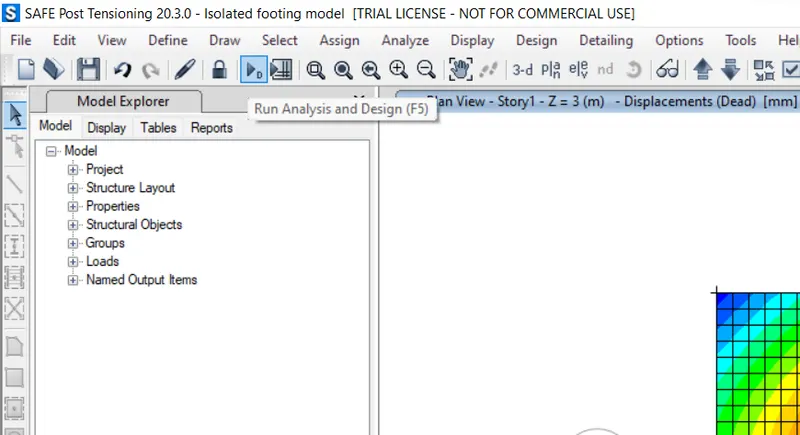
When I check the model it fails in the punching shear so I have changed the thickness of footing and thickness of stiff as 600mm
Check the need to be performed in safe analysis
Safe bearing capacity under service load:-
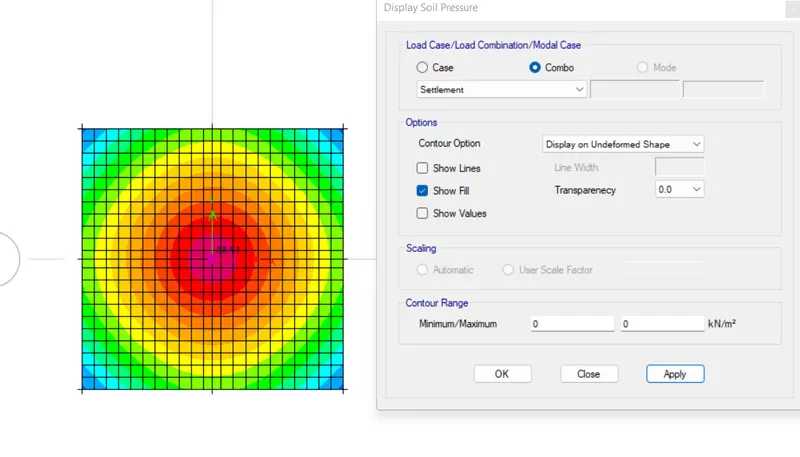
- Click on the display soil pressure then select the settlement combo
- Then click on apply
- The maximum displacement value is 150KN/m^2 but in the software it is showing 58.51KN/m^2
- Hence it is safe
Settlement under service load:-
- Click on the show deformed shape then you will get a deformed shape dialouge box
- Then click on combo then click on settlement then click apply
- The deformed shape is shown in the below figure
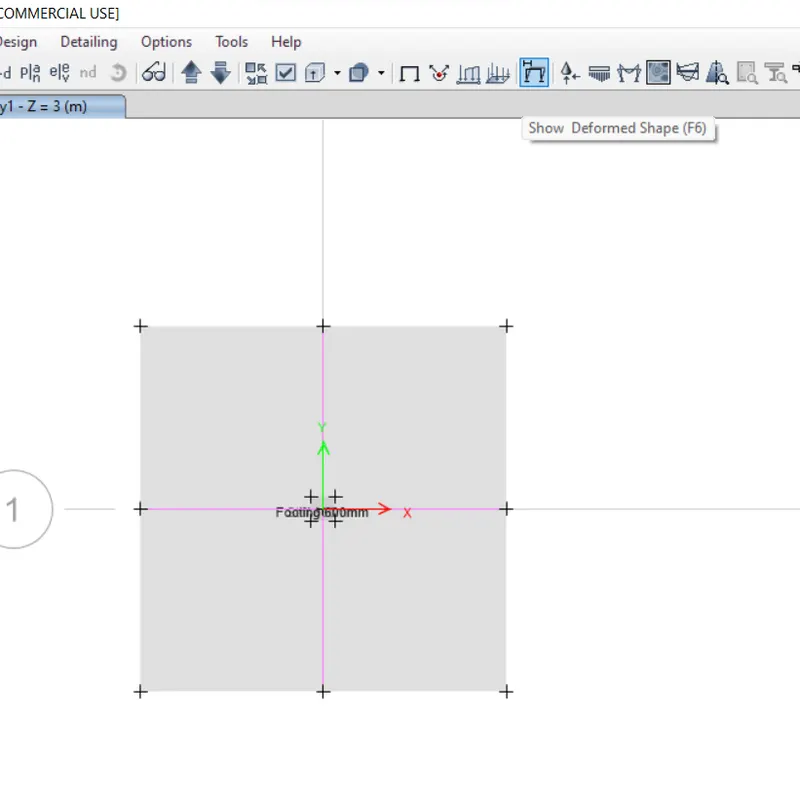
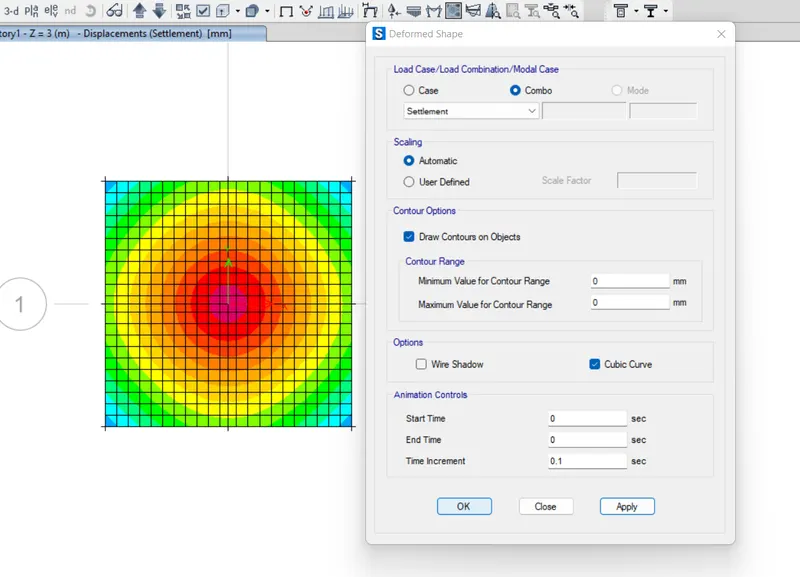
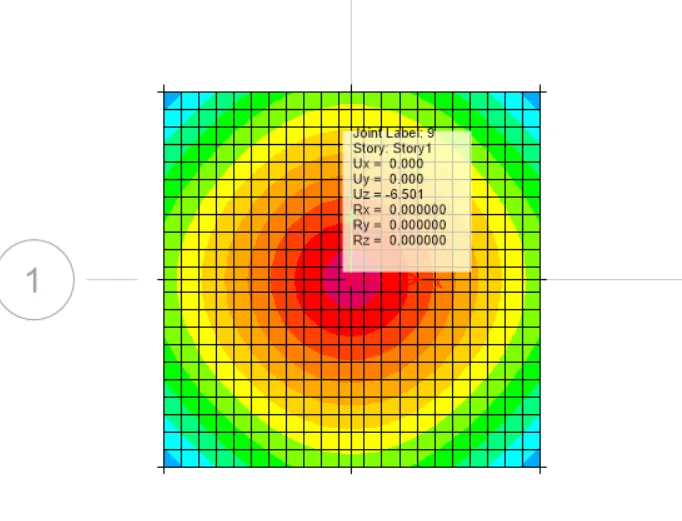
- This is the deformed shape of the model
- The allowable deflection is 50mm but I'm getting the 6.501 as the deflection value
- Hence safe
Two way shear check :-
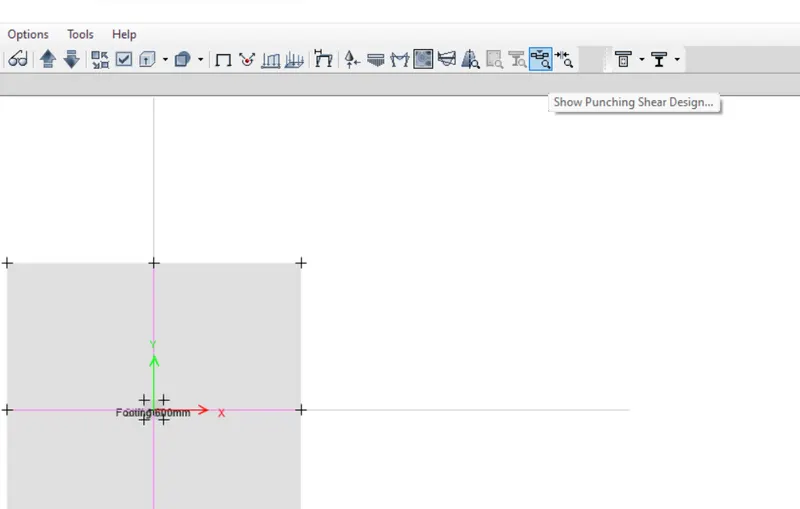
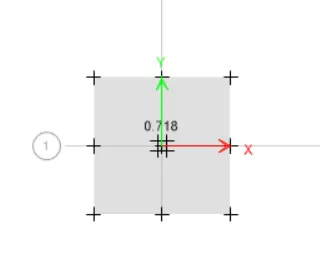
- To check the punching shear just click on the show punching shear icon
- The maximum punching shear may go upto 0.9 or 0.95 but I'm getting the punching shear as 0.718
- Hence it is safe
Ultimate bending moment
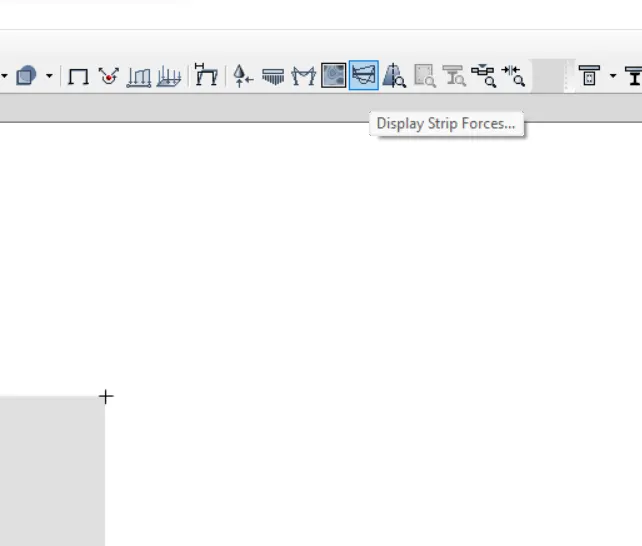
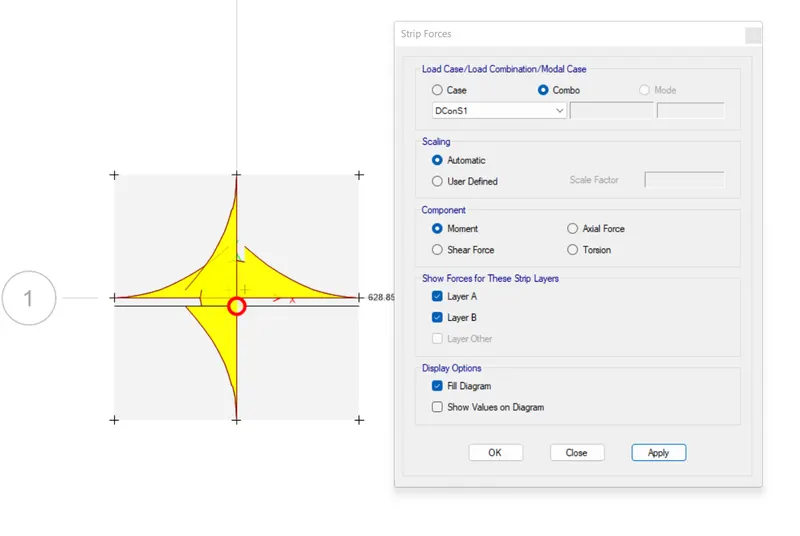
- Click on the display strip force then the strip force dialouge box opens
- Then click on the combo then select the DconS1
- Then select the moment click on apply then it will show the ultimate bending moment
- It's taking the maximum value 628KN/m^2
Flexural reinforcement design for footing slab
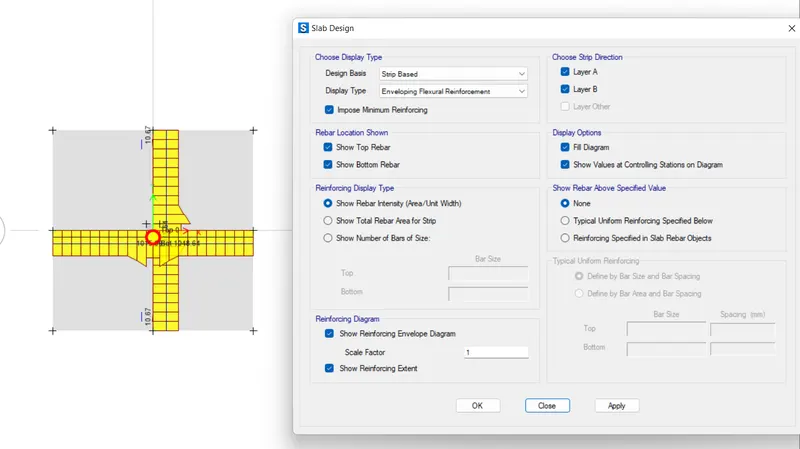
- Click on the show slab design then it shows the slab design dialouge box
- make sure that the impose minimum reinforcement is selected and layer A and layer B are selected
- Then click on OK
Result:-
- Safe bearing capacity under service load - 58.51KN/m^2 - Safe
- Settlement under service load - 6.501mm - Safe
- Two way shear check - 0.718 - Safe
- Ultimate bending moment - 628mm^2
- Flexural reinforcement design for footing slab - 1050mm^2
By using SAFE software we came to know that The isolated footing design is safe
Hence the footing design is safe
2.
Column size = 600x600mm
Load carrying capacity = 200KN
Data required for the safe analysis and design
Unfactored load =1175 KN
Dead load break up = 1175/2 = 587.5 KN
Live load break up = 1175/2 = 587.5 KN
Point spring of pile = (A x E / L)
K = (196349x25000) / 16000
K = 306796KN/m
K = 306.8KN/mm
Rebar yield strength Fy = 500N/mm^2
Rebar ultimate strength Fu = 575N/mm^2
Elastic modulus of M-25 grade concrete = 5000`sqrtfck`= 5000 x (25)^1/2 = 25000 N/mm^2
Number of piles required = unfactored load with self weight addition / individual pile capacity
Number of piles required = 1175 x 1.1 /200
Number of piles required = 6.5 = 8Nos
Consider 8 pile for symmetric placement of pile under pile cap
Take center to center distance between the pile = 3 x pile diameter
Take center to center distance between the pile = 3 x 500 = 1500mm
Edge distance from the pile center = 1 x pile diameter
Edge distance from the pile center = 1 x 500 = 500mm
Assuming pile cap depth as 500mm
Procedure:-
Step1:-
- Open the safe software by double clicking on it
- Then click on the new model
- After that the model initialization dialouge box opens
- Then change the setting Display unit as metric SI , Region for default material as India, Steel section data based as Indian,Steel design code as BS 5950-1990, Concrete design code as IS 456:200
- Then click on OK
Step2:-
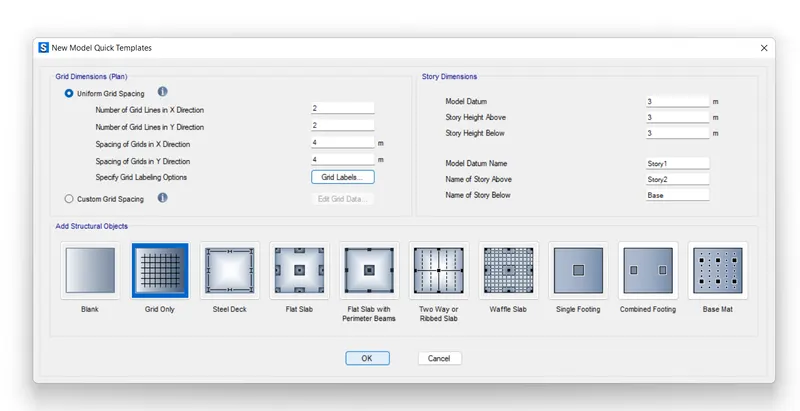
- After that click on Grid only then new model quick templates diaalouge box opens
- Then change the number of grids in X and Y direction as 2
- Then change the spacing if grids as 4m in both X and Y direction
- Then click on OK
Step3:-
- after the mentioning all the information then the model grid look like as shown below
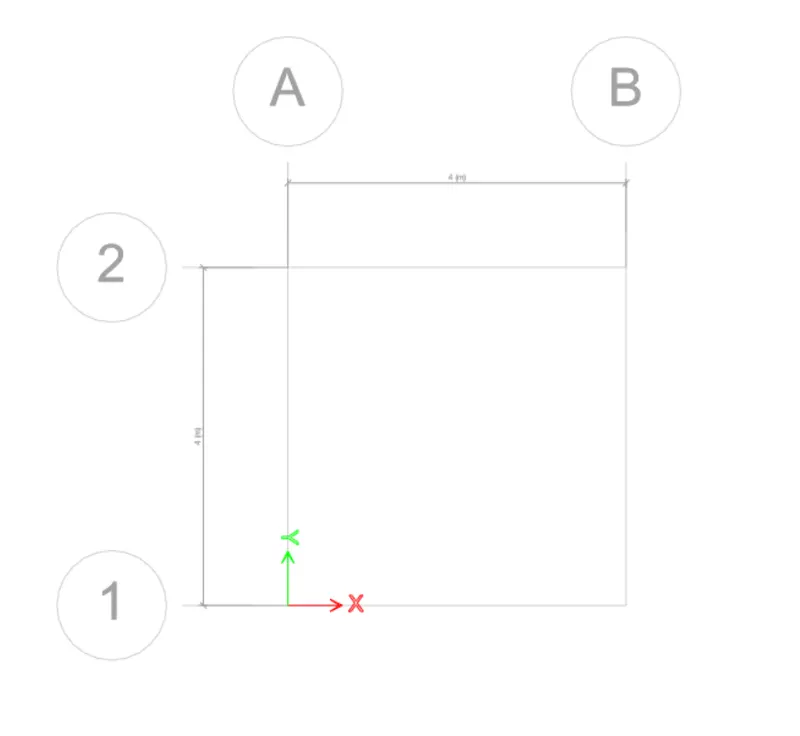
Step4:-
- After the model then assign the material
- Click on the define then click on the material property
- Then click on the add new material
- Then create the M-25 concrete as shown
- Then click on OK
Step5:-
- Then click on the add new material
- Then create the Fe 500 steel as shown
- Then click on OK
Step6:-
- Click on the define then click on the seection property
- Then click on slab section
- Then click on the add new material
- Then create the Pile cap 500mm as shown
- Then click on OK
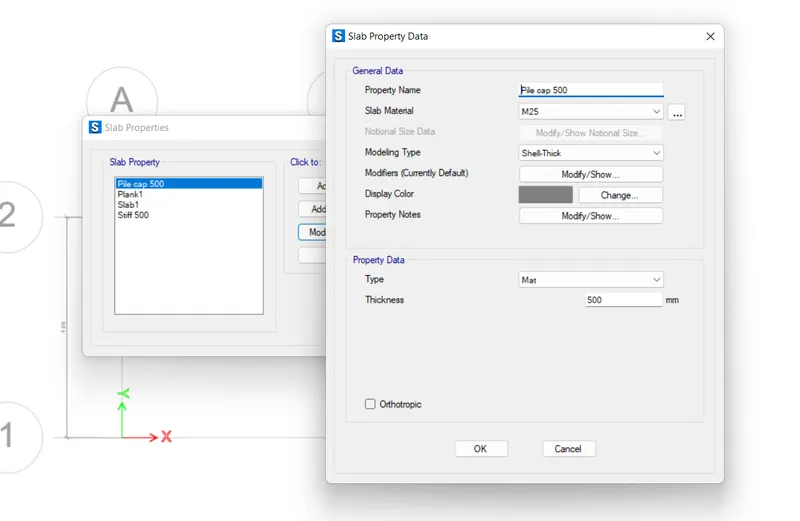
Step7:-
- Then click on the add new material
- Then create the Stiff 500mm as shown
- Then click on OK
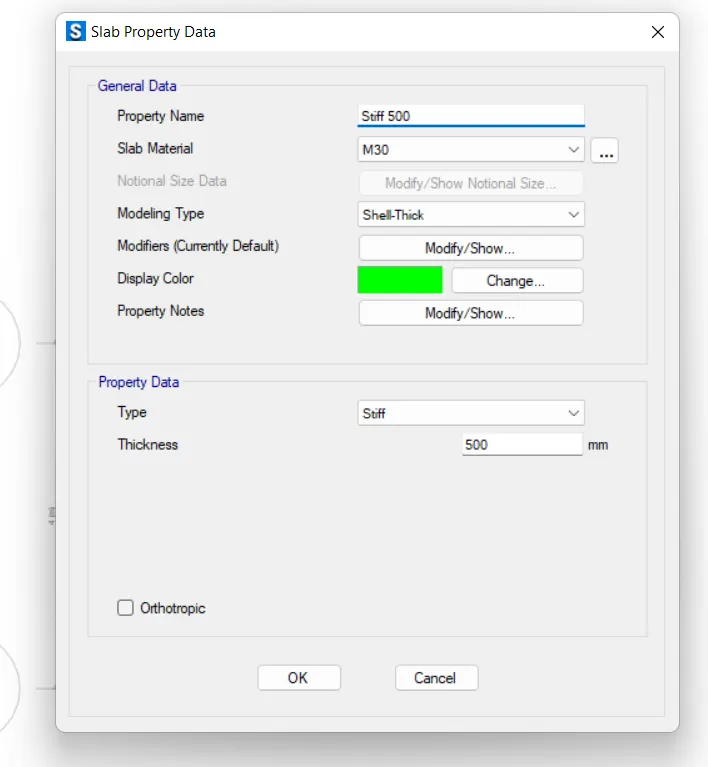
Step8:-
- Then click on the add new material
- Then create the Pile 500mm as shown
- Then click on OK
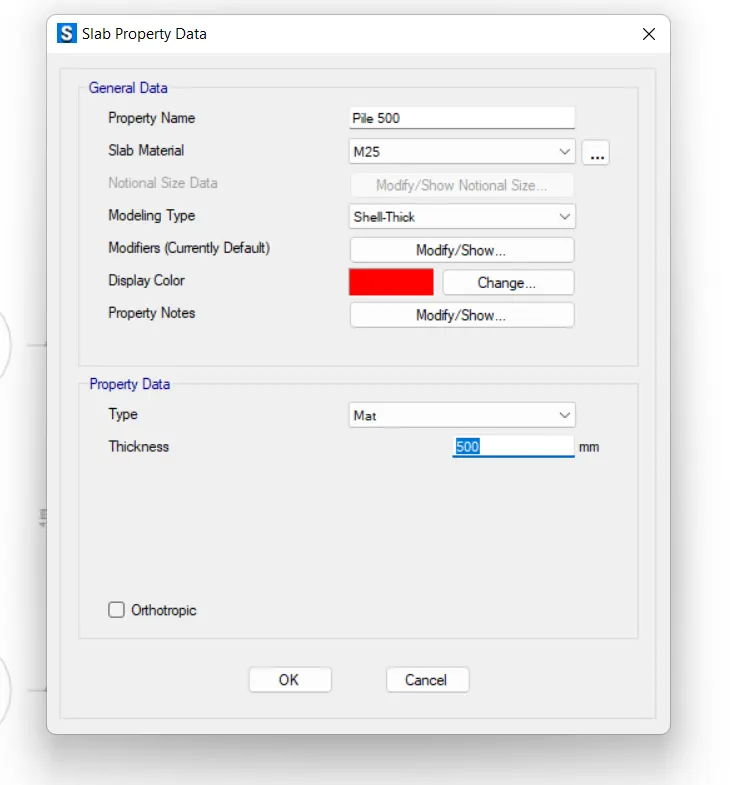
Step9:-
- After assigning all the materials
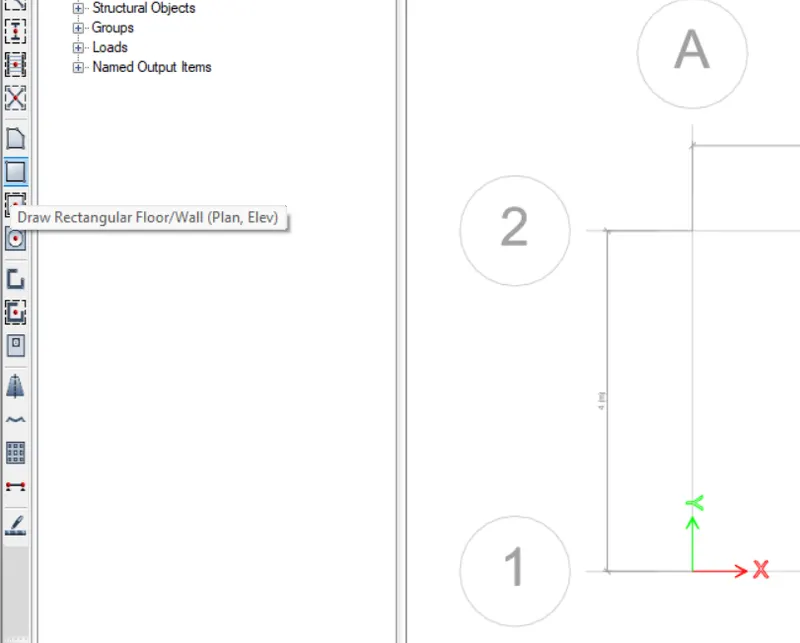
- Click on the Draw rectangular floor /wall to draw the slab
Step10:-
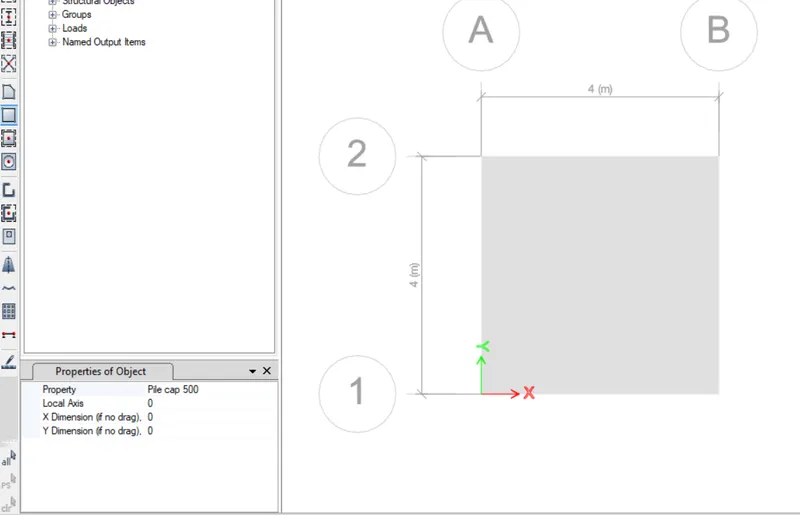
- After selecting the Draw rectangular floor /wall tool
- Select the one corner and drag into diagonal corner then the slab is created
- Here make sure that the pile cap is selected
Step11;-
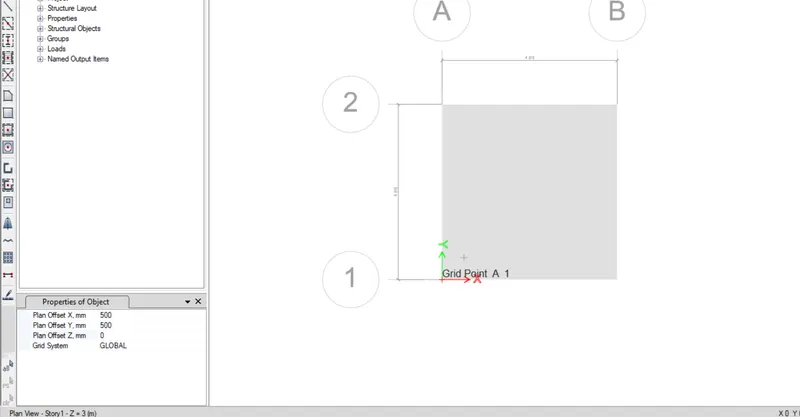
- After creating the pile cap then draw the reference points to place the piles
- Calculate the points properly then give the dimension in the box which is appearing in the left corner
Step12:-
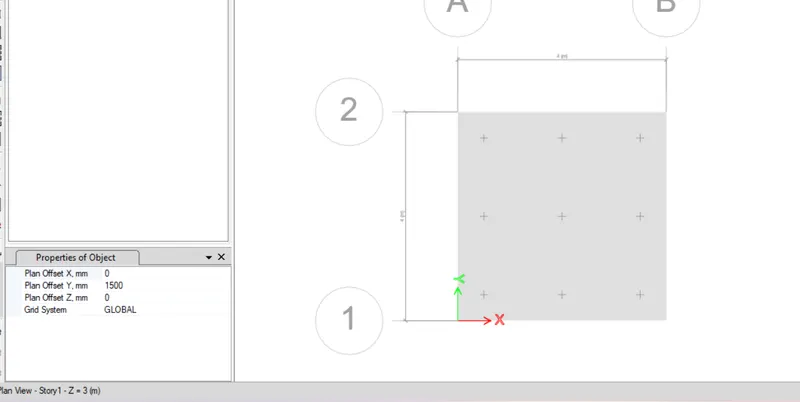
- After completion of the points assignment
- The model looks like this
Step13:-
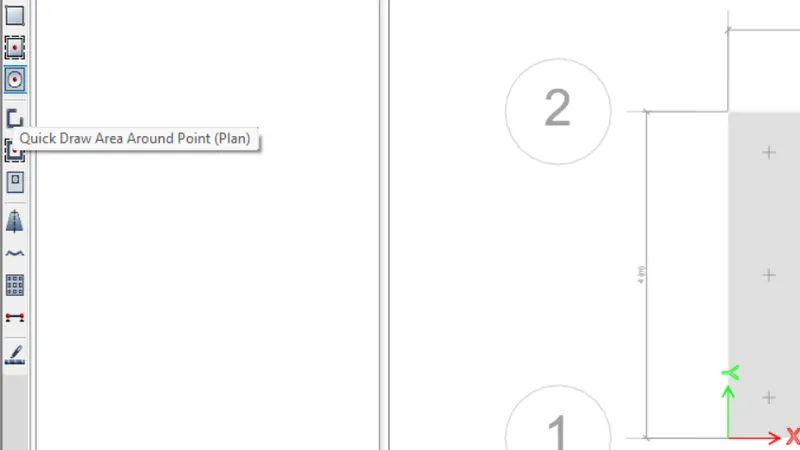
- To draw the pile with reference to the points
- Click on the Quick draw area around points
- This will helps to create the pile by clicking it once
Step14:-
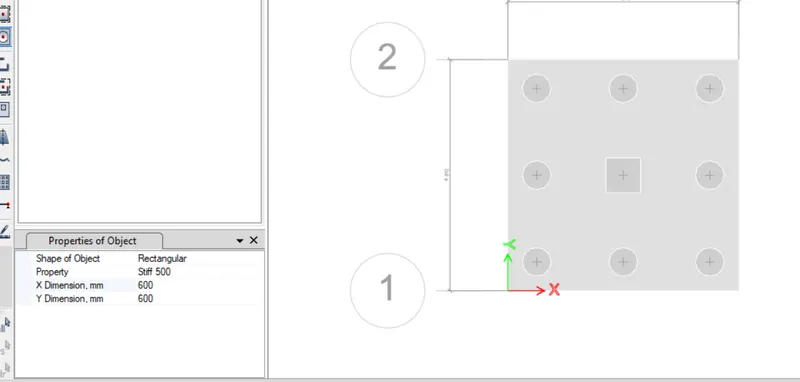
- After creating the piles then create the rectangular column which has 600x600mm column
- Click on the Quick draw area around points
- This will helps to create the stiff by clicking it once
Step15;-
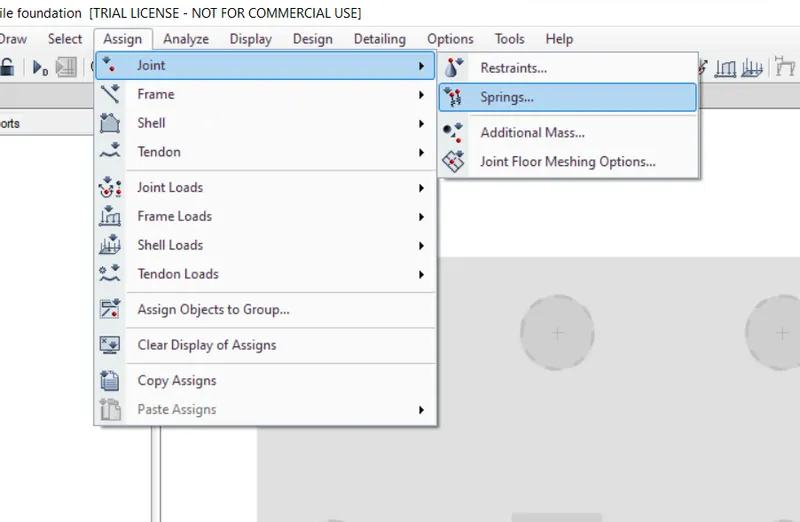
- Assign the spring to the piles by selecting the middle points in the piles
- Click on the assign then click on the joints
- Then click on the spring
Step16;-
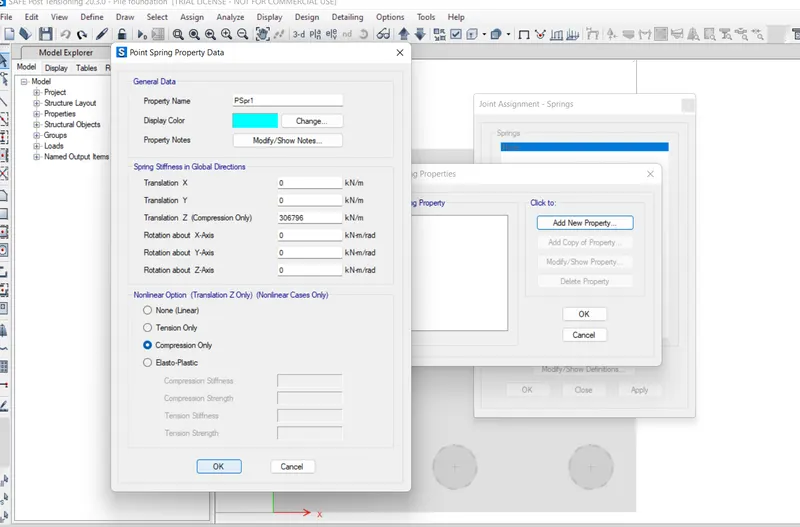
- After clicking springs then joints assignment dialouge box will opens then click on modify/show deformation
- Then click on add new property
- Then the point spring property data dialouge box opens
- Ener the point spring as 306796KN/m
- Then click on compression
- Then click on OK
Step17:-
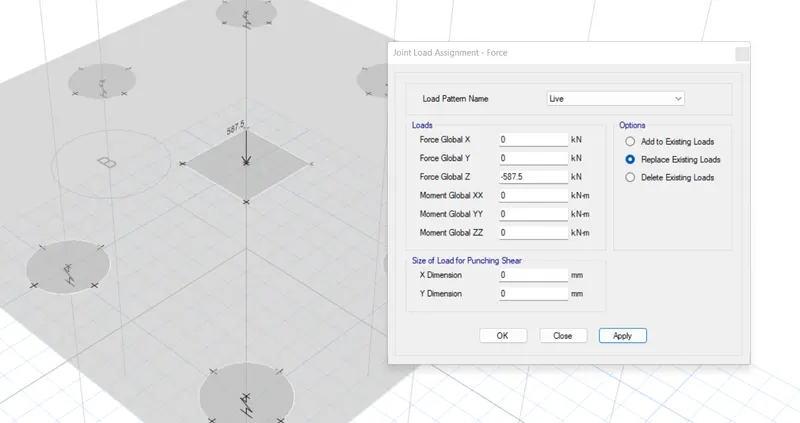
- After providing the spring value to the piles then assign the load to the column
- Assign a 587.5 KN load at the mid point of the column
- Then click on apply then click OK
Step18:-
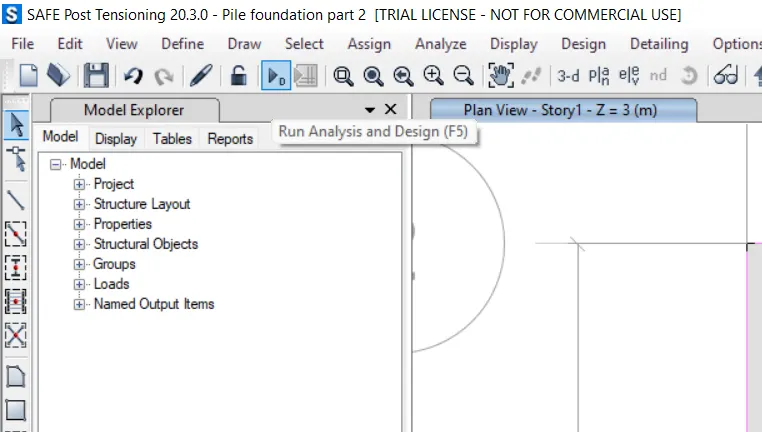
- After assigning the loads to it then run the analysis
Step19;-
- In this step I'm getting a warning message from the software when I click Run analysis
- The warning message is about the mesh
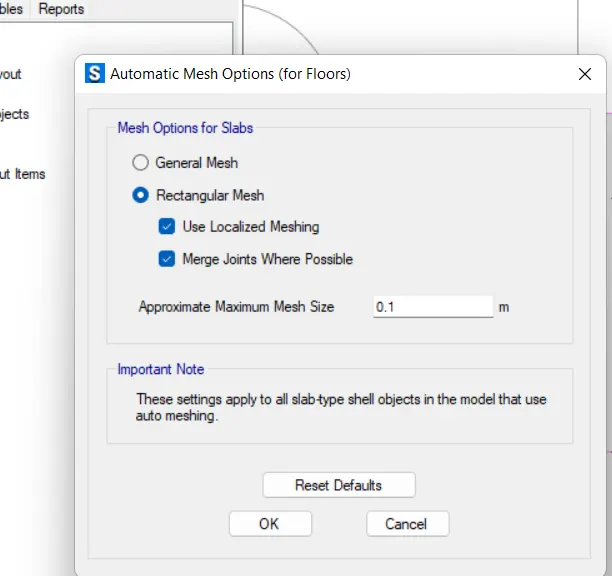
- So provide the proper mesh to the footing
- First select all the point by draging the mouse
- Go to the analyse then go to the automatic mesh setting for floor
- Before it is in General mesh then change it into rectangular mesh and provide the approximate maximum size as 0.1
Step20:-
- After making all the changes then click on Run analysis
Step21:-
Check needs to be performed in SAFE analysis
Individual pile capacity under service load
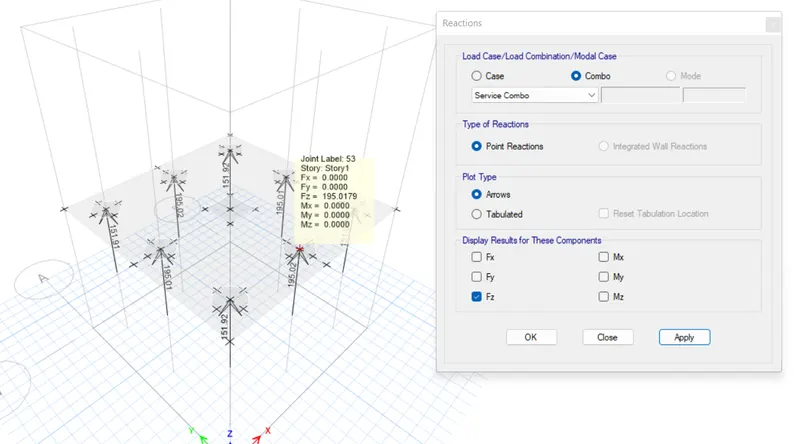
- Here check the reactions of the piles
- Select the reaction icon then select the service combo, the load combination shoul dbe combo
- Then click on OK
- The maximum load is taken by the piles are 195 KN almost 200KN
- The minimum load taken by the piles are 152KN
- These loads snap shot is inserted below
- Hence safe
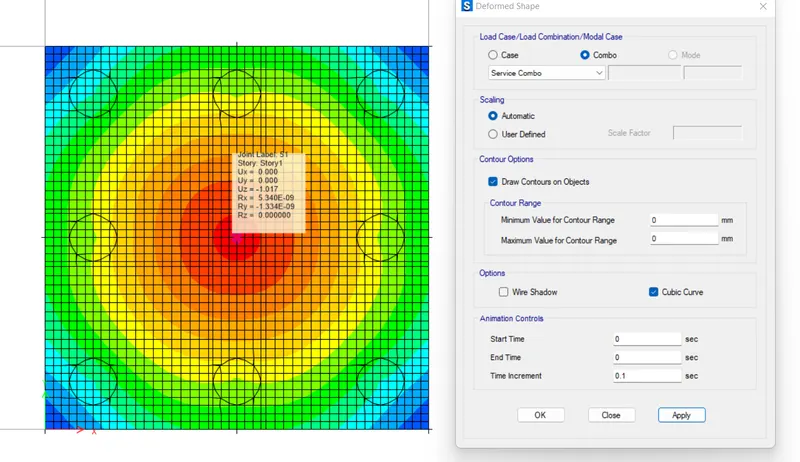
Settelment under service load
- This is the deformed shape of the model
- The load is combo, then type of load is service combo
- The allowable deflection is 50mm but I'm getting the 1mm as the deflection value
- Hence safe
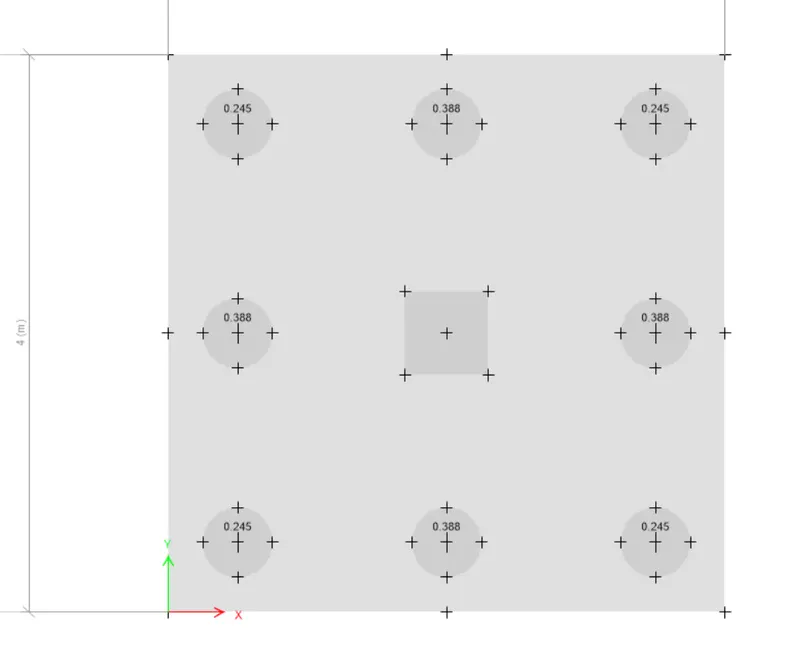
Two way shear check (Punching shear)
- To check the punching shear just click on the show punching shear icon
- The maximum punching shear may go upto 0.9 or 0.95 but I'm getting the punching shear as 0.245 is minimum and 0.388 is maximum
- Hence it is safe
Flexural reinforcement design for footing slab
- Click on the show slab design then it shows the slab design dialouge box
- make sure that the impose minimum reinforcement is selected and layer A and layer B are selected
- Then click on OK
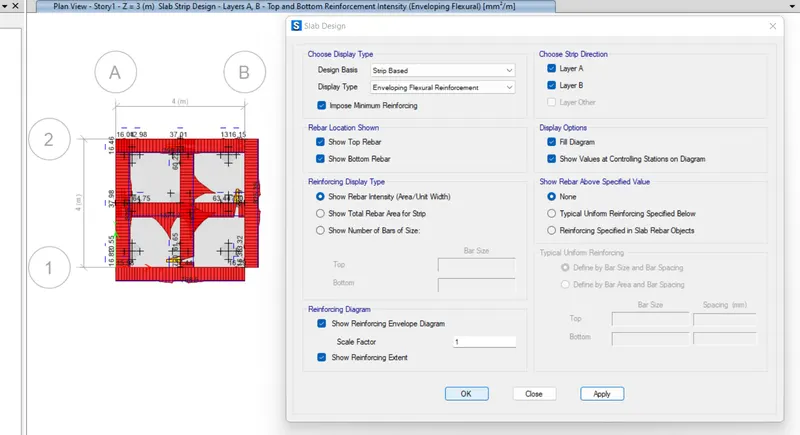
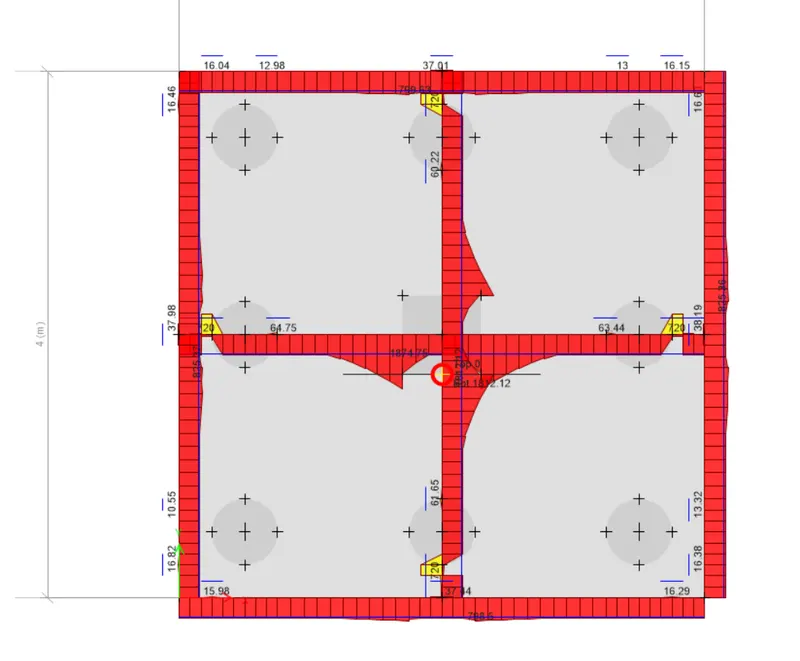
- In this the top and bottom reinforcement are calculated by the software itself
- The maximum reinforcemnt is required at the mid of the column, it is a 1813mm^2
Result:-
- Individual pile capacity under service load -The maximum load is taken by the piles are 195 KN almost 200KNThe minimum load taken by the piles are 152KN - Safe
- Settlement under service load - 1mm - Safe
- Two way shear check - 0.245 is minimum and 0.388 is maximum - Safe
- Flexural reinforcement design for footing slab - 1813mm^2
By using SAFE software we came to know that The pile foundation design is safe
This design is done according to the IS 2911 (part-2) code book and SP 34 code book
Hence the foundation design is safe