Challenge on Combustion
AIM: To perform a combustion simulation on the combustor model and to plot the variation of the mass fraction of the different species’ in the simulation using line probes at different locations of the combustor and also to add water content in the fuel from 5% to 30% by mole and observe its effects.
PROCEDURE:
Geometry
- To import the model to spaceclaim.
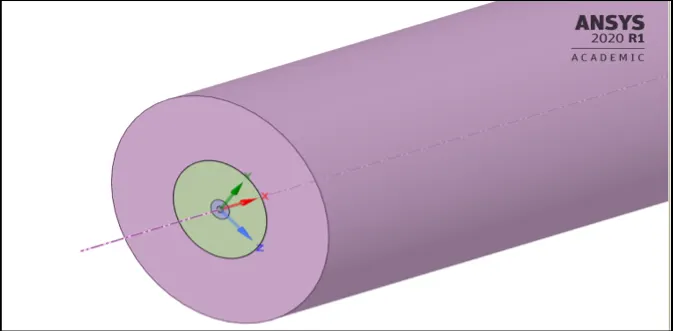
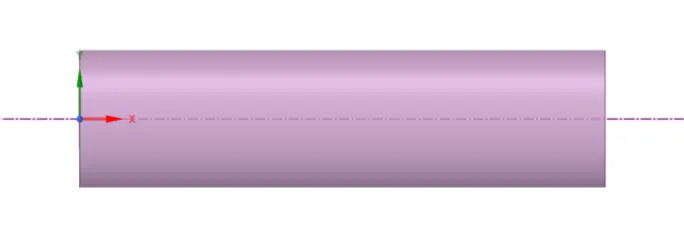
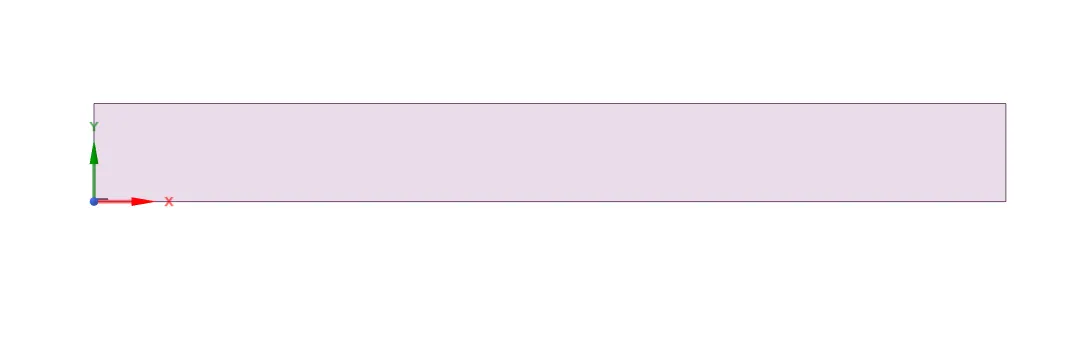
- Since this being a 3D model will be more expensive in carrying out the simulation. Hence has to be converted to 2D.
Meshing
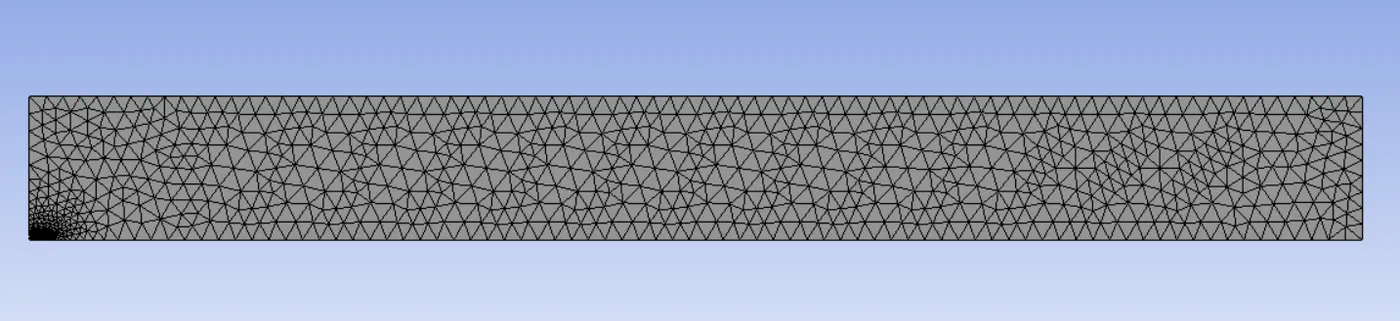
Element size = 10mm
Solving
- A steady-state absolute pressure-based solver with axisymmetric 2D space was used to run the simulation. The energy equation and K-epsilon turbulence model was enabled. Also, the species transport model with volumetric reaction was also enabled. The mixture-material was set to Methane-air-2step. Eddy dissipation model was used for turbulence- chemistry interaction. The inlet diffusion and diffusion energy source were also enabled to solve for the diffusion terms at the inlet.
Boundary conditions
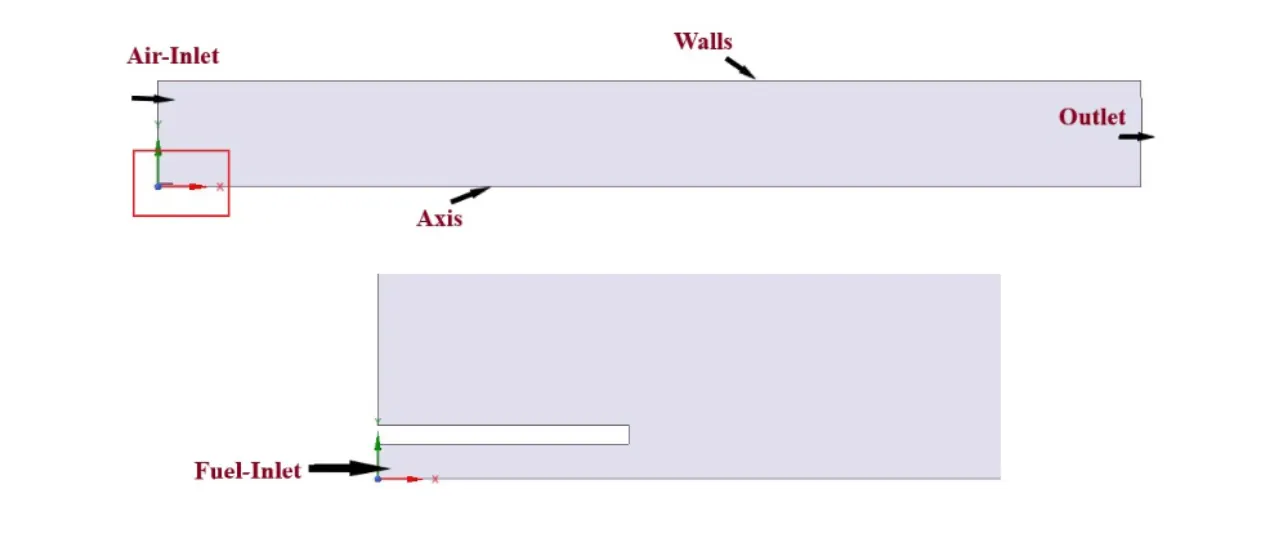
Air-inlet :Velocity: 0.5m/s
Temperature: 300K
species mass fraction: 02(0.23)
Fuel-inlet:Velocity: 80m/s
Temperature: 300k
species mass fraction: CH4(1.00)
Outlet: Pressure outlet(OPa)
Results
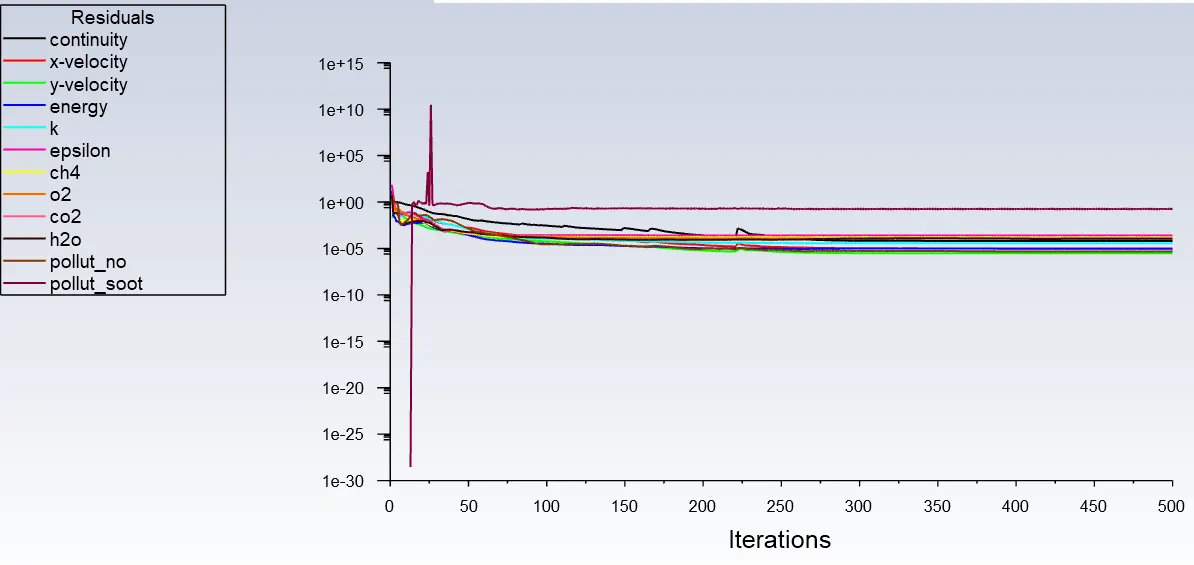
Residuals:
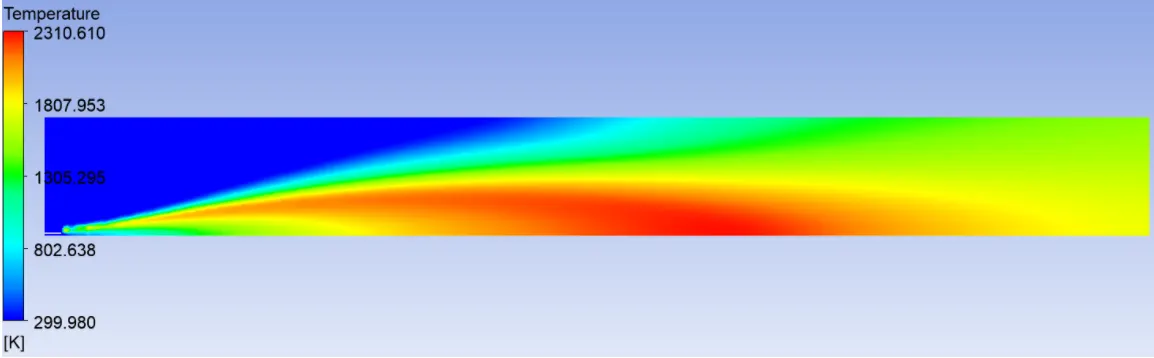
Temperature contour:
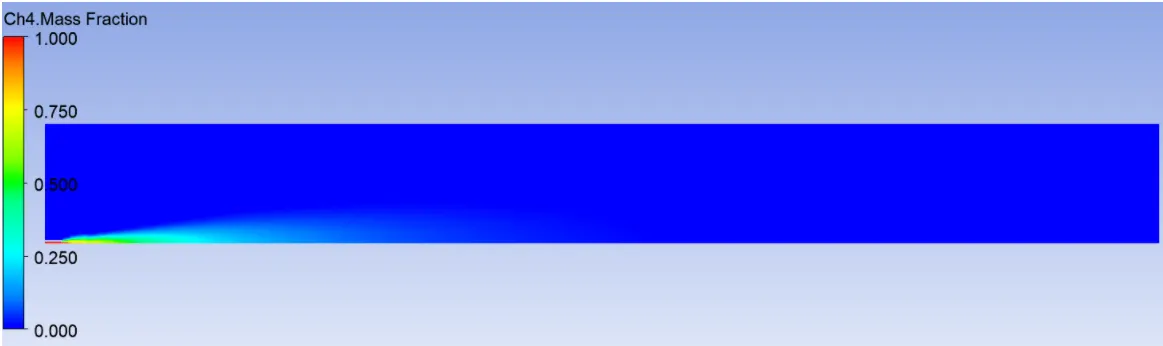
CH4:
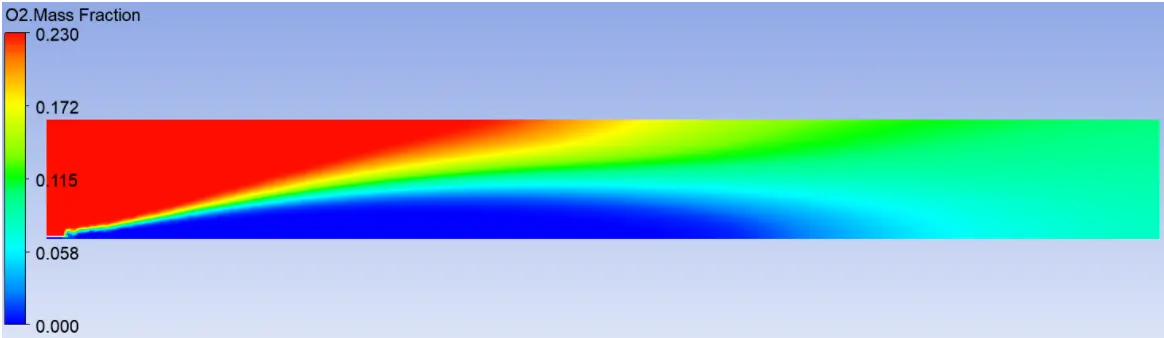
O2:
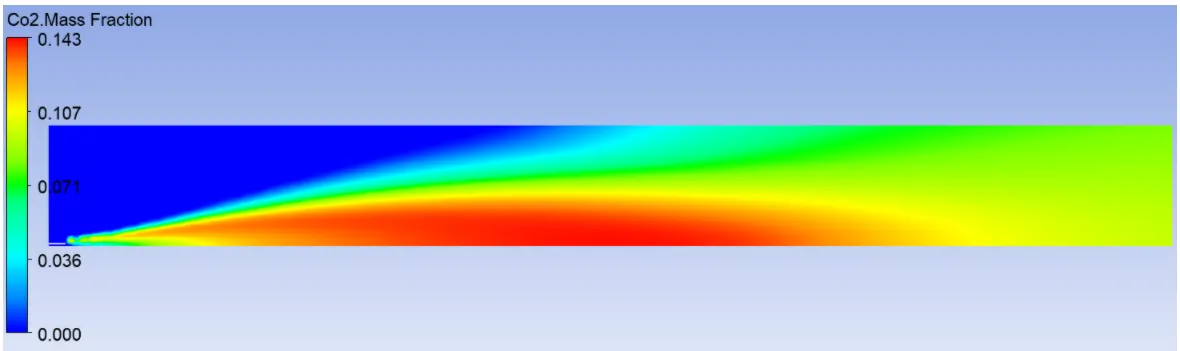
CO2:
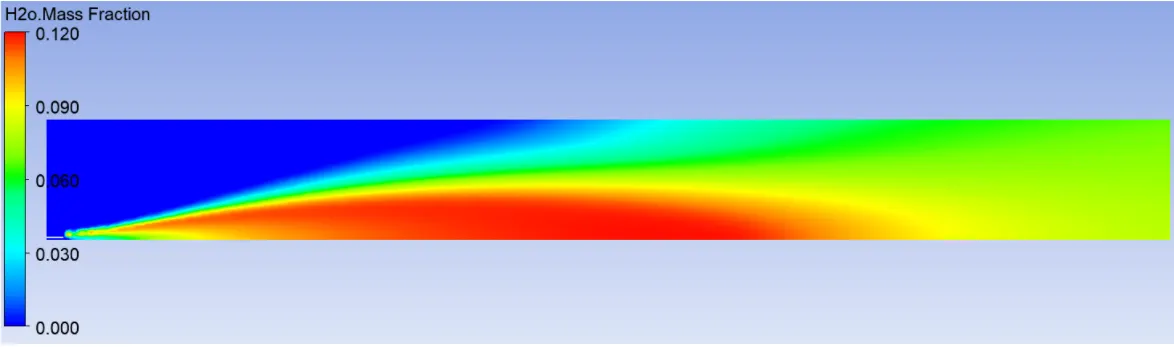
H2O:
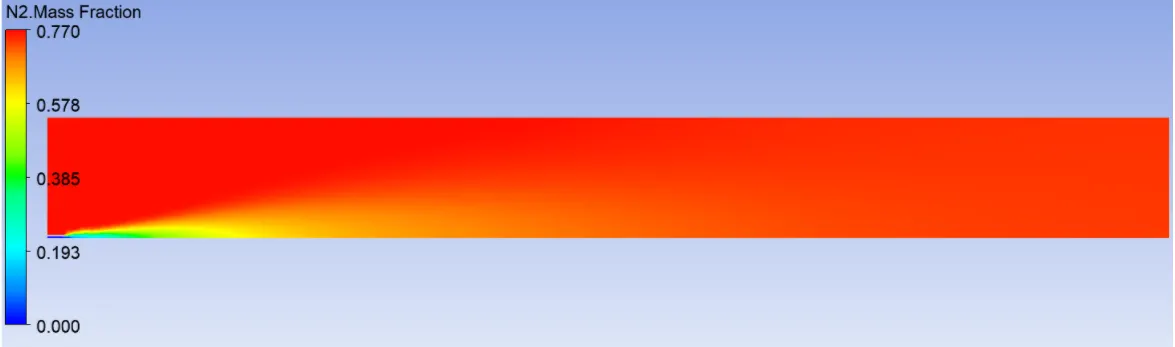
N2:
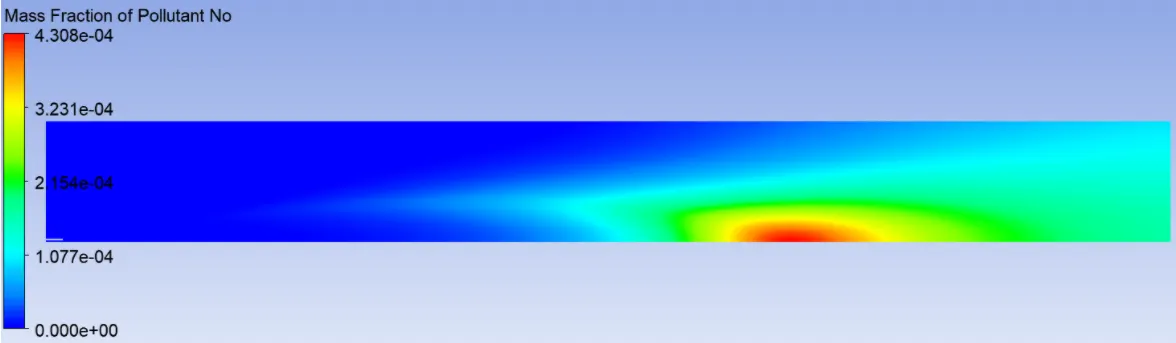
NOx:
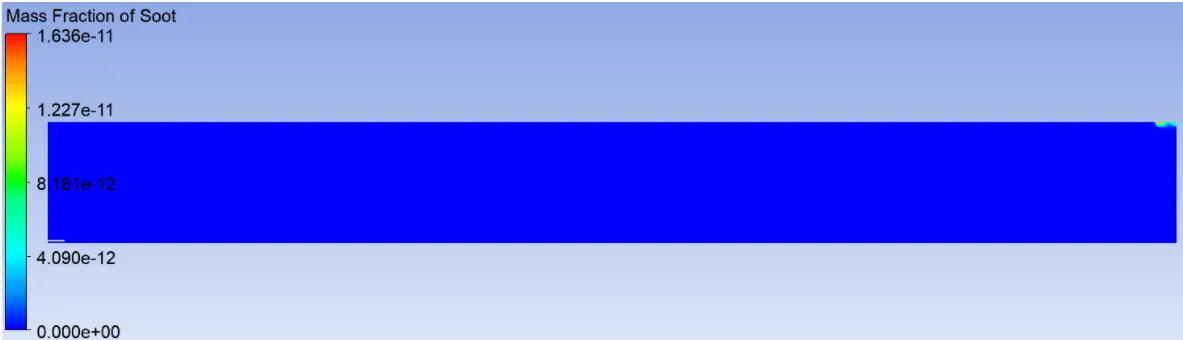
Soot:
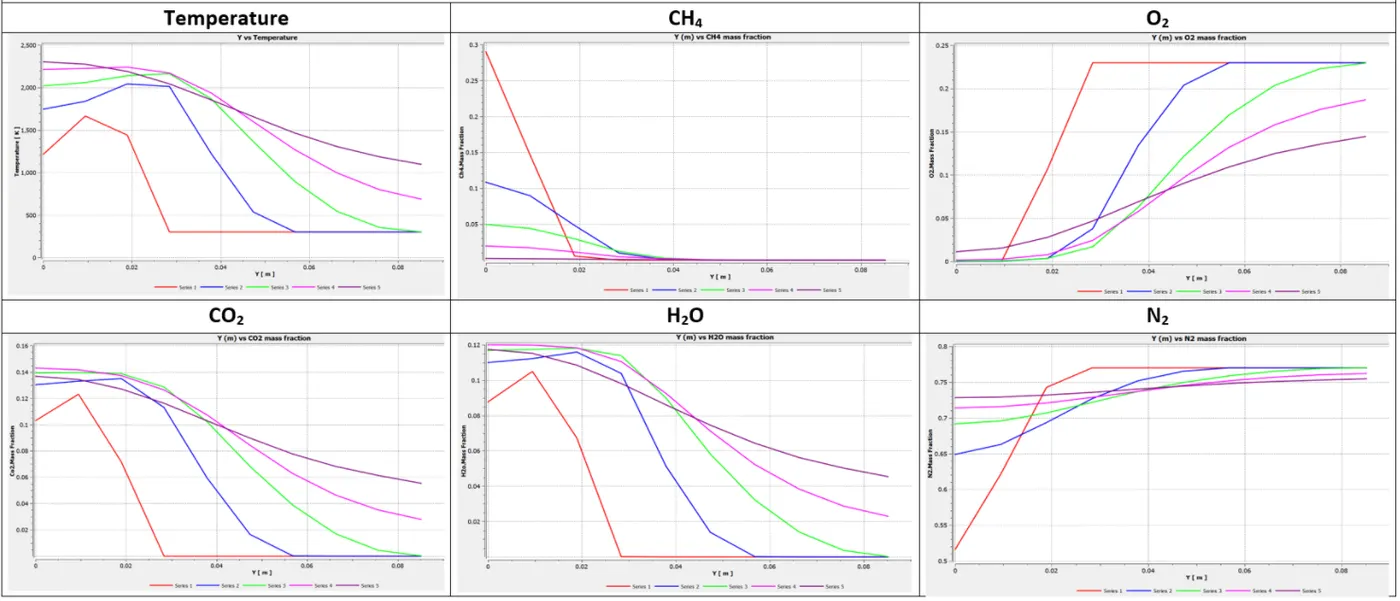
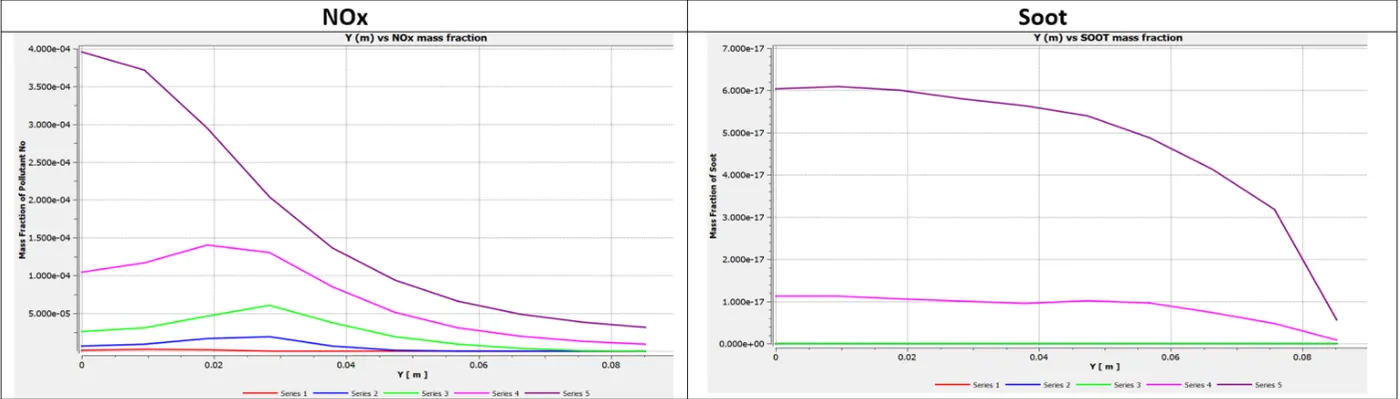
Now the above species are examined at different locations of the combustor using the line probes.

The distance betweeen each line probe is 0.1m
Results:
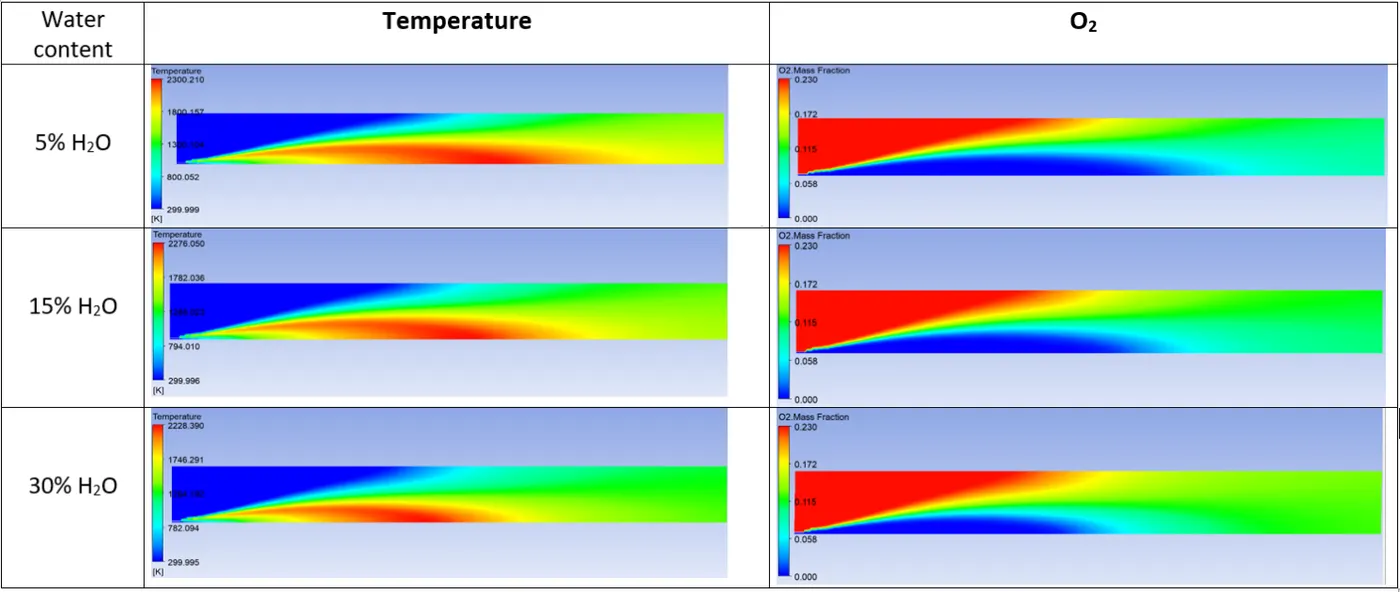
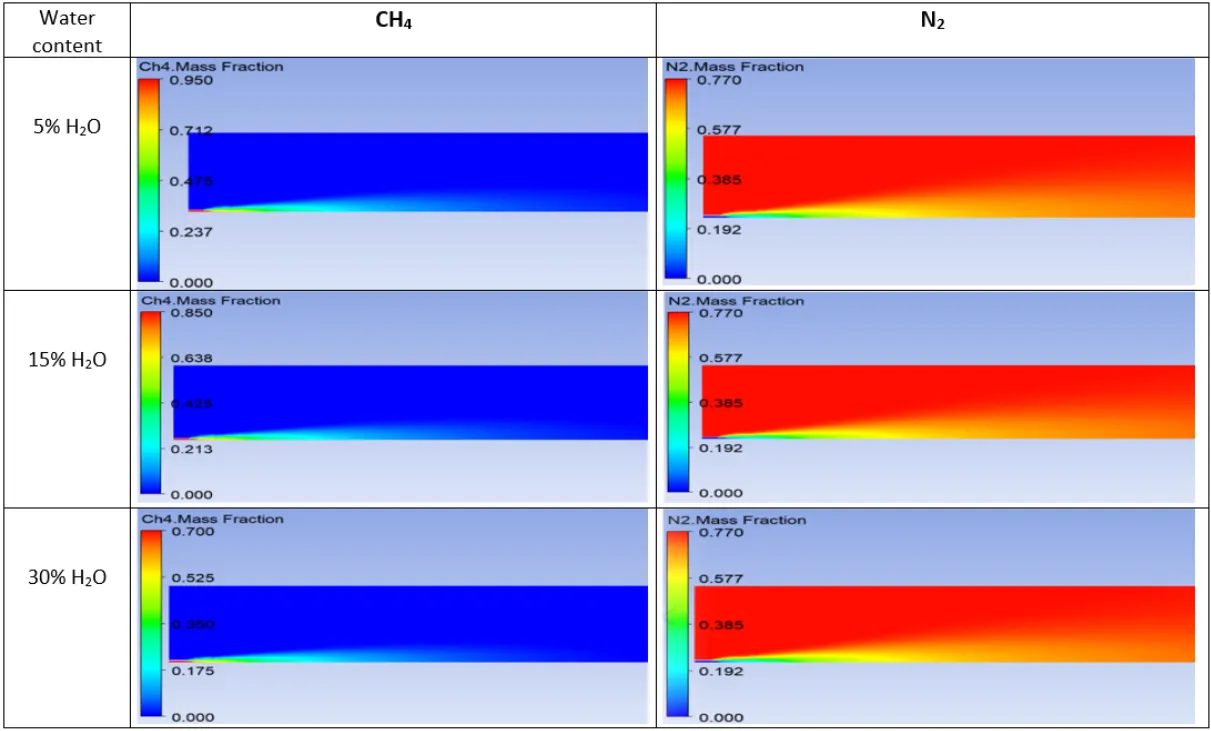
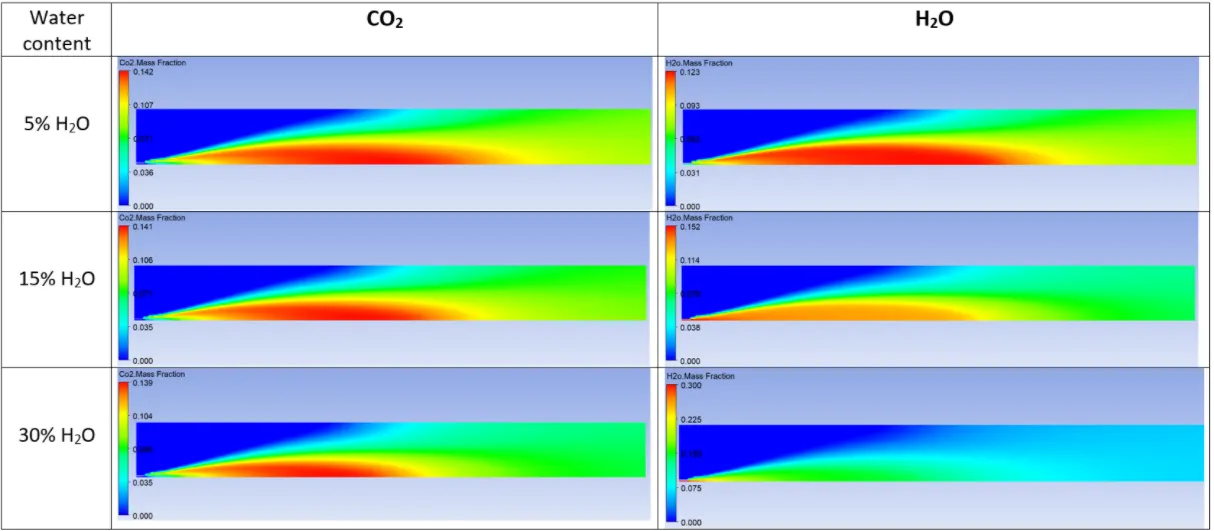
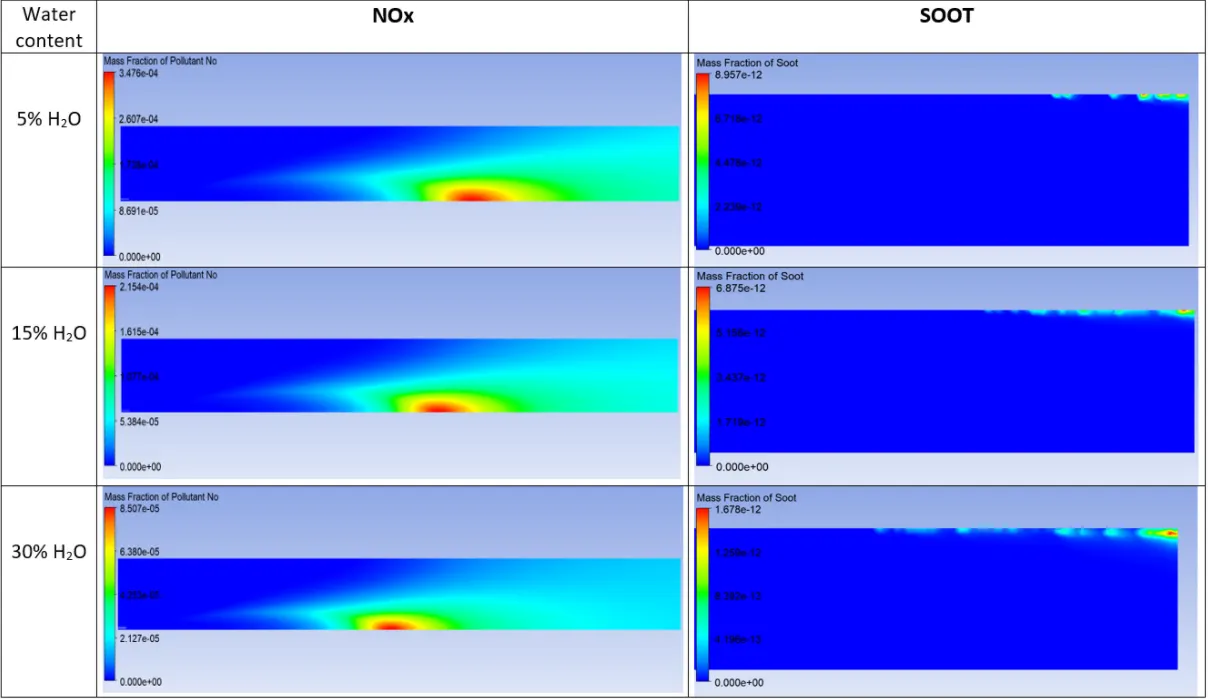
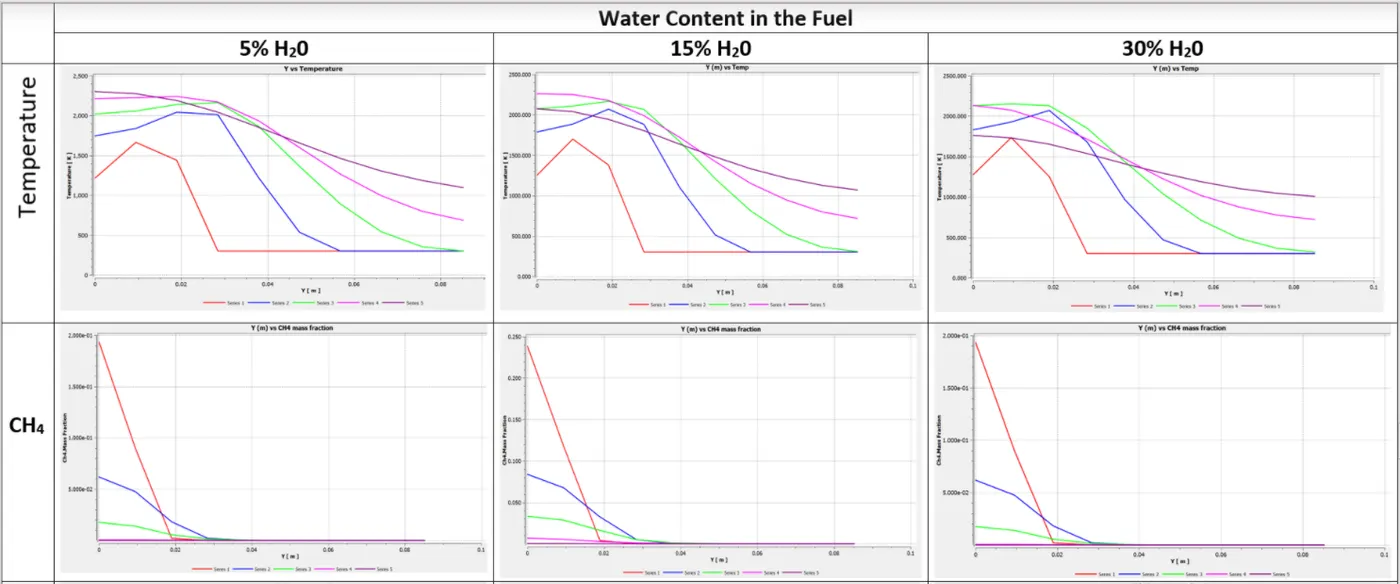
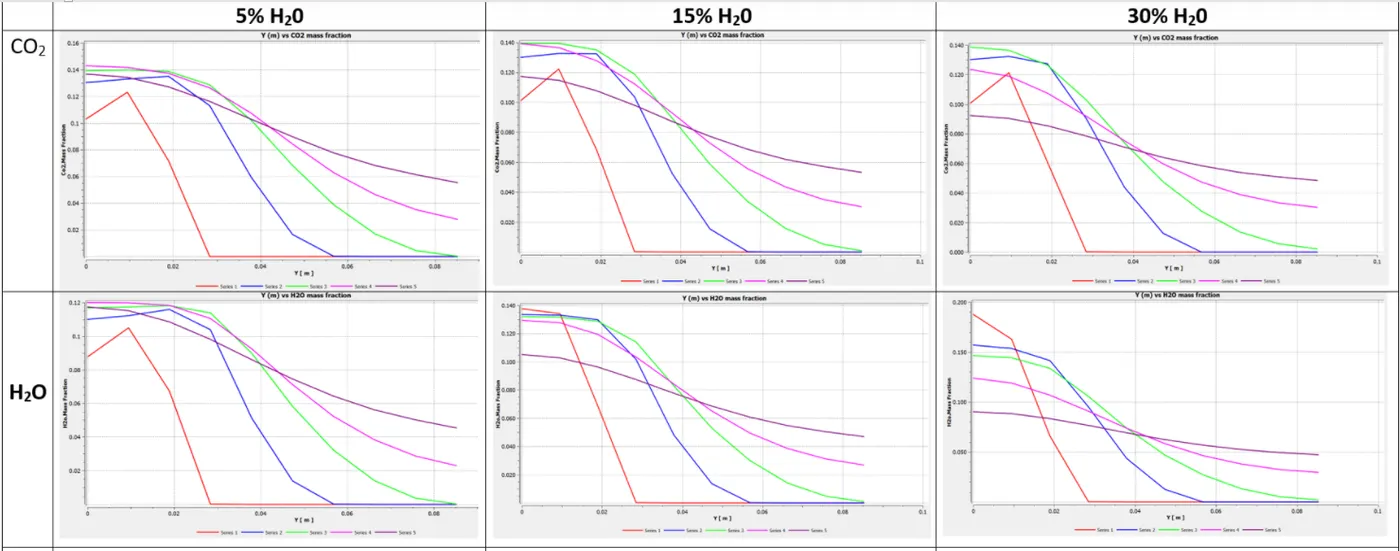
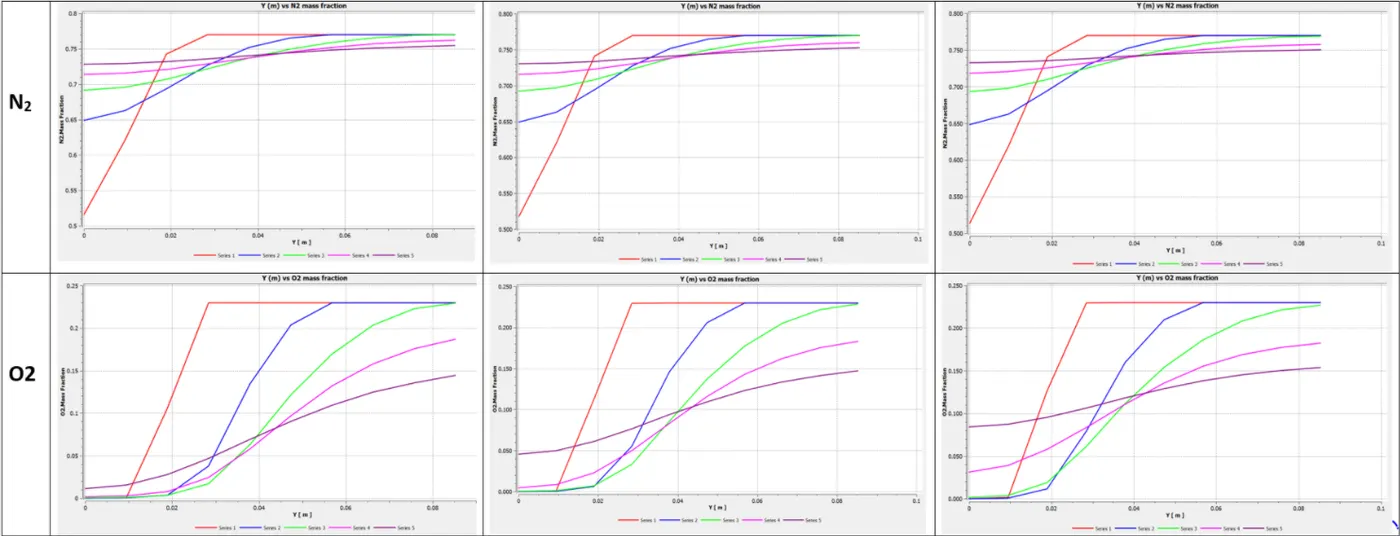
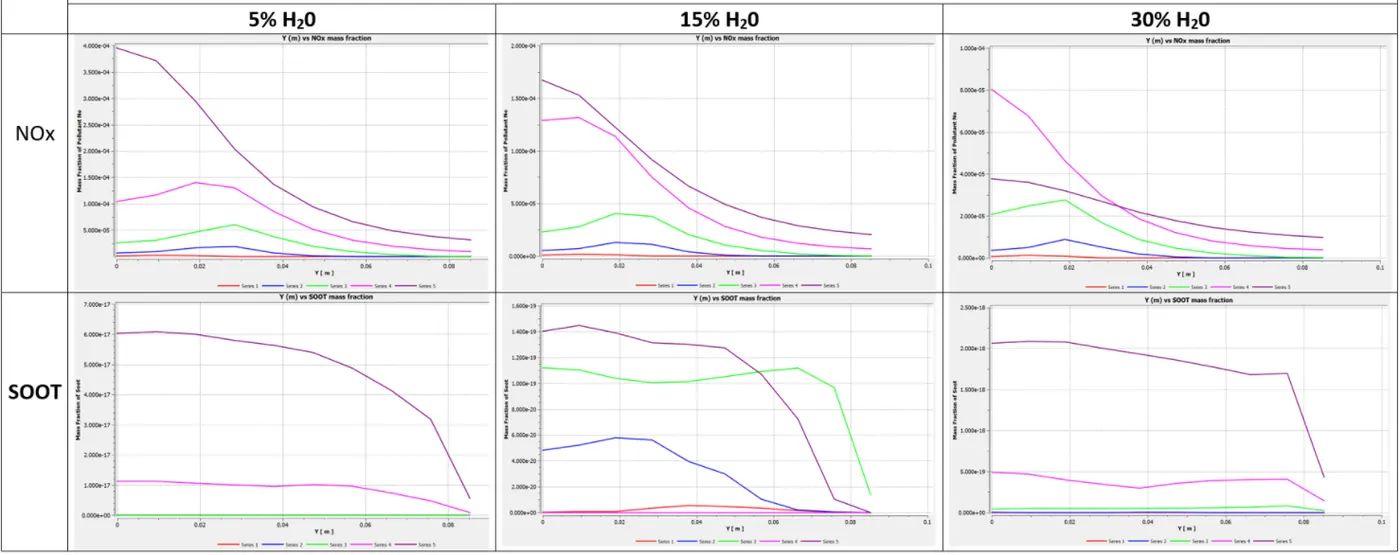
II. Addition of water to the fuel from 5% to 30%
Results:
Line probes:
Summary:


Conclusion:
- As the water percentage is increasing the temperature is decreasing by which incomplete combustion can happen.
- Similarly on addition of water the pollutants such as NOx and soot are getting reduced thereby becoming an advantage.