Week 11: Project 2 - Emission characterization on a CAT3410 engine
Objective :
1. The CAT3140 engine f or open-W and omega piston models generates a sector geometry of t he combustion chambers.
2. To simulate t he t wo-sector profiles with t he same parameters.
3. To analyze and compare t he different operative conditions of both configurations and compare t heir performance
parameters.
4. To study t he emissions f or both t he configurations and draw suitable conclusions f or t he same.
Introduction :
The CAT3410 i s a caterpillar commercial engine. I t acts as a substitute f or diesel. I n diesel engines, f uel i s put i nto t he
combustion chamber using i njection t hrough a nozzle. t he f uel spray i s subjected t o break up and atomization before being
mixed with air and experiencing combustion i n t he chamber.
A diesel engine combustion chamber with different piston head will affect t he combustion process and eventually affect t he
diesel engine performance.
The mixing of air and f uel i n t he combustion chamber happens when t he piston i s i n t he TDC. t hus t here i s a combined f low
in t he swirl, t he f low i n t he radial direction f rom t he piston crown. This f low of air and f uel i s closely related t o t he shape of
the piston head.
Geometry Profiles :
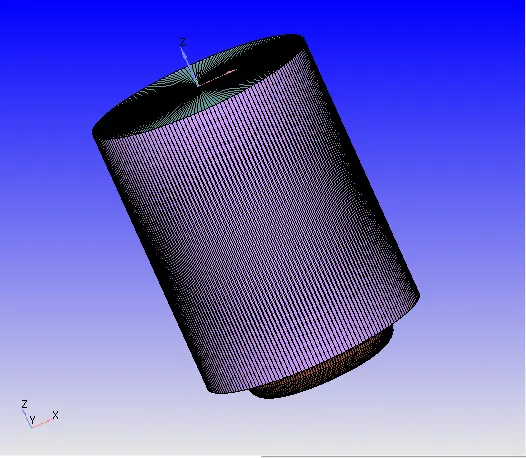
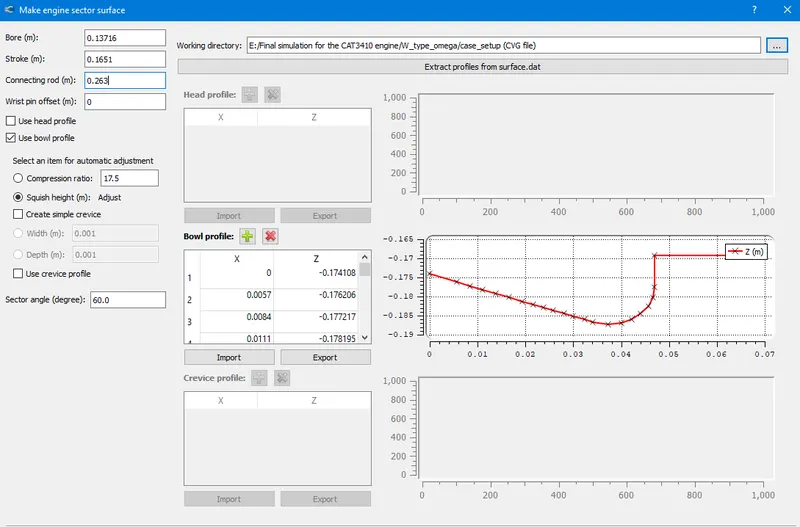
Based on the data provided we can extract the head, bowl, forward, and reverse profiles. Once we extract our profiles we
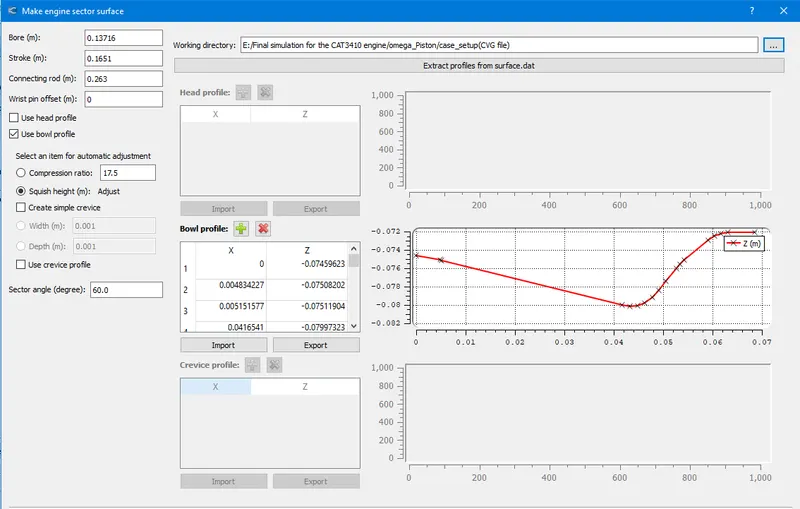
import only t he bowl profile and provide useful data t o create an engine sector using t he t ool "Make Engine sector surface".
The picture below shows us t he t oolbar where we make t he sector surface.
For t he Omega profile :
For t he Open W profile :
The f our i ndividual boundaries f lagged are cylinder wall, cylinder head Piston f ront, and back f aces t hese are done
respectively f or t he t wo i ndividual piston profiles and t hey are shown i n t he f igure given below:
The geometrical details of t he engine are as f ollows:
Bore = 0.13716m
Stroke = 0.1651m
Rod l ength = 0.263m
RPM = 1600
Compression Ratio = 17.5
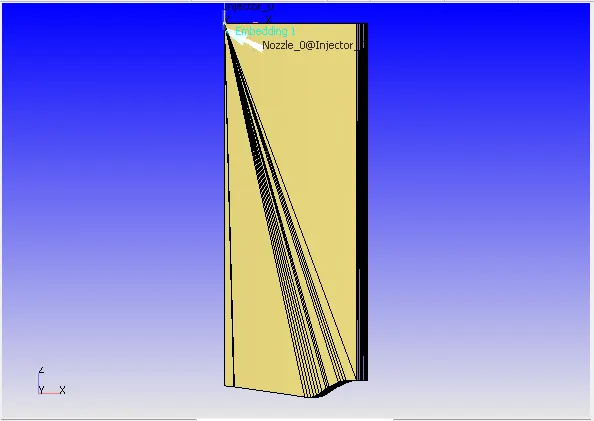
For t he Open W piston, t he sector i s generated by using t he bowl profile.
We are only concerned with having one i njector and one nozzle he considering t he sector geometry f or both t he profiles
depicted i n t he i mages. Also, t he parameters f or t he engine geometry are given i n t he picture below
The geometrical details of t he engine are as f ollows:
Bore = 0.13716m
Stroke = 0.1651m
Rod l ength = 0.263m
RPM = 1600
Compression Ratio = 17.5
For t he Omega piston, t he sector i s generated by using t he bowl profile.
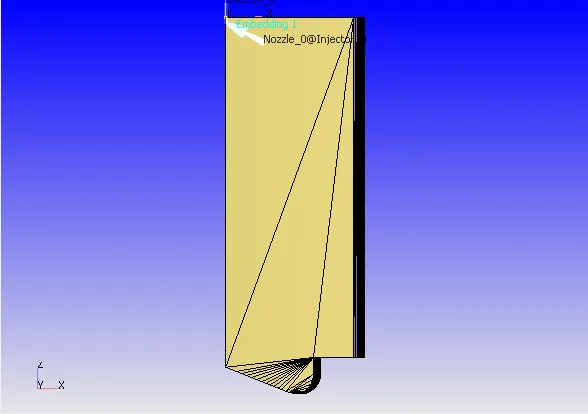
As t he Engine has a 6 nozzle configuration and t he geometry i s axisymmetric a cut section with a single i s generated f or
each nozzle and one of t he sections i s analyzed i n t his project. Hence t he sector angle i s 60 degrees.
Application Type :
Crank angle based f or I C Engine
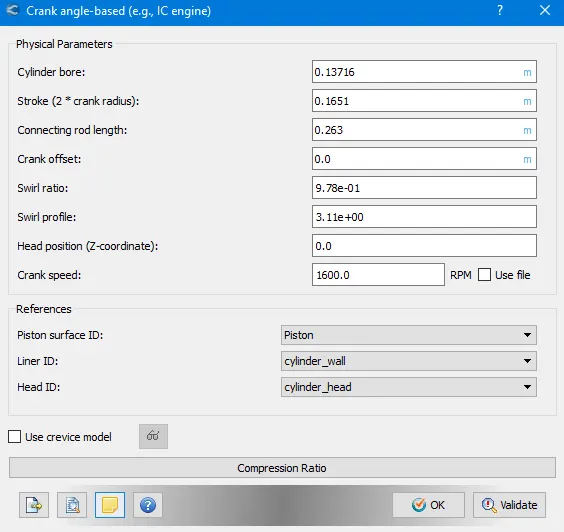
Once we are done with providing suitable physical parameters f or our engine we have t o provide suitable boundary
conditions f or every i ndividual boundary f or t he t wo-piston bowls.
Gas simulation :
The gas simulation properties were set as f ollowing
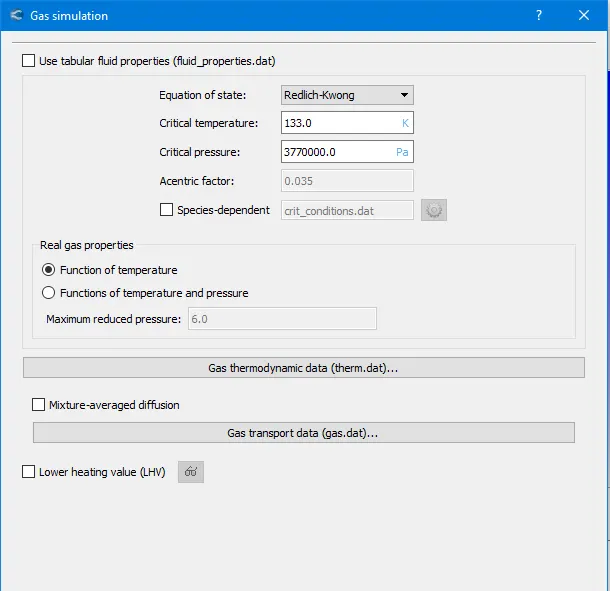
Parcel simulation :
The f uel chosen was Diesel-2 and t he spray parcel properties were t aken f rom t he data f iles.
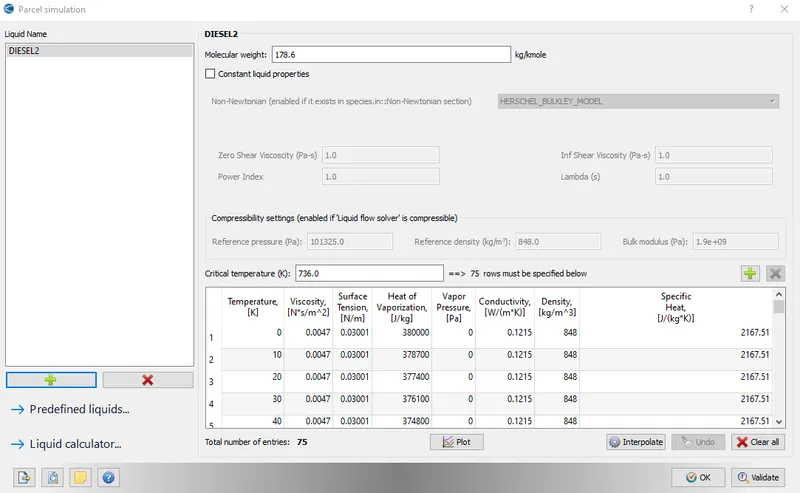
The t ransport parameters were set as default values. The reaction mechanism was set based on t he data f iles and f or
Diesel-2 combustion.
Global t ransport parameters :
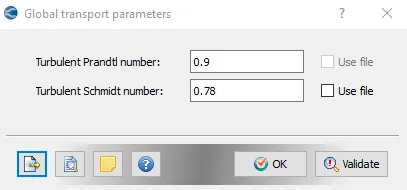
The global t ransport parameters are considered t o as shown below
Reaction mechanism :
The t ransport parameters were set as default values. The reaction mechanism was set based on t he data f iles and f or
Diesel-2 combustion.
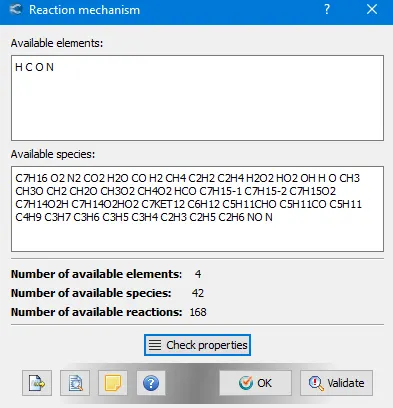
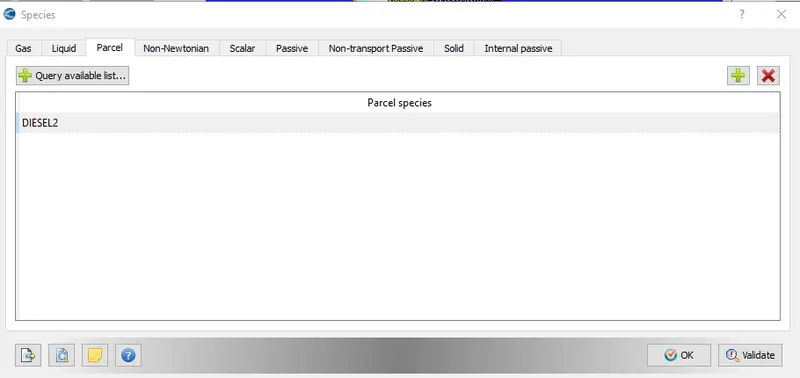
Species :
The parcel elements are set as t he Diesel-2 l iquid and t he passive elements are kept as t he Hiroy soot and NOx.
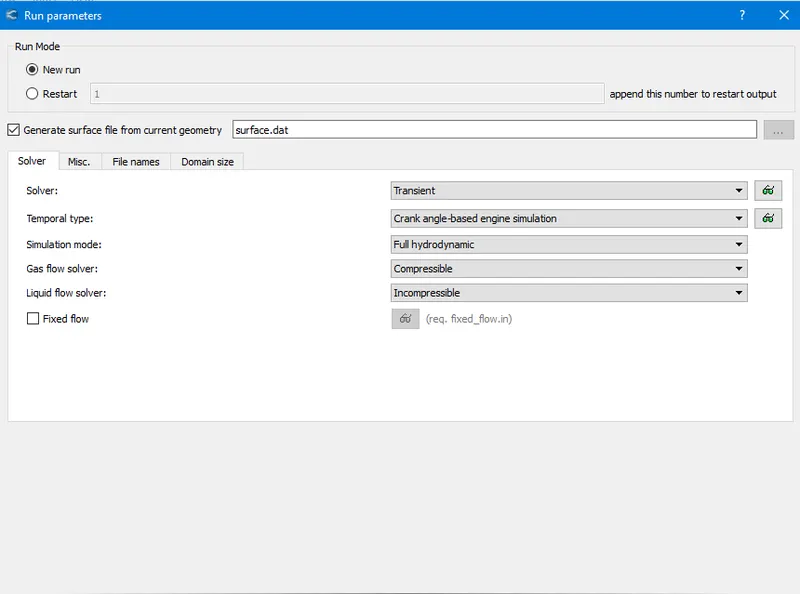
Run Parameter :
The simulation t ype was set f or t he f ull hydrodynamic state and t he solver was used t o be t he t ransient state f or t he
simulation.
Simulation t ime parameters :
The simulation
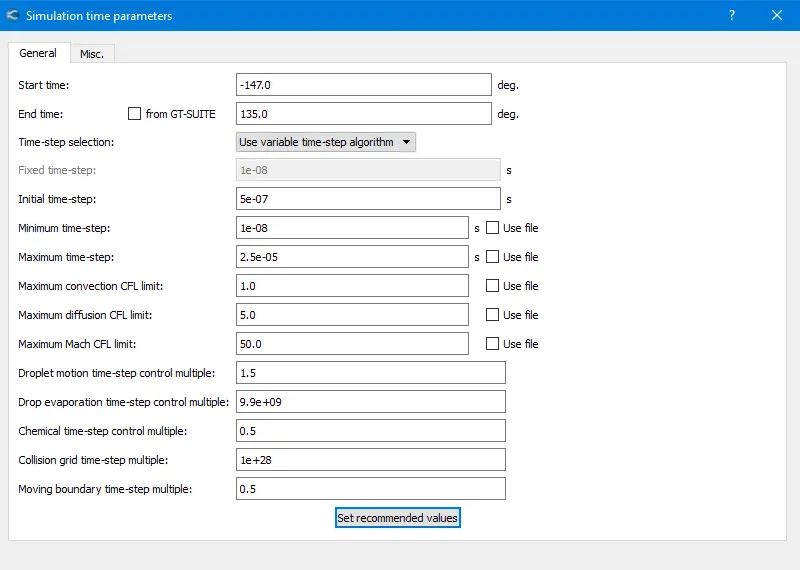
Simulation t ime parameters :
The simulation was run with a start t ime of -147 and t he end t ime was 135 with t he i nitial t ime step being with 5e-07 seconds
and t he f inal t ime step being 2.5e-05 seconds.
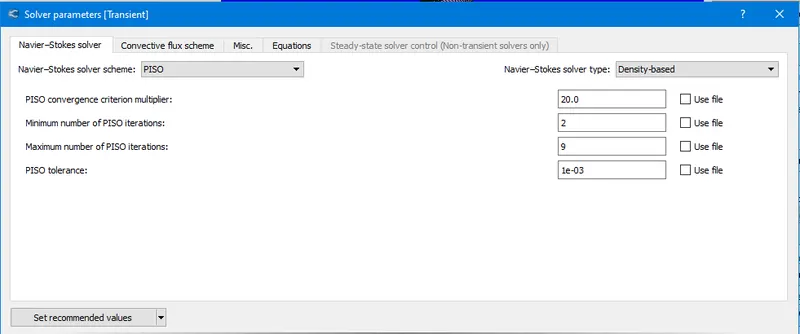
Solver parameters :
The solver parameters have been set f or t he Navier-Stokes solver and t he PISO scheme was used f or t he Navier strokes
solver and t he solver t ype used was Density-based.
Boundary Conditions :
The piston boundary was set at a t emperature of 533 k and t he motion t ype was set a t ranslating with a moving surface. The
velocity and t emperature boundary conditions were set as t he l aw of t he wall and t he species, passive and t he t urbulent
kinetic energy was set as t he Neumann boundary conditions and t he t urbulent dissipation was set t o wall model(law of t he
wall).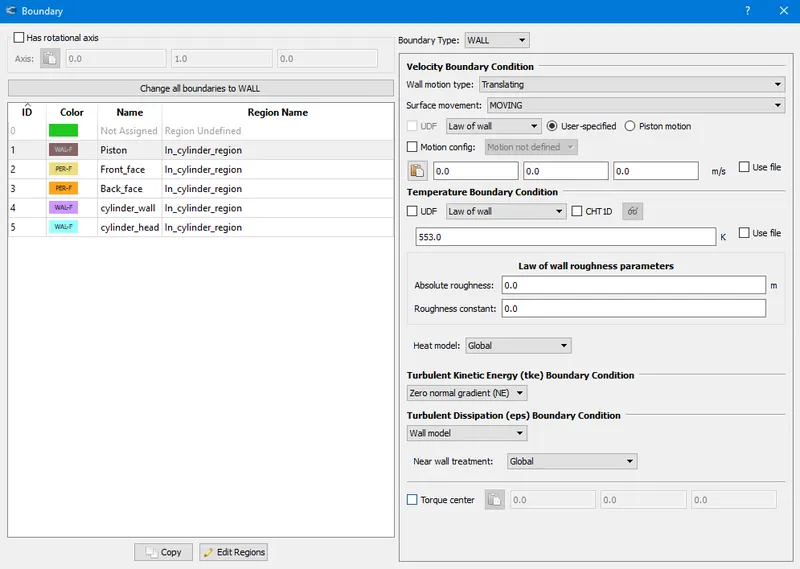
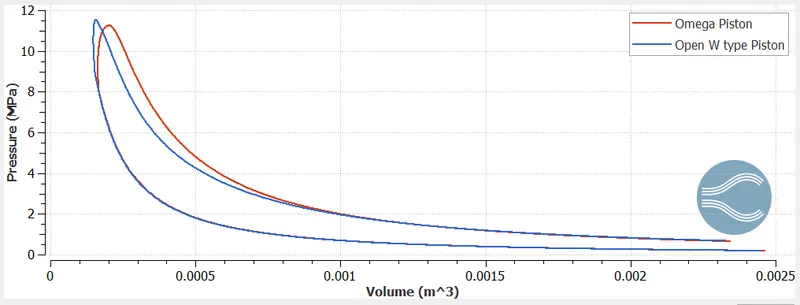
The area under t he PV diagram of an engine i ndicates t he work done by t he engine. Here f rom t he comparison of t he PV
diagram of t he t wo-piston configurations, t he area under t he Omega piston P-V curve i s higher i ndicating higher work i s
done which endorse with the values of work done by the engine Performance calculator tool.
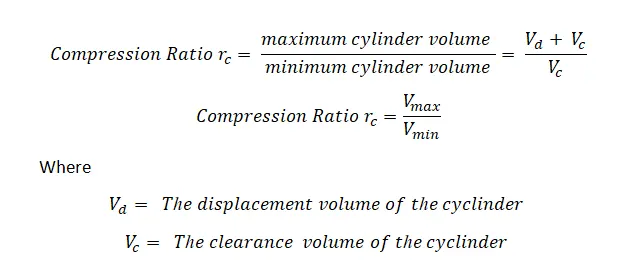
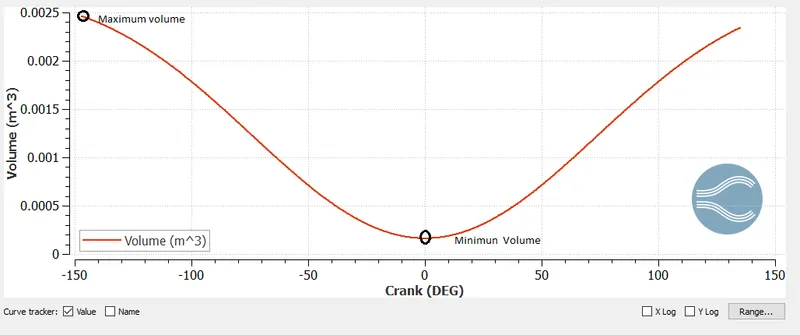
Compression Ratio :
The geometrical details of t he engine are as f ollows:
Bore = 0.13716m
Stroke = 0.1651m
Rod l ength = 0.263m
RPM = 1600
Compression Ratio = 17.5
The bore, stroke and compression ratio are t he same f or both t he pistons. Hence t he parameters are calculated as f ollows.
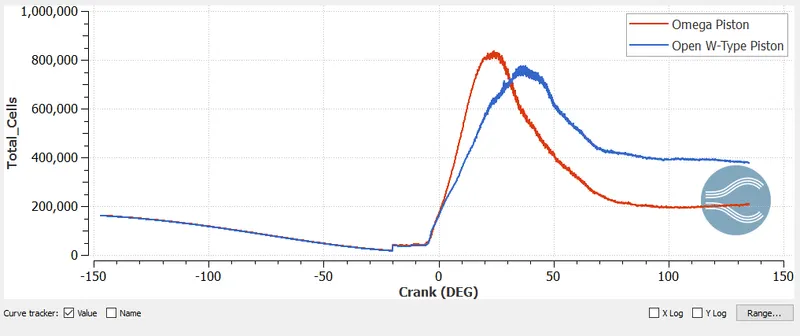
Initially, t he simulation starts with a cell count of approx.180,000 at -130 CAD. and after t he combustion completed we can
see t hat t he t otal cell count i s nearly 820,000 f or t he omega piston and f or t he Open W-Type piston we can see a t otal cell
count of 745,664.
Peak Pressure(P) :
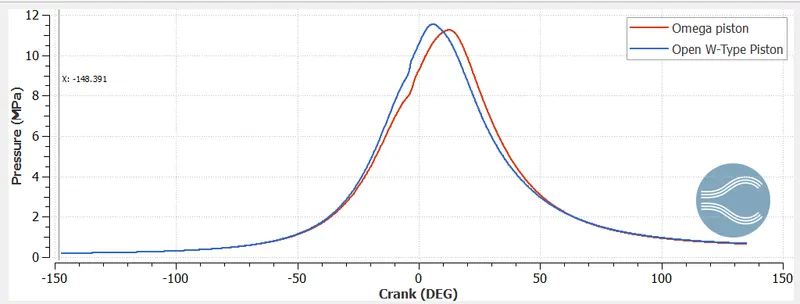
● The peak pressure of an Open W piston i s higher compared t o an Omega piston. However, we can't conclude t hat
Open W piston i s better f or our diesel engine based on a single parameter alone.
Animation f or t he Pressure f or t he Omega and Open W-Type Pistons
The Pressure f ormation i n t he omega and t he Open W-type Pistons are provided i n t he animation above.
Mean Temperature(T) :
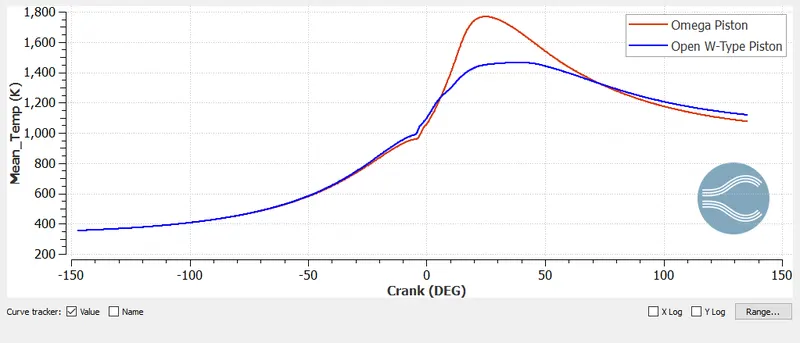
● we can see t hat l ow t emperature f or an Open W piston i s beneficial i f we are supposed t o l ower our NOx
emissions. But t here i s a problem of f uel not being burned properly which needs t o be verified by l ooking at other
essential parameters.
Animation f or t he t emperature f or t he Omega and Open W-Type Piston.
The Temperature f ormation i n t he omega and t he Open W-type Pistons are provided i n t he animation above.
Heat Release rate :
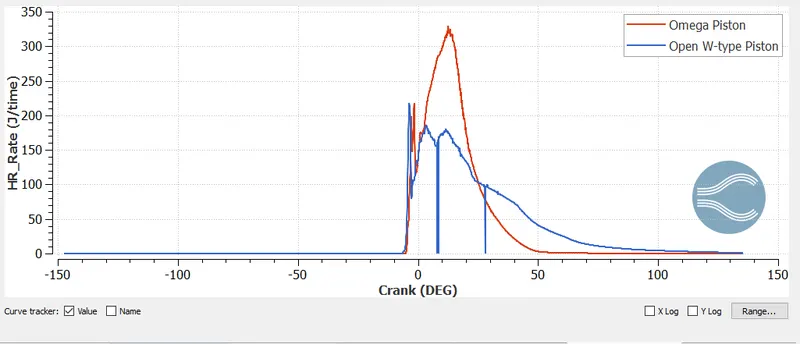
A higher heat release rate i n Omega piston explains t he high t emperature and a l ow heat release i n Open W piston with
sudden dips i n t he curve t ells us about t he noise i nside t he engine.
●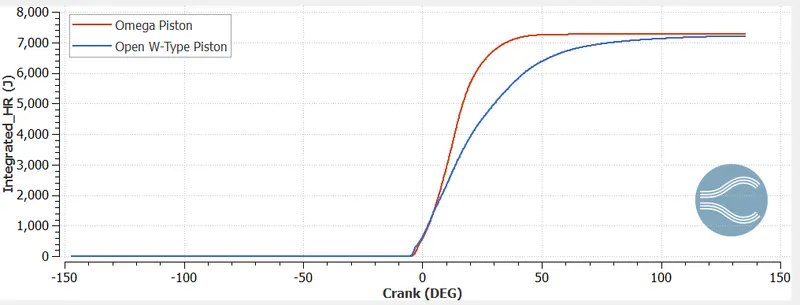
● We can see t hat t he t otal heat energy released f rom t he combustion process alone i n t he Omega piston i .e
7279.46 J. While i n t he Open W piston t he energy released i s i .e 7211.74J t here i s a discrepancy of close t o 63
J/Cycle.
● Also, t he rate at which t he f uel burns i n Open W piston i s much slower when compared t o Omega Piston
● Open W has a l ow t emperature and t he combustion efficiency of t he engine i s also l ow.
Emissions:
HC :
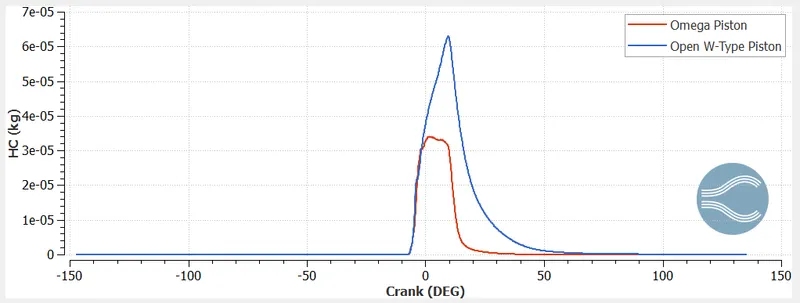
The quantity of Unburnt Hydrocarbons i s higher i n t he Open-W-piston. The f ormation of Unburnt hydrocarbons i s due t o t he
improper combustion of t he f uel. As i nferred earlier f rom t he Heat Release Rates of both piston heads, t he combustion
efficiency would be higher f or t he Omega piston, t hus explaining t he higher quantity of unburnt hydrocarbons produced.
Animation f or t he H2O and H2 f or t he Omega and Open W-Type Pistons
The H2O and H2 f ormation i n t he omega and t he Open W-type Pistons are provided i n t he animation above.