ADAMS - Project - Hardpoint tuning to achieve pitch gradient targets using suspension “anti” characteristics
Project Deliverables
- Perform hardpoint tuning to achieve the target acceleration and braking pitch gradients for Double Wishbone Suspension at the front and Multilink Suspension at the rear.
- Adams Plot showing effect of tuning (overlay curves).
- Completed Excel Sheet.
Project targets and coonstraints:
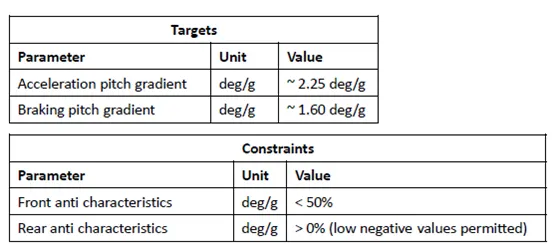
Introduction:
Pitch is a phenomenon that occurs in response to the acceleration and braking forces. Pitch is the front and rear motion of a car about an axis that extends from the left to right of a vehicle and through the center of gravity i.e. the transverse axis. Pitch angle is the angle that the body makes in side-view. Pitch is typically taken to be positive (+ve) for upward movement of the vehicle nose and negative (-ve) for downward movement of the vehicle nose.
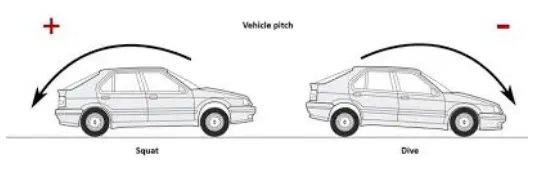
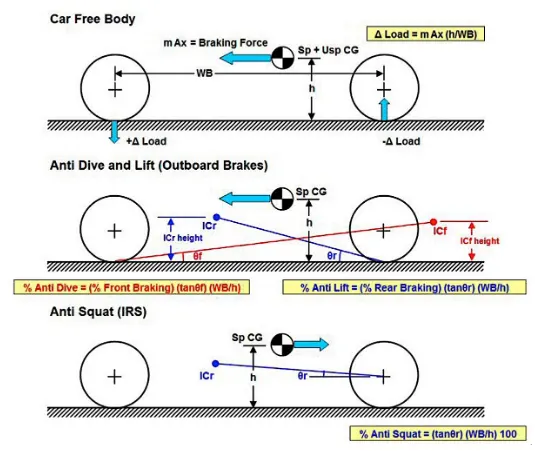
This pitching movement occurs due to load transfer from front to rear and vice versa leading to extension and compression of springs. Anti characteristic is a term that describes the longitudinal to vertical force coupling between sprung and unsprung mass. It is a geometry setup that uses the longitudinal forces (acceleration or braking) to eliminate the spring deflection caused due to vertical load change.
Anti-dive: Reduces the compression travel in the front suspension during braking.
Anti-squat: Reduces the compression travel in the rear suspension during acceleration.
Anti-lift: Reduces the rebound travel in the front suspension during acceleration and the rebound travel in the rear suspension during braking.
These anti characteristics are driven by side view instant center location i.e its angle and distance from wheel center. This instant center location is optimized during hard point tuning to achieve the desired anti characteristics. It denotes the fraction of longitudinal load transfer that occurs through suspension links and through springs. The net longitudinal load transfer remains the same as it is purely governed by the center of gravity height, vehicle weight and wheel base.
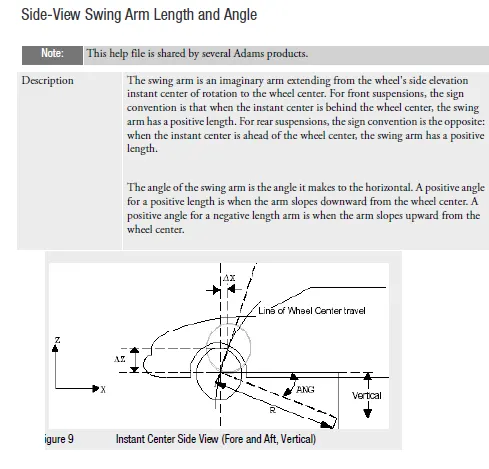
Adams sign convention:
-Steps:
Models:
-models are opened
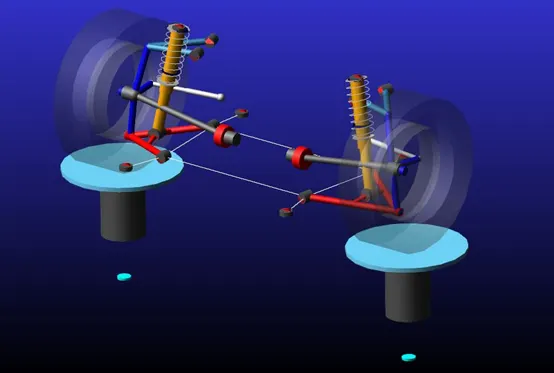
front sla suspension
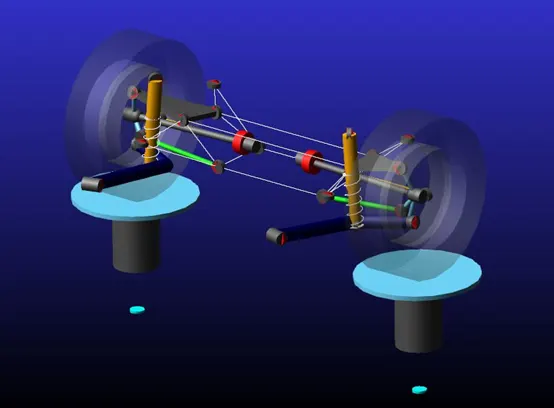
Rear multilink suspension
-Modifying adams springs to the given values
The front springs was modified to 100n/mm as given
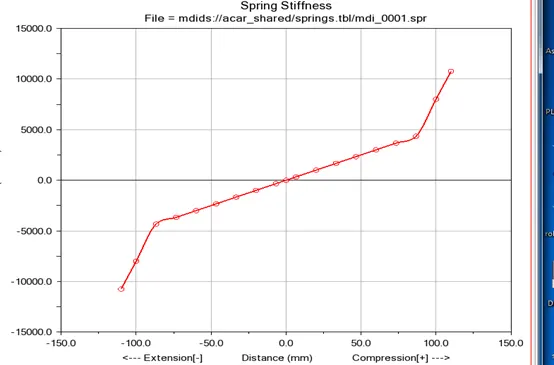
before modification
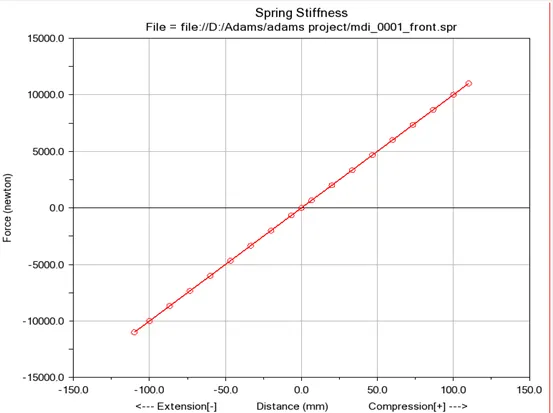
After modification (k=100n/mm)
-Rear springs were also modified to 125 n/mm
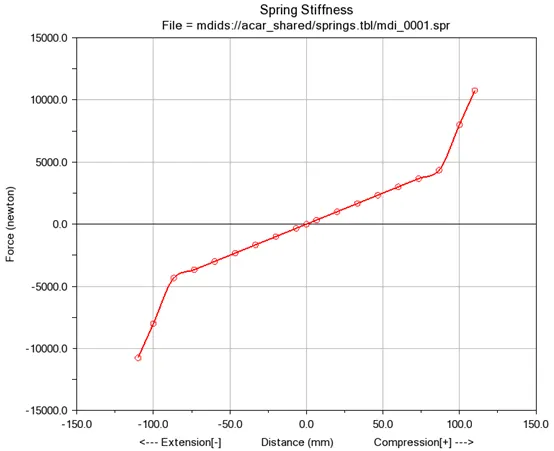
Original rear spring stiffness
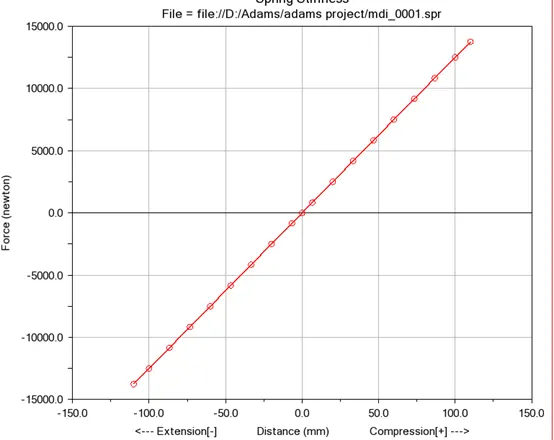
modified rear springs striffness (125 n/mm)
-Modifications of motion ratio:
The suspension hardpoints were modified to provide same motion ratio as what was given in the problem in order for the analytical results to be comparable with adams
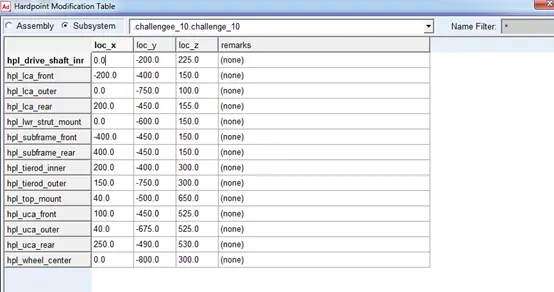
untuned front hardpoints table
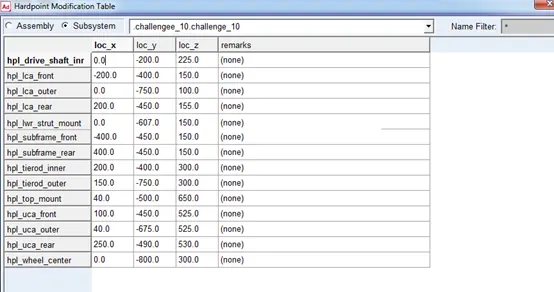
front suspension front hardpoint motion-ratio tuned table
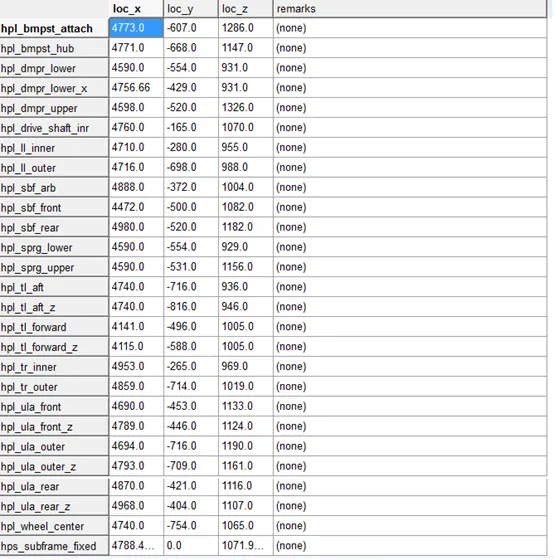
untuned hardpoints rear
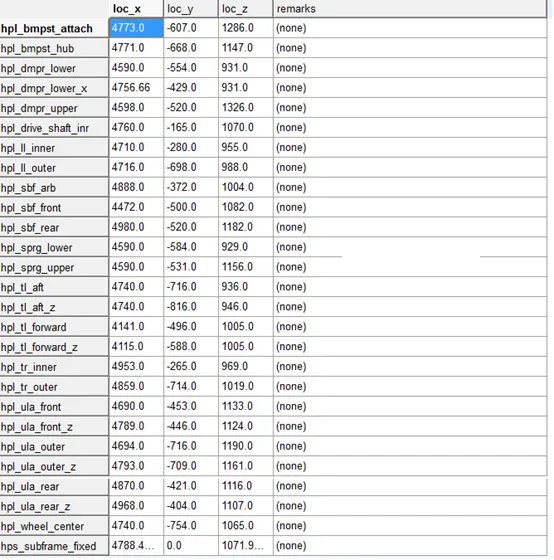
tuned rear motion ratio hardpoints
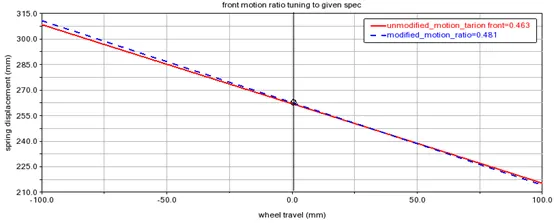
The front motion ratio was tuned 0.48 as given
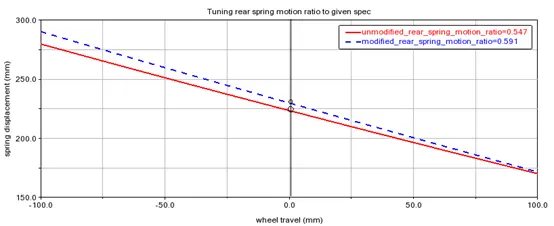
The rear motion ratio was tuned to 0.59 as given
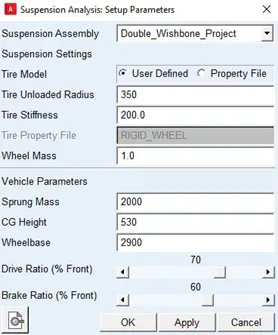
-inputting the front and rear suspension input parameters:
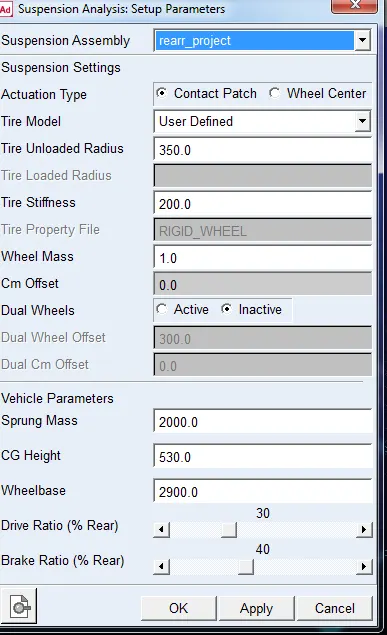
-Inputting the rear suspension input paramenters (Note: It was showcased correctly in the software as % rear)
-Then parallel wheel simulations is run
-Tuning hardpoints to achieve required targets:
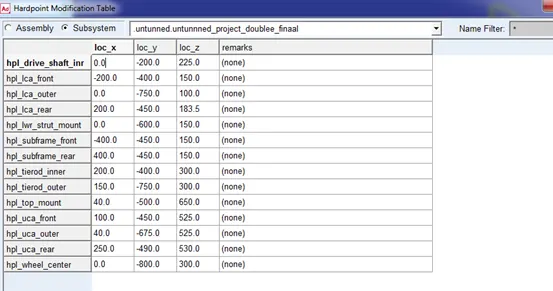
Front hardpoints target-tuned
tuned hardpoints rear to achieve targets
Output results:
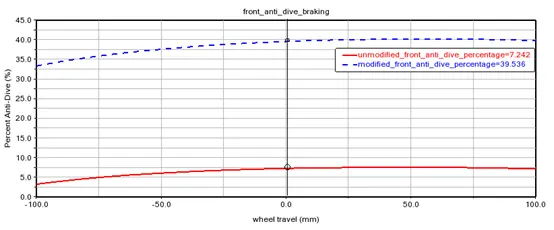
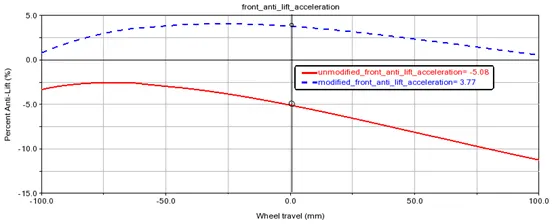
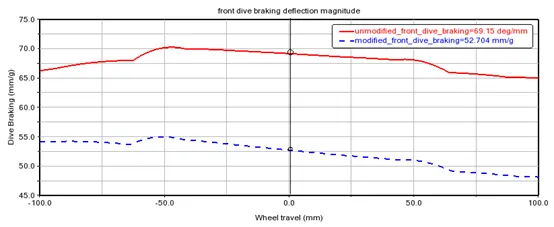
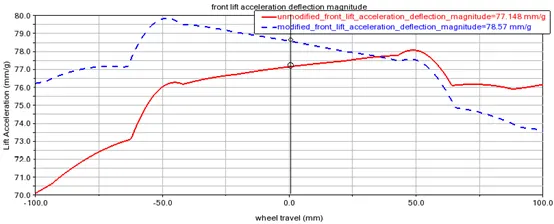
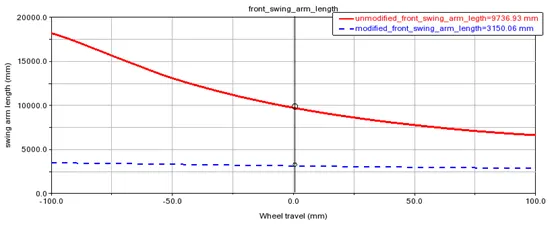
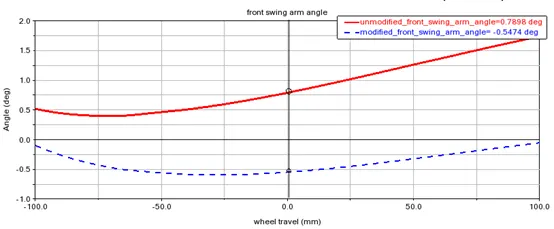
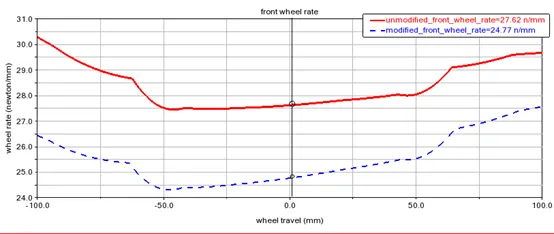
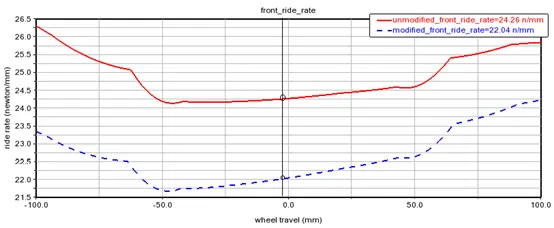
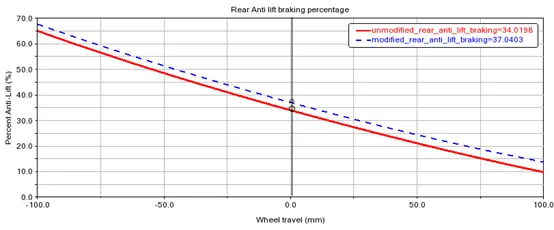
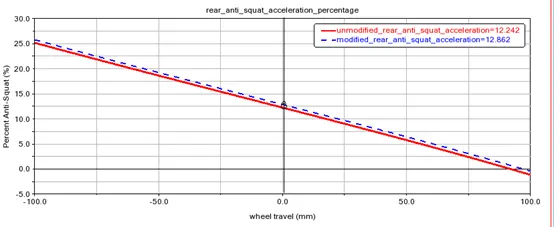
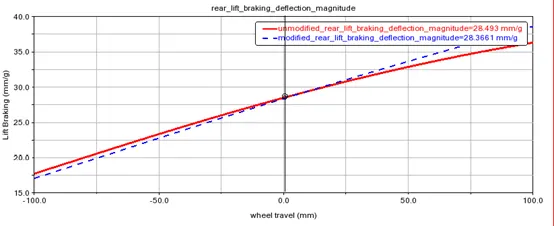
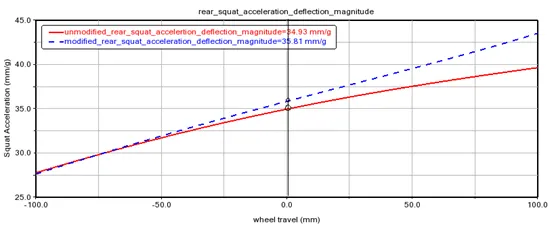
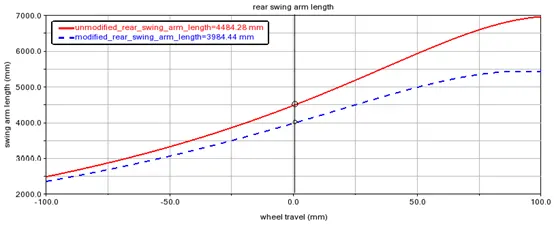
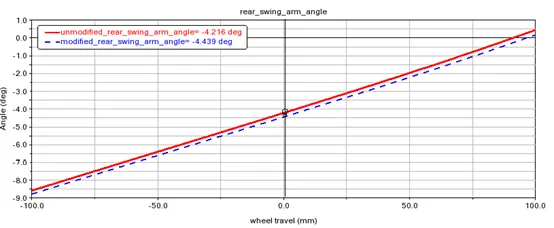
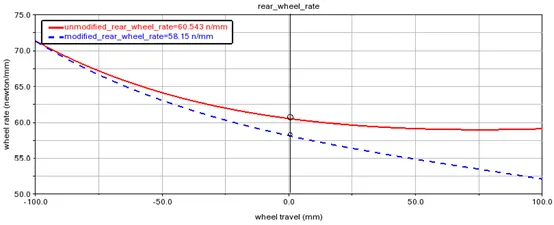
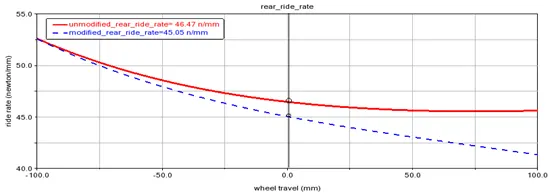
Target achievement and deviation:
Acceleration pitch gradient:
|
pitch gradient |
2.258594675 |
|
Target |
2.25 |
|
deviation % |
0.381985533 |
Braking pitch gradient:
|
pitch gradient |
1.608917 |
|
Target |
1.6 |
|
Deviation% |
0.557289 |
Files:
https://drive.google.com/drive/folders/1xvquNfPOJPzG720mUhj2G2uUpiJc05x9?usp=sharing