Carburetor: parts, diagram and how it works
A carburetor mixes petrol into the air an engine breathes, using nothing but the suction of the airflow. Here a simple carburetor, with the choke and idle circuit every real one adds, is modelled in 3D, cut open, pulled apart and run through idle, full throttle and a cold start, with every part labelled.
By Skill-Lync · Published 21 Nov 2026 · Teaching model built and rendered in Blender from code
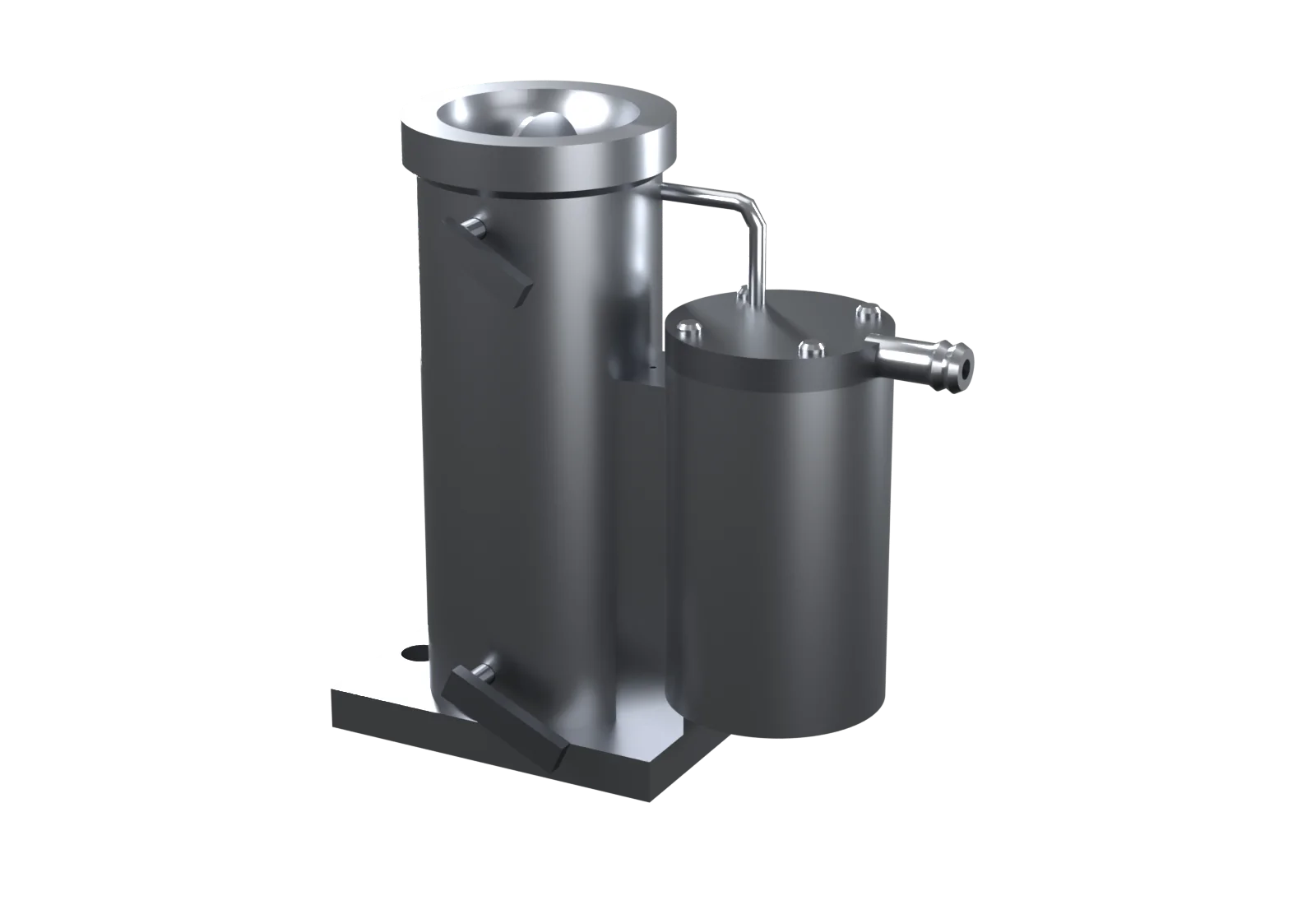
- 1Air inlet (air horn)
- 2Choke lever
- 3Barrel (venturi inside)
- 4Mounting flange
- 5Throttle lever
- 6Bowl vent
- 7Float-chamber cover
- 8Fuel inlet
- 9Float chamber
What is a carburetor?
A carburetor is a device that meters fuel into the air going into a petrol engine. Air flows through a narrow throat called a venturi, speeds up and loses pressure, and that suction draws petrol from a float chamber through a calibrated jet. A throttle valve below controls how much air-fuel mixture the engine gets, and so its power.
Think of drinking through a straw, except the "mouth" is fast-moving air. The faster the air, the harder it sucks, so more air automatically brings more fuel. No electronics, no pump pressure at the nozzle: just Bernoulli's principle and a fuel level held constant by a float.
Numbers from the worked example on this page, for a 1.2-litre engine; they are illustrative, not one product's specification.
What are the parts of a carburetor and their functions?
A simple carburetor has a float chamber with a float and needle valve, a main jet, a discharge nozzle, a venturi, a choke valve and a throttle valve. Every practical carburetor adds an idle circuit with an idle mixture screw. Fuel enters at the inlet, waits in the float chamber at a fixed level, and is drawn through the main jet and nozzle into the air in the venturi.
Inside a carburetor: labelled cutaway
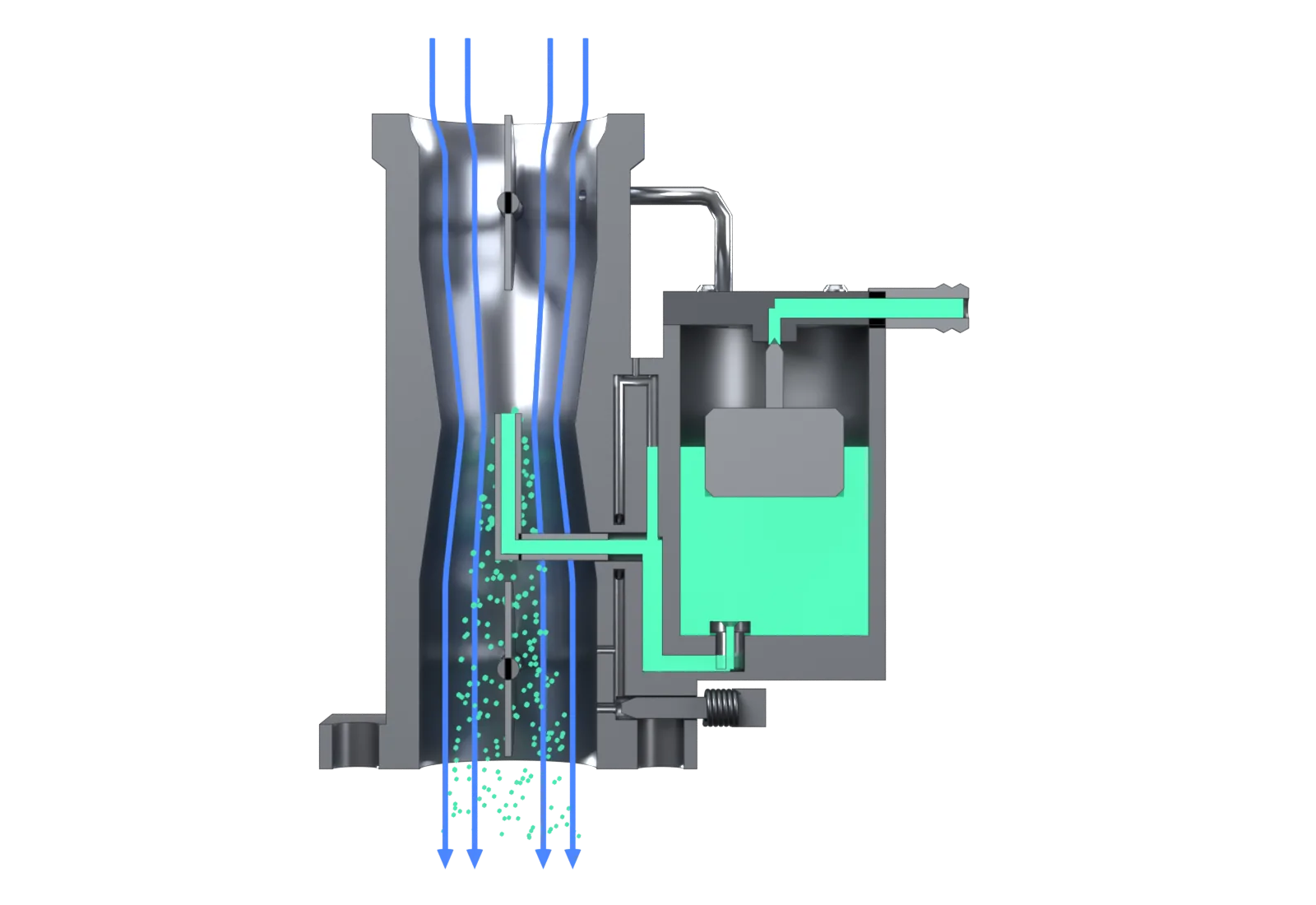
- 1Air in
- 2Choke valve
- 3Venturi (throat)
- 4Discharge nozzle
- 5Fuel spray
- 6Throttle valve
- 7Air-fuel mixture to the engine
- 8Bowl vent
- 9Fuel inlet
- 10Needle valve
- 11Idle passage
- 12Float
- 13Fuel level
- 14Fuel passage
- 15Main jet
- 16Idle port
- 17Idle mixture screw
| Part | What it does |
|---|---|
| Fuel inlet | The pipe nipple the fuel hose fits on. Fuel arrives from the tank by a pump or, on many bikes, by gravity. |
| Needle valve (float valve) | A tapered needle in a seat at the top of the float chamber. It lets fuel in when the level drops and shuts it off when the level is right. |
| Float | A hollow brass or plastic float on the fuel. As the level rises it pushes the needle shut, so the level stays constant: the reference every jet is calibrated against. |
| Float chamber (bowl) | Holds a small store of fuel at a fixed level and at near-atmospheric pressure, so the fuel delivered depends only on the venturi suction. |
| Bowl vent | Connects the space above the fuel to the air horn, so the float chamber sees the same air pressure as the carburettor inlet, even with a dirty air filter. |
| Main jet | A brass plug with a precisely sized hole at the bottom of the float chamber. Its size sets how much fuel flows for a given suction: the main tuning part. |
| Fuel passage (main well) | Carries metered fuel from the jet to the nozzle. At rest, fuel stands in it at the float-chamber level. |
| Discharge nozzle | The tube that ends in the venturi throat, a few millimetres above the fuel level. Fuel is drawn out of its tip only when air is flowing. |
| Venturi (choke tube) | The narrowed part of the barrel. Air speeds up through it and its pressure falls; that suction is what draws fuel from the nozzle. |
| Choke valve | A butterfly plate above the venturi. Closed for a cold start, it makes the whole barrel below it a strong vacuum, which gives a rich mixture. |
| Throttle valve | A butterfly plate below the venturi, linked to the accelerator or twist grip. It controls how much mixture the engine breathes, and so its power. |
| Idle passage and idle port | A small circuit that delivers fuel just below the nearly closed throttle, where vacuum is high at idle. A progression hole just above the plate edge smooths the move to the main circuit. |
| Idle mixture screw | A tapered screw that sets how much fuel the idle circuit passes, so the engine idles smoothly. |
| Mounting flange | Bolts the carburettor to the intake manifold, with a gasket so no unmetered air leaks in. |
How does a carburetor work?
The float and needle valve keep the fuel in the float chamber at a fixed level. When the engine draws air through the venturi, the air speeds up and its pressure drops, and the float chamber's higher pressure pushes fuel through the main jet and out of the nozzle into the air. The throttle sets how much mixture flows; the idle circuit and choke cover idle and cold starts.
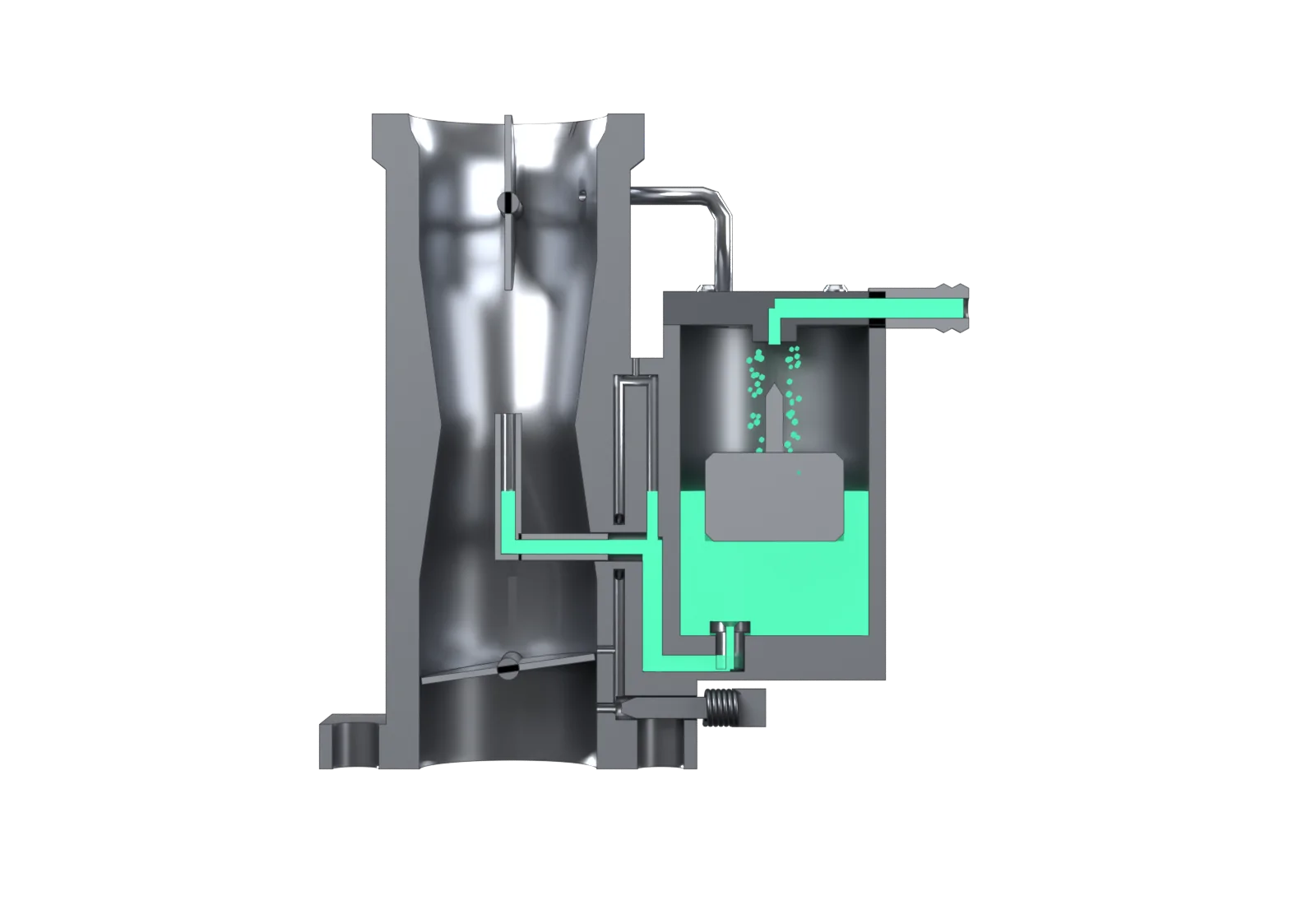
- 1Choke valve
- 2Venturi (throat)
- 3Discharge nozzle
- 4Throttle valve
- 5Fuel inlet
- 6Needle valve open
- 7Idle passage
- 8Float
- 9Fuel level low
- 10Main jet
- 11Idle port
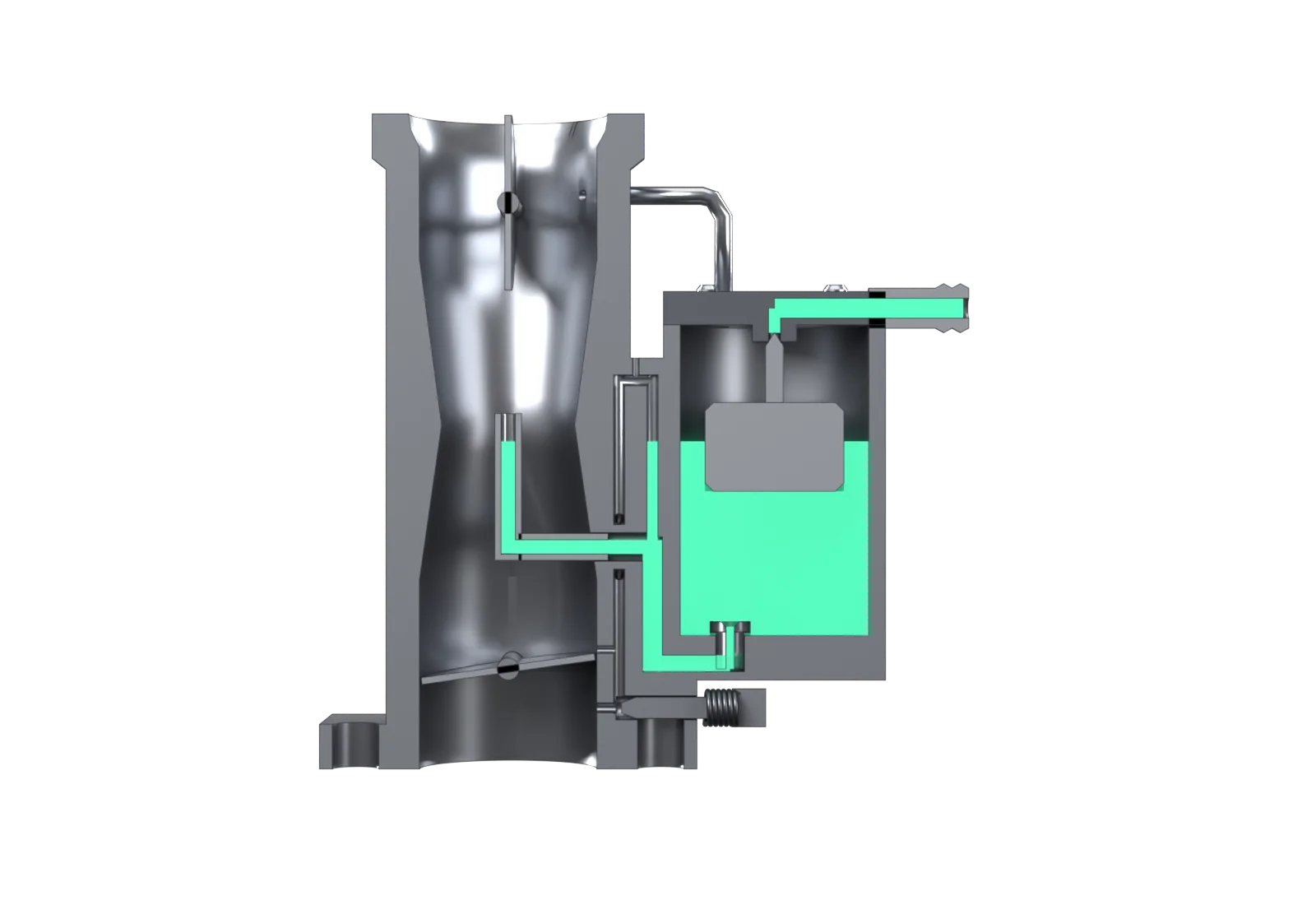
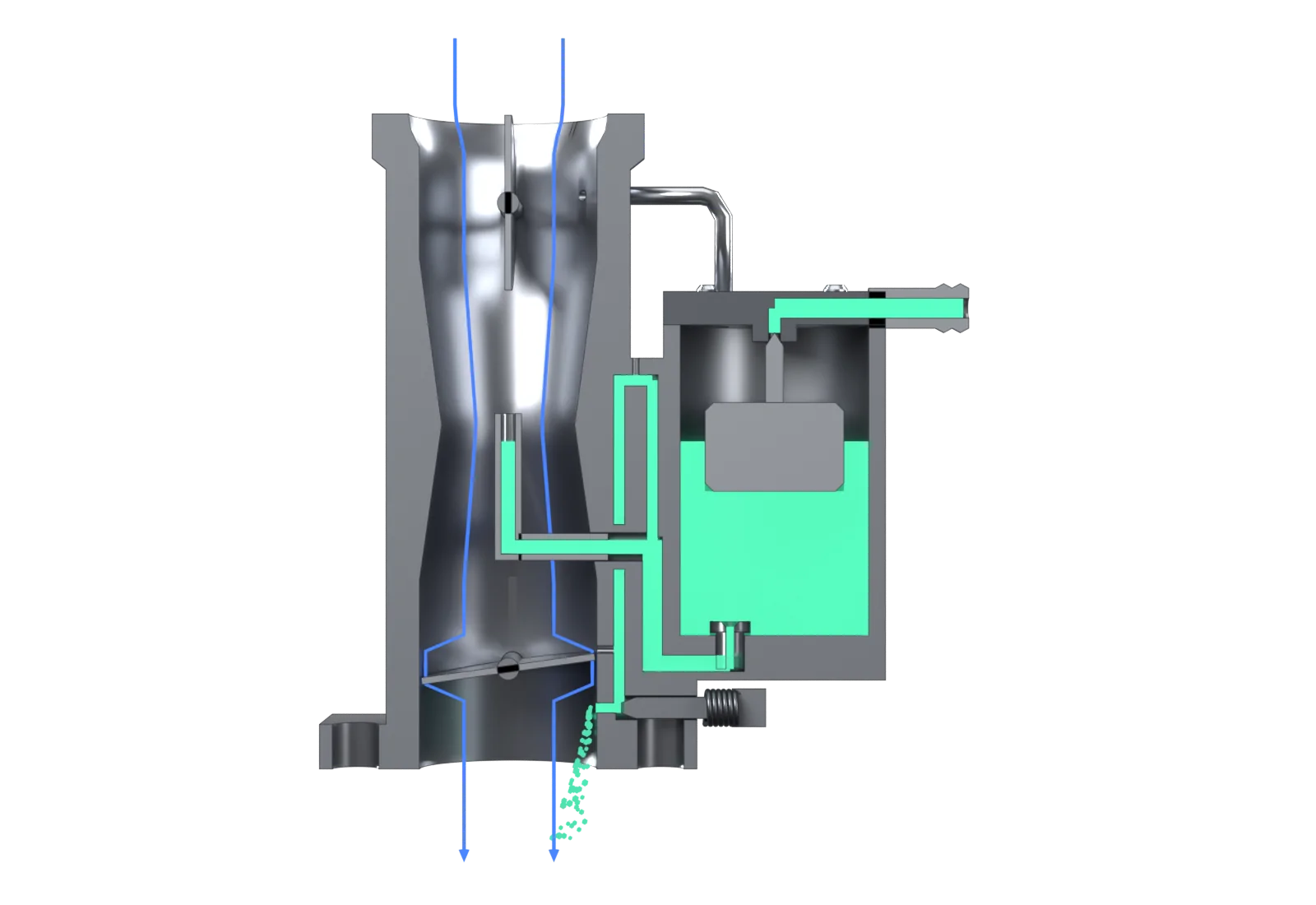
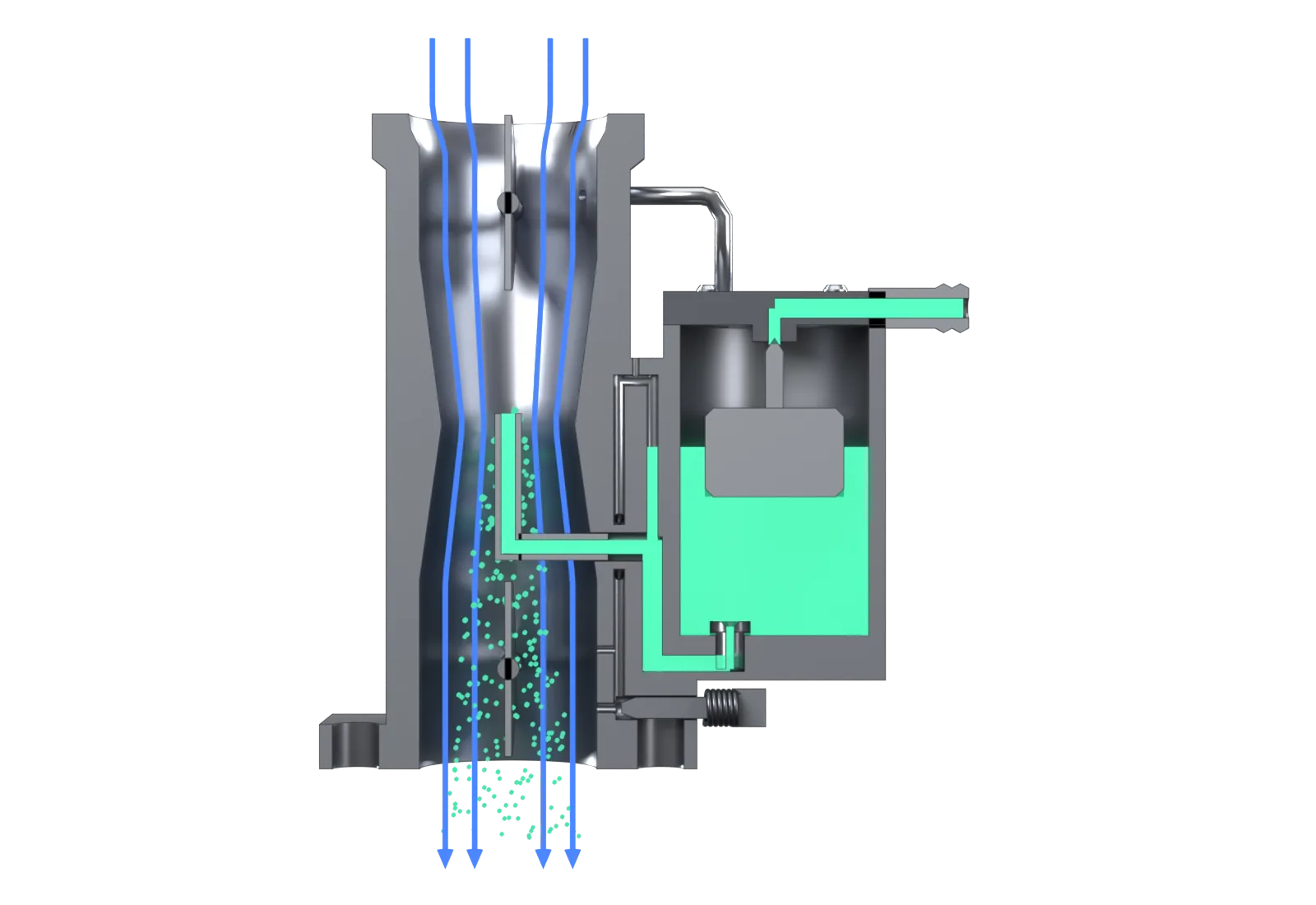
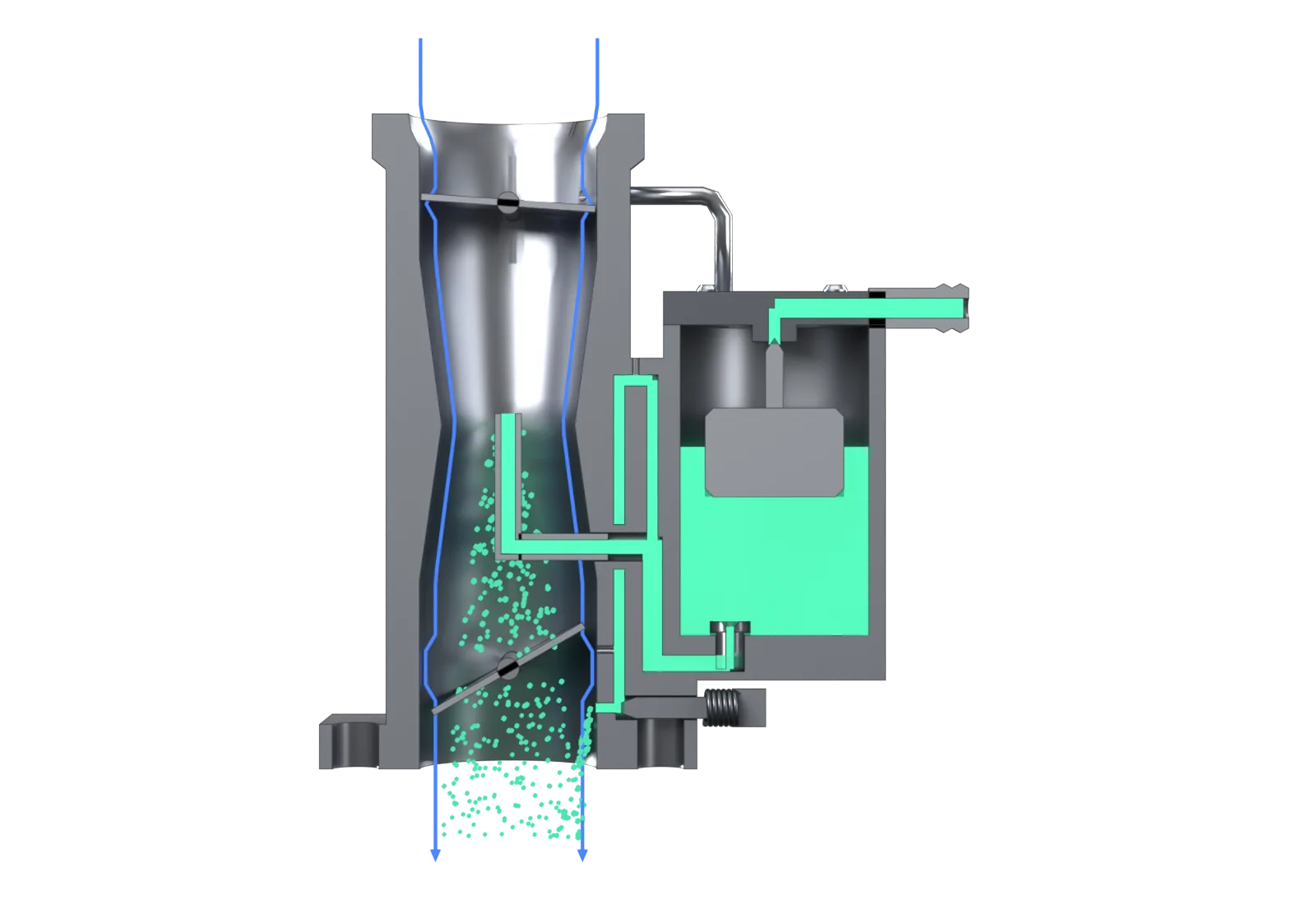
1. Float chamber fills. Petrol from the tank (pumped, or by gravity on many bikes) enters through the inlet. With the level low, the float hangs down and the needle sits off its seat, so fuel (mint) pours into the float chamber.
2. Float shuts the needle. As the level rises the float lifts and pushes the needle into its seat. The flow stops at a fixed level. Fuel also stands in the passages at that same level, a few millimetres below the nozzle tip, so nothing spills into the barrel when the engine is off.
3. Idle. At idle the throttle is almost closed. Air (blue) squeezes past its edges, so the airflow through the venturi is too weak to lift fuel to the main nozzle. Below the plate, though, manifold vacuum is strong, and it pulls fuel through the idle passage and out of the idle port. The idle mixture screw trims how much.
4. Throttle open. Open the throttle and air rushes through the venturi. It speeds up in the throat and its pressure drops (Bernoulli). The float chamber is still at about atmospheric pressure, so that difference pushes fuel up the nozzle and out as a spray that mixes with the air on its way to the cylinders. The more air, the more fuel.
5. Cold start: choke. On a cold engine much of the petrol condenses on cold walls, so it needs a much richer mixture to start. Closing the choke above the venturi puts the whole barrel below it under strong vacuum, which pulls extra fuel from the main nozzle and the idle port. Open the choke as the engine warms, or it runs rich and sooty.
The needle-valve opening and the drop in fuel level while filling are drawn larger than real so you can see them. Blue lines show the air path; mint is fuel.
Simple carburetor working principle, with numbers
Two equations describe a simple carburetor (they are the first-pass model in Heywood's Internal Combustion Engine Fundamentals, chapter 7). The venturi suction comes from the air speed in the throat, and the fuel flow comes from that suction minus the small head needed to lift fuel from the float level to the nozzle tip:
A worked example with round numbers: a 1.2-litre four-stroke engine at 5,500 rpm, volumetric efficiency 0.8, air at 1.2 kg/m³, takes in . Through a 24 mm throat with a discharge coefficient of 0.85, , so . For a full-load mixture of 13:1 (slightly rich, for power) the engine needs 4.06 g/s of petrol. Lifting petrol 5 mm costs , and with a jet discharge coefficient of 0.7 the main jet works out to about 1.47 mm across.
Now keep that jet and close the throttle. The suction falls with the square of the airflow, but the 36.8 Pa lift does not, so the mixture leans out and then stops altogether:
| Airflow (share of full load) | Air-fuel ratio from the main jet |
|---|---|
| 100% (full load) | 13.0 |
| 50% | 13.1 |
| 25% | 13.5 |
| 10% | 17.8 |
| below 6.8% | no fuel at all |
That is the simple carburetor's flaw, and the reason for the extra circuits on every real one: an idle circuit for near-closed throttle, compensating jets or air bleeds to hold the mixture steady across the range, an accelerator pump for sudden throttle openings, and a power circuit or valve for full load.
Incompressible model: at 7.9 kPa suction the air density changes by a few per cent, which a full analysis includes. Petrol taken as 750 kg/m³. Every number here is checked by a script kept with the model files.
Try the carburettor calculator: it opens on this example and sizes the throat and jet for your own numbers, with and without compressibility.
Carburetor exploded view: how the parts fit together
The float-chamber cover lifts off with the fuel inlet and the vent tube, which frees the float needle and the float. The main jet unscrews from below the float chamber, the idle mixture screw and its spring come out sideways, and the choke and throttle plates come off their shafts. The discharge nozzle is pressed into the body.
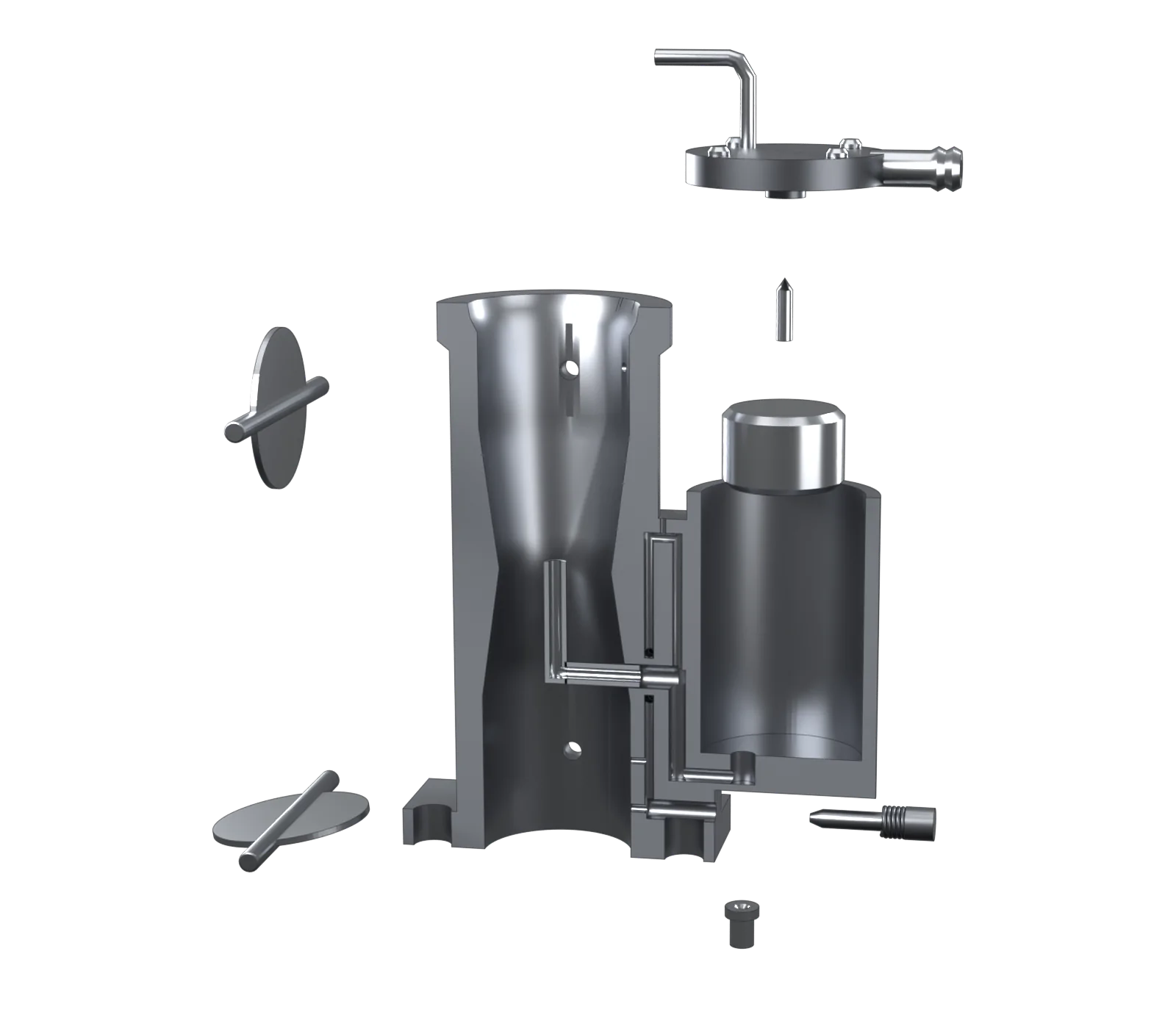
- 1Body (sectioned)
- 2Choke plate and shaft
- 3Discharge nozzle
- 4Throttle plate and shaft
- 5Bowl vent tube
- 6Fuel inlet
- 7Float-chamber cover
- 8Float needle
- 9Float
- 10Idle mixture screw
- 11Main jet
Carburetor dimensions: front and top views
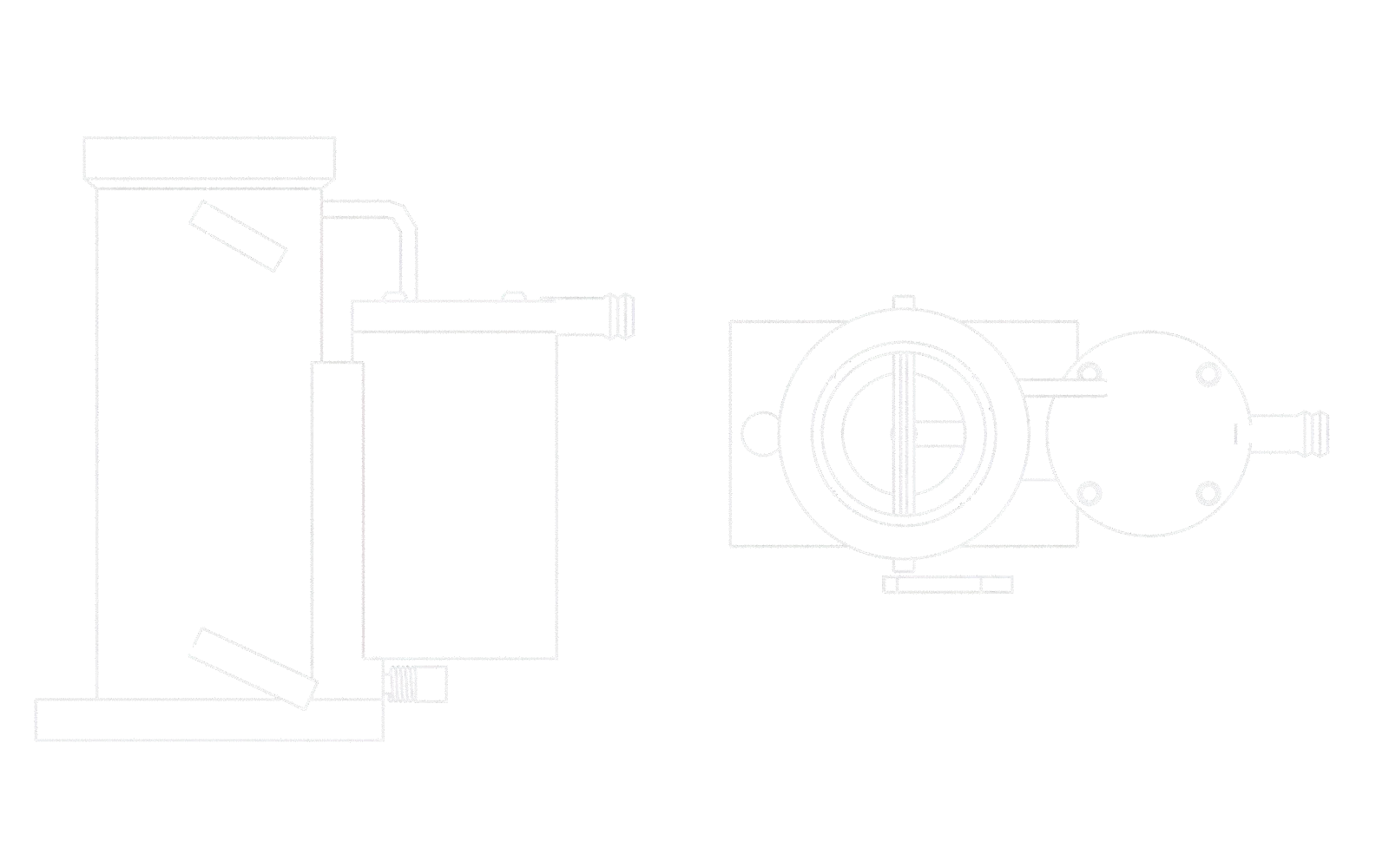
| Dimension | Value | Basis | |
|---|---|---|---|
| A | Overall height, mounting face to air inlet | 118 mm | This model |
| B | Overall width, flange edge to fuel inlet | 117 mm | This model |
| C | Bore (barrel) diameter | 32 mm | This model, a common size for a small car carburetor barrel |
| – | Venturi throat diameter (inside, see the cutaway) | 24 mm | This model; used in the worked example |
| – | Nozzle tip above the float-chamber fuel level | 5 mm | This model ("slightly below the tip" is the textbook rule) |
What are the types of carburetors?
Carburetors are classified by the direction of airflow (updraft, downdraft, side-draft or horizontal), by the venturi (fixed venturi, like this one, or variable venturi: slide and constant-vacuum types), and by the number of barrels (single, twin or four-barrel). Motorcycles mostly use variable-venturi slide or CV carburetors; older cars used fixed-venturi downdraft ones.
| Type | How it works | Typical use |
|---|---|---|
| Simple (elementary) carburetor | Float chamber, one jet, venturi, throttle: this page's core | The textbook model; real carburetors add circuits |
| Downdraft, fixed venturi | Air flows down through a fixed throat; extra circuits correct the mixture | Older cars (single, twin-barrel progressive) |
| Side-draft (horizontal) | Barrel horizontal, so the carburetor fits low beside the engine | Motorcycles, sports cars |
| Updraft | Air flows up through the carburetor into the engine | Old tractors, some aircraft and stationary engines |
| Slide (variable venturi) | The throttle cable lifts a slide that is both throttle and venturi; a tapered needle on it meters the main fuel | Older Indian motorcycles and scooters |
| Constant vacuum (CV) | The rider opens a butterfly; engine suction lifts a piston that sets the venturi size | Many Japanese and BMW motorcycles (Keihin CV, Bing CV); SU on British cars |
Carburetor in a bike: what is different?
A motorcycle or scooter carburetor works on the same venturi principle, but most use a slide instead of a butterfly throttle. Twisting the grip lifts the slide, which opens the venturi and raises a tapered jet needle out of the main fuel passage, so fuel delivery follows the slide position. Petrol usually reaches it by gravity from the tank, through a fuel tap.
The float chamber, float, needle valve, main jet, pilot (idle) circuit and choke are all there, just packed tightly around the slide. Common bike carburetor jobs are cleaning blocked jets, checking that the float and needle hold the right level, and setting the idle with the idle mixture screw and the idle speed screw. In India, new two-wheelers moved to fuel injection when BS-VI emission norms came in on 1 April 2020; carburetors live on in older bikes, small engines and generators.
Carburetor vs fuel injector: which is better?
A fuel injector is more accurate: the ECU times every injection from sensors and corrects it with an oxygen sensor, so mileage, cold starts and emissions are better and the mixture doesn't drift with altitude. A carburetor is simpler, cheaper and easy to repair with basic tools, but its mixture only roughly follows the load, which is why modern emission norms ended it in new vehicles.
| Carburetor | Fuel injector | |
|---|---|---|
| Meters fuel by | Venturi suction through fixed jets | ECU pulse width at constant pressure |
| Mixture control | Open loop; jets sized for average conditions | Closed loop with the oxygen (lambda) sensor |
| Cold start | Choke, by hand or by a thermostat | ECU adds fuel from the coolant temperature |
| Altitude | Runs rich in thin air unless rejetted | Corrected from air pressure sensors |
| Repair | Clean, rejet and adjust with hand tools | Needs diagnostics; injectors are replaced or ultrasonically cleaned |
See the injector taken apart the same way: fuel injector in 3D.
Common carburetor problems and their symptoms
Most carburetor faults are dirt, varnish from old petrol, or a float level that is off. They show up as hard starting, a rough or hunting idle, hesitation when you open the throttle, black smoke and poor mileage (too rich), or popping and overheating (too lean).
| Problem | Cause | Symptoms |
|---|---|---|
| Flooding | Needle valve held open by dirt, worn needle or seat, float set too high or punctured | Fuel dripping from the carburetor, strong petrol smell, hard starting, black smoke |
| Blocked main jet | Dirt or varnish from stale petrol | Engine idles but dies or splutters when the throttle opens; lean running at speed |
| Blocked idle circuit | The idle passage and port are tiny and clog first | Won't idle unless the choke is on or the throttle held open |
| Choke stuck or left on | Sticking linkage or forgotten manual choke | Rich running, sooty spark plug, poor mileage, black smoke |
| Air leak | Loose mounting, perished gasket or intake rubber | High or hunting idle, lean misfire |
| Carburetor icing | Fuel evaporation and the pressure drop in the venturi chill the air; moisture freezes in the throat in cool, humid weather | Gradual power loss, rough running; aircraft use carburetor heat to clear it |
Where are carburetors used?
Carburetors fed most petrol cars until the 1990s (later in India) and most Indian two-wheelers until BS-VI in April 2020. Today they are mostly found in older vehicles, lawn mowers, chainsaws and other small engines, portable generators and water pumps, and many piston aircraft engines.
Carburetor interview and viva questions
Why does a simple carburetor run lean at low airflow and need an idle circuit?
The venturi suction grows with the square of the airflow, but part of it is used up lifting fuel from the float level to the nozzle tip. At low flow that fixed head is a large share of the suction, so the fuel flow falls faster than the air; below a few per cent of full flow no fuel comes out at all. An idle circuit feeds fuel below the throttle, where vacuum is high at idle.
If the main jet diameter is increased by 10%, how much richer does the mixture get?
Jet flow is proportional to its area, so a 10% larger diameter passes about 21% more fuel (1.1² = 1.21) at the same suction. The air-fuel ratio drops by the same factor, from 13.0 to about 10.7 in our example: far too rich. That is why jets come in small steps.
Why does a carbureted engine run rich at high altitude?
Thinner air has lower density. For the same volume flow the air mass drops, but the venturi suction (½ρv²) drops only in proportion to density while the fuel flow follows the square root of that suction, so fuel mass falls less than air mass. The mixture goes rich, which is why carbureted vehicles were rejetted for hill stations and aircraft carburetors have a mixture control.
What is the purpose of the accelerator pump?
When the throttle snaps open, air speeds up instantly but the heavier fuel lags behind, and the mixture goes momentarily lean, causing a hesitation or stumble. An accelerator pump squirts a small extra shot of fuel into the venturi at that moment.
About this 3D model
This is a teaching model of the textbook simple carburetor, not a CAD replica of a product. It keeps the parts students are asked to sketch (float chamber, float, needle valve, main jet, nozzle, venturi, choke and throttle) and adds an idle circuit and a bowl vent, because every working carburetor has them. The float sits in the middle of the chamber under the needle, as in the textbook diagram; real floats are guided or, more often, hinged on a lever, and the guide is left out here. Compensating jets, the accelerator pump and the power circuit are left out for clarity. Sizes are proportioned for a small single-barrel car carburetor (32 mm bore, 24 mm venturi). Skill-Lync modelled and rendered it in Blender entirely from code, so it can be checked and re-rendered.
Related Skill-Lync courses and reading
- IC Engine Calibration using GT-POWER and GT-SUITEAir-fuel ratio, fuel and spark maps and engine models, the way calibration engineers set them today.
- Internal Combustion Engine Analyst course using Python and CanteraEngine cycles, combustion chemistry and mixture strength, worked in Python.
- Advanced CFD for IC Engine Applications using CONVERGESimulate intake flow, fuel spray, mixing and combustion inside the engine.
- Automotive Systems and Controls using MATLAB/SimulinkThe electronic side that replaced the carburettor: sensors, actuators and engine control logic.
- Fuel injector in 3D: parts, cutaway and how it works
- Turbocharger in 3D: parts, cutaway and how it works
- Fuel injection in petrol (SI) engines: TBI, MPFI and GDI
- How an IC engine works: four strokes and real engine numbers
- CFD project: transient simulation of flow over a throttle body
- Engine knocking: causes, diagnosis and fixes
- Automobile engineering book, chapter 6: carburettor, MPFI and GDI
- More parts in 3D: all engineering components
FAQs
What are the main parts of a carburetor?
A simple carburetor has a fuel inlet, a float chamber with a float and needle valve that hold the fuel level constant, a main jet that meters the fuel, a discharge nozzle that ends in the venturi, a venturi that creates suction, a choke valve above it and a throttle valve below it. Practical carburetors add an idle circuit with an idle mixture screw, and often an accelerator pump and a power enrichment circuit.
What is the working principle of a carburetor?
Bernoulli's principle. Air speeds up through the narrow venturi and its pressure drops below that of the float chamber. That pressure difference pushes fuel through the main jet and out of the nozzle into the air stream. More airflow gives more suction and so more fuel, which keeps the mixture roughly in proportion.
Why is the nozzle tip kept above the fuel level in the float chamber?
So that fuel cannot run out of the nozzle when the engine is stopped or the vehicle tilts. The air flow has to create enough suction to lift fuel those few millimetres before any flows. In our worked example 5 mm of petrol needs 36.8 Pa, which the venturi only reaches above about 7% of full-load airflow; below that the idle circuit takes over.
How does a carburetor work in a bike?
Most older motorcycles and scooters use a slide carburetor: the throttle cable lifts a slide that changes the size of the venturi itself, and a tapered needle on the slide opens the main fuel passage more as it rises. Some bikes use a constant-vacuum (CV) carburetor, where the rider opens a butterfly and engine suction lifts the slide. The float chamber, jets, idle circuit and choke work as on this page.
What is the difference between a carburetor and a fuel injector?
A carburetor lets airflow suck fuel through fixed jets, so the mixture only roughly follows the load and drifts with altitude and temperature. A fuel injector is an electrically opened valve: the ECU decides how long it opens from sensor readings and corrects the mixture with an oxygen sensor. That precision is why BS-VI vehicles sold in India since 1 April 2020 use fuel injection.
What does the choke do in a carburetor?
It enriches the mixture for a cold start. Closing the choke plate above the venturi makes the whole barrel below it a strong vacuum, so the nozzle and idle port deliver much more fuel than usual. Cold walls condense part of the petrol, so the extra fuel makes sure enough vapour reaches the spark plug. Leaving it on after warm-up wastes fuel and fouls plugs.
Sources
- J. B. Heywood, Internal Combustion Engine Fundamentals, McGraw-Hill, chapter 7 (mixture preparation): carburetor air-flow and fuel-flow equations, the elementary carburetor's limits and the added idle, compensation, enrichment, accelerator-pump and choke systems
- Wikipedia: Carburetor (float valve, choke and idle circuit; used as a starting point)
- Wikipedia: SU carburettor (variable-venturi piston carburetors, Keihin CV and Bing CV)