Mechanical · Course

IC Engine Calibration using GT-POWER and GT-SUITE

A comprehensive course on I.C Engine Calibration using GT-SUITE. This course is highly suited for beginners

Duration
12 weeks
Content
19 hours
Projects
3
Mode
Online
Overview

What you'll
be able to do.

IC Engine Calibration using GT-POWER and GT-SUITE is an online course from Skill-Lync: 12 weeks, 19 hours of content and 3 industry projects.

  • GT-POWER and GT-SUITE come under the system-simulation domain as it employs sophisticated algorithms to solve fluid flow equations in complex electromechanical systems.
  • Students who aspire to work for Automotive OEMs as calibration engineers targeting internal R&D projects can choose to opt for this course.
  • This course aims to impart the methodology that goes behind performing such calibrations and analyzing their result.

Revise the theory first: free interactive book

Thermal Engineering: 22 chapters mapped to the Anna University, VTU, SPPU, Mumbai University and KTU syllabi, with interactives and worked examples.

Curriculum

12 modules,
built with industry.

Get the full syllabus ↓
  1. 01IC Engine Calibration using GT-POWER and GT-SUITE12 modules
    1. Introduction to GT-POWER and GT-SUITEW01
      • GT-POWER is the industry's first choice when reliable results are needed for engine thermodynamics and combustion/emissions development. The intelligent integration of modules within it [GEM 3D; Cool 3D; GT - VTD; GT - TAItherm ] coupled with Simulink, Star CD, Converge, Fluent and other codes facilitate easy solutions for complex tasks early in the development phase and provide unparalleled accuracy during the detailed design phase.
        • Need of a 1D thermodynamic simulation tool
        • Overview of GT-POWER, GT valve train, GT cool, GT drive, etc.
        • Introduction to GUI
        • Templates and libraries
        • Representation of engine parts
        • Implicit vs Explicit approach
        • Navier Stoke equation relevance
    2. SI Engine Modelling TechniquesW02
      • Over the past decade, there has been an increase in air pollution all around the globe, as well as a recognition that fossil fuels will not be available forever. This has inspired OEMs to develop electrified powertrains. But, this has also opened the door to investigating new technologies that could significantly improve the ‘old-fashioned’ combustion engine in both efficiency and emissions.
      • In this section, you will get an in-depth look at the functioning of SI Engine operations.
        • Challenges in SI engine modelling
        • Combustion modelling approach
        • Port injection and gasoline direct injection approach
        • Tumble modelling
        • Gas exchange modelling and analysis
    3. Case Study on SI EngineW03
      • Virtual prototyping is an efficient and effective way to test new ideas.
      • In this module, you will look into some aspects of the SI Engine, including the basics of fuel spray in the combustion chamber, spray and wall film models accounting for premixed and sooting diffusion combustion, detecting knock, and precise heat transfer modeling.
        • Engine specifications for modelling
        • Prediction of performance and emissions
    4. CI Engine Modelling TechniquesW04
      • Understanding the mechanics of modelling combustion in a CI engine. These solutions play an integral role in engine simulations to accurately predict performance, fuel consumption, and engine-out emissions. Various models are available to predict combustion and pollutant formation based on in-cylinder conditions, knock, cycle-to-cycle variation (CCV), and other related processes.
        • Challenges in CI Engine Modelling
        • DI Pulse Combustion Modelling Approach
        • Swirl Modelling
        • Turbocharger Modelling
    5. Case Study on CI EngineW05
      • To further our understanding by modelling an ‘On road’ application by calibrating critical CI Engine concepts such as ignition delay time for mixtures of air, fuel, and residual gases using detailed kinetics.
      • This challenge enables the user to understand the correlations for ignition delay (CI) or knock (SI) that consider the effect of pressure, temperature, equivalence ratio, residual gas fraction, fuel composition, etc.
        • Engine specifications for modelling
        • Performance and emission prediction
    6. Turbocharger and Supercharger ModellingW06
      • Turbocharging allows automakers to reduce engine size and emissions while continuing to deliver the power and performance consumers demand.
      • Students will be taken across the turbine and compressor mechanics to understand the fluid flow and to improve overall engine performance, reduce pollutant formation, optimise NVH and ensure component durability.
        • Fixed geometry TC modelling
        • Wastegate TC modelling
        • Variable geometry turbine modelling
        • Two stage turbocharger modelling
        • Supercharger modelling
        • eTurbo modelling
    7. Case Study on FRM BuilderW07
      • GT-POWER engine models and their validated solution methodologies, can be used by the controls system engineer for ECU development, calibration, and testing to generate a fast running, real-time capable engine plant model.
      • With seamless integration to Simulink and the most popular real-time software tools, controls engineers are empowered with the ability to run fully physical, crank angle resolved models, capable of predicting pressure wave dynamics and in-cylinder combustion in a real-time environment.
      • Advanced control strategies, such as combustion control, can now be tested with a detailed physical engine model at significantly faster computation speeds with minimum effort and maximum accuracy, predictiveness, and fidelity.
        • Introduction to FRM builder
        • Modeling of various engines using FRM builder approach
        • Crank-angle resolved, physically conservative formulation for accurate results
        • Built-in DOE and Neural Network trainer for MV model development
    8. Aftertreatment Modelling TechniquesW08
      • The starting point for the development and optimisation of exhaust gas aftertreatment systems is 1D simulation.
      • GT’s Quasi-steady state AFT solver offers unmatched modelling depth, simple model setup, and extremely short simulation times-faster than real-time if desired.
      • It solves the very demanding fluid flow, heat transfer, and chemical reactions taking place in the aftertreatment systems of modern IC engines by employing the most advanced set of physics and chemistry models.
        • An introduction to chemical kinetics
        • Modelling of precious metal catalysts
        • Pre-defined test cases and scenarios
    9. Case Study on 3-way Cat DOC DPF and SCR SystemW09
      • For the detailed 1D and 2D design of exhaust gas after-treatment components, GT-SUITE offers outstanding capabilities for modelling all relevant physics and chemistry. This makes it a crucial element in the design, development and optimization of both diesel and gasoline after-treatment devices.
      • Together with GEM 3D, it forms a unique and dependable 1D/3D solution that can be applied consistently throughout the layout, concept and detailed design stages in both component and system development to provide a seamless development approach with the reuse of models and results among tools, assuring maximum consistency and efficiency. The after-treatment system performance data integrated into in-vehicle models is used to predict drive cycle emissions.
        • Modelling 3-way cat con
        • Modelling DOC
        • Modelling DPF
        • Modelling SCR
    10. Optimization TechniquesW10
      • Every GT license includes full access to a built-in optimizer that allows optimization of any combination of model inputs (factors) to maximize, minimize, or target any single or multiple model outputs (responses).
      • Key features include Multiple local and global search algorithms to explore design trade-offs among multiple competing responses and constraints with the multi-objective Pareto optimization tool and the NSGA-III [Genetic search algorithm].
        • Design of experiments
        • Single-factor optimization
        • Multi-objective optimization
        • Case study on gas exchange optimization
    11. Discretization TechniquesW11
      • GEM3D is a 3D graphical pre-processor that combines building and importing tools used to create 1D GT-SUITE models from 3D geometries. From primitive components like pipes, flowsplits, etc. it can also be used to import 3D CAD models from other applications, like GT-SPACECLAIM.
        • Introduction to SPACECLAIM
        • Overview of GEM 3D
        • Discretizing intake manifold
        • Discretizing exhaust manifold
    12. Hybrid Engine ModellingW12
      • Build any hybrid configuration with any level of electrification, including but not limited to: 48-volt mild hybrids with an electric boost, strong power-split hybrids (HEV), parallel through-the road (TTR) plug-in hybrids (PHEV), or battery electric vehicles (BEV) using a comprehensive control library, including finite state machines in GT-SUITE, or co-simulate with Simulink to develop and optimise control algorithms.
        • Overview of hybrid system configuration
        • Modeling of P0 and P1 configurations
        • Built-in optimization and DOE tools to evaluate architectures, components, and control strategies.
Industry projects

3 projects
you'll ship.

Our projects are designed by experts in the industry to reflect industry standards. By working through our projects, Learners will gain a practical understanding of what they will take on at a larger-scale in the industry. In total, there are 3 Projects that are available in this program.

Thermodynamic Analysis of a Commercial Application Tractor Engine

Thermodynamic Analysis of a Commercial Application Tractor Engine

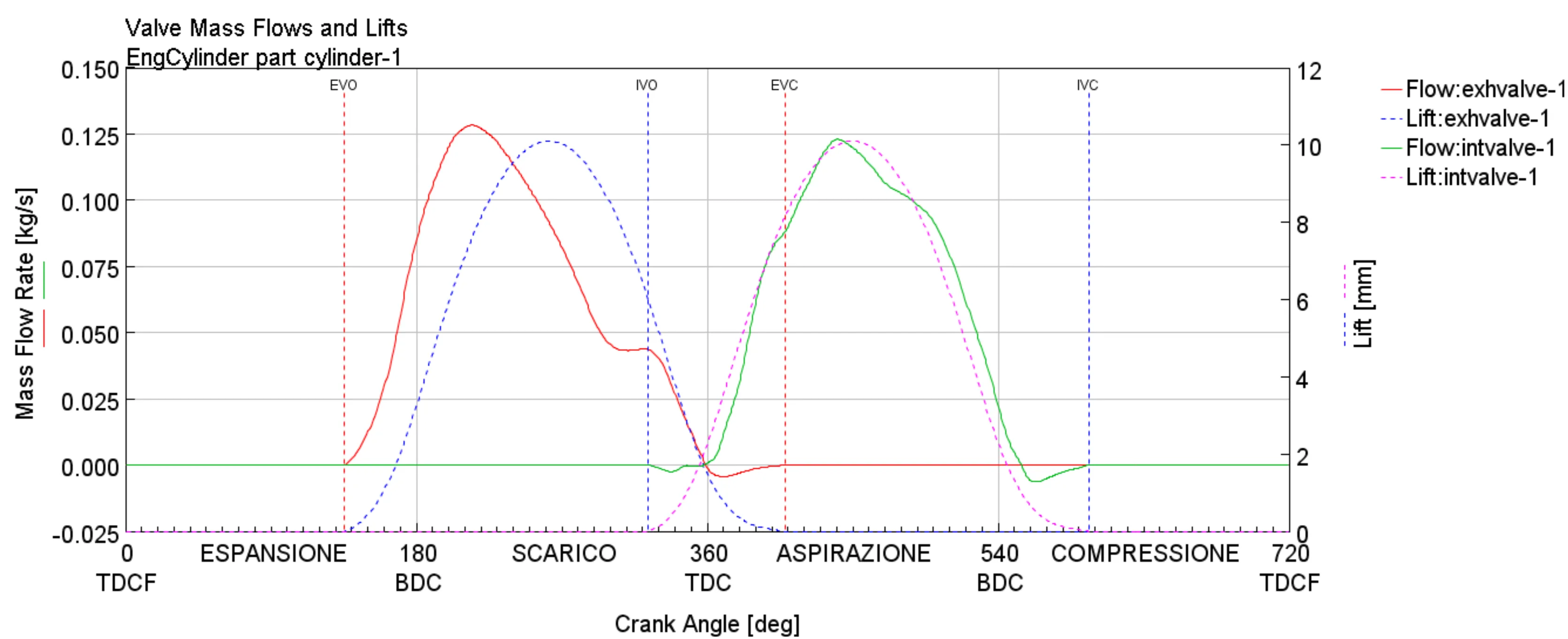
This project is a case study on a CI engine. The student will calibrate and simulate a tractor engine to study its performance and emission characteristics.
Modelling of an AFT System

Modelling of an AFT System

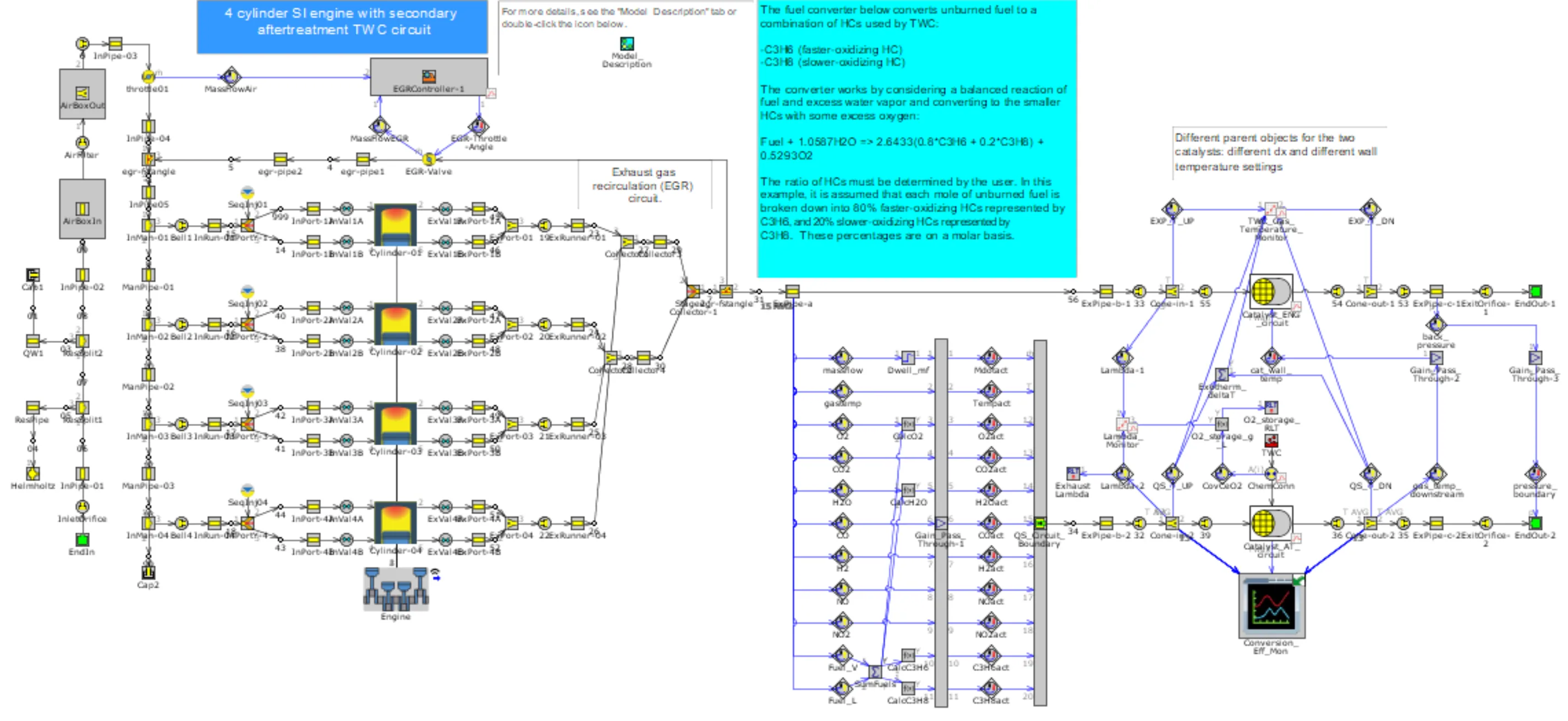
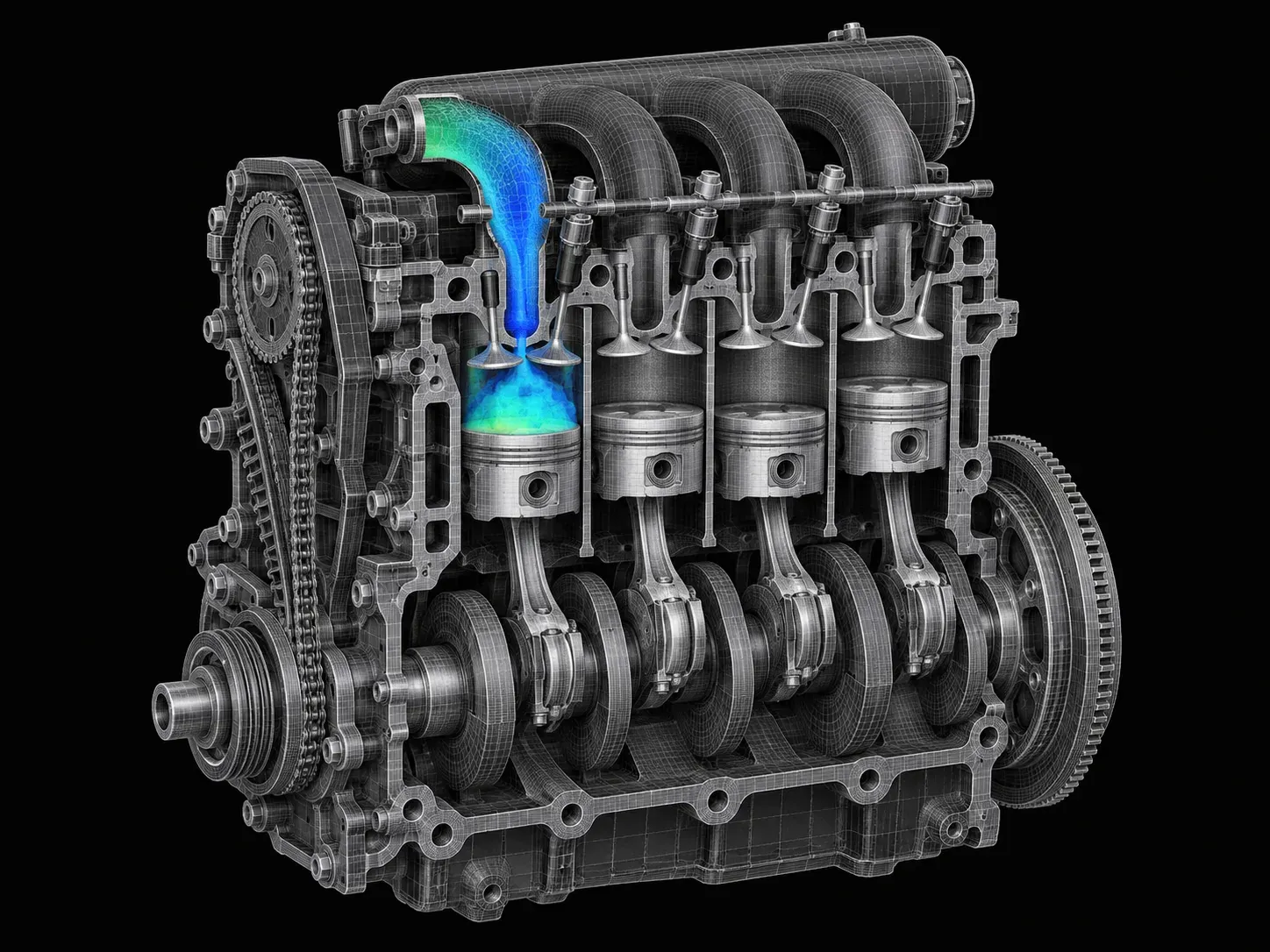
This project is a case study on AFT system. Here, the students will model AFT circuit systems for SI and CI Engines and study the engine emission characteristics.
Optimization using GT- Suite’s IDO [Integrated Design Optimizer]

Optimization using GT- Suite’s IDO [Integrated Design Optimizer]

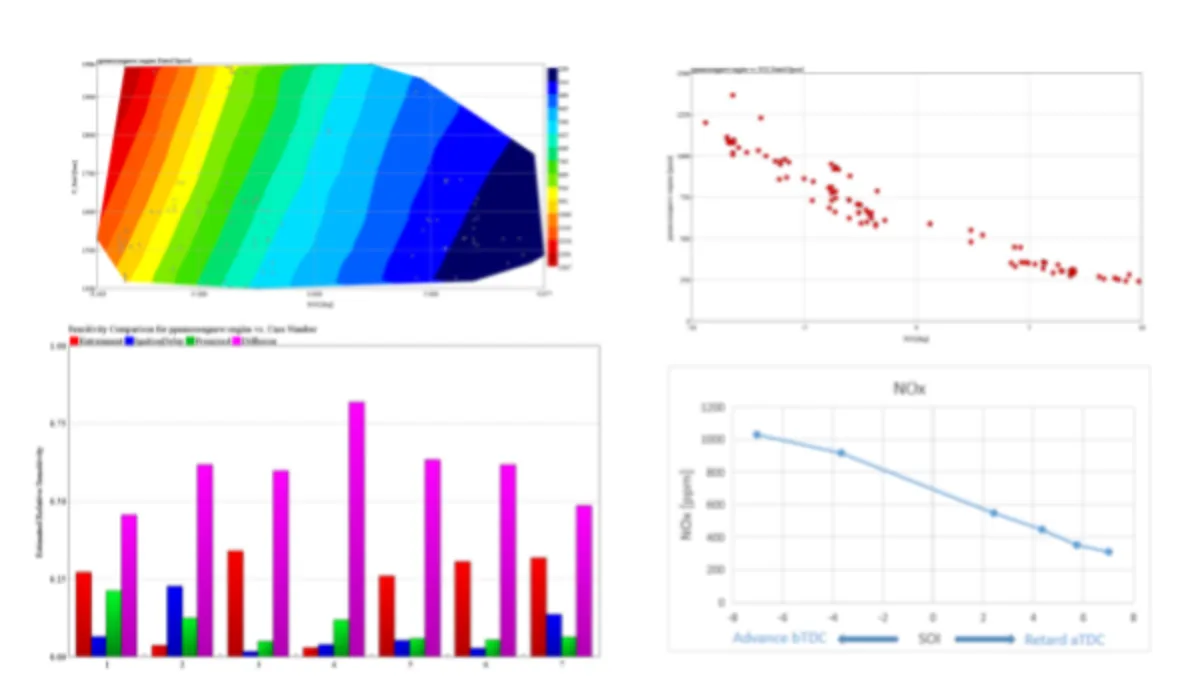
In this project, students will be asked to optimize a compression ignition engine using the GT-Suite's IDO.

Learner stories

Learners from Skill-Lync's mechanical programs.
In their own words.

Video stories from learners of related mechanical programs, from Skill-Lync's YouTube channel.

VivekHyundaiPG in Automotive Manufacturing Design
ShubhamTimetooth TechnologiesPG in Automotive Design & Analysis
AkashDesign Engineer, TATA GotionPG Program in Automotive Design and Analysis
SebastianSenior Design EngineerPG Program in Automotive Design (and Analysis)
Satheesh YesudasGraduate Engineer Trainee, Tata Technologies · TamilPG Program in CAD
Nikhit BolarCFD Engineer (USA)PG Program in CFD
Guide

IC engine simulation in GT-POWER, explained.

by the Skill-Lync team

What is GT-POWER and what does 1D simulation mean?

GT-POWER is the engine performance module of GT-SUITE, Gamma Technologies' system simulation software. It predicts an engine's airflow, torque, power, fuel consumption and emissions before hardware exists. It is one-dimensional: like a pipe whose pressure, temperature and velocity vary only along its length, every pipe, valve and cylinder is reduced to quantities that change along the flow path and in time.

Models are built from a library of templates. A template becomes an object when you fill in its attributes, and an object becomes a part when you place it on the map and connect it; change the object and every part made from it changes. The first three lessons, which cover this and two complete SI engine models, are free to watch on Grow.

Will GT-POWER warn you when an input is unrealistic?

No, and this is the most useful lesson in the free sessions. The instructor takes a single-cylinder spark-ignition model (86 mm bore and stroke, compression ratio 9.5, 3,600 rpm) and changes the compression ratio to 18. The run finishes without a warning and the results look like a breakthrough:

  • brake torque 42.9 → 48.0 N·m
  • BSFC (fuel per unit of power) 249.5 → 218.9 g/kWh
  • peak cylinder pressure 53 → 88.7 bar, with the pressure-rise rate up from 1.8 to 2.8 bar per degree of crank angle

A real petrol engine would knock long before that. Production SI engines run at about 10 to 12 (Mazda's Skyactiv reaches 14 with extra measures), diesels at 18 to 19. The software solves what you give it, so knowing the physical limits on each input is the engineer's job.

How close can a first GT-POWER model get to a real engine?

In the third lesson's case study you build a 4-cylinder, 16-valve, naturally aspirated petrol engine from an example file: 73 mm bore, 89.4 mm stroke, targets of 87.7 kW at 6,600 rpm and 145 N·m at 4,600 rpm.

  • Displacement: cc, the 1.497 L GT-POWER reports.
  • Compression ratio set to 10, chosen for the octane of pump fuel, not for the best BSFC.
  • First run: 90.7 kW at 6,600 rpm against the 87.7 kW target (+3.4%), with volumetric efficiency of 98.3% at maximum power and 98.4% at maximum torque.

For scale, 145 N·m at 4,600 rpm is kW. Calibration is the work of closing the remaining gap against test data: burn rate, valve timing, friction and heat transfer.

What does the rest of the course cover?

After the SI engine, the 12 modules cover diesel (CI) combustion with ignition delay, turbocharger and supercharger modelling, fast running models (FRM) for ECU development with Simulink, aftertreatment (three-way catalyst, DOC, DPF and SCR), GT-SUITE's built-in optimiser, discretising 3D geometry into 1D models in GEM3D, and hybrid powertrains. The projects are a tractor diesel engine's performance and emissions, an aftertreatment system for SI and CI engines, and optimising a diesel engine with the Integrated Design Optimizer.

The recorded course is 12 lessons, about 18.7 hours of video. It is also part of Skill-Lync's PG Program in CFD and PG Program in Hybrid Electric Vehicle Design and Analysis.

Do GT-POWER skills lead to jobs?

We can only show a small sample. As of 16 Nov 2026, Skill-Lync's placement records (n = 3,905) list no learner with 'calibration' in the job title, and 13 in powertrain or engine performance roles, at AVL, Cyient, Expleo, Quest Global, RNTBCI and others. Engine simulation is a narrow, specialist field, so pair this course with CFD or hybrid powertrain skills.

For the wider simulation picture: the PG Program in CFD, which includes this course, has 223 recorded placements (2019 to 2025), mostly as CFD engineers, with a median disclosed salary of ₹3.5 LPA (n = 201).

Which Skill-Lync engine simulation course fits you?

CourseLengthProjectsToolsFee
IC Engine Calibration using GT-POWER and GT-SUITE (this page)1D engine models in GT-POWER: SI, CI, turbo, aftertreatment, hybrid12 weeks, 19 h3GT POWER, GT-SUITE₹40,000
Advanced CFD for IC Engine Applications using CONVERGE3D in-cylinder CFD in CONVERGE12 weeks, 13 h3CONVERGE, Paraview₹40,000
Internal Combustion Engine Analyst course using Python and CanteraCombustion chemistry in Python and Cantera, then CONVERGE12 weeks, 22 h5Python, Cantera, CONVERGE, Paraview₹2,75,000
Battery Cooling System using GT SuiteGT-SUITE for battery cooling circuits instead of engines16 h2ANSYS Fluent, GT-SUITE₹40,000
PG Program in Computational Fluid DynamicsPG program that includes this course48 weeks, 125 h28ANSYS Fluent, SpaceClaim, CFD Post, CONVERGE, Paraview, MATLAB, OpenFOAM, Octave, GT POWER, GT-SUITE, ANSA, ICEM CFD, Visual Studio₹2,75,000
PG Program in Hybrid Electric Vehicle Design and AnalysisPG program that includes this course48 weeks, 343 h48MATLAB, LS-DYNA, LS-PREPOST, ANSYS Fluent, SpaceClaim, CFD Post, HyperMesh, Radioss, ANSA, Simulink, CONVERGE, Paraview, OpenFOAM, Octave, CATIA V5, Python, Siemens NX CAD, Simscape, ANSYS Workbench₹2,75,000

Lengths, projects and fees are taken from each course page on 16 Nov 2026; fees are the Premium plan in INR, including all charges.

Fee

One fee.
Everything included.

Become job ready with our comprehensive industry focused curriculum for freshers & early career professionals

Premium
₹40,000
Inclusive of all charges
  • 1 Year Access
  • Personalized Page
  • Live Individual & Group Sessions
  • Personalized & Hands-On
  • Job-Oriented Industry Relevant Curriculum
Check eligibility →
FAQ

Questions,
answered.

Who are the instructors, and what is the learning process?

The instructors for this GT power courseare industry experts. You will get access to recorded content and assignments each week.

What are the prerequisites for this course?

You should be pursuing or have graduated with a B.E/B.Tech in Mechanical or Automotive Engineering to take this GT power course.

What is the support I will get if I have doubts?

As part of this GT-SUITE online course, we offer one-on-one support through videoconferencing, WhatsApp messages/calls, and individual online sessions.

Do I still need this course after graduating from college?

This GT-SUITE online course will help you apply what you have learned in college as theory and work on projects to give you a leg up in your career aspirations. 

What will I learn in this course?

This GT-SUITE course will help you learn the complexities of engine design and the related topics of thermodynamics, chemical kinetics, heat transfer, fluid mechanics, etc.

Next step

Not sure it's
the right fit?

A counsellor will walk you through the syllabus, projects and fee options — and tell you honestly if another course suits you better.

Get the syllabus + a call back

We'll email the full syllabus and call within one working day.

By submitting you agree to our Terms and Privacy Policy.

Call usEnquire
Talk to a career counsellor

Talk to a career counsellor

Free 20-minute call. We'll map the right course to where you want to work.

By submitting you agree to our Terms and Privacy Policy.