Fuel injector: parts, diagram and how it works
A fuel injector is an electrically opened valve that sprays a measured shot of fuel into the engine. Here a typical port-injection injector is modelled in 3D, cut open, pulled apart and run through one injection, with every part labelled.
By Skill-Lync · Published 20 Nov 2026 · Teaching model built and rendered in Blender from sourced dimensions
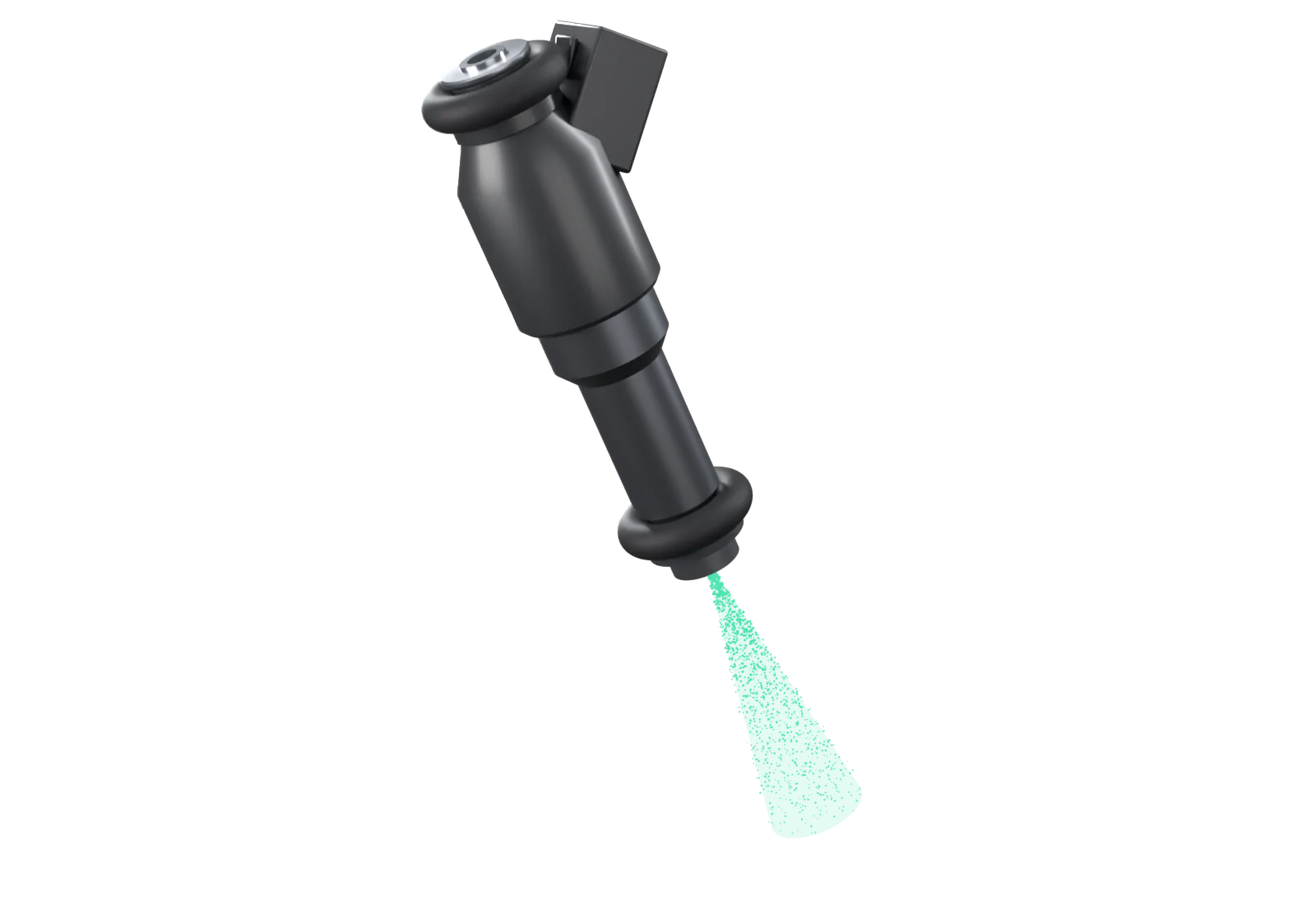
- 1Inlet with filter screen
- 2Upper O-ring
- 3Body (plastic overmould)
- 4Valve housing (steel shell)
- 5Electrical connector
- 6Lower O-ring
- 7Nozzle tip
- 8Fuel spray cone
What is a fuel injector?
A fuel injector is a small solenoid valve that sits between the pressurised fuel rail and the engine's intake. When the engine control unit (ECU) switches its coil on, a needle lifts off its seat and fuel sprays out; when the coil switches off, a spring snaps it shut. Fuel quantity is set by how long it stays open.
Think of it as a tap that opens for a few thousandths of a second, hundreds to thousands of times a minute, with the pressure behind it held constant. The ECU never measures the fuel directly. It knows the injector's flow rate at that pressure and simply times the opening.
Ratings from the Bosch EV 14 data sheet; needle lift from SAE paper 961121. Sources are listed under key design numbers.
What are the parts of a fuel injector and their functions?
A port fuel injector has 16 main parts (17 if you count the lower O-ring's retainer separately). Fuel enters through a filter screen, flows down the hollow core, through the armature and needle, and leaves past the ball and seat through an orifice plate. Around that path, a solenoid coil in a steel housing lifts the armature against a return spring. O-rings seal both ends.
Inside a fuel injector: cutaway view
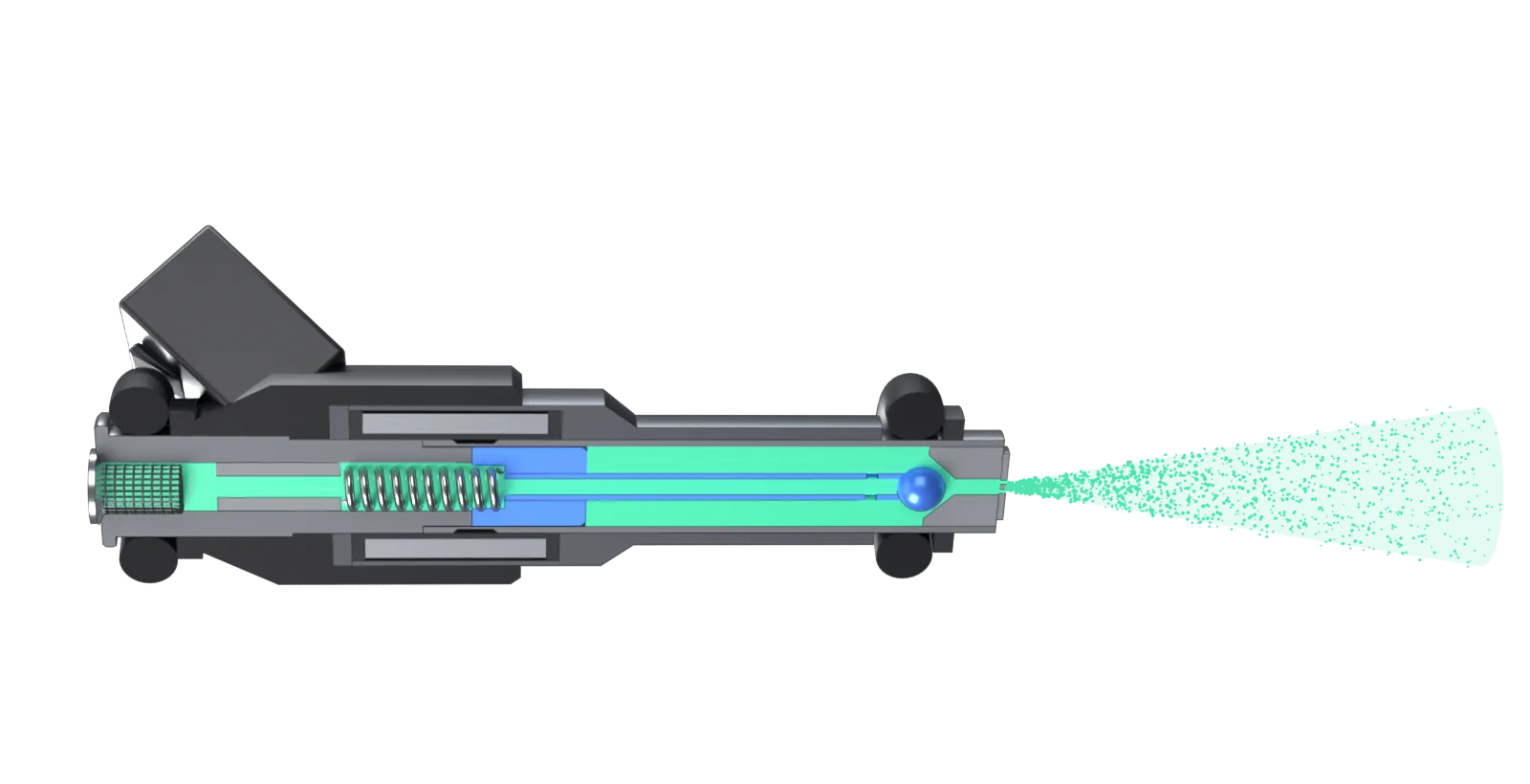
- 1Upper O-ring
- 2Electrical connector
- 3Adjusting sleeve
- 4Solenoid coil
- 5Fuel path
- 6Needle (valve stem)
- 7Valve seat
- 8Filter screen
- 9Inlet tube / magnetic core
- 10Plastic overmould
- 11Return spring
- 12Armature
- 13Steel housing (flux return)
- 14Valve sleeve
- 15Lower O-ring
- 16Ball (needle tip)
- 17Orifice plate
- 18Spray
| Part | What it does |
|---|---|
| Inlet filter screen | A fine mesh basket in the inlet. It catches dirt that got past the main fuel filter, so particles can't jam the needle or scratch the seat. |
| Upper O-ring | Seals the inlet into its cup on the fuel rail, so fuel at rail pressure can't leak out. |
| Inlet tube (magnetic core) | The steel tube fuel flows down. Its lower end is the fixed pole of the electromagnet that the armature is pulled towards. |
| Adjusting sleeve | Pressed into the core to a set depth at the factory. It sets the return spring's preload, and so how quickly the needle closes. |
| Return spring | Pushes the needle and ball onto the seat. It is what closes the injector when the coil switches off. |
| Solenoid coil | A copper winding (12 Ω on a high-impedance injector) that becomes an electromagnet when the ECU switches current through it. |
| Steel housing (valve shell) | Wraps the coil and carries the magnetic flux back from the armature to the core, so most of the coil's pull ends up on the armature. |
| Plastic overmould (body) | Seals the coil from fuel and moisture, holds the connector and gives the injector its shape and grip. |
| Electrical connector | Two pins to the coil. Typically one gets battery voltage and the ECU switches the other to ground to open the injector. |
| Armature | The soft-magnetic steel slug that the field pulls up (ferritic stainless, because it sits in fuel). The needle is fixed to it, so they move as one. |
| Needle (valve stem) | A hollow tube from the armature to the ball. Fuel runs down its bore and out of two cross-holes just above the ball. |
| Ball (closing element) | A hardened ball on the end of the needle that seals against the seat. Pintle-type injectors use a pointed pin instead. |
| Valve sleeve | The thin tube that guides the armature and joins the core to the seat. Its wall is thinned at the air gap (a magnetic throttling point), so the flux crosses the gap into the armature instead of short-circuiting along the tube. |
| Valve seat | A hardened cone the ball seals on. Ball down means closed; how far it lifts sets the flow area past the seat. |
| Orifice plate (spray disc) | A thin disc with one or more precision holes (four in this model) that meter the flow and break it into a spray. |
| Lower O-ring and retainer | Seal the nozzle into its bore in the intake manifold, so no unmetered air leaks into the engine. |
How does a fuel injector work?
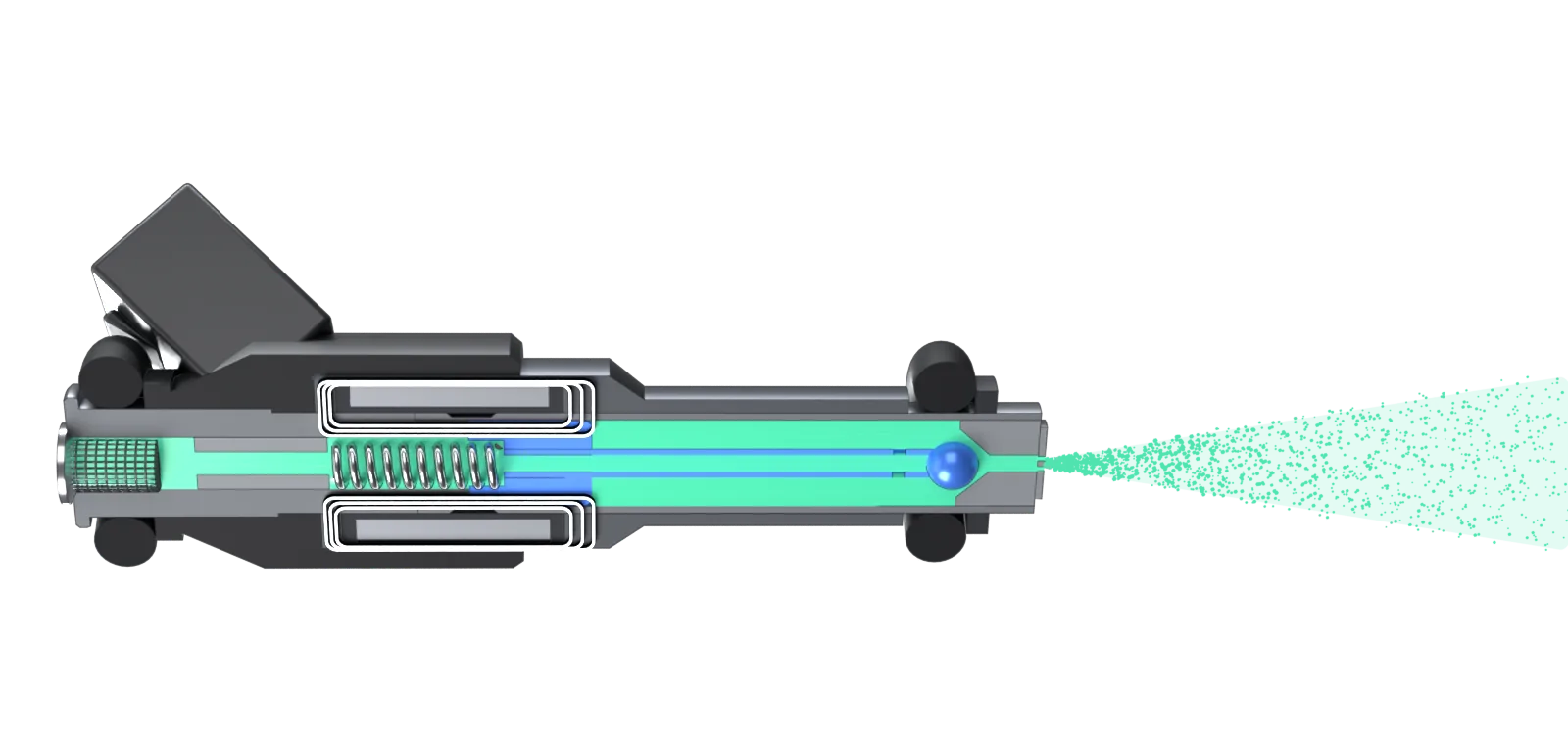
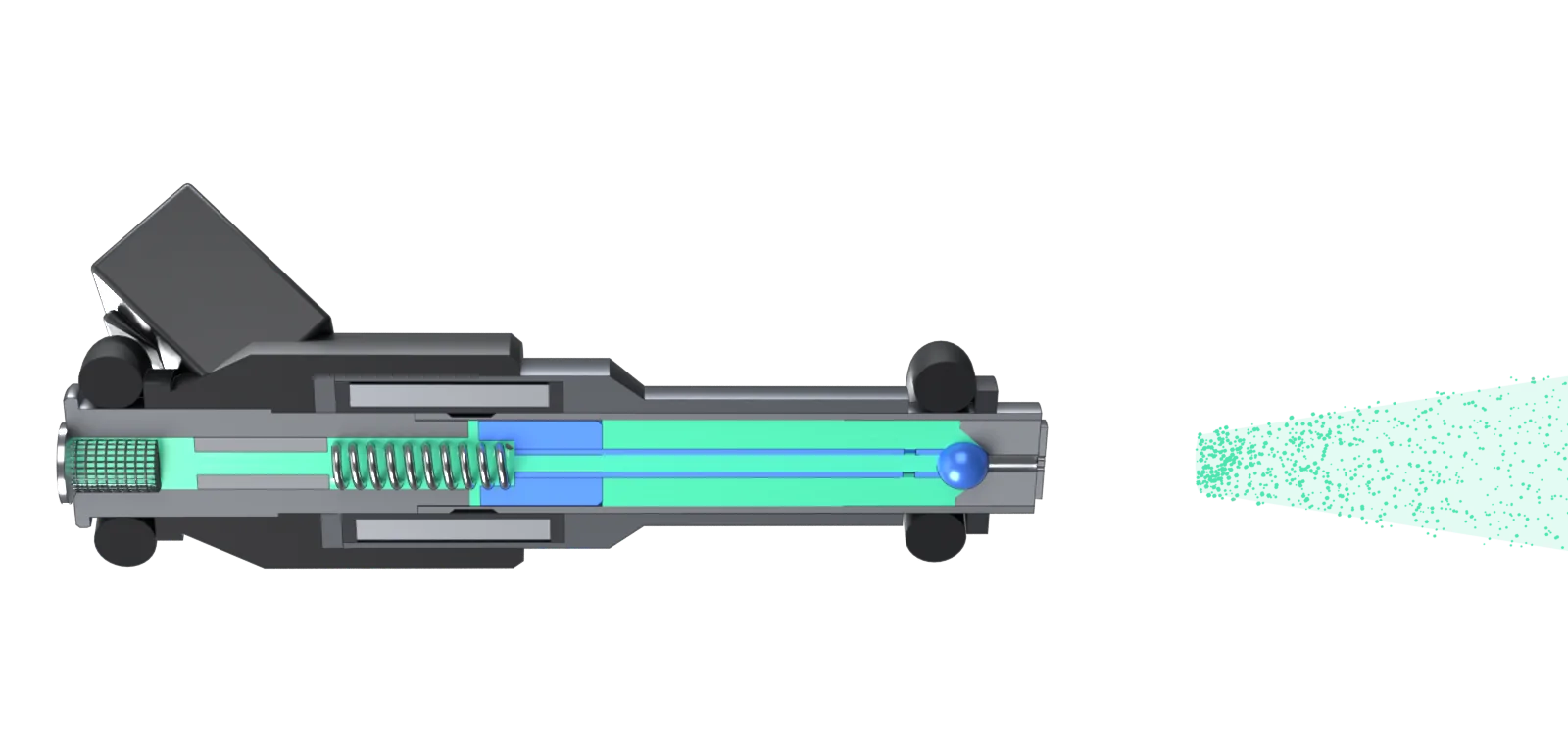
The ECU switches the coil on, the magnetic field pulls the armature and needle up by a few hundredths of a millimetre, and fuel at constant pressure sprays through the orifice plate. When the coil switches off, the spring closes the needle. The fuel delivered equals the flow rate times the open time.
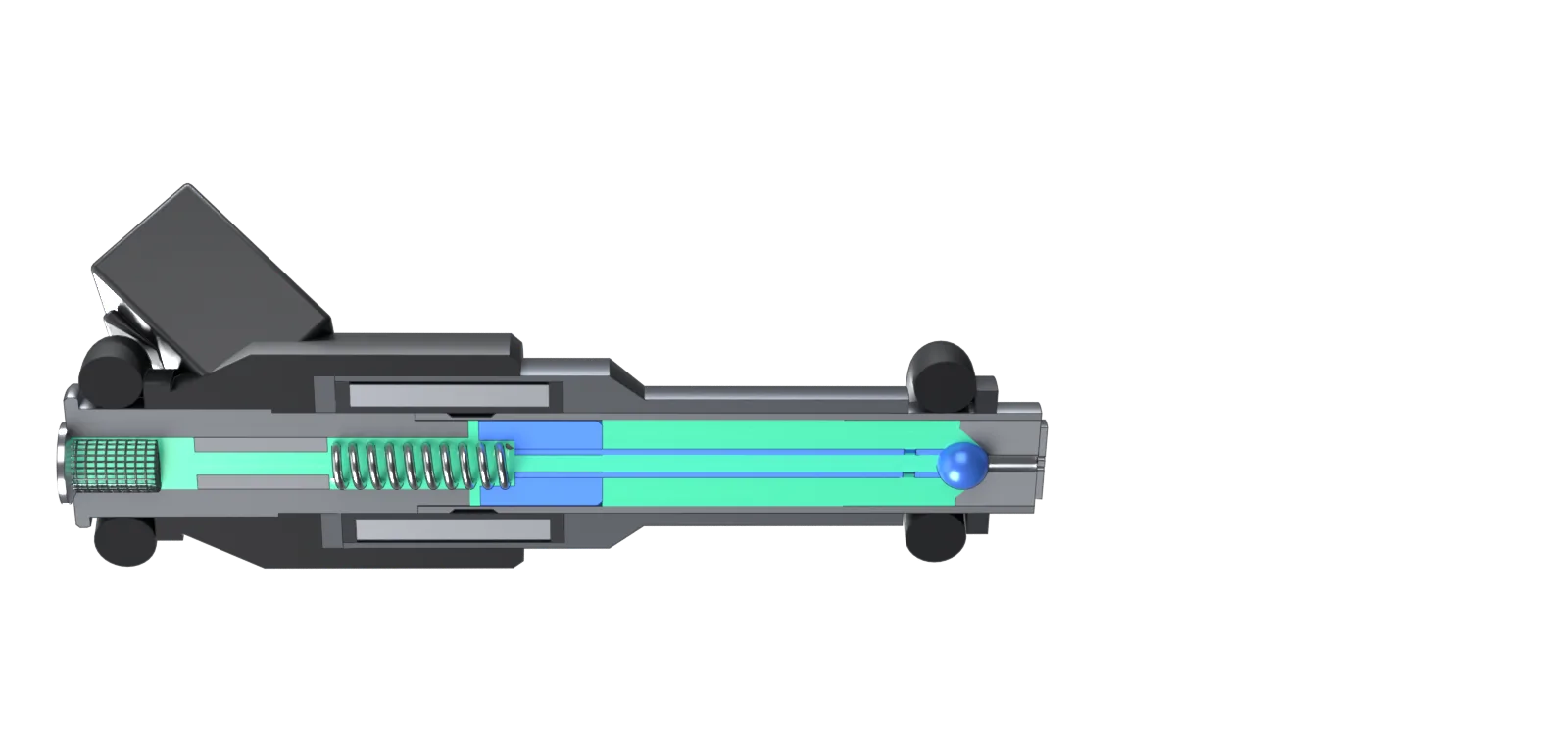
- 1Return spring
- 2Solenoid coil
- 3Needle
- 4Valve seat
- 5Air gap (drawn 10× real)
- 6Armature
- 7Fuel at 3 bar
- 8Ball on the seat
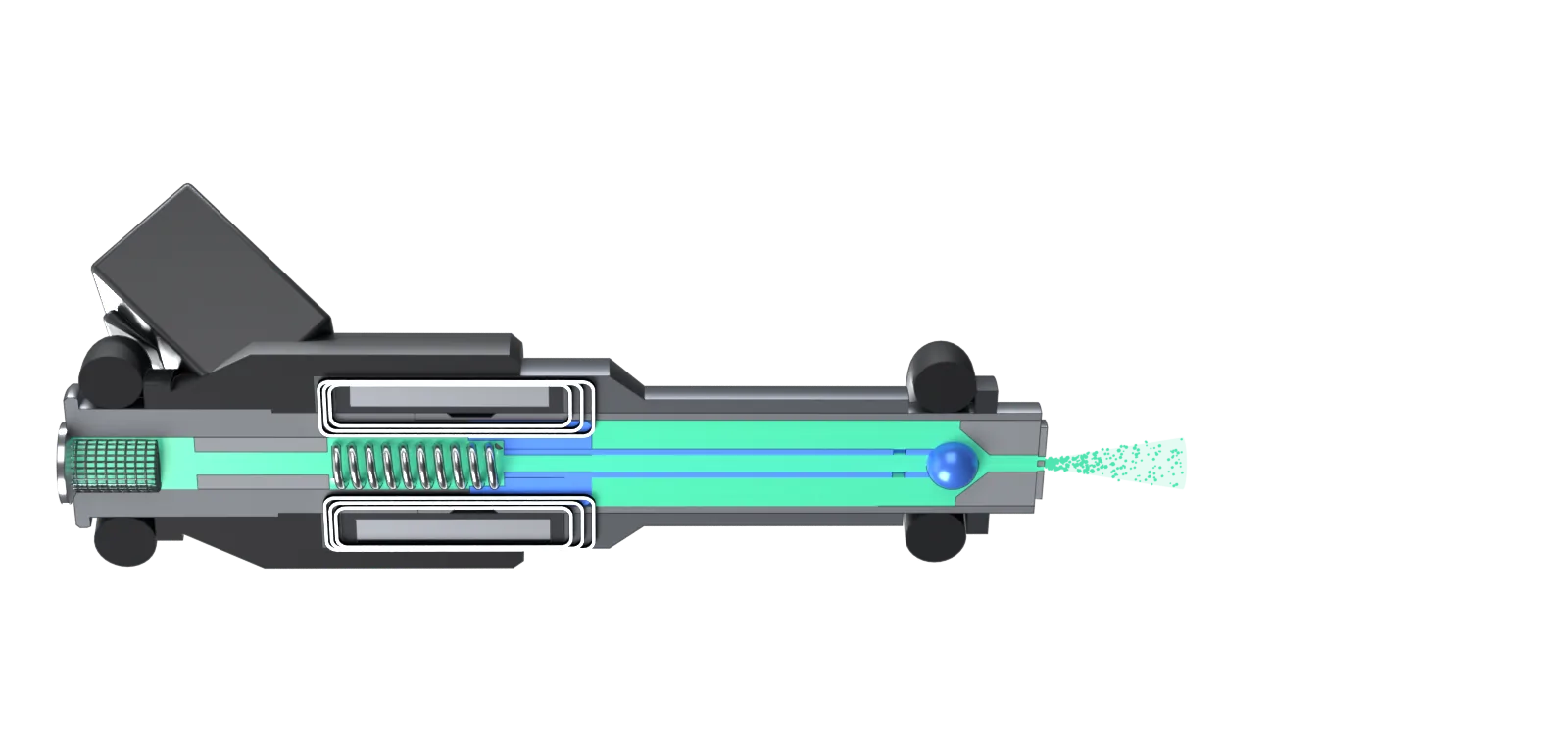
1. Coil off: closed. The return spring and the fuel pressure hold the ball on the seat. Fuel (mint) fills the injector down to the seat at rail pressure, about 3 bar on a typical port-injection system, but nothing flows.
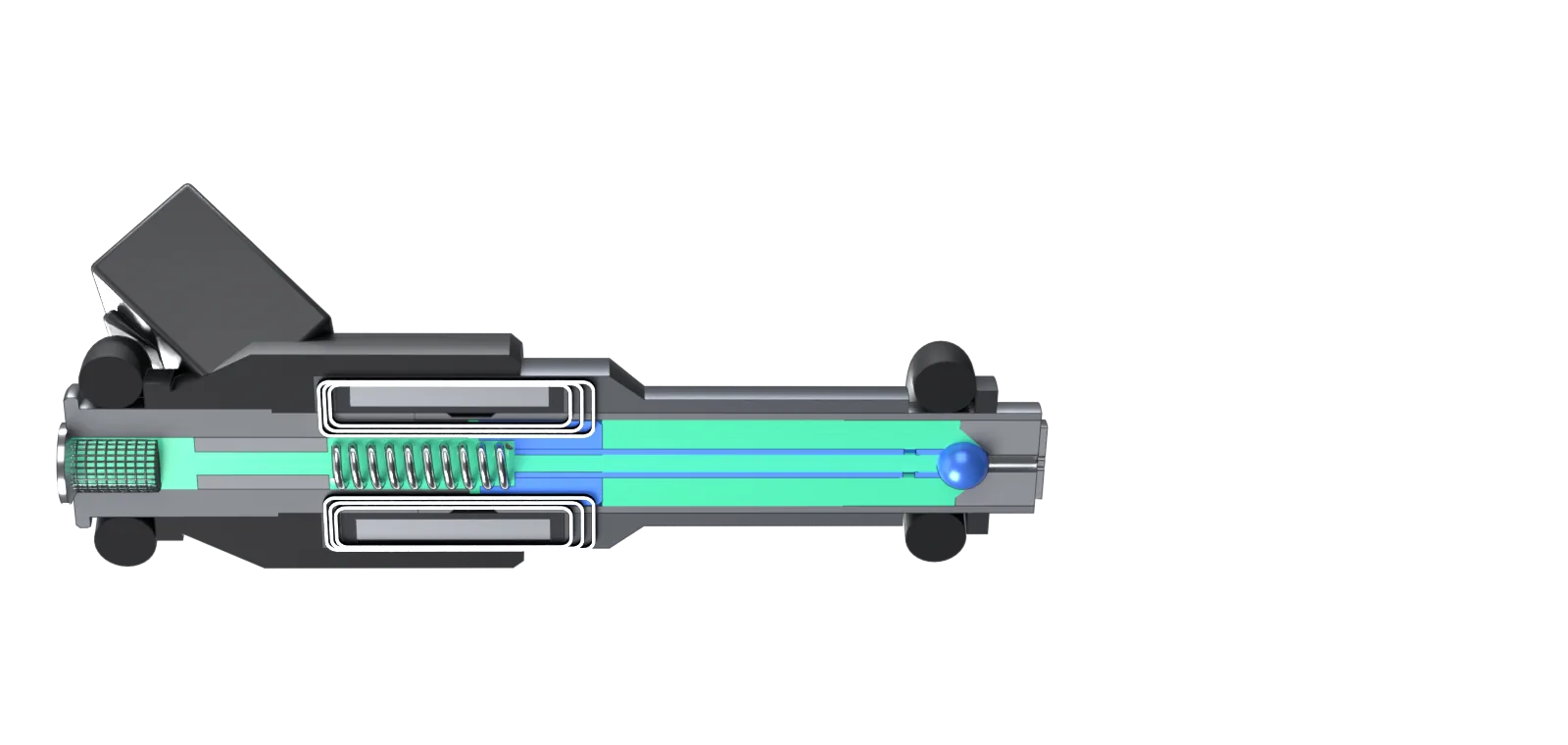
2. Coil energised. The ECU switches the coil on. Current builds over a fraction of a millisecond and magnetic flux (white loops) runs through the core, across the air gap, through the armature and back through the steel housing. Until the pull beats the spring and the fuel pressure, the needle stays put: this is the opening delay.
3. Needle lifts. The armature snaps up until it touches the core face, lifting the needle and ball (blue) off the seat. In a real injector this stroke is only tens of micrometres; it is drawn 10 times larger here so you can see it. Fuel starts to pass the seat.
4. Spray. Fuel leaves through the orifice-plate holes as a fine cone aimed at the back of the intake valve. With the pressure held steady, the fuel delivered is the flow rate times the open time, which is why the ECU meters fuel by pulse width.
5. Coil off: closes. The ECU switches the coil off, the field collapses and the spring pushes the needle back onto the seat. The fuel that already left keeps travelling into the port and evaporates; the next injection waits for the next engine cycle.
The air gap and needle lift are drawn 10 times larger than real (real lift is tens of micrometres). White loops show the magnetic flux path.
How long does the injector stay open?
Because the pressure across the injector is held steady, its flow rate is fixed, and the ECU works backwards from the air the cylinder took in:
The delay term (injector dead time) covers the time the needle takes to open and close, which grows when battery voltage drops; "steady pressure" means the difference between rail and manifold, which returnless fuel systems let vary and the ECU corrects for. A worked example with round numbers: one 300 cm³ cylinder (a 1.2-litre four-cylinder engine) breathing air at 1.2 kg/m³ at full load takes in . For a stoichiometric petrol mixture of 14.7 parts air to 1 part fuel, that needs .
A 150 g/min injector (a real Bosch EV 14 rating) delivers 2.5 mg per millisecond, so plus the delay. At 6,000 rpm a four-stroke cycle lasts only 20 ms, so the injector is open for about 49% of it. That is why engines with more power need bigger injectors, and why tuners talk about injector duty cycle.
Assumes volumetric efficiency of 1, an upper bound for a naturally aspirated engine; at part load and idle the fuel per cycle, and the open time, are several times smaller. Injector flow is rated with n-heptane, so petrol flow differs by a few per cent. Checked by a script kept with the model files.
Fuel injector exploded view: how the parts fit together
Pulled apart along its axis, the order is easy to follow: filter, adjusting sleeve and upper O-ring go into the inlet; the coil sits inside the steel housing under the plastic overmould; the spring, armature and needle slide up the valve sleeve from below; the seat and orifice plate close the bottom end, and the lower O-ring slips over the tip.
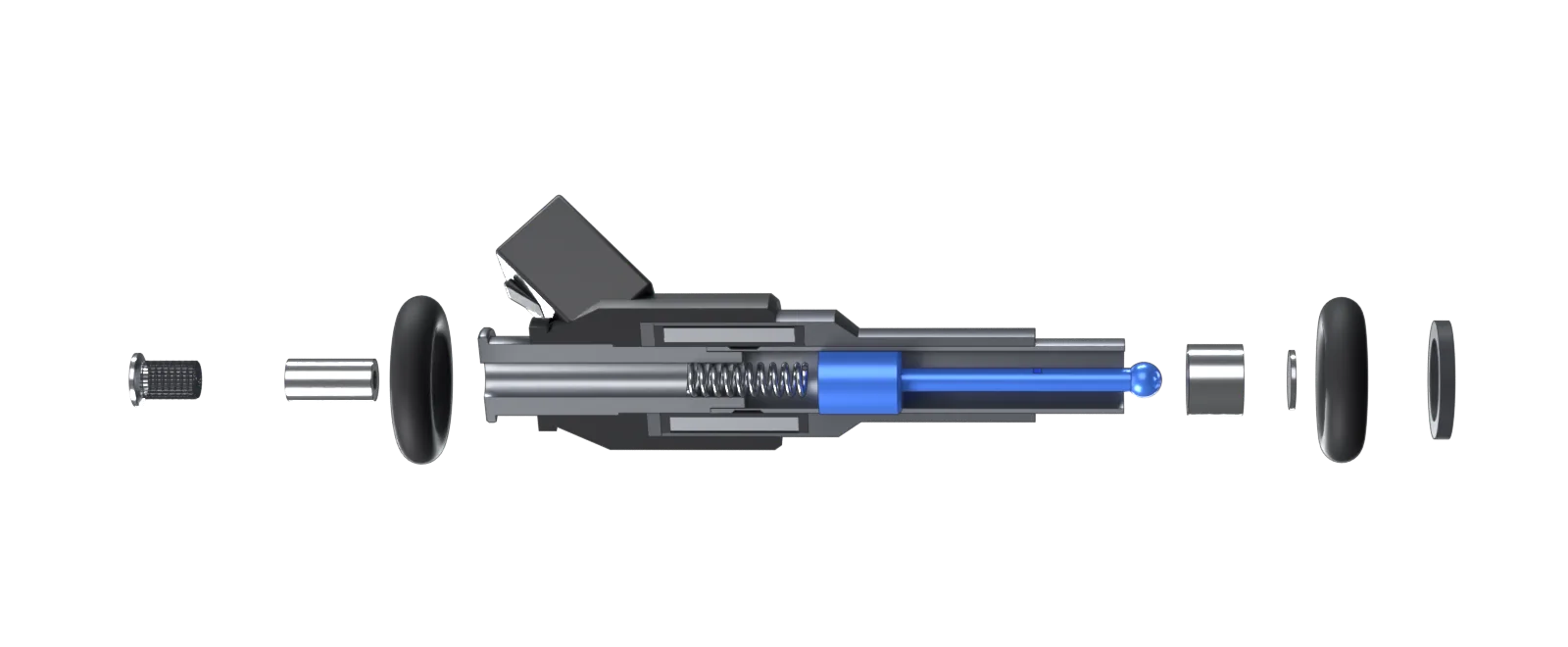
- 1Filter screen
- 2Upper O-ring
- 3Connector
- 4Overmould
- 5Return spring
- 6Needle
- 7Ball
- 8Orifice plate
- 9O-ring retainer
- 10Adjusting sleeve
- 11Inlet tube / core
- 12Solenoid coil
- 13Armature
- 14Steel housing
- 15Valve sleeve
- 16Valve seat
- 17Lower O-ring
Fuel injector dimensions: front and side views
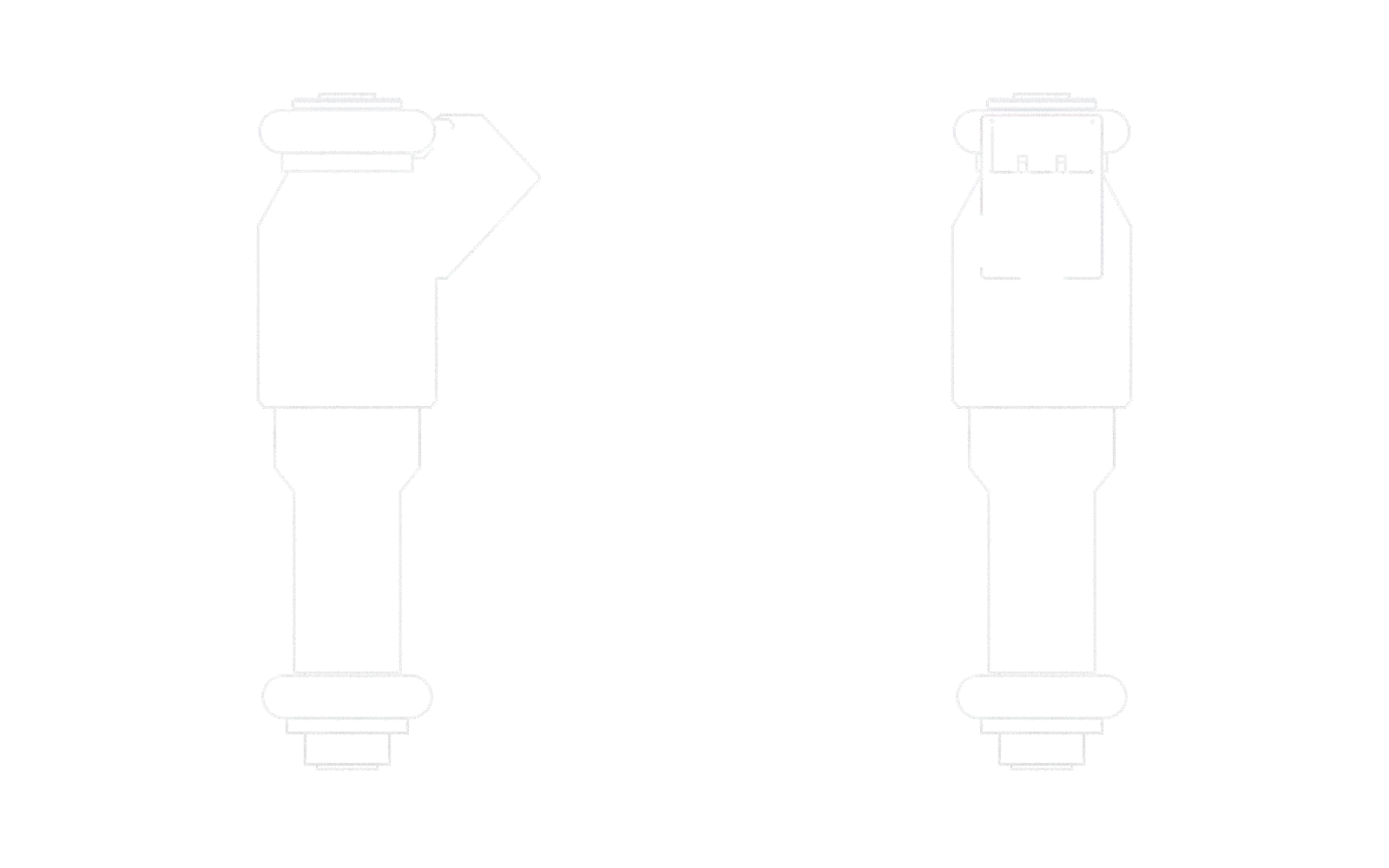
| Dimension | Value | Basis | |
|---|---|---|---|
| A | Overall length, inlet to nozzle tip | ≈ 56 mm | This model (the EV 14 Standard drawing gives 65.45 mm without extension tip; this model is shorter) |
| B | Installation length between the O-rings | 48.65 mm | Bosch EV 14 Standard |
| C | Body diameter | ≈ 14.8 mm | This model |
| D | O-ring outside diameter (7.52 × 3.51 mm ring, fits a 14 mm bore) | ≈ 14.5 mm | EV 14 service O-ring size |
What are the types of fuel injectors?
By where they spray: throttle-body injection (one or two injectors above the throttle), port fuel injection (one injector per intake port, the type shown here), gasoline direct injection (into the cylinder at much higher pressure) and diesel common-rail injection. Injectors also differ by feed, coil impedance and spray pattern.
| Type | Where it sprays | How it opens |
|---|---|---|
| Throttle-body injection (TBI) | Into the air above the throttle plate, for all cylinders | Solenoid, low pressure |
| Port fuel injection (PFI / MPFI) | Onto the back of each intake valve | Solenoid, rated at 3 bar (this page) |
| Gasoline direct injection (GDI) | Straight into the combustion chamber | Solenoid or piezo, high pressure from a cam-driven pump |
| Diesel common rail (CRDI) | Into the cylinder, several shots per cycle | Solenoid or piezo servo valve, up to 2,500 bar (Bosch CRI2) |
Top-feed or side-feed. Top-feed injectors, like this one, take fuel in at the top and pass it down the middle. Side-feed injectors sit inside the fuel rail and take fuel in through windows in the side. High or low impedance. A 12 Ω coil can be driven by a simple switched circuit; a low-impedance coil opens faster but needs a peak-and-hold driver. Spray pattern. A single cone (Bosch calls it type C) or two sprays (type E) for engines with two intake valves per cylinder, with spray angles from 15° to 85°.
How is a common-rail diesel injector different?
A common-rail injector uses its solenoid as a pilot, not a lift. The solenoid opens a tiny servo valve that bleeds fuel from a control chamber above the needle plunger. Rail pressure on the needle's shoulder then pushes the needle open hydraulically. Close the servo valve, pressure rebuilds above the plunger, and the needle snaps shut.
The reason is force. At up to 2,500 bar on Bosch's CRI2 solenoid injector, the hydraulic load on the needle is far beyond what a small, fast solenoid could pull. Two calibrated throttles do the timing work: an inlet throttle that refills the control chamber and a larger outlet throttle that empties it when the servo valve opens. The same design allows up to ten injections per cycle: pilot shots for a quieter start of combustion, a main shot and post shots for the exhaust after-treatment. Piezo injectors replace the solenoid with a piezo stack, which switches even faster and allows more, smaller injections per cycle. There is more in our explainer on how CRDI works.
Fuel injector vs carburetor: what is the difference?
A carburetor meters fuel with airflow: air rushing through a venturi sucks petrol through fixed jets, so the mixture only roughly follows the load. A fuel injector is a timed valve: the ECU calculates the fuel for every cycle from sensors and trims it with the oxygen sensor. That accuracy is what catalytic converters and today's emission norms need.
| Carburetor | Fuel injector | |
|---|---|---|
| Meters fuel by | Venturi vacuum through fixed jets | ECU pulse width at constant pressure |
| Mixture control | Open loop; jets sized for average conditions | Closed loop with the oxygen (lambda) sensor |
| Cold start | Choke enriches the mixture by hand or by a thermostat | ECU adds fuel from the coolant temperature |
| Altitude and temperature | Mixture drifts rich at altitude | Corrected from air pressure and temperature sensors |
In India the switch is complete for new vehicles: BS-VI emission norms, in force since 1 April 2020, pushed new motorcycles and scooters from carburettors to fuel injection, which is why "fuel injector bike" searches are so common.
What are the symptoms of a bad fuel injector?
A failing injector usually shows up as misfires or a rough idle, hesitation when you accelerate, poor mileage, a fuel smell or hard starting when the engine is hot. The engine light often comes on with a misfire code (P0300 random, P0301 to P0308 for cylinders 1 to 8), a lean or rich code, or an injector circuit code (P0201 to P0208).
| Failure | Cause | Symptoms |
|---|---|---|
| Clogged orifice or filter | Varnish and deposits from fuel that bakes on the hot tip after shutdown; dirt in the fuel | Lean misfire, hesitation, lean codes (P0171, P0174), weak or uneven spray |
| Leaking (dripping) seat | Debris or wear on the ball and seat | Hard hot start, rich running, fuel smell, fuel washing oil off the cylinder wall |
| Hardened or torn O-ring | Heat and age; wrong lubricant on refitting | External fuel leak at the top (a fire risk); an air leak and lean idle at the bottom |
| Open or shorted coil | Broken winding, heat, corroded connector or wiring | Dead cylinder, injector circuit code (P0201 to P0208) |
| Stuck open | Debris holding the needle off the seat | Flooding, very rich running, risk of hydro-locking the engine |
How mechanics test one. Measure the coil resistance across the two pins and compare it with the injector's specification (12 Ω for the high-impedance Bosch EV 14 at room temperature; check the manual for yours). Listen for the click with a stethoscope while the engine runs. A power balance test cuts each injector in turn and watches the engine speed drop; an injector balance test pulses each injector with the engine off and compares how far the rail pressure falls. Ultrasonic cleaning and flow benches restore and match clogged injectors.
Key design numbers for a port fuel injector
A port injector runs on 3 to 7 bar of fuel pressure, lifts its needle by tens of micrometres and opens in about a millisecond. The 12 Ω coil, the 3 bar rating and the dimensions below come from Bosch's EV 14 data sheet, a widely used injector family. Exact values differ by part number.
| Quantity | Value | Source |
|---|---|---|
| Fuel pressure the flow is rated at | 3 bar | Bosch EV 14 data sheet |
| Maximum system pressure | 8 bar | Bosch EV 14 data sheet |
| Typical port-injection pressure range | 3 to 7 bar | IEEE TechNav: fuel injectors |
| Coil resistance (high impedance) | 12 Ω | Bosch EV 14 data sheet |
| Supply voltage | 6 to 16.5 V | Bosch EV 14 data sheet |
| Static flow at 3 bar | 100 to 700 g/min | Bosch EV 14 data sheet (n-heptane) |
| Spray angle | 15° to 85° | Bosch EV 14 data sheet |
| Installation length between the O-rings | 33.6, 48.65 or 60.65 mm | Bosch EV 14 data sheet (compact, standard, long) |
| Weight | ≤ 30 g | Bosch EV 14 data sheet |
| Needle lift | 30 to 80 µm | SAE 961121, influence of needle lift on gasoline injector flow |
| Response time | about 1 ms | IEEE TechNav: fuel injectors |
| Common-rail diesel solenoid injector | up to 2,500 bar | Bosch CRI2 solenoid valve injector |
Where are fuel injectors used?
Port injectors meter petrol in almost every modern petrol car without direct injection and in fuel-injected motorcycles and scooters. Many newer engines use direct injection or combine both. Diesel cars, trucks, tractors and generators use common-rail injectors. Similar solenoid valves dose AdBlue into diesel exhausts and meter CNG and LPG in gas conversions.
Fuel injector interview questions
Why is the solenoid in a common-rail injector not lifting the needle directly?
At up to 2,500 bar the hydraulic force on the needle is far beyond what a small, fast solenoid can pull. The solenoid only opens a tiny servo valve; the rail pressure itself then moves the needle. That keeps the actuator small and the response fast.
What is injector dead time and why does battery voltage matter?
It is the delay between the ECU switching the coil on and fuel actually flowing, minus the closing delay. A lower battery voltage makes the coil current rise more slowly, so the injector opens later. The ECU adds a voltage-dependent offset to every pulse to keep the fuel quantity right.
If the fuel pressure across the injector doubles, how much does the flow change?
Flow through a fixed orifice scales with the square root of the pressure difference, so doubling it raises flow by about √2, or 41%. That is why the regulator holds the pressure across the injector constant, often referenced to manifold pressure.
High-impedance or low-impedance injector: what is the difference?
A high-impedance injector (about 12 Ω) limits its own current, so a simple saturated driver can run it with little heat. A low-impedance injector opens faster but needs a peak-and-hold driver that drops the current once the needle has lifted.
About this 3D model
This is a teaching model, not a CAD replica of one product. Its outside follows the Bosch EV 14 Standard housing (48.65 mm installation length, O-rings for a 14 mm bore, connector at 45°), with a shorter tip. The inside is a typical Bosch-type layout (core, adjusting sleeve, return spring, coil in a steel shell, armature and needle with a ball, seat and spray disc, as in patent US 6,079,642); this model passes fuel down a hollow needle with cross-holes, where that patent uses a hollow armature and a solid shaft. Internal sizes are proportioned to fit, not measured from one part, and the guide that centres the ball near the seat is left out for clarity. Skill-Lync modelled and rendered it in Blender entirely from code, so it can be checked and re-rendered.
Related Skill-Lync courses and reading
- IC Engine Calibration using GT-POWER and GT-SUITEFuel and spark maps, injector pulse width and engine models, the way calibration engineers set them.
- Advanced CFD for IC Engine Applications using CONVERGESimulate the spray: injection, atomisation, evaporation and combustion inside the cylinder.
- Internal Combustion Engine Analyst course using Python and CanteraEngine cycles, combustion chemistry and air-fuel ratio, worked in Python.
- Automotive Systems and Controls using MATLAB/SimulinkThe control side: sensors, actuators and the ECU logic that decides when the injector opens.
- Fuel injection in petrol (SI) engines: TBI, MPFI and GDI
- How common rail direct injection (CRDI) works
- How an IC engine works: four strokes and real engine numbers
- Stages of combustion in CI engines
- Study of cavitation in a Winkl-Hoffer diesel nozzle (CFD)
- Automobile engineering book, chapter 6: petrol injection (carburettor, MPFI, GDI)
- Automobile engineering book, chapter 7: diesel injection and common rail
- More parts in 3D: all engineering components
FAQs
What are the main parts of a fuel injector?
A port fuel injector has an inlet with a filter screen, two O-rings, a plastic body with an electrical connector, a solenoid coil inside a steel housing, an armature fixed to a needle with a ball or pintle tip, a return spring, a valve seat and an orifice plate that forms the spray.
How does a fuel injector work in a bike?
The same way as in a car. A fuel-injected motorcycle or scooter has a port injector in the throttle body or intake. The ECU reads throttle position, engine speed and temperature, then opens the injector's solenoid for a few milliseconds per cycle; a fuel pump keeps the pressure steady so the open time sets the fuel quantity.
What is the difference between a fuel injector and a carburetor?
A carburetor lets the airflow suck fuel through fixed jets, so the mixture only roughly follows the load. A fuel injector is an electrically opened valve: the ECU decides exactly how long it stays open from sensor readings, and corrects the mixture with the oxygen sensor. That precision is what modern emission norms need.
What are the symptoms of a bad fuel injector?
Misfires and rough idle (codes P0300 and P0301 to P0308), hesitation under load, a lean or rich mixture code, higher fuel consumption, a fuel smell from a leaking O-ring, hard hot starts from a dripping seat, or a dead cylinder with an injector circuit code (P0201 to P0208).
How long does a fuel injector stay open?
Milliseconds. In our worked example a 300 cm³ cylinder at full load needs 24.5 mg of petrol, which a 150 g/min injector delivers in about 9.8 ms. At idle the cylinder takes in a fraction of that air, so the open time drops to a few milliseconds.
Why does a diesel common-rail injector need such high pressure?
Diesel is sprayed straight into hot, compressed air just before it must burn, so it needs very fine droplets and deep penetration in a millisecond or two. Port injection has the whole intake stroke to evaporate fuel, so 3 bar is enough. Common-rail solenoid injectors run up to 2,500 bar (Bosch CRI2).
Sources
- Bosch Motorsport, Injection Valve EV 14 data sheet (pressures, coil, flow, spray angle, lengths, weight)
- Robert Bosch GmbH, US patent 6,079,642: fuel injection valve (internal construction)
- SAE 961121, Influence of needle lift on gasoline injector static flows (needle lift)
- IEEE TechNav, Fuel injectors (response time, port-injection pressure)
- Bosch Mobility, Solenoid valve injector CRI2 (common-rail pressure, injections per cycle)