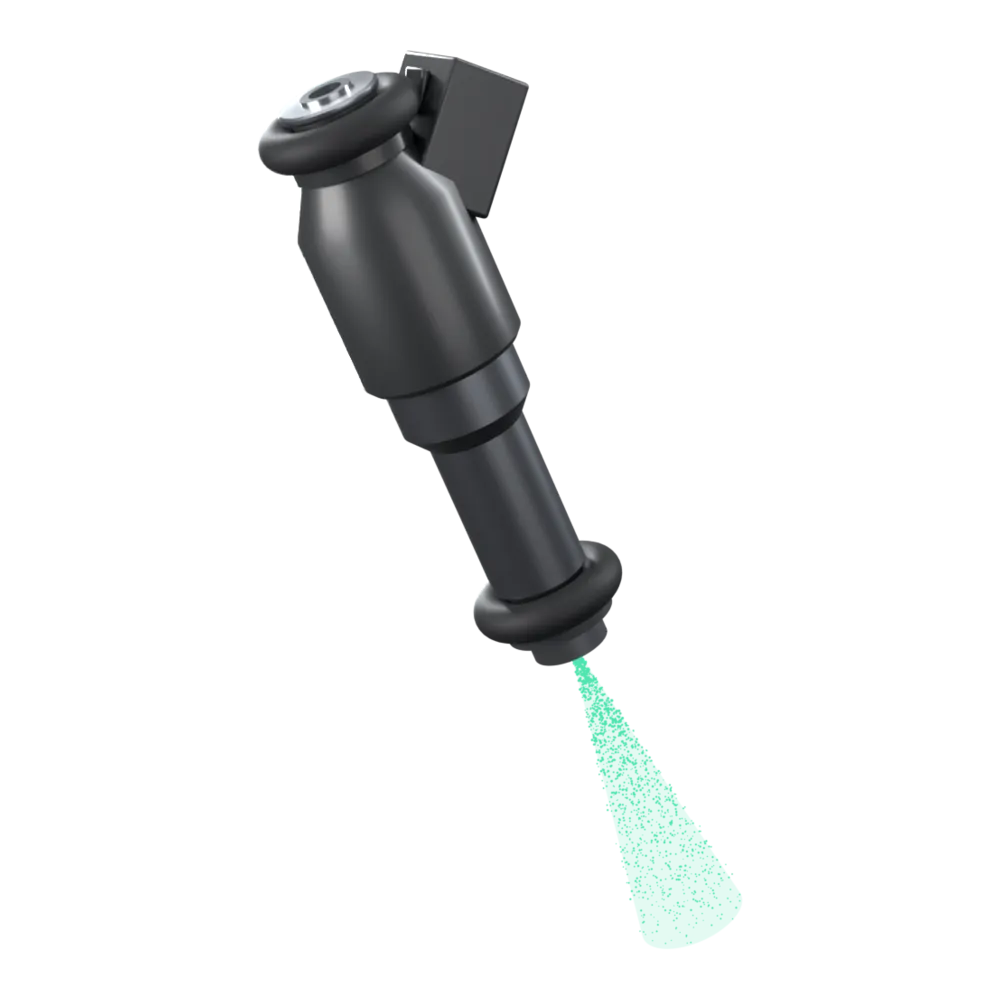
Machine parts,
taken apart in 3D.
Each page is one component: modelled in 3D from sourced dimensions, cut open, pulled apart and labelled part by part, with how it works shown step by step. Free, no sign-up.
- Component live
- 1 new ones added regularly
- Views each
- 5 3D, cutaway, exploded, drawing, working
- Parts labelled
- 16
- Built in
- Blender from code, with a sourced spec
How are these 3D components made?
Every model is built in Blender entirely from a script, not sculpted by hand. Before modelling, we write a spec with the parts, their order and the dimensions we use, each from a manufacturer data sheet, a patent, a standard or a textbook. The script turns that into named 3D parts, and the same camera that renders each view also works out where every label points, so a leader line always lands on the part it names.
Are the models accurate?
They are teaching models: the parts, their order, how they connect and the main proportions match the sources, and each page says which dimensions come from a real product and which are proportioned to fit. They are not CAD replicas of one part number. Before a page goes live, a reviewer who did not build the model checks every render, label and number against the spec.
What does each component page include?
A labelled 3D diagram, a cutaway that shows the inside, an exploded view, front and side drawings with key dimensions, and the working principle shown step by step. The text covers the parts and their functions, types and variants, common failures and their symptoms, design numbers with sources, interview questions and FAQs.
What colours do the diagrams use?
The same scheme on every page: neutral satin metal and dark plastic for the structure, mint for fluid flow (fuel, air or coolant) and blue for the part that moves. Only those two accent colours are used, so the eye goes straight to what the page is about.
Which components are coming next?
The queue follows what engineering students search for and what Skill-Lync teaches: carburettor, turbocharger, piston and connecting rod, disc brake caliper, MacPherson strut, airfoil terminology and bridge bearings, among others. Last updated 20 Nov 2026.
Where can I learn to design components like these?
Skill-Lync's mechanical engineering courses cover CAD, simulation and IC engines; start with the free automobile engineering book or the fuel injection explainer.