IoT and Telecom: The Synergy of Connectivity and Smart Devices
The Internet of Things (IoT) has evolved from a novel concept to a widely adopted technology that continues to be improved and expanded upon.
 Anup KumarH S·6 Jun 2023·6 min read
The Internet of Things (IoT) has evolved from a novel concept to a widely adopted technology that continues to be improved and expanded upon. Its implementation has become commonplace in various sectors worldwide, with the telecom industry experiencing significant growth due to its reliance on IoT.
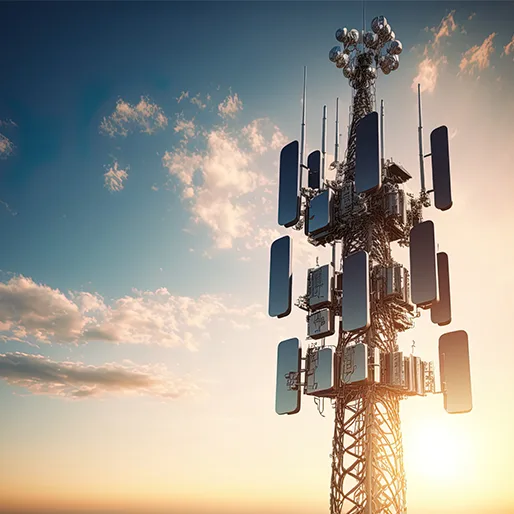
Telecom providers play a crucial role in supporting IoT solutions, and as a result, they stand to benefit the most from its widespread adoption. The telecom industry has witnessed substantial growth prospects due to new mobile IoT applications and services. Statistics further validate the increasing popularity and practical implementation of IoT in telecom industry. A few years ago, 71% of IT and telecom companies had already embraced IoT, and this penetration rate continues to rise steadily.
Today, implementing IoT-based initiatives is essential for telecom businesses that aim to embrace the digital age, gain a competitive advantage, and capitalize on the opportunities presented by modern technology.
In this blog, we will explore the concept of IoT in the telecom sector and shed light on how it shapes the telecommunication industry.
IoT for Telecom Business Growth: Opportunities
The Internet of Things (IoT) has been instrumental in reshaping the telecommunications industry, creating a paradigm shift in the technological landscape. Projections suggest that by 2025, the number of IoT devices in use worldwide will reach a staggering 38.6 billion. This presents a golden opportunity for telecom businesses to harness the potential of this innovative industry and leverage the rapidly evolving technology.
IoT holds immense promise for telecom operators, offering numerous opportunities and advantages that can revolutionize the telecommunications market. It is expected to continue redefining the roles of telecommunications service providers by facilitating seamless communication between people and devices. In light of this, telecom companies must focus on developing new IoT solutions to cater to the evolving demands of their customers.
One of the key contributions of IoT lies in its ability to transform ordinary objects into smart and interconnected entities, enabling them to interact with one another. From a business perspective, IoT automation streamlines workflows, increasing efficiency and productivity. Furthermore, IoT plays a pivotal role in developing a revolutionary communication network built upon the foundation of 5G technology. This next-generation network empowers the telecom sector to introduce groundbreaking IoT products across various industries, ushering in new approaches and possibilities.
By bridging the divide between the digital and physical realms, IoT seamlessly connects billions of devices and enables the exchange of data on a global scale. This connectivity empowers telcos to transform their business models, driving growth and positioning themselves as market leaders.
IoT Telecom Use Cases
The practical application of Internet of Things (IoT) technologies in the telecom sector aims to transform the role of mobile network providers by facilitating seamless connectivity between users and devices. To achieve this, businesses operating in the telecom industry must adopt IoT-based solutions to enhance their processes. Fortunately, numerous options are available for network operators to leverage and benefit from the innovative capabilities of the Internet of Things.

Across the telecom industry, several compelling use cases for IoT highlight its potential impact. Here they are:
-
IoT Connectivity Services
One of the telecom providers' primary IoT implementation options is offering connectivity services to users with IoT devices. While the data generated by these devices is typically stored and processed on the client side, telecommunication operators play a crucial role by providing an IoT connectivity platform. This platform manages the devices and enhances the quality of the customer's infrastructure connection to the telecom network.
-
Data Analytics
Through implementing Internet of Things (IoT) initiatives, telecommunication businesses can acquire vast amounts of valuable data. This data empowers telcos to create information repositories and utilize analytics to derive valuable insights and generate essential business ideas. By combining analytics with the data generated by IoT devices and employing algorithms based on artificial intelligence and machine learning, telecom providers can effectively track user behavior, conduct diagnostics, and develop forecasting models to predict industry trends and insights.
-
Location Services
IoT sensors and mobile networks are vital in enabling advanced and enhanced location capabilities, which are crucial for smart cities and beyond. Proximity sensors, in particular, facilitate seamless information sharing between IoT applications in the telecommunications domain.
-
Autonomous Cars
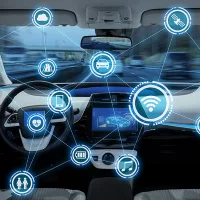
Autonomous driving, connected vehicles, and the automotive infrastructure are crucial for the Internet of Things (IoT) and 5G mobile technologies. For cars to achieve full autonomy, their environment must be equipped with real-time sensors to transmit signals, ensuring secure and reliable driving. Integrating IoT devices with LTE Vehicle-to-Everything (LTEV) solutions enables cars to interact with one another, providing notifications about emergency braking, lane changes, detours, and other critical information. This communication capability helps prevent accidents and facilitates seamless interaction with the surrounding road environment.
-
Industrial Monitoring Systems
There is a growing trend in the telecommunications market where industrial enterprises increasingly adopt Internet of Things (IoT) solutions to enhance their real-time ability to manage resources and facilities. This expansion into the industrial segment allows telecom businesses to enable intelligent supply chains, offering personalized offerings that monetize IoT technologies. By integrating all aspects of the production process, telecom providers provided absolute transparency in supply chains, leading to increased productivity and reduced operating costs.
-
Healthcare Industry
Forecasts indicate that the healthcare market's adoption of Internet of Things (IoT) technologies is projected to reach nearly $180 billion by 2026, positioning it as one of the leading and most promising industries for telecommunications. IoT solutions enhance the monitoring of patients' conditions and enable the introduction of remote healthcare services.
-
Smart Cities and Homes
The role of telecommunications in smart home and smart city technologies cannot be overstated, with 5G and narrowband IoT at the forefront of their implementation. This technological convergence of mobile networks and the Internet of Things (IoT) is critical in achieving system automation. In smart homes, telecommunications and IoT enable the management of security systems, lighting, electronics, and other connected devices. In the context of smart cities, IoT and telecom are instrumental in creating an inclusive, efficient, and interconnected ecosystem.
-
Security
In remote sites, the security of expensive and critical equipment is crucial. The exposure of such equipment to the possibility of theft necessitates implementing highly reliable and robust protection systems by telecommunication providers. In this regard, IoT-based smart cameras are the ideal solution for ensuring physical security. These cameras can effectively monitor potential safety breaches and automatically send real-time warning alerts.
-
Hazard Detection
In addition to equipment failures, telecommunication providers face the challenge of responding to global catastrophes that can disrupt the uninterrupted provision of telecom services. The lack of control over such hazards can cause significant damage to equipment and infrastructure.
Conclusion
The prospects for IoT's rapid implementation and overall development in the telecommunications sector are undeniably promising. While it is evident that full implementation will take time, the industry is poised to gain experience and expertise in this direction. The long-term investment in IoT will undoubtedly yield significant returns for developers, operators, and consumers alike.
In the foreseeable future, established telecommunication enterprises and startups are expected to promote their IoT services across various industry segments actively. Integrating IoT with the telecommunications industry will be a robust competitive advantage, optimizing productivity, enhancing service quality, unlocking new opportunities, fostering customer loyalty, and ultimately driving profitability. This convergence of IoT and telecommunications is poised to lead the industry toward remarkable success.
If you aspire to work in the IoT domain as an electronics engineer, pursuing specialized IoT-centric courses can be highly beneficial. Skill-Lync, a leading platform, can assist you in acquiring the necessary skills and knowledge in this field. By enrolling in our IoT-focused courses online, you can comprehensively understand the ins and outs of IoT technologies, equipping you with the expertise needed to excel in the dynamic and rapidly growing IoT industry.