Week 7-Long Piston With Cam
Objective:
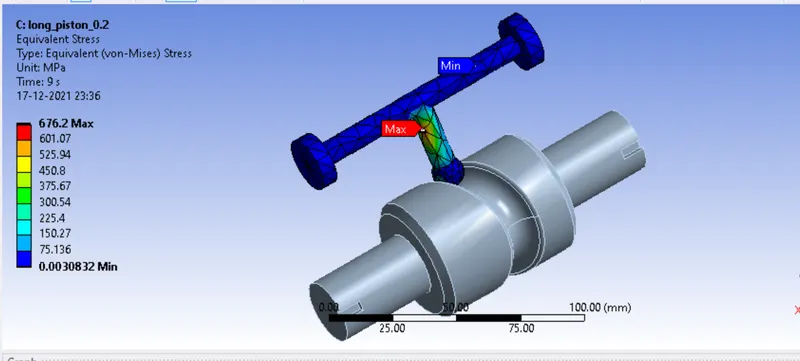
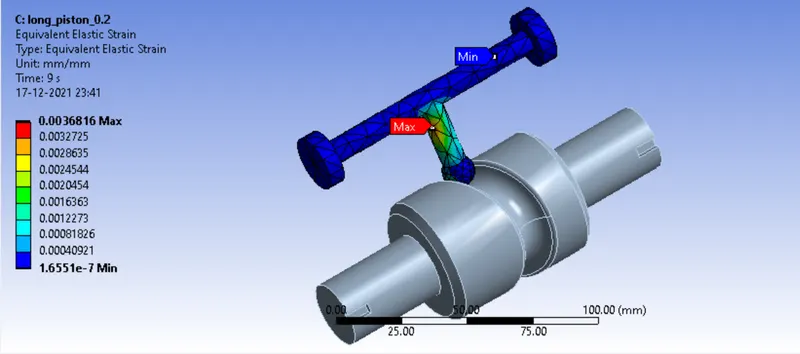
For this challenge we will have to perform a transient analysis on a piston and cam mechanism model that has been provided to you. You need to run the analysis with Frictionless contact, Frictional with 0.1 and 0.2 as the frictional contact for a total of 3 cases. Find out the Equivalent Stress, Directional Deformation and Equivalent Elastic Strain and compare them for all the three cases. Give an inference as to why the results vary between cases.
Procedrure:
in this simulation we have 3components barrel,cam,follower we will keep barrel and cam rigid
Contacts:
there are two contacts one is between cam and follower and anoher one is piston and barrel.for first case we keep as a friction less contact.for 2nd case contact type is frictional with coefficient of friction is 0.1.for 3rd case contact type is frictional with coefficient of friction is 0.2
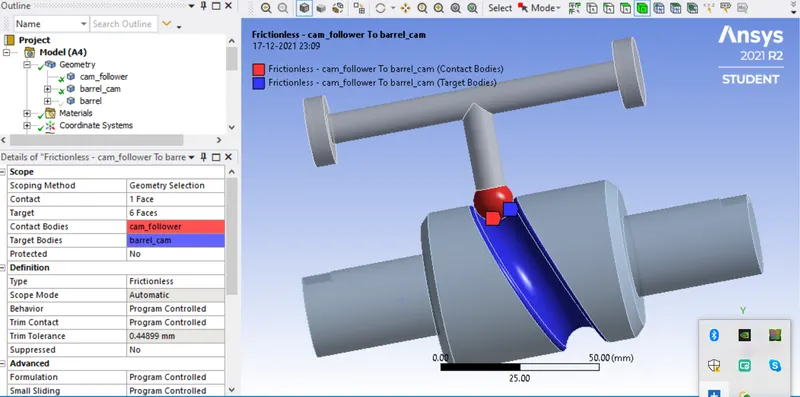
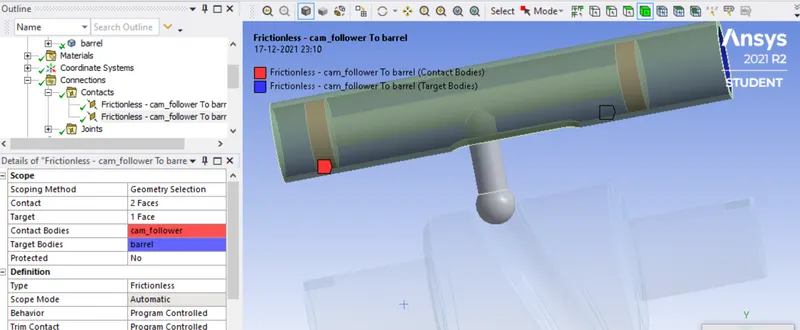
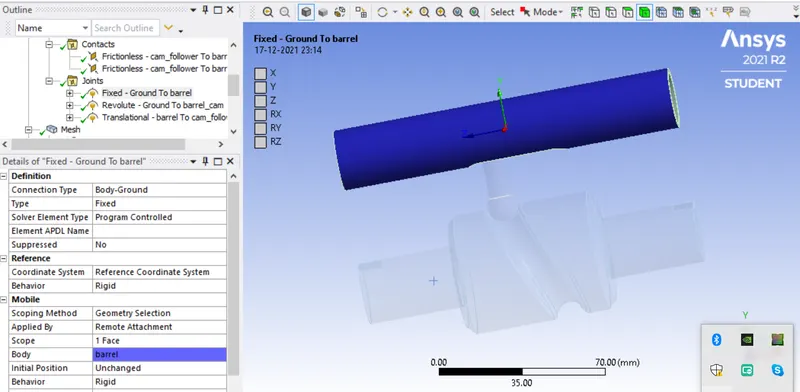
JOINTS:
fixed joint body ground for barrel and revolute joint body ground for cam.translational joint body to body for piston with referance to barrel.
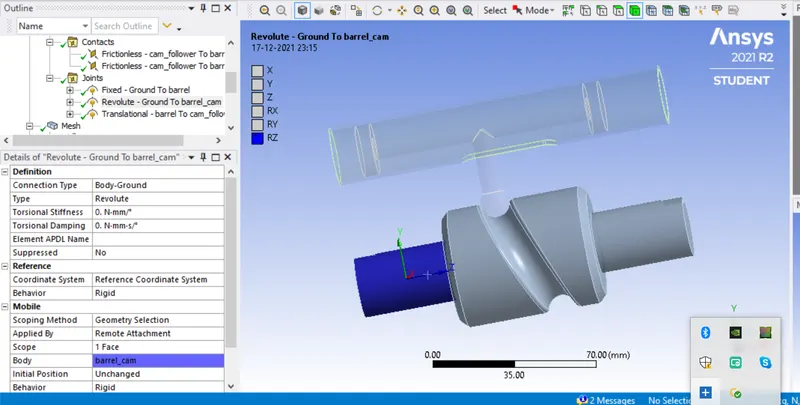
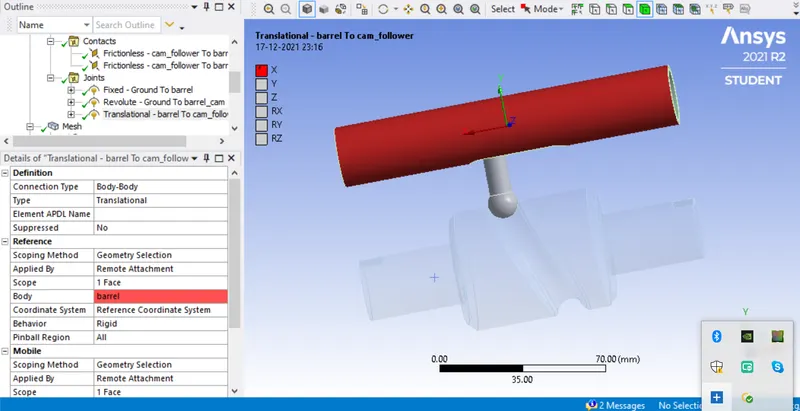
Meshing :
meshing done by element size of 3mm at the contact between follower and cam remaining as default.
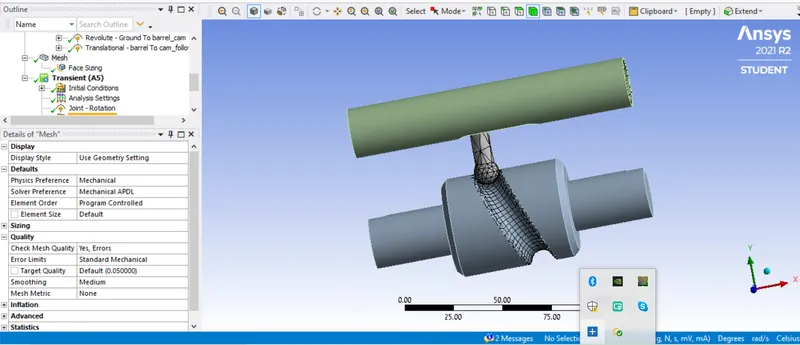
In Analysis settings we carried out the simulation in 9 steps with intial mtime step 0.1s minimum time step 5e-002s maximum time step=0.2s with time integration on <solver type as programme controlled<weak springs as programme controlled and large deflection is on.
for nonlinear controlsw stabilization is constant<energy decipation ratio is 0.1 and activation substep is yes .for out put controls change contact misellinious as no remaining are yes
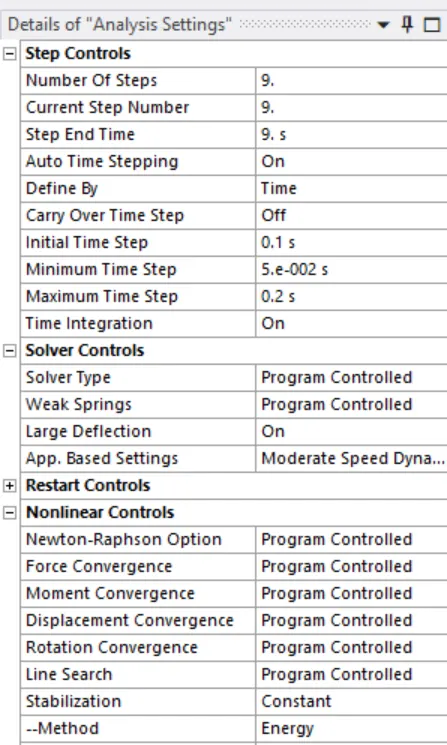
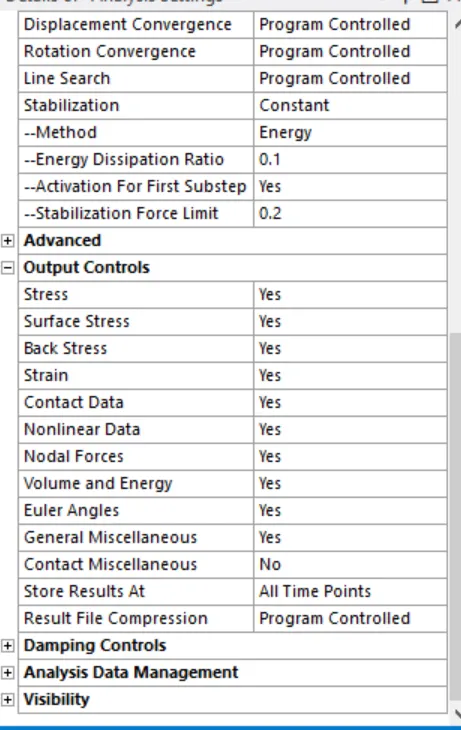
JOINT LOAD:
Insert joint load type as rotation magnitude tabular
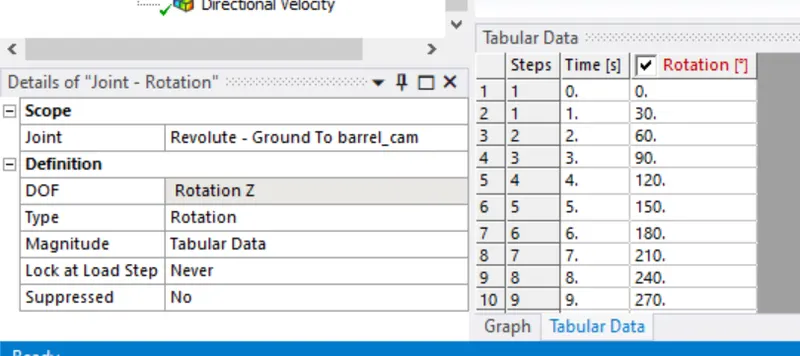
RESULTS:
CASE1:
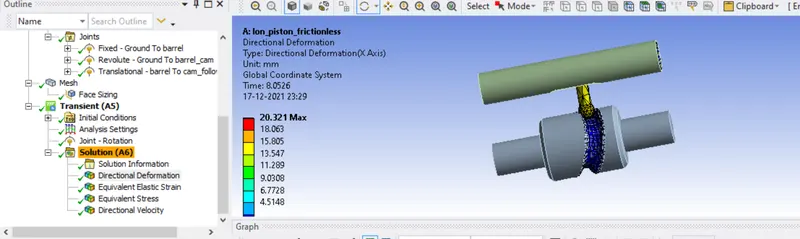
directional deformation :
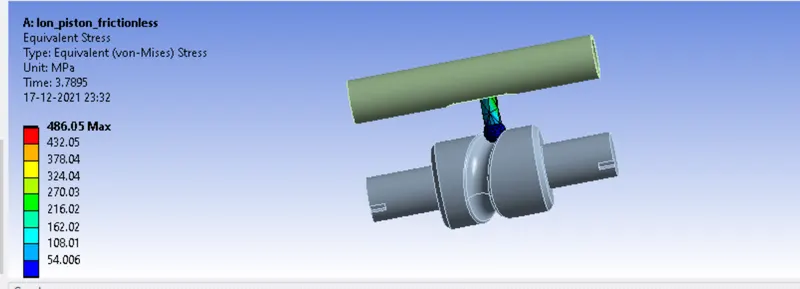
Equivalent stress:
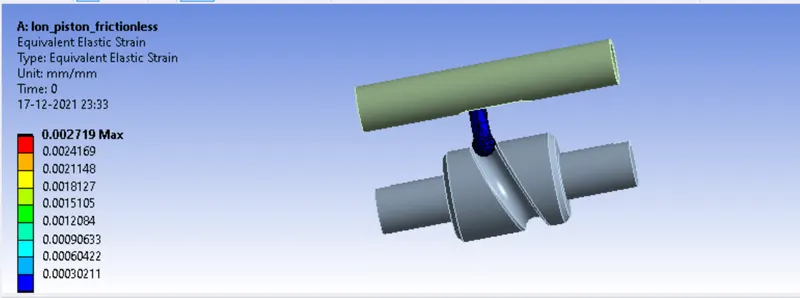
Equivalent strain:
Case-2:
Directional deformation:
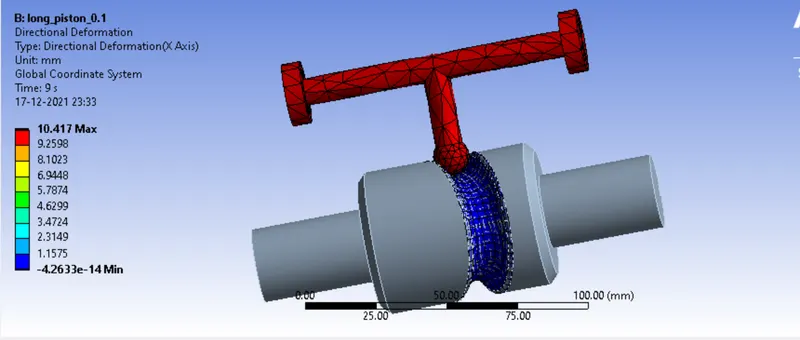
Equivalent stress:
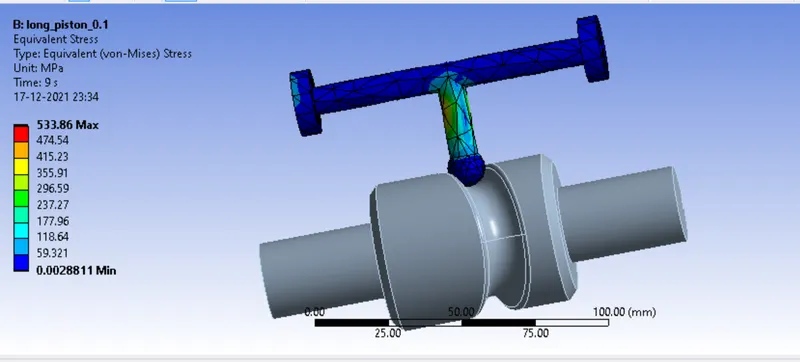
Equivalent strain:
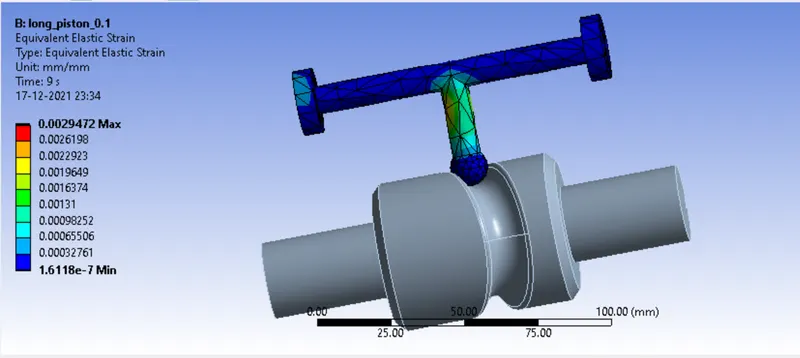
Case-3;
Directional deformation:
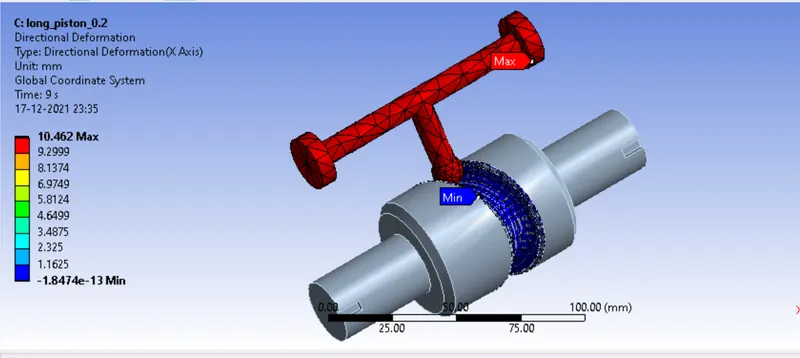
Equivalent stress:
Equivalent strain:
Result comparrison:
|
Directional Deformation(mm) |
Equivalent stress(Mpa) | Equivalent strain | |
| CASE-1 | 20.321 | 486.05 | 0.002719 |
| CASE-2 | 20.321 | 533.86 | 0.0029472 |
| CASE-3 | 20.321 | 676.2 | 0.0036816 |
conclussion:
directional deformation is not changed with coefficient of friction.
Due to increase of friction more amount of work has to be done to over come that friction thats why more stress developed in coefficient of friction is 0.2 compared to friction less and 0.1 coefficient of friction.
more strain developed in case3 compared to case1 and 2