Week 3 - 2D meshing for sheet metal
OBJECTIVE:
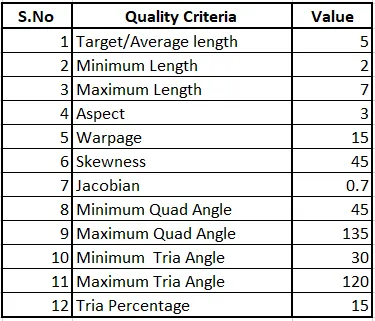
To perform 2D meshing on the given sheet metal component by following the given Quality Criteria and to assign the corresponding thickness.
PROCEDURE:
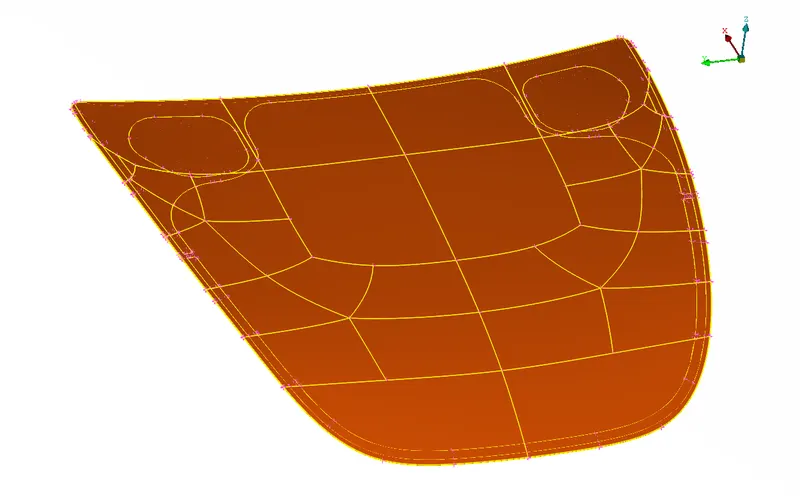
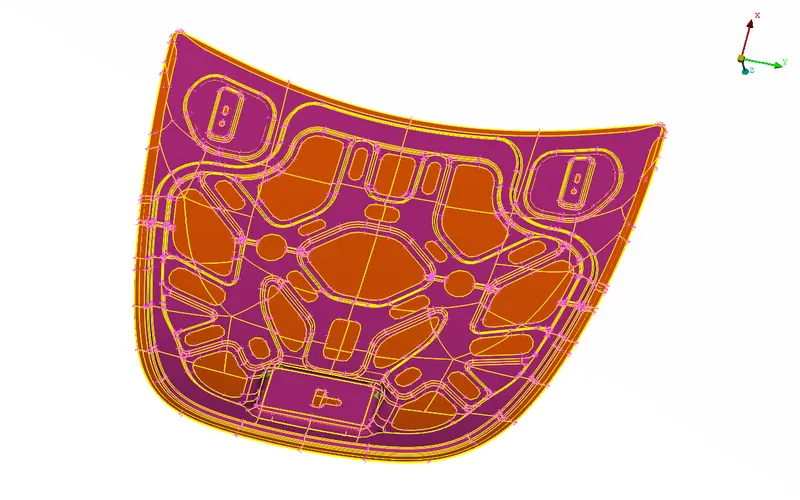
1) Open the given model in ANSA.
2) Geometry Cleanup
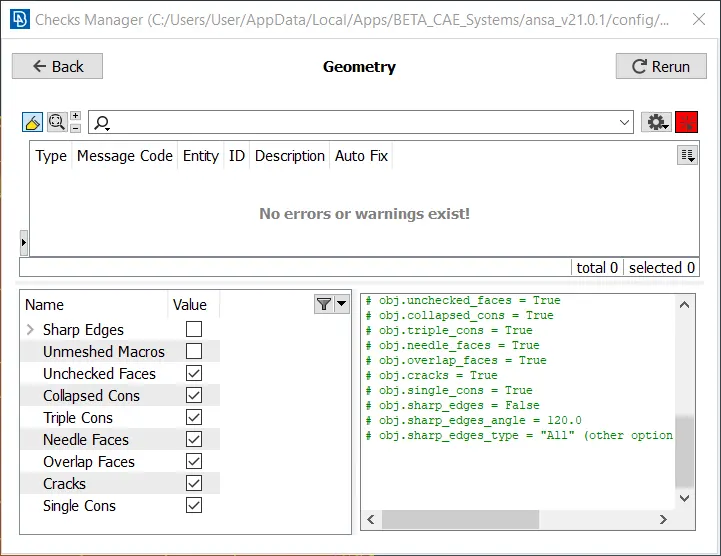
Before extracting the mid surface from the model, it needs to be ensured that the model surface is perfect and free from errors like free edges, cracks, overlap faces, distorted faces, needle faces etc. The geometry check is done using the Checks Manager available under, Tools>Checks>Geometry.
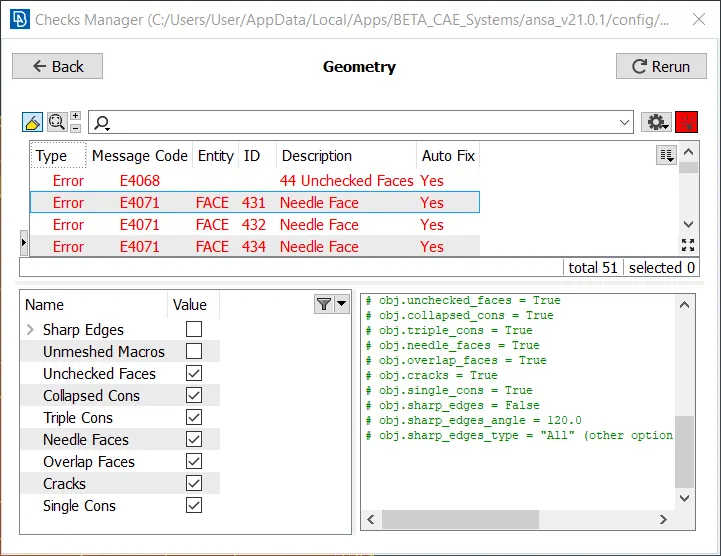
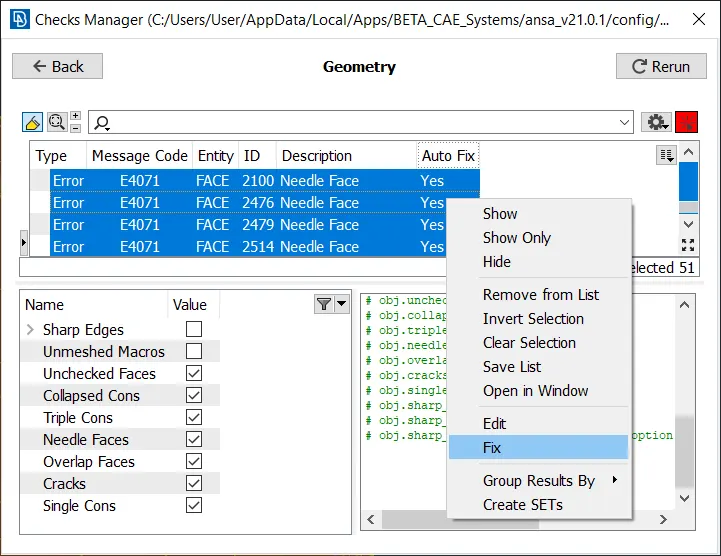
ANSA provides an option to automatically rectify the errors. This is done by, selecting all the errors>rigiht click>Fix. If any errors persist then it can be fixed manually.
By using the Topo function topological conditions between selected adjacent CONS can be created automatically.
On the model, if any lines are too close to each other or if the distance between the lines is less than the minimum element length, then one of the lines needs to be removed. Otherwise, on meshing, elements that fail the minimum element length criteria will be created between the closely spaced lines.
By using the Bounds button, the free edges of the model can be viewed and can be used to check for any cracks in the model.
3) Mid surface extraction
The midsurface can be extracted either through manual midsurfacing or through auto midsurfacing. The type of method used depends on the geometry of the model.
For manual midsurfacing, Topo>Faces>Offset
For auto midsurfacing, Topo>Faces>Mid.Surface>Skin
Outer Extract:
The thickness of the component is measured at multiple locations and is found to be 0.75 mm.
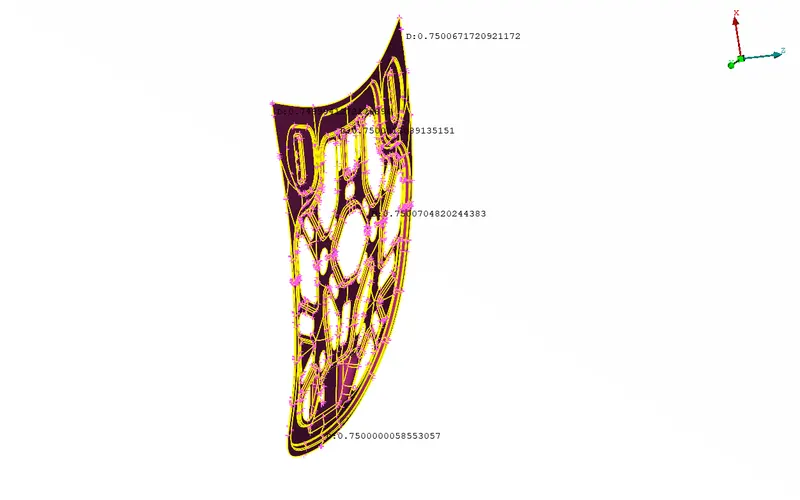
New PID is created for the mid surface and the corresponding thickness is assigned.
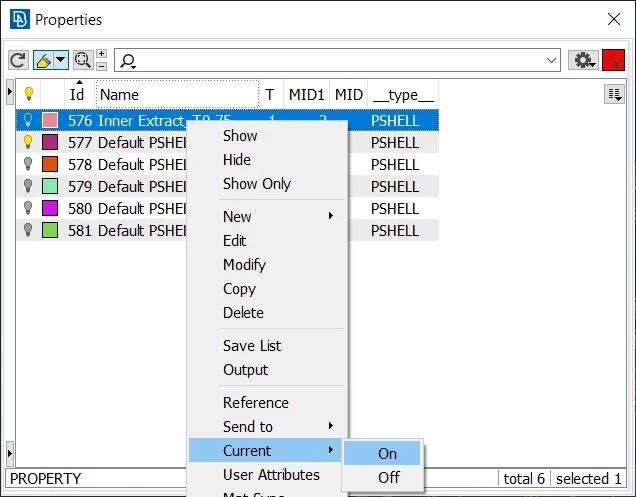
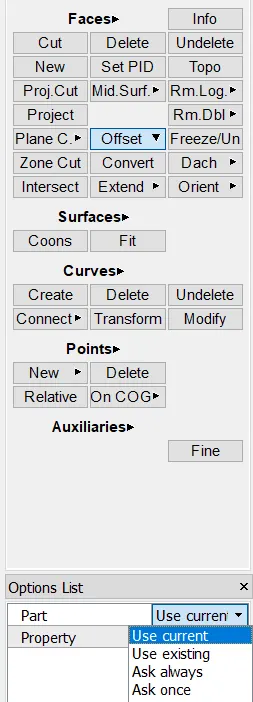
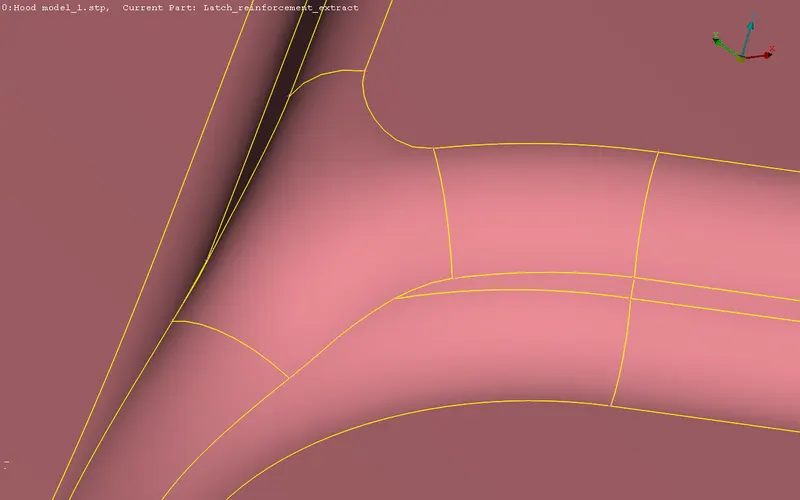
Then the mid surface is extracted using manual offset as the geometry is complex. Under Faces>Offset, the top or bottom face is selected using the ‘Feature Area’ selection tool. The face is then offset by a distance of 0.75/2.
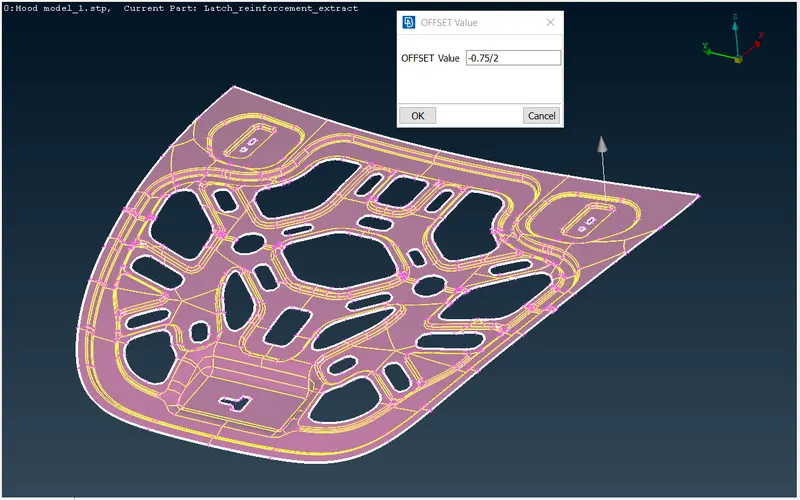
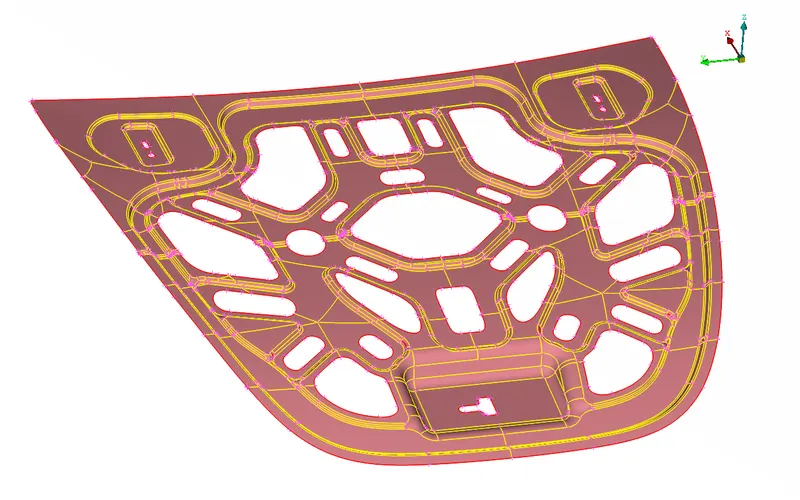
Then the mid surface obtained is checked for any geometrical errors and the required cleanup is done.
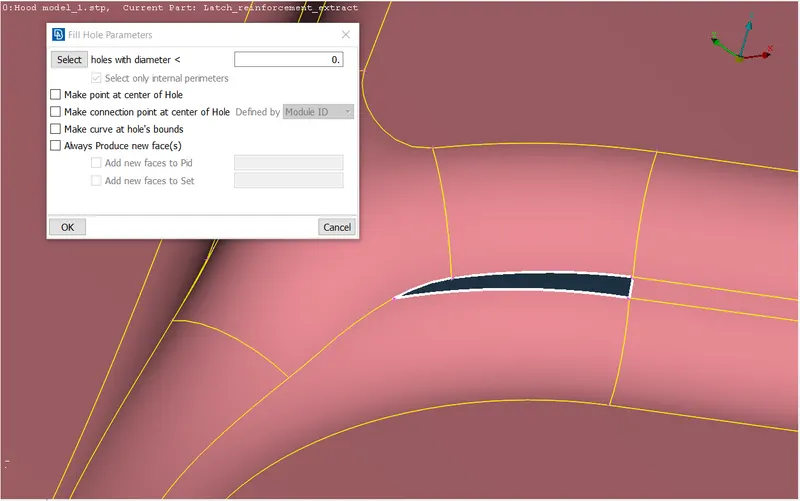
Inner Extract:
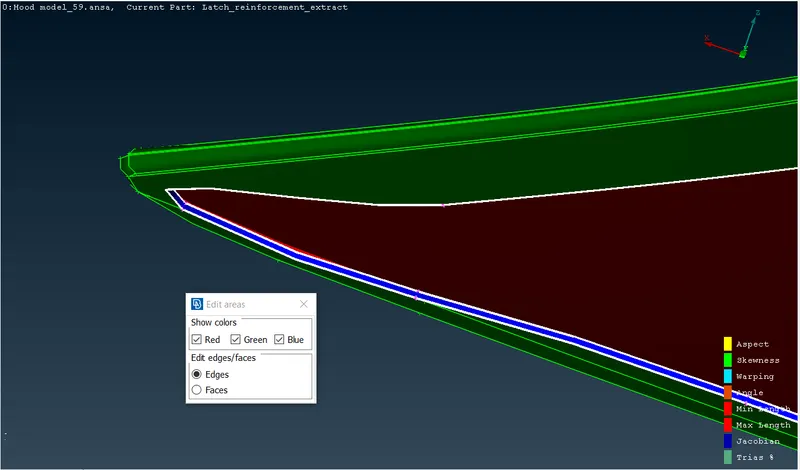
The mid surface is extracted using auto midsurface tool as the geometry is of uniform thickness and is not complex.
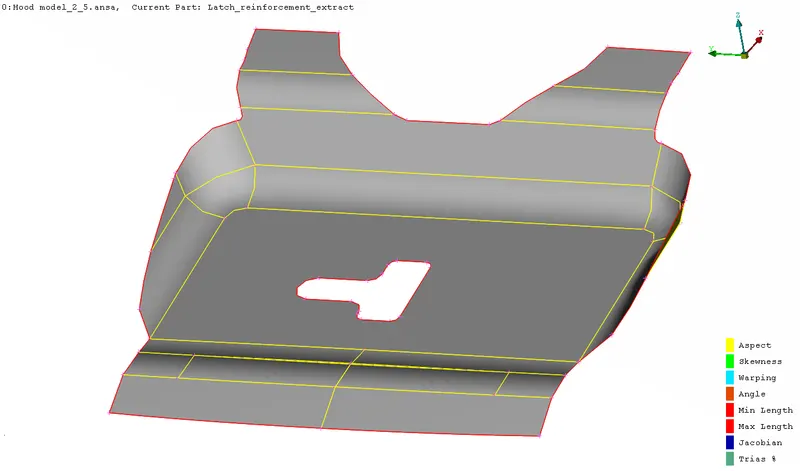
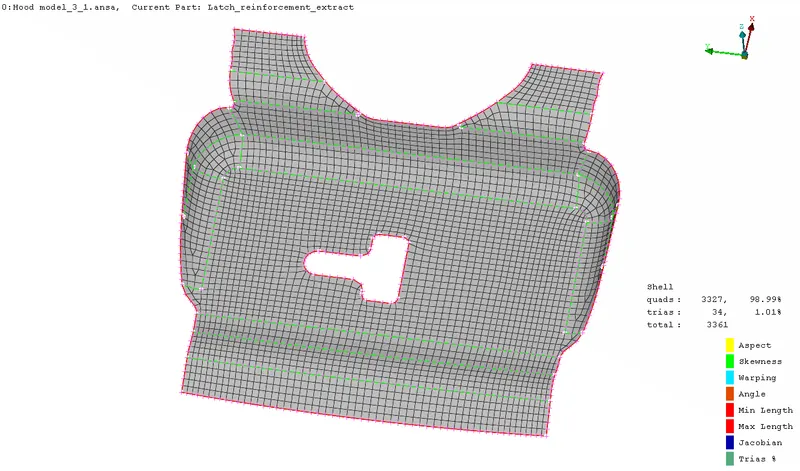
Latch:
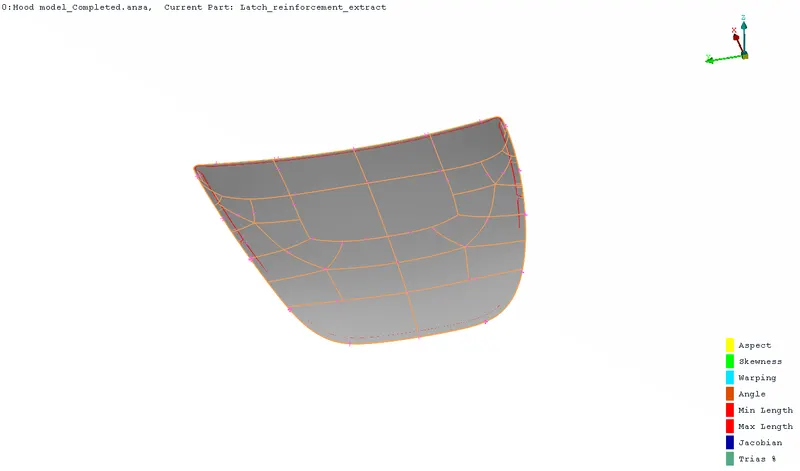
The mid surface is extracted using auto midsurface tool.
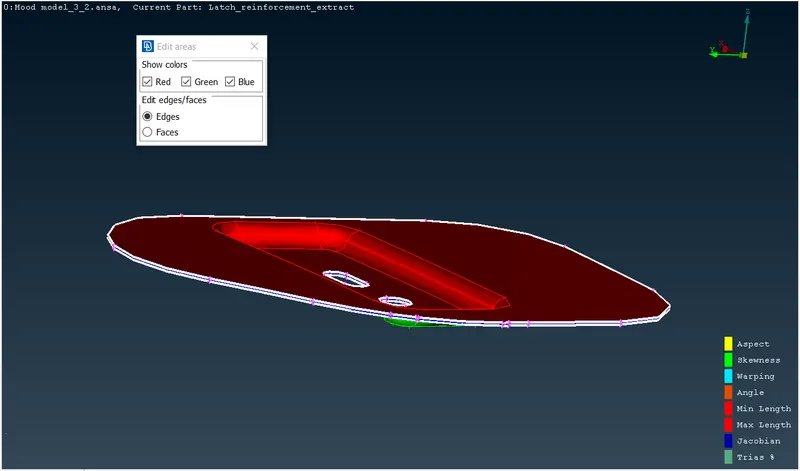
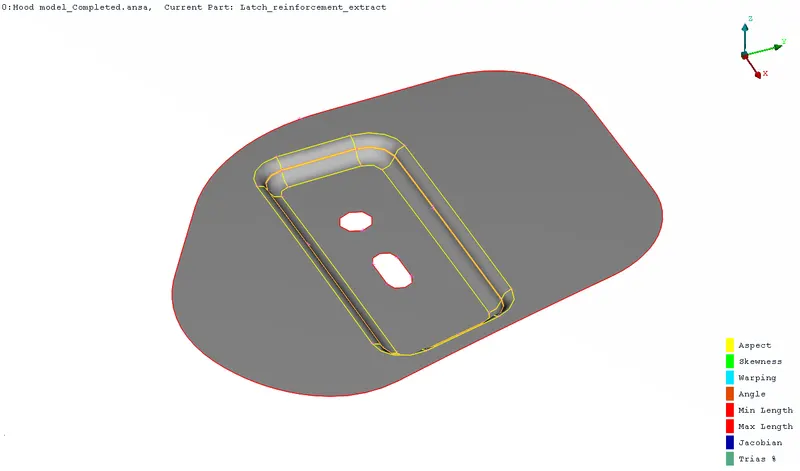
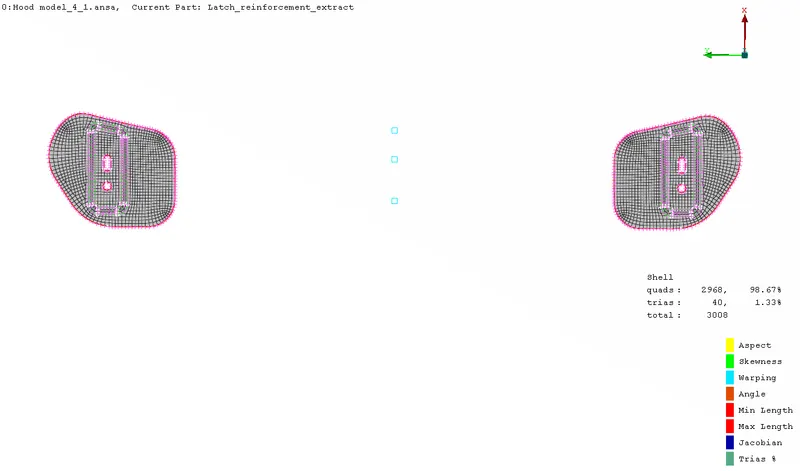
Hinge:
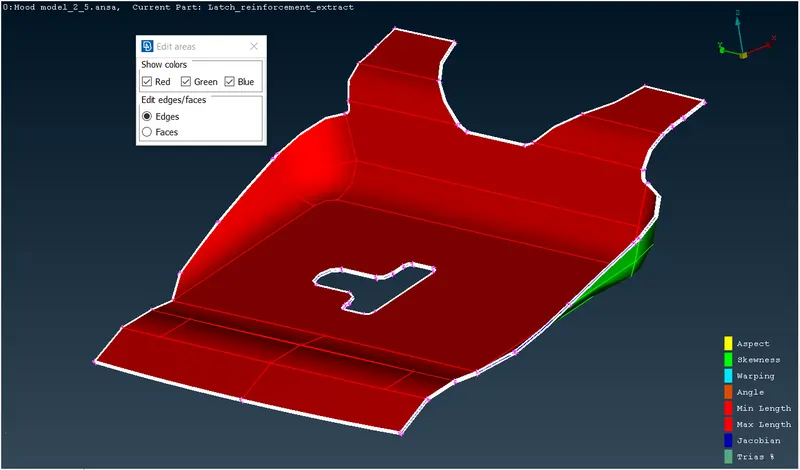
The mid surface is extracted using auto midsurface tool.
4) Meshing of midsurface
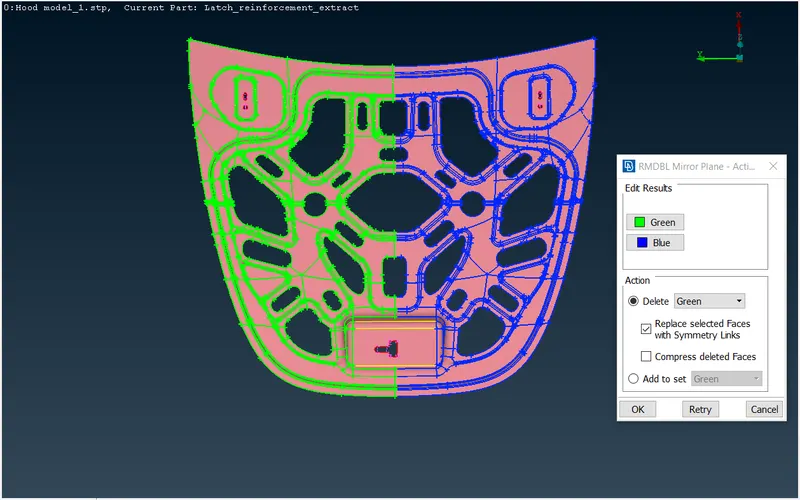
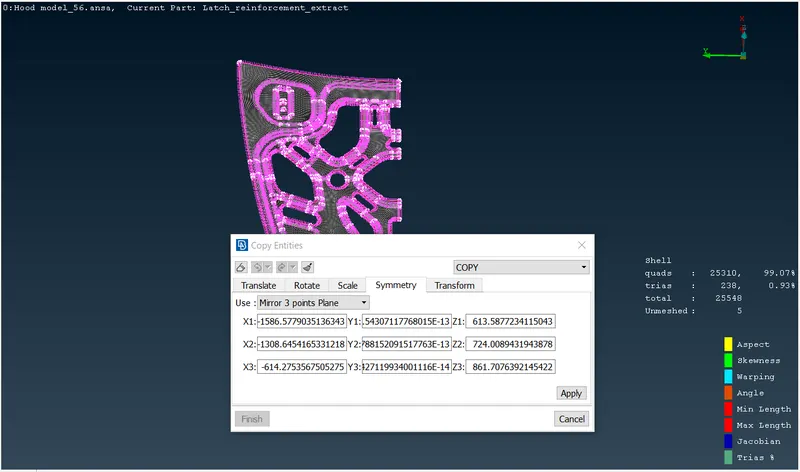
Since some components are symmetrical, meshing can be performed on one half of the component and can be copied to the other half.
The given quality criteria’s need to be specified using the criteria file editor before meshing the model.
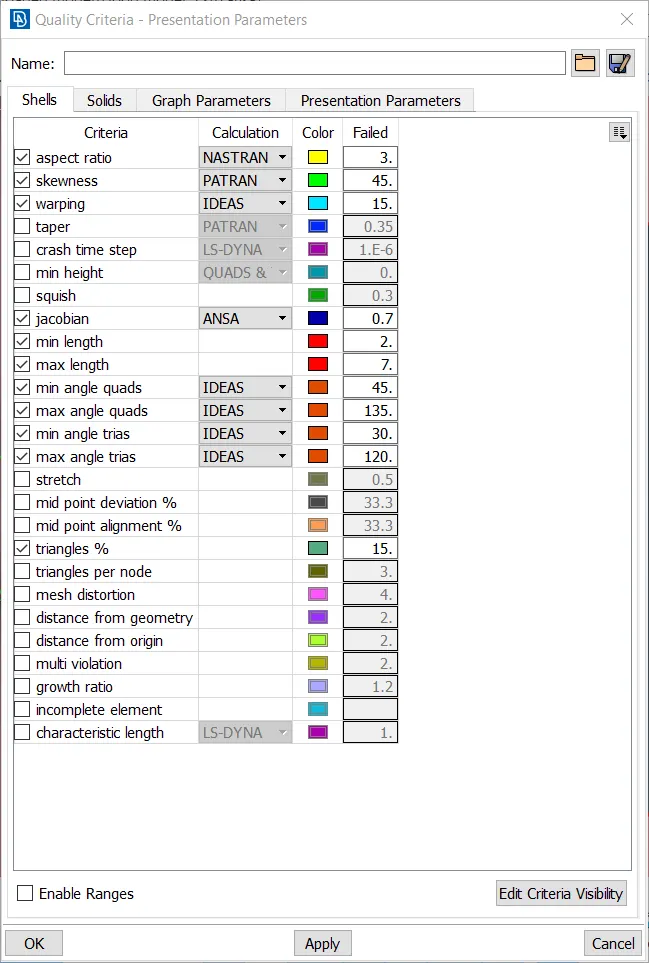
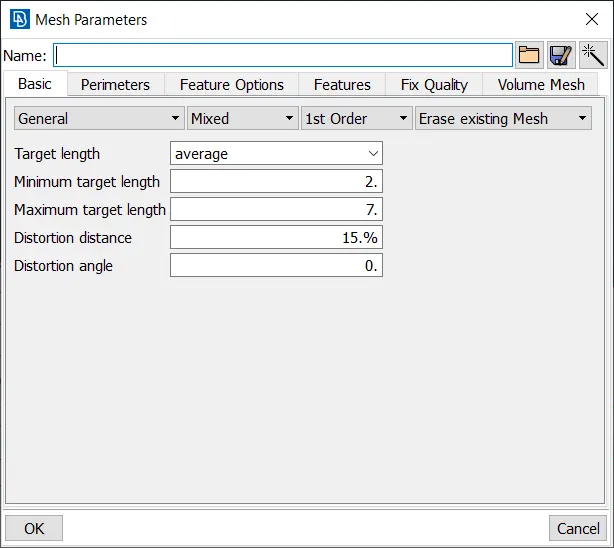
Once the quality criteria’s are set, meshing is performed with a target element size of 5 mm.
The meshing is performed using the ‘Best’ option under ‘Mesh Generation’. This function automatically meshes Macro Areas using all alternative meshing algorithms and keeps only the mesh of highest quality.
For ensuring proper mesh flow and also for ease of meshing the surface is divided into sections and the meshing is carried out on each of the sections one by one.
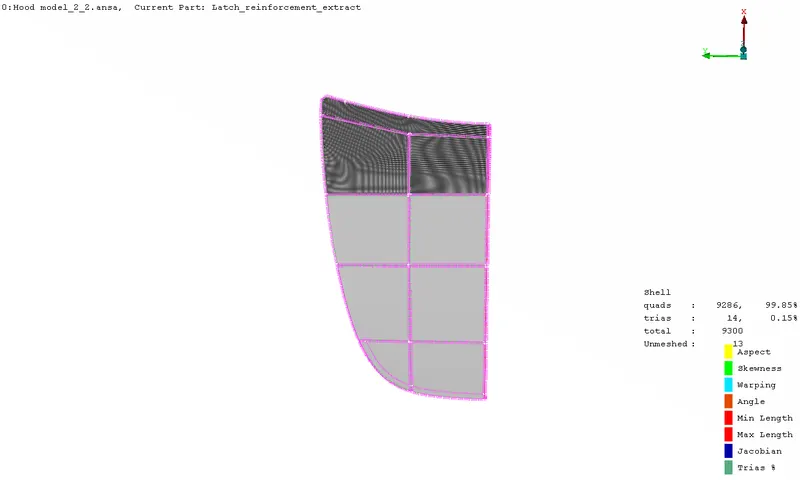
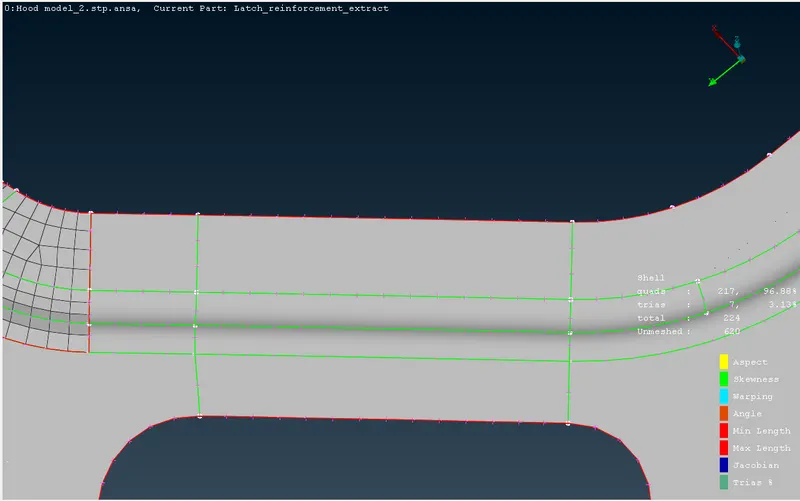
The meshing is carried out starting from the complex regions first and then progressing outwards.
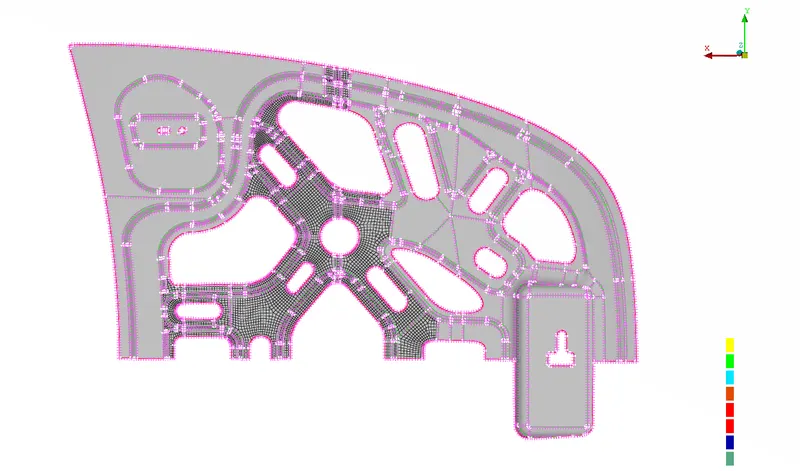
To copy the mesh to the other half of the symmetrical components.
Utilities>Transform>Copy
5) Ensuring proper mesh flow and quality of elements generated
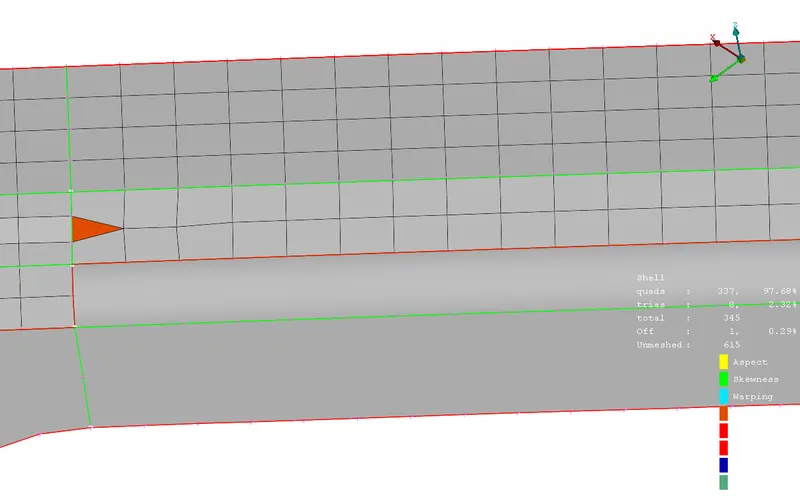
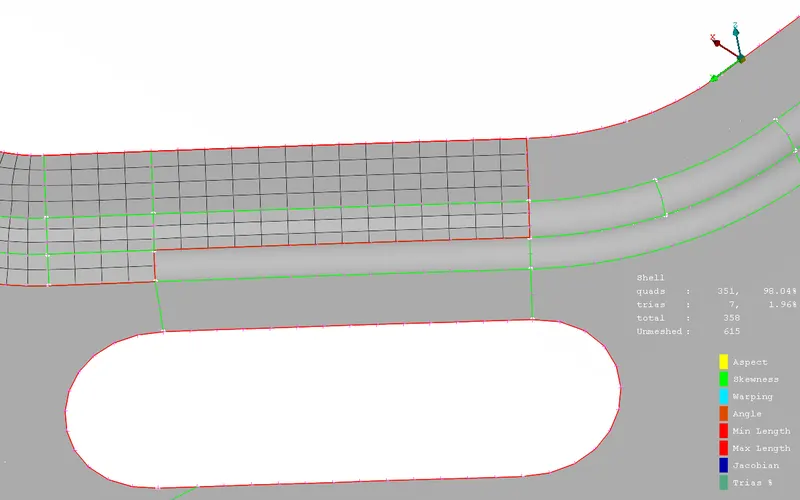
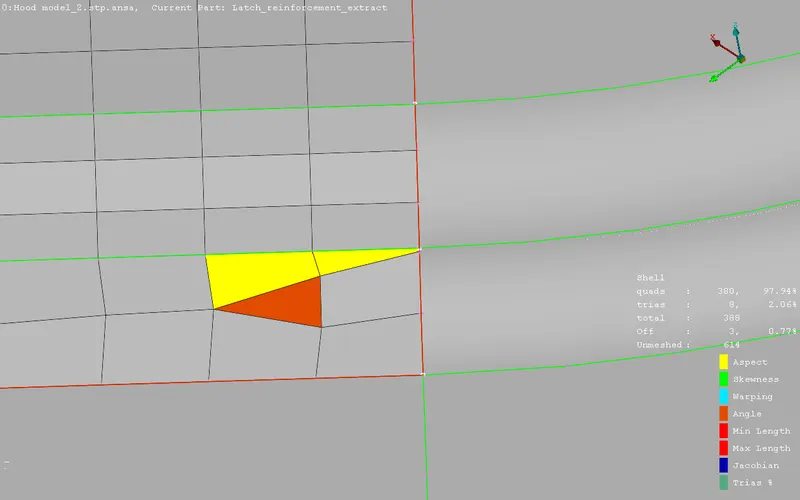
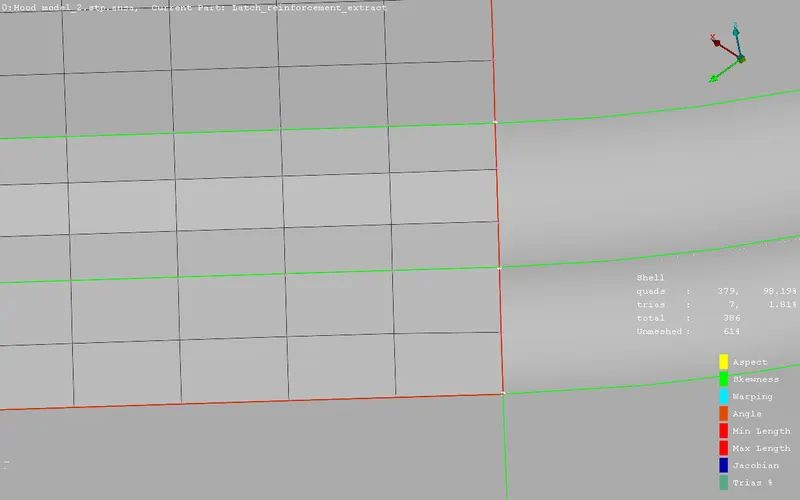
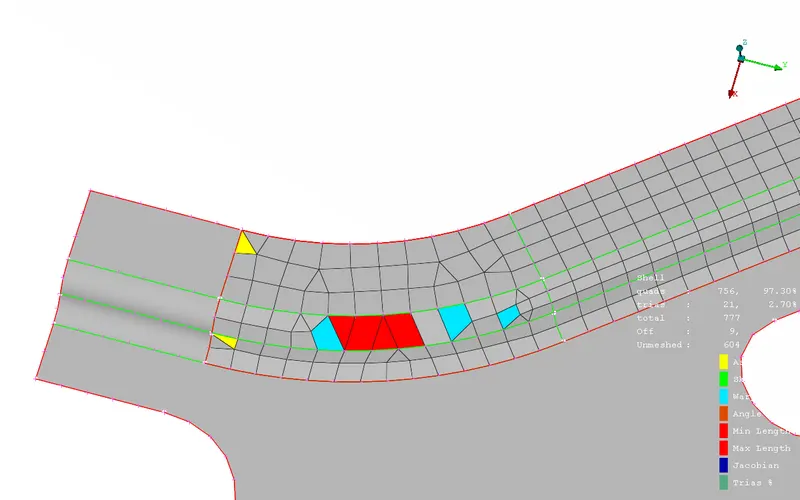
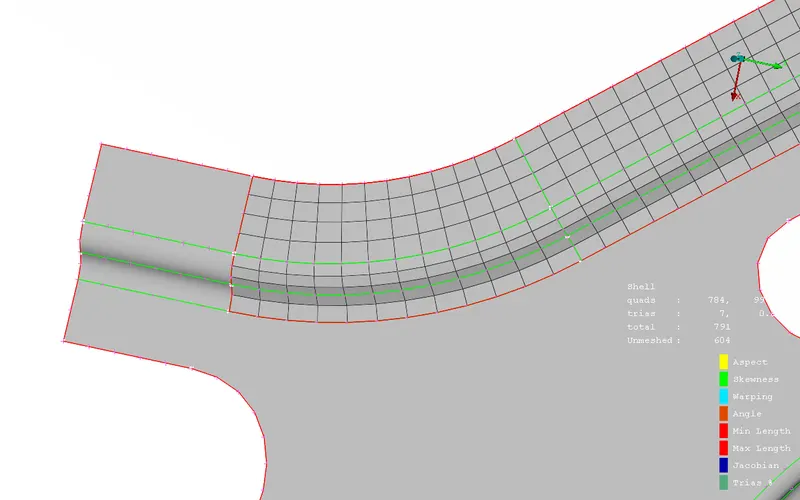
The generated mesh is examined properly to ensure that there is a proper mesh flow. Also, the number of trias should be kept to a minimum. Ensure that there are no rotating quads, back to back trias, opposite trias or trias on feature line.
The various tools available such as Reconstruct, Split, Swap, and Paste can be used for this purpose.
Also, check if any elements are failing for any of the given quality criteria’s. If any element is found to be failing the given quality criteria then the required cleanup is done to correct them.
The ‘Reconstruct’ option under ‘Shell Mesh’ can be used to improve the mesh. It examines a given mesh and performs re-meshing to correct problematic areas and optimize the overall quality of the mesh according to the mesh parameters.
Smoothing is performed using the ‘Smooth’ option under Shell mesh to improve the mesh flow after performing any operation.
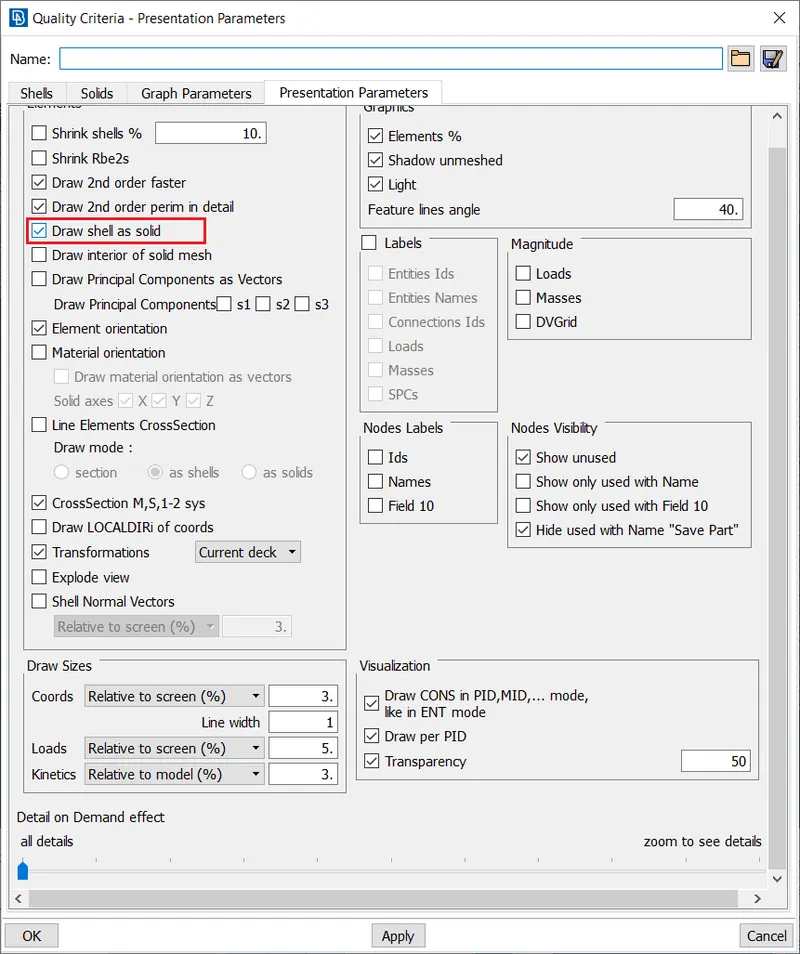
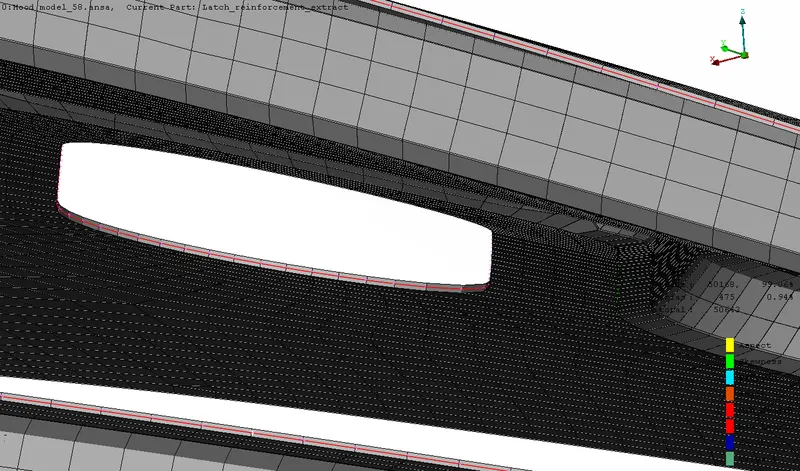
6) To view the 2D shell elements as solid based on their PID thickness,
Quality Criteria>Presentation Parameters>Draw shell as solid
FINAL MESHED MODEL IMAGE:
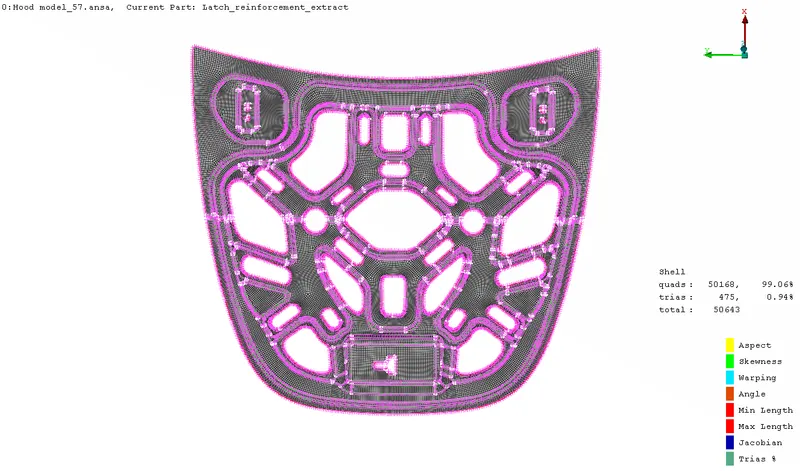
Inner Extract:
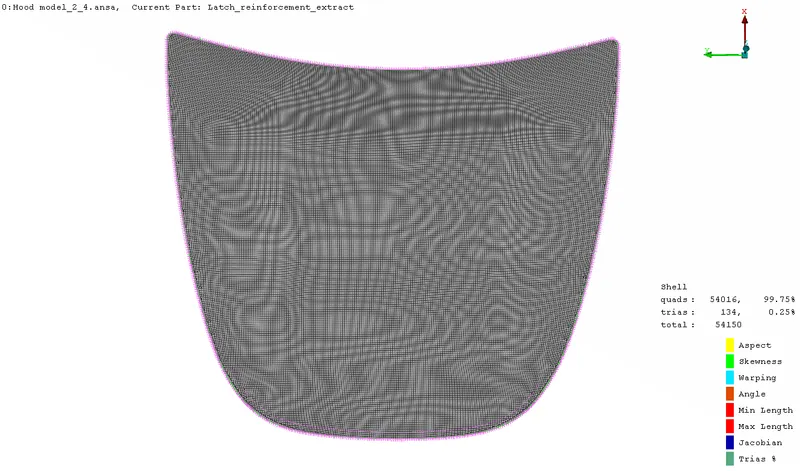
Outer Extract:
Latch:
Hinge:
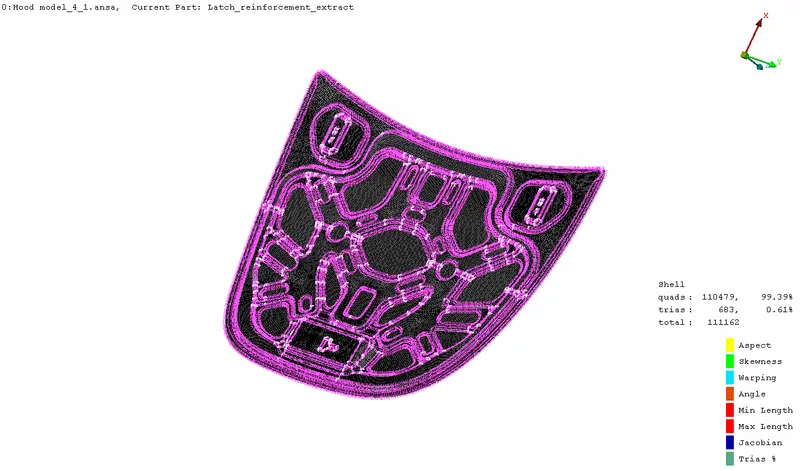
Full model:
LEARNING OUTCOMES:
- Learned how to perform geometry cleanup and extract midsurface for sheet metal components.
- Gained an understanding of how to perform meshing and obtain good quality mesh and proper mesh flow using the various tools available in the ANSA pre-processor.
CONCLUSION:
The given components were meshed according to the given quality criteria’s after extracting the midsurface. Also, the required thickness was assigned to the elements.