Week 2 Railwheel and Track
Objective:
Perform a static structural analysis on the Railwheel and Track setup and
Case 1: Multiply the bearing load by 5 times and compare the results with the load of 100000 N (As done in week 2 video). Compare the Total Deformation, Equivalent stress and the life under both the loads
Case 2: Implement a User defined result and calculate the Total Deformation from this result and check if it is the same as that obtained by the inbuilt result by ANSYS for a load of 100000 N
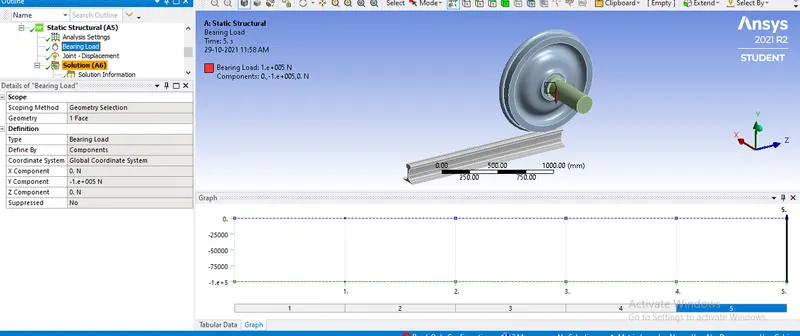
First we need to perform static analysis by taking bearing load as 100000N
- Go to Engineering Data and select material as structural steel
- Go to geometry and import the model.remove the unwanted portion of gear.
- now go to model and click on edit mechanical APDL will open.
- we have to create two contacts between Rail wheel and track with friction.another one is between railwheel and shaft which is friction less contact
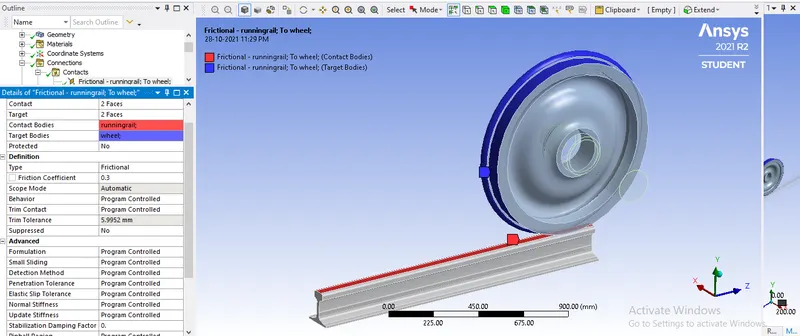
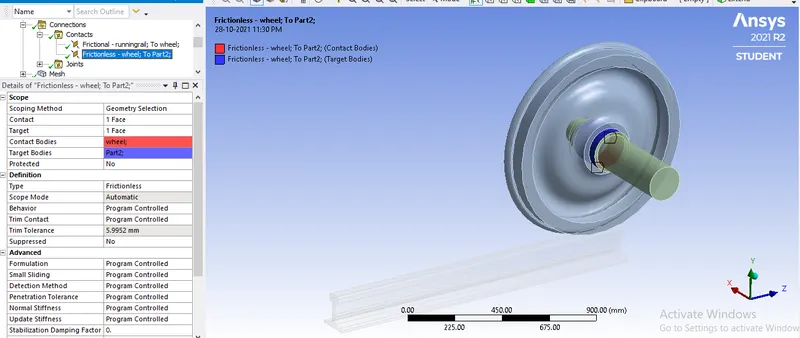
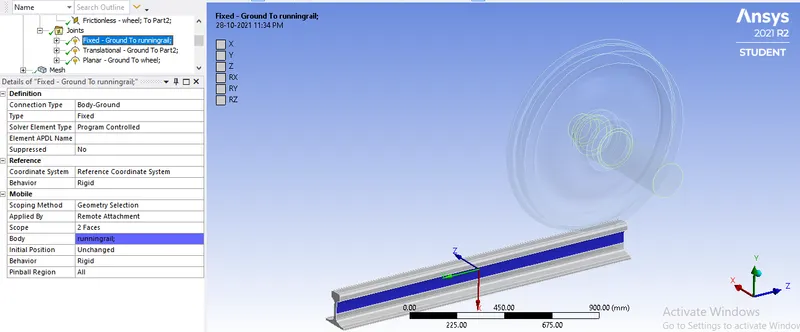
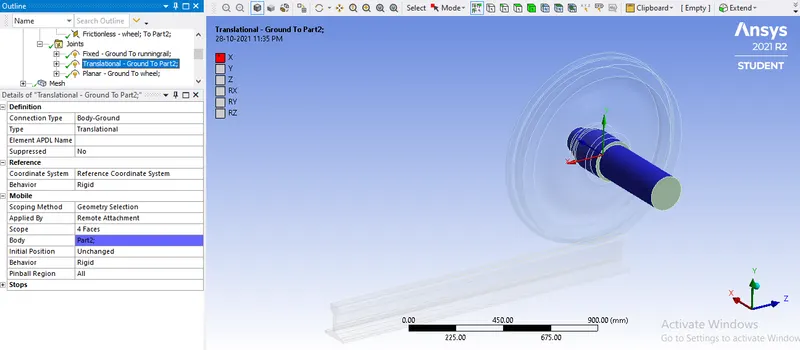
- Create three joints one is fixed and one is translational joint last one is planar joint for wheel
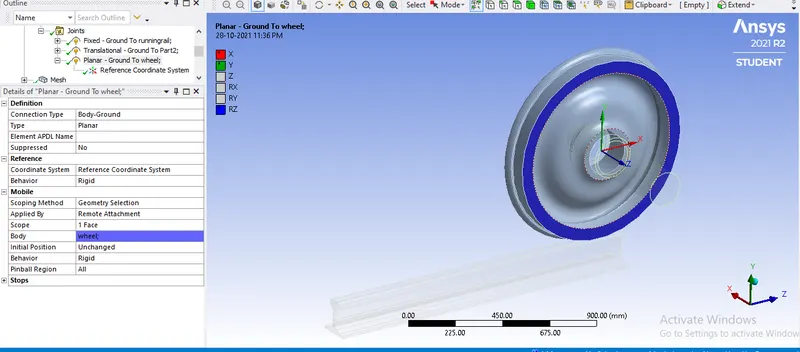
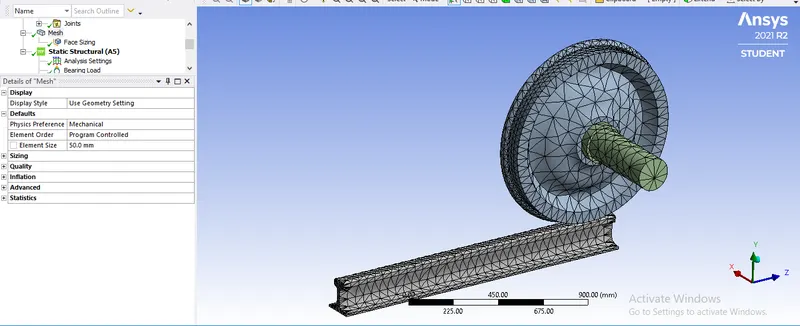
- generate a mesh size of 50mm all assembly except contacting area of rail wheel and track is 35mm
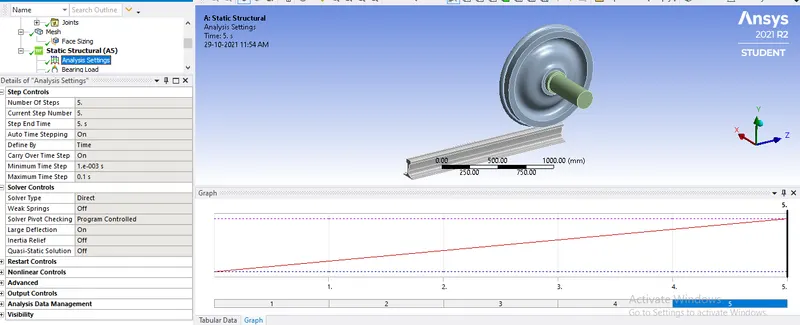
- Go to analysis settings
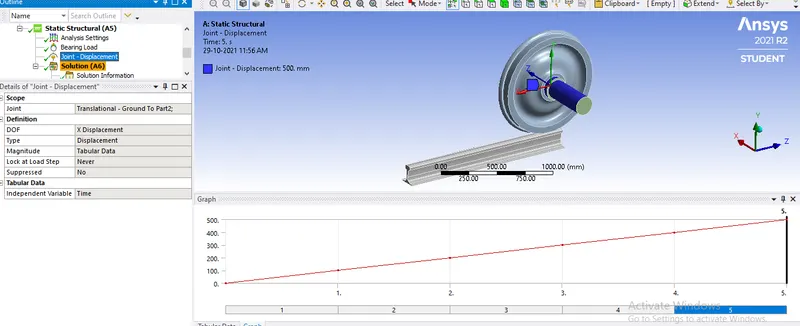
- create joint load by selecting static structural
- Apply bearing load by insert
- select output parameters of deformation,euivalent stress,equivalent strain and Life of component.
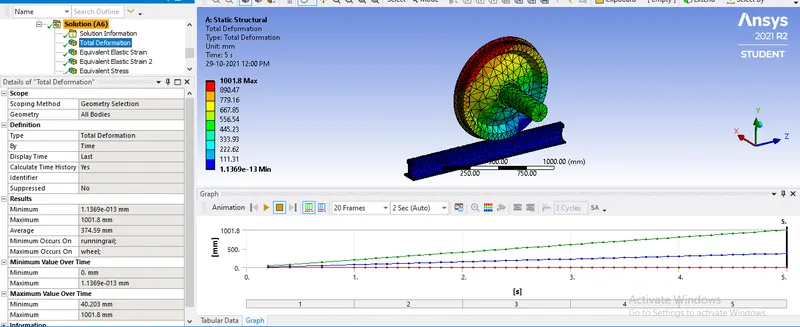
Deformation:
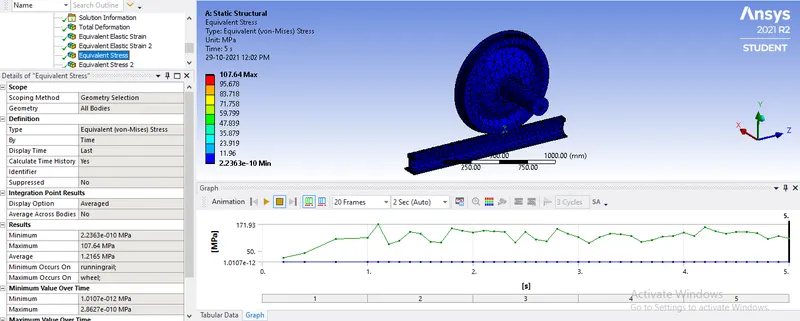
Equivalent stress:
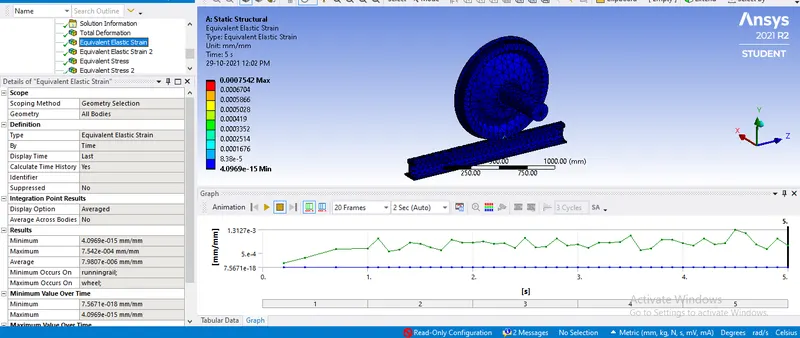
Equivalent strain:
Life:
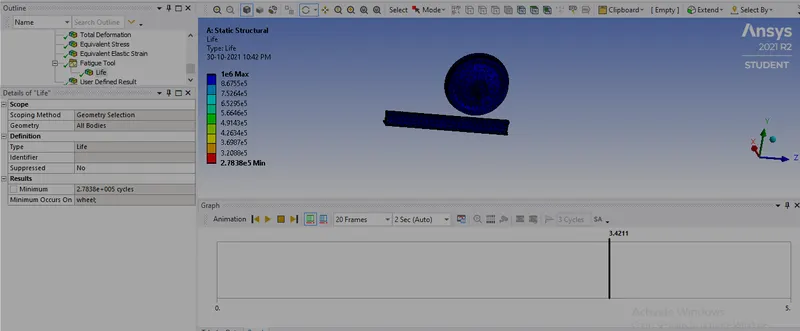
Case1:Now change the Bearing load 500000N then do the simulation.Check the results
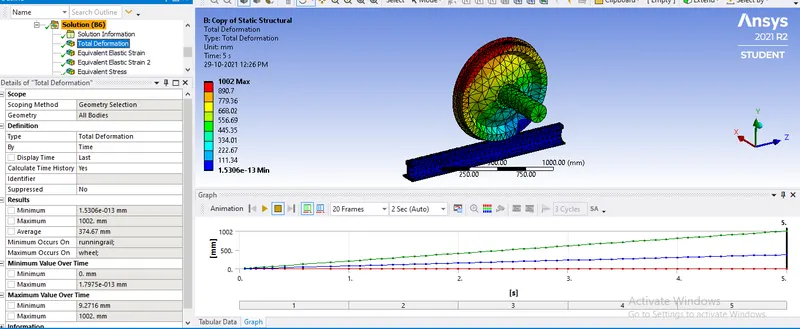
Deformation:
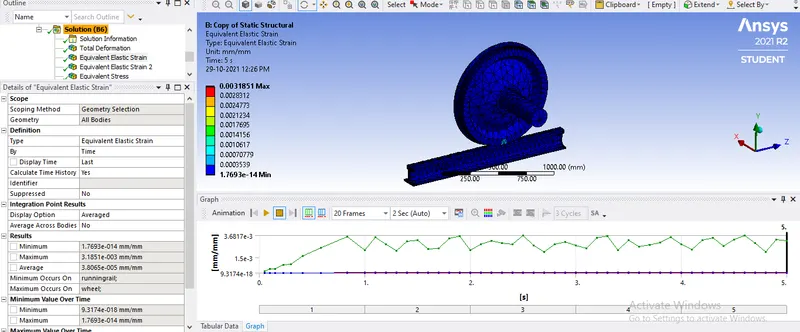
Equivalent strain:
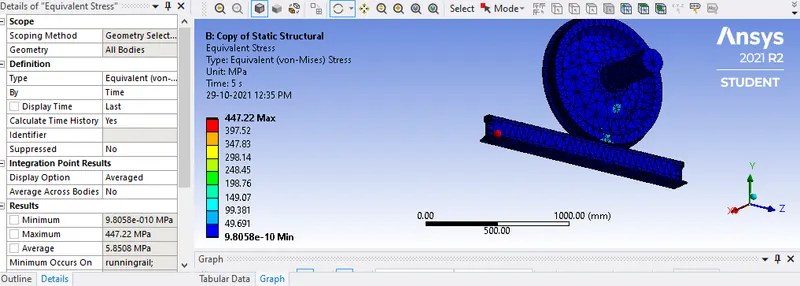
Equivalent stress:
Life:
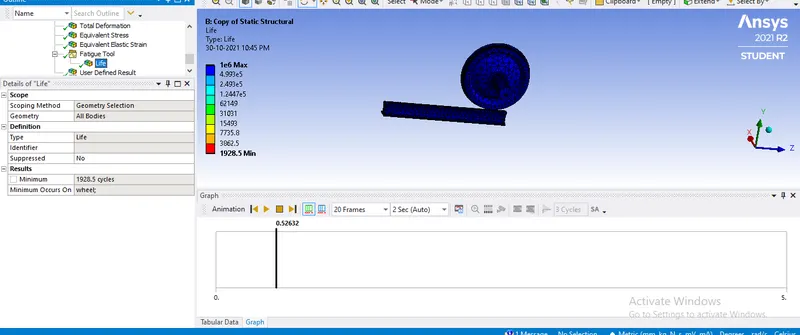
Case2: Implement a User defined result and calculate the Total Deformation from this result and check if it is the same as that obtained by the inbuilt result by ANSYS for a load of 100000 N.
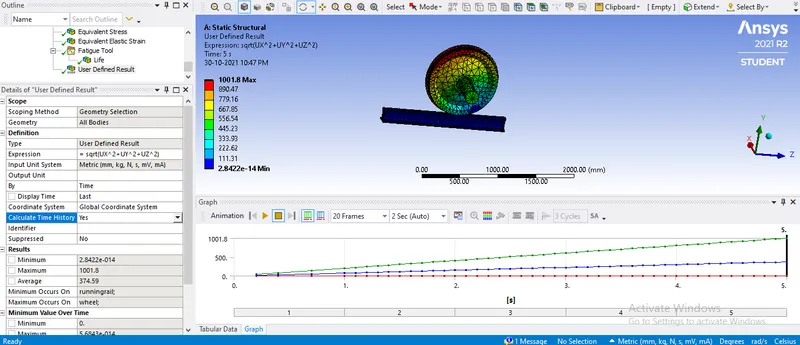
- from above result we can say that user defined result=sqrt(UX^2+UY^2+UZ^2) is 1001.8 mm which is equal to ansys result 1001.8mm
Result comparisson:
| Stress(MPa) | strain | Deformation(mm) | Life(No of cycles) | |
| when 100000N Bearing load applied | 107.64 | 0.0007542 | 1001.8 | 2.78e5 |
| when 500000N Bearing load applied | 447.22 | 0.0031851 | 1002 | 7.10e-14 |
Conclussion:
- From results we can conclude that increasing bearing load can increase stress,strain,deformation and life of the component is reduced drastically.